AI Use Case Library

Specific AI Applications, Bounded and Sourced

A structured, filterable library of specific AI applications across supply chain functions — demand forecasting, inventory optimization, procurement automation, warehouse operations, logistics routing, and supply chain visibility. Each entry covers what the use case does, where it delivers measurable value, real-world deployment examples, relevant vendors, and known implementation constraints. This group serves readers in the stakeholder-validation and vendor-shortlisting stages who need concrete evidence that AI works in a specific functional context. Excludes generic overviews of 'AI in supply chain' that do not anchor to a specific, bounded application. Boundary with case-studies: use case entries describe the application pattern and its general evidence base; case study entries document a specific company's deployment outcome.

Each entry covers what the use case does, where it delivers measurable value, real-world deployment examples, relevant vendors, and known implementation constraints.

100 use cases

  • AI Contract Intelligence and NLP in Procurement Automation

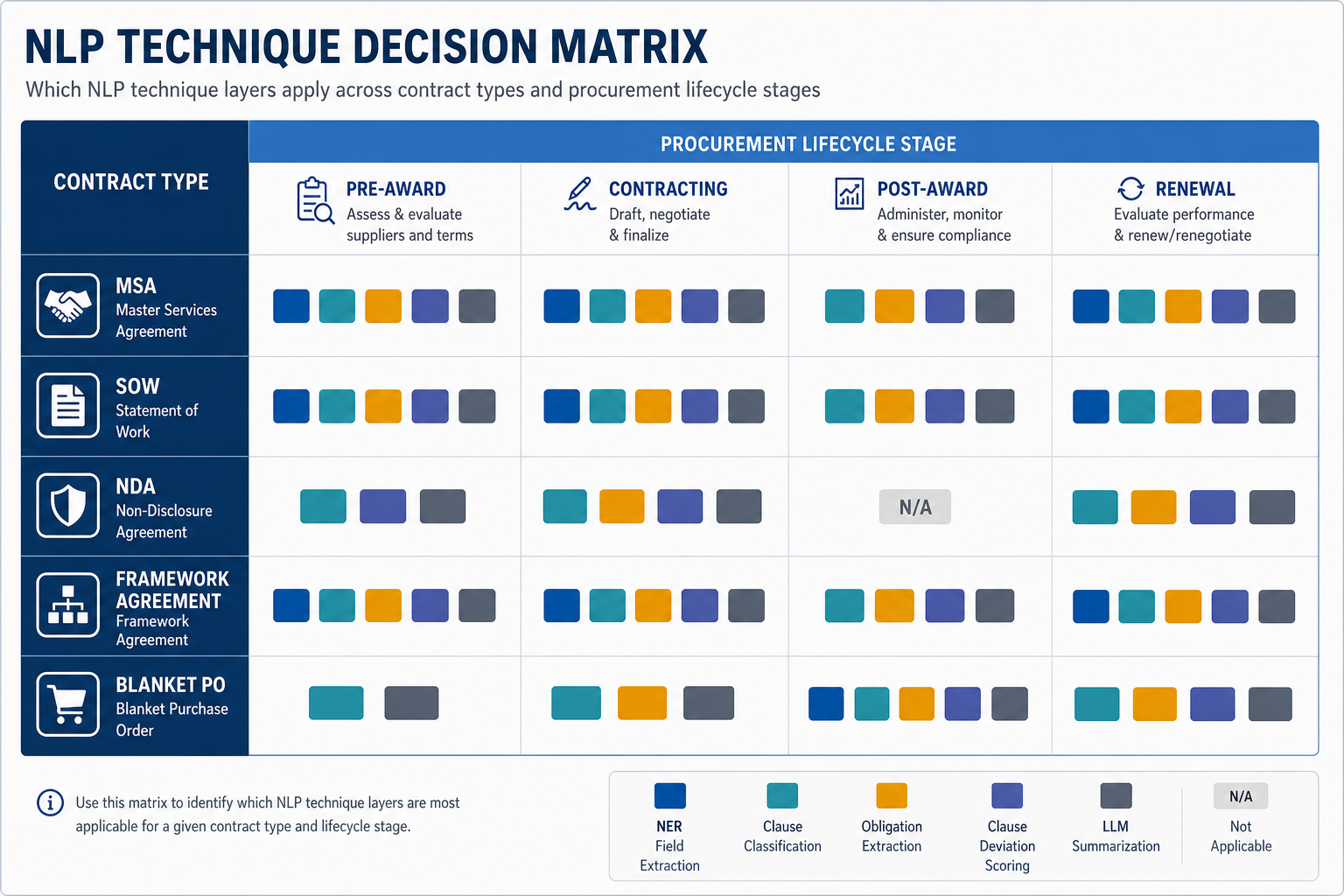
    A practitioner-level reference covering how NLP-based contract intelligence works in procurement automation — including data prerequisites, applicable use cases, known limitations, and what separates genuine AI capability from rule-based extraction dressed up as machine learning.

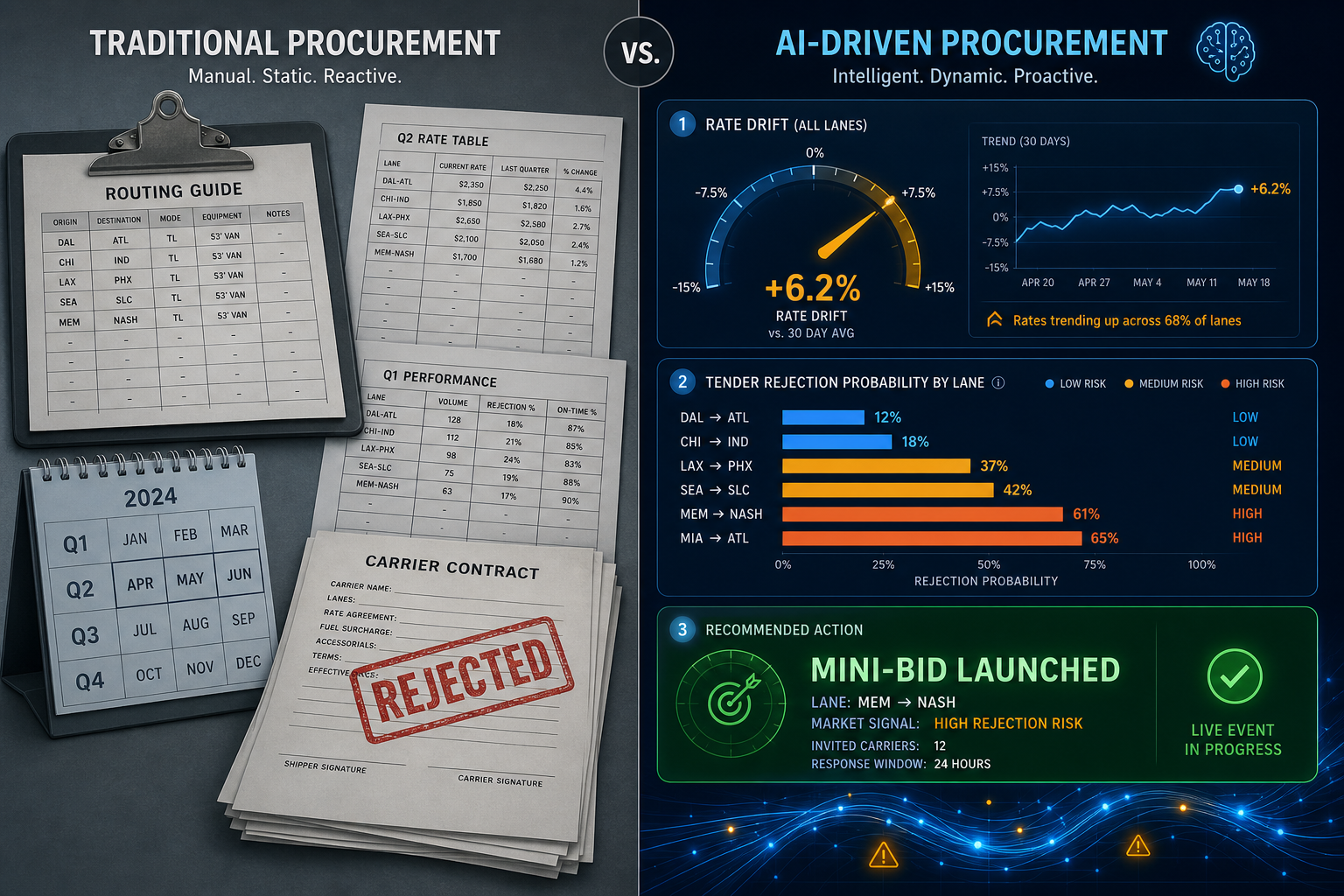
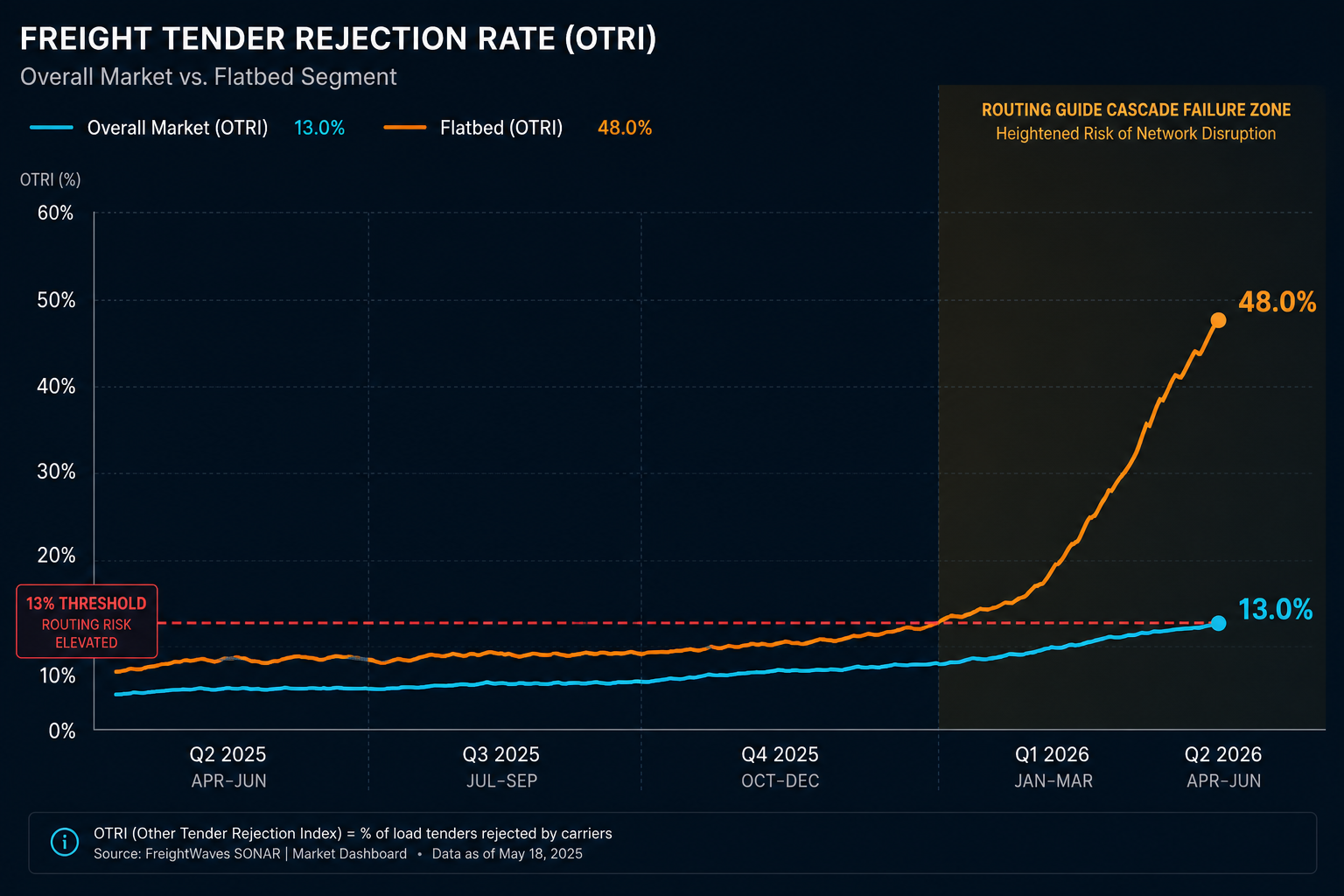
  • AI Freight Rate Prediction and Tender Rejection Modeling in TMS: Vendor Landscape Snapshot, Q2 2026

    AI Freight Rate Prediction and Tender Rejection Modeling in TMS: Vendor Landscape Snapshot, Q2 2026

    A structured comparison of verifiable AI capabilities across major TMS platforms — project44, Oracle OTM, Trimble, McLeod, and AI-native entrants — mapping each vendor's external market signal integration, lane-level prediction depth, and rejection modeling approach against the operational realities of a 2026 freight market where tender rejection rates have reached historically disruptive levels.

  • AI Spend Analysis Automation: Getting Real Tail Spend Visibility in Procurement

    AI-powered spend analysis automation is closing the visibility gap in tail spend — the fragmented, low-value transactions that collectively account for 20–40% of procurement budgets but receive minimal oversight. This article covers how the technology works, where it breaks down, and what data conditions are required before it delivers meaningful results.

  • Data Requirements and Deployment Conditions for AI Supplier Risk Scoring

    Data Requirements and Deployment Conditions for AI Supplier Risk Scoring

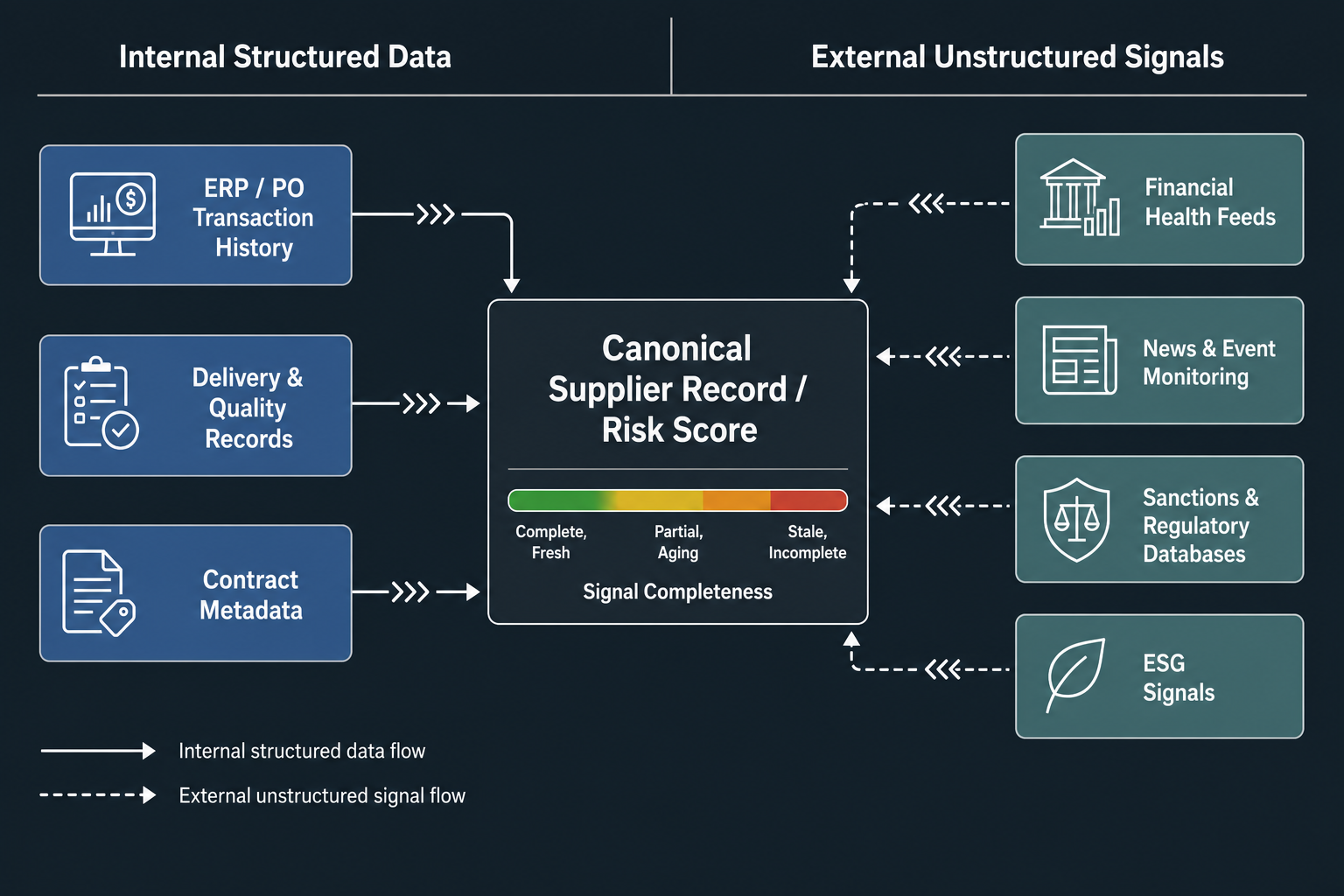
    Most AI supplier risk scoring deployments stall not because of model limitations but because of data readiness deficits — fragmented supplier records, shallow transaction history, and unresolved supplier identity across systems. This guide maps the internal structured data, external signal inputs, and integration conditions a scoring deployment actually requires, and provides a self-assessment framework for procurement teams before they commit to a vendor or build path.

  • AI Supplier Risk Scoring: An Implementation Guide for Mid-Market Procurement Teams

    AI Supplier Risk Scoring: An Implementation Guide for Mid-Market Procurement Teams

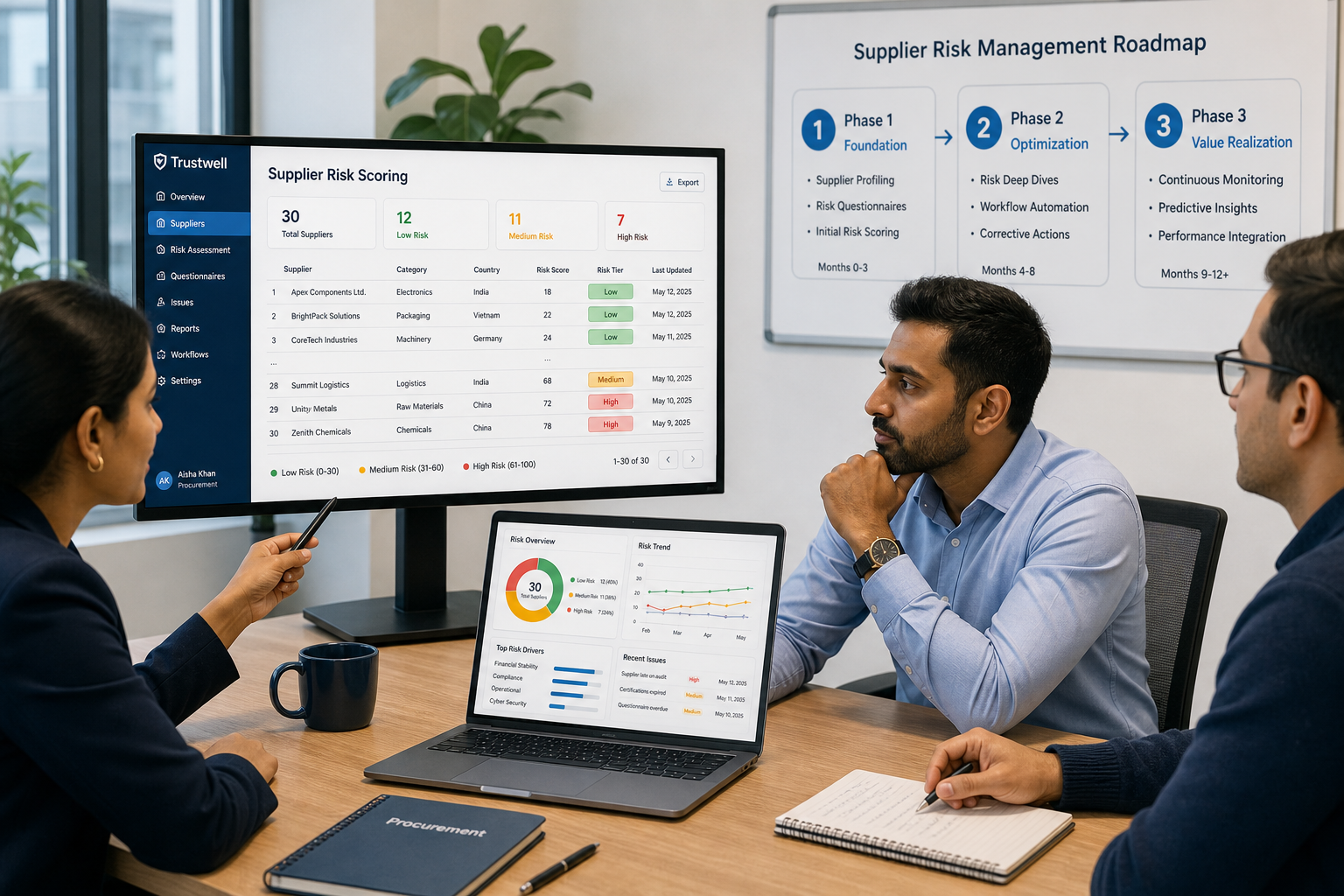
    Most AI supplier risk scoring guides assume enterprise-scale data infrastructure and dedicated data science teams that mid-market procurement organizations don't have. This guide provides a practical, phased implementation roadmap for procurement directors and sourcing managers at companies with 200M–2B USD in revenue — covering tool selection criteria, constrained-data pilot design, and workflow integration steps that embed scores into actual sourcing decisions.

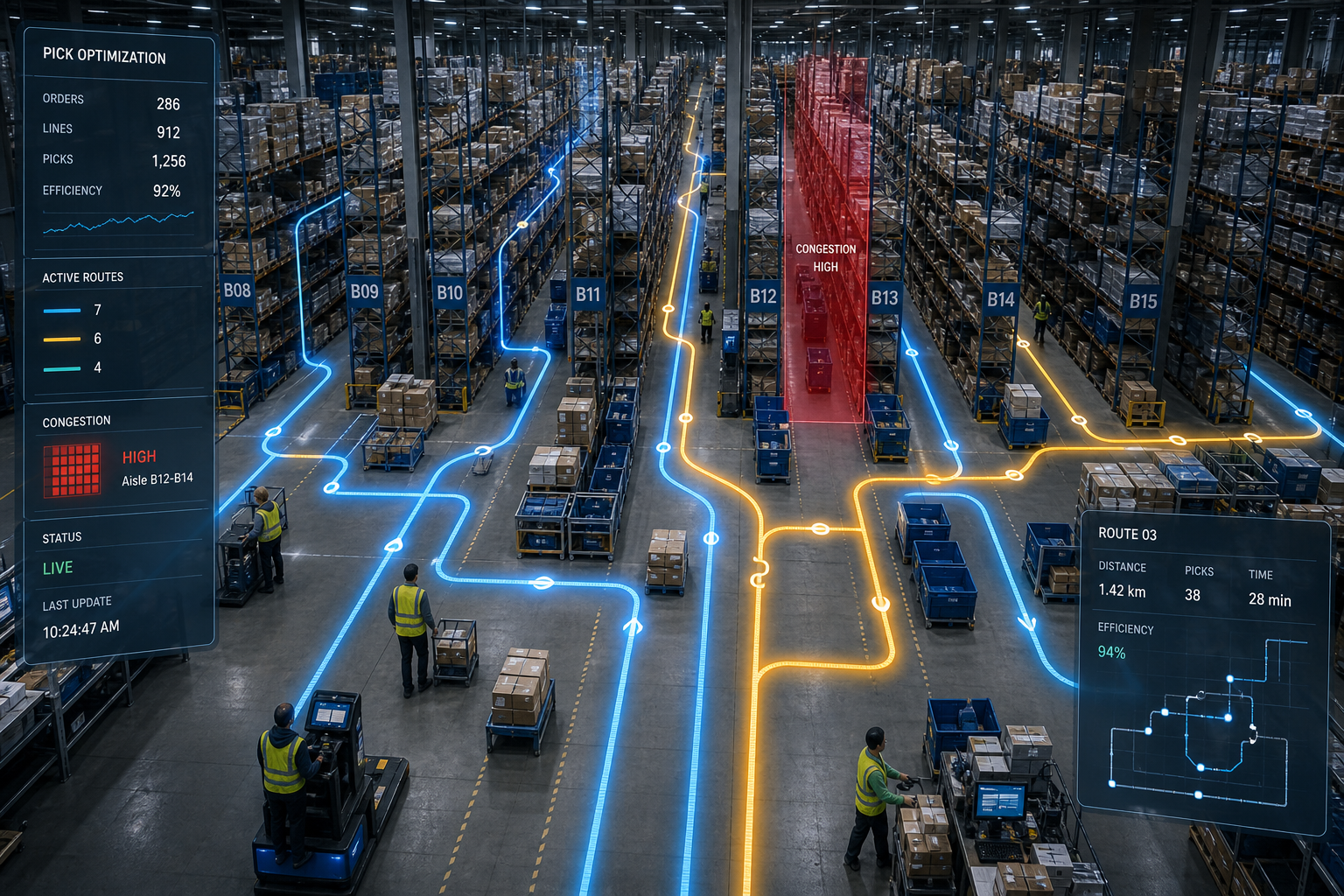
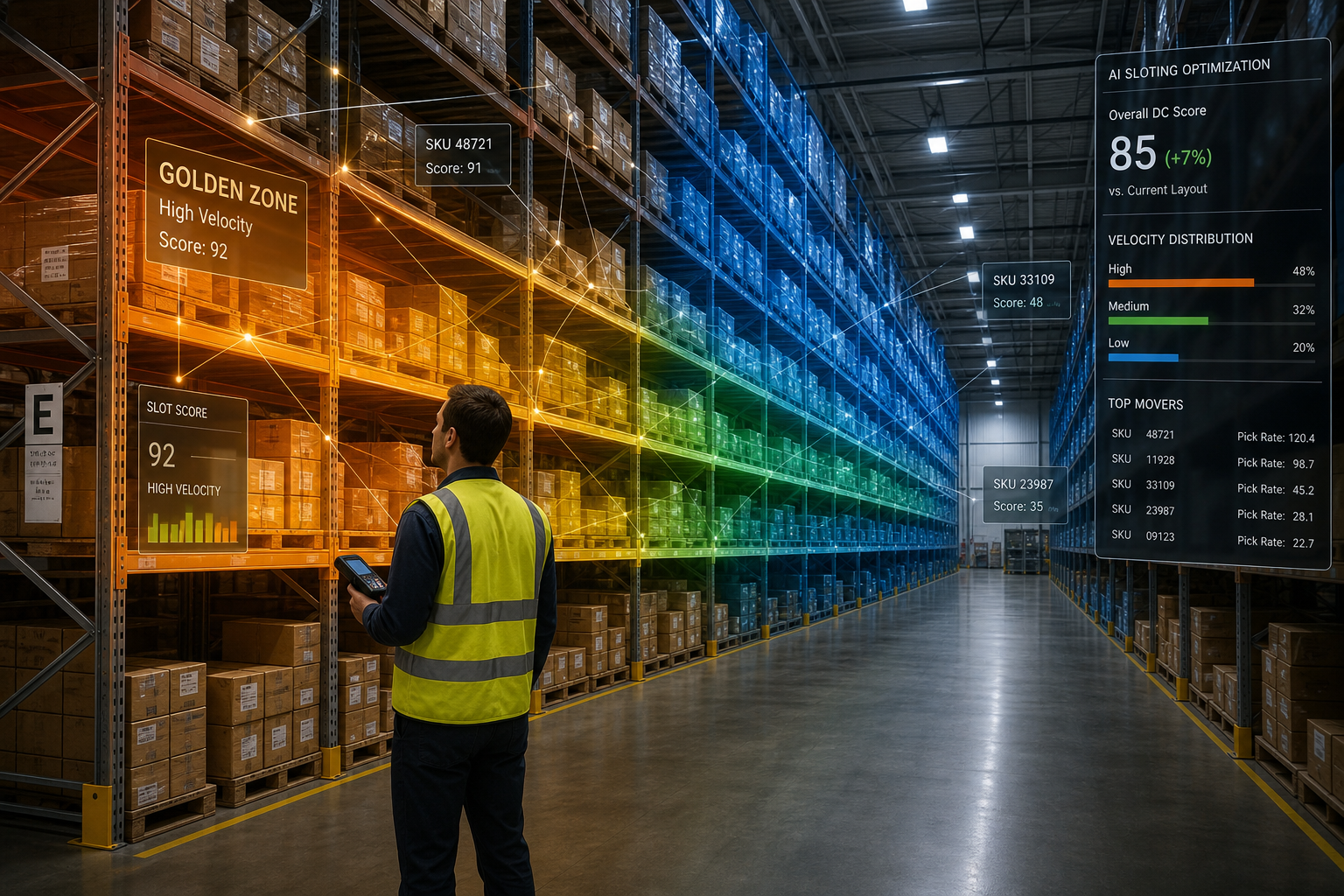
  • AMR and AI-Driven Slotting Optimization: How They Work Together in High-Velocity Warehouses

    Autonomous mobile robots and AI slotting engines are increasingly deployed together in distribution centers — but the integration logic, data prerequisites, and failure modes are rarely explained in one place. This use-case record covers how AMR fleets and slotting optimization models interact, what data conditions are required, and where deployments have run into trouble.

  • Digital Twin Supply Chain Control Tower: Deployment Case Analysis

    A structured deployment case record examining how digital twin technology has been integrated into supply chain control tower environments — covering the operational problems addressed, AI methods applied, integration prerequisites, measurable outcomes, and implementation challenges encountered in production rollouts.

  • Red Sea Shipping Disruptions 2024: Impact on Lead Time AI Models and Safety Stock Assumptions

    The Houthi attack campaign that began in late 2023 and escalated through 2024 forced Asia-Europe transit times up by 10–14 days and invalidated the historical lead time distributions embedded in most AI demand planning and inventory optimization models. This entry documents the planning variable impact, the specific model failure modes observed, and the corrective actions required for safety stock recalibration.

  • US Tariff Escalation 2025: Impact on AI Supply Chain Planning Assumptions

    The 2025 US tariff escalation cycle invalidated hardcoded cost, lead time, and sourcing-mix assumptions embedded in AI demand and inventory planning models. This entry documents the specific planning variables affected, the functions most exposed, and the model recalibration requirements that followed.

  • What Actually Works: 5 AI Applications in Supply Chain With Proven 2025–2026 Results
    LogisticsEstablished

    What Actually Works: 5 AI Applications in Supply Chain With Proven 2025–2026 Results

    This article identifies five AI applications in logistics and supply chain that have demonstrated consistent, measurable ROI through 2025–2026, and contrasts them with overhyped areas that underdelivered — helping technology evaluators prioritize investments with proven operational impact.

    ROI: 5–20% logistics cost reduction, 20–30% inventory reduction, 20–50% forecast error reduction (McKinsey 2024)
  • How Agentic AI Orchestrates Airline Disruption Recovery Logistics
    LogisticsGrowing

    How Agentic AI Orchestrates Airline Disruption Recovery Logistics

    This article examines how agentic AI systems are autonomously orchestrating crew, aircraft, passenger, and baggage logistics during airline disruptions, and what measurable outcomes — including up to 30% cost reduction and 75-85% autonomous scenario handling — logistics leaders can expect from live deployments.

    ROI: Up to 30% cost reduction, 75-85% autonomous scenario handling (vendor-reported)Aviation
  • Why the Iran Deal Collapse Demands Agentic AI for Supply Chains
    ProcurementEmerging

    Why the Iran Deal Collapse Demands Agentic AI for Supply Chains

    The Iran deal collapse reveals the limits of traditional risk analytics. This article examines how agentic AI platforms are evolving from alert systems to autonomous action triggers across procurement, logistics, and finance — and what that means for supply chains with global exposure.

    Oil & Gas
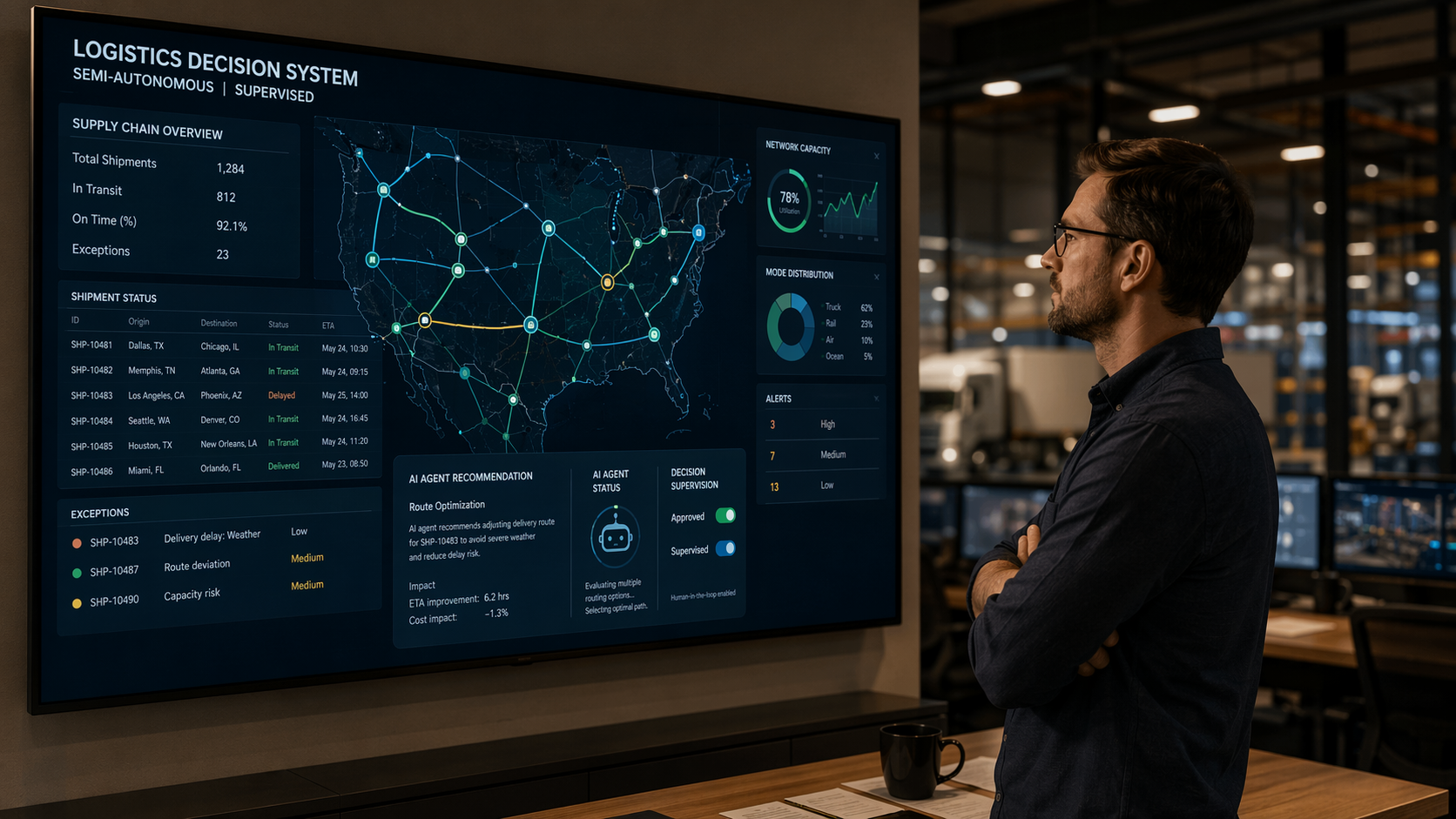
  • How Agentic AI Turns Logistics Control Towers into Autonomous Orchestrators
    LogisticsGrowing

    How Agentic AI Turns Logistics Control Towers into Autonomous Orchestrators

    Agentic AI has shifted logistics control towers from passive visibility dashboards to autonomous orchestration platforms that detect exceptions and execute corrective action without human dispatchers. This analysis documents the measurable outcomes, implementation prerequisites, and governance boundaries that define whether this shift is worth pursuing in 2026.

    ROI: 25% efficiency gains, 45% more deliveries per vehicle, 8% SLA improvement (Locus deployment data)
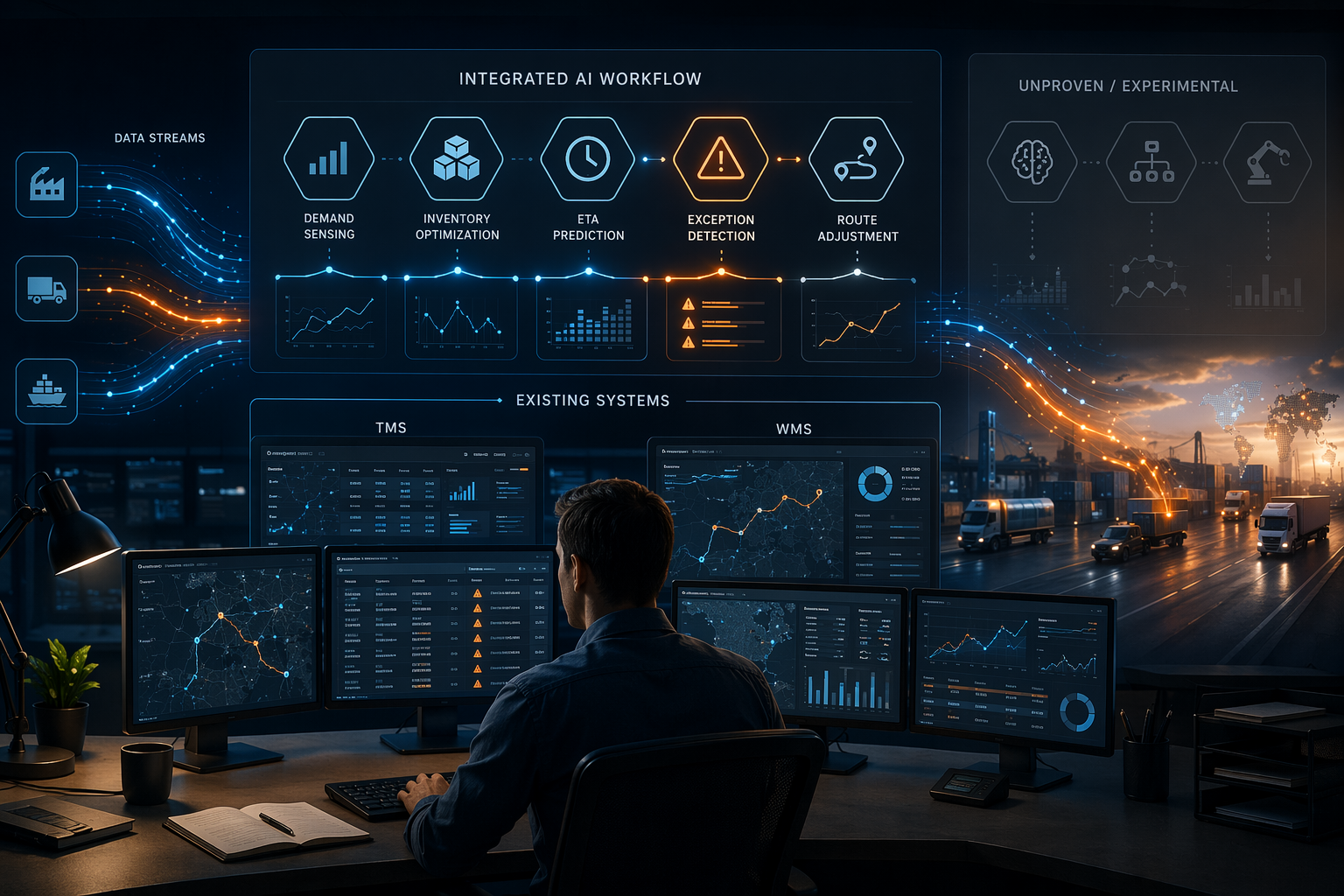
  • Agentic AI for Logistics Disruptions: Where Autonomous Response Already Works
    LogisticsGrowing

    Agentic AI for Logistics Disruptions: Where Autonomous Response Already Works

    This article examines whether agentic AI systems can reliably detect and autonomously respond to logistics disruptions such as port delays, carrier failures, and weather events. Drawing on 2025–2026 deployment evidence from C.H. Robinson, Walmart, and Maersk, it finds that bounded autonomous actions deliver measurable gains today, while full autonomy requires graduated governance frameworks and remains years from widespread trust.

    ROI: 40% productivity increase per person per day (C.H. Robinson)Retail, Logistics
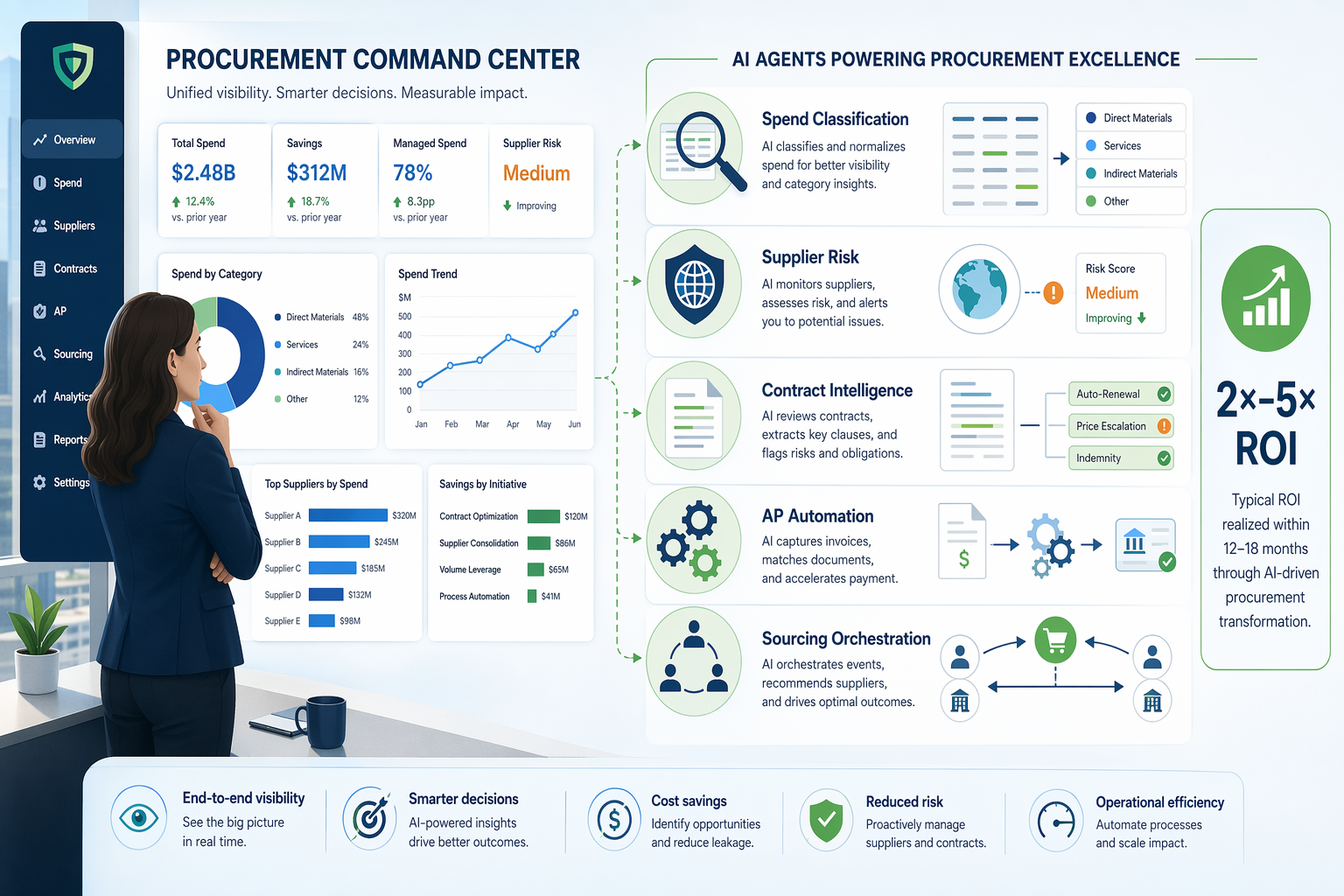
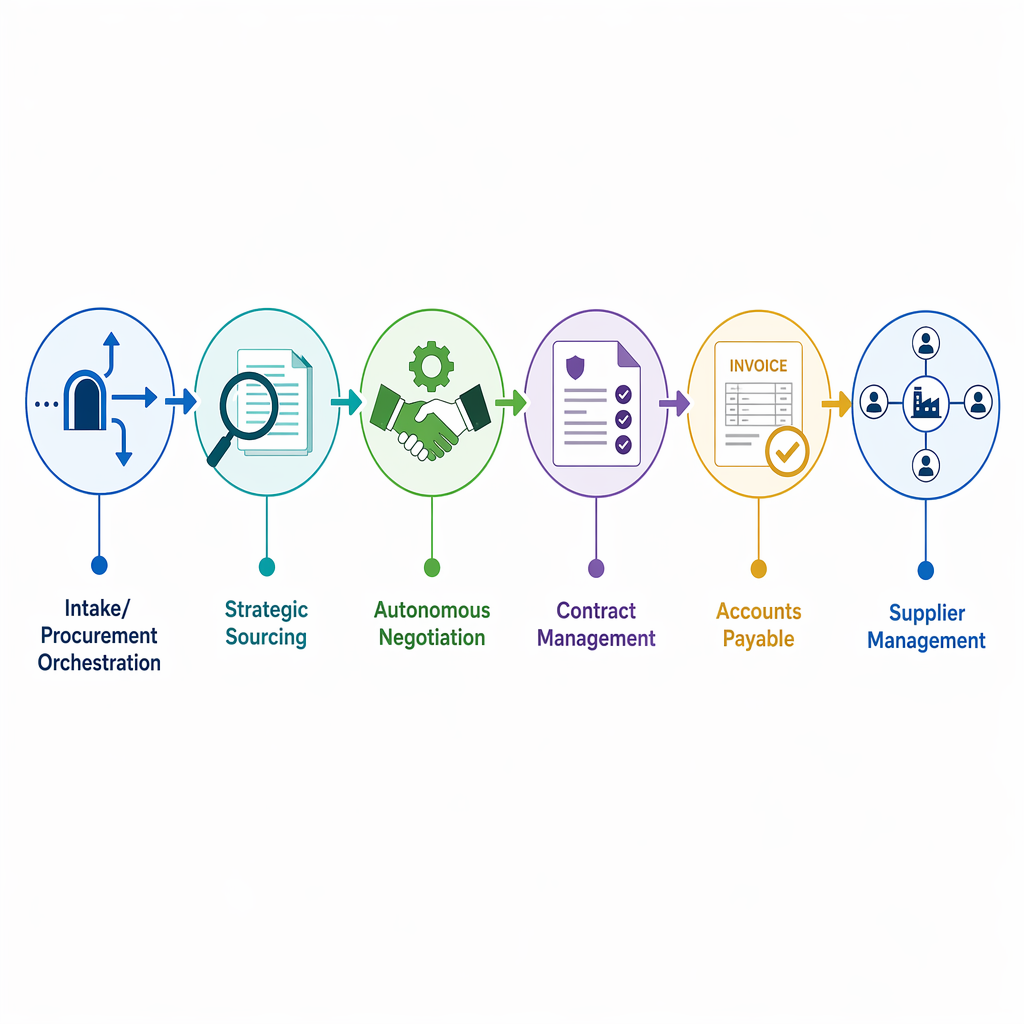
  • Agentic AI in Procurement: How Autonomous Sourcing, Contract Intelligence, and Risk Agents Are Reshaping Procurement Operations
    ProcurementEmerging

    Agentic AI in Procurement: How Autonomous Sourcing, Contract Intelligence, and Risk Agents Are Reshaping Procurement Operations

    This article provides procurement leaders with a structured understanding of agentic AI — the next evolution beyond generative AI — covering the 4-tier capability progression, procurement-specific use cases with measurable efficiency data, the emerging vendor landscape, and governance models for deploying autonomous agents in sourcing, contract management, and supplier risk workflows.

    ROI: 15–30% efficiency improvement for autonomous category agents (McKinsey); 25–40% efficiency improvement in procurement functions (McKinsey)Retail, Food & Beverage
  • How Agentic AI Transforms Procurement and Logistics Workflows in 2026
    Procurement, LogisticsEmerging

    How Agentic AI Transforms Procurement and Logistics Workflows in 2026

    Agentic AI moves beyond dashboards to autonomously execute procurement and logistics workflows. This article examines deployment evidence, governance guardrails, and realistic ROI expectations for supply chain leaders evaluating autonomous agents in 2026.

  • How Agentic AI Is Reshaping the Procurement Operating Model
    ProcurementGrowing

    How Agentic AI Is Reshaping the Procurement Operating Model

    This article provides a practical framework for CPOs and supply chain leaders to redesign source-to-pay operating models around agentic AI, using Oliver Wyman's lane-based model to determine which workflows run autonomously and where human oversight remains critical.

    ROI: 25–40% efficiency improvement (McKinsey 2026)Retail, Energy
  • Agentic AI in Procurement: What Works in Production in 2026 — Use Cases, Benchmarks, and ROI from Live Deployments
    ProcurementGrowing

    Agentic AI in Procurement: What Works in Production in 2026 — Use Cases, Benchmarks, and ROI from Live Deployments

    A data-driven analysis for senior procurement leaders evaluating agentic AI systems. Covers six agent types with production-stage proof points, quantified benchmarks, governance requirements, and a realistic adoption pathway from pilot to scaled orchestration.

    ROI: 12–29% savings on indirect spend categories (McKinsey 2025); 4× ROI on autonomous negotiation (Harvard Business Review 2024); 30% process efficiency improvement with coordinated agents (Hackett Group 2025)Retail, Technology
  • Agentic AI in Procurement: Where Autonomous Agents Are Delivering Measurable Results
    ProcurementGrowing

    Agentic AI in Procurement: Where Autonomous Agents Are Delivering Measurable Results

    A structured overview of six agentic AI applications across the source-to-pay lifecycle, each with documented production deployments, quantified outcomes, and adoption maturity context — helping procurement leaders prioritize investments and design governance for autonomous decision-making.

    ROI: 3% savings on tail spend, 4x ROI (Walmart); 12-20% savings in contact-center spend (McKinsey)
  • How Agentic AI Is Reshaping Strategic Sourcing in 2026
    ProcurementEmerging

    How Agentic AI Is Reshaping Strategic Sourcing in 2026

    Procurement leaders evaluating agentic AI need concrete evidence of what autonomous agents achieve beyond analytical AI. This article documents early-adopter results across industries and explains the conditions under which those outcomes are replicable.

    ROI: 12-29% savings in selected categories, 20-30% efficiency gain, per McKinsey 2026Chemicals, Telecommunications
  • Agentic AI in Supply Chain: What Actually Works in 2026 and What's Still Hype
    ProcurementGrowing

    Agentic AI in Supply Chain: What Actually Works in 2026 and What's Still Hype

    A source-backed assessment of agentic AI in supply chain, identifying the three domains where it delivers measurable value today and the organizational prerequisites that separate successful deployments from hype.

    ROI: Up to 30% working capital reduction and 2–4 percentage point EBITDA lift (BCG 2026, conditional on end-to-end workflow redesign)
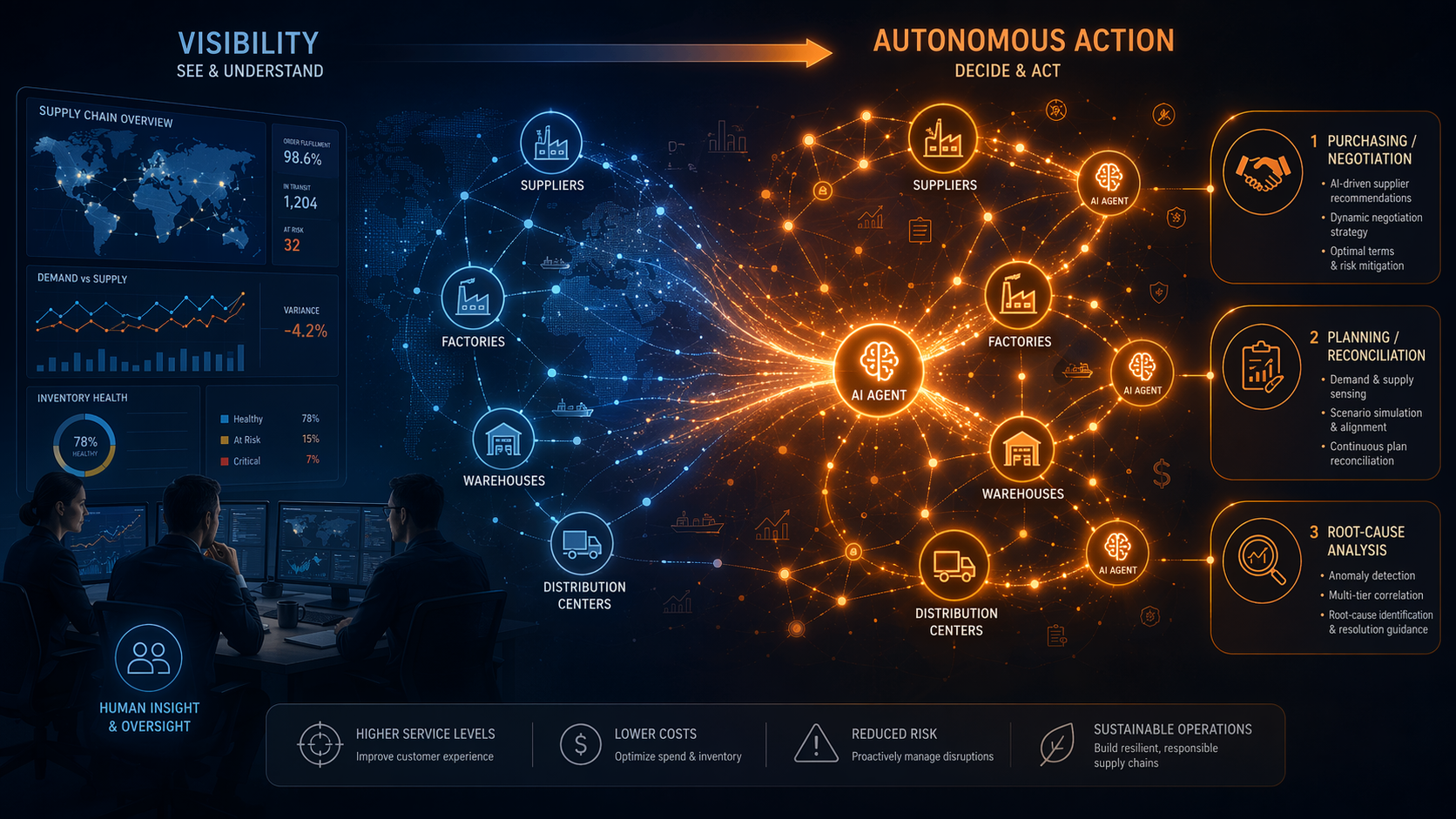
  • Agentic AI in Supply Chain 2026: From Visibility to Autonomous Action — Three Deployment Patterns That Are Working Now
    Integrated Business PlanningEmerging

    Agentic AI in Supply Chain 2026: From Visibility to Autonomous Action — Three Deployment Patterns That Are Working Now

    This article is for supply chain planning and transformation leaders who have basic AI/ML in place and are evaluating the next frontier: autonomous exception handling, purchase optimization, and continuous IBP. It documents three concrete, implemented agentic AI deployment patterns with 2026 data, governance requirements, and a practical path forward.

    ROI: Double-digit efficiency gains; decision latency reduced from days to seconds (Dataiku/BCG)Retail, Wholesale
  • Agentic AI in Supply Chain — When AI Agents Become Digital Colleagues
    ProcurementGrowing

    Agentic AI in Supply Chain — When AI Agents Become Digital Colleagues

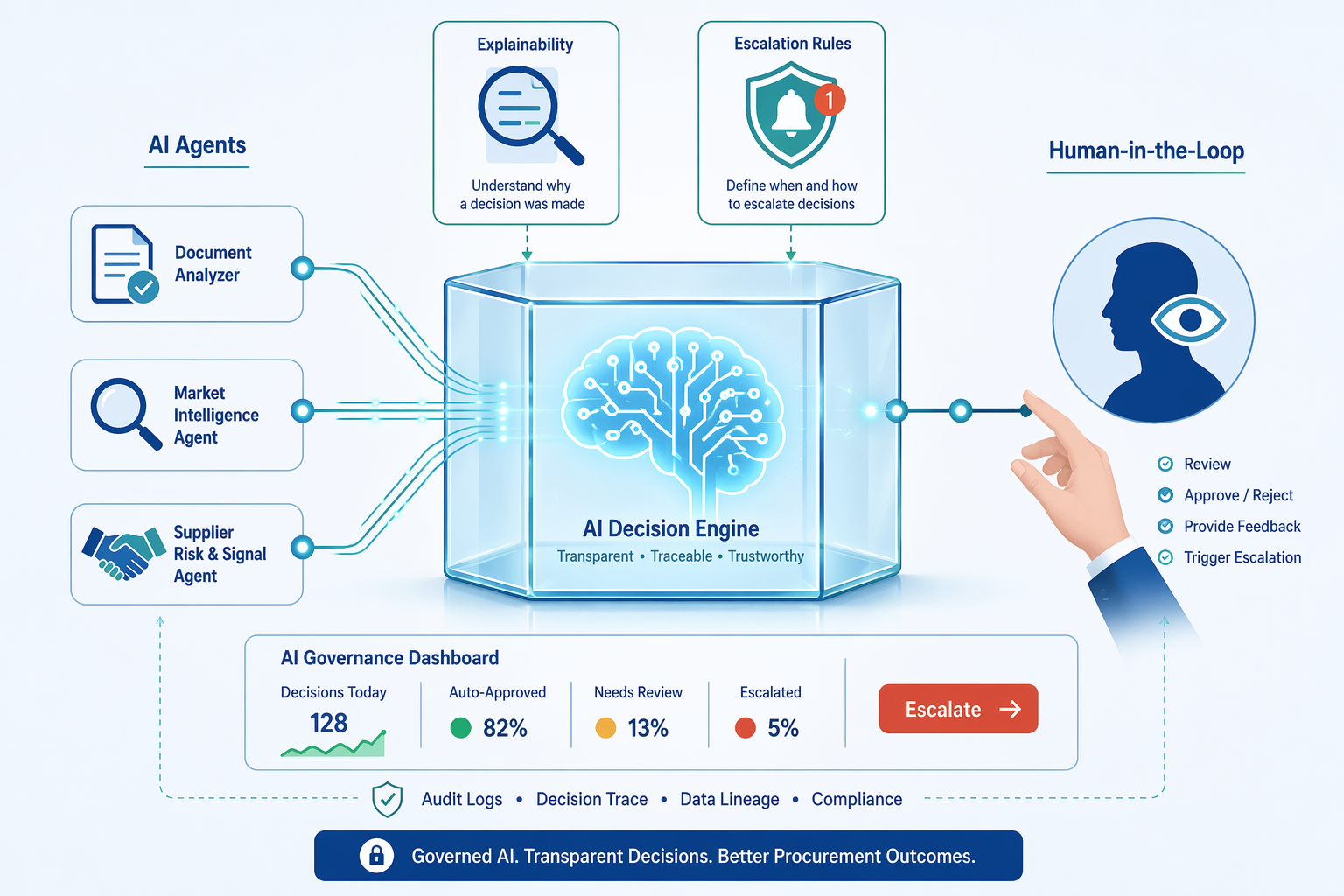
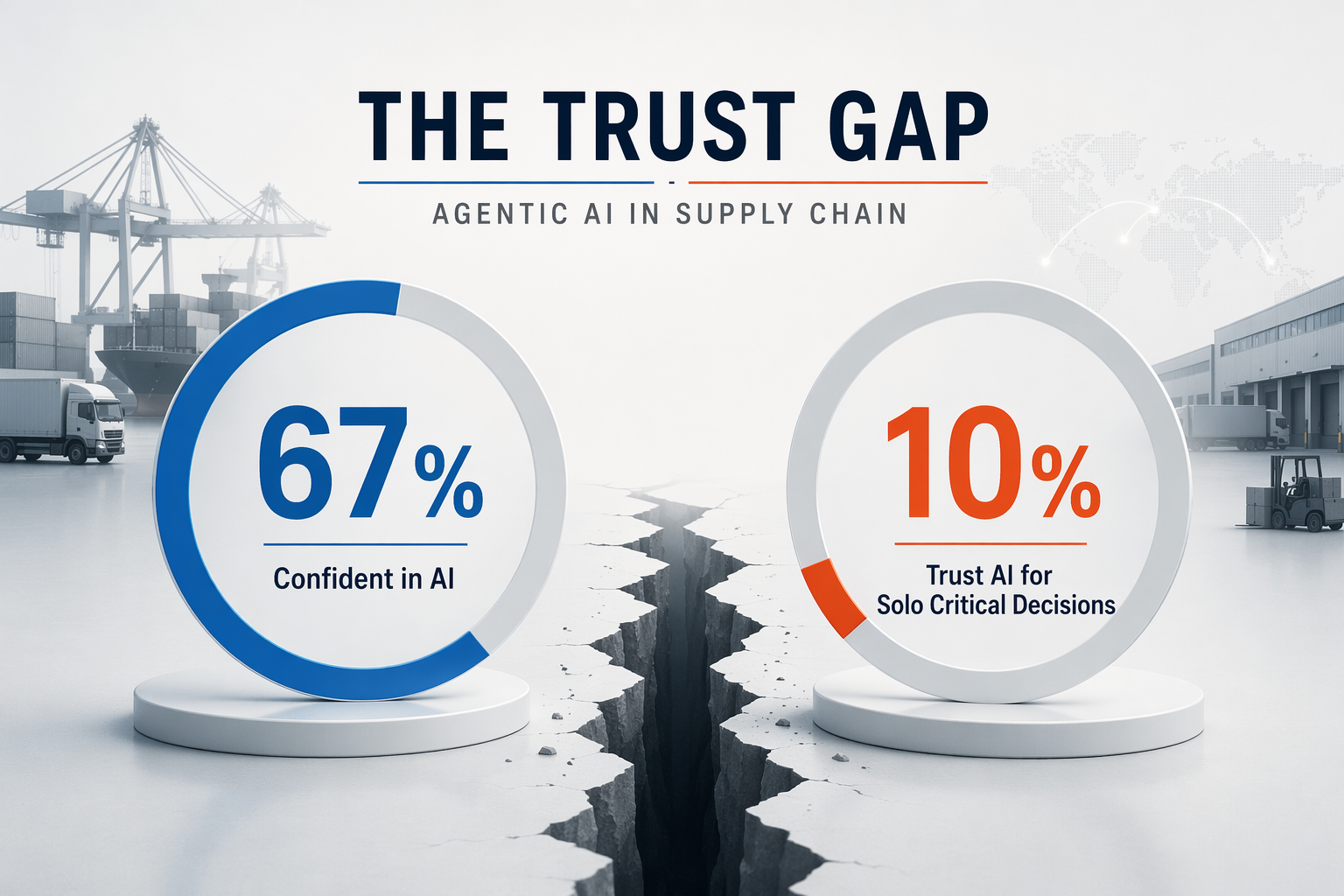
    This article examines whether agentic AI is ready to operate as a trusted digital colleague in supply chain operations, arguing that 2026 marks the inflection point—but the winning approach is governed human-machine collaboration, not full autonomy, given the persistent trust gap where 67% of leaders are more confident yet only 10% trust agents for solo critical decisions.

    ROI: RFQ cycle reduced by 70%, purchase cost reduced by 6.2% (Mathnal Analytics)
  • What the $53 Billion Agentic AI Forecast Means for Supply Chain Leaders
    LogisticsEmerging

    What the $53 Billion Agentic AI Forecast Means for Supply Chain Leaders

    A data-backed look at the agentic AI trajectory in supply chain — from the $53 billion market forecast to the infrastructure foundations and maturity stages that determine whether organizations capture value through 2030.

    ROI: 20-30% procurement efficiency, 20-30% inventory reduction, 5-20% logistics cost reduction (SAP 2026 examples)
  • Agentic AI in Supply Chain Planning: Three Domains Where Autonomous Agents Deliver
    Supply Chain PlanningGrowing

    Agentic AI in Supply Chain Planning: Three Domains Where Autonomous Agents Deliver

    Agentic AI is delivering measurable results in purchase optimization, continuous integrated business planning, and autonomous root cause analysis—but success hinges on disciplined use-case selection and a graduated governance framework. This article separates production-ready deployment patterns from experimental hype using 2026 evidence from Gartner, Deloitte, and RELEX.

    ROI: Up to 30% reduction in delivery times per ICRON 2026; 12% fuel cost reduction per ICRON 2026
  • How Agentic AI Introduces Six New Risks in Supply Chain Planning
    Supply Chain PlanningEmerging

    How Agentic AI Introduces Six New Risks in Supply Chain Planning

    Agentic AI in supply chain planning introduces six distinct risk categories, from cascading multi-agent failures to regulatory exposure. This article provides a structured risk taxonomy for planning directors who need to govern agentic deployments safely.

  • Agentic AI in Supply Chain: Where Autonomous Agents Are Entering Production Today
    ProcurementGrowing

    Agentic AI in Supply Chain: Where Autonomous Agents Are Entering Production Today

    This article examines where agentic AI is moving from pilot to production in supply chain operations, identifying the bounded, low-stakes decisions where autonomous agents are already deployed and the governance limitations that still prevent full end-to-end trust.

    Transportation, Medical Device Manufacturing
  • The Trust Paradox in Agentic AI: Three Supply Chain Deployment Hotspots for 2026
    ProcurementEmerging

    The Trust Paradox in Agentic AI: Three Supply Chain Deployment Hotspots for 2026

    Despite 67% of supply chain leaders expressing greater confidence in AI, only 10% trust it for unsupervised critical decisions. This article identifies three deployment hotspots—purchase optimization, always-on IBP, and autonomous root cause analysis—where conditional autonomy delivers measurable value, and offers a framework for structuring the staged transition from augmentation to autonomy.

    Retail, Wholesale
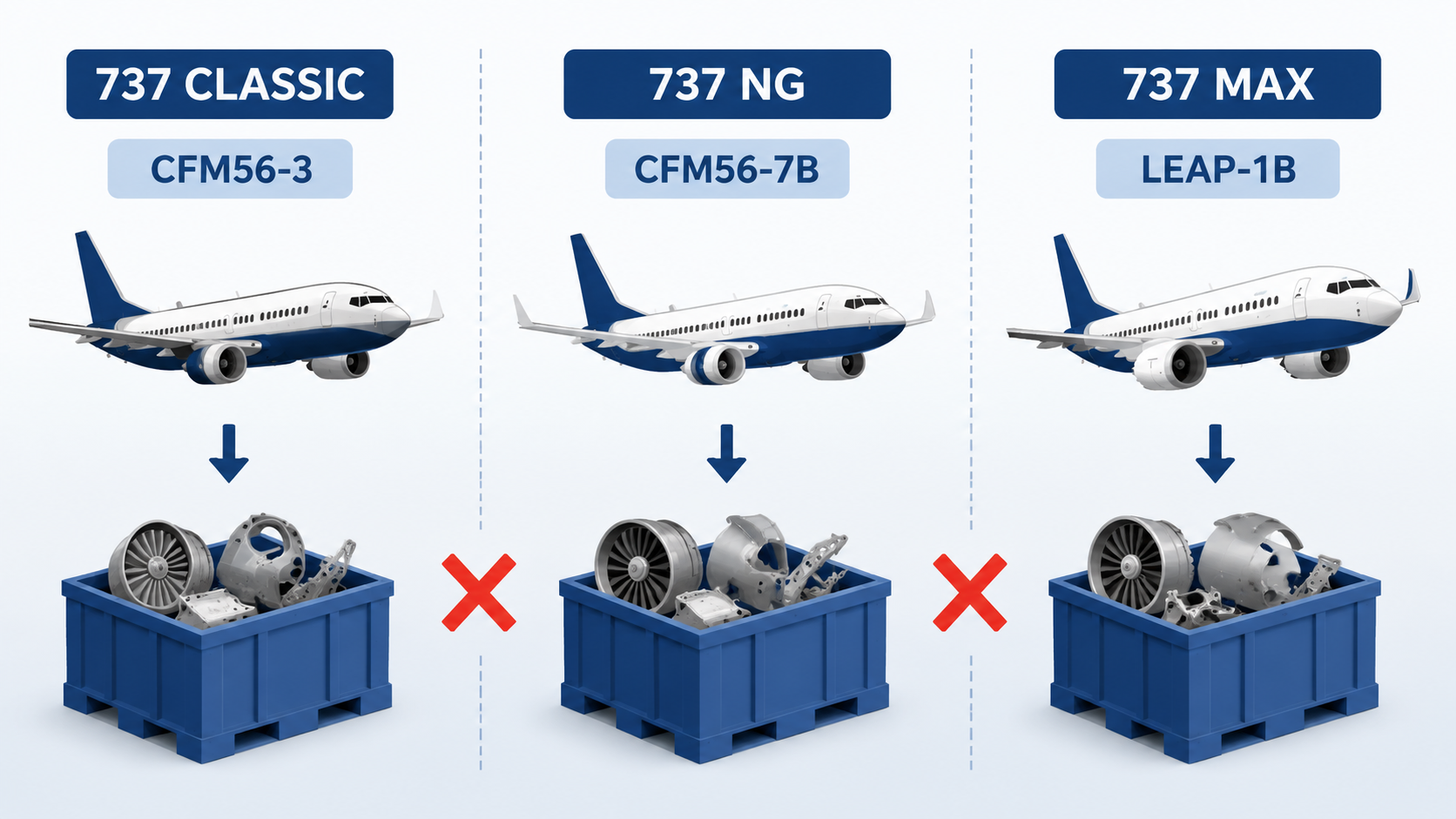
  • How AI spare parts forecasting optimizes Boeing 737 MRO
    Demand PlanningGrowing

    How AI spare parts forecasting optimizes Boeing 737 MRO

    AI demand forecasting models trained on consumption and fleet utilization data can predict Boeing 737 spare parts demand with 85–94% accuracy, reducing excess inventory by 31% and cutting total parts spend by 20–22%. This article explains how the multi-generation 737 fleet's complexity makes this one of the highest-leverage AI applications for MRO, and what data, integration, and governance conditions are required to achieve those results.

    ROI: 31% excess inventory reduction, 20-22% total parts spend reduction per OxMaint (2026)Aviation
  • How AI Extends Supplier Visibility in Aerospace Supply Chains
    Supplier Risk ManagementEmerging

    How AI Extends Supplier Visibility in Aerospace Supply Chains

    AI-powered network mapping and continuous monitoring can extend supplier visibility across sub-tiers in aerospace supply chains, enabling proactive risk detection and measurable cost reduction — yet adoption remains low due to system integration barriers and organizational inexperience.

    ROI: 15–20% disruption cost reduction (McKinsey via Everstream); 50–70% faster impact assessment (Everstream)Aerospace, Defense
  • Who Bears the Risk When an AI Agent Signs a Purchase Order?
    ProcurementGrowing

    Who Bears the Risk When an AI Agent Signs a Purchase Order?

    As AI agents autonomously execute purchase orders and reroute shipments, courts and regulators are closing the liability gap. This article explains why the 'algorithm defense' no longer shields organizations and outlines the governance framework needed to manage legal exposure before disputes arise.

  • Why AI Agent Pilots Fail in Supply Chain — and How to Build One That Works
    Cross-functional (Demand Planning, Inventory Management, Procurement)Emerging

    Why AI Agent Pilots Fail in Supply Chain — and How to Build One That Works

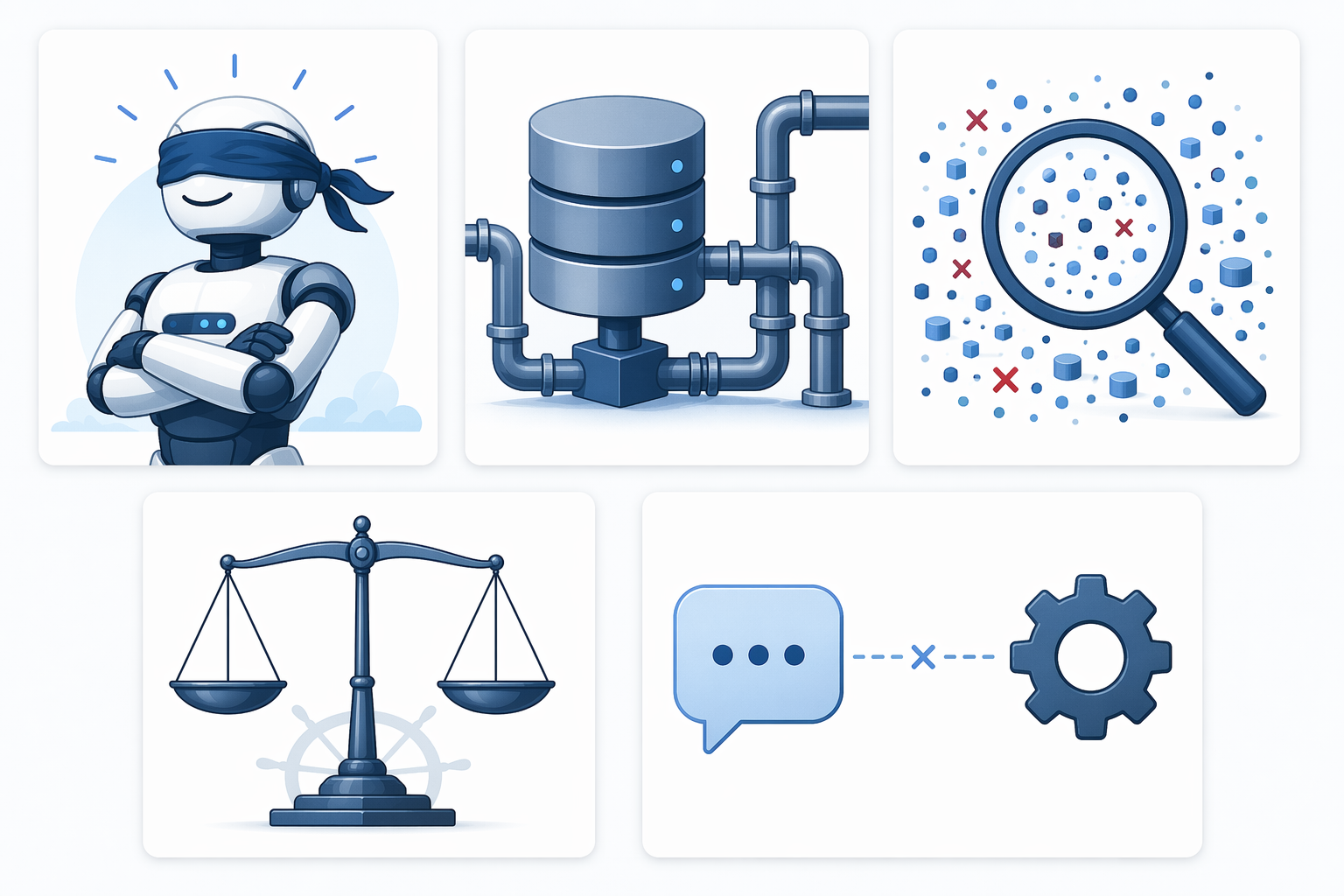
    Most AI agent pilots stall because they aim for too much autonomy too fast. This article diagnoses five specific failure patterns — from the autonomy illusion to missing decision governance — and provides a four-step framework for building agent pilots that actually reach production.

    ROI: 10–19% cost reduction from focused deployments (McKinsey); 3.2x higher 5-year ROI for fast implementers (McKinsey via Deposco)Consumer Packaged Goods, Food & Beverage
  • AI Air Quality Forecasting Helps Fleets Reroute and Cut Emissions
    LogisticsGrowing

    AI Air Quality Forecasting Helps Fleets Reroute and Cut Emissions

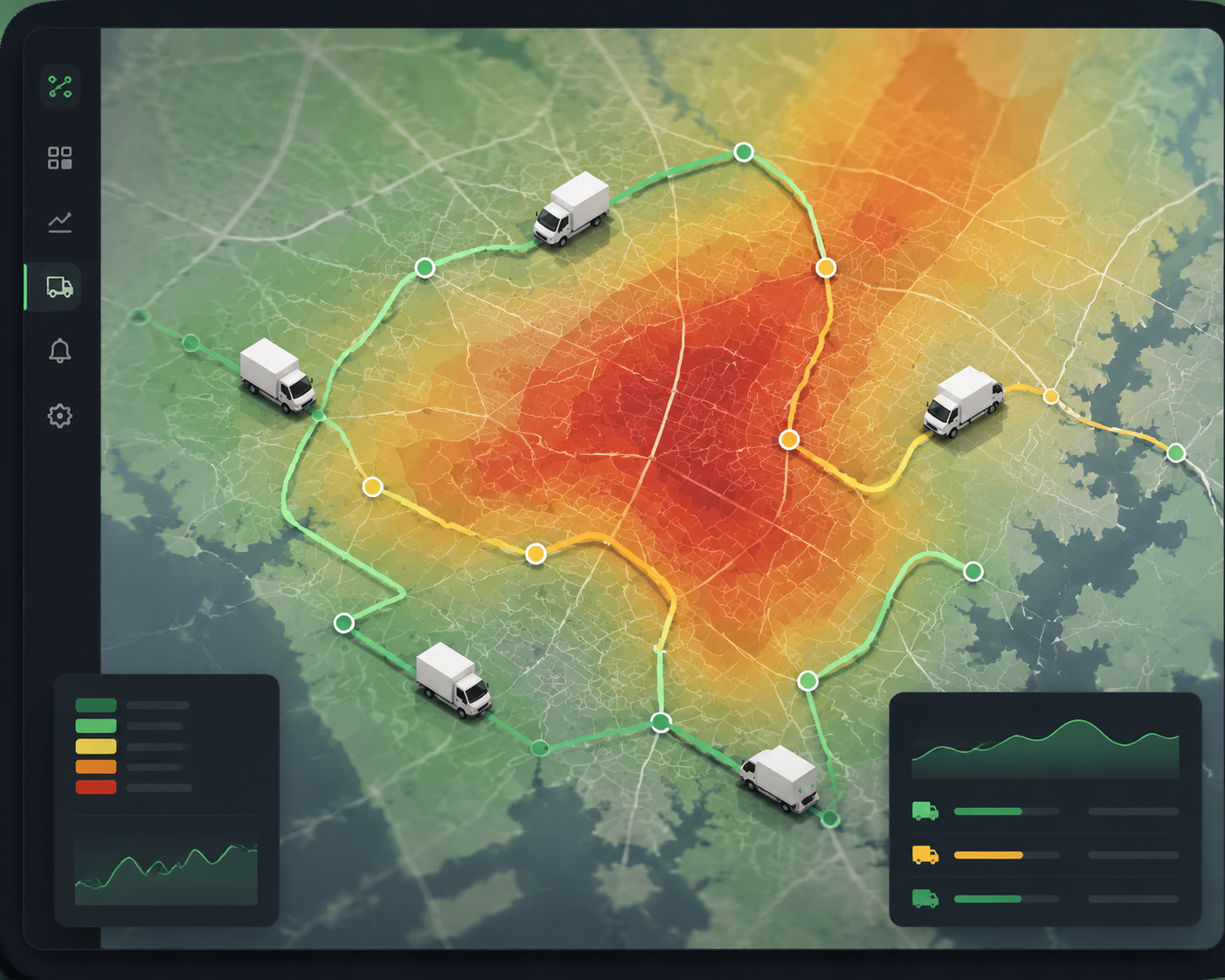
    This article explains how logistics teams can integrate AI-driven air quality forecasts into routing platforms to dynamically avoid pollution zones, reduce emissions, and cut fuel costs. It covers documented outcomes, vendor approaches, and implementation risks.

    ROI: 25% fewer shipping delays, 35% wasted mile reduction (vendor-reported by Tomorrow.io)Logistics, transportation
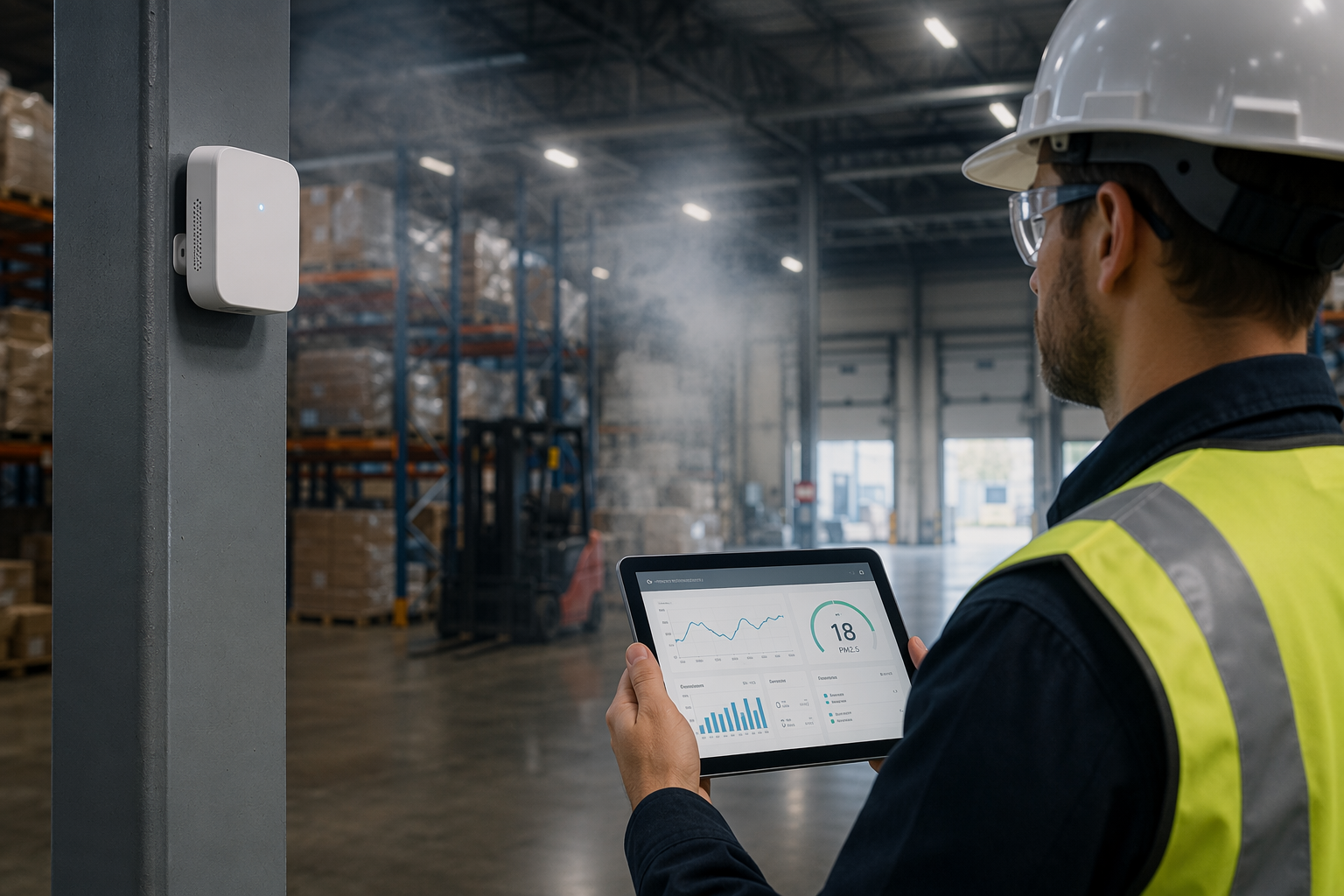
  • AI Air Quality Monitoring for Warehouse Wildfire Smoke Safety
    Warehouse OperationsGrowing

    AI Air Quality Monitoring for Warehouse Wildfire Smoke Safety

    This article shows how AI-driven continuous PM2.5 monitoring addresses the regulatory gap between OSHA limits and state wildfire smoke rules, providing warehouse safety teams with deployment guidance, cost benchmarks, and outcome evidence from real installations.

    ROI: 5:1 ROI; 40-60% reduction in respiratory complaints; 23% absenteeism reduction (Envigilance case study)
  • How AI Tackles Supply Chain Disruptions from Air Quality Alerts
    Logistics, Warehousing, ProcurementEmerging

    How AI Tackles Supply Chain Disruptions from Air Quality Alerts

    Air quality events like wildfire smoke and pollution spikes create distinct supply chain disruptions that standard weather AI often misses. This use case examines how specialized AI systems predict and mitigate these risks, using hyperlocal AQI data, satellite inputs, and historical disruption correlations to provide advance warning and reduce impact.

    ROI: 50-70% reduction in disruption identification time (Everstream); 66% improvement in hazardous-AQI forecast accuracy (UT Knoxville 2023)
  • How AI Predicts Aircraft Manufacturing Supply Chain Delays
    ProcurementGrowing

    How AI Predicts Aircraft Manufacturing Supply Chain Delays

    AI early-warning systems that analyze purchase order changes, supplier financial health, and geopolitical signals can predict aircraft manufacturing delays 4–8 weeks ahead—early adopters report 25–40% fewer unplanned disruptions.

    ROI: 25–40% fewer unplanned disruptions, per Fygurs; 25% reduction in component shortages, per McKinseyAerospace, Defense
  • AI for Aircraft Production and Supplier Order Optimization
    Production SchedulingEmerging

    AI for Aircraft Production and Supplier Order Optimization

    AI-driven production scheduling and supplier coordination can help aircraft manufacturers narrow the gap between record order backlogs and actual deliveries, though data integration and supplier adoption remain significant hurdles.

    ROI: 20% production throughput improvement, 50x scheduling efficiency (C3 AI)Aerospace
  • How Airlines Use AI for Employee Conflict Resolution Training
    Workforce TrainingGrowing

    How Airlines Use AI for Employee Conflict Resolution Training

    AI-powered conflict resolution training for airline employees has moved from pilot to production at carriers like Lufthansa, Delta, and Southwest, delivering measurable improvements in de-escalation skills and training efficiency. Supply chain leaders facing similar distributed-workforce training challenges can apply the same pattern.

    Aviation, Supply Chain Logistics
  • How AI Turns Airline Disruption Management from Reactive to Proactive
    LogisticsGrowing

    How AI Turns Airline Disruption Management from Reactive to Proactive

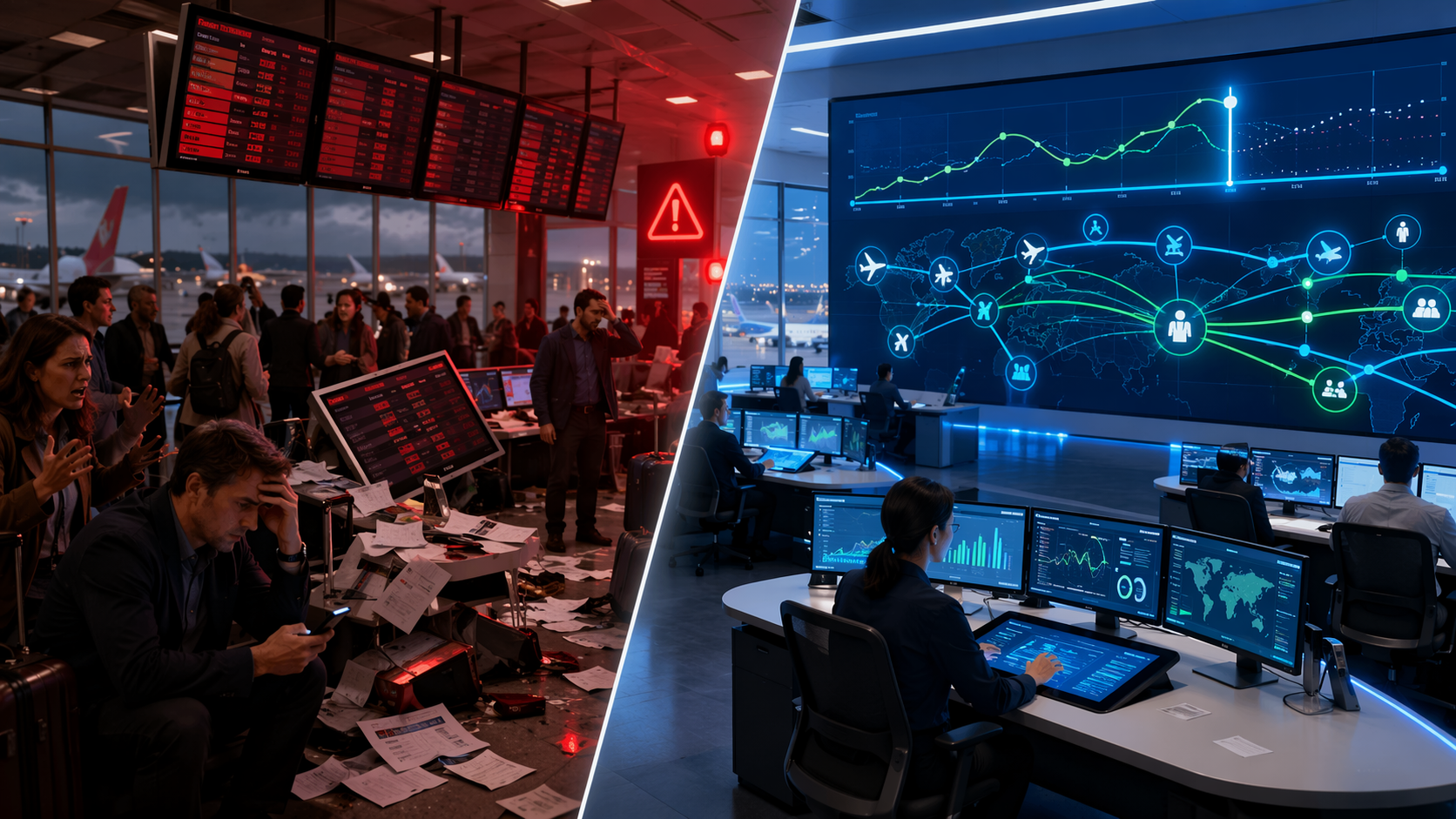
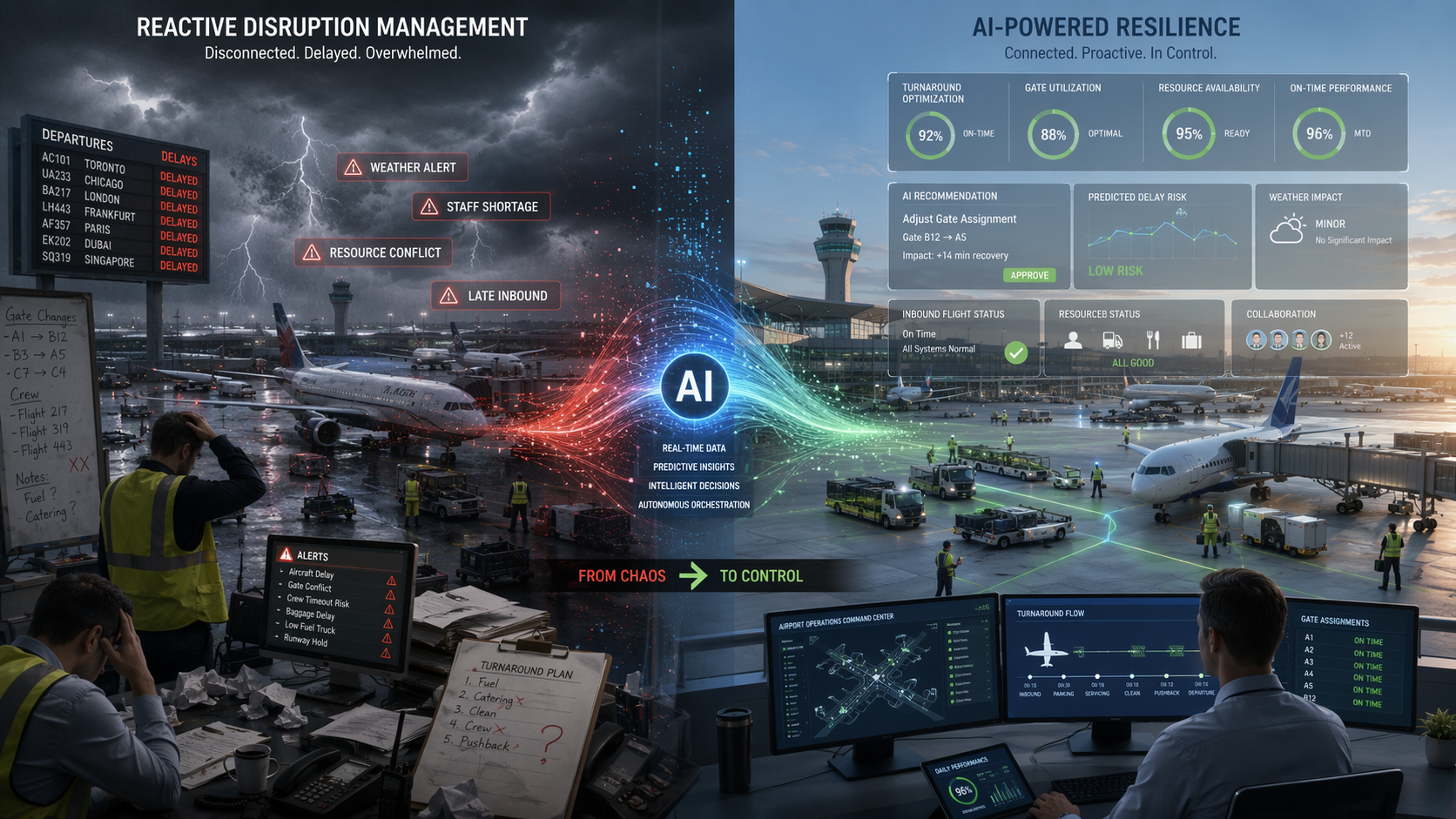
    Learn how airlines apply AI across four core workflows to predict disruptions hours in advance, automate crew and aircraft recovery, rebook passengers instantly, and reduce the $60 billion annual cost of irregular operations.

    ROI: 30–45% reduction in recovery time, up to $3M annual savings (DataIntelo, IBS iFlight)Aviation
  • How UAE Airlines Use AI to Predict and Recover From Disruptions
    LogisticsGrowing

    How UAE Airlines Use AI to Predict and Recover From Disruptions

    UAE carriers and airports are deploying AI across predictive maintenance, turnaround optimization, and autonomous recovery orchestration, with documented reductions in flight diversions, delays, and disruption costs. This article examines specific deployments at Emirates, Dubai Airports, and flydubai, and the measurable outcomes achieved.

    ROI: 25% fewer median departure delays; up to 30% disruption cost reduction; 5% gate efficiency improvementAviation
  • How AI Transforms Airline Disruption Recovery
    LogisticsGrowing

    How AI Transforms Airline Disruption Recovery

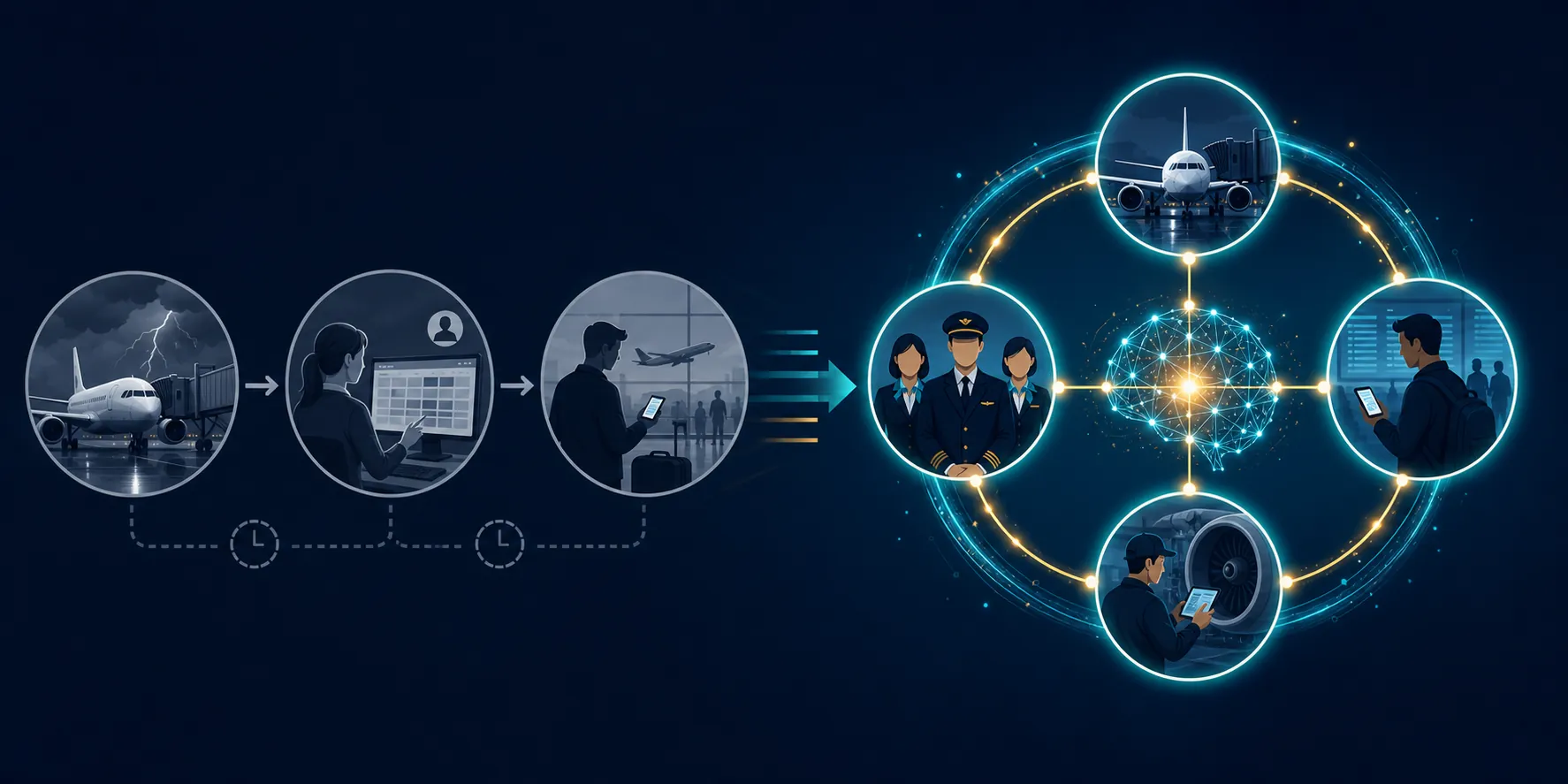
    The traditional sequential approach to airline disruption recovery—reassigning aircraft, then crew, then passengers—creates compounding delays. AI enables parallel constraint optimization that evaluates all variables simultaneously, compressing recovery time and cutting costs by 25–30% for early adopters like Delta, United, and Air France-KLM.

    ROI: 25-30% disruption cost reduction (SITA 2026)Airlines
  • How AI Bridges Airline Disruption Recovery and Spare Parts Supply Chains
    Inventory ManagementGrowing

    How AI Bridges Airline Disruption Recovery and Spare Parts Supply Chains

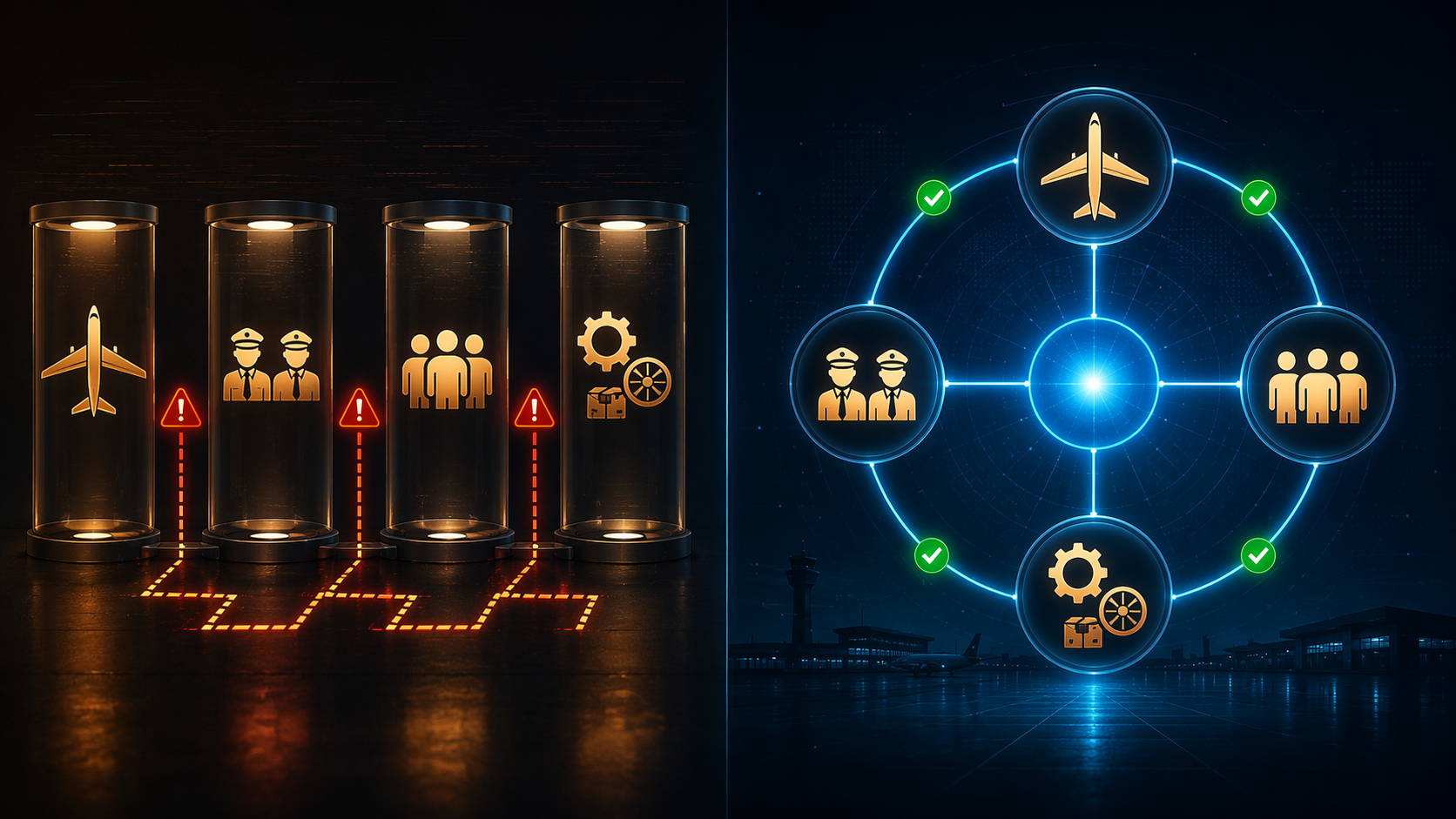
    AI platforms that evaluate aircraft, crew, passenger, and spare parts constraints concurrently can reduce airline disruption recovery costs by 17–30% by avoiding sequential silo decisions. This entry covers the AI architecture, production evidence from SITA/OCCam, and data readiness requirements for implementation.

    ROI: 17–30% recovery cost reduction, $20–30M annual savings per mid-size carrier (vendor-attributed, SITA 2026)Airlines
  • How AI airline emergency investigation impacts supply chain
    Inventory ManagementEmerging

    How AI airline emergency investigation impacts supply chain

    AI-powered airline emergency investigation goes beyond faster root-cause analysis: it produces machine-readable disruption data that can feed predictive supply chain models. This article shows how this feedback loop moves airlines from reactive parts stocking to disruption-informed positioning.

    ROI: Up to 30% reduction in disruption costs (SITA, 2026)Aviation
  • Five Ways AI Is Reshaping Airline Fleet Planning
    LogisticsGrowing

    Five Ways AI Is Reshaping Airline Fleet Planning

    This use case overview examines how AI is applied across five domains of airline fleet planning — from fleet composition to predictive maintenance — with documented ROI benchmarks and implementation caveats for supply chain leaders evaluating adoption.

    ROI: 3.5M CHF annual savings (SWISS tail assignment); 1M gal fuel saved (American gate planning); 40% forecast accuracy lift (AWS)Aviation
  • AI Airline Fleet Planning for Disruption Recovery
    Fleet PlanningGrowing

    AI Airline Fleet Planning for Disruption Recovery

    Can AI deliver measurable improvements in airline disruption recovery? Documented evidence from Alaska Airlines, United, and KLM shows 15–22% cost reduction, 4–7 point on-time performance improvement, and recovery decisions compressed from hours to minutes.

    ROI: 15–22% disruption cost reduction, 4–7 ppt on-time performance improvement (attributed to DataIntelo 2026)Airlines
  • How AI Connects Airline Fleet Replacement to Daily Logistics
    LogisticsEmerging

    How AI Connects Airline Fleet Replacement to Daily Logistics

    Airlines lose millions from the disconnect between strategic fleet replacement planning and the daily logistics of parts, maintenance slots, and crew transitions. An emerging generation of integrated AI platforms—combining digital twin simulation with multi-agent optimization—can close that gap, with early evidence suggesting significant margin improvements for adopters who address data quality first.

    ROI: 5-6 percentage point margin improvement projected by 2030 (BCG 2025)Airlines, Aviation
  • How Airlines Use AI to Cut Fuel Procurement Costs by 2-3%
    ProcurementGrowing

    How Airlines Use AI to Cut Fuel Procurement Costs by 2-3%

    With jet fuel costs at record highs and no major US carrier hedged, AI-driven procurement optimization cuts forecast error from 10-15% to under 2%, enabling smarter purchasing timing and supplier selection that reduces total fuel spend by 2-3%.

    ROI: 2–3% reduction in total fuel spend, $12M annual savings (Logicraft 2026)Aviation
  • How AI optimizes airline routes for supply chain profitability
    LogisticsEstablished

    How AI optimizes airline routes for supply chain profitability

    AI-driven network planning uses causal inference and ensemble modeling to help airlines optimize route profitability, allocate fleet capacity, and replace intuition-based decisions. Real-world deployments show $6M weekly revenue gains and 3–5% fuel savings, but integration complexity and data quality remain barriers.

    ROI: Up to $6M weekly revenue gain; 3-5% fuel savings on flights >4 hoursAirlines, Air cargo
  • Can AI Airline Route Planning Deliver Real Logistics Savings?
    LogisticsEstablished

    Can AI Airline Route Planning Deliver Real Logistics Savings?

    AI-driven airline route planning has moved from pilot to production at major carriers, with documented fuel savings of 3–8% and crew cost reductions of 7–14%. This evaluation helps supply chain and logistics leaders assess the investment readiness of AI for airline route optimization and its integration with broader logistics networks.

    ROI: 3-8% fuel savings, 7-14% crew cost reductions (per ArticSledge 2026)Aviation, Air Cargo
  • Does AI for Airline Route Planning Actually Deliver ROI?
    LogisticsGrowing

    Does AI for Airline Route Planning Actually Deliver ROI?

    A data-driven look at AI deployments at Alaska Airlines, KLM, and American Airlines shows fuel savings of 3–5% and delay reductions of 20–40%, but returns depend heavily on the application layer and a human-in-the-loop deployment model. This article gives supply chain leaders a realistic framework for building an AI route planning business case.

    ROI: 3–5% fuel savings, up to 40% delay reductionAirlines
  • How Airlines Use AI for Route Pricing and Optimization
    LogisticsEstablished

    How Airlines Use AI for Route Pricing and Optimization

    This article examines how airlines apply AI to two linked problems—dynamic fare pricing and flight route optimization—and documents revenue uplifts of 1–10%, fuel savings of 3–8%, and the vendor landscape. It also highlights the deployment risks supply chain leaders should expect when pursuing similar AI use cases in transportation networks.

    ROI: 1-10% revenue uplift, 3-8% fuel savingsAirlines
  • How AI Transforms Airport Disruption Logistics Planning
    Aviation LogisticsGrowing

    How AI Transforms Airport Disruption Logistics Planning

    This use case examines how AI systems predict delays, reallocate resources, and coordinate turnaround logistics during airport disruptions, with documented 25–30% cost reductions and 12–18% fewer delay minutes from early adopters.

    ROI: 25–30% disruption cost reduction, 12–18% fewer delay minutesAviation, Airports
  • How AI Predicts Supply Chain Disruptions from Airport Ground Stops
    LogisticsEmerging

    How AI Predicts Supply Chain Disruptions from Airport Ground Stops

    Airport ground stops cascade into supply chain disruptions that most logistics teams only detect after cargo misses its flight. This article examines how AI systems fuse FAA traffic data, weather feeds, and inventory signals to predict ground-stop impacts 24–72 hours ahead and trigger automated rerouting before production lines stall.

    Automotive, Pharmaceuticals
  • How AI Anticipates Airport Logistics Disruptions Before They Cascade
    LogisticsGrowing

    How AI Anticipates Airport Logistics Disruptions Before They Cascade

    Nearly 60% of flight delays are preventable with better planning. This article shows how AI-powered disruption planning at airports cuts median departure delays by 25% and recovers up to $250,000 per major event.

    ROI: 25% median delay reduction, $150k–$250k per major eventAviation
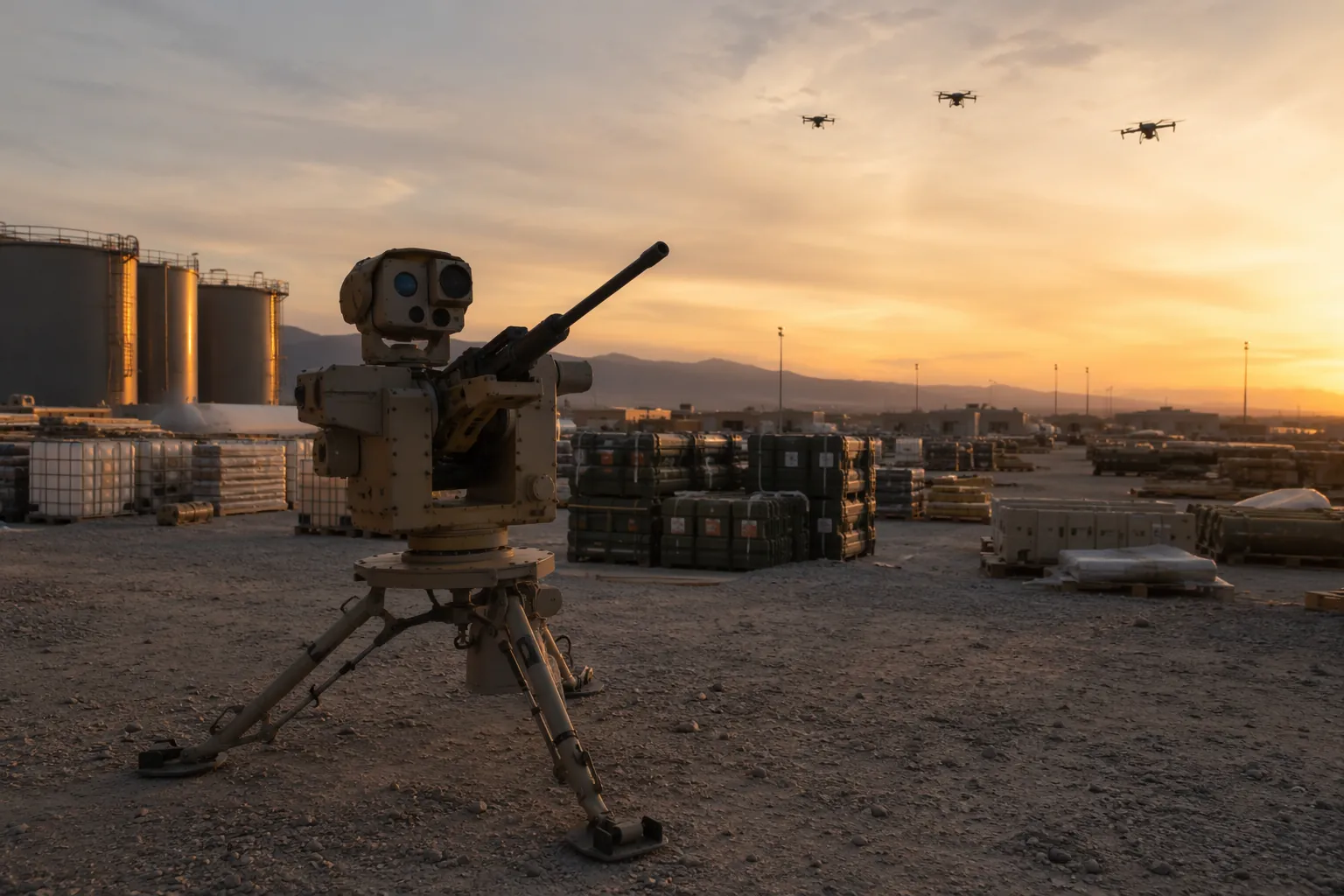
  • AI Anti-Drone Turrets for Military Logistics Protection
    LogisticsGrowing

    AI Anti-Drone Turrets for Military Logistics Protection

    Small drones have redefined the threat landscape for military supply depots, fuel farms, and airfields. This article explains how AI-powered autonomous gun turrets deliver a cost-effective close-in defense layer — and the real limitations that prevent them from replacing traditional air defense.

    ROI: Marginal cost per engagement ~$10; turret unit cost $150k–$500kDefense
  • AI-Driven Supply Chain Prevents Aircraft-on-Ground Events
    Inventory ManagementGrowing

    AI-Driven Supply Chain Prevents Aircraft-on-Ground Events

    Learn how AI-driven predictive supply chain systems reduce aircraft-on-ground (AOG) events by forecasting parts shortages, optimizing inventory, and automating sourcing across fragmented supplier networks — cutting unplanned maintenance disruptions by 30–40% and compressing parts sourcing from hours to minutes.

    ROI: Parts sourcing compressed from hours to minutes (OrbitronAI, 2026)Aviation
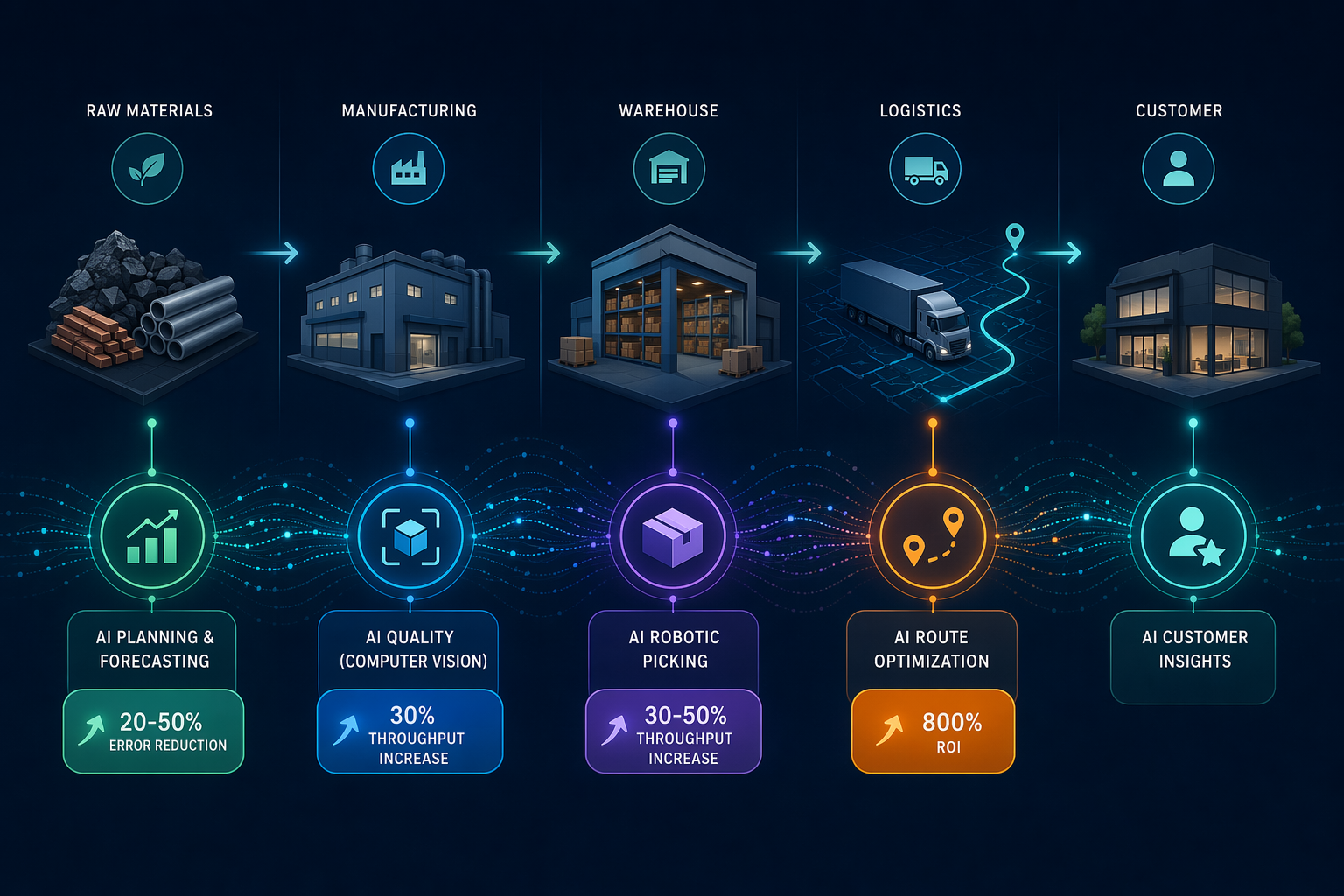
  • AI Applications in Supply Chain: A Structured Use Case Library for 2026
    Cross-functional (Demand Planning, Inventory Management, Procurement, Logistics, Warehouse Operations)Established

    AI Applications in Supply Chain: A Structured Use Case Library for 2026

    A cross-functional catalog of 10 AI use cases across demand forecasting, inventory, procurement, logistics, and warehouse operations — each with maturity ratings, ROI benchmarks, implementation risks, and representative vendors. Designed for supply chain leaders building investment priorities.

    ROI: 20–50% forecast error reduction (McKinsey); 20–30% inventory reduction (McKinsey); 800–1,200% three-year ROI for route optimization (The Thinking Company); 150–400% three-year ROI for warehouse AI (The Thinking Company)Retail, Food & Beverage

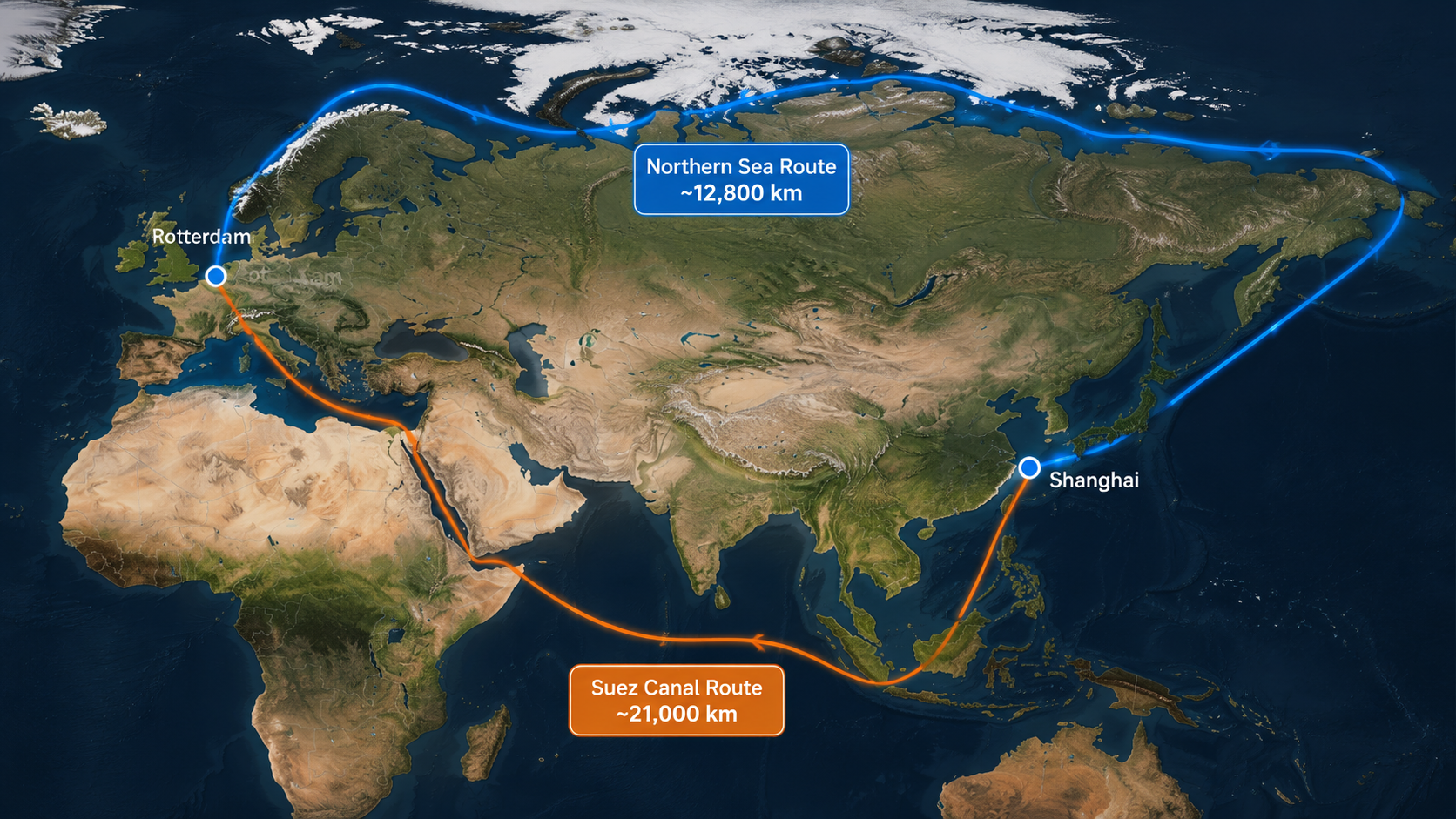
  • How AI Is Making Arctic Shipping Routes Commercially Viable
    LogisticsEmerging

    How AI Is Making Arctic Shipping Routes Commercially Viable

    This use case examines how AI technologies—from reinforcement learning route planning to deep-learning ice forecasting and computer vision—are transforming the Northern Sea Route into a commercially viable alternative for Asia-Europe trade, with documented fuel savings of 3–17% and transit time reductions of 10–15 days.

    ROI: Fuel savings 3-17%, transit time reduction 10-15 daysMaritime, Logistics
  • AI gives automotive recall management a 4-12 week early window
    Inventory ManagementEmerging

    AI gives automotive recall management a 4-12 week early window

    Connected vehicle telemetry and machine learning models can detect systemic defect signals 4–12 weeks before official recall campaigns, enabling supply chain teams to pre-order parts and pre-allocate dealer inventory. This article reviews the evidence, the data and organizational prerequisites, and the limitations supply chain leaders need to understand before investing in this approach.

    Automotive
  • Automotive Recall Detection with Supply Chain AI
    Quality ManagementGrowing

    Automotive Recall Detection with Supply Chain AI

    Connected vehicle telemetry, warranty claims histories, and NHTSA complaint data can feed LSTM models that flag emerging defect signals weeks to months before manual detection. Supply chain teams can use this lead time to pre-position replacement parts and narrow recall scope.

    Automotive
  • Can AI Make Automotive Reshoring a Defensible Decision?
    ProcurementGrowing

    Can AI Make Automotive Reshoring a Defensible Decision?

    Automotive leaders face 10-30% cost penalties when reshoring, but early AI deployments at Ford, Audi, BMW, and Toyota show how scenario modeling, multi-tier supplier risk visibility, and EV battery localization optimization can turn reshoring into a data-calibrated strategic decision.

    Automotive
  • How AI Aviation Supply Chain Logistics Prevents Counterfeit Parts
    LogisticsGrowing

    How AI Aviation Supply Chain Logistics Prevents Counterfeit Parts

    This article explains how AI-powered document forensics, supplier behavior anomaly detection, and blockchain traceability are being deployed to prevent counterfeit aircraft parts from entering aviation supply chains, drawing on the AOG Technics scandal, the GE Aerospace-led coalition response, and the Aviation Supply Chain Safety and Security Digitization Act of 2025.

    Aviation, Aerospace
  • AI Baseball Bat Tracking Analysis in Manufacturing
    Manufacturing Quality ControlGrowing

    AI Baseball Bat Tracking Analysis in Manufacturing

    AI-powered simulation and computer vision are transforming baseball bat design and quality inspection, enabling manufacturers to explore thousands of barrel design variations and achieve sub-minute, 99.8%-accurate dimensional measurements on the production line.

    ROI: Up to 100x more design variations; 99.8% dimensional inspection accuracySports equipment manufacturing
  • AI-Based Inventory Management: Why Augmented Workflows Beat Full Automation
    Inventory ManagementGrowing

    AI-Based Inventory Management: Why Augmented Workflows Beat Full Automation

    AI-based inventory management delivers the best results when humans remain in the loop. This article examines the evidence behind augmented workflows—why 54% of supply chain leaders prefer human-in-the-loop AI, how to build these workflows, and what limitations keep full automation from being effective today.

  • AI-Based Seasonal Demand Planning Use Case Profile
    Demand PlanningGrowing

    AI-Based Seasonal Demand Planning Use Case Profile

    AI-based seasonal demand planning replaces static forecasting with continuous learning models that integrate real-time signals like weather, POS data, and IoT feeds. This structured reference covers the documented accuracy gains, real-world deployment examples, implementation risks, and representative vendors for supply chain leaders evaluating this capability.

    ROI: 20–50% forecast error reduction (McKinsey benchmark, per secondary sources)Retail, Food & Beverage

  • AI Bridge Risk Screening for Supply Chain Route Intelligence
    LogisticsEmerging

    AI Bridge Risk Screening for Supply Chain Route Intelligence

    AI-powered bridge seismic risk screening using surrogate neural networks, computer vision, and covariance matrix models can provide actionable infrastructure risk intelligence for supply chain route planning and disruption mitigation. This article examines the evidence, accuracy metrics, and integration pathways for these techniques.

  • Which AI Capabilities Should You Invest in for Disruption Planning?
    Supply Chain VisibilityGrowing

    Which AI Capabilities Should You Invest in for Disruption Planning?

    A use-case map matching four AI capability clusters to the four structural disruption types identified by ABI Research, helping supply chain leaders prioritize AI investments for resilience and cost reduction.

    ROI: 5-20% logistics cost reduction, 20-30% inventory reduction, per McKinsey 2024
  • How AI automates CBAM supply chain data collection
    ProcurementGrowing

    How AI automates CBAM supply chain data collection

    CBAM's definitive phase requires verified supplier emissions data at scale. AI-driven data orchestration tools automate collection, validation, and calculation, turning compliance from a cost burden into a reusable data asset.

    ROI: 2–3x productivity gains in compliance workflows (vendor-reported by Assent)Iron & Steel, Aluminum
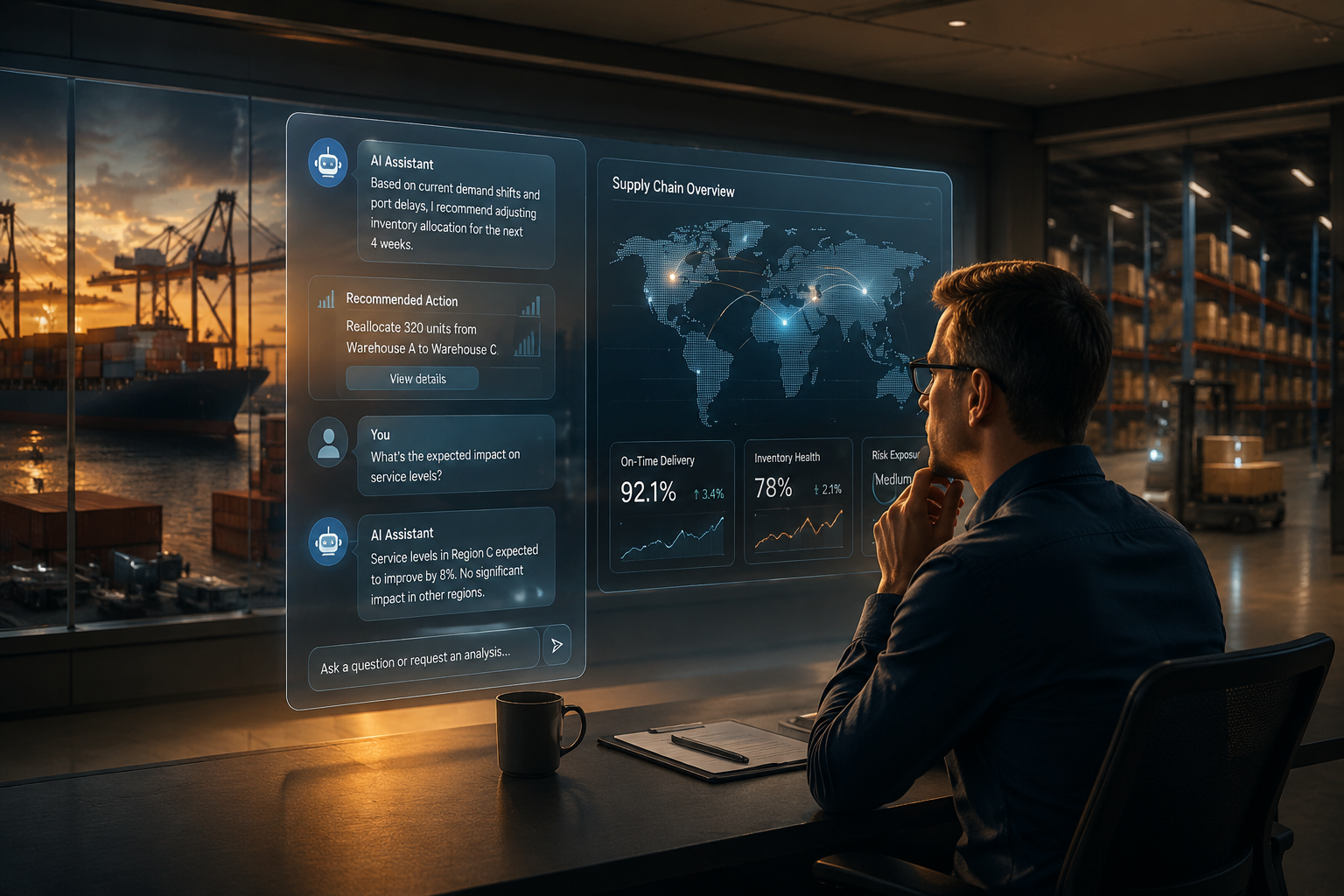
  • 8 Use Cases for AI Chatbots in Enterprise Supply Chain
    ProcurementGrowing

    8 Use Cases for AI Chatbots in Enterprise Supply Chain

    Explore eight specific use cases where AI chatbots are delivering measurable improvements across demand planning, procurement, logistics, warehouse operations, order management, supplier risk, exception handling, and sustainability analysis—backed by real-world ROI data and implementation caveats for supply chain leaders.

    ROI: 3% average savings, 35-day payment term extension (Walmart/Pactum, 2026); 40-60% admin cost reduction (BCG, 2026)Retail, manufacturing
  • AI Chatfishing on Dating Apps Has Jumped 333% — Here's the Data
    OtherGrowing

    AI Chatfishing on Dating Apps Has Jumped 333% — Here's the Data

    Chatfishing—using AI tools like ChatGPT to write dating app messages—has surged 333% in the past year, with 26% of singles now using AI to enhance their dating lives. This article examines the scale of the trend, the human experiences behind it, and why low detection rates make the true scope likely underestimated.

    Dating Apps
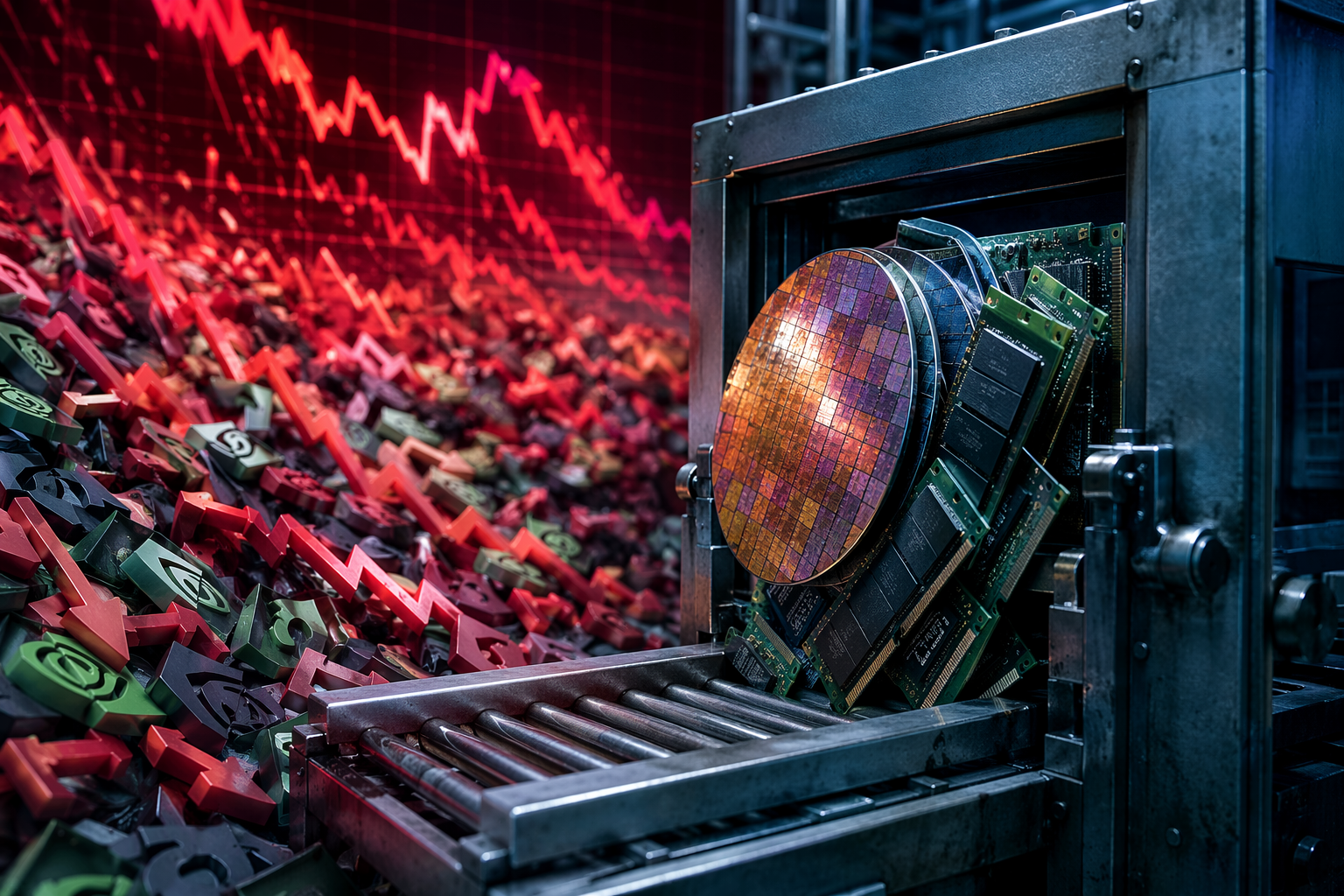
  • AI Chip Supply Chain Bottlenecks Are Reshaping Stock Market Risk
    ProcurementEmerging

    AI Chip Supply Chain Bottlenecks Are Reshaping Stock Market Risk

    This analysis explains how physical supply bottlenecks in AI chip production—from wafer capacity to advanced packaging and HBM memory—have become the primary driver of semiconductor stock volatility in 2026. Using the June 2026 selloff as a case study, it identifies real-time indicators supply chain leaders can monitor to anticipate market moves.

    Electronics
  • How AI Maps Climate Hazards Across Multi-Tier Supply Chains
    ProcurementGrowing

    How AI Maps Climate Hazards Across Multi-Tier Supply Chains

    Supply chain risk managers can now use AI platforms to assess flood, cyclone, drought, and wildfire risks at sub-kilometer resolution across tier-1 to tier-4 suppliers, shifting from reactive crisis response to proactive inventory and sourcing decisions months ahead. This entry explains how the technology works, the real deployment evidence from organizations like Hitachi and Cooper University Health Care, and the data and model limitations buyers must account for.

    Healthcare, Electronics
  • How AI Climate Modeling Reshapes Supply Chain Risk Management
    Supply Chain Risk ManagementGrowing

    How AI Climate Modeling Reshapes Supply Chain Risk Management

    AI climate models are shifting supply chain risk management from reactive disruption response to predictive, impact-based planning. This article explains how weather foundation models, digital twins, and probabilistic frameworks improve forecasting accuracy and localize risk to specific supplier sites, along with the evidence and limitations leaders need to understand before investing.

    Food & Beverage, Retail

Ready to move from application patterns to peer evidence or vendor comparison?

Blogarama - Blog Directory