AI Vendor & Platform Directory

Vendor-Neutral Platform Profiles

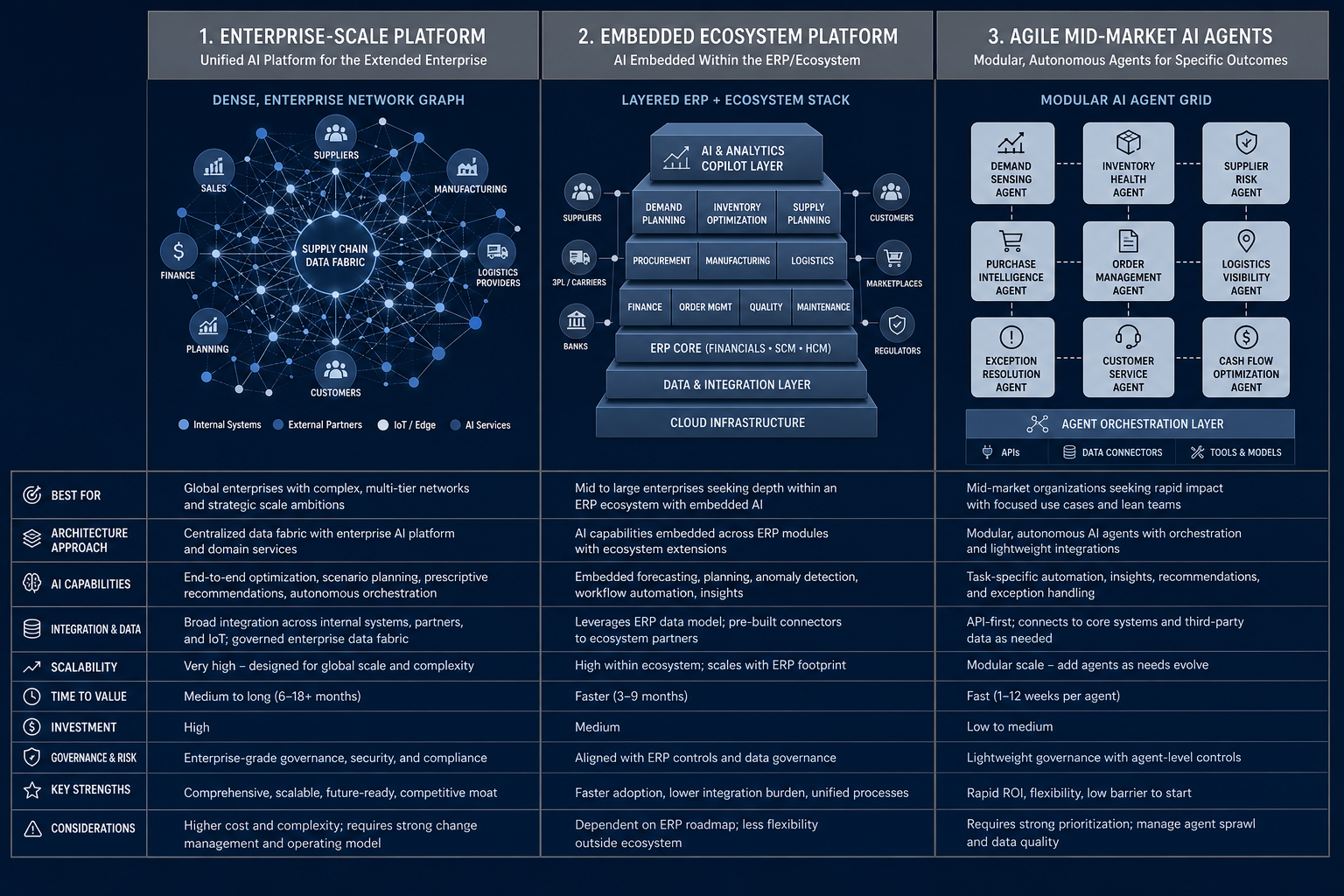
Structured profiles of AI software companies and platforms serving supply chain functions — covering Blue Yonder, o9 Solutions, Kinaxis, SAP IBP, C3.ai, Palantir, Altana, Coupa, Relex, John Galt Solutions, and others. Each profile covers functional capabilities, target customer profile (company size, industry), deployment model, key integrations, known customer case studies, and pricing transparency where available. This group serves readers in active software evaluation who need vendor-neutral, structured information to build shortlists and conduct due diligence. Excludes vendor-produced marketing content; all profiles are editorially maintained with clear review dates. Boundary with comparisons: individual profiles describe a single vendor; comparison entries place two or more vendors side-by-side on specific dimensions.

Profiles are maintained by our editorial team — not vendor-produced content. Head-to-head comparisons are in Platform Comparisons.

60 vendor profiles

  • AI WMS Vendor Comparison: Körber, Manhattan Associates, Blue Yonder

    A structured capability comparison of three leading AI-enabled warehouse management systems — Körber WMS, Manhattan Active WM, and Blue Yonder WMS — evaluated across AI methodology, deployment model, integration requirements, and notable capability gaps.
    enterpriseSaaS, on-premise, hybrid
  • Blue Yonder Demand Planning AI: Vendor Profile

    A structured capability profile of Blue Yonder's demand planning AI platform — covering core ML methodology, integration requirements, data prerequisites, deployment model, and known limitations for enterprise practitioners evaluating the product.

    SaaS
  • Blue Yonder vs. Infor CloudSuite SCM vs. Logility: S&OP AI Comparison, Q2 2026

    Blue Yonder vs. Infor CloudSuite SCM vs. Logility: S&OP AI Comparison, Q2 2026

    A structured Q2 2026 comparison of three architecturally distinct S&OP AI platforms — Blue Yonder, Infor CloudSuite SCM, and Logility (Aptean) — covering AI technique depth, integration prerequisites, deployment profiles, and fit-by-profile guidance for mid-market to upper-mid-market supply chain practitioners evaluating outside the Kinaxis/SAP IBP/o9 enterprise tier.

  • Coupa Supply Chain AI Capabilities: Vendor Profile for 2026

    Coupa Supply Chain AI Capabilities: Vendor Profile for 2026

    A structured practitioner profile of Coupa's AI capabilities as of Q2 2026, covering the platform's two structurally distinct tracks — procurement-side agentic AI and LLamasoft-derived supply chain design — including deployment models, integration requirements, recent acquisitions, and documented limitations for supply chain directors and procurement leads evaluating or renewing the platform.

    SaaS cloud-native (procurement suite); cloud-hybrid with desktop installation required (SC Design & Planning)
  • Kinaxis Maestro vs SAP IBP vs o9 Digital Brain: AI Architecture Comparison and Platform Selection Framework, Q2 2026

    Kinaxis Maestro vs SAP IBP vs o9 Digital Brain: AI Architecture Comparison and Platform Selection Framework, Q2 2026

    A practitioner-level comparison of three AI demand planning architectures — Kinaxis's concurrent planning engine, o9's neuro-symbolic Enterprise Knowledge Graph, and SAP IBP's ERP-embedded AI copilot — designed for enterprise supply chain teams 6–18 months into a formal platform evaluation who need to resolve selection decisions based on architectural fit rather than feature marketing.

  • Kinaxis Maestro vs SAP IBP vs o9 Solutions: Implementation Profile, Deployment Cost, and Program Risk Comparison, Q2 2026

    Kinaxis Maestro vs SAP IBP vs o9 Solutions: Implementation Profile, Deployment Cost, and Program Risk Comparison, Q2 2026

    For enterprise supply chain program leads who have already evaluated platform architectures and received demos, this comparison examines the implementation realities that most often determine program success: go-live timelines, system integrator dependency, data readiness requirements, total cost of ownership, and organizational change burden across Kinaxis Maestro, SAP IBP, and o9 Solutions.

  • o9 Solutions Vendor Profile: AI Supply Chain Planning Platform

    A structured capability profile of o9 Solutions covering its AI-driven integrated business planning platform — including core methodology, ERP integration requirements, data prerequisites, known deployment conditions, and limitations practitioners should evaluate before shortlisting.

    SaaS
  • Procurement AI Supplier Risk Scoring: Methods Compared

    A structured comparison of the primary AI methodologies used for supplier risk scoring in procurement — covering rule-based systems, ML classification, graph-based network analysis, NLP-driven news monitoring, and hybrid approaches — with evaluation criteria, capability gaps, and fit guidance for procurement teams shortlisting tools.

    enterprise, mid-marketSaaS
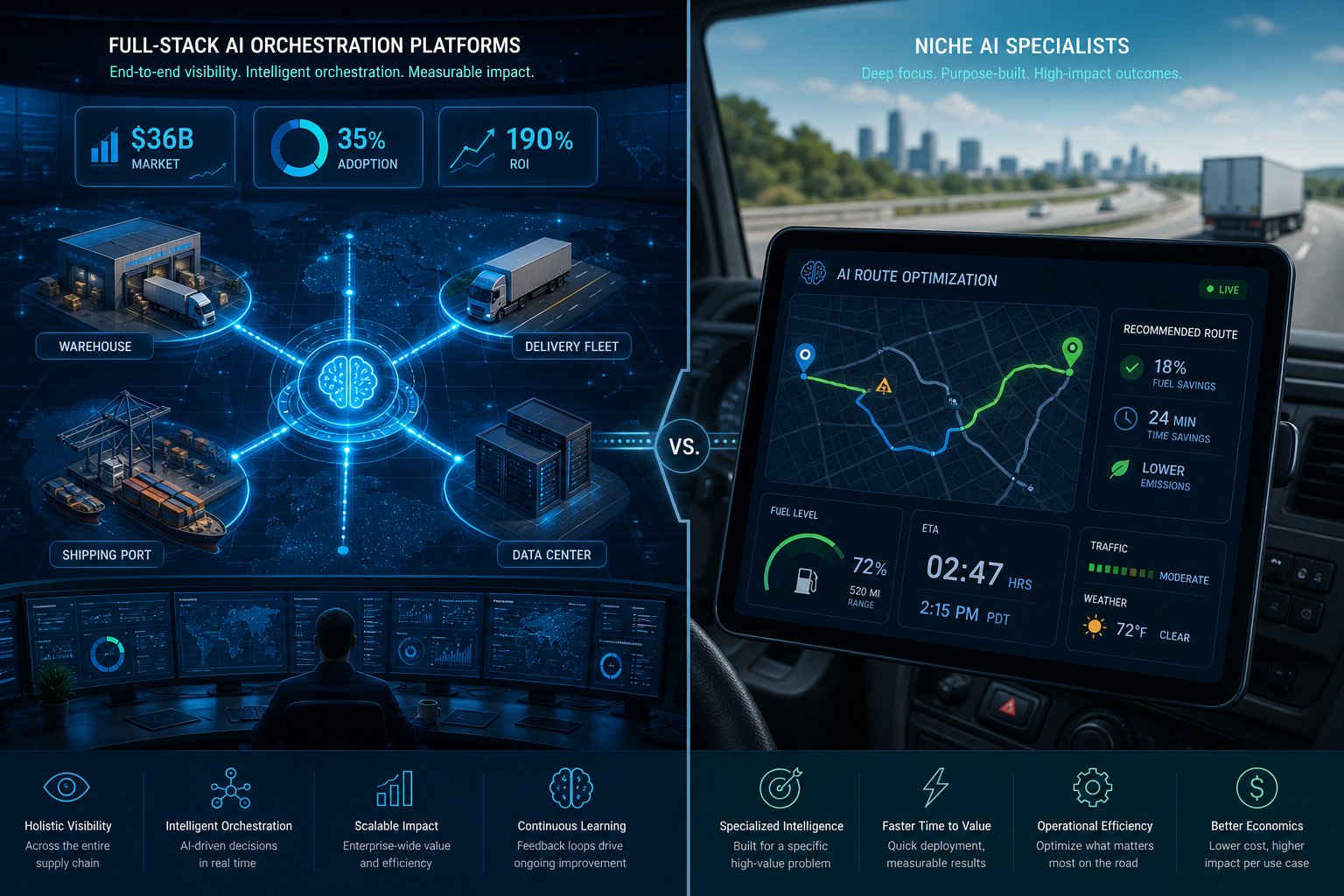
  • AI Logistics Companies Compared: Full-Stack Orchestrators vs. Niche Specialists — Which Model Fits Your Supply Chain?
    Demand PlanningWarehouse Management

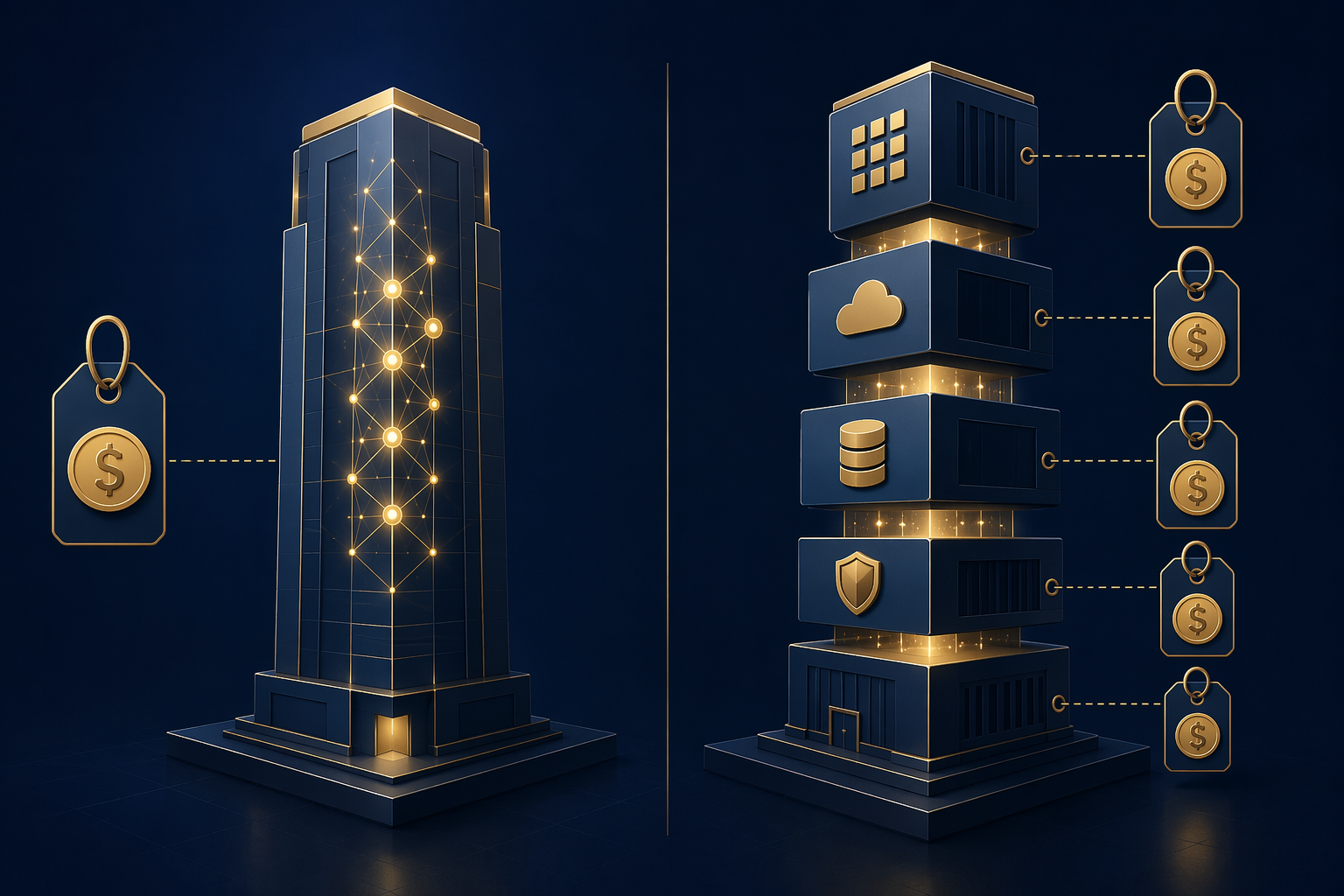
    AI Logistics Companies Compared: Full-Stack Orchestrators vs. Niche Specialists — Which Model Fits Your Supply Chain?

    This article helps supply chain leaders and technology buyers navigate the bifurcating AI logistics vendor market. It profiles full-stack orchestration platforms and niche specialists, compares them across eight buyer-relevant dimensions, and provides a seven-question decision framework to determine which model aligns with your organization's maturity, deployment speed requirements, and ROI expectations.

    Enterprise, Mid-MarketCloud SaaS
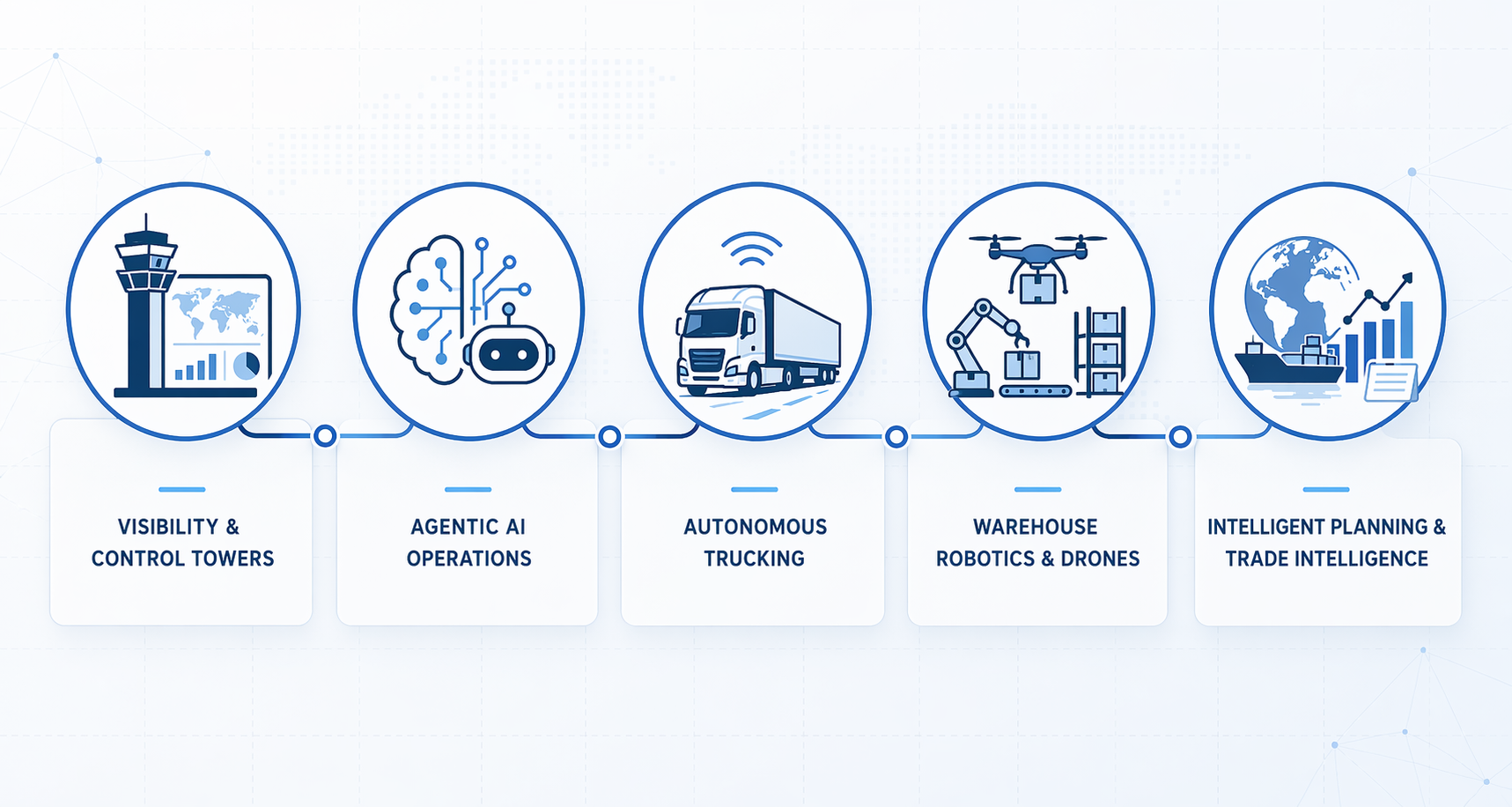
  • AI Logistics Companies: A Functional Buyer's Guide
    Visibility and control towersAgentic AI operations

    AI Logistics Companies: A Functional Buyer's Guide

    For supply chain leaders evaluating AI logistics vendors, this guide organizes companies into five functional categories — visibility and control towers, agentic AI operations, autonomous trucking, warehouse robotics, and intelligent planning — and provides a framework for shortlisting based on operational pain point and documented ROI.

    Enterprise, Mid-MarketCloud SaaS
  • AI-Native vs. AI-Enhanced: How to Distinguish Genuinely AI-First Supply Chain Companies from Legacy Platforms with AI Add-Ons
    Supply Chain PlanningDemand Planning

    AI-Native vs. AI-Enhanced: How to Distinguish Genuinely AI-First Supply Chain Companies from Legacy Platforms with AI Add-Ons

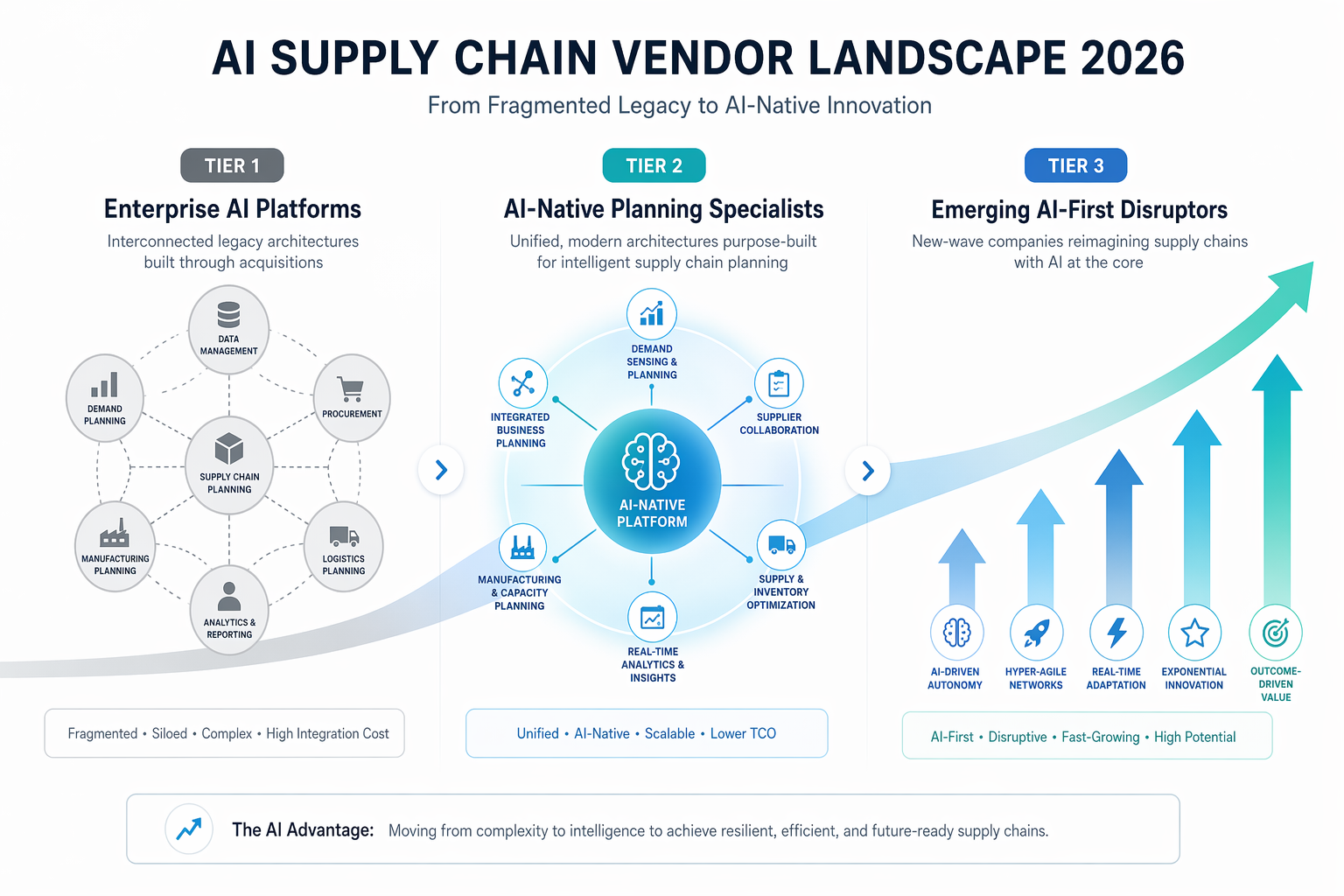
    This article provides a decision framework for senior supply chain leaders and enterprise architects evaluating AI platforms. It distinguishes AI-native companies built on graph-based data models and machine learning from the start from legacy platforms that added AI features on top of acquisition-built codebases, and examines the measurable consequences of this architectural difference on AI performance, data access, implementation speed, and ROI.

    EnterpriseCloud SaaS
  • AI-Native vs. Legacy Supply Chain Platforms: The Real Performance Gap in 2026
    Demand PlanningInventory Optimization

    AI-Native vs. Legacy Supply Chain Platforms: The Real Performance Gap in 2026

    An evidence-based comparison for supply chain technology evaluators who are skeptical of AI-washing marketing. This article analyzes which vendors deliver measurable AI value in production — using G2 ratings, implementation timelines, and actual use-case breadth — versus those rebranding legacy functionality.

    Enterprise, Mid-MarketCloud SaaS
  • The 2026 AI Supplier Risk Monitoring Vendor Directory
    Supply chain risk managementvendor risk management

    The 2026 AI Supplier Risk Monitoring Vendor Directory

    A structured overview of the 2026 AI supplier risk monitoring tool landscape, organized by platform architecture, data depth, and signal coverage to help procurement leaders match tool categories to their specific risk visibility requirements.

    EnterpriseCloud SaaS
  • AI Supply Chain Companies 2026: The Definitive Vendor Directory by Functional Category
    Demand PlanningInventory Optimization

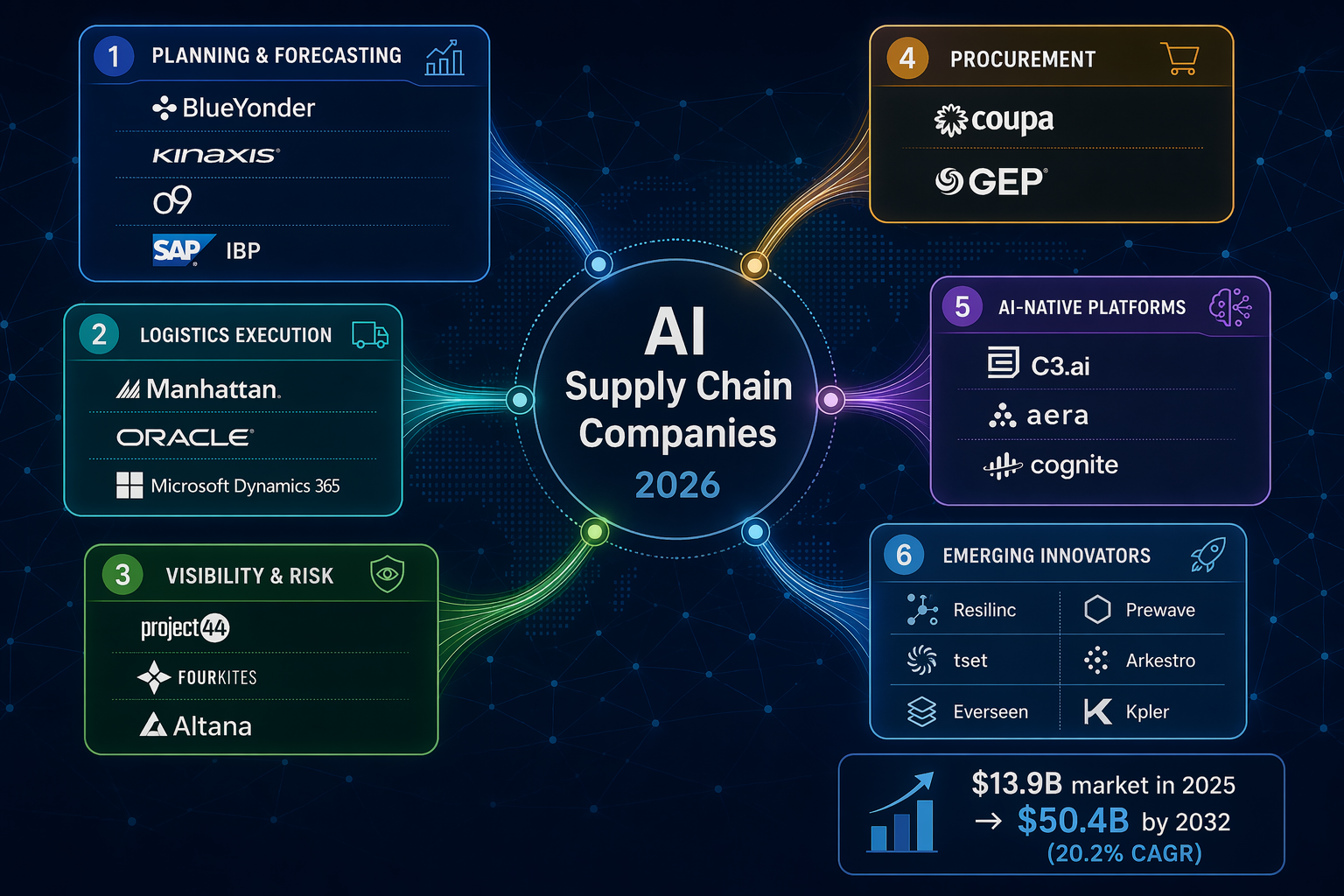
    AI Supply Chain Companies 2026: The Definitive Vendor Directory by Functional Category

    A structured, category-based directory of 30+ AI supply chain companies for supply chain leaders evaluating vendors across planning, logistics, visibility, procurement, and AI-native platforms. Includes market context, a six-category taxonomy, and a selection framework to avoid apples-to-oranges comparisons.

    Enterprise, Mid-MarketCloud SaaS, On-Premise, Hybrid
  • AI Supply Chain Companies: Why Platform Architecture Determines AI ROI
    Supply Chain PlanningInventory Optimization

    AI Supply Chain Companies: Why Platform Architecture Determines AI ROI

    For senior supply chain leaders evaluating AI platforms, this article explains why platform architecture—acquired-stack, unified, or AI-native—is the primary driver of AI ROI, and provides a decision framework for extending, replacing, or augmenting existing systems.

    EnterpriseCloud SaaS
  • AI Supply Chain Companies: Planning vs. Execution — Which Vendors Do What
    Demand PlanningInventory Optimization

    AI Supply Chain Companies: Planning vs. Execution — Which Vendors Do What

    For supply chain leaders evaluating AI software, the most expensive mistake is choosing the wrong category first. This article maps the market into planning-first platforms, execution-first systems, and a growing visibility layer, then provides a decision framework to determine where to start based on your organization's data maturity and operational pain point.

    EnterpriseCloud SaaS
  • AI Warehouse Albert: Cool Demo or Real Warehouse Technology?
    Dynamic Order PickingRobot Traffic Coordination

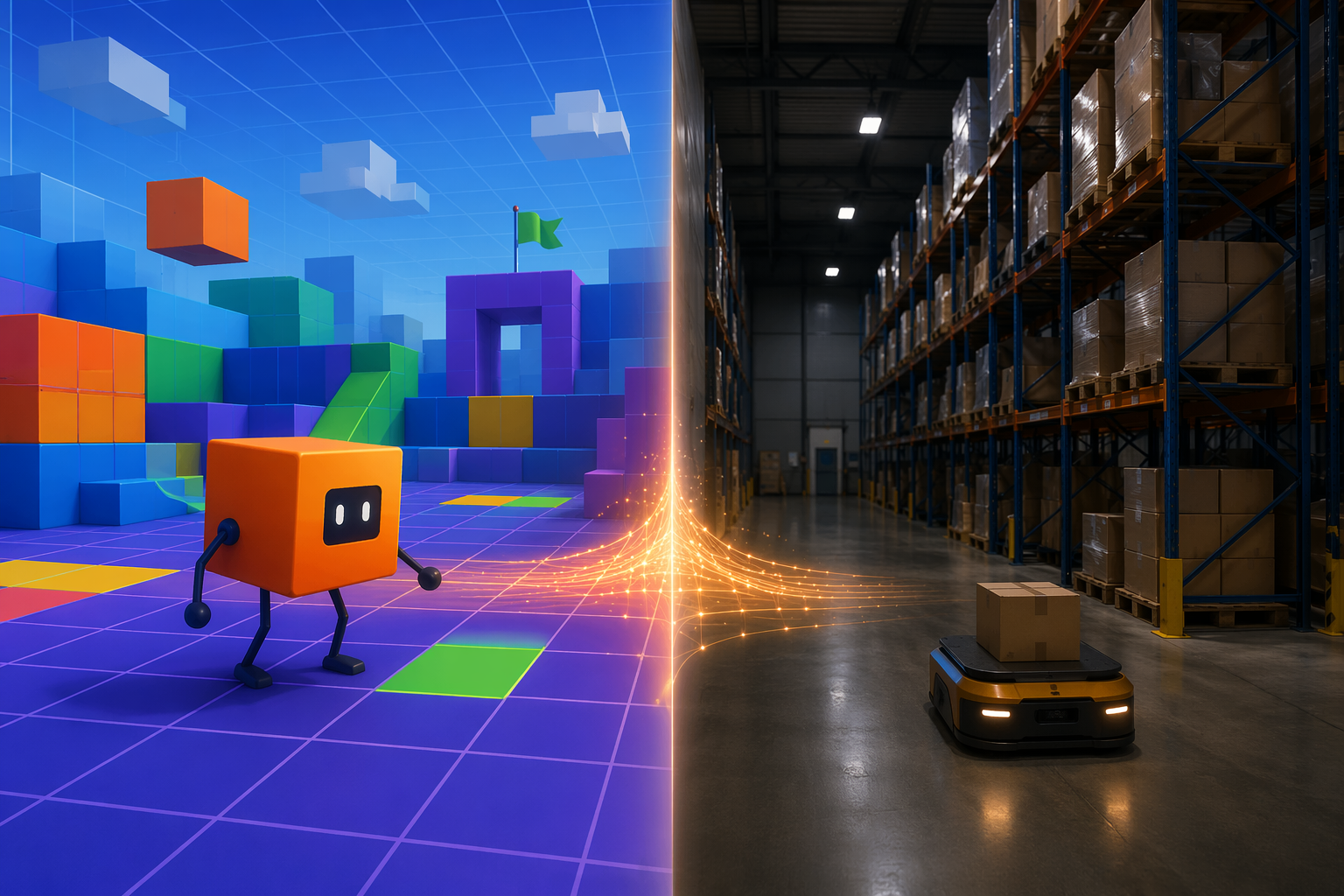
    AI Warehouse Albert: Cool Demo or Real Warehouse Technology?

    An evidence-based look at how deep reinforcement learning — the technique behind AI Warehouse Albert — is being applied to warehouse operations, with documented results and honest boundaries.

    EnterpriseCloud SaaS
  • Altana for Trade Compliance: Tracing Forced Labor and Tariff Risks Across Multi-Tier Supply Chains
    Trade ComplianceSupplier Risk Management

    Altana for Trade Compliance: Tracing Forced Labor and Tariff Risks Across Multi-Tier Supply Chains

    This article evaluates Altana AI's platform for upstream trade compliance, focusing on its documented ability to trace product value chains for forced labor linkages under UFLPA, automate tariff classification under IEEPA, and enable pre-arrival validation with CBP through Product Passports. It gives procurement and risk leaders a grounded assessment of what Altana can practically deliver, based on vendor-sourced case evidence.

    EnterpriseCloud SaaS
  • Can Bloom Energy's Supply Chain Support Its AI Data Center Boom?
    Energy Generation

    Can Bloom Energy's Supply Chain Support Its AI Data Center Boom?

    An evaluation of Bloom Energy's manufacturing capacity, supplier dependencies, and material sourcing risks behind its $7.65B+ in AI data center power contracts, helping buyers assess whether the company can deliver on its speed-to-power promise.

    EnterpriseOn-Premise
  • Blue Yonder's Agentic AI Transformation: From Planning to Autonomous Execution
    Demand PlanningInventory Optimization

    Blue Yonder's Agentic AI Transformation: From Planning to Autonomous Execution

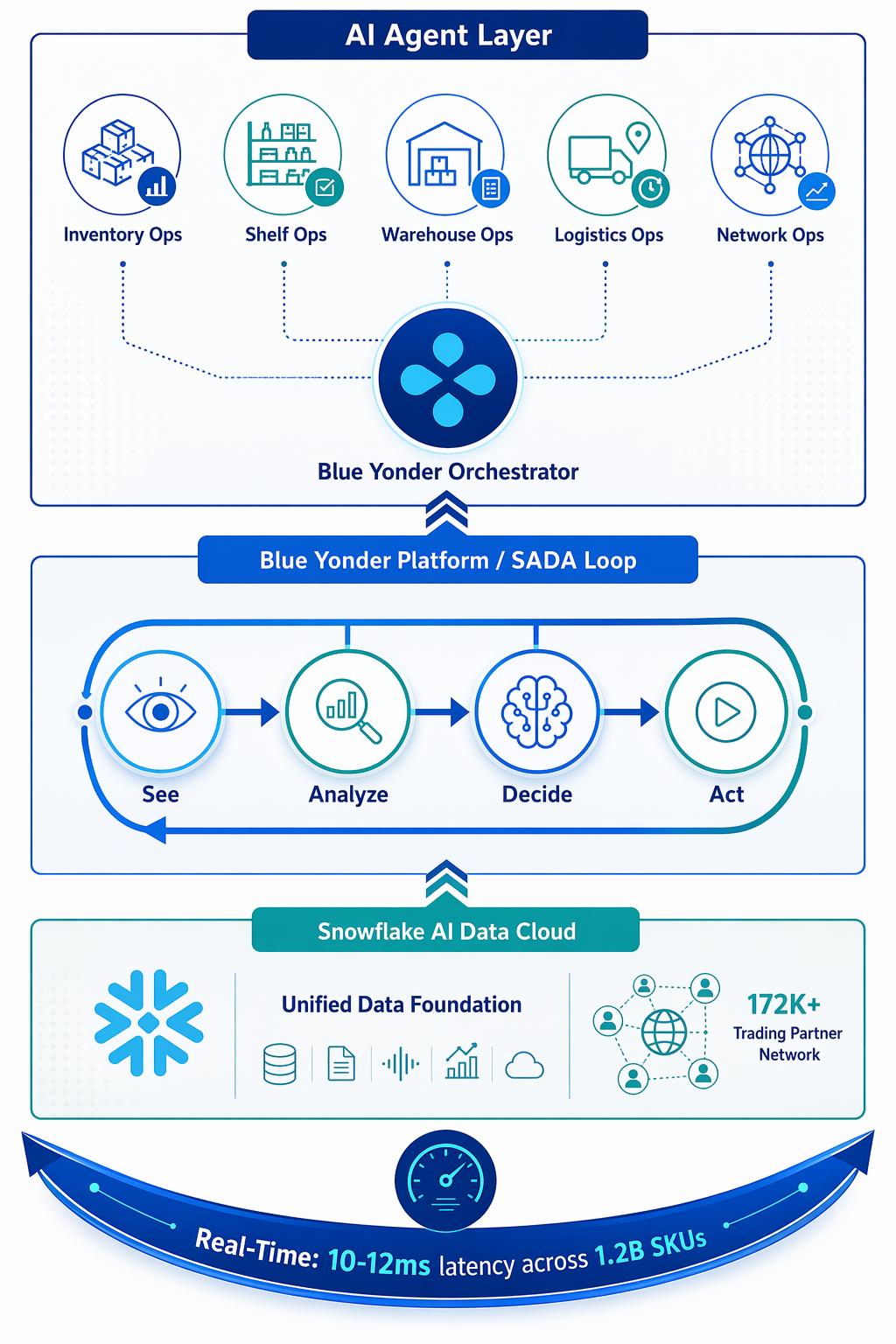
    For supply chain leaders evaluating AI maturity, this profile drills into Blue Yonder's 2025–2026 shift to agentic autonomous execution. It covers the five Autonomous Domain Agents, the SADA Loop cognitive model, the Orchestrator governance layer, and real-world outcomes from Sainsbury's and Australia Post — without repeating the general platform overview.

    EnterpriseCloud SaaS
  • Blue Yonder Supply Chain AI Platform: Full-Suite Vendor Profile for Enterprise Evaluators
    Supply Chain PlanningWMS

    Blue Yonder Supply Chain AI Platform: Full-Suite Vendor Profile for Enterprise Evaluators

    A structured, editorially independent profile of Blue Yonder's end-to-end supply chain AI platform — covering platform architecture, module capabilities, AI methodology, Gartner recognition, implementation reality, and a buyer decision framework — written for CSCOs, supply chain VPs, and IT transformation leads at $500M+ enterprises conducting active due diligence or renewal evaluation.

    EnterpriseCloud SaaS
  • C3 AI Demand Forecasting in the Age of Agentic AI: What the 2026 Platform Refresh Means for Supply Chain Planning
    Demand PlanningSupply Chain Planning

    C3 AI Demand Forecasting in the Age of Agentic AI: What the 2026 Platform Refresh Means for Supply Chain Planning

    This article critically examines C3 AI's 2026 agentic AI platform refresh for supply chain planning, separating genuine platform evolution from marketing rebranding. It provides supply chain technology strategists with an assessment of the new agentic architecture, its foundations, and the vendor risk signals that matter for long-horizon procurement decisions.

    EnterpriseCloud SaaS
  • C3 AI Demand Forecasting ROI: Patterns from Four Enterprise Deployments
    Demand PlanningInventory Optimization

    C3 AI Demand Forecasting ROI: Patterns from Four Enterprise Deployments

    An analysis of C3 AI's four publicly documented demand forecasting case studies across biopharma, food processing, high-tech hardware, and agribusiness shows accuracy improvements from 8% to 100% WAPE reduction and economic impact from $20M to $300M. The data reveals that greater data fragmentation predicts larger gains, but all results are vendor-published pilot-phase data without independent audit.

    EnterpriseCloud SaaS
  • C3 AI Demand Forecasting: Capabilities, Customer Outcomes, and Buyer Risks for Enterprise Supply Chain Planning
    Demand PlanningDemand Forecasting

    C3 AI Demand Forecasting: Capabilities, Customer Outcomes, and Buyer Risks for Enterprise Supply Chain Planning

    A structured vendor profile for supply chain leaders evaluating C3 AI Demand Forecasting. Covers technical architecture, core capabilities, quantified customer outcomes across four industries, competitive positioning, implementation timelines, and a transparent risk assessment including vendor volatility and deployment complexity.

    EnterpriseCloud SaaS
  • Which supply chain control tower model fits your bottleneck?
    Control Tower

    Which supply chain control tower model fits your bottleneck?

    Supply chain control towers are often marketed as one-size-fits-all, but they actually fall into three distinct operational models. This guide breaks down visibility-led, planning-led, and execution-led platforms so you can match the right model to your operational bottleneck and avoid costly misalignment.

    Enterprise, Mid-MarketCloud SaaS
  • What Do CoreWeave's Analyst Ratings Say About AI Infrastructure?
    AI Infrastructure

    What Do CoreWeave's Analyst Ratings Say About AI Infrastructure?

    Supply chain leaders evaluating CoreWeave for AI infrastructure need to look beyond the consensus 'Moderate Buy' rating. This article dissects the exceptionally wide analyst disagreement — from $32 to $303 price targets — to help you assess the true financial and competitive risk profile of this pure-play GPU cloud provider.

    EnterpriseCloud SaaS
  • CoreWeave stock drop reveals AI infrastructure supply chain risks
    AI Compute Infrastructure

    CoreWeave stock drop reveals AI infrastructure supply chain risks

    CoreWeave's roughly 60% decline from its June 2025 peak is not a routine tech correction—it exposes five structural supply chain risks that enterprise AI buyers must diligence before committing to any neocloud vendor. This article examines single-supplier GPU dependency, debt fragility, extreme customer concentration, data center execution delays, and the lack of an economic moat as critical vendor health indicators for procurement teams.

    EnterpriseCloud SaaS
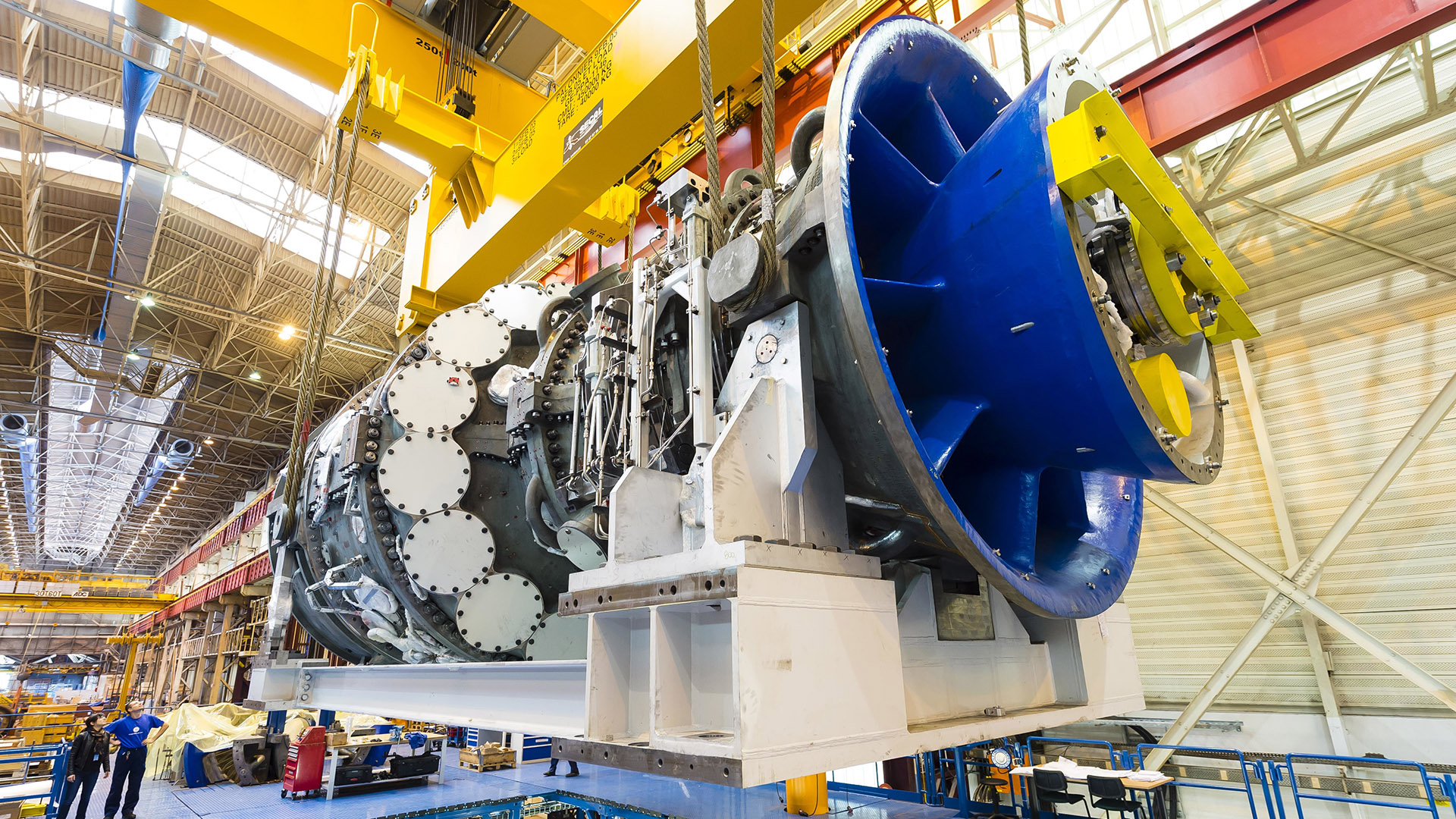
  • How GE Vernova Became the AI Infrastructure Supply Chain's Bottleneck
    Power generation equipmentGrid equipment

    How GE Vernova Became the AI Infrastructure Supply Chain's Bottleneck

    GE Vernova's gas turbine and grid equipment backlogs have become the binding constraint on AI data center expansion, with delivery windows extending into the 2030s. This profile examines why its capacity constraints are a first-order supply chain risk for hyperscalers and developers.

    EnterpriseOn-Premise
  • Finding the Real Agentic AI Platforms in Supply Chain Procurement and Planning
    ProcurementSupply Chain Planning

    Finding the Real Agentic AI Platforms in Supply Chain Procurement and Planning

    Cut through agentic AI hype in supply chain. This article profiles which platforms deliver production-grade autonomous agents versus those still offering co-pilots and rule-based triggers, providing evaluators with a framework to separate genuine capability from rebranding.

    Enterprise, Mid-MarketCloud SaaS
  • How IBM's AI Supply Chain Strategy Starts With Its Own Operations
    Procurement AutomationSupplier Risk Management

    How IBM's AI Supply Chain Strategy Starts With Its Own Operations

    IBM first stress-tested its AI across its own $4.5B+ global supply chain before productizing the results. This vendor profile evaluates the evidence behind its client-zero approach, agentic orchestration pivot with watsonx Orchestrate, and partnerships with Confluent and S&P Global, and what it means for enterprises evaluating IBM as a supply chain AI platform partner.

    EnterpriseHybrid
  • Kinaxis Maestro: AI Supply Chain Planning Platform — Vendor Profile for Enterprise Evaluators
    Demand PlanningSupply Planning

    Kinaxis Maestro: AI Supply Chain Planning Platform — Vendor Profile for Enterprise Evaluators

    A structured, editorially independent profile of Kinaxis Maestro covering its concurrent planning architecture, agentic AI layer, functional scope, deployment model, and buyer-fit thresholds — written for supply chain VPs, CSCOs, and IT transformation leads at $1B+ manufacturers conducting active due diligence on AI-powered supply chain planning platforms.

    EnterpriseCloud SaaS
  • Micron Earnings Signal Long-Term AI Memory Supply Constraints
    Memory manufacturing and supply

    Micron Earnings Signal Long-Term AI Memory Supply Constraints

    Micron's Q3 FY2026 earnings revealed a sold-out HBM position and $22B in customer commitments, signaling that AI-driven memory demand will keep supply tight through at least 2027. This vendor profile examines the procurement and planning implications for downstream hardware and infrastructure buyers.

    EnterpriseOn-Premise
  • Micron's Role in the AI Memory Supply Chain
    Memory Chips

    Micron's Role in the AI Memory Supply Chain

    Micron has emerged as a critical AI memory supplier, but its HBM and DRAM capacity is structurally insufficient to meet hyperscaler demand. This profile examines Micron's capabilities, capacity constraints, and what supply chain leaders should know about the persistent shortages.

    EnterpriseOn-Premise
  • What Moonshot AI's K3 Means for Semiconductor Supply Chains
    AI Platform

    What Moonshot AI's K3 Means for Semiconductor Supply Chains

    Moonshot AI's Kimi K3 model triggered a semiconductor selloff, but the real shift is in chip demand composition rather than destruction. This analysis separates market panic from structural supply chain realities, including persistent HBM and packaging bottlenecks.

    EnterpriseCloud SaaS
  • Should Supply Chain AI Teams Use Moonshot AI's Kimi K3?
    Document IntelligenceException Handling

    Should Supply Chain AI Teams Use Moonshot AI's Kimi K3?

    This article evaluates whether supply chain AI teams should consider Moonshot AI's open-weight Kimi models, particularly the new Kimi K3, as a cost-effective foundation-model alternative while navigating regulatory and data sovereignty risks.

    EnterpriseHybrid
  • o9 Solutions Demand Planning Module: AI Forecasting, Touchless Planning, and Data Readiness for Enterprise Practitioners
    Demand PlanningDemand Sensing

    o9 Solutions Demand Planning Module: AI Forecasting, Touchless Planning, and Data Readiness for Enterprise Practitioners

    A practitioner-level evaluation of o9 Solutions' demand planning module covering its multi-model ensemble forecasting engine, FVA-based touchless planning pathway, demand sensing architecture, and the data and organizational readiness conditions that determine whether vendor-cited outcomes are achievable in a given enterprise environment. Written for demand planning managers and supply chain leaders at large enterprises who have already encountered o9 in evaluations and need functional depth before requesting a demo or RFP.

    EnterpriseCloud SaaS
  • Oracle's $638B AI Backlog Introduces Supply Chain Vendor Risk
    Supply Chain PlanningProcurement

    Oracle's $638B AI Backlog Introduces Supply Chain Vendor Risk

    Oracle's $638B AI infrastructure backlog raises critical questions about the company's financial stability as a long-term supply chain software partner. This article examines the implications for SCM buyers evaluating Oracle Fusion Cloud SCM, revealing how the backlog concentration, financial engineering, and execution risks should inform contract structuring and risk management decisions.

    EnterpriseCloud SaaS
  • Oracle's AI Agents Improve Supply Chain at Zero Additional Cost
    Demand PlanningProcurement

    Oracle's AI Agents Improve Supply Chain at Zero Additional Cost

    This vendor profile examines Oracle's supply chain AI agent strategy — over 50 embedded agents across planning, procurement, logistics, and manufacturing — and explains how its no-extra-cost pricing model creates a structural advantage while acknowledging data quality, change management, and the gap between licensing and realization.

    Enterprise, Mid-MarketCloud SaaS
  • What Oracle's Supply Chain Command Center Does Differently
    Supply Chain PlanningProcurement

    What Oracle's Supply Chain Command Center Does Differently

    Oracle's Supply Chain Command Center is a unified, AI-native decision layer embedded in Fusion Cloud SCM, not a traditional visibility dashboard. This profile explains how it works, its 13+ AI agents, and when the unified-platform approach beats best-of-breed.

    EnterpriseCloud SaaS
  • Oracle's Three-Tier AI Strategy and Supply Chain Implications
    Supply Chain PlanningProcurement

    Oracle's Three-Tier AI Strategy and Supply Chain Implications

    Oracle's 2026 supply chain AI strategy advances through three capability tiers—from embedded ML to single-task agents to coordinated agentic applications. This article examines what each tier means for supply chain workforce roles, decision workflows, and the skills your team will need.

    EnterpriseCloud SaaS
  • Procurement AI Tools in 2026: A Three-Tier Market Taxonomy
    ProcurementSourcing

    Procurement AI Tools in 2026: A Three-Tier Market Taxonomy

    A structured taxonomy of the 2026 procurement AI market, organizing vendors into three architectural tiers — full source-to-pay suites, AI-native orchestration platforms, and specialist point solutions — and explaining how each tier aligns with different organizational maturity levels, data readiness, and time-to-value expectations.

    EnterpriseCloud SaaS
  • SAP supply chain AI use cases by module
    Demand PlanningWMS

    SAP supply chain AI use cases by module

    A module-level breakdown of SAP's embedded AI capabilities across IBP, EWM, TM, Ariba, Digital Manufacturing, and Green Token, with use case descriptions, availability stages, and representative customer metrics for supply chain evaluators.

    EnterpriseCloud SaaS
  • SAP Supply Chain Control Tower for Standardized SAP Shops
    Supply chain visibilityexception management

    SAP Supply Chain Control Tower for Standardized SAP Shops

    A vendor-neutral assessment of SAP's Supply Chain Control Tower for large enterprises already on SAP ERP/S/4HANA. Covers its native integration strengths, visibility-led architecture, execution limitations, and 2026 roadmap developments to help shortlisting teams decide whether to stay within the SAP ecosystem or evaluate third-party alternatives.

    EnterpriseCloud SaaS
  • ServiceNow Earnings Reveal Supply Chain AI Platform Strategy
    ProcurementQuality Management

    ServiceNow Earnings Reveal Supply Chain AI Platform Strategy

    ServiceNow's Q1 2026 earnings confirm strong AI revenue growth but do not isolate supply chain AI. This analysis positions ServiceNow as an AI orchestration layer above ERP/SCM for source-to-pay and manufacturing workflows, not a supply chain planning replacement, providing clarity for procurement and supply chain leaders evaluating the platform.

    Enterprise, Mid-MarketCloud SaaS
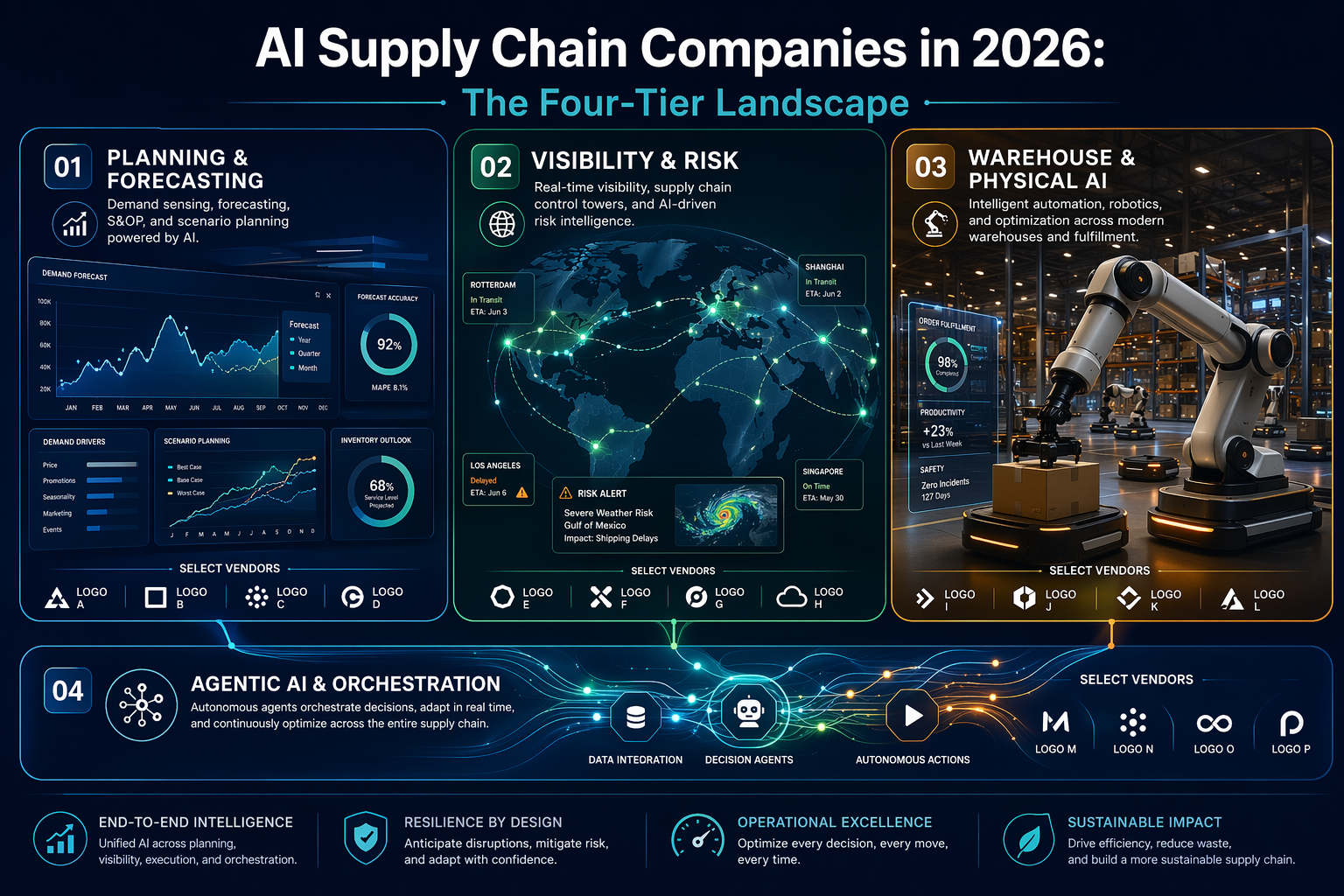
  • Supply Chain AI Solutions: A Vendor Directory by Archetype
    Demand PlanningSupply Planning

    Supply Chain AI Solutions: A Vendor Directory by Archetype

    This structured directory maps the supply chain AI vendor ecosystem into four distinct archetypes—ERP suites, planning specialists, AI-native platforms, and functional specialists—so supply chain leaders can shortlist vendors by function, size, and deployment fit rather than comparing across mismatched categories.

    EnterpriseCloud SaaS

Platform Comparisons

Ready to compare specific vendors side-by-side on defined evaluation dimensions?

View all platform comparisons →
Blogarama - Blog Directory
AI Vendor & Platform Directory — ChainSignal