
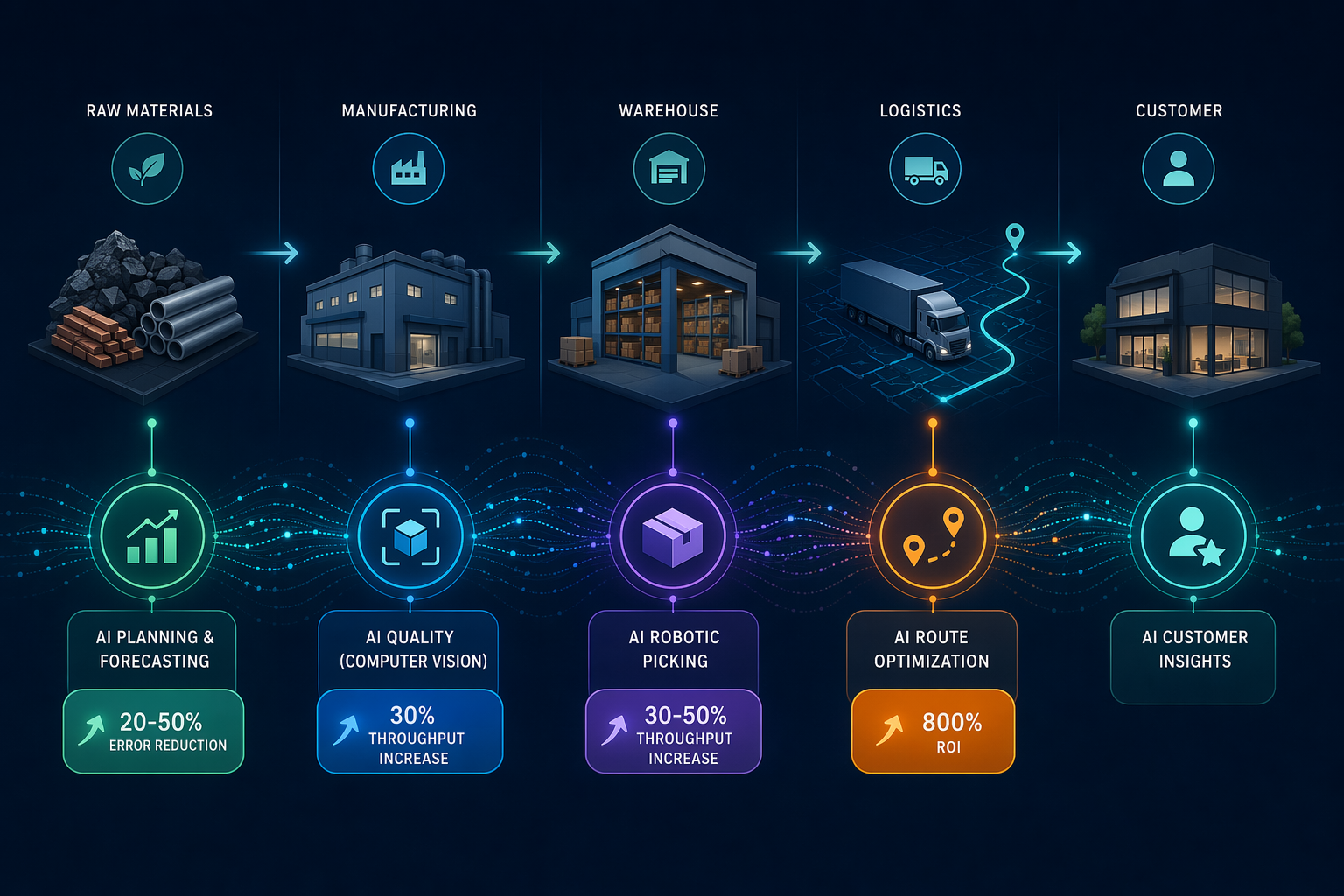
Why a Structured AI Use Case Library Matters Now
The gap between AI adoption intent and execution readiness in supply chain is wide and well-documented. A 2025 survey by ABI Research of 490 supply chain professionals found that 94% of companies plan to use AI or generative AI for decision support within two years. Yet a separate 2025 Gartner survey of 120 supply chain leaders reported that only 23% of organizations have a formal AI strategy in place. That 71-point gap between intention and structured execution is the problem this library is designed to address.
For supply chain directors and VP-level operations leaders, the challenge is no longer whether AI works — it is which applications are mature enough to deploy now, which require more preparation, and how to sequence investments across functions. A 2024 Accenture analysis of 1,148 companies across 10 industries found that organizations with AI-mature supply chains are 23% more profitable than peers and six times as likely to use AI or generative AI widely. The payoff is real, but it depends on choosing the right use cases for your organization's current data readiness, integration capacity, and risk tolerance.
How to Read This Library: Maturity, ROI, and Risk
Each use case entry in this catalog follows a consistent structure so you can compare across functions on the same dimensions. Three labels require explanation before you dive into the entries.
Maturity Levels
| Label | Definition | What It Means for Your Investment Decision |
|---|---|---|
| Established | Widely deployed across industries with documented, repeatable outcomes and multiple mature vendors. | Lowest execution risk. Suitable for organizations with basic data readiness. ROI benchmarks are reliable. |
| Growing | Proven in early-adopter organizations and specific verticals, but not yet standardized. Vendor landscape is consolidating. | Moderate risk. Requires stronger data integration and change management. ROI varies by organizational maturity. |
| Emerging | Early production deployments exist, but standards, vendor maturity, and long-term ROI data are still forming. | Highest risk and highest potential upside. Best suited for organizations with dedicated AI teams and tolerance for experimentation. |
Comments
Join the discussion with an anonymous comment.