
Analysis & Editorial
Market Intelligence, Source-Attributed
Original analysis, trend reporting, market commentary, and perspective pieces covering the state of AI adoption in supply chain — including quarterly adoption data synthesis, vendor funding and M&A tracking, technology trajectory assessments, and practitioner opinion. This group serves readers who track the field continuously and need current, contextualized intelligence beyond what individual use case or vendor entries provide. Content in this group explicitly distinguishes between editorially independent analysis and sponsored or vendor-attributed perspectives. Includes the annual or quarterly 'State of AI in Supply Chain' synthesis reports. Excludes evergreen reference content (use cases, glossary, vendor profiles) and step-by-step implementation guidance (implementation guides). Editorial entries have prominent publication dates and author attribution.
Accountability Framework for Agentic AI in Autonomous Procurement
A practical governance reference for procurement and supply chain teams operating agentic AI systems that execute purchasing decisions without per-transaction human approval — covering accountability structures, audit trail requirements, escalation thresholds, and model oversight obligations.
By Supply AI Hub Editorial
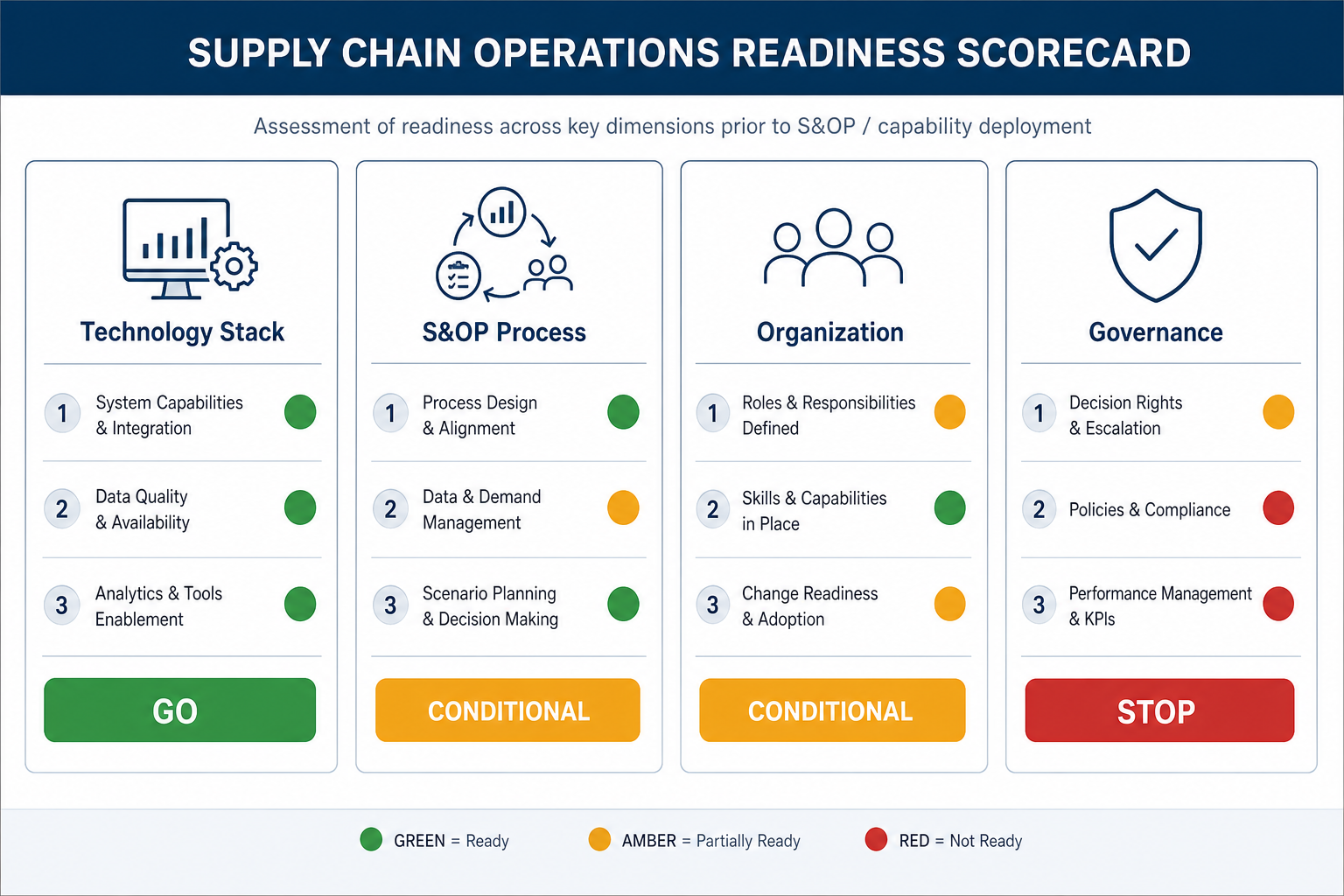
AI Demand Forecasting Implementation Readiness Checklist for Demand Planning Leads
A structured four-dimension self-assessment checklist for demand planning leads evaluating whether their organization is ready to deploy AI demand forecasting — covering technology stack compatibility, S&OP process maturity, organizational change management, and cross-functional governance, explicitly excluding data readiness topics addressed in companion guides.
By Editorial Team
AI Demand Forecasting Pilot Design and Rollout Sequencing Guide
A structured, stage-sequenced guide for demand planning teams designing and rolling out AI forecasting pilots — covering scope selection, data prerequisites, success metrics, and sequencing decisions that determine whether a pilot converts to production.
By Supply Chain AI Review Editorial Team
AI Procurement Implementation Guide: Supplier Risk Scoring Rollout
A stage-sequenced implementation guide for procurement teams deploying AI-driven supplier risk scoring — covering data prerequisites, model selection criteria, ERP integration checkpoints, pilot design, and the governance decisions that determine whether a rollout reaches production.
By Supply Chain AI Review Editorial
AI Supply Chain Integration: ERP Data Readiness Assessment Checklist
A structured, stage-by-stage checklist for assessing ERP data readiness before integrating AI into supply chain operations — covering data quality, schema alignment, integration architecture, and go/no-go decision criteria.
By Supply Chain AI Review Editorial
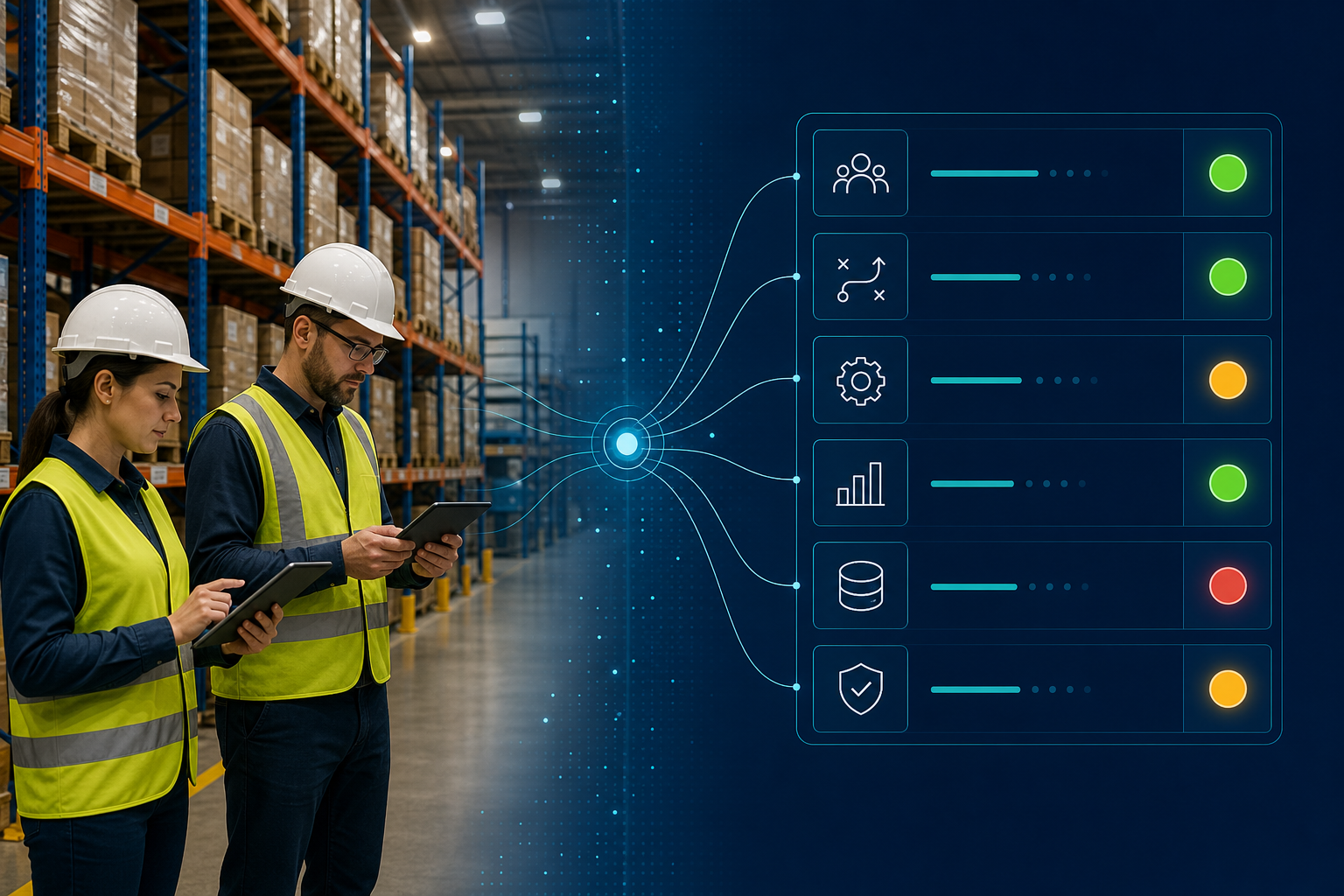
AI WMS Integration Readiness Checklist: Six Dimensions to Assess Before Deployment
A structured, dimension-by-dimension readiness assessment for warehouse operations directors and IT leaders evaluating AI integration into their warehouse management system — covering data quality, ERP and system integration, WMS architecture, process standardization, organizational change capacity, and vendor fit before any deployment begins.
By Editorial Team

Change Management Guide for Autonomous Procurement AI: Organizational Readiness and Phased Deployment Planning
A practitioner-level framework for CPOs, procurement transformation leads, and operations managers planning to move autonomous procurement AI from pilot to production scale—covering organizational readiness assessment, stakeholder authority mapping, role redesign, resistance management, and phased governance handoffs.
By Editorial Team
Change Management for WMS AI Integration: Checklist and Readiness Guide
A structured readiness guide and annotated checklist for warehouse operations managers and IT leads navigating the organizational and process changes required when integrating AI capabilities into an existing WMS environment.
By Supply AI Hub Editorial
Data Readiness Assessment for AI Demand Forecasting Implementation
A structured assessment framework for demand planning teams evaluating whether their data environment can support AI-driven forecasting. Covers history requirements, data quality gates, ERP integration conditions, and common failure modes before deployment.
By Supply Chain AI Review Editorial
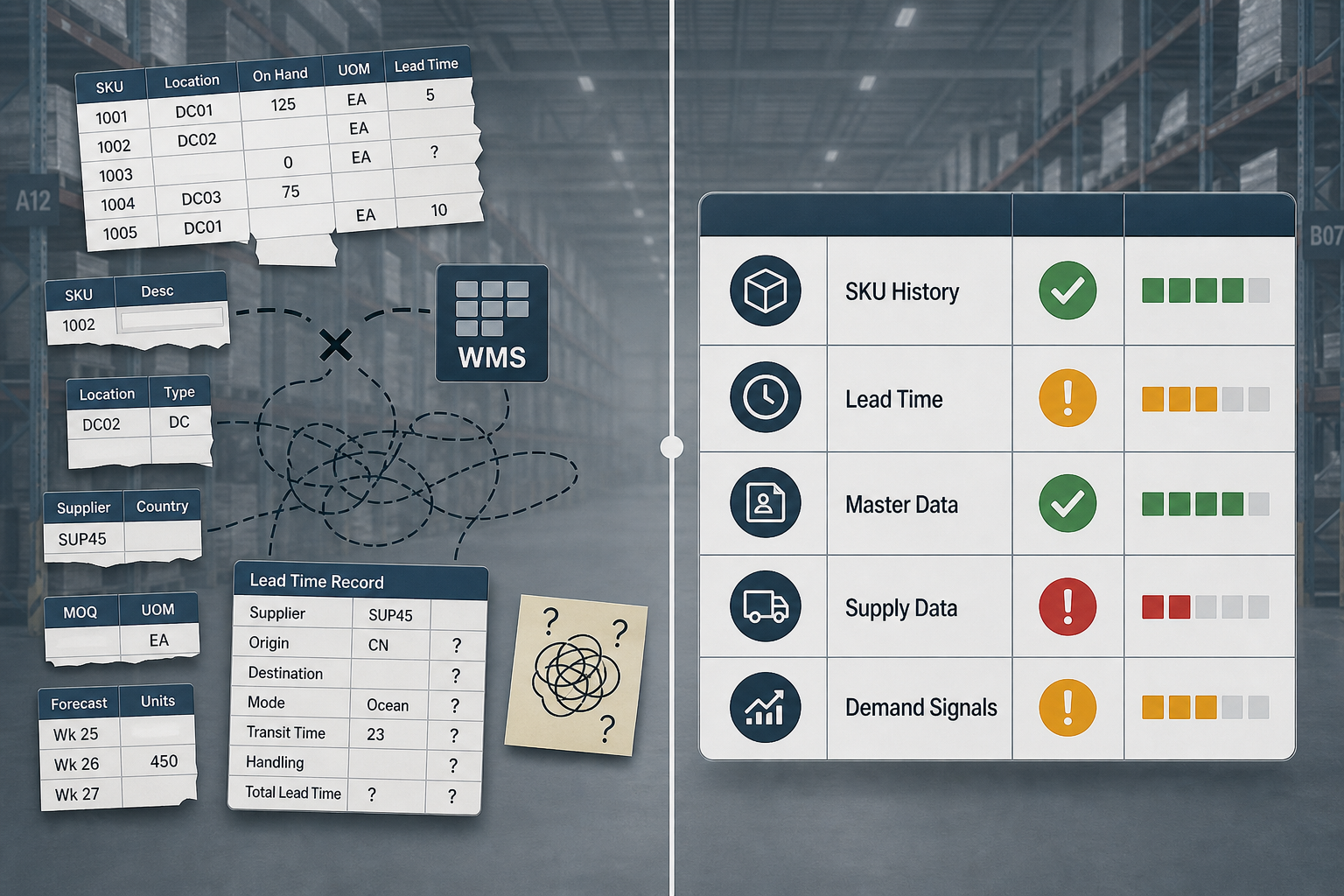
Data Readiness Assessment for AI Inventory Optimization: Implementation Guide
A structured, inventory-specific framework for supply chain practitioners to assess whether their data environment is ready for AI inventory optimization deployment — covering five critical data dimensions, a scoring methodology, gap remediation sequencing, and explicit go/no-go criteria before vendor selection or pilot commitment.
By Editorial Team
Data Readiness Assessment for AI Procurement Automation: Implementation Guide
A structured framework for procurement teams to assess data readiness before deploying AI automation — covering required data domains, quality thresholds, integration prerequisites, and a staged rollout approach from pilot to production.
By Supply AI Hub Editorial
Data Readiness Assessment Checklist for AI Demand Forecasting Implementation
A structured, stage-sequenced checklist for demand planning teams to assess whether their data environment can support AI-driven demand forecasting — covering history depth, granularity, cleanliness, ERP integration, and known failure points before vendor selection or model deployment begins.
By Supply Chain AI Review Editorial
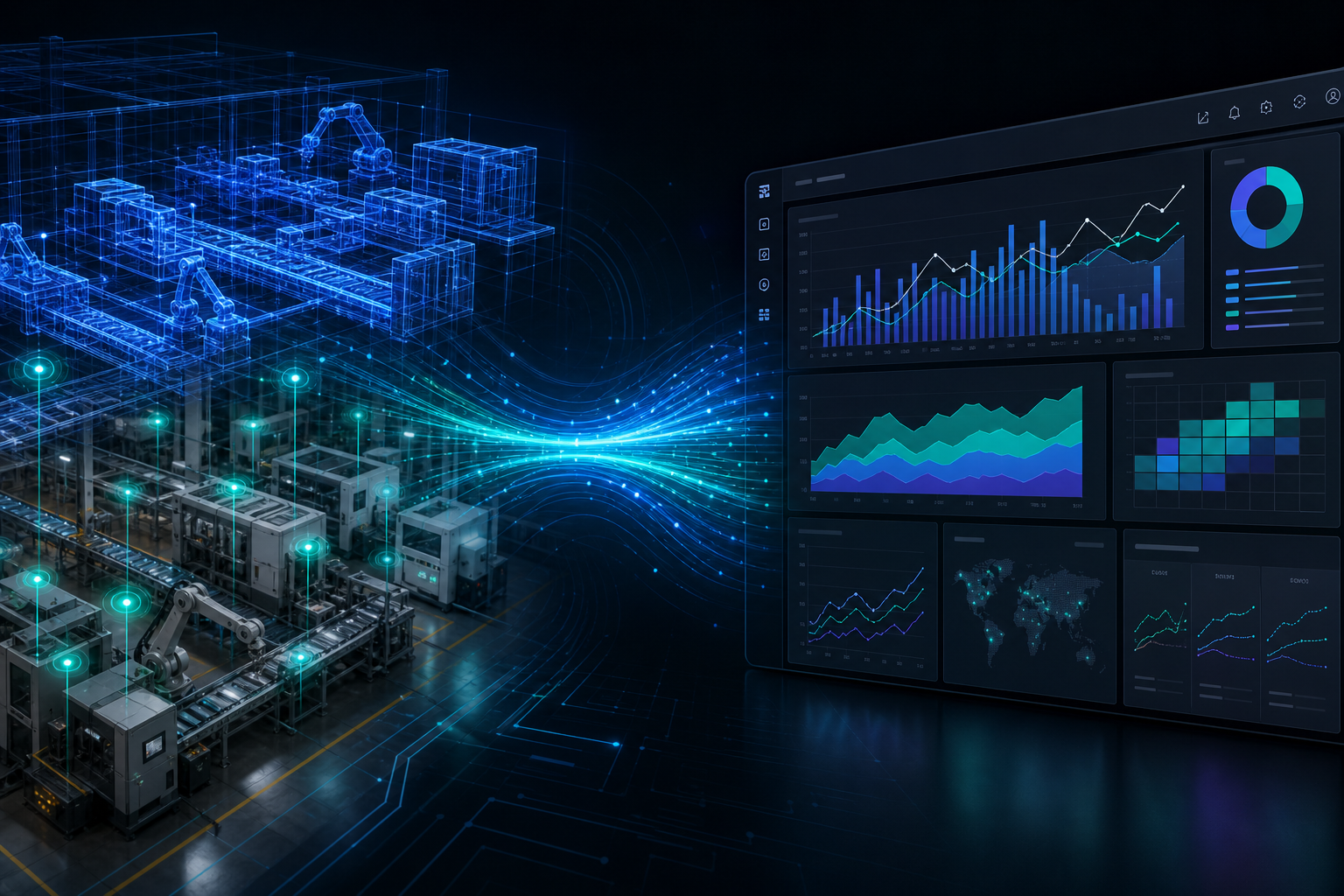
Connecting Factory Digital Twins to S&OP: How Manufacturers Bridge the OT-IT Planning Gap
Most manufacturers run factory digital twins and S&OP processes in isolation, leaving constrained-capacity intelligence locked on the shop floor while supply plans rely on assumed capacity. This guide explains the architectural patterns, organizational governance requirements, and platform options that let production AI feed live, constraint-aware signals into S&OP and scenario planning.
By Editorial Team
ERP Integration Readiness for AI Demand Planning: A Practitioner's Guide
A structured readiness framework for supply chain teams assessing whether their ERP environment can support AI demand planning deployment — covering data prerequisites, integration architecture patterns, common failure points, and a staged readiness checklist.
By Supply AI Hub Editorial
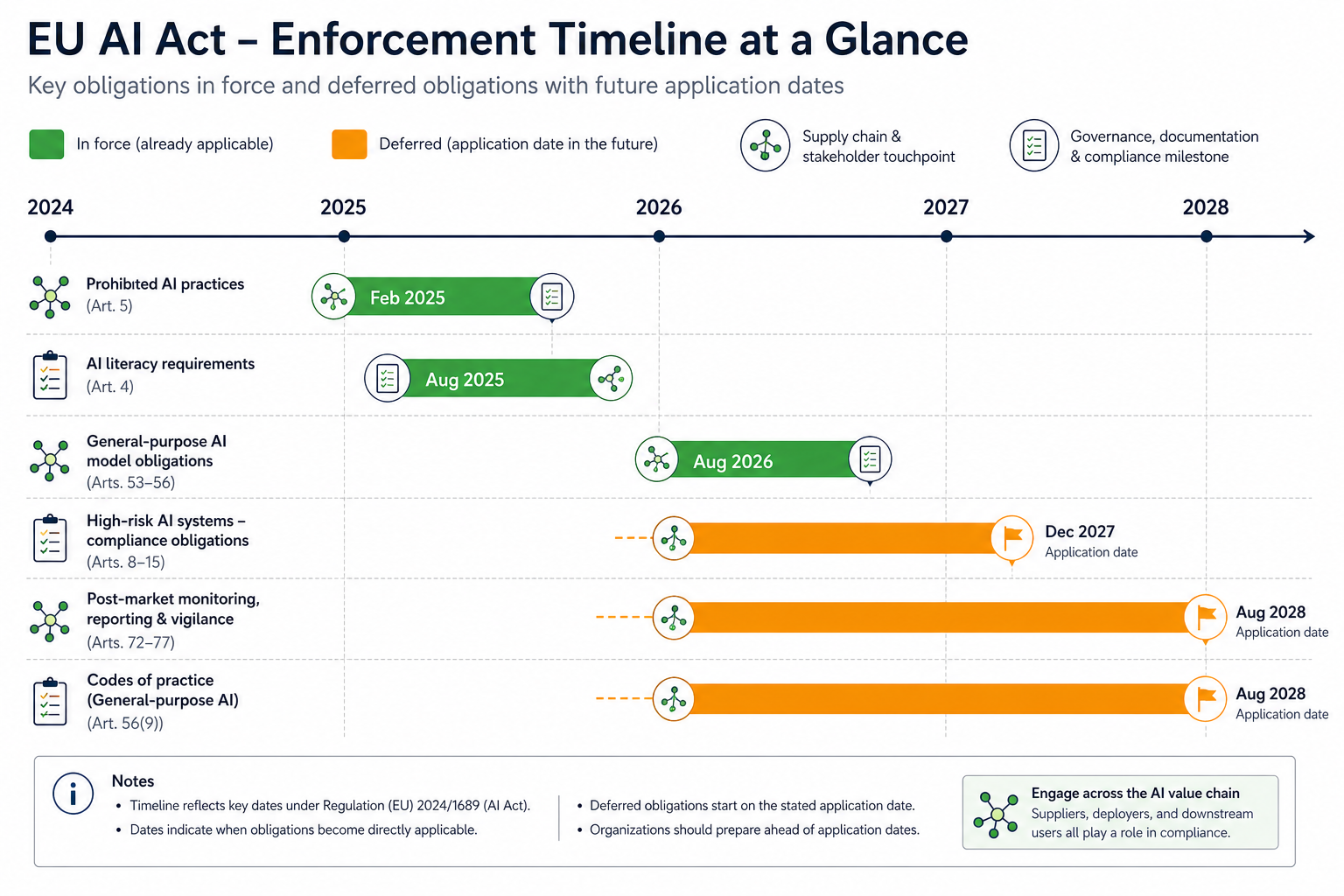
EU AI Act Enforcement Milestones After the Digital Omnibus: What Changed and What Supply Chain Operators Must Do Now
The Digital Omnibus provisional agreement of May 2026 deferred the EU AI Act's Annex III high-risk enforcement deadline from August 2026 to December 2027, but several obligations are already in force and the window to build a defensible compliance posture is open now. This record maps the revised enforcement calendar, identifies which supply chain AI use cases carry high-risk classification exposure, and outlines the deployer and procurement actions required before December 2027.
By Editorial Team
EU AI Act Supply Chain Compliance: What High-Risk Classification Means for AI Procurement and Planning Tools
The EU AI Act's high-risk classification framework has direct implications for supply chain AI deployments — particularly procurement automation, supplier scoring, and workforce planning tools. This record examines which supply chain AI applications are affected, what compliance obligations attach, and where vendors and operators share responsibility.
By Supply Chain AI Review Editorial
Human-in-the-Loop Design Patterns for Autonomous Procurement AI: A Governance Framework
A practitioner-oriented governance framework covering the four primary human-in-the-loop design patterns for autonomous procurement AI — when to use each, how to assign accountability, and what audit trail requirements apply in production environments.
By Supply AI Hub Editorial
Kinaxis Q2 2026: Funding Position, Product Direction, and What It Means for Planning Evaluations
A practitioner-oriented market signal record covering Kinaxis's Q2 2026 product trajectory, AI capability additions, and the competitive positioning signals relevant to supply chain planning evaluations in progress.
By Supply Chain AI Review Editorial
Model Drift Monitoring for Autonomous Inventory AI: A Supply Chain Governance Framework
A practitioner-oriented governance reference covering how model drift manifests in autonomous inventory AI, what monitoring signals matter, and how to assign accountability when models make consequential replenishment decisions without human sign-off.
By Supply AI Hub Editorial
Model Drift Monitoring in Production Supply Chain AI Systems
A governance reference covering how to detect, classify, and respond to model drift in production supply chain AI — including drift types specific to demand forecasting, procurement automation, and inventory optimization, plus organizational accountability structures for ongoing monitoring.
By Supply AI Hub Editorial
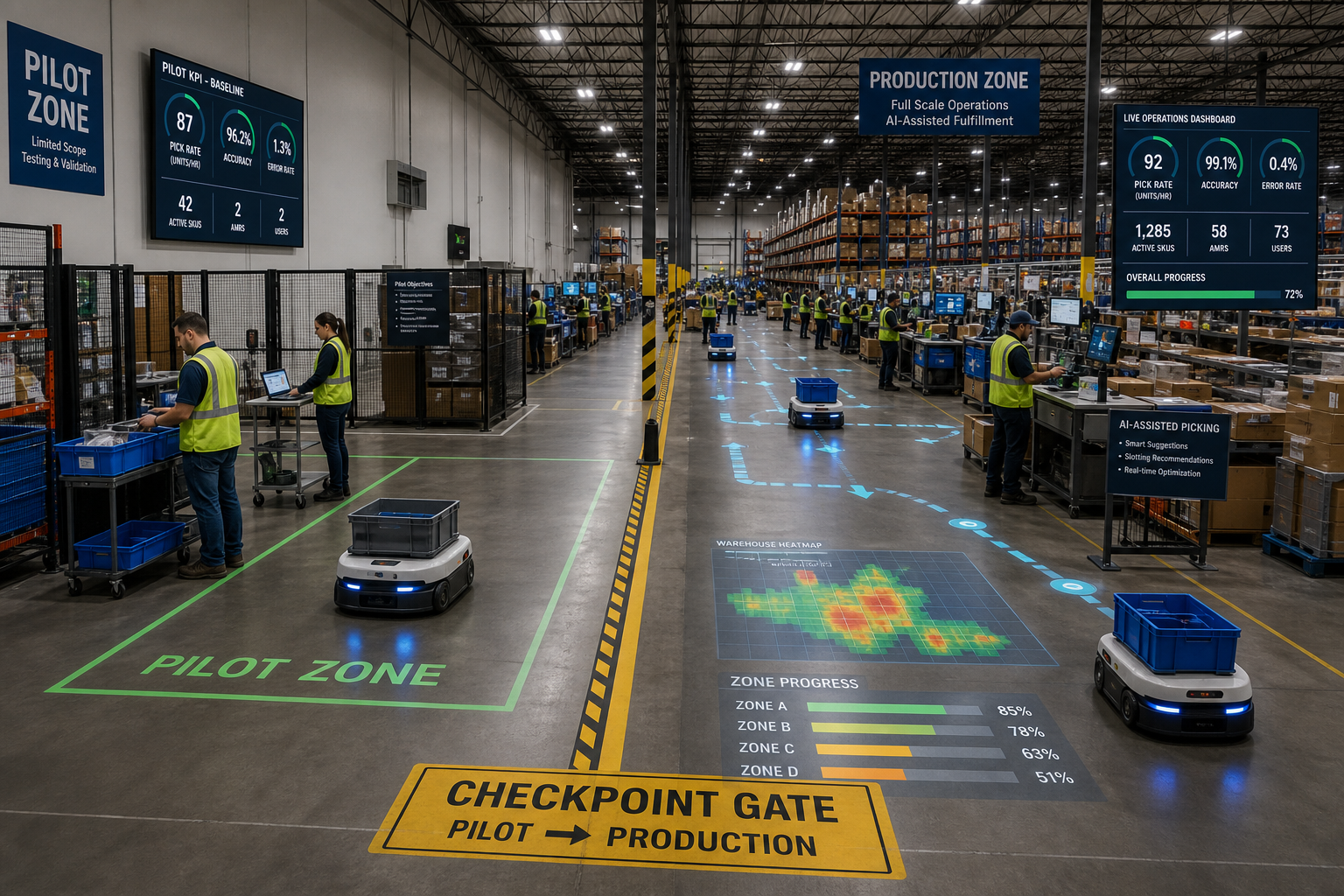
Pilot to Production: A Phase-Gate Sequencing Framework for Warehouse AI Implementation
A structured deployment guide for warehouse operations managers and VP Operations who have committed to warehouse AI and need explicit phase-gate criteria — covering data quality thresholds, WMS integration checkpoints, workforce adoption milestones, and multi-site scaling conditions — to move from a controlled pilot to full production without stalling at the 88–95% failure rate that characterizes underprepared rollouts.
By Editorial Team
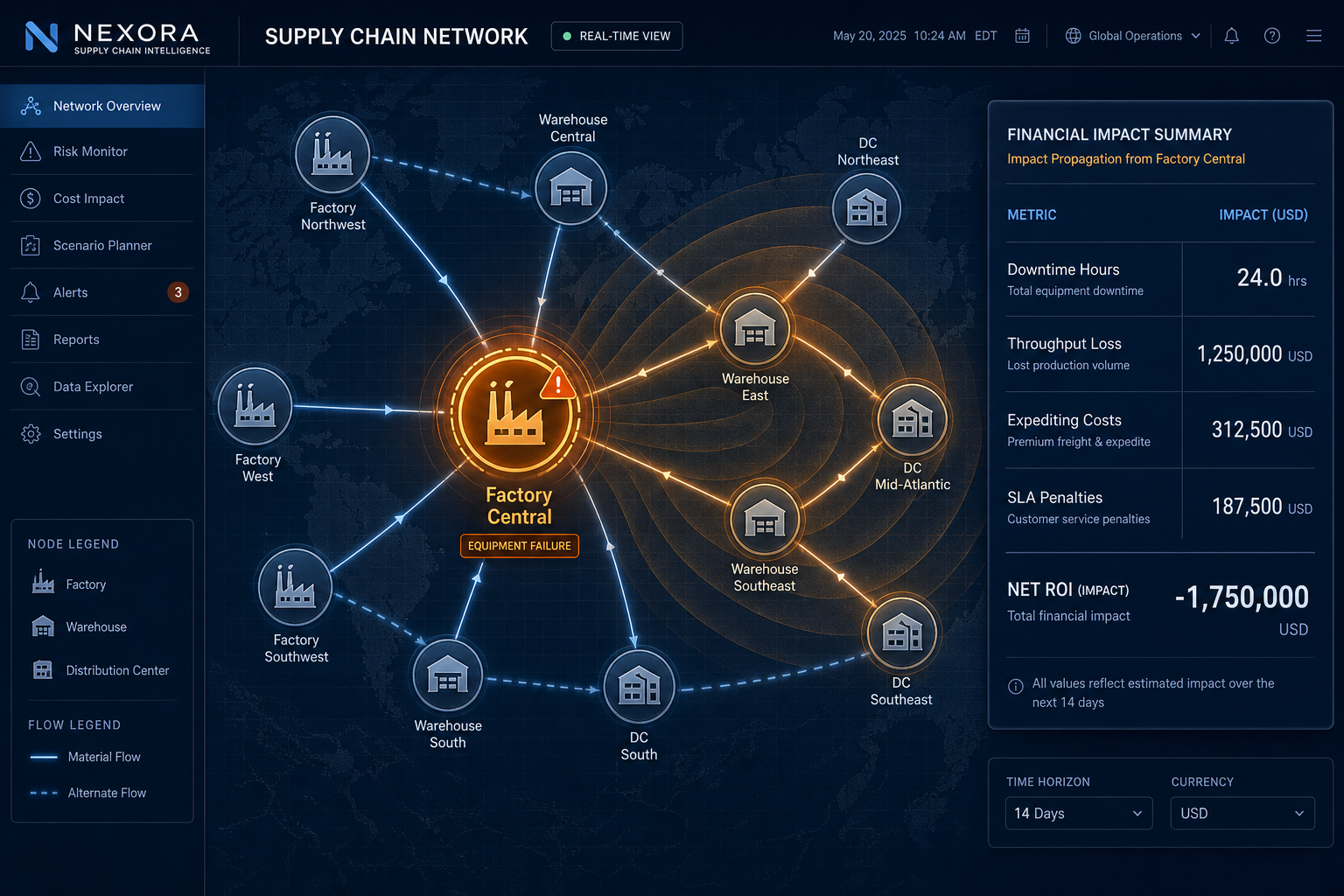
Predictive Maintenance ROI Modeling for Supply Chain Planners: Quantifying the Full Cost of Equipment Downtime
Most predictive maintenance business cases are built on maintenance cost savings alone — systematically understating total value by ignoring the supply chain disruption costs that cascade from equipment failures. This guide gives supply chain planners a structured framework for conducting a full-scope downtime impact analysis and building a defensible ROI model that captures both direct and indirect costs.
By Editorial Team
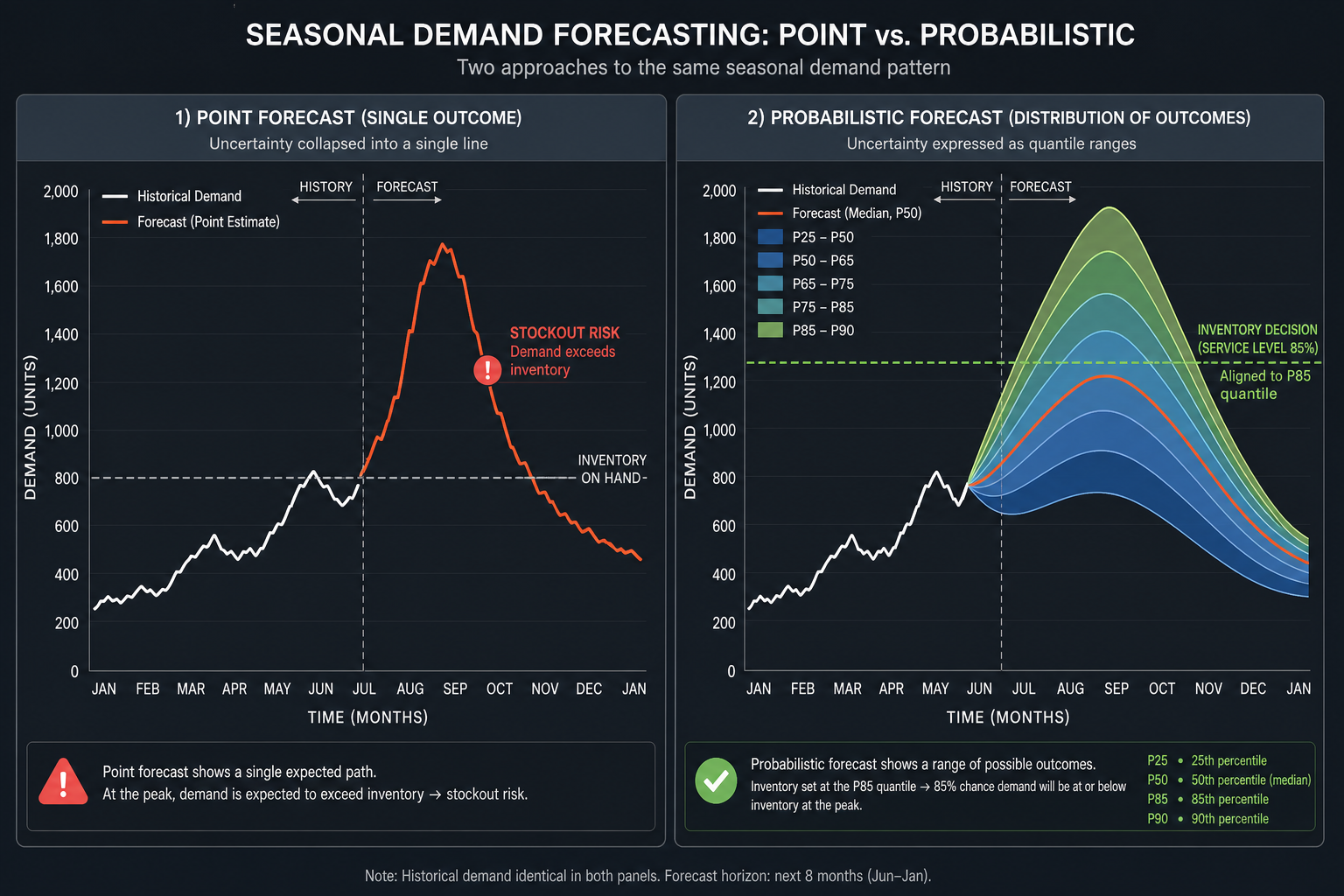
Probabilistic Demand Forecasting vs. Statistical Forecasting for Seasonal CPG Supply Chains
For CPG and FMCG supply chain teams managing seasonal SKUs, traditional statistical forecasting methods produce single point estimates that hide the demand uncertainty driving costly stockouts and overstock. This article explains how probabilistic demand forecasting outputs full distributions over possible future demand, why that distinction matters specifically for seasonal and promotional products, and how to determine which approach fits which part of your portfolio.
By Editorial Team

Q2 2026 Supply Chain AI Product Releases: What They Signal to Buyers
Q2 2026 delivered the most consequential wave of supply chain AI product releases to date — agentic closed-loop platforms, AI-native logistics networks, and consolidating warehouse automation stacks — but Gartner data shows 83% of organizations remain in incremental adoption mode. This analysis decodes what each major release signals for buyers planning vendor selections and technology roadmaps heading into H2 2026.
By Editorial Team
Supply Chain AI Agentic Automation: Market Developments Q2 2026
A practitioner-oriented review of the most consequential market developments in supply chain agentic AI automation through Q2 2026 — covering vendor moves, product shifts, funding signals, and governance pressure points that affect deployment decisions.
By Supply Chain AI Review Editorial
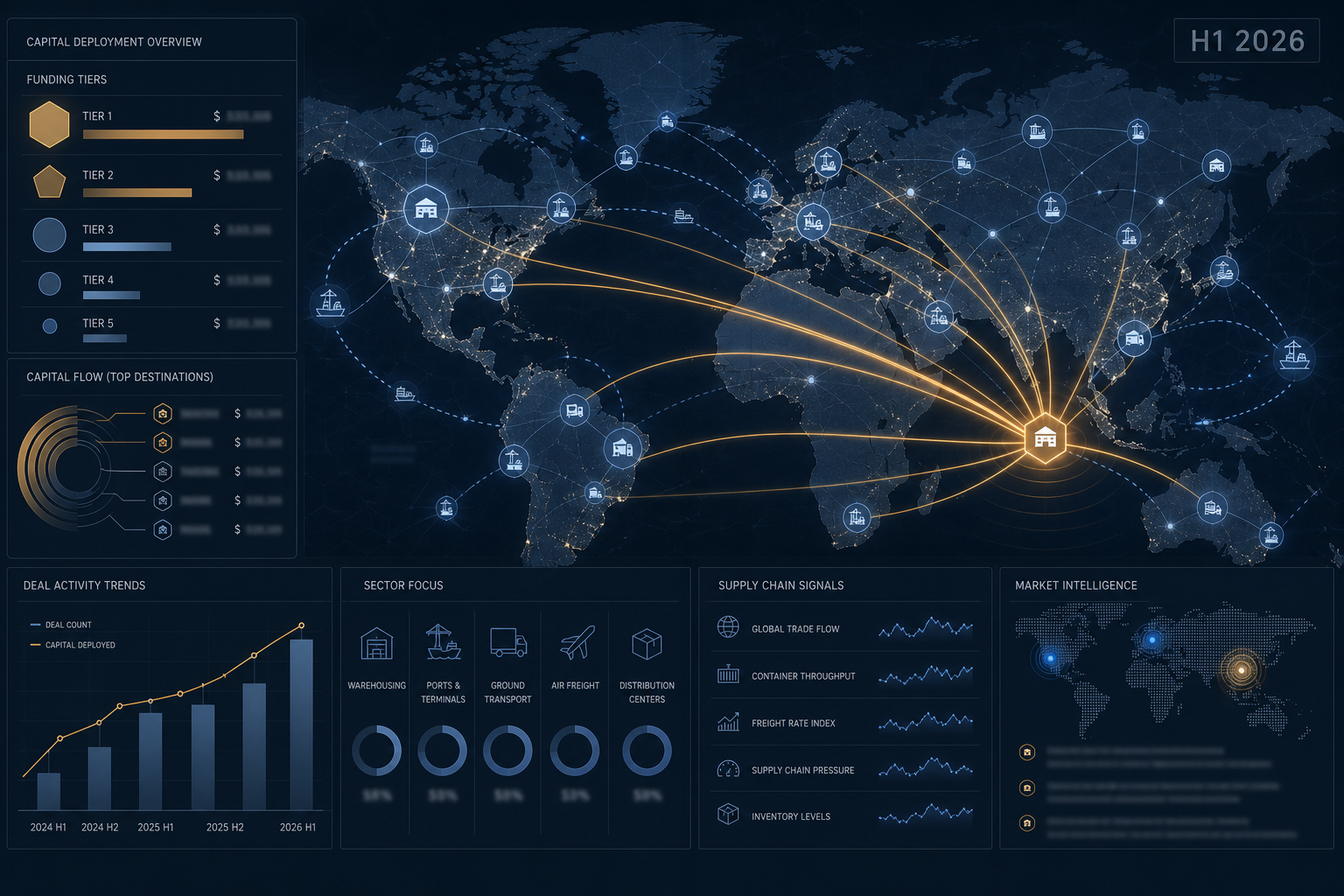
Supply Chain AI Funding and M&A: What H1 2026 Deals Signal for Vendor Selection
A sourced review of named supply chain AI funding rounds and acquisitions from the first half of 2026 — covering Loop, ORO Labs, Stord, Aptean/OpsVeda, and others — with editorial interpretation of what the deal patterns mean for practitioners evaluating AI vendors, managing renewal decisions, or assessing consolidation risk.
By Editorial Team
Supply Chain AI Funding Rounds & M&A Activity: Q2 2026 Market Signals
A structured review of notable supply chain AI funding rounds and M&A activity in Q2 2026, with editorial framing on what each deal signals for vendor capability trajectories, integration landscapes, and practitioner evaluation decisions.
By Supply Chain AI Review Editorial
Supply Chain AI Vendor Funding & M&A: Market Signals Q2 2026
A dated, practitioner-oriented review of notable supply chain AI funding rounds, acquisitions, and partnership shifts observed in Q2 2026 — with editorial framing on what each signal means for vendor selection, integration risk, and category consolidation.
By Supply Chain AI Review Editorial

2025 AI Infrastructure Stock Scorecard for Supply Chain
This scorecard examines 2025 price targets and actual performance of key AI infrastructure stocks—including NVIDIA, Micron, Broadcom, and AMD—to help supply chain leaders assess the financial durability of the technology stack their AI platforms depend on. The data confirms a multiyear, institutionally funded buildout that provides strong market validation, while also highlighting important caveats about application execution risk and power constraints.
By Editorial Team
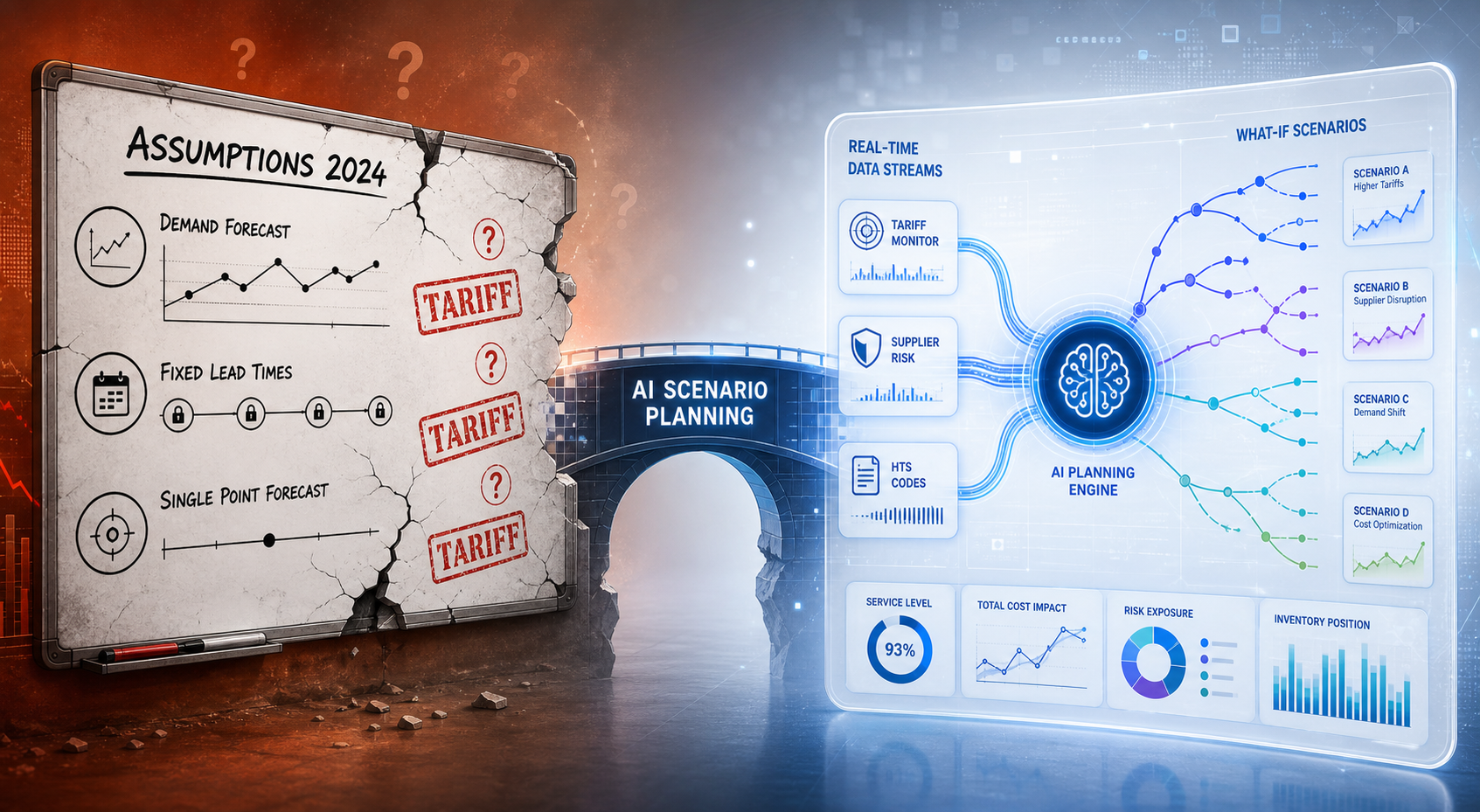
The Assumption Crisis: How 2025 Tariffs Broke the Core Planning Assumptions Behind S&OP, Demand Forecasting, and Inventory Optimization — and Why AI Scenario Planning Is the Only Way to Rebuild Them
This article explains how the 2025 tariff regime has invalidated three foundational planning pillars — historical demand forecasting, static cost/lead-time inputs, and single-point inventory optimization — and argues that AI-driven scenario planning with dynamic assumption updating is the necessary replacement. Written for VP/Director of Planning, S&OP leaders, and Demand Planning heads at mid-to-large enterprises facing structural tariff volatility.
By Editorial Team

The 2026 AI Security Policy Overhaul for Supply Chains
Three concurrent 2026 policy actions—the AI Executive Order, NSPM-11, and the NDAA's AI supply chain provisions—create an interlocking compliance regime that extends supply chain security mandates into AI/ML, prohibits certain foreign AI tools, and establishes government-run threat intelligence mechanisms. This article provides a unified reading of these actions and the concrete compliance steps organizations must take.
By Editorial Team

Does Agentic AI Deliver on Geopolitical Risk? Evidence from Iran
The Iran war is the first real-world stress test of agentic AI in geopolitical supply chain risk management. This analysis examines what the crisis revealed about AI's ability to speed decision-making—and where it still falls short.
By Editorial Team
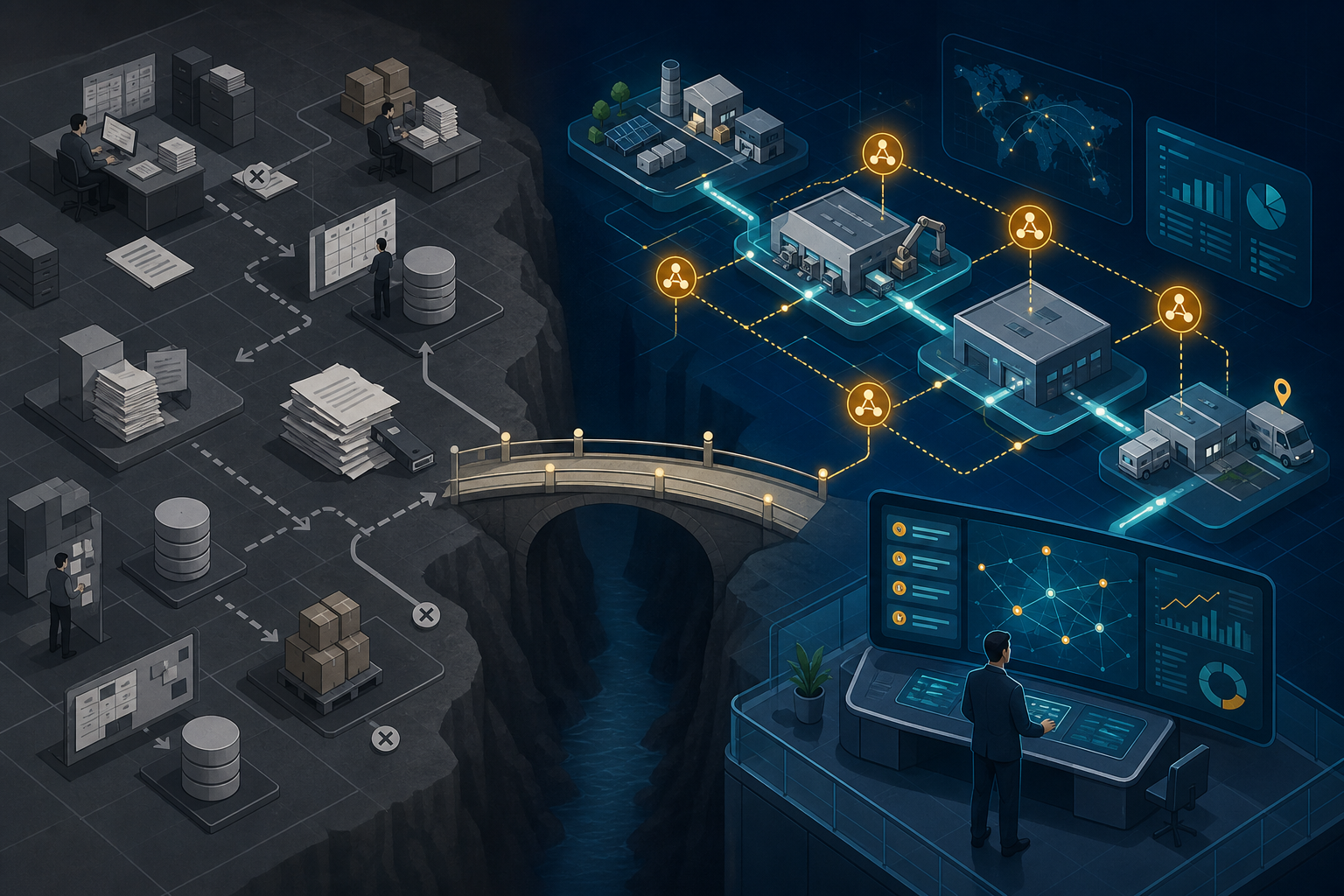
Agentic AI in Supply Chain: From Pilot to Production — Use Cases, Architecture, and the Human-AI Collaboration Model That Actually Works
This article provides supply chain technology leaders with a grounded, evidence-based view of agentic AI in 2026 — covering where it delivers measurable value today, the architecture required to support multi-agent systems, and the guardrails and human-in-the-loop models that make autonomous decision-making viable in production environments.
By Editorial Team

Agentic AI in Supply Chain: How Autonomous Agents Are Moving from Pilots to Production in 2026
This article provides supply chain technology leaders with a practical deployment roadmap for agentic AI — covering current adoption data, quantified use cases, governance guardrails, and a graduated trust model to move from pilot to production without overstepping organizational readiness.
By Editorial Team

Agentic AI in Supply Chain Planning: Where It's Working and What Governance Looks Like
This article identifies three agentic AI applications currently deployed in supply chain planning—purchase optimization, always-on integrated business planning, and autonomous root cause analysis—and outlines the graduated governance framework that determines whether these agents create value or introduce operational risk.
By Editorial Team

Agentic AI in Supply Chain Depends on Readiness, Not Just Model Power
What agentic AI means for supply chain in 2026, which use cases early adopters have deployed, and what measurable outcomes they report. This article also explains the governance and data prerequisites organizations must establish before scaling autonomous decision-making agents.
By Editorial Team

Agentic AI in Supply Chain: From Visibility to Autonomous Action in 2026
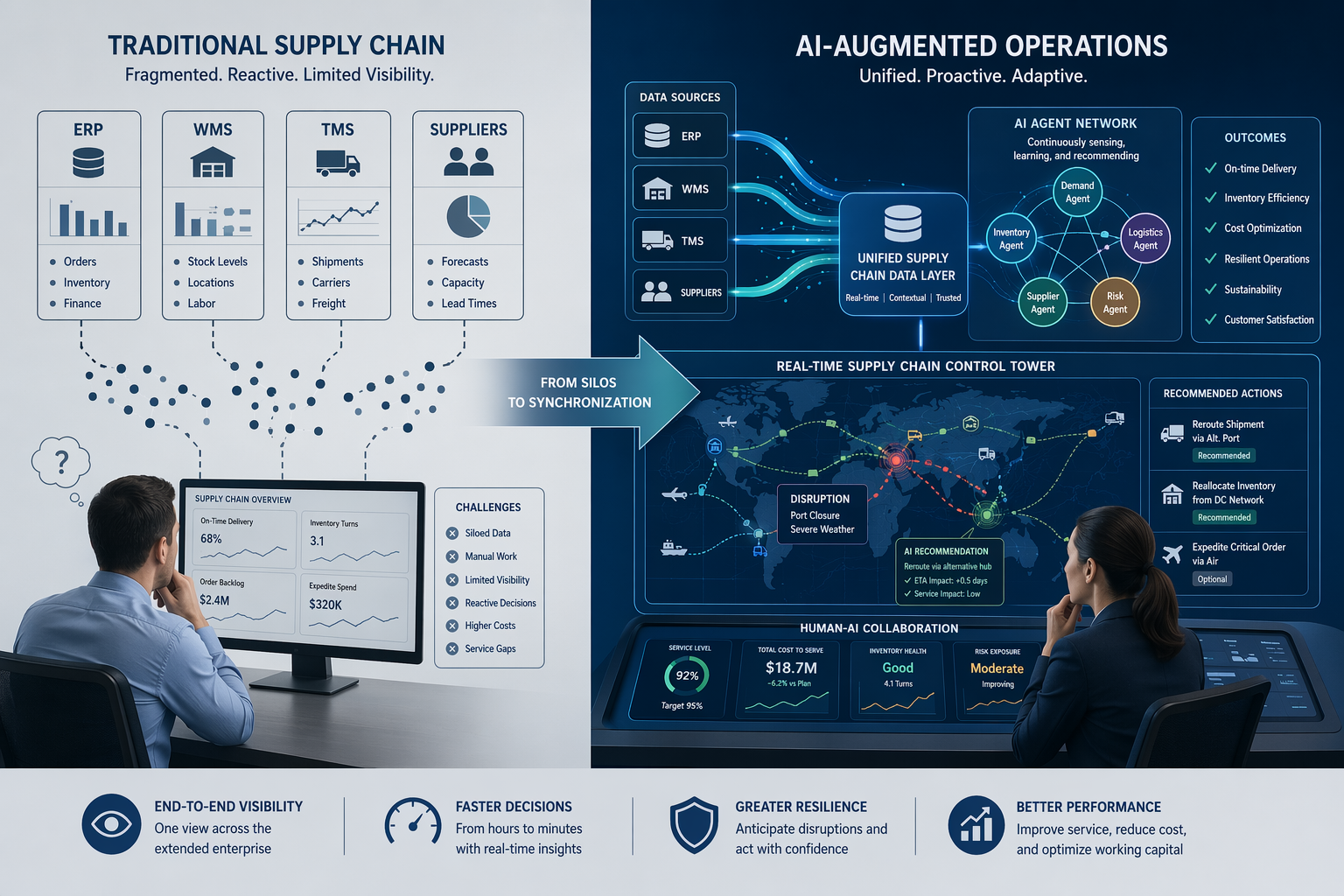
For supply chain technology leaders and innovation directors: this article examines the 2026 shift from passive AI dashboards to active agentic systems that detect disruptions, reason across systems, and take corrective action autonomously — and the governance, architecture, and workforce redesign prerequisites most organizations have not yet addressed.
By Editorial Team
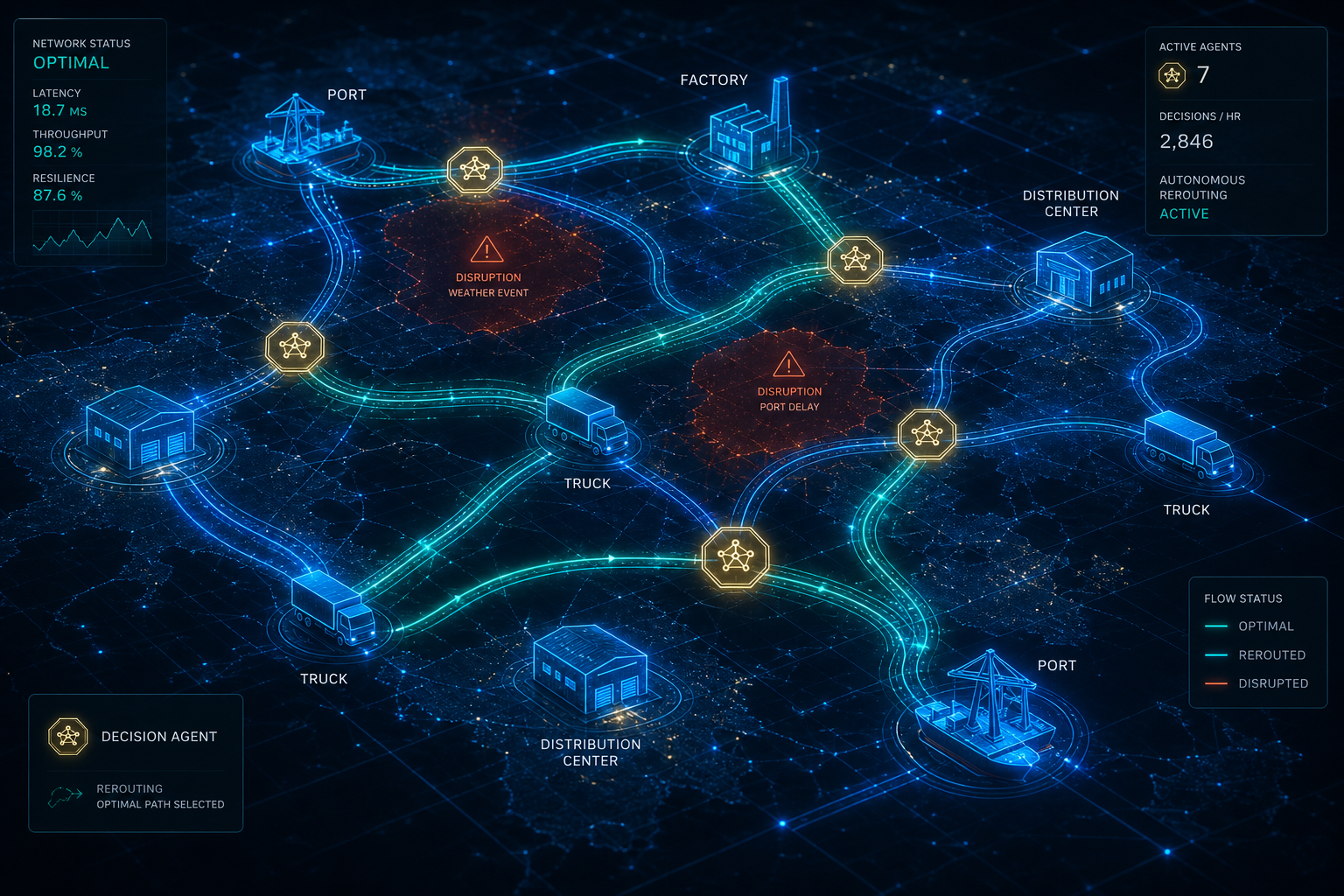
From Visibility to Autonomous Execution: How Agentic AI Is Reshaping Supply Chain Operations in 2026
This article argues that 2026 marks a fundamental shift from passive supply chain visibility dashboards to autonomous execution powered by agentic AI. Written for supply chain technology leaders, it defines agentic AI versus other AI paradigms, presents market projections from BCG and Gartner, showcases real-world use cases, and outlines the data foundation and governance requirements for successful adoption.
By Editorial Team
Agentic AI in Supply Chain: Why Workflow Redesign Matters More Than Technology in 2026
This article argues that the critical success factor for agentic AI in supply chain is fundamentally redesigning workflows around human-agent collaboration, not layering agents onto existing processes. It provides supply chain technology leaders with a four-foundations framework (data architecture, tech stack modernization, workforce redesign, and trust/security guardrails) grounded in the latest Gartner, Deloitte, and BCG data.
By Editorial Team

The AI Adoption Paradox in Supply Chain: High Intent, Low Readiness
Examines why 94% of supply chain organizations plan to deploy AI yet only 23% have a formal strategy — and what the leaders who close this readiness gap do differently to capture value.
By Editorial Team

Why AI Advertising Backlash Is Damaging Supply Chain Trust
The backlash against inflated AI advertising is reshaping B2B procurement in supply chain. This article examines why overclaiming AI capabilities erodes both algorithmic visibility and buyer trust, and what vendors must do to maintain credibility.
By Editorial Team

AI Agent Skills Are the New Supply Chain Vendor Risk
Supply chain organizations deploying AI agents inherit ungoverned vendor dependencies in the form of agent skills. Analysis of 49,943 skills from the OpenClaw registry found 80% exhibit mismatches between declared and actual behavior, and 5% carry multi-stage attack chains capable of credential exfiltration or operational hijack. This article explains why existing third-party risk management fails to cover agent skills and how to add integrity verification, provenance tracking, and zero-trust consumption to your vendor risk program.
By Editorial Team

Why AI audio surveillance in supply chains needs ethical guardrails
AI audio surveillance tools in warehouses and logistics centers promise safety gains but carry hidden ethical and legal risks—including racial disparities in monitoring exposure, stress-related injuries, and a fragmenting regulatory landscape. This editorial examines the documented liabilities and provides a governance framework for supply chain leaders evaluating these tools.
By Editorial Team

AI Aviation Supply Chain Reforms That Tackle the $11B Crisis
Aviation supply chains face $11B in documented losses from OEM dependency, fragile networks, and labor shortages. This analysis maps those root causes to specific AI interventions that deliver measurable cost reductions and operational gains.
By Editorial Team

The Investment Case for AI and Blockchain in Supply Chain
Supply chain leaders face a capital allocation decision between AI and blockchain investments, each with vastly different maturity, funding, and ROI profiles. This analysis provides a framework to evaluate them individually and together, drawing on market data, ROI benchmarks, and governance lessons from high-profile failures.
By Editorial Team

The AI Chip Boom Is Reshaping Semiconductor Supply Through 2028
The surging demand for AI chips is causing a structural reallocation of semiconductor production capacity, squeezing supply of conventional components used across electronics. This article explains why the shortage differs from earlier crises and outlines procurement strategies to manage constraints through 2028.
By Editorial Team
Why HBM and Advanced Packaging Bottleneck the AI Chip Supply Chain
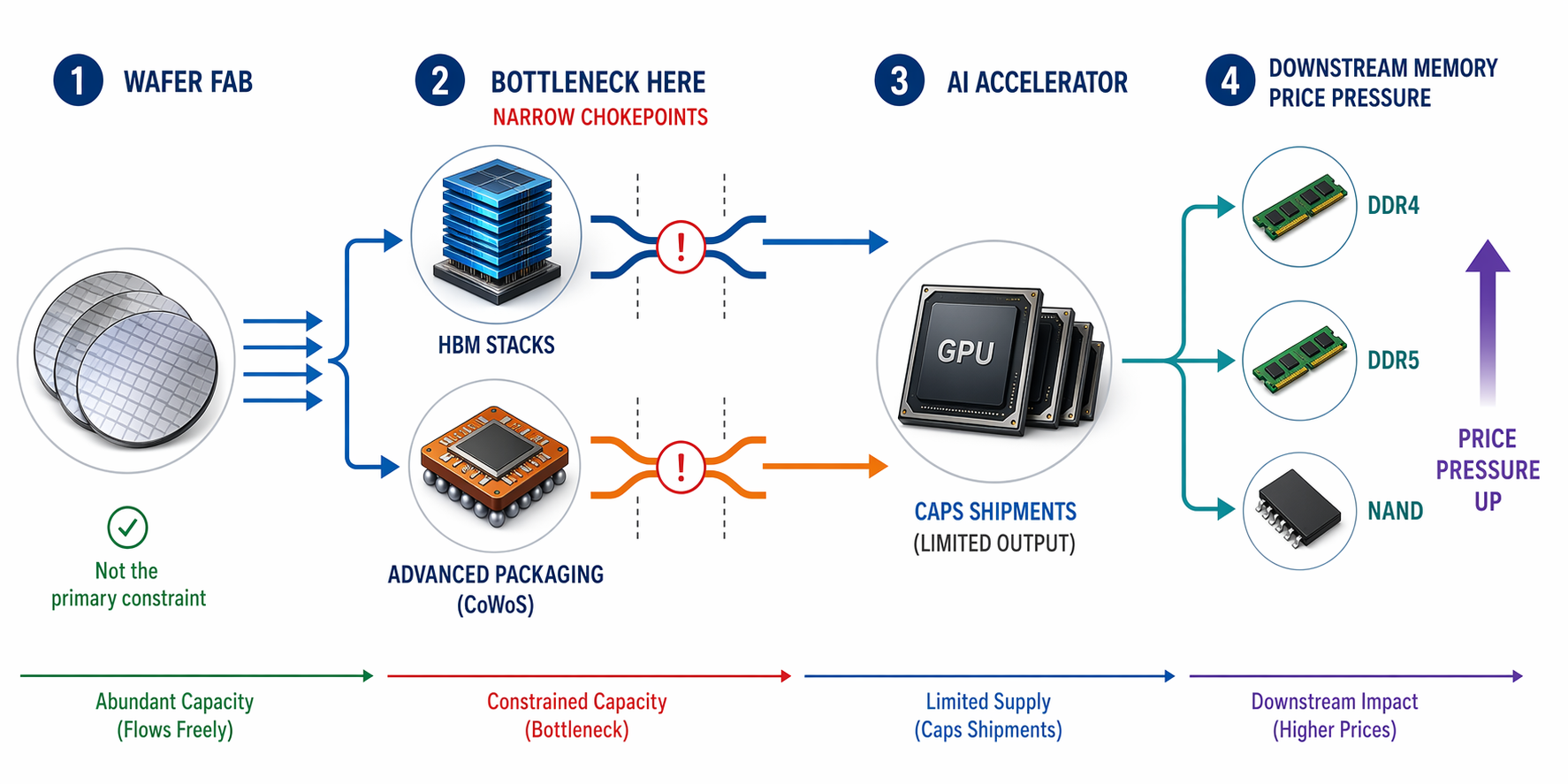
The AI chip supply chain in 2026 faces a bottleneck that isn't wafer fab capacity: high-bandwidth memory and advanced packaging are the real constraints capping accelerator shipments. This analysis explains how these constraints ripple to raise DRAM and NAND prices, and what procurement teams should factor into sourcing, lead-time, and BOM planning.
By Editorial Team

What AI Chip Supply Chain Investment Trends Mean for Procurement
With over $770 billion in semiconductor investments announced since 2020, supply chain hardware buyers face a multi-year supply-demand gap. This analysis maps where the money is going and provides a framework for adjusting procurement strategy around AI chips, sensors, and embedded processors.
By Editorial Team

How AI Copyright Lawsuits Create Hidden Supply Chain Risk
AI copyright lawsuits against foundation model providers create cascading legal and financial liability for companies using AI in procurement, forecasting, and logistics. This article explains the liability chain and what supply chain leaders must demand in vendor contracts to protect themselves.
By Editorial Team

How AI Cost Forecasting Protects Margins Under Structural Inflation
As supply chain costs remain structurally elevated through 2026, AI-powered cost forecasting is emerging as the primary tool for margin protection. This analysis reviews the evidence from Kearney, McKinsey, and real deployments to show what works, what doesn't, and what the investment timeline looks like.
By Editorial Team