
What AI-Based Seasonal Demand Planning Changes
AI-based seasonal demand planning is the use of machine learning and real-time demand signals to update seasonal forecasts before the next formal planning cycle. The important shift is not that a forecast becomes “AI-generated.” It is that weather feeds, POS data, promotion calendars, pricing moves, social signals, and IoT readings can keep changing the demand view while the season is already moving.
A static seasonal forecast usually starts with prior-year sales, applies an uplift or curve, and gets reviewed on a weekly or monthly cadence. That can work for stable holiday patterns or low-volatility items. It struggles when July heat arrives two weeks early, a regional promotion drains a specific store cluster, or a freezer cabinet starts showing depletion that the weekly POS file will not fully reflect until replenishment has already missed the shelf.
This use case sits inside the broader demand forecasting and demand sensing family, but it is narrower than a generic forecasting program. For CPG and retail teams comparing adjacent applications, ChainSignal’s AI demand forecasting in CPG and retail use-case reference covers the wider landscape. Seasonal demand planning is the part where timing, location, weather, events, and replenishment latency do the most damage when the forecast stays frozen.

The Evidence Base: Useful, But Not All Equivalent
The strongest reading of the current evidence is that AI can materially improve seasonal demand planning when the business has volatile demand and usable fast-moving signals. The weaker reading, and the one vendors too often imply, is that every SKU-channel combination should expect the midpoint of a broad accuracy range. Those are not the same claim.
| Evidence point | What it measures | How to read it |
|---|---|---|
| McKinsey-attributed benchmark: AI forecasting reduces forecast errors by 20–50%, cuts lost sales up to 65%, and enables 20–50% inventory reduction, as reported in secondary sources [1][2] | Broad performance range across AI forecasting contexts | Useful as an expectation band, not a guaranteed seasonal result for every category |
| Walmart deployment: ensemble ML forecasting across 4,700 stores, 300 bps forecast accuracy improvement, and $86M annual food waste savings [1] | Large-scale retail deployment snapshot | One of the more concrete operating examples, though reported through a secondary source |
| Church Brothers Farms: 40% short-term forecast accuracy improvement in an agriculture demand forecasting case [3] | Seasonal produce forecasting outcome | Relevant to weather- and harvest-sensitive planning, but vendor-reported |
| RELEX: weather data integration can reduce forecast errors by 5–15% at product level and up to 40% at product-group level for weather-sensitive categories [4] | Weather-signal contribution to forecast accuracy | Especially useful because it separates weather-sensitive demand from general demand |
| Unilever ice cream: 100,000+ IoT-connected freezer cabinets used as demand sensors; about 5% of seasonal replenishment orders generated directly from AI real-time signals [5] | IoT-enabled replenishment signal deployment | A practical example of demand sensing, with figures traced through an editorial source citing Unilever’s own release |
| Novolex: 16% excess inventory reduction through AI-driven demand sensing [6] | Inventory outcome linked to demand sensing | Operationally relevant, but vendor-reported and not necessarily seasonal-specific |
| Directional ROI benchmarks: 3.5X average ROI within 12–24 months; implementation costs from $50K to $500K+ from SMB to enterprise deployments [7] | Investment sizing and payback range | Treat as directional secondary-source synthesis, not audited economics |
The table matters because it keeps three evidence types apart. Broad benchmark ranges help set the ceiling of ambition. Named deployment snapshots show that the capability has moved beyond slideware. Vendor-reported case studies point to where the system can work, but they rarely expose the integration backlog, planner override behavior, or the categories where the model did not travel well.
Walmart’s example is the cleanest large-scale retail signal in the available material because it connects model use to store count, accuracy movement, and food waste savings. That still does not mean a regional grocer, a beverage brand, or an apparel chain can copy the result. The transferable part is the operating pattern: use ensemble forecasting at scale, feed it store-level signals, and make the output consequential enough to affect replenishment and waste.
The RELEX weather figures are also useful because they do not pretend that weather has the same value everywhere. A five-point temperature swing may matter deeply for ice cream, chilled beverages, lawn care, or fresh produce. It may barely move demand for a slow-turning pantry item. That distinction is where seasonal AI projects either become targeted operating tools or expensive dashboards.
How the Forecast Gets Sharper
The modeling toolkit can include gradient boosting methods such as XGBoost or LightGBM, Prophet-style time-series models, transformer-based approaches, ensembles, and classical baselines such as ARIMA or exponential smoothing. The model family matters, but less than the operating design around it. A strong classical baseline with fresh local signals can beat a fashionable model that is starved of current demand inputs.
- Historical demand: prior-year seasonality, holiday timing, weekday effects, regional demand curves, and item-store patterns.
- Weather feeds: temperature, precipitation, humidity, and forecasted changes that affect weather-sensitive categories.
- Commercial signals: promotion calendars, price changes, retailer scanner data, competitor pricing, and channel-specific merchandising plans.
- Demand sensing inputs: POS streams, social sentiment, search or trend signals, and IoT sensor data from assets such as cabinets, coolers, or production equipment.
- Execution feedback: stockouts, substitutions, service levels, replenishment actions, and planner overrides that explain why observed sales may not equal true demand.
The practical gain comes from sub-cycle updates. If a weekly forecast review locks the demand plan on Monday, but a heat wave, promotion, and local depletion pattern become visible by Wednesday, the AI system can raise the signal before the next meeting. The planning team still needs rules for when that update changes replenishment, when it triggers human review, and when it is suppressed because the input is noisy.
For deeper benchmark context on accuracy ranges and how they are usually measured, see ChainSignal’s AI demand forecasting accuracy benchmarks. Seasonal demand planning should be judged with the same discipline: forecast error reduction is only valuable if it survives at the item-location-time level where inventory decisions are made.
The Freezer Cabinet Is a Better Seasonal Sensor Than a Monthly Review
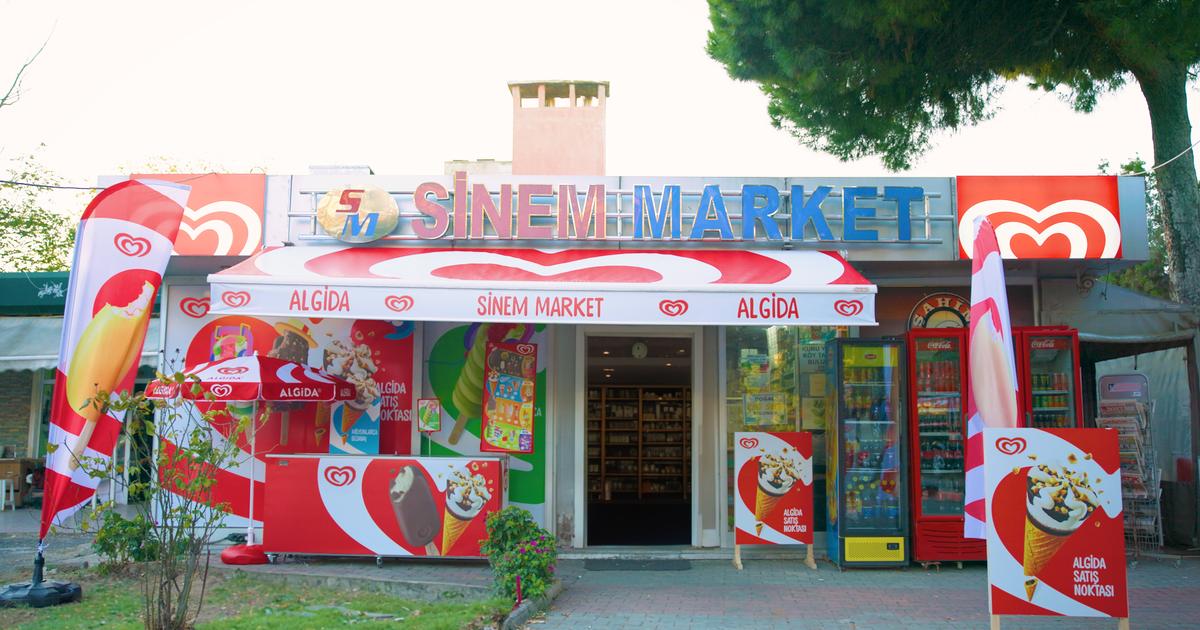
Unilever’s ice cream example shows why seasonal AI is not just a better curve-fitting exercise. The reported deployment uses more than 100,000 AI-equipped freezer cabinets as real-time demand sensors, cross-referencing depletion rates with local weather to generate autonomous replenishment signals. About 5% of seasonal replenishment orders were generated directly from AI real-time signals, according to Log-hub’s write-up citing Unilever’s 2025 release [5].
That 5% figure is modest in the right way. It does not imply that AI took over the whole ordering process. It shows where the system found demand movement that was specific enough to act on. In a seasonal category, catching the right 5% of replenishment exceptions before the shelf empties can matter more than producing a prettier national forecast.
Where the Use Case Has the Best Fit
AI-based seasonal demand planning has the strongest fit where demand changes quickly, the change is visible in external or operational signals, and the organization can still act before the season passes. The last condition is easy to underweight. A better forecast that arrives after production is frozen, vendor lead times are exhausted, or store labor has already been scheduled becomes an explanation, not a decision tool.
- Retail: store-level forecasts for holiday, weather, local event, and promotion-driven demand.
- CPG and food and beverage: seasonal replenishment, promotional lift, fresh and chilled inventory, and weather-sensitive consumption.
- Agriculture and fresh produce: short-term demand alignment where weather, harvest timing, perishability, and regional demand interact.
- Apparel and fashion: trend sensing and allocation decisions where social signals and selling velocity can change the seasonal curve.
- Aftermarket and service parts with seasonal peaks: categories where climate, usage patterns, and regional installed base influence demand.
The category screen should come before the vendor demo. If the business cannot name the seasonal drivers, the refresh frequency, the decision owner, and the downstream action, it is not yet evaluating an AI seasonal planning system. It is evaluating forecasting software in general.
Implementation Reality: The Algorithm Is Not the Long Pole
The uncomfortable part of this use case is that the hardest work is rarely model selection. Articsledge’s synthesis cites BCG’s 10-20-70 principle: 10% algorithms, 20% technology, and 70% people and process. The same source cites BCG’s finding that only 4% of companies achieve substantial value from AI implementations [7]. Those numbers are blunt, but they match what planning rooms already know: the forecast is only one handoff in a longer operating chain.
Data readiness is the first gate. About 60% of organizations struggle with data readiness for AI demand planning, according to nexocode’s discussion of AI demand planning challenges [8]. In seasonal planning, the weak points are usually familiar: inconsistent item hierarchies, late POS feeds, promotion calendars that live outside the planning system, missing stockout flags, weather data mapped too coarsely, and IoT signals that arrive without a clean link to product, store, or replenishment policy.
Integration time is not a side task. Log-hub cites research indicating that data integration consumes about 42% of AI implementation timelines [5]. That is credible because the seasonal model needs more than a historical sales table. It needs weather APIs, retailer feeds, pricing inputs, promotion metadata, inventory positions, service constraints, and governance rules for which source wins when signals conflict.
Planner adoption is the second gate. A continuously updating forecast changes the rhythm of review. Planners need to know why the forecast moved, which signal drove the change, whether the change is inside tolerance, and whether the replenishment system will act automatically. If the model sends unexplained changes into the plan, planners will either override it reflexively or wait for the next meeting, which defeats the purpose of sub-cycle sensing.
Model degradation is the third gate. Seasonal patterns drift: promotions move, weather norms shift, consumers trade down, competitors change price, and channel mix changes the meaning of last year’s demand. Monitoring has to track forecast error by item, location, horizon, and season phase, not just publish one aggregate accuracy score. The ugly misses are usually local.
For readers validating the organizational work behind demand sensing, ChainSignal’s CPG demand sensing AI production deployment case study is the more relevant companion than another model explainer. Seasonal AI succeeds when improved forecasts are absorbed into replenishment, allocation, production, and exception management.
Representative Vendor Landscape
The vendor market is broad enough that the shortlist should start with operating fit, not logo familiarity. Blue Yonder, o9 Solutions, Kinaxis, RELEX, ToolsGroup, IBM, ThroughPut AI, OnePint, Slimstock, and Anaplan all appear in or around the AI planning and demand forecasting landscape. The right comparison is not simply “which platform has AI.” It is which one can ingest the signals that matter for the category and push forecast changes into the decisions the business can still make.
| Vendor orientation | What to validate in seasonal planning |
|---|---|
| Retail and replenishment planning platforms such as Blue Yonder, RELEX, ToolsGroup, and Slimstock | Store-item forecasting, promotion and weather handling, exception workflows, and replenishment integration |
| Enterprise planning platforms such as o9 Solutions, Kinaxis, Anaplan, and IBM Planning Analytics with Watson | Cross-functional planning, scenario management, S&OP or IBP integration, and governance across planning layers |
| Demand sensing and applied AI specialists such as ThroughPut AI and OnePint | Signal ingestion, short-horizon forecast improvement, implementation support, and proof of value in comparable categories |
A useful demo should show how the system behaves when signals disagree. If the weather feed says demand should spike, POS is muted because the shelf is empty, and the promotion calendar says the lift should have started yesterday, the system’s explanation layer matters. Seasonal demand planning is full of those collisions.
Questions That Separate a Pilot From a Planning Capability
- Which seasonal decisions will change if the forecast improves: replenishment, allocation, production, labor, purchasing, or markdown timing?
- Which external and operational signals are available at the item-location level, and how often can they be refreshed?
- How will the team distinguish true demand from constrained sales when stockouts or substitutions occur?
- What accuracy metric will be tracked by horizon, category, and season phase rather than averaged into a flattering total?
- Who approves model-driven forecast changes, and which changes can flow automatically into replenishment?
- What monitoring process will catch degradation when weather, promotions, channel mix, or consumer behavior changes?
The downstream link is where many seasonal AI pilots lose value. A forecast that improves on paper but does not change inventory positioning will not prevent the stockout. For ecommerce and omnichannel teams thinking about the allocation side, ChainSignal’s AI inventory allocation stockout use case shows how demand signals need to flow into fulfillment decisions.
The Practical Qualification
AI-based seasonal demand planning is a strong candidate for organizations with volatile seasonal demand, meaningful real-time signals, and enough operational flexibility to act before the season moves on. The documented upside is real enough to justify serious evaluation: broad benchmark ranges point to 20–50% forecast-error reduction, and named deployments show concrete improvements in retail, food, agriculture, and weather-sensitive categories.
The business case should still be built around data integration capacity, planner adoption, monitoring discipline, and the ability to turn improved forecasts into replenishment and inventory decisions. If those pieces are weak, the model may still be impressive. The seasonal plan will not be.
References
- AI in Demand Forecasting: Use Cases, Benefits, Solution and Implementation — LeewayHertz
- What is AI demand forecasting? — IBM
- Case Study: AI Demand Forecasting for Agriculture — Church Brothers Farms — ThroughPut World
- Complete guide to machine learning in retail demand forecasting — RELEX Solutions
- Forecasting the Heat: How AI is Reshaping Demand Planning — Log-hub
- Machine Learning in Demand Planning: How to Boost Forecasting — ToolsGroup
- AI for Demand Forecasting in Seasonal Sales Businesses — Articsledge
- Navigating Supply Chain Transformation: Overcoming AI-Based Demand Planning Challenges — nexocode
Comments
Join the discussion with an anonymous comment.