Implementation Guides

Practitioner Guides for AI Deployment

Practitioner-oriented guides covering the operational, organizational, and technical dimensions of deploying AI in supply chain functions — including data readiness assessments, change management frameworks, build-vs-buy decision guides, integration roadmaps, and AI adoption maturity models. This group serves supply chain leaders and digital transformation teams who have moved past awareness and are actively planning or executing AI initiatives. Content acknowledges real implementation difficulty, failure modes, and organizational prerequisites rather than presenting idealized deployment paths. Excludes product feature descriptions (those belong in vendor-profiles) and conceptual overviews (those belong in editorial). Guides are structured for deep reading with clear step-by-step or framework-based organization.

Guides are organized by implementation stage (Awareness → Optimization) and target role. Filter to find guidance that matches your position.

49 guides

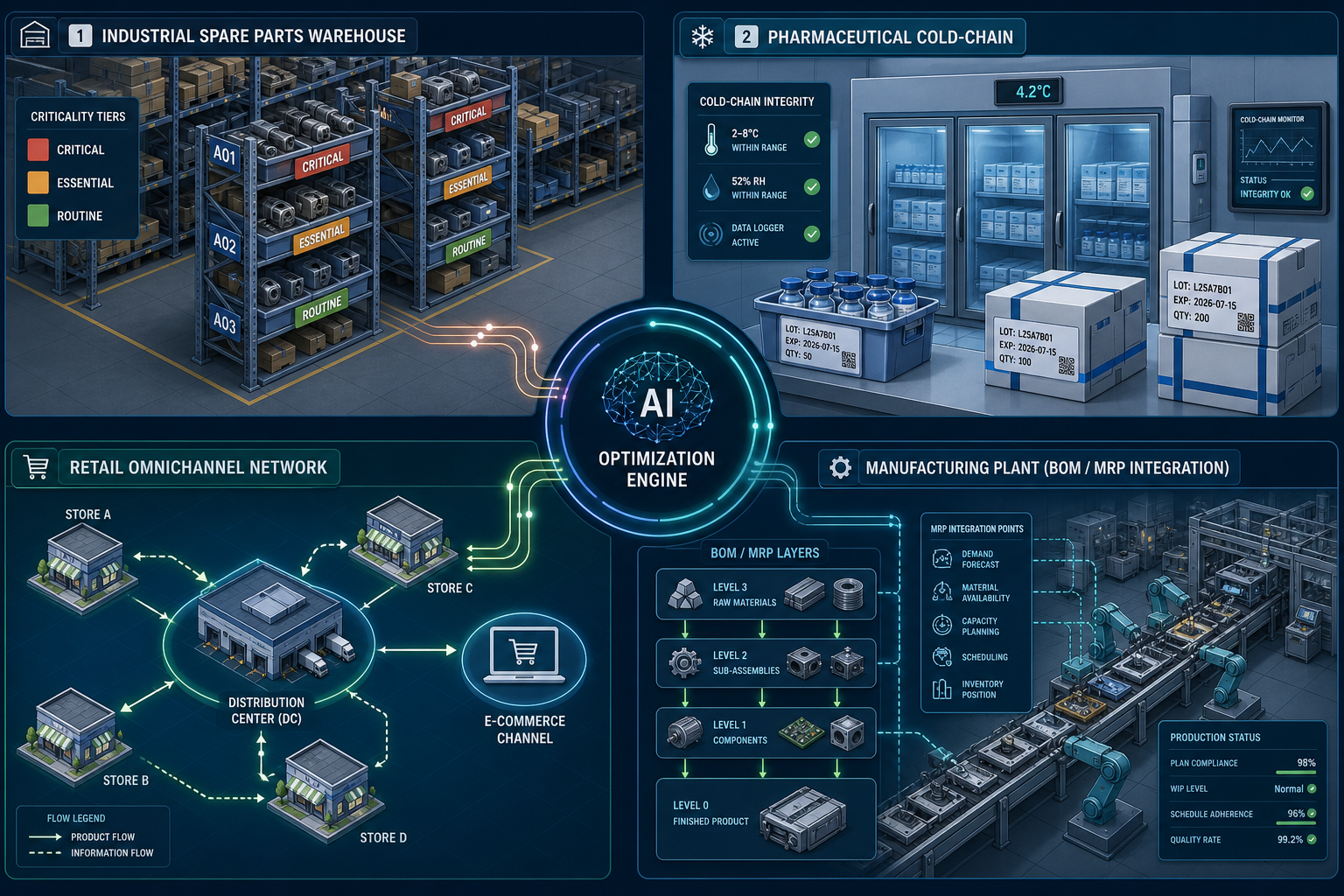
  • AI Multi-Echelon Inventory Optimization by Industry Vertical: Spare Parts, Pharma, Retail, and Manufacturing

    AI Multi-Echelon Inventory Optimization by Industry Vertical: Spare Parts, Pharma, Retail, and Manufacturing

    AI-driven MEIO does not apply uniformly across industries — the required AI techniques, data prerequisites, service-level definitions, and failure modes differ substantially between spare parts, pharmaceutical, retail, and manufacturing supply chains. This use-case record gives inventory planning leads in each vertical a structured applicability guide for evaluating whether and how MEIO fits their specific operational constraints before committing to deployment.
  • Gartner 2024 Supply Chain Technology Adoption Report: AI Planning Benchmarks

    A structured record of Gartner's 2024 supply chain technology adoption findings, covering AI planning adoption rates, deployment maturity tiers, investment intent, and the top barriers practitioners reported. Scoped to the planning function with supporting data on demand forecasting, S&OP/IBP, and inventory optimization.

  • MHI 2024 Annual Industry Report: Supply Chain AI Adoption Benchmarks

    A structured benchmark record covering the MHI 2024 Annual Industry Report's AI adoption data for supply chain operations — including adoption rates by technology category, investment intent, deployment maturity indicators, and the barriers practitioners ranked highest.

  • Probabilistic Demand Forecasting for Short-Lifecycle SKU Retail

    A use-case library entry mapping the operational problem of short-lifecycle SKU demand uncertainty in retail to probabilistic forecasting techniques — covering data requirements, applicable conditions, known limitations, and representative implementation patterns.
  • Agentic AI in Supply Chain: A Practitioner’s Guide to Graduated Autonomy in 2026
    Pilotcross-functional supply chain planning, logistics, procurement, inventory

    Agentic AI in Supply Chain: A Practitioner’s Guide to Graduated Autonomy in 2026

    This guide helps supply chain planning and operations leaders move from predictive analytics to agentic AI by deploying a graduated autonomy model. It covers the five highest-ROI domains, a three-tier governance framework, common pilot failure modes, and a practical starting playbook.

    For: Supply Chain Planning and Operations Leader~18 min
  • A Structured AI Adoption Roadmap for Transportation and Logistics
    PilotTransportation and Logistics

    A Structured AI Adoption Roadmap for Transportation and Logistics

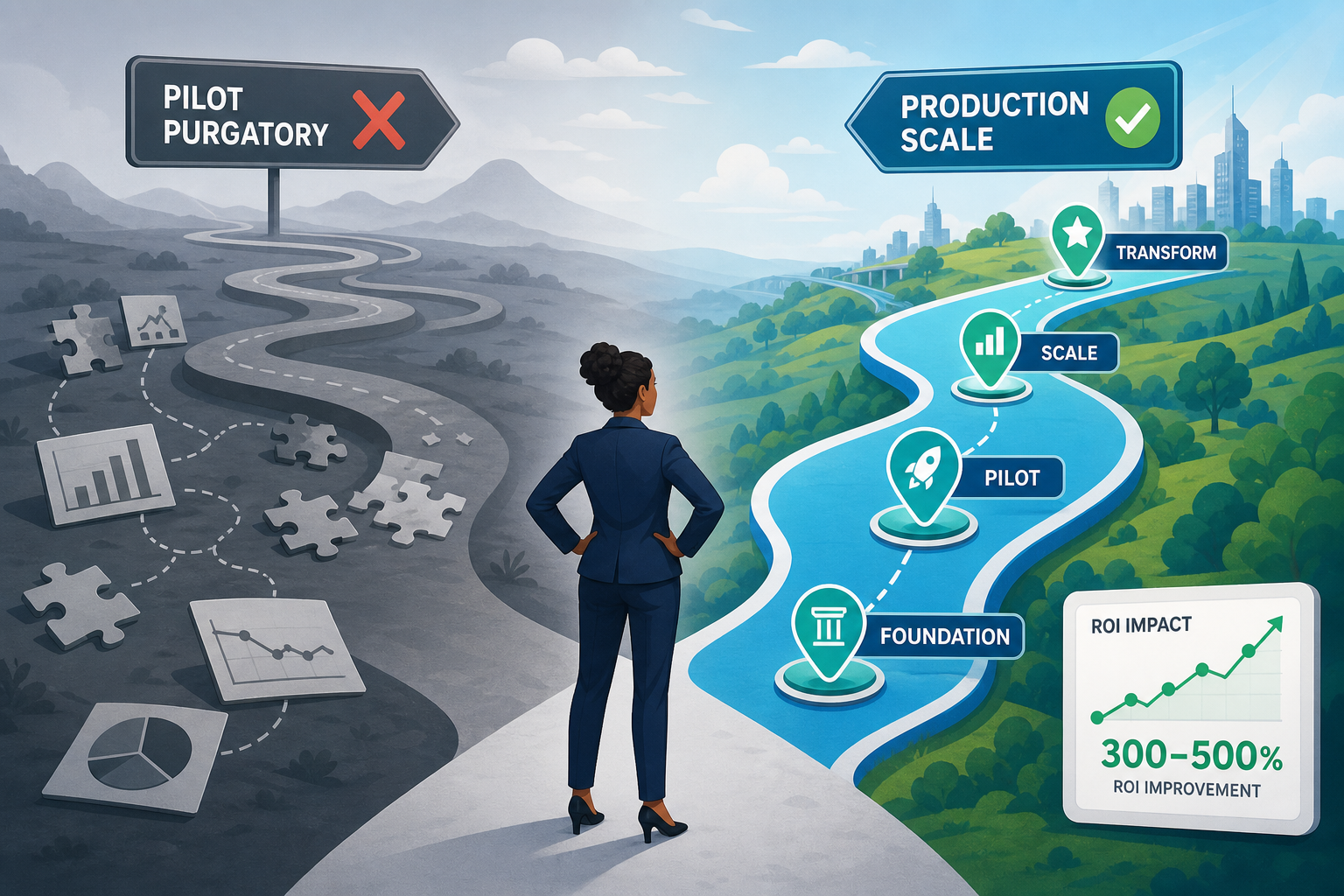
    Supply chain leaders struggling to move AI experiments into production can follow a phased roadmap that addresses the data, integration, and workforce challenges specific to logistics operations, based on real deployment patterns from DHL, Kuehne+Nagel, and industry benchmarks.

    For: Supply Chain Leader
  • AI Demand Planning Implementation Readiness Assessment Checklist
    Business CaseDemand Planning

    AI Demand Planning Implementation Readiness Assessment Checklist

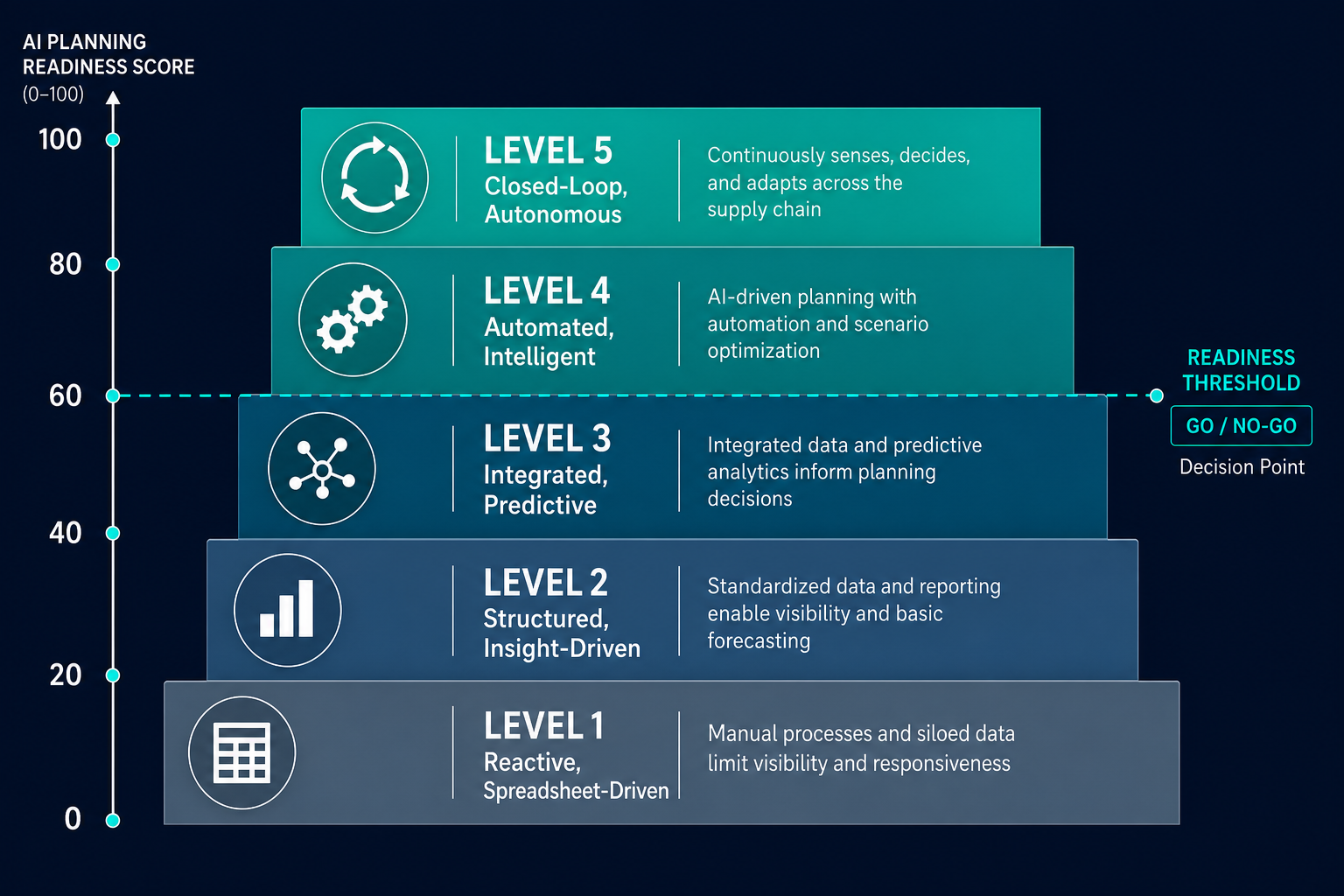
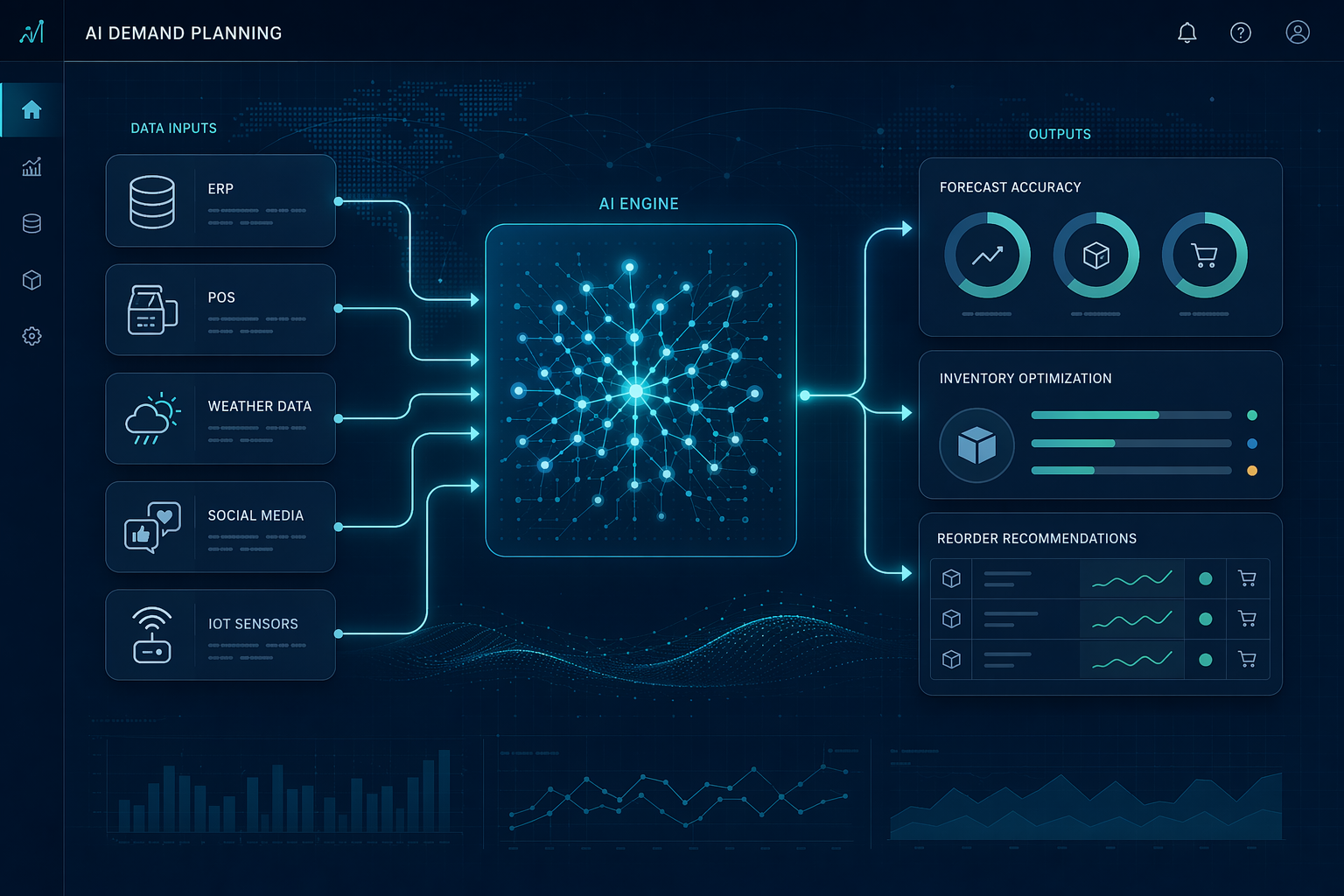
    A practitioner-grade self-assessment framework for supply chain leaders and demand planning managers evaluating whether their organization is ready to implement AI-powered demand planning — covering five critical dimensions, a maturity scoring model, and go/no-go trigger criteria for vendor engagement.
    For: Supply Chain Planner, CSCO / VP Supply Chain, IT / Data Leader~22 min
  • AI Demand Planning vs. Traditional Methods: A Decision Framework for Supply Chain Leaders
    Business Casedemand planning

    AI Demand Planning vs. Traditional Methods: A Decision Framework for Supply Chain Leaders

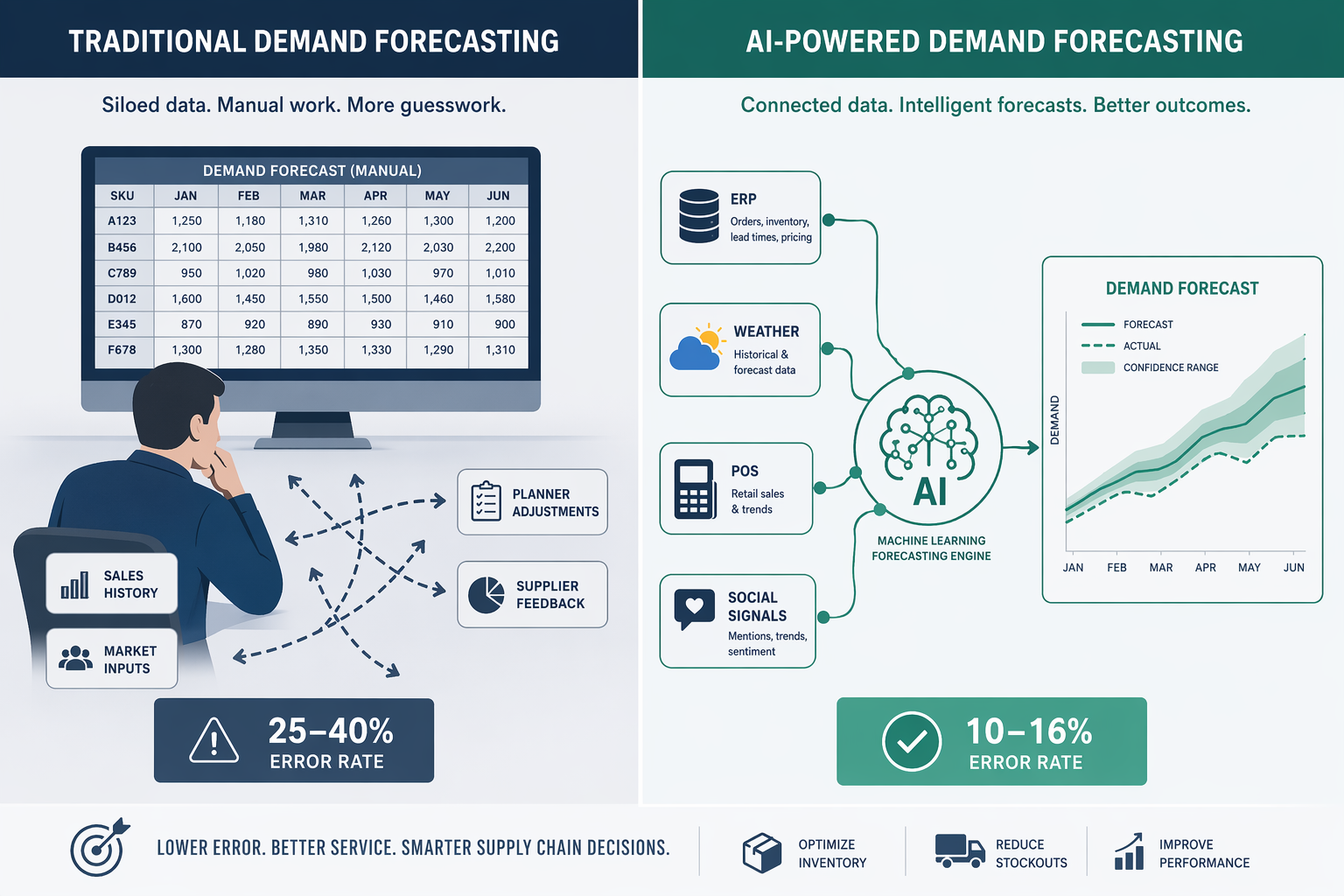
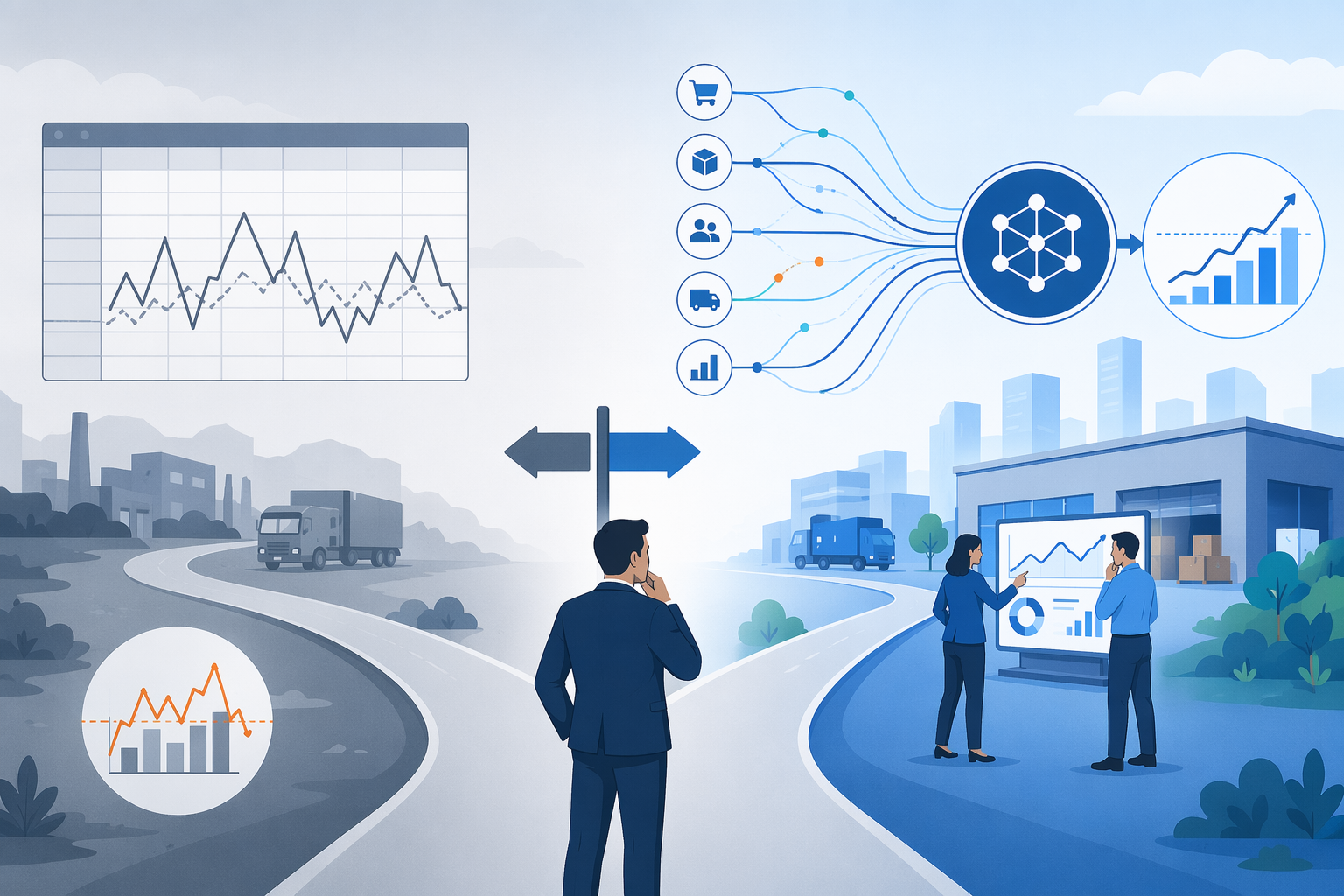
    This executive decision framework helps supply chain leaders and demand planning managers build a quantifiable business case for AI demand planning investment. It provides a structured comparison across six dimensions, a quantified accuracy differential, and an ROI framework for board-level justification.

    For: CSCO / VP Supply Chain~12 min
  • How to Build an AI Training Infrastructure for Your Supply Chain Team
    Full DeploymentSupply Chain Operations

    How to Build an AI Training Infrastructure for Your Supply Chain Team

    Most supply chain AI investments fail because teams lack the supporting training infrastructure to use them effectively. This guide outlines five interconnected components—baseline assessment, role-specific curriculum, hands-on practice, adoption measurement, and sustainment—that organizations must build in sequence to move their workforce from AI-curious to AI-capable.

    For: CSCO / VP Supply Chain~12 min
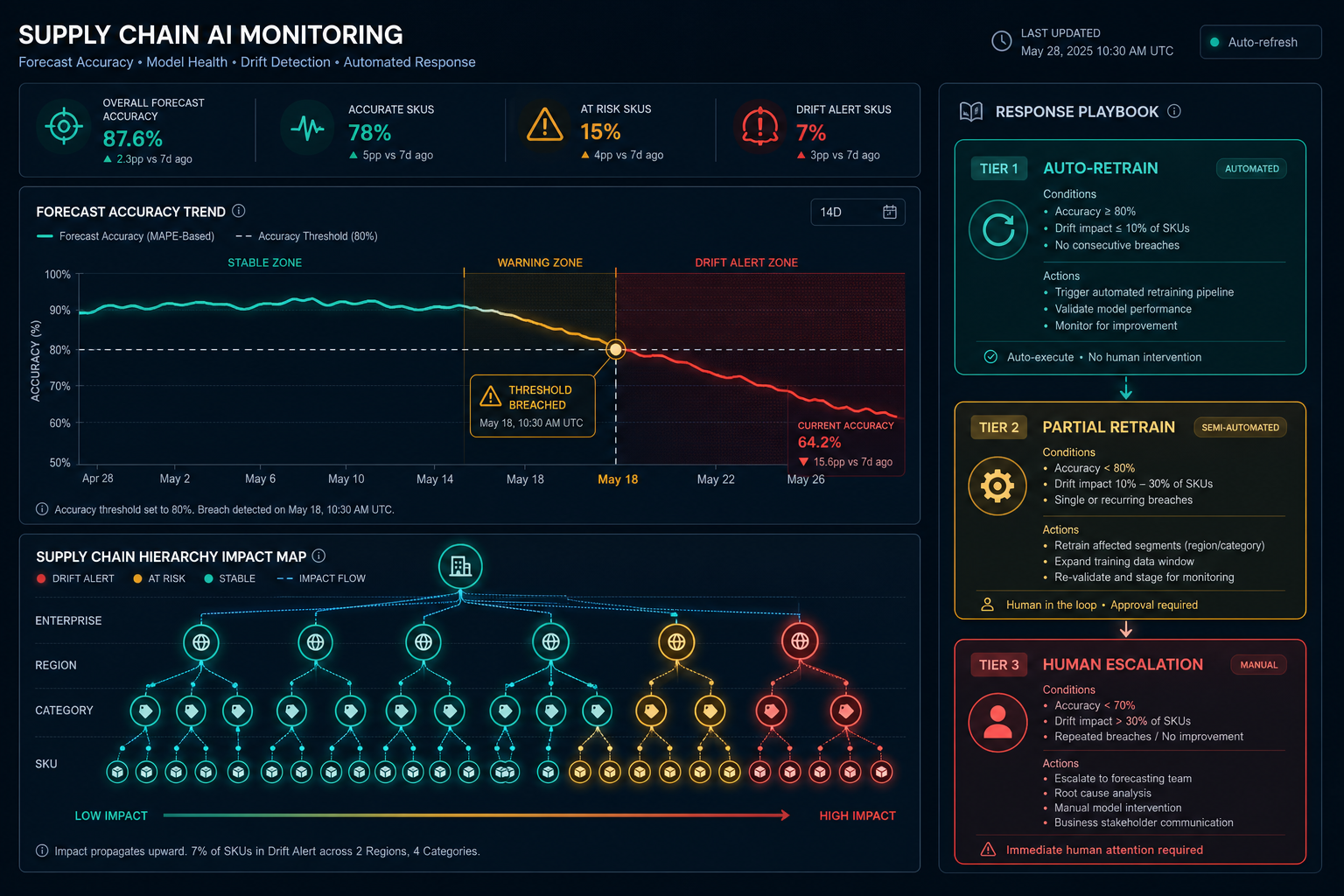
  • AI Model Drift Detection and Response Framework for Demand Planning
    OptimizationDemand Planning

    AI Model Drift Detection and Response Framework for Demand Planning

    A structured five-stage framework for demand planning managers and supply chain AI practitioners who need to detect, diagnose, and respond to model drift before silent degradation drives excess inventory costs and service-level failures — covering drift taxonomy, ensemble detection architecture, SHAP-based root-cause diagnosis, tiered response playbooks, and retraining governance.

    For: Supply Chain Planner / Demand Planning Manager, Supply Chain IT / AI-ML Operations Lead~28 min
  • The 2026 AI Supply Chain Tool Buyer's Guide: How to Evaluate, Compare, and Select the Right Platform
    Vendor Selectiondemand planning, inventory optimization, procurement, logistics

    The 2026 AI Supply Chain Tool Buyer's Guide: How to Evaluate, Compare, and Select the Right Platform

    A vendor-neutral framework for supply chain leaders actively evaluating AI-powered planning, visibility, and automation tools. Includes a structured evaluation checklist, vendor comparison table, proof-of-concept guide, ROI benchmarks from real deployments, and a phased 30/90/12-month implementation roadmap.

    For: CSCO / VP Supply Chain~18 min
  • Implementing AI Voice Cloning in Supply Chain Training
    PilotTraining and Development

    Implementing AI Voice Cloning in Supply Chain Training

    Learn how to implement AI voice cloning to reduce onboarding time, cut training production costs by up to 50%, and deliver consistent instruction in 50+ languages. This guide walks through data readiness, vendor evaluation, and staged rollout for supply chain training teams facing high turnover and multilingual workforce challenges.

    For: Learning & Development Manager~12 min
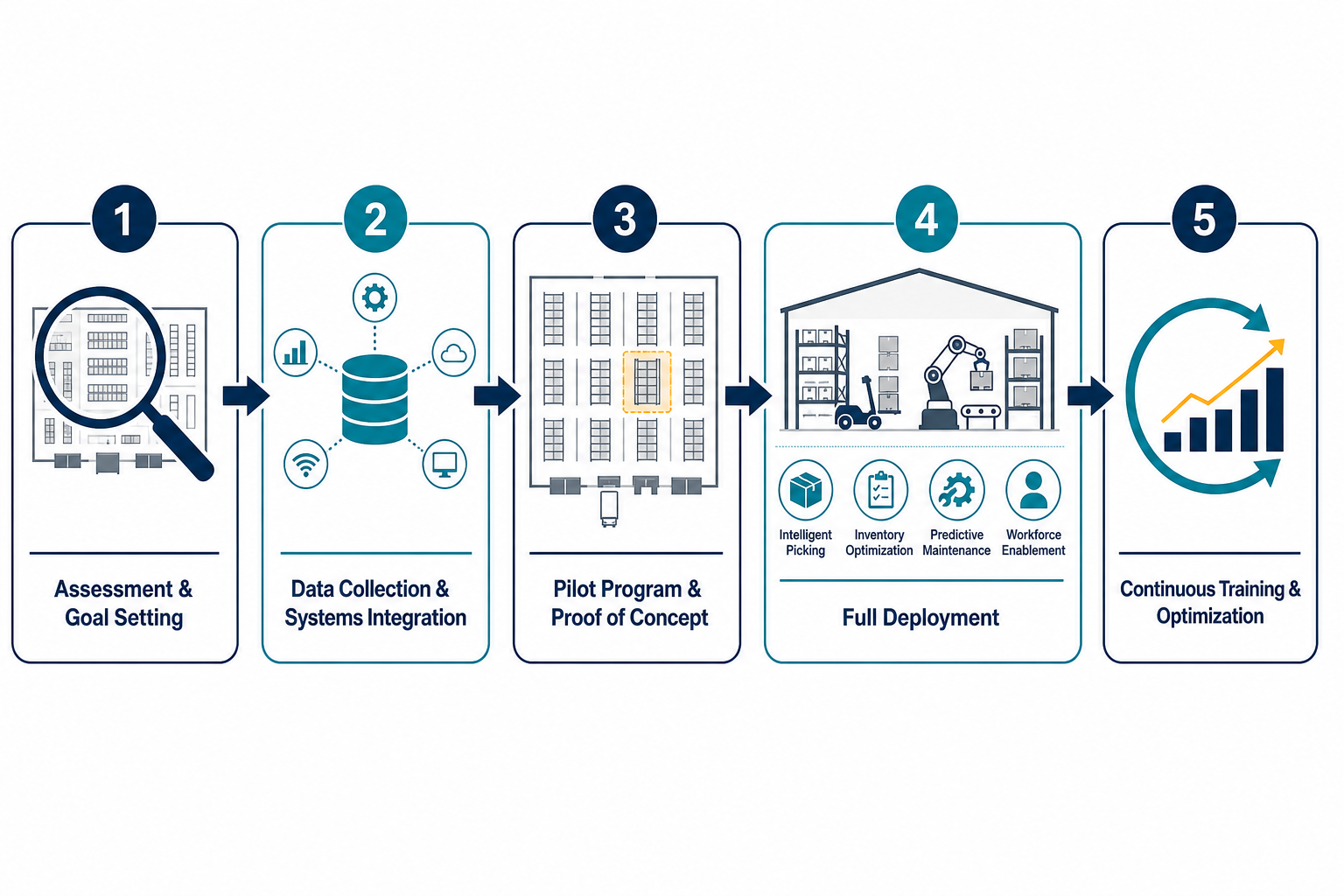
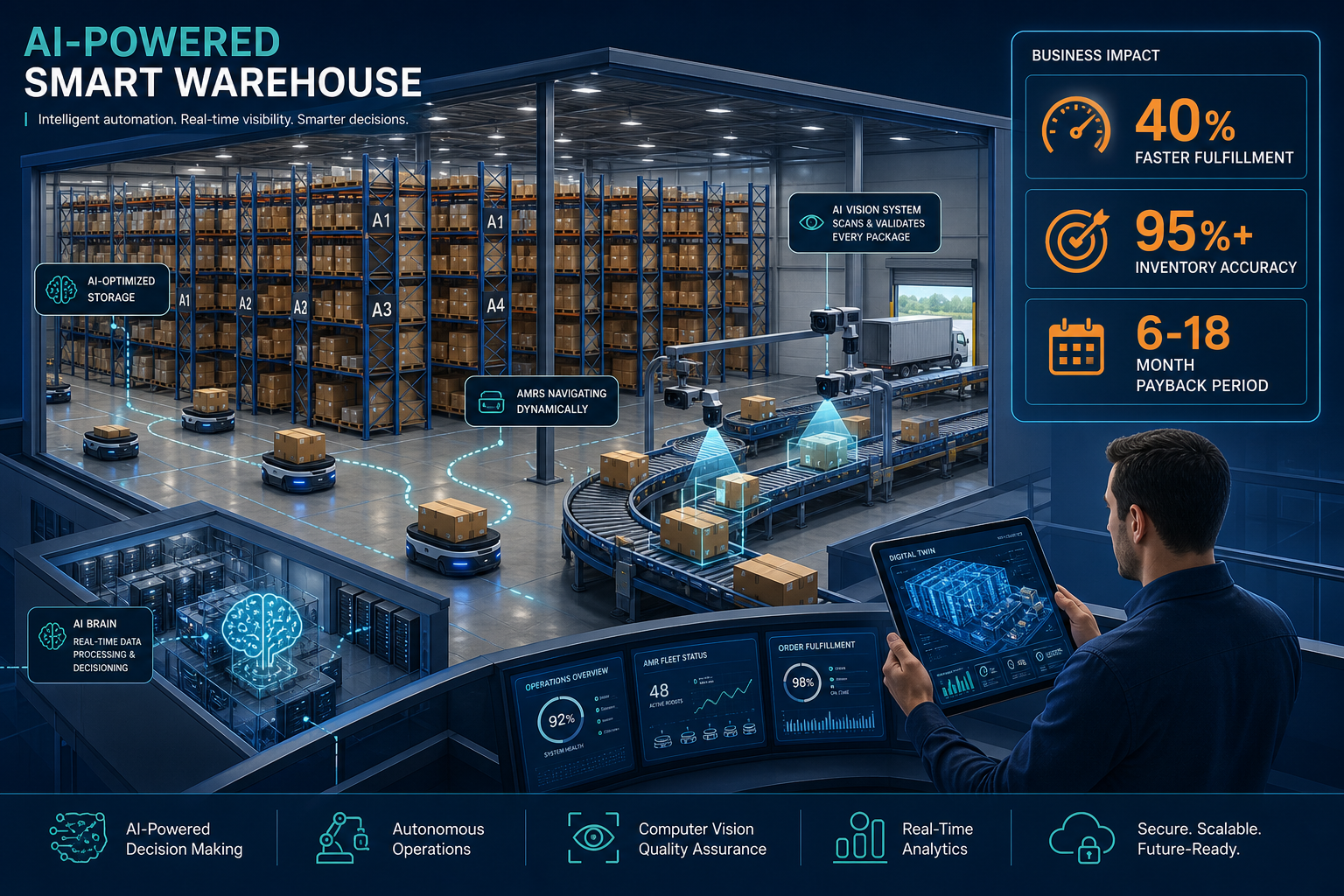
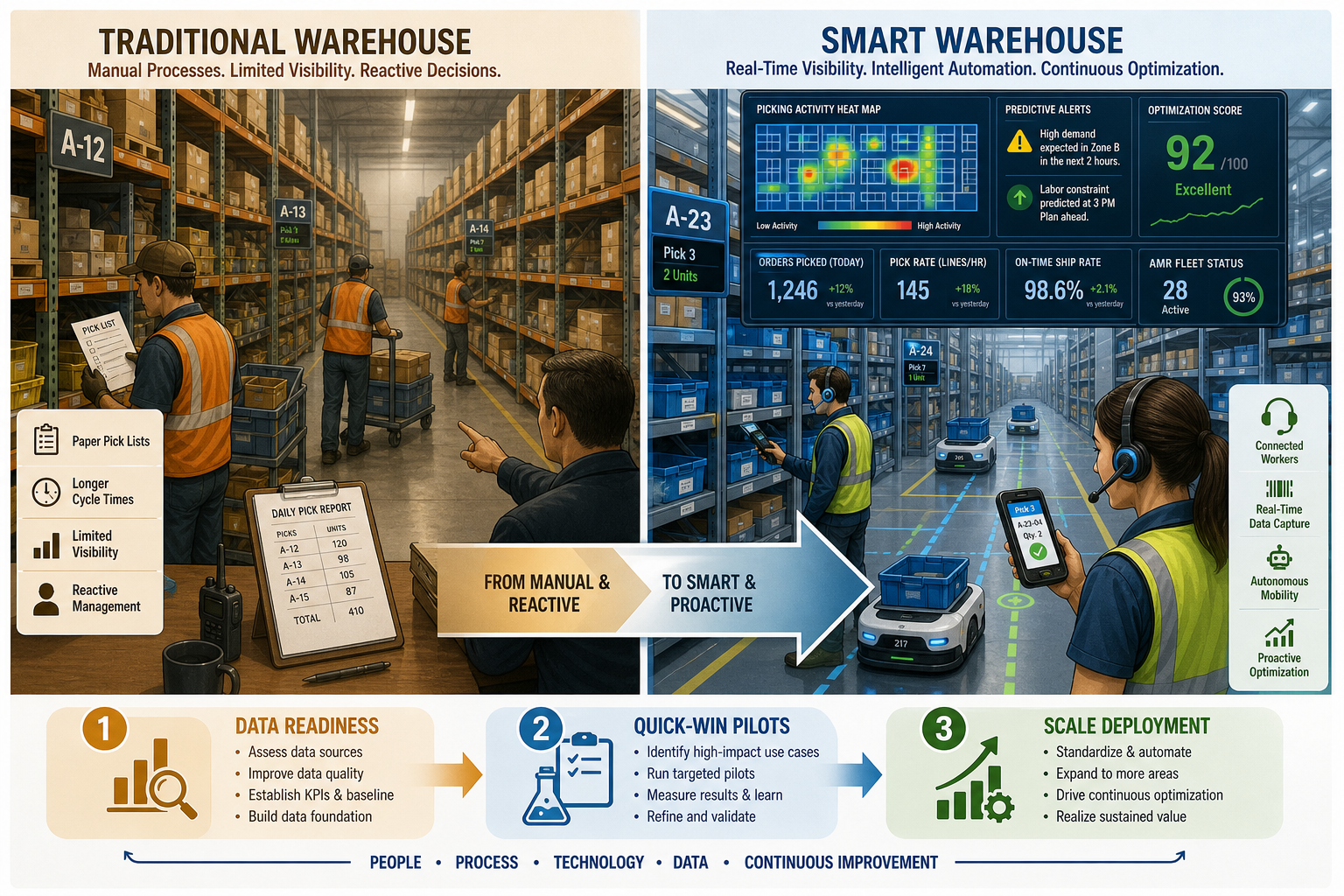
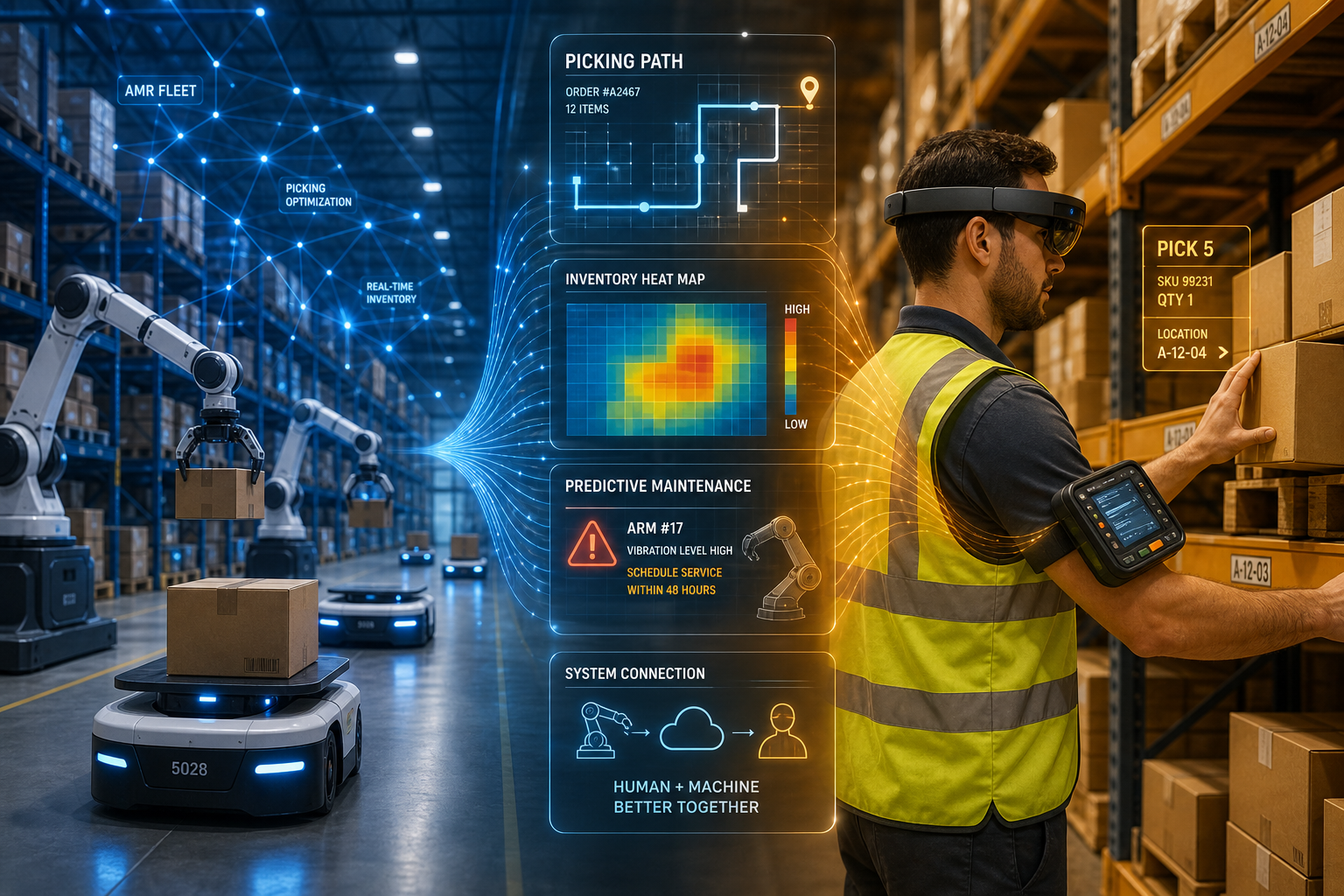
  • How to Implement AI in Warehouse Management: A 5-Step Roadmap for Supply Chain Leaders
    Pilotwarehouse management

    How to Implement AI in Warehouse Management: A 5-Step Roadmap for Supply Chain Leaders

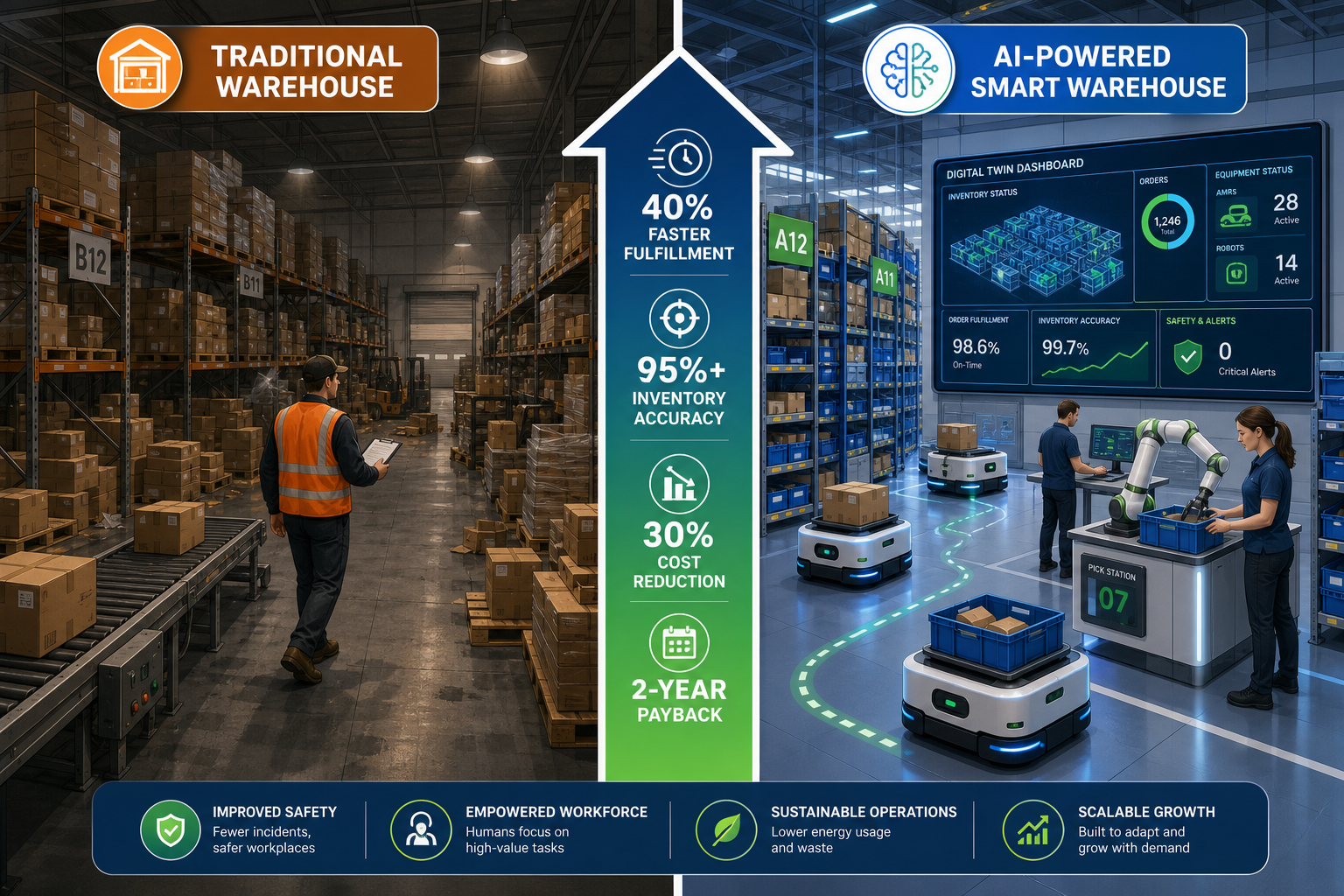
    A practical, phased implementation roadmap for VP/Director-level supply chain leaders evaluating AI adoption in warehouse operations. Covers assessment, data readiness, pilot testing, full deployment, and continuous optimization with concrete cost ranges, ROI timelines, and adoption benchmarks.

    For: VP/Director of Supply Chain~18 min
  • A Five-Phase Cloud Migration Roadmap for Supply Chain AI
    Full DeploymentSupply Chain Operations

    A Five-Phase Cloud Migration Roadmap for Supply Chain AI

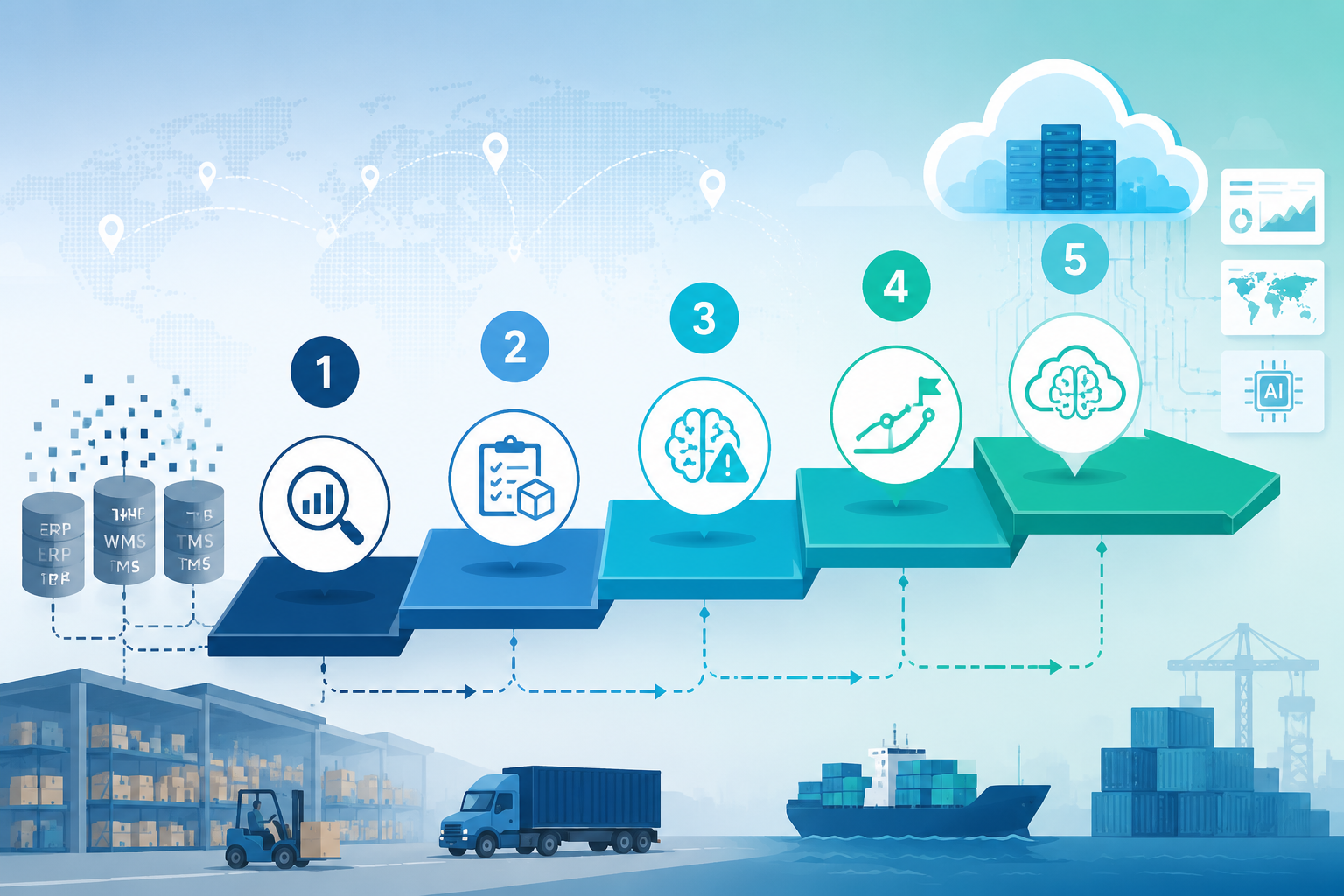
    This guide details a five-phase cloud migration roadmap tailored for supply chain AI, covering data quality assessment, workload classification using supply-chain-specific criteria, predictive risk modeling, phased execution, and post-migration optimization. Built from industry frameworks and real-world implementation cases, it explains why generic lift-and-shift fails for AI and provides a sequenced approach for CSCOs and enterprise architects.

    For: CSCO / VP Supply Chain~15 min
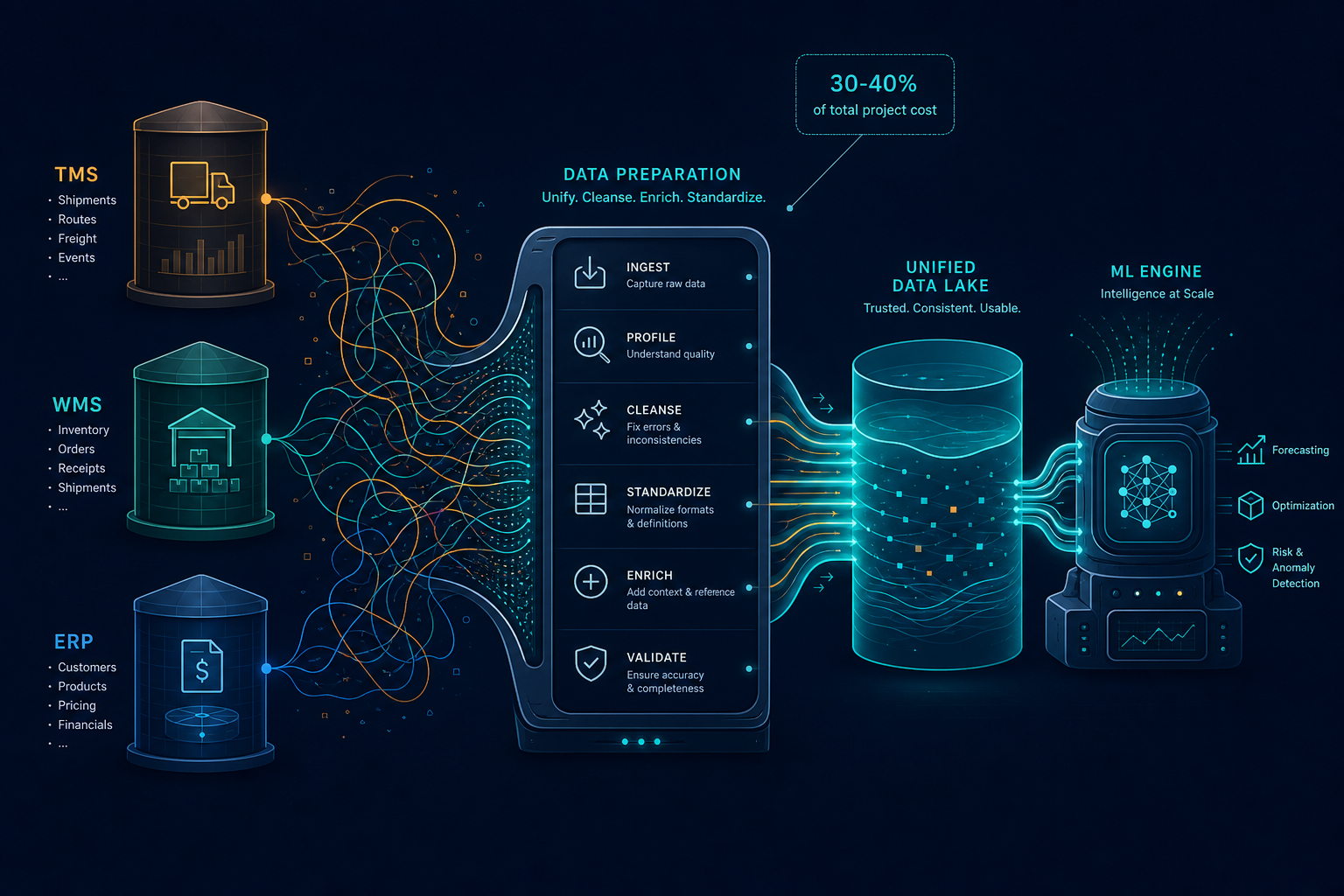
  • The 6-Dimension Data Quality Checklist for Supply Chain AI
    Pilotcross-functional

    The 6-Dimension Data Quality Checklist for Supply Chain AI

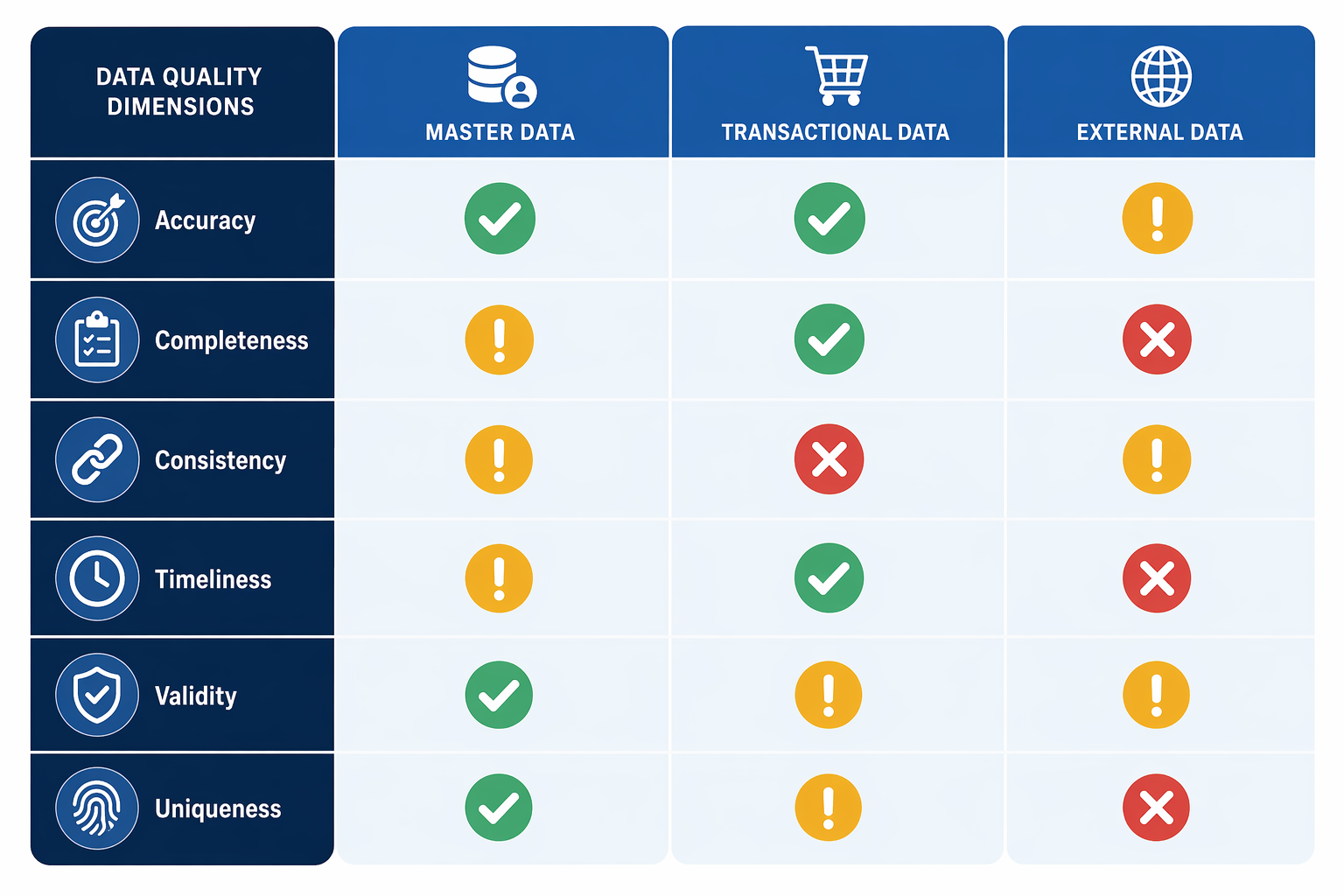
    A structured checklist for assessing data quality across six dimensions—accuracy, completeness, consistency, timeliness, validity, and uniqueness—redefined for supply chain AI use cases. Use it to audit your data before committing to model training.

    For: IT / Data Leader~15 min
  • Designing a Production-Grade ERP Integration for AI Supply Chain Tools
    Full DeploymentCross-functional Supply Chain Integration

    Designing a Production-Grade ERP Integration for AI Supply Chain Tools

    The primary bottleneck in AI supply chain ROI is not model accuracy but the integration layer between AI tools and ERP systems. This implementation guide details the four-tier architectural pattern and sequencing steps to build a robust, production-grade integration.

    For: IT / Data Leader~14 min
  • How to Evaluate and Select AI-Powered Demand Forecasting Tools: A Step-by-Step Implementation Guide for Supply Chain Leaders
    Vendor SelectionDemand Planning

    How to Evaluate and Select AI-Powered Demand Forecasting Tools: A Step-by-Step Implementation Guide for Supply Chain Leaders

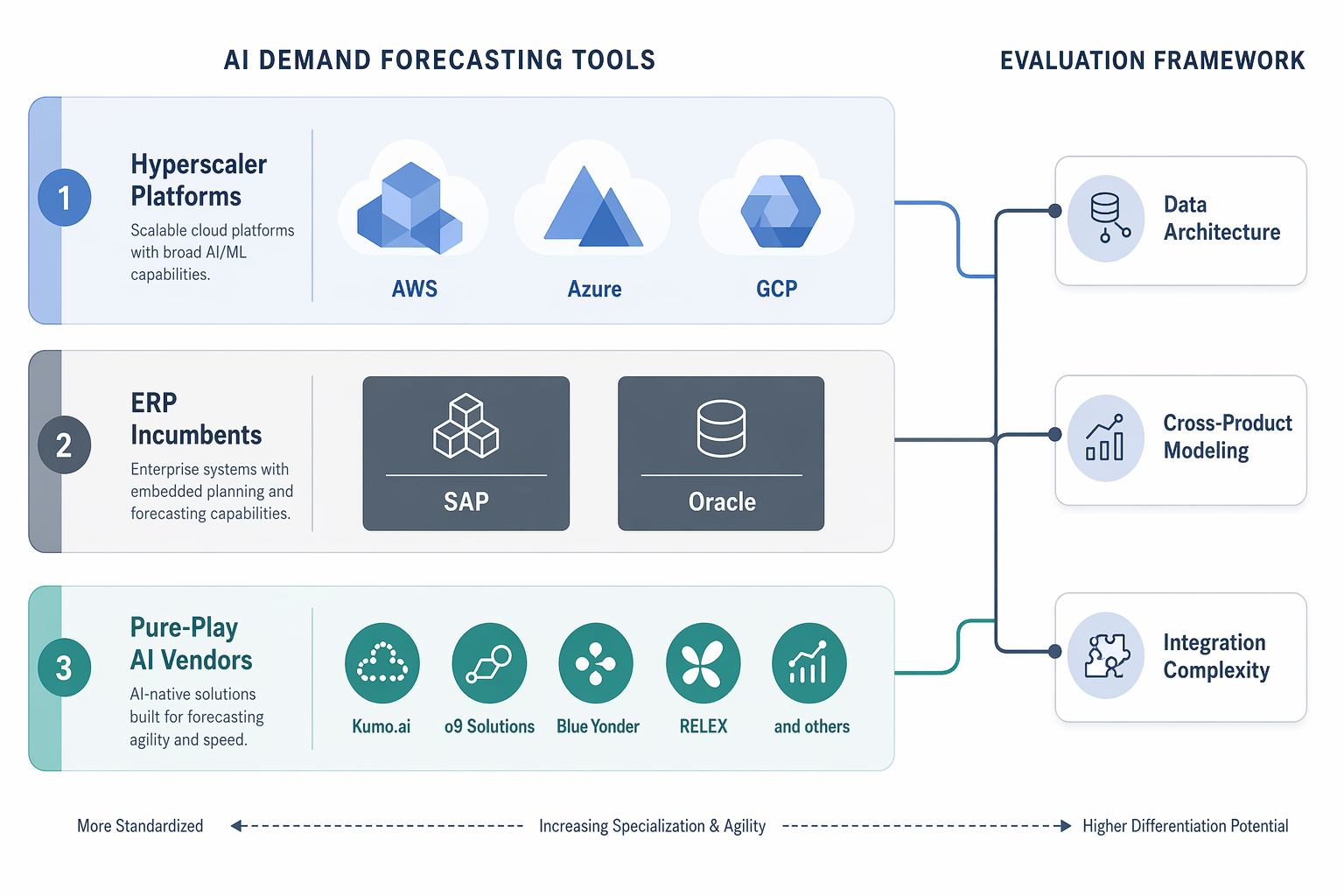
    This guide provides a structured framework for supply chain leaders evaluating AI-powered demand forecasting platforms. It covers key evaluation dimensions beyond feature lists, a vendor landscape overview, a data readiness checklist, and a phased implementation roadmap from pilot to adaptive enterprise deployment.

    For: Supply Chain Director / VP Supply Chain~18 min
  • From Batch to Real-Time: Closing the Data Pipeline Gap That Blocks Warehouse AI
    Business CaseWarehouse Management

    From Batch to Real-Time: Closing the Data Pipeline Gap That Blocks Warehouse AI

    This guide helps warehouse IT leaders and supply chain technology architects assess and close the data pipeline gap that prevents AI from delivering value in warehouse operations. It argues that real-time pipeline capability—not data quality—is the primary readiness differentiator, and provides an actionable framework using benchmarks, a streaming infrastructure checklist, cost-benefit analysis, and a real-world case study from DB Schenker.

    For: Warehouse IT Leader~13 min
  • The Hidden Costs and Failure Modes of AI Warehouse Implementation — What Every Supply Chain Leader Should Know Before Signing a Contract
    Vendor Selectionwarehouse management

    The Hidden Costs and Failure Modes of AI Warehouse Implementation — What Every Supply Chain Leader Should Know Before Signing a Contract

    This guide for supply chain directors, VPs of operations, and CFOs exposes the six most common failure modes in AI warehouse projects — from network infrastructure gaps to workforce resistance — and provides a pre-contract due diligence framework to separate realistic deployments from expensive lessons.

    For: Supply Chain Director / VP of Operations / CFO~18 min
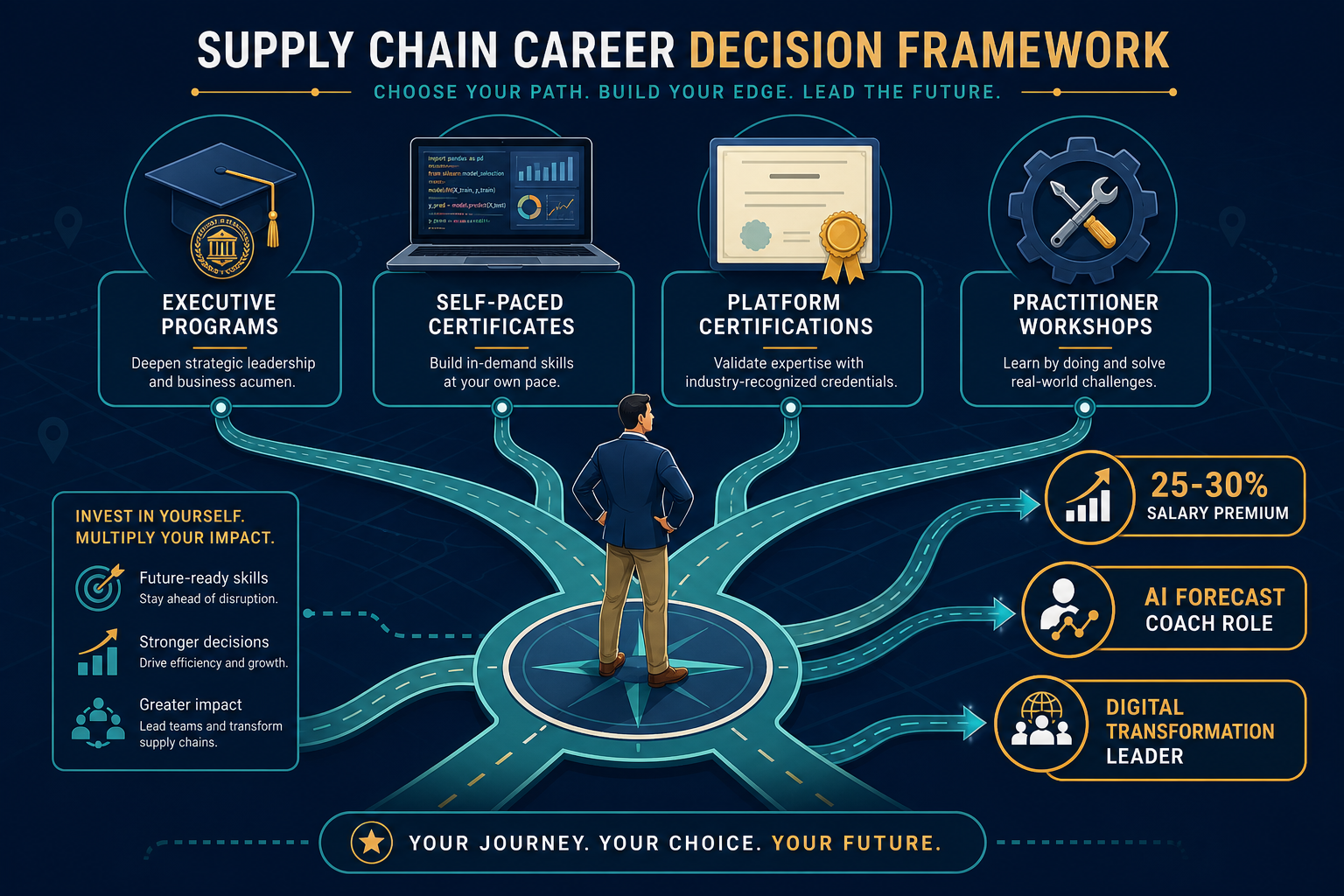
  • How to Choose the Right AI in Supply Chain Management Course: A Decision Framework for 2026
    AwarenessCross-functional (demand planning, procurement, logistics, inventory management)

    How to Choose the Right AI in Supply Chain Management Course: A Decision Framework for 2026

    A structured decision framework for supply chain professionals overwhelmed by course options — from $50 self-paced modules to $6,000 executive intensives — helping you match programs to your role, technical baseline, career goals, and employer's AI maturity.

    For: Supply Chain Manager / Director / VP~18 min
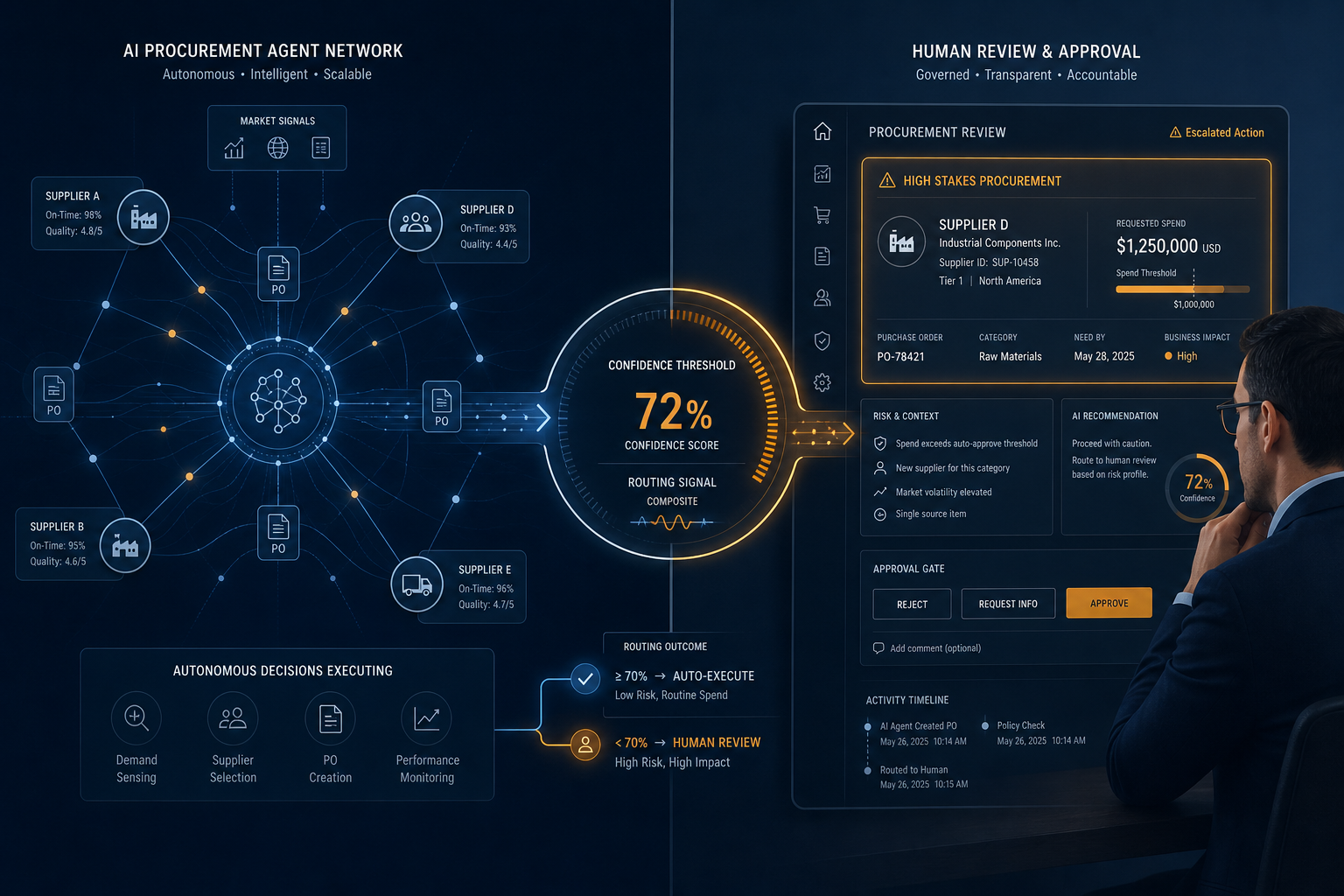
  • Human-in-the-Loop Design Patterns for Autonomous Procurement AI: An Implementation Guide
    Full DeploymentProcurement

    Human-in-the-Loop Design Patterns for Autonomous Procurement AI: An Implementation Guide

    For procurement teams past the pilot stage, the challenge with autonomous AI isn't selecting a human oversight pattern — it's keeping that oversight functional in production. This guide covers the operational failure modes that degrade reviewer quality over time and the implementation mechanics for multi-signal confidence routing, trust calibration, and feedback loops that turn human corrections into compounding model improvements.

    For: Procurement Manager, IT / Data Leader, Digital Transformation Lead~22 min
  • How to Implement Machine Learning in Logistics: A Phased Roadmap for Mid-Market Leaders
    PilotLogistics and Transportation

    How to Implement Machine Learning in Logistics: A Phased Roadmap for Mid-Market Leaders

    A practical, phased implementation roadmap for supply chain and logistics leaders at mid-market companies who are evaluating ML for the first time. Covers assessment, data preparation, PoC execution, and scaling — with realistic cost ranges, timeline expectations, and industry benchmarks.

    For: VP Supply Chain / Logistics Director~18 min
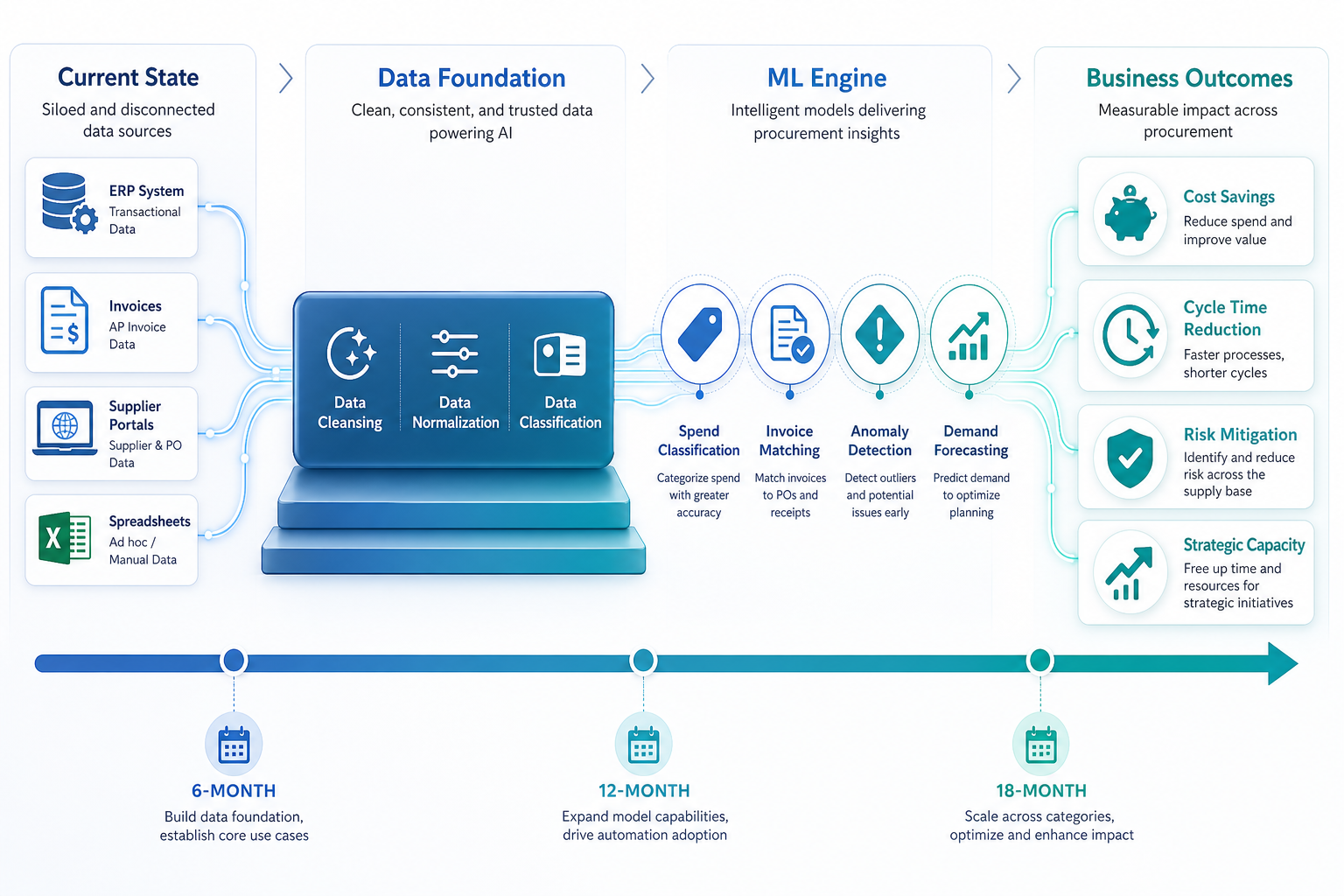
  • How to Implement Machine Learning in Procurement: A 6-Step Roadmap from Pilot to Scale
    PilotProcurement

    How to Implement Machine Learning in Procurement: A 6-Step Roadmap from Pilot to Scale

    A prescriptive, step-by-step implementation roadmap for CPOs and procurement leaders moving ML from pilot to enterprise-wide deployment. Covers data readiness thresholds, starting use cases, governance model selection, and a scaling playbook — grounded in current adoption benchmarks and real-world outcomes.

    For: CPO / VP Supply Chain~18 min
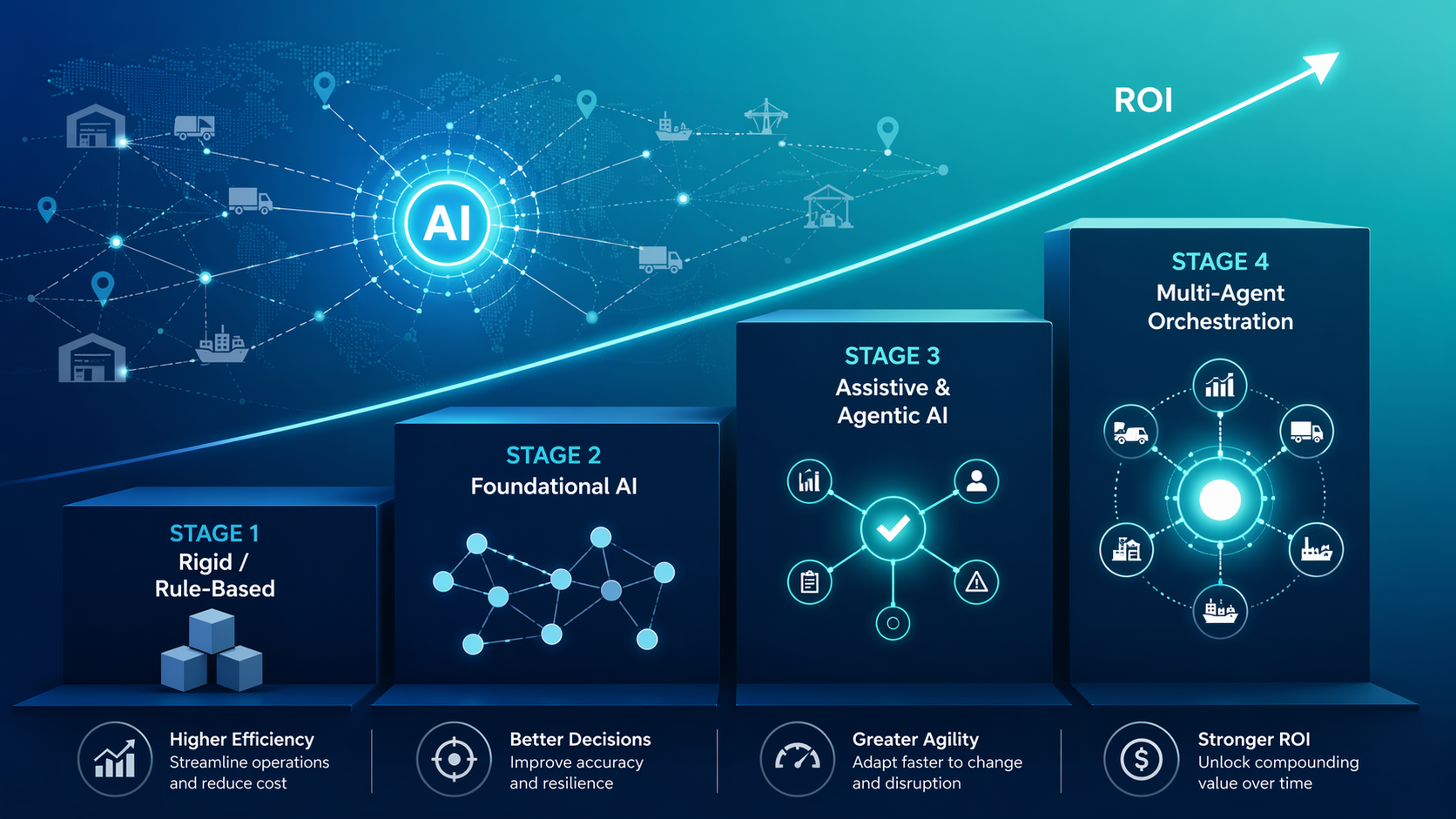
  • Implementing machine learning in supply chain: a phased roadmap from readiness to autonomous operations
    Pilotdemand planning

    Implementing machine learning in supply chain: a phased roadmap from readiness to autonomous operations

    Most supply chain ML initiatives stall because organizations skip readiness assessment, start with the wrong use case, and treat AI as a technology upgrade rather than an organizational shift. This phased roadmap—anchored on maturity stage, data foundation, and assigned transformation ownership—shows how to move from foundational AI to autonomous decision-making with clear stage gates and realistic timelines.

    For: CSCO / VP Supply Chain~15 min
  • Matching AI Technologies to Warehouse Problems: A Decision Framework
    Vendor Selectionwarehouse management

    Matching AI Technologies to Warehouse Problems: A Decision Framework

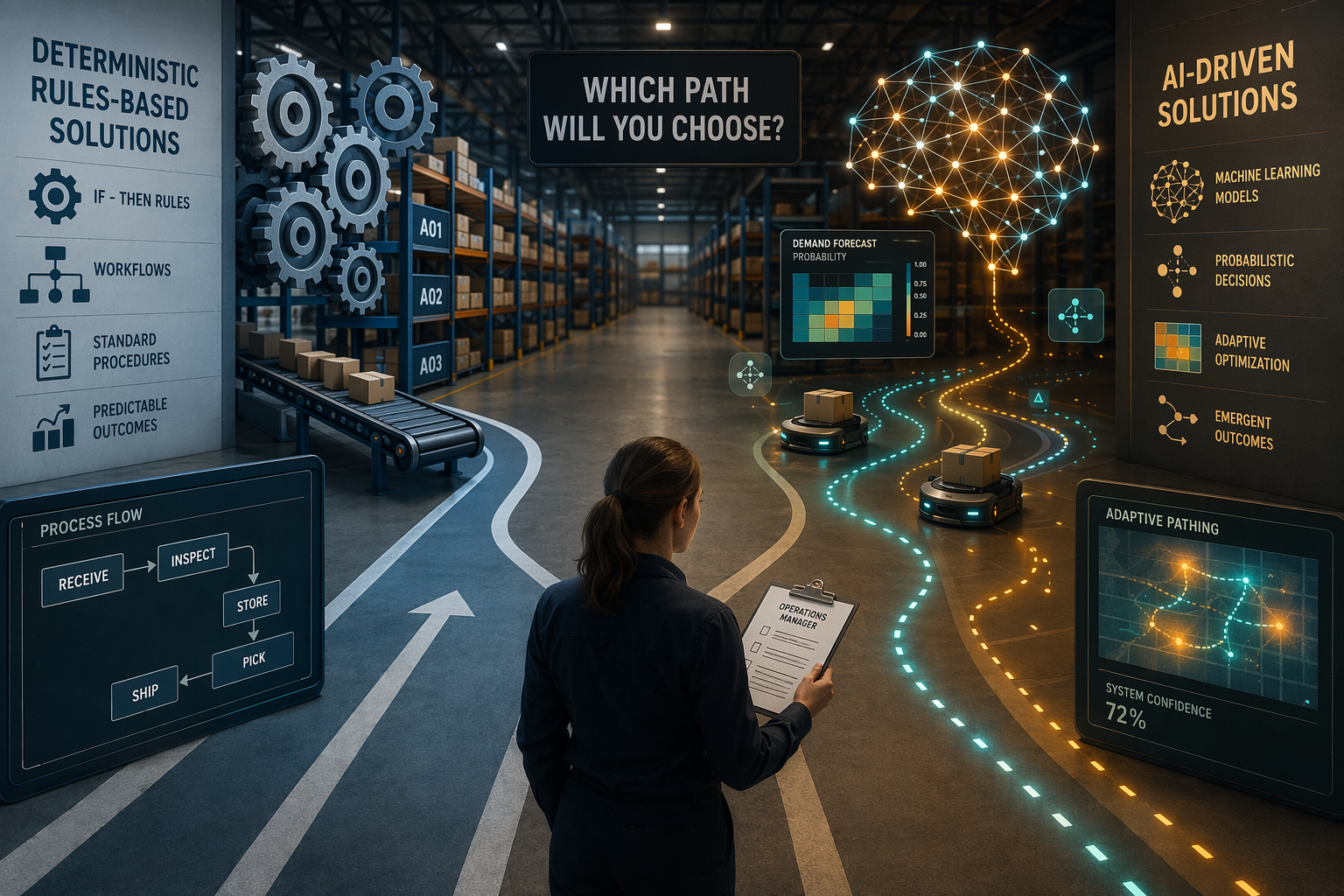
    A structured decision framework that helps warehouse operations managers identify which AI technology — from machine learning and computer vision to autonomous mobile robots — actually solves their specific operational problem, and when rules-based algorithms are the more reliable and cost-effective choice.

    For: Warehouse Operations Manager~10 min
  • How to Implement Machine Learning in Logistics: A Phased Roadmap for Supply Chain Leaders
    PilotLogistics

    How to Implement Machine Learning in Logistics: A Phased Roadmap for Supply Chain Leaders

    This guide presents a structured four-phase roadmap for deploying machine learning in logistics operations, addressing the execution gap that causes most AI initiatives to stall. It covers data readiness, use-case prioritization, pilot design, and organizational scaling based on industry benchmarks and real-world constraints.

    For: CSCO / VP Supply Chain
  • Predictive Analytics in Logistics: A 90-Day Implementation Roadmap
    PilotLogistics

    Predictive Analytics in Logistics: A 90-Day Implementation Roadmap

    This guide provides a week-by-week, three-phase plan for implementing predictive analytics in logistics — from data readiness audit to focused pilot to systematic scaling — helping supply chain teams avoid the common failures that derail most initiatives.

    For: CSCO / VP Supply Chain~15 min
  • Which Procurement AI Use Cases Deliver the Fastest ROI? A 90-Day Pilot Strategy
    PilotProcurement

    Which Procurement AI Use Cases Deliver the Fastest ROI? A 90-Day Pilot Strategy

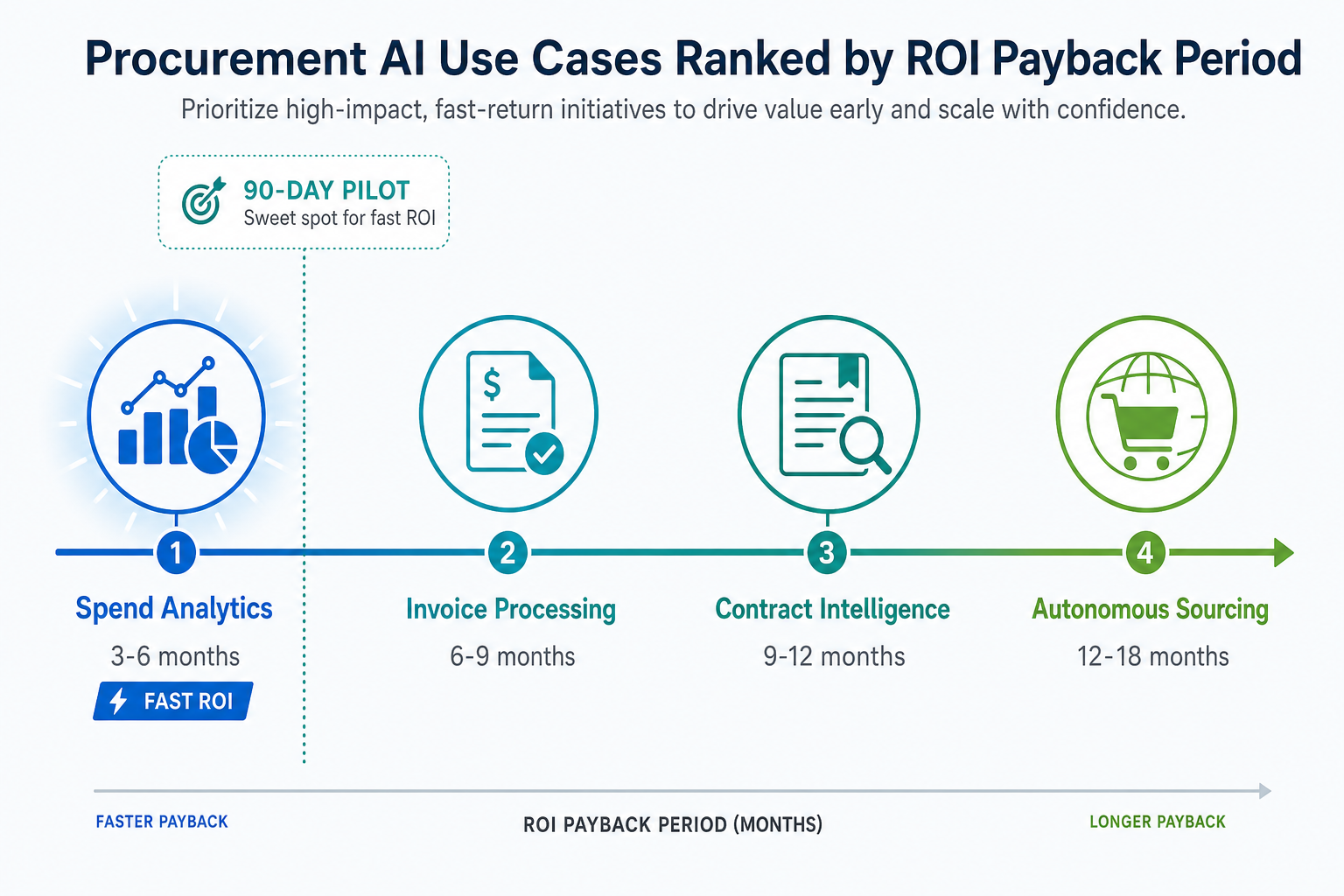
    For procurement leaders under pressure to show quick wins, this article ranks six AI use cases by payback period — from spend analytics (3–6 months) to autonomous sourcing (12–18 months) — and provides a structured 90-day pilot framework to prove ROI on cycle-time reduction and spend under management capture.

    For: Procurement Operations Director~12 min
  • Retail Supply Chain Predictive Analytics: The 2026 Implementation Playbook from Data Readiness to Production Scale
    Pilotdemand forecasting, inventory optimization

    Retail Supply Chain Predictive Analytics: The 2026 Implementation Playbook from Data Readiness to Production Scale

    A prescriptive, five-phase playbook for VP/Director of Supply Chain Analytics and Heads of Planning who need to move from evaluation to execution. Covers data readiness, use case selection, model development sequence, workflow deployment, and scaling — anchored by the reality that 60% of planning IT projects fail to meet cost, timeline, or outcome targets.

    For: VP/Director of Supply Chain Analytics, Head of Planning~25 min
  • The Conditional ROI of AI Demand Planning Software: What Supply Chain Leaders Can Expect from Forecast Accuracy, Inventory, and Revenue Gains
    Business Casedemand planning

    The Conditional ROI of AI Demand Planning Software: What Supply Chain Leaders Can Expect from Forecast Accuracy, Inventory, and Revenue Gains

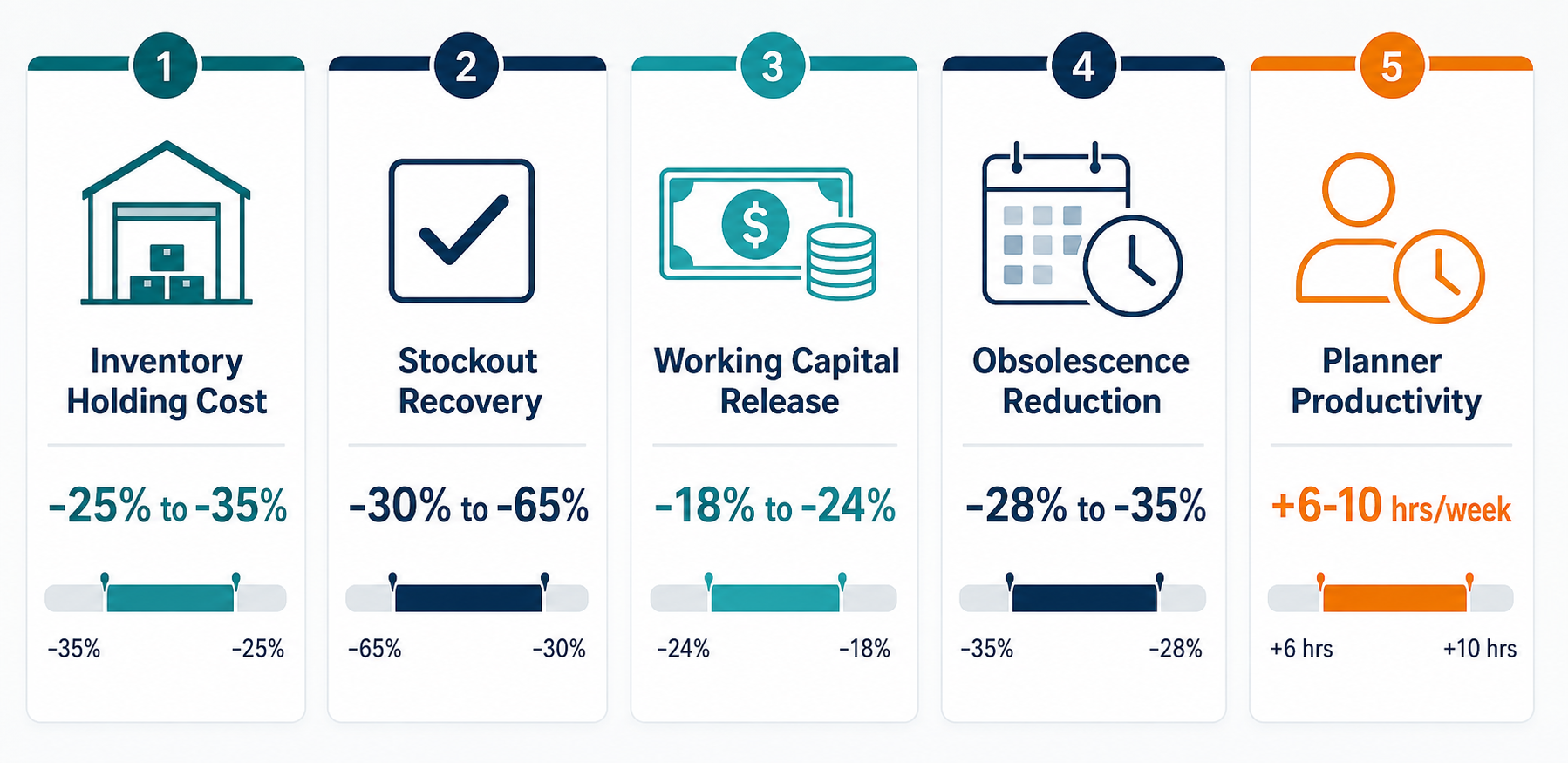
    This guide helps supply chain executives and financial decision-makers build a board-level business case for AI demand planning software investment. It presents tiered, source-attributed ROI data across forecast accuracy, inventory optimization, and revenue impact — and argues that outcomes depend on data maturity, staged adoption, and organizational readiness, not just software selection.

    For: Supply Chain Executive / CSCO~18 min
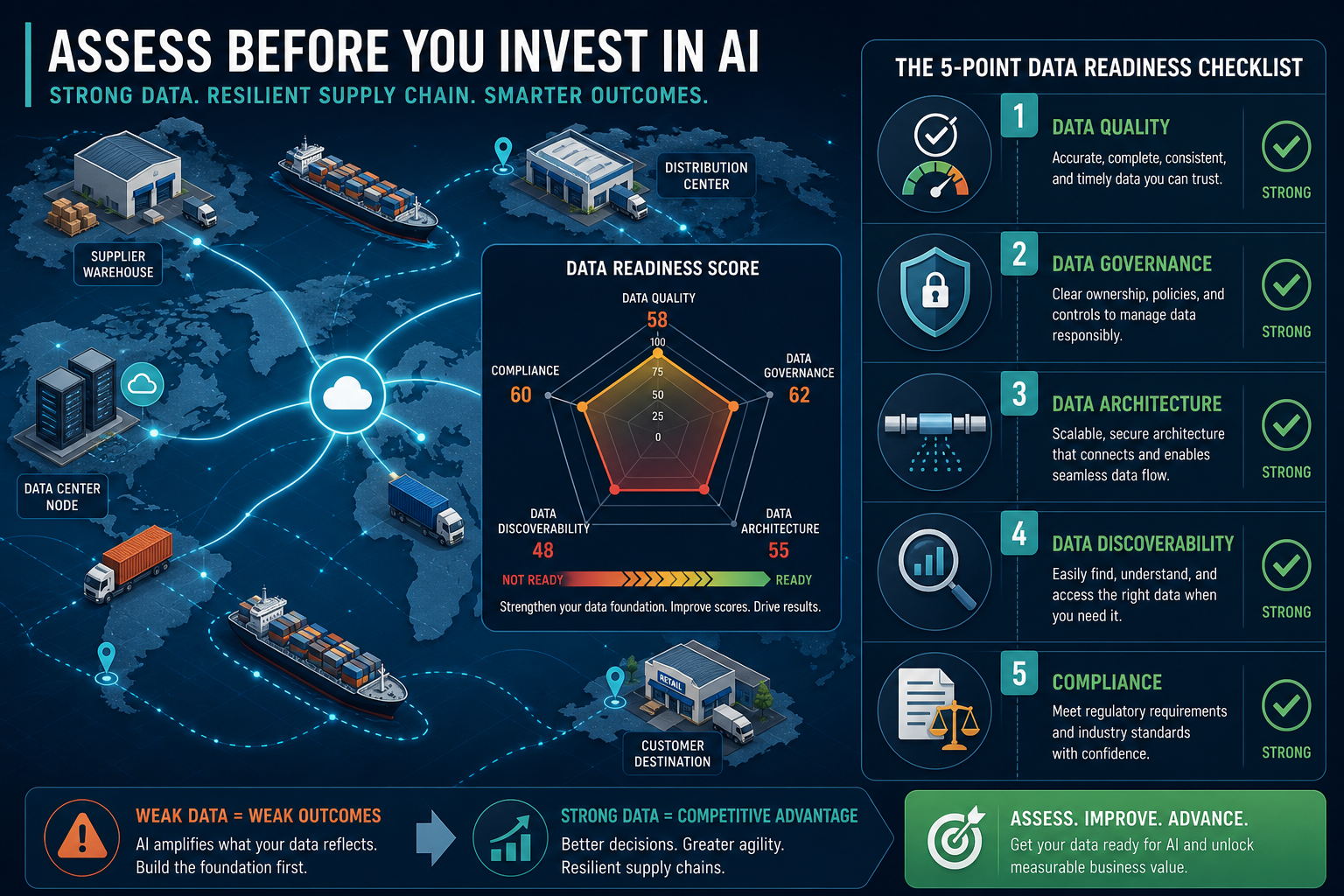
  • The CSCO's Data Readiness Checklist for Supply Chain AI Implementation
    Business CaseCross-functional (planning, logistics, procurement, warehouse)

    The CSCO's Data Readiness Checklist for Supply Chain AI Implementation

    A step-by-step guide for supply chain leaders to assess and prepare their data for AI deployment across planning, logistics, procurement, and warehouse operations, covering the five critical dimensions of readiness with a practical scoring checklist.

    For: CSCO / VP Supply Chain~18 min
  • Why Most AI Warehouse Deployments Underdeliver — and How to Structure Yours for Success
    PilotWarehouse Management

    Why Most AI Warehouse Deployments Underdeliver — and How to Structure Yours for Success

    For supply chain leaders frustrated by stalled AI initiatives, this article diagnoses the three systemic failure patterns behind the gap between adoption intent and actual deployment, then presents a disciplined corrective framework to structure warehouse AI projects for measurable results.

    For: Supply Chain Operations Executive~10 min
Use Case Library →Vendor Directory →Courses & Certifications →
Blogarama - Blog Directory