
The hard part of evaluating supply chain AI solutions is no longer finding vendors that claim AI capability. The hard part is explaining why the vendors on the same shortlist belong there together.
That problem is getting worse because the market is expanding faster than many buying teams can organize it. MarketsandMarkets estimates the AI in supply chain market at $13.93 billion in 2025 and projects it to reach $50.41 billion by 2032, a 20.2% CAGR.[1] That growth figure is useful as atmosphere. It says budget, vendor attention, and board interest are moving in the same direction. It does not tell a VP of supply chain whether SAP IBP, Kinaxis, Altana, and Zebra should ever sit in the same comparison table.
The readiness numbers make the confusion more operational. Gartner reports that only 23% of supply chain organizations have a formal AI strategy, while ABI Research says 94% plan to deploy AI within two years.[2] RELEX’s 2026 State of Supply Chain report adds a useful confidence check: 67% of supply chain leaders say they are more confident in AI than a year earlier, but only 10% trust AI to make critical decisions without human review.[3] PwC’s 2026 operations survey found that 89% of operations leaders say technology investments have not fully delivered expected results, with integration complexity named as the top obstacle.[4]
So the starting rule is simple: do not build one universal table of supply chain AI solutions. First place vendors into archetypes. Then compare vendors inside the archetype that matches the operating environment, functional need, and integration reality. Cross-archetype tradeoffs come later, after the buyer can defend why the tradeoff is legitimate.
A four-archetype map for supply chain AI shortlisting
The vendor examples below are not a ranking. They are a way to keep unlike tools from being compared as if they solve the same procurement question. Vendor capability positioning in this directory is drawn from a mix of vendor-comparison and market-listing sources, including Flowlity, monday.com, AIMultiple, and Supply Chain Digital; those sources are useful for mapping claims and categories, but they should not be treated as independent benchmark results.[5][6][7][8]
| Archetype | Representative vendors | Best-fit buyer profile | Core functions | Deployment fit | Main evaluation criteria |
|---|---|---|---|---|---|
| ERP-centric suites | SAP IBP, Oracle SCM Cloud | Enterprises already standardized around SAP or Oracle, or those prioritizing ecosystem continuity | Integrated business planning, supply planning, demand planning, inventory, order and operations workflows | Strongest when enterprise data, process ownership, and IT governance already sit inside the ERP ecosystem | ERP integration depth, master data model fit, workflow continuity, implementation partner capability, governance |
| Planning specialists | Blue Yonder, Kinaxis | Organizations with mature planning needs, complex networks, and high consequences for plan instability | Demand planning, supply planning, scenario planning, optimization, S&OP / IBP planning cycles | Best when planning depth matters more than staying inside one ERP vendor’s application boundary | Planning model sophistication, scenario speed, planner adoption, exception handling, optimization logic |
| AI-native integrated platforms | o9 Solutions, E2open, Flowlity, ToolsGroup | Companies seeking ML-centered planning or network intelligence without committing all functions to an ERP suite | Integrated planning, forecasting, inventory optimization, collaboration, network and decision intelligence | Often attractive where buyers want faster deployment or more flexible architecture, though breadth varies by vendor | Data ingestion, model transparency, functional coverage, time-to-value assumptions, integration effort |
| Functional specialists | Altana, Coupa, Zebra Technologies | Teams solving a specific problem in visibility, procurement, warehouse operations, or execution | Supply chain visibility, procurement intelligence, spend management, warehouse automation, execution workflows | Best when depth in one domain is more important than broad suite coverage | Domain fit, workflow embedding, operational usability, ecosystem connections, measurable function-level outcomes |

ERP-centric suites: evaluate the ecosystem gravity first
SAP IBP and Oracle SCM Cloud should not be evaluated mainly as generic AI products. Their buying logic starts with enterprise architecture. If the company already runs core planning, finance, procurement, manufacturing, or order workflows inside SAP or Oracle, these platforms carry an integration advantage that a standalone tool has to overcome.
That advantage is not magic. It depends on how cleanly the company’s actual data and process model fit the suite. An ERP-native planning deployment can still struggle if master data ownership is fragmented, if regional planning teams have built workaround spreadsheets for years, or if the implementation partner treats AI features as a configuration layer rather than a process redesign issue.
The right shortlist question for this archetype is not, “Which vendor has the most AI?” It is, “Which suite can extend our existing operating model with the least destructive integration burden, while still improving planning decisions?” That means the evaluation should spend real time on data objects, workflow handoffs, role permissions, planning calendars, and exception management. AI recommendations are only useful if planners can see where they enter the process and who reviews them before a consequential decision moves downstream.
ERP-centric suites tend to be most defensible for large enterprises that value process continuity and governance. They are harder to justify when the business problem is narrow, urgent, and poorly served by the current ERP data structure. In those cases, forcing every requirement through the ERP roadmap can turn a solvable functional problem into a multi-year architecture debate.
What to test in an ERP-suite evaluation
- Whether the AI-supported workflow uses existing master data or requires a major data restructuring effort.
- How exceptions move from recommendation to planner review to approved action.
- Whether finance, operations, and supply planning can work from the same planning assumptions.
- How much of the value depends on implementation partner skill rather than product capability alone.
- Whether the roadmap locks the buyer into broader suite adoption before the first supply chain use case proves value.
Planning specialists: when planning depth is the point of the purchase
Blue Yonder and Kinaxis belong in a different conversation. They are usually shortlisted when the planning problem itself is complex enough to deserve a specialist platform: volatile demand, constrained supply, multi-tier networks, long lead times, frequent plan changes, or an S&OP process that cannot tolerate slow scenario analysis.
This is where buyers should be strict about the word “planning.” A lightweight forecast, a dashboard, and a set of alerts do not equal mature planning capability. Planning specialists are judged by how they model constraints, propagate changes, simulate alternatives, and help planners understand the consequence of a decision before the decision becomes a purchase order, production schedule, allocation, or expedite.
The best evaluation work in this category happens with the planning team in the room, not just IT and procurement. Ask planners to walk through a real planning cycle: demand change, supply constraint, service-level impact, inventory tradeoff, financial implication, and final approval. The vendor demo should show whether the system can keep pace with that cycle. If every scenario requires a long batch process, manual export, or specialist intervention, the buyer has learned something useful before signing.
Planning specialists can also be uncomfortable for organizations that have not clarified planning ownership. A powerful planning engine will expose unresolved process questions: who owns the baseline forecast, who can override a recommendation, what counts as an approved plan, and how commercial optimism is reconciled with supply reality. That is not a reason to avoid the category. It is a reason not to buy it as if it were a reporting upgrade.
How to compare planning specialists
- Use actual planning exceptions, not generic demo scenarios.
- Test scenario speed and explainability under constrained supply, not only forecast accuracy.
- Separate demand planning, supply planning, inventory optimization, and S&OP requirements before scoring vendors.
- Check whether planners can understand and challenge AI recommendations without waiting for data science support.
- Validate integration points to ERP, order management, manufacturing, procurement, and data platforms.
AI-native integrated platforms: attractive architecture, still a fit question
o9 Solutions, E2open, Flowlity, and ToolsGroup are often discussed as AI-native or AI-forward platforms because their positioning emphasizes machine learning, connected decision models, network intelligence, or modern planning architecture. The appeal is easy to understand: many buyers want something more flexible than a traditional suite and more integrated than a point solution.
This archetype deserves interest, but not a free pass. “AI-native” should translate into observable deployment and operating differences. Can the platform ingest messy supply chain data without turning the project into a hidden data warehouse rebuild? Can business users see why a model is recommending a change? Does the system improve exception prioritization, or does it simply generate more alerts with better branding?
The stronger case for this group usually appears where the buyer needs integrated decision support but does not want to wait for a broad ERP transformation. A company may need better inventory positioning, faster demand sensing, supplier collaboration, or planning intelligence across systems that were never designed to work neatly together. In that environment, a platform with flexible data connections and ML-centered workflows can be more plausible than asking a legacy landscape to modernize all at once.
The caution is breadth. Some AI-native platforms cover multiple supply chain functions; others are deeper in particular planning or inventory domains. That is not a defect if the buyer is clear about the problem. It becomes a defect only when the shortlist treats an AI-native platform as a full substitute for every module in an ERP or specialist planning suite without validating coverage.
Questions that separate architecture from aspiration
- Which supply chain decisions does the platform actually support today?
- What data must be cleansed, mapped, or enriched before the first production use case?
- How does the model expose confidence, assumptions, and recommended actions to planners?
- Where is human review required before a recommendation changes supply, inventory, or customer commitments?
- Which functions are native to the platform, and which depend on integrations, partners, or roadmap promises?
Functional specialists: depth beats breadth when the problem is specific
Functional specialists are the easiest vendors to underestimate in a broad “supply chain AI” search because they do not always look like enterprise planning platforms. That is exactly why they matter. Altana, Coupa, and Zebra Technologies do not solve the same problem, and they should not be scored as if they do. Their value sits in a specific operating domain.
Altana is more naturally considered in supply chain visibility and network intelligence conversations. Coupa belongs in procurement, spend, and supplier-related workflows. Zebra Technologies is more relevant when the operational issue sits in warehouse execution, frontline visibility, asset tracking, or physical operations. A buyer looking for AI-assisted procurement risk insight does not need the same shortlist as a buyer trying to improve warehouse task execution.
The functional-specialist route is most attractive when the organization can name the bottleneck precisely. If procurement needs better supplier intelligence, a planning suite may be too indirect. If warehouse operations need better visibility into labor, assets, or execution flow, a planning engine will not fix the floor. If trade, supplier, or network visibility is the issue, the evaluation should focus on the quality of external data, entity resolution, risk signals, and workflow integration rather than generic planning features.
The risk is creating another island. A functional specialist can produce strong local value while leaving the broader planning process unchanged. That may be acceptable. It may even be the right decision. The buyer just needs to say so plainly: this is a procurement, visibility, or warehouse decision first, not an enterprise planning transformation disguised as a point solution.
Where functional specialists belong on the shortlist
| Buyer problem | Likely specialist category | Evaluation focus |
|---|---|---|
| Poor supplier visibility or network transparency | Visibility and network intelligence | External data coverage, entity matching, risk signals, workflow integration |
| Procurement cost, supplier, or spend-management issue | Procurement intelligence | Supplier data quality, sourcing workflow fit, spend analytics, approval controls |
| Warehouse execution or frontline operational issue | Warehouse and execution technology | Device and systems integration, worker usability, task-level visibility, operational reliability |
When cross-archetype comparisons are legitimate
Cross-archetype comparisons are not wrong. They are just dangerous when they happen too early. A buyer may reasonably compare an ERP-suite extension against a planning specialist if the real decision is whether to stay inside the ERP ecosystem or adopt deeper planning capability. A buyer may compare an AI-native platform against a functional specialist if the unresolved question is whether to solve a narrow use case now or create a broader decision layer.
The comparison becomes defensible only after the tradeoff is explicit. Otherwise, scoring matrices reward whatever is easiest to demo. A broad suite gets points for coverage. A specialist gets points for depth. An AI-native platform gets points for architecture. A functional tool gets points for speed. Without a declared buying logic, the highest score may simply reflect the weighting preferences of the loudest meeting room.
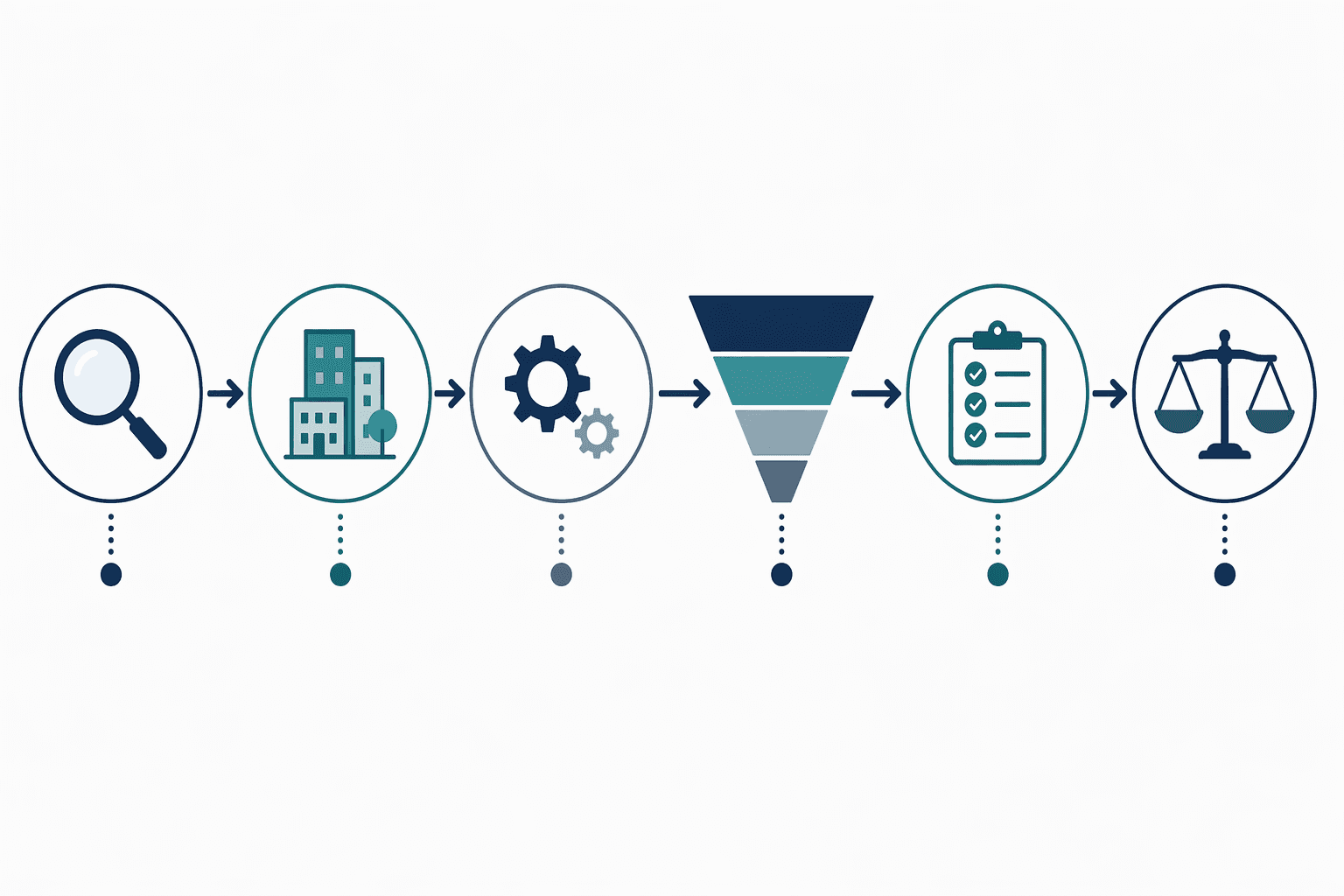
A clean cross-archetype comparison should name the business decision first:
- ERP suite versus planning specialist: Is ecosystem continuity more important than specialist planning depth?
- Planning specialist versus AI-native platform: Is the need mature planning optimization or a more flexible decision-intelligence layer?
- AI-native platform versus functional specialist: Is the buyer solving one urgent domain problem or building broader connected intelligence?
- ERP suite versus functional specialist: Is the problem part of the enterprise process backbone, or does it need domain-specific execution depth?
The ROI and trust reality check
The adoption pressure is real. RELEX reports that 71% of organizations plan to invest in generative AI over the next three to five years.[3] That does not mean generative AI should dominate the supply chain AI shortlist. In many supply chain processes, the harder value still comes from forecasting, optimization, exception prioritization, inventory decisions, supplier intelligence, and execution workflows where data quality and human review matter more than interface novelty.
The same trust gap should shape procurement. If only 10% of supply chain leaders trust AI for critical decisions without human review, then evaluation teams should not stop at model performance claims.[3] They should inspect approval workflows, override rights, audit trails, escalation paths, and the practical burden placed on planners and operators. A recommendation that cannot be reviewed cleanly will either be ignored or become a governance risk.
Integration deserves the same treatment. PwC’s finding that integration complexity is the top obstacle behind under-delivered technology investments is not a background statistic; it is a procurement filter.[4] Vendors should be asked to show how their product connects to the systems that actually run the supply chain: ERP, WMS, TMS, MES, procurement systems, order management, data platforms, and the spreadsheets that still hold operational truth in many organizations.
A practical shortlisting sequence
A defensible shortlist usually starts narrower than the market map. The first pass should eliminate category confusion, not crown a winner.
- Name the primary decision or workflow. Demand planning, supply planning, procurement, supplier visibility, warehouse execution, and integrated business planning do not have the same vendor logic.
- Define the operating environment. Company size, global complexity, planning maturity, ERP footprint, and data ownership determine whether suite gravity helps or hurts.
- Choose the archetype before scoring vendors. Compare SAP IBP with Oracle SCM Cloud as ERP-centric options; compare Blue Yonder with Kinaxis as planning specialists; compare AI-native platforms against the specific connected-intelligence use case; compare functional specialists inside their domain.
- Run demos against real exceptions. The best test is not a polished dashboard. It is a constrained supply event, forecast miss, supplier disruption, inventory imbalance, or warehouse execution issue that resembles the company’s actual work.
- Validate human review and integration effort. The buyer should know who approves AI-assisted decisions, what systems are touched, and what data must be fixed before value appears.
- Only then compare across archetypes. At that point, the tradeoff is visible enough for finance, IT, operations, and planning leaders to debate honestly.
The supply chain AI solutions market is too broad for a single leaderboard to be useful. A credible procurement process begins with functional need, company size, ecosystem constraints, and deployment complexity. Then it validates vendors inside the right archetype before making any cross-category tradeoff.
References
- AI in Supply Chain Market, MarketsandMarkets, January 2026.
- Supply Chain AI Roadmap, Gartner.
- 2026 State of Supply Chain, RELEX Solutions.
- 2026 Digital Trends in Operations Survey, PwC.
- AI in Supply Chain Planning Software: Comparative Analysis, Flowlity.
- AI for Supply Chain, monday.com.
- Supply Chain AI Tools, AIMultiple.
- Top 10 Supply Chain Management Platforms, Supply Chain Digital.
Comments
Join the discussion with an anonymous comment.