
The most important phrase in Oracle’s supply chain AI story is not “agentic.” It is “no additional cost.” Oracle says it is embedding more than 50 AI agents into Fusion Cloud Supply Chain & Manufacturing across planning, procurement, manufacturing, inventory, logistics, service, and product lifecycle management, with the agents included for existing customers rather than sold as a separate AI layer.[1][2]
That distinction matters because supply chain AI buying rarely fails at the demo. It fails later, when the team discovers that the attractive assistant, planner, or exception engine is tied to a premium module, a consumption pool, a limited entitlement, or a contract clause that makes broad adoption hard to defend. For the buyer evaluating Oracle AI supply chain impact, the first question is therefore commercial before it is technical: what can users actually access inside the transaction system they already run?
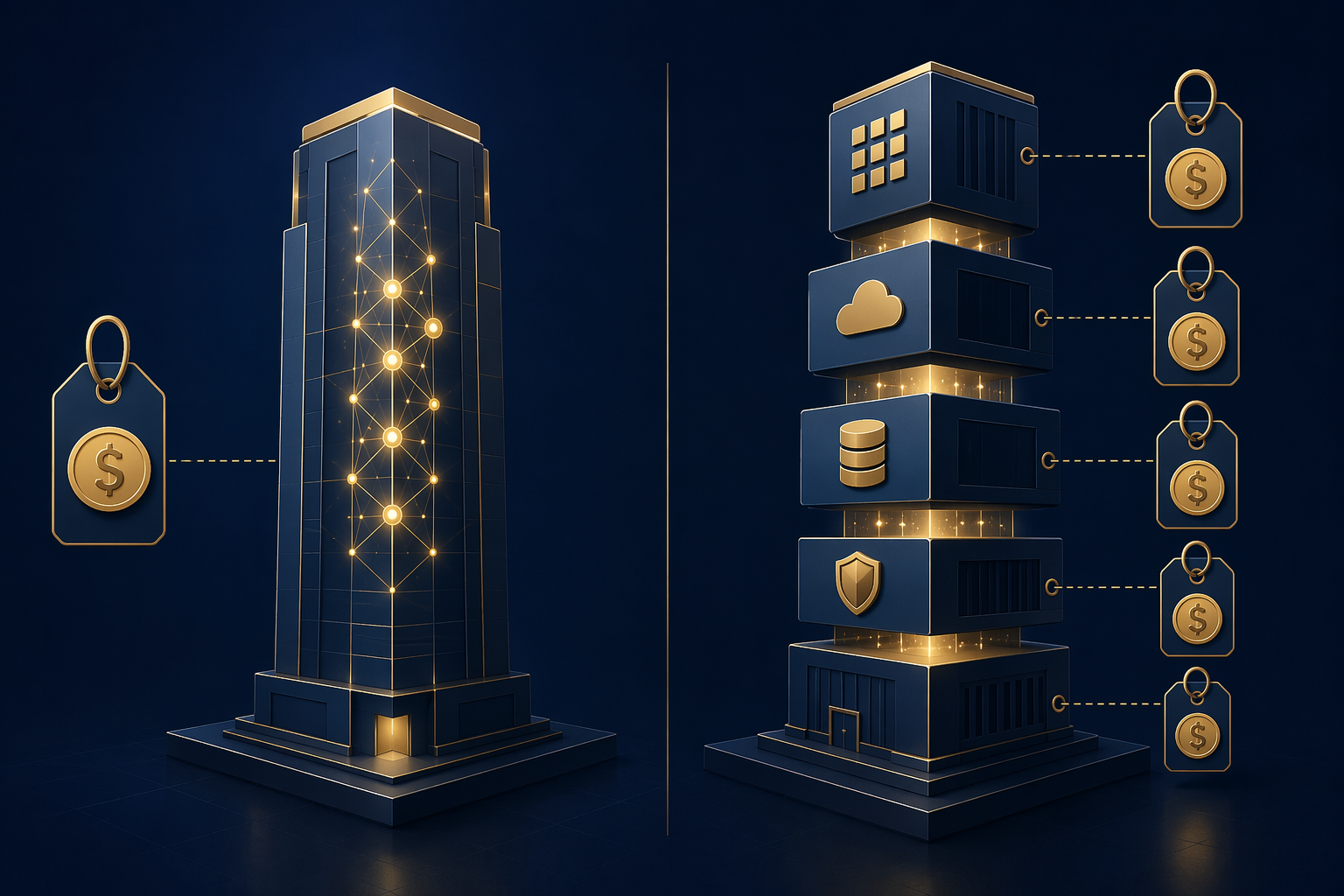
Oracle’s answer is unusually direct. The company’s 2025 and 2026 announcements describe SCM-specific agents inside the application workflow, not a standalone AI workbench sitting beside it.[1][2] Futurum Group framed the pricing point even more sharply, writing that Oracle is “one of the few vendors to eschew add-on, consumption, or outcome-based pricing” and instead absorb GenAI costs through its broader stack economics.[3] That does not make implementation free. It does change the politics of adoption.
The Commercial Claim Is Bigger Than the Agent Count
Oracle’s official supply chain materials consistently support the “50+” SCM agent figure.[1][2][4] That is the number worth using. A partner blog later referred to more than 600 AI agents across the broader Fusion Cloud suite, but that broader figure is not the same claim as Oracle’s official SCM-specific portfolio and should not be blended into the supply chain evaluation.[10]
Inflated counts are easy to sell and hard to evaluate. A supply chain leader does not need 50 equally impressive names. They need to know whether the agents sit where work already happens: in a planning run, a supplier negotiation, a maintenance decision, a production exception, a quality review, a shipment delay, a field service task, or an engineering change. Oracle’s AI for SCM catalog is useful because it anchors the discussion in those workflow locations rather than in a generic agent platform narrative.[4]
| Supply chain area | What Oracle says the agents support |
|---|---|
| Planning | Demand sensing, forecast review, supply planning, replenishment, order promising, and scenario support |
| Procurement | Supplier discovery, sourcing support, negotiation preparation, contract review, and purchasing guidance |
| Manufacturing | Work order review, production exception handling, quality inspection support, and maintenance-related actions |
| Inventory | Stock availability analysis, replenishment recommendations, transfer support, and inventory exception review |
| Logistics | Transportation planning, shipment monitoring, delivery exception review, and logistics document support |
| Service | Field service guidance, parts recommendations, service request support, and repair workflow assistance |
| PLM | Product record support, engineering change analysis, compliance review, and product information summarization |
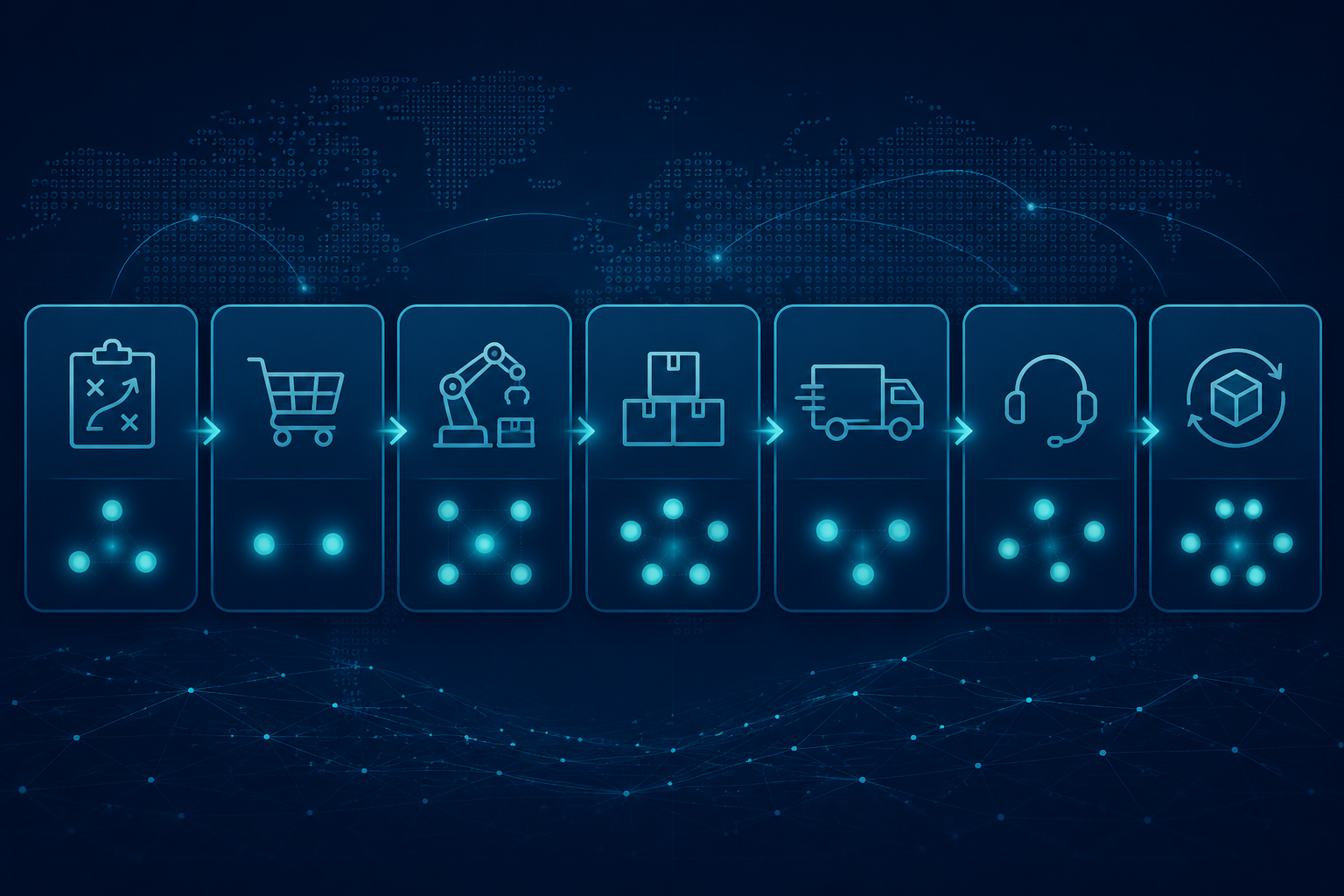
The table compresses a large catalog, but the pattern is more important than any single agent name: Oracle is not presenting supply chain AI as a planning-only feature. It is spreading assistants and task-oriented agents across the operational chain where planning decisions become purchase orders, work orders, shipments, service events, and product changes.[4]
Where the Agents Actually Matter
The cleanest way to read Oracle’s SCM catalog is by consequence. Some agents reduce search time. Some prepare a user for a decision. Some summarize a condition that already exists in the system. Some propose an action that still needs human review. Those are different levels of value, and buyers should not treat them as interchangeable just because they all carry the same AI label.
Planning agents: useful when they shorten the path from signal to decision
Planning is where AI claims tend to sound most familiar, but Oracle’s embedded approach still has practical weight. The company lists agents and AI capabilities tied to demand, supply, replenishment, and order promising workflows.[4] The value is not that a planner sees another dashboard. It is that the assistant can work inside the same planning environment where exceptions, constraints, forecasts, and recommendations already live.
This is also where the evidence needs careful handling. Oracle’s 2026 Gartner-related supply chain planning blog cites customer results such as double-digit forecast accuracy improvements, inventory-turn gains, and sales and operations planning cycles compressed from weeks to days.[6] Those are meaningful signals for Oracle planning maturity, but they are not named, independently verifiable case studies for the 2025–2026 AI agents themselves. They support confidence in the planning platform, not a blanket ROI claim for every new agent.
Procurement agents: strongest when they reduce preparation work
Procurement is one of the more credible places for embedded GenAI because so much of the work is document-heavy and context-sensitive. Oracle’s catalog describes supplier, sourcing, contract, and purchasing support that can help users prepare for negotiations, review supplier information, draft or summarize content, and move through procurement tasks with less manual assembly.[4]
The key word is prepare. A negotiation brief or supplier summary can be useful without becoming an autonomous sourcing decision. That narrower view is more defensible, and it is where procurement teams are more likely to get early value: fewer hours collecting supplier context, fewer missed clauses, faster movement from request to reviewed recommendation.
Manufacturing and inventory agents: value depends on disciplined master data
Oracle’s manufacturing and inventory agents sit closer to the operational nerve endings of the business. The official catalog points to support for production, quality, maintenance, inventory availability, replenishment, and exceptions.[4] In those workflows, an AI agent’s usefulness depends heavily on whether routings, item records, lead times, supplier constraints, quality holds, and inventory balances are trustworthy.
A poorly maintained item master does not become reliable because an agent can explain it fluently. A plant with inconsistent exception codes does not automatically gain better root-cause analysis because the interface is conversational. Embedded AI can reduce friction, but manufacturing and inventory teams still pay for old process debt when the model is asked to reason over messy operational records.
Logistics and service agents: the workflow fit is attractive, but time sensitivity raises the bar
Logistics and service are good tests of whether agents are actually embedded or merely adjacent. Oracle says its agents support logistics workflows such as shipment and transportation-related work, while service agents support field service, parts, repair, and service request activity.[2][4] These areas have a simple operational reality: the person using the system is often dealing with a waiting customer, a delayed carrier, a technician, a missing part, or a commitment window that is already slipping.
In that setting, an agent that summarizes status, identifies likely next actions, or helps prepare a response can matter. But the burden is higher than in a slow analytical process. Latency, accuracy, exception permissions, and escalation rules all determine whether the agent becomes part of the service rhythm or remains a nice panel that users ignore during real disruptions.
PLM agents: less glamorous, potentially important
PLM is easy to underweight in an AI supply chain discussion because it does not have the drama of a late shipment or a forecast miss. Oracle includes agents for product lifecycle work, including product information, change, and compliance-related support.[4] That matters because supply chain failures often start before execution: incomplete specifications, slow engineering change reviews, compliance ambiguity, and weak handoffs between design and operations.
If an agent helps a product team summarize change impacts or navigate product records faster, the benefit may show up downstream as fewer delays and fewer avoidable questions. That is harder to attribute than a transport savings line, but it is a legitimate place for embedded AI to improve cycle time.

Why Full-Stack Economics Change the TCO Conversation
Oracle’s most credible advantage is not that it invented supply chain AI. It is that it owns a large part of the stack required to deliver it: OCI infrastructure, database services, Fusion Applications, business process data, security controls, and the application workflow itself. Futurum’s analysis argues that this full-stack position lets Oracle absorb GenAI costs rather than pass them directly to customers through add-on, consumption, or outcome-based pricing.[3]
That has a straightforward procurement consequence. If two vendors both show a useful AI assistant, but one prices it as part of the existing application subscription while another prices it through separate AI access or metered use, the same business case behaves differently under enterprise adoption. A pilot may look similar. A global rollout across planners, buyers, schedulers, warehouse coordinators, logistics analysts, service managers, and product teams may not.
This is where no-extra-cost packaging becomes more than a marketing phrase. It can reduce the number of internal approvals needed to test broader usage. It can spare a supply chain technology leader from rationing AI features to a small group of power users. It can also make experimentation less politically exposed, because every prompt or agent-assisted interaction is not being mentally converted into a future invoice.
The advantage is structural, not magical. Oracle still has to fund compute, model operations, product engineering, support, and governance. Customers still pay for the underlying Fusion Cloud SCM subscription. The point is narrower and more useful: Oracle’s pricing architecture appears to lower the marginal commercial barrier to using embedded agents across supply chain workflows, compared with models that make AI access a separate commercial decision.
Market Validation Helps, but It Does Not Prove Agent ROI
Oracle was named a Leader in Gartner’s 2026 Magic Quadrant reports for Supply Chain Planning Solutions for both discrete and process industries.[6][7] That is relevant market validation for Oracle’s planning position, especially for buyers already comparing enterprise-grade planning platforms. It should not be stretched into proof that every new SCM AI agent has delivered measured customer outcomes.
There is a similar distinction in Oracle’s competitive comparison page. Oracle presents itself against SAP, Blue Yonder, Kinaxis, RELEX, Workday, and Palantir across 22 capability dimensions.[8] The page is useful because it shows how Oracle wants the market to frame the contest: breadth, embedded AI, suite coverage, and end-to-end process ownership. It is not independent evidence that Oracle wins every dimension claimed.
Third-party coverage also confirms that Oracle’s supply chain AI rollout was noticed outside Oracle’s own newsroom. ERP Today reported on Oracle’s AI agents for supply chain workflows, reinforcing that the announcement landed in the enterprise applications market rather than remaining a quiet release-note item.[9] Coverage, however, is not the same as adoption data.
The 26A release notes add another useful signal: Oracle is continuing to place AI features into regular Fusion Cloud SCM release cycles rather than treating AI as a separate seasonal showcase.[5] For enterprise buyers, that release discipline matters. Embedded AI only stays credible if it is maintained, governed, localized to workflow changes, and improved through the same product cadence as the core application.
What Buyers Should Verify Before Treating “Included” as “Realized”
No additional licensing cost answers one procurement question. It does not answer the implementation question. A company can be entitled to every agent in Oracle’s SCM portfolio and still see little operational improvement if users distrust the data, managers do not adjust workflows, or process owners cannot decide which recommendations are allowed to become actions.
- Data readiness: item, supplier, customer, inventory, routing, lead-time, quality, service, and logistics records need enough consistency for agent outputs to be useful.
- Workflow ownership: each agent needs a process owner who decides when users should rely on it, when they should override it, and who reviews exceptions.
- Security and permissions: embedded AI should inherit enterprise access rules, but buyers still need to test whether summaries and recommendations expose sensitive commercial or product data appropriately.
- Change management: planners, buyers, production teams, logistics coordinators, and service users need training tied to their actual tasks, not a generic AI launch session.
- Measurement: teams should decide which cycle times, exception queues, review steps, or adoption rates will indicate that an agent is improving work rather than merely being available.
This is the gap that often gets hidden in AI pricing debates. A zero-cost entitlement can make adoption easier to start, but value still has to be earned in process design. Someone has to decide whether a sourcing agent changes the buyer’s preparation routine. Someone has to decide whether a logistics agent’s exception summary becomes part of the morning control meeting. Someone has to decide whether planning recommendations can move from advisory output to workflow trigger.
Oracle’s suite coherence helps here because the agents are closer to the transactions that supply chain teams already manage. It can also create a blind spot. A single-vendor workflow is not automatically a disciplined workflow. If the underlying planning calendar, procurement policy, plant execution model, or service escalation path is unclear, the agent inherits that ambiguity.
The Practical Verdict
Oracle’s embedded AI agent strategy gives Fusion Cloud SCM a real commercial differentiator. The official SCM portfolio is broad, function-specific, and positioned inside the application areas where supply chain work is already performed.[1][2][4] The no-extra-cost model also changes the total cost of ownership discussion in Oracle’s favor, particularly when compared with AI approaches that require separate modules, consumption pricing, or premium entitlements.[3]
That is strongest for organizations already committed to Fusion Cloud SCM or seriously considering it as a suite platform. They can evaluate AI agents as part of the core application roadmap rather than as another layer to buy, integrate, secure, and justify. For those buyers, Oracle’s strategy is not just feature packaging; it is a lower-friction path to experimenting with AI across planning, procurement, manufacturing, logistics, service, inventory, and PLM.
It is not enough to declare Oracle the best AI supply chain platform. The evidence supports a more precise conclusion: Oracle has made one of the stronger enterprise application moves toward native, broadly entitled supply chain AI. The impact will depend on whether each customer has the data quality, process ownership, governance, and change capacity to turn included functionality into adopted workflow.
References
- Oracle AI Agents Help Supply Chain Leaders Boost Operational Efficiency, Oracle, October 15, 2025
- Oracle AI Agents Help Boost Supply Chain Efficiency and Strengthen Resiliency, Oracle, February 10, 2026
- Oracle Bets on AI-Driven Sales and Supply Chain Transformation, Futurum Group, February 2025
- AI for Supply Chain Management, Oracle
- Oracle Fusion Cloud SCM 26A: Built-in AI for Resilient Supply Chains, Oracle
- Oracle Named a Leader in Gartner Supply Chain Planning 2026, Oracle
- Oracle Named a Leader in Two 2026 Gartner Magic Quadrant Reports for Supply Chain Planning Solutions, Oracle, April 8, 2026
- Oracle SCM vs. Competition, Oracle
- Oracle AI Agents Help Transform Supply Chain Workflows, ERP Today
- Oracle 2026 Trends: AI, Cloud, Automation Transforming Businesses, CES LTD, 2026
Comments
Join the discussion with an anonymous comment.