
By Q3 2026, a data center developer trying to reserve a large gas turbine is not really shopping in a normal equipment market. The more accurate image is a production queue: GE Vernova’s gas turbine backlog had reached 100 GW in Q1 2026, enough to effectively sell out capacity through 2030, with new orders moving into 2031 delivery windows.[1]
That queue is where the phrase GE Vernova AI infrastructure supply chain stops being an abstract market phrase and becomes a schedule risk. The limiting item for many AI campuses is no longer only land, capital, GPUs, or fiber. It is whether the generation and grid equipment needed to energize the site can be bought, manufactured, delivered, interconnected, and commissioned inside the same planning horizon as the compute.
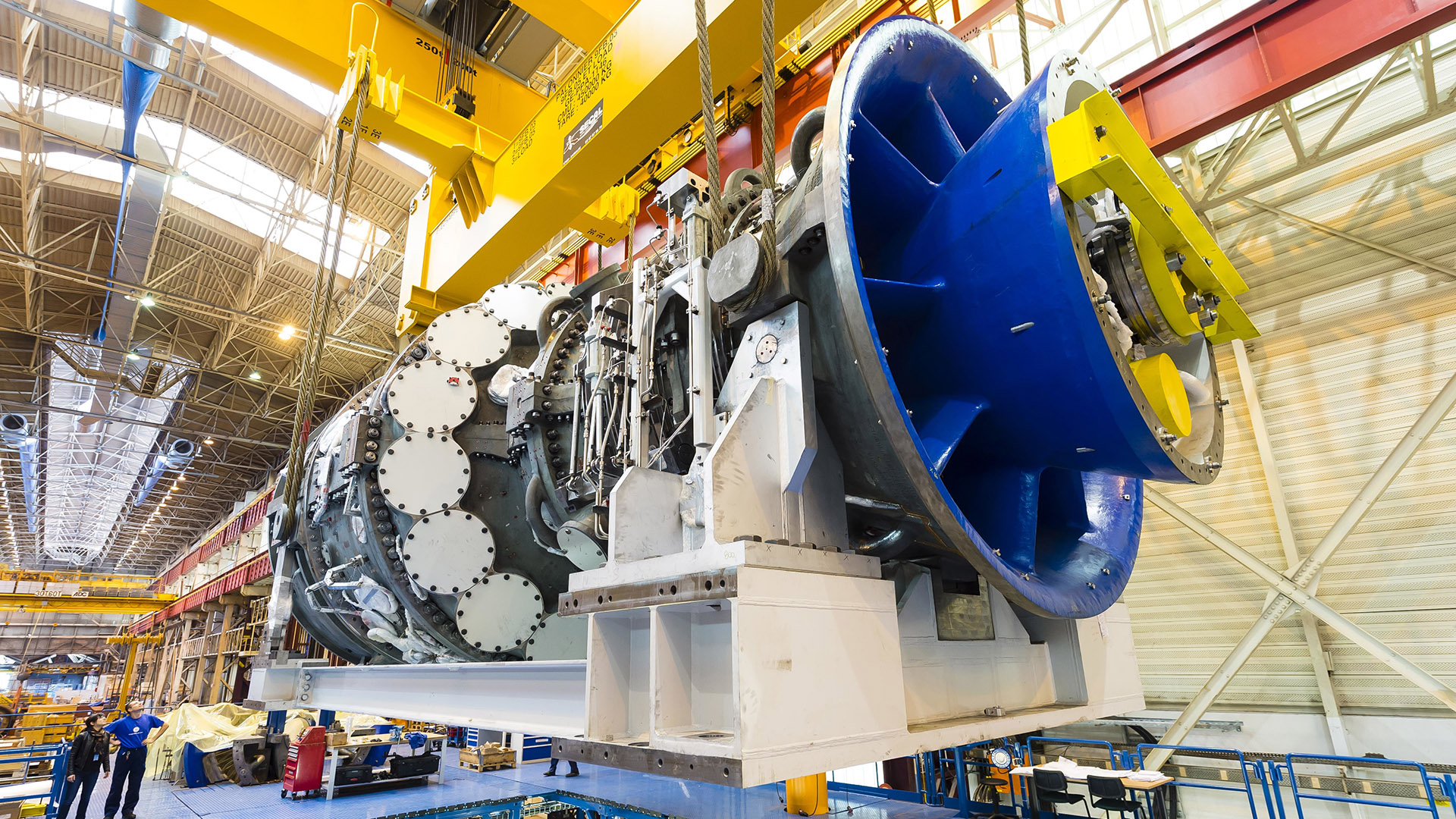
GE Vernova did not single-handedly create this constraint. Heavy-duty gas turbines sit in an oligopolistic supplier structure led by GE Vernova, Siemens Energy, and Mitsubishi Heavy Industries. But GE Vernova is the vendor most visibly sitting at the intersection of the AI buildout, gas-fired generation demand, and the grid equipment shortage that follows after generation is selected.
The turbine slot is now a project milestone
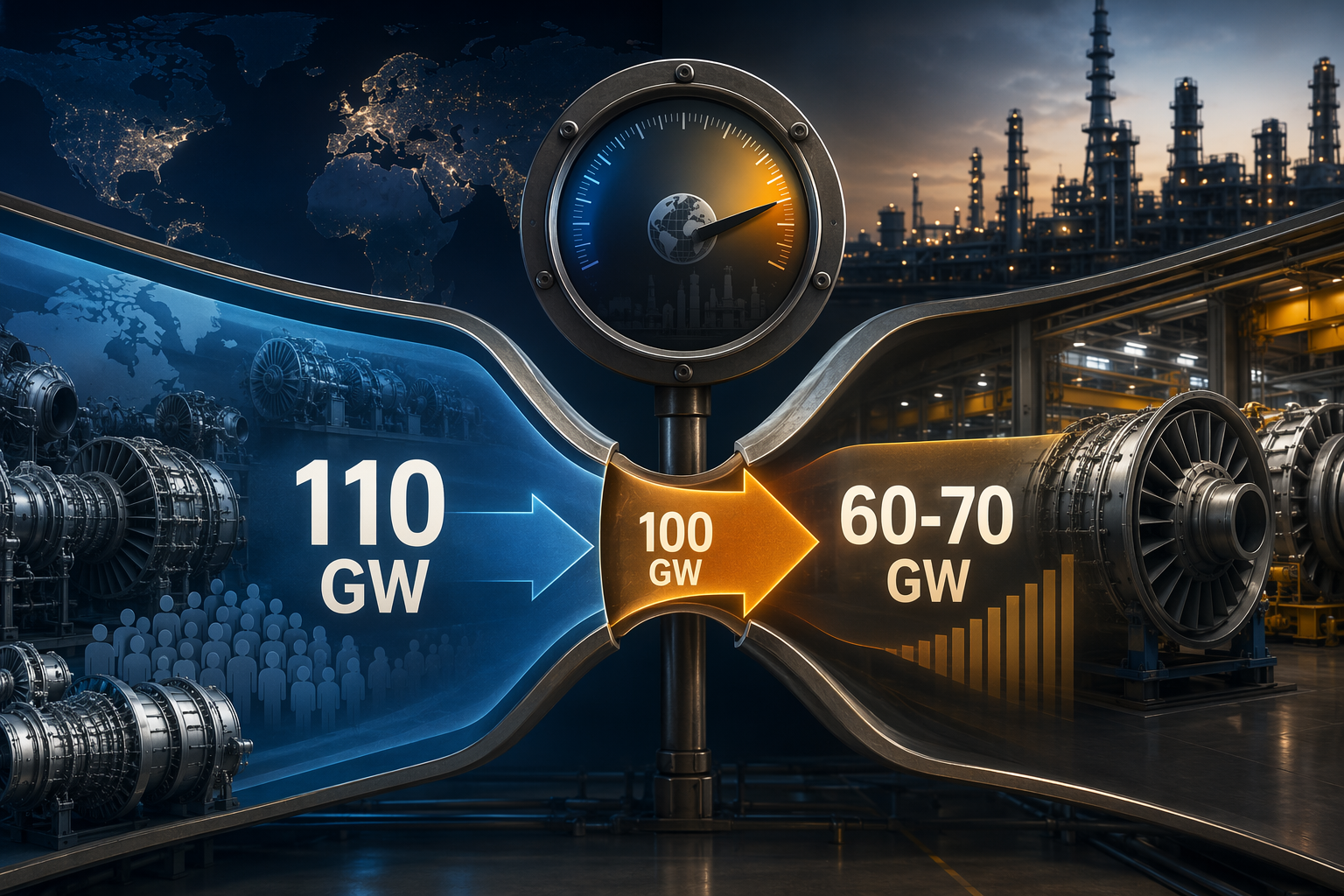
A gas turbine purchase used to be one line in a broader power strategy. In the current market, it can decide whether the power strategy is credible. Global turbine manufacturing capacity is estimated at roughly 60 GW to 70 GW per year, while global orders stood around 110 GW at the end of 2025.[2][3] The arithmetic is not subtle. Even before every AI data center receives a firm utility interconnection plan, the manufacturing base is already being asked to supply more equipment than it can comfortably produce.
For procurement teams, the problem is not that a preferred OEM is busy. The problem is that turbine availability has become an early-stage development dependency. A hyperscaler planning a large campus, a colocated power developer, and a utility serving new load may all arrive at the same supplier conversations at once. The team that waits until the site plan, tax package, and interconnection study are tidy may discover that the equipment reservation window has moved beyond the commercial opening date.
The consequence is a change in what counts as procurement readiness. A letter of intent without a manufacturing slot is weaker than it looks. A power strategy without turbine delivery assumptions is not yet a schedule. A capital budget that treats the turbine as a later commodity buy is carrying a hidden critical path.
| Constraint | What it changes for AI infrastructure buyers |
|---|---|
| 100 GW GE Vernova gas turbine backlog | Generation equipment must be reserved earlier, often before the full data center program is locked. |
| Orders moving into 2031 | Delivery windows can sit beyond normal corporate planning cycles and customer demand forecasts. |
| 60-70 GW/year global turbine manufacturing capacity against about 110 GW of orders | Supplier access, not only financing, becomes a gating condition. |
| Transformer lead times above 160 weeks | Grid connection and step-up equipment can extend the schedule even after generation is sourced. |
Price is the signal; schedule is the constraint
The price movement confirms that this is not a soft queue. Wood Mackenzie projects heavy-duty gas turbine prices will reach $600 per kilowatt by the end of 2027, a 195% increase since 2019.[4] CNBC has also reported analyst commentary pointing to roughly 300% increases over three years, but that figure is best treated as market commentary rather than the anchor for procurement planning.[2]
The more useful procurement lesson is that price escalation and delivery risk are moving together. A buyer can absorb a higher unit price and still miss the load date if the manufacturing slot is not real. A developer can sign a power purchase concept and still face a non-bankable schedule if the turbine, transformer, switchgear, and interconnection equipment are not under control.
That shifts leverage toward suppliers with credible manufacturing capacity and toward buyers willing to make earlier commitments. It also creates uncomfortable internal conversations. Finance wants budget certainty. Development wants optionality. Engineering wants time to refine the design. The equipment market is rewarding the opposite behavior: earlier decisions, fewer late substitutions, and contractual treatment of delivery slots as scarce assets.
The grid equipment backlog compounds the turbine problem
Generation equipment is only the first bottleneck. A turbine does not energize an AI campus by itself. The plant still needs transformers and related electrification equipment to move power safely and at the right voltage. That second queue is tightening at the same time.
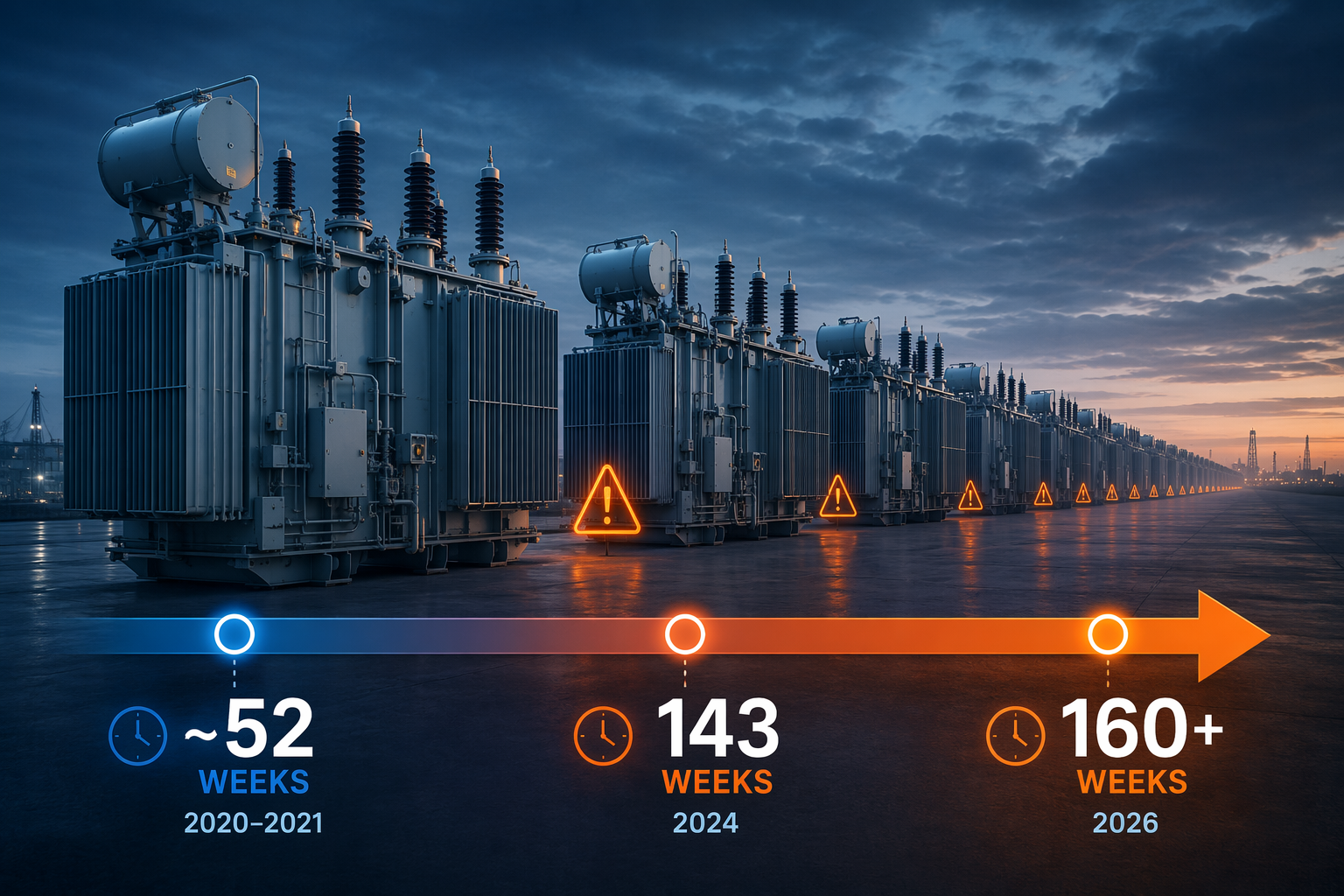
Transformer lead times had surpassed 160 weeks by Q1 2026, up from about 143 weeks in 2024 and roughly 52 weeks in 2020-2021, according to Wood Mackenzie data cited by Reuters.[5] The figure should not be read as a universal lead time for every transformer type. It is most relevant to the large power equipment that matters for utilities, major industrial loads, and large data center campuses. That is exactly why it matters here.
GE Vernova’s own electrification numbers show the pressure entering its order book. In Q1 2026, the company reported $2.4 billion in data center equipment orders in its Electrification segment, more than all of 2025; 2025 itself had been more than triple 2024 volume. The segment backlog rose from $25 billion to $42.4 billion year over year.[6]
This is the part of the AI power story that gets treated too casually. A developer may secure a gas-fired generation path and still be waiting on the grid-side equipment that lets the project operate. A utility may be willing to serve the load and still face a transformer queue. A hyperscaler may have the balance sheet to pay for acceleration and still find that there is no acceleration to buy.
Behind-the-meter power is a workaround, not a bypass
The move toward behind-the-meter and colocated power is not a gimmick. GE Vernova has been tied to efforts with Chevron, NRG, and others to support power plants colocated with large loads, including data centers.[1][2] For buyers trying to escape slow interconnection processes or uncertain utility capacity, the model has obvious appeal: place generation close to the load, contract directly for power, and reduce dependence on a traditional grid expansion timeline.
But colocated power still consumes the same scarce industrial equipment. It may change who signs the purchase order and who bears development risk. It does not eliminate the need for turbines, transformers, controls, switchgear, permitting, fuel arrangements, and operations capability. In some cases it may move the procurement burden from the utility to a private power developer serving a hyperscaler. That can be commercially useful, but it is not a manufacturing shortcut.
The practical effect is a market-structure shift. AI infrastructure buyers are moving upstream into decisions that once sat mainly with utilities and independent power producers. They are not merely buying data center capacity; they are indirectly competing for heavy electrical equipment, turbine production slots, and engineering attention.
Prolec GE helps the strategic position, not the immediate clock
GE Vernova’s acquisition of Prolec GE is the kind of move that deserves attention because it addresses the right constraint. The $5.275 billion deal closed in February 2026 and added about 10,000 employees and seven manufacturing sites across the Americas, expanding GE Vernova’s transformer manufacturing position.[7]
That is a meaningful vertical-integration step. It signals that GE Vernova understands electrification capacity is not a supporting business line; it is strategic infrastructure for the load growth now arriving from data centers, grid upgrades, electrification, and industrial demand. It may improve the company’s ability to capture margin, coordinate capacity, and offer customers a broader power-equipment package.
It does not make a 160-week lead-time environment disappear. Manufacturing integration still has to work through factory capacity, skilled labor, component availability, testing bottlenecks, and order books that were already filling before the deal closed. For buyers, the acquisition improves GE Vernova’s strategic importance, but it should not be modeled as a near-term cure for transformer availability.
What changes in procurement behavior
The GE Vernova constraint changes procurement in ways that are visible before any contract is signed. The first change is timing. Buyers have to reserve equipment earlier, often before every downstream commercial variable is settled. That creates tension with governance processes built for competitive bids, final design packages, and annual capital approval cycles.
The second change is contracting. Delivery dates, escalation clauses, cancellation rights, liquidated damages, and substitution options matter more when the market cannot easily replace a missed slot. A procurement team that treats a turbine reservation like a standard equipment PO is likely underestimating the value of the place in line.
The third change is supplier strategy. GE Vernova may be central, but it is not the only supplier in the global turbine market. Serious buyers will still evaluate Siemens Energy and Mitsubishi Heavy Industries, and they will pressure EPC partners and utilities to show which OEM assumptions sit behind the schedule. Supplier diversification is useful only if the alternative slot actually exists.
The fourth change is site selection. A site with better access to available power equipment, a utility with reserved transformer capacity, or a colocated generation partner with credible OEM commitments may outrank a site that looks cheaper on land or tax incentives. In this market, the cheapest megawatt on paper can be the most expensive one if it arrives late.
Market power under constraint
GE Vernova’s position is enviable because the company sells the equipment that turns AI ambition into energized infrastructure. It is also difficult because that same position exposes every gap between software-speed demand and industrial manufacturing reality. A model deployment can be rescheduled in weeks. A large turbine or transformer manufacturing slot can move the whole project into another year.
For hyperscalers, developers, utilities, and private power partners, GE Vernova’s capacity is now a first-order schedule and cost variable through 2030. The relevant question is not whether AI demand will be large in the abstract. It is whether the equipment needed to serve specific campuses can be secured on dates that match the commercial promise.
Any serious AI infrastructure plan now has to treat power equipment availability as a gating supply chain risk, not a downstream utility detail.
References
- GE Vernova gas turbine backlog hits 100 GW as prices rise, Utility Dive
- GE Vernova gas turbines AI data centers, CNBC
- The gas turbine bottleneck reshaping energy infrastructure, Primary VC
- Gas turbine prices soar 195% as market faces supply-demand crisis, Wood Mackenzie
- US power companies scramble to secure equipment as surging data center demand strains supplies, Reuters, July 9, 2026
- GE Vernova reports first quarter 2026 financial results, GE Vernova
- GE Vernova completes Prolec GE acquisition, GE Vernova, February 2026
Comments
Join the discussion with an anonymous comment.