
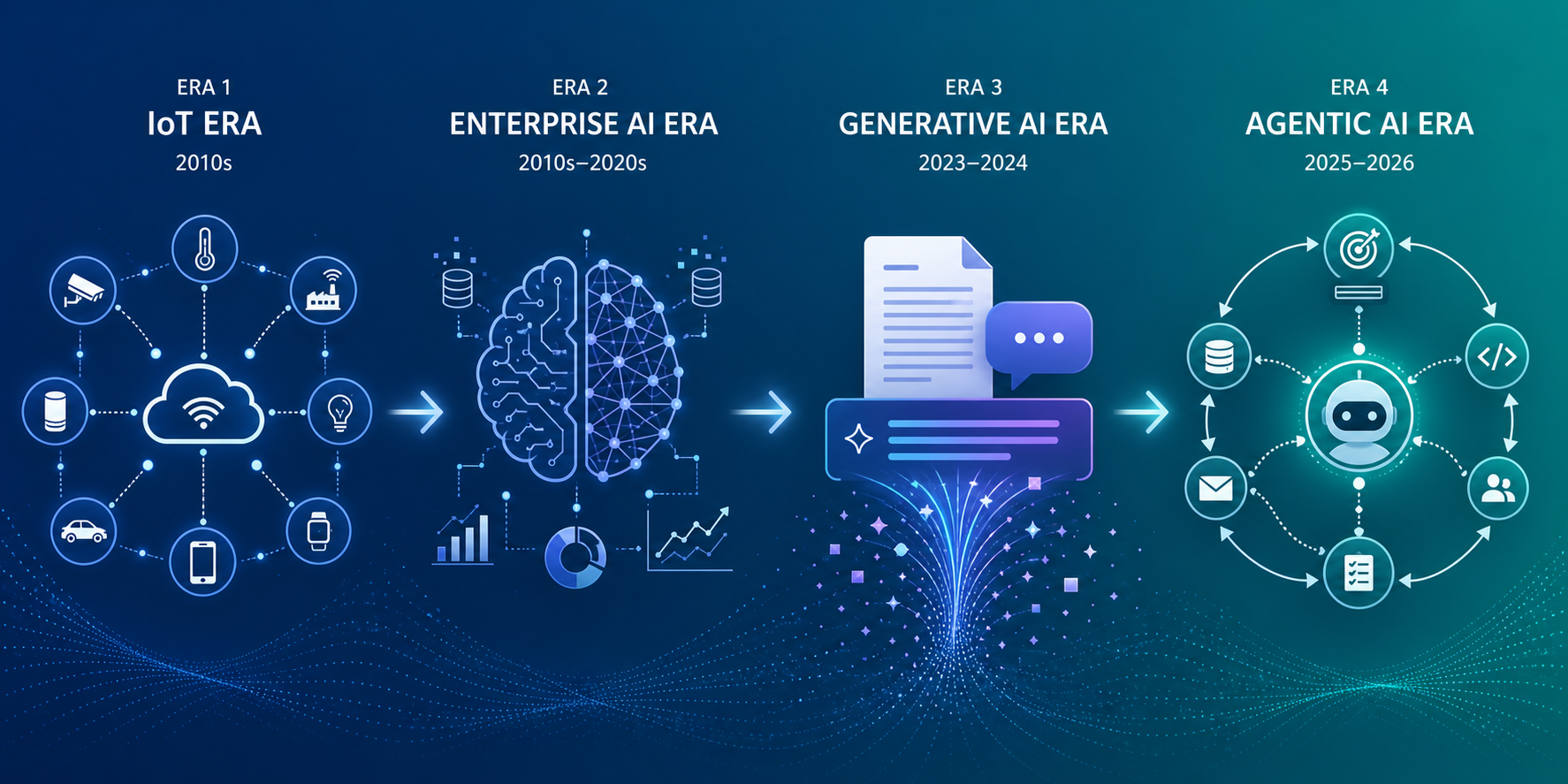
C3 AI's Product Narrative Evolution: From IoT to Agentic AI
C3 AI has never been a company that stays with one story for long. Founded in 2009 by Thomas Siebel, the company initially built its reputation on IoT analytics and energy management for industrial enterprises. As market attention shifted, so did C3 AI's positioning: it became an "enterprise AI" platform, then a "generative AI" platform, and now, in 2026, an "agentic AI" platform for supply chain planning. Each transition has been accompanied by a product refresh, a new set of marketing materials, and a recalibrated message to analysts and customers.
This pattern of following dominant AI narratives is not inherently disqualifying — many platform companies adjust their messaging to reflect evolving technical capabilities and market demand. But for supply chain technology strategists evaluating long-term platform commitments, the pattern matters. C3 AI's current "agentic AI" narrative, unveiled with its 2026 supply chain suite, represents the latest layer on top of an already mature platform company, not a new technical foundation. As the independent review from Lokad notes, the company has moved through carbon, energy, IoT, enterprise AI, generative AI, and now agentic AI narratives, calling the current phase "the latest layer on top of an already mature platform company, not as a new technical foundation."
The question for buyers is not whether C3 AI has genuine technical depth — it does, particularly in data unification, model operations, and enterprise-scale deployment. The question is whether the "agentic" framing adds substantive new capability for supply chain planning, or whether it repackages existing strengths under a more fashionable label. The answer, as this article will examine, lies somewhere in between: the orchestration layer is real, but the underlying AI reasoning engine has not fundamentally changed.
What "Agentic Supply Chain Planning" Actually Means at C3 AI
C3 AI's 2026 supply chain suite page explicitly frames planning as an "always-on decision system" powered by "composable agents and workflows" for both Sales & Operations Planning (S&OP) and Sales & Operations Execution (S&OE). This is not the same as the general agentic AI hype around autonomous reasoning systems that can set their own goals and rewrite their own code. C3 AI's interpretation is more pragmatic and more bounded: domain-specific AI agents that execute predefined planning workflows, orchestrated by a central platform.
In C3 AI's architecture, an "agent" is a composable application module that combines a specific ML model (or set of models), a defined data scope, a trigger condition, and an output action. These agents are not independent reasoning entities. They are purpose-built components that can be assembled into workflows — for example, a demand sensing agent detects a signal change, which triggers a disruption agent to assess impact, which then prompts a capacity planning agent to propose a reallocation. The orchestration layer manages the sequence, data handoffs, and human-in-the-loop approvals.
- Composable agents: Each agent is a self-contained module with a specific planning function (demand sensing, tariff modeling, capacity planning) that can be combined with other agents to form end-to-end workflows.
- Workflow orchestration: The platform manages the sequence of agent execution, data dependencies, and exception handling — this is the genuinely new capability in the 2026 refresh.
- Always-on decision system: Agents run continuously, not just during periodic S&OP cycles, enabling faster response to disruptions and demand signals.
- Human-in-the-loop: Critical decisions (e.g., supplier repricing, capacity reallocation) require human approval before execution, distinguishing this from fully autonomous planning.
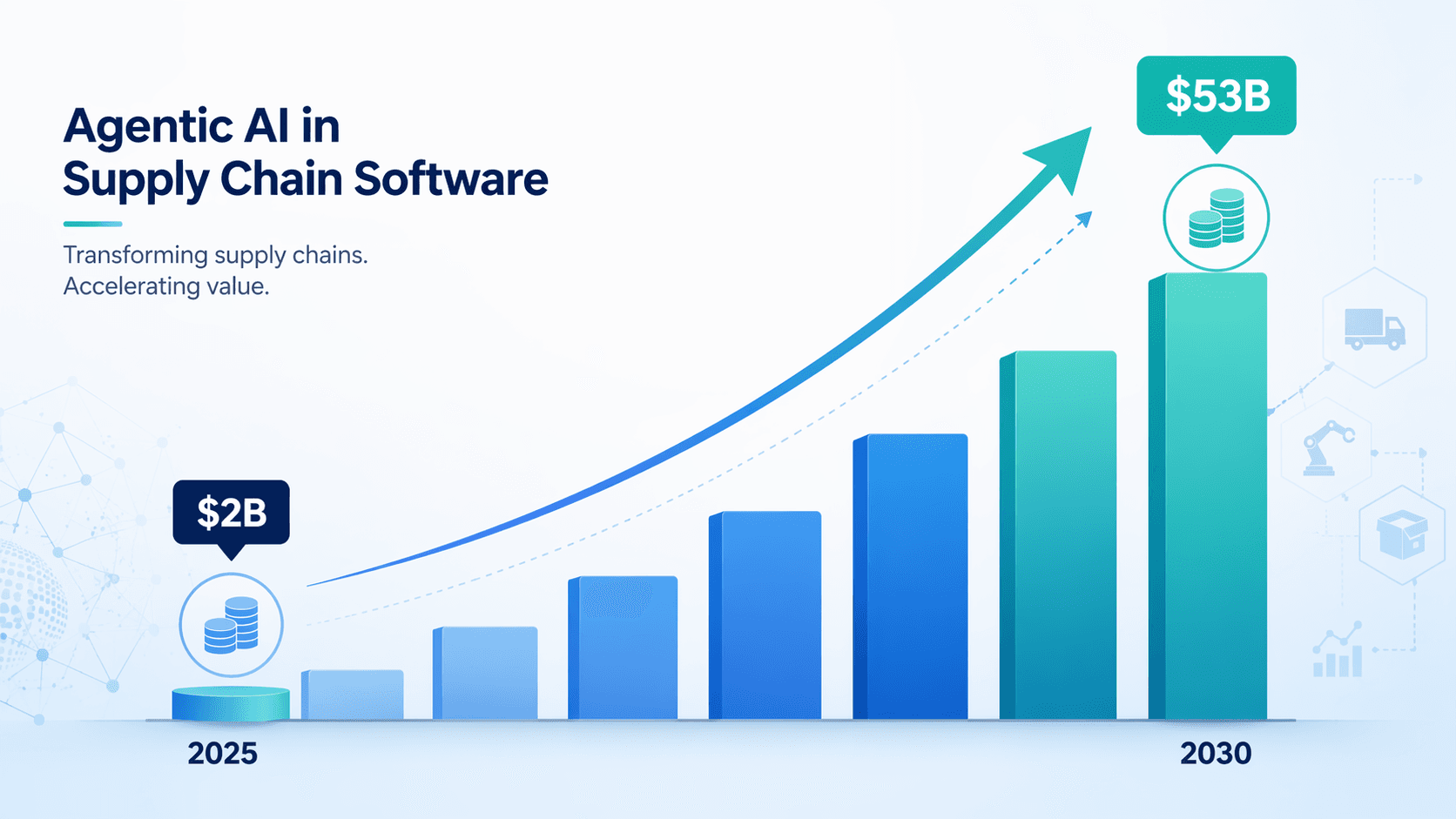
This distinction matters because the market is moving fast. Gartner forecasts that supply chain management software with agentic AI capabilities will grow from less than $2 billion in 2025 to $53 billion in spend by 2030, and that by 2030, 60% of enterprises using SCM software will have adopted agentic AI features, up from 5% in 2025. C3 AI is positioning itself to capture a share of that growth, but the substance of its offering needs to be evaluated against the specific planning problems it claims to solve, not against the market trajectory.
Architecture Foundations: The Type System, Digital Twin, and ML Pipeline
The agentic layer in C3 AI's 2026 platform does not replace the company's existing technical infrastructure. It sits on top of it. Understanding this architecture is essential for evaluating whether the agentic claims represent genuine platform evolution or marketing reframing.
C3 AI's platform has three foundational layers that predate the agentic refresh and continue to serve as its backbone:
| Layer | Function | Role in Agentic Architecture |
|---|---|---|
| Type System | A metadata-driven abstraction layer that models enterprise entities (products, customers, suppliers, locations) and their relationships in a unified schema | Provides the shared data model that all agents operate on; agents inherit entity definitions and relationships from the Type System rather than managing their own data schemas |
| Digital Twin | A real-time, simulation-capable representation of the supply chain that integrates data from ERP, CRM, IoT, and external sources | Agents use the digital twin as their "world model" — they query it for current state, run simulations, and write proposed changes back to it before execution |
| ML Pipeline (Auto-ML, Feature Store, Managed Jupyter) | Automated model training, feature engineering, and deployment infrastructure that supports millions of models at scale | Each agent is backed by one or more ML models trained through this pipeline; the agentic layer does not introduce new ML capabilities, only new orchestration of existing ones |
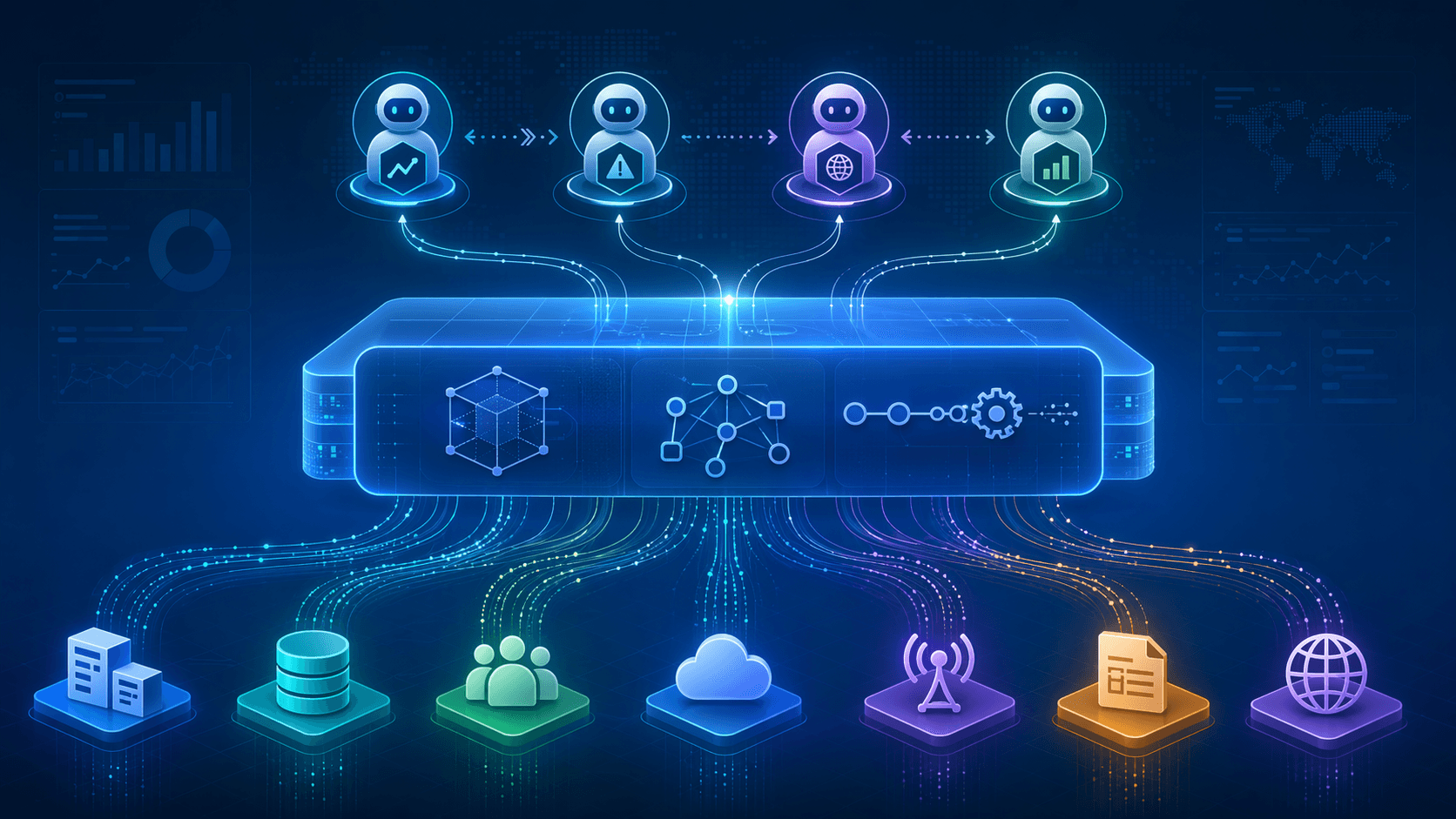
The critical insight for evaluators is that the agentic layer is an orchestration and workflow abstraction on top of these existing capabilities. The ML models that power demand sensing, disruption detection, and tariff analysis are the same types of models C3 AI has been deploying for years. What is new is the ability to compose them into multi-step workflows, manage their execution order, and handle exceptions programmatically.
This is not trivial — workflow orchestration at enterprise scale is genuinely difficult, and C3 AI's model-driven architecture gives it an advantage in managing the complexity of interconnected planning processes. But it is not the same as building AI agents that can reason autonomously about supply chain trade-offs. The Lokad review captures this distinction, giving C3 AI a product and architecture integrity score of 5.8/10 and noting that the supply chain applications are "technically non-trivial but still secondary to a much broader horizontal platform story."
Supply Chain Agent Catalog: What C3 AI Actually Ships
C3 AI's 2026 supply chain suite organizes its agentic capabilities into two categories: Planning (S&OP) agents and Execution (S&OE) agents. Each agent is a composable module with a defined function, data scope, and output. The following table catalogs the specific agents C3 AI offers, based on its published product documentation.
| Agent | Category | Stated Function |
|---|---|---|
| Capacity & Supply Planning | S&OP | Optimizes production capacity and supply allocation against demand forecasts, considering constraints and costs |
| Should Cost Modeling | S&OP | Calculates target costs for manufactured items based on raw materials, labor, and overhead inputs |
| Sourcing - RFQ Automation | S&OP | Automates request-for-quote workflows by matching demand with supplier capabilities and pricing |
| Tariff Agent | S&OP | Models the impact of tariff changes on sourcing decisions, landed costs, and supply allocation |
| Similar Part Analysis | S&OE | Identifies substitute parts or materials when primary options are unavailable due to disruption |
| Disruption Agent | S&OE | Detects supply chain disruptions (supplier failure, logistics delay, demand spike) and assesses impact on plans |
| Should Cost & Total Cost Modeling | S&OE | Provides real-time cost analysis for procurement decisions during execution |
| Supplier Repricing | S&OE | Recommends price adjustments based on market conditions, cost changes, and contract terms |
The tariff agent is particularly noteworthy given the current trade environment. C3 AI has positioned this agent to help planners model the impact of tariff changes on sourcing decisions and landed costs — a capability that has become increasingly critical as trade policy volatility has become a first-class planning variable. For readers evaluating this capability in the context of real-world tariff modeling, the site's US Tariff Escalation 2025: Impact on AI Supply Chain Planning Assumptions use case entry provides additional context on how AI-based tariff modeling works in practice.
The demand sensing function, while not listed as a separate agent in the S&OP/S&OE catalog, is embedded within the broader platform's forecasting capabilities. C3 AI's demand forecasting product supports any granularity (product, customer, location), any time horizon, and any interval (intra-day, daily, monthly), with Auto ML for automatic curation of pre-processing, feature engineering, and model deployment. The agentic layer adds the ability to trigger demand sensing workflows automatically when new data arrives or when forecast error exceeds thresholds.
Assessment: Genuine Platform Evolution vs. Narrative Reframing
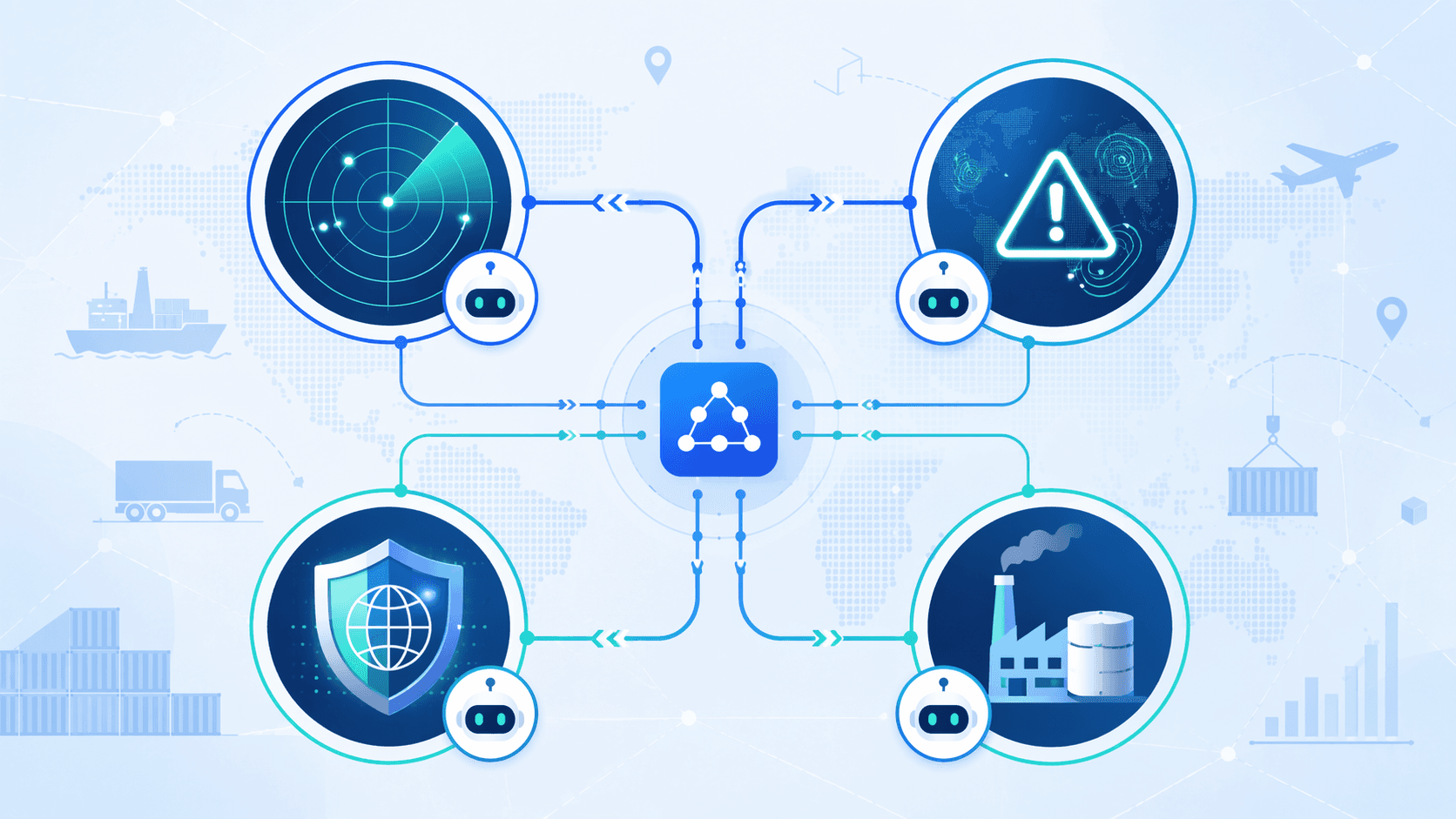
The central question for supply chain technology strategists is whether C3 AI's 2026 agentic AI refresh represents a genuine platform evolution or a narrative reframing of existing capabilities. The answer, based on available evidence, is that it is both — and the distinction matters for procurement decisions.
| Dimension | Genuinely New | Rebranded Existing Capability |
|---|---|---|
| Workflow orchestration | Composable agents with defined triggers, data handoffs, and execution sequencing — this is the core new capability | — |
| ML models and algorithms | — | The underlying ML pipeline (Auto-ML, feature store, managed Jupyter) is unchanged; agents use the same model types C3 AI has deployed for years |
| Digital twin | — | The digital twin layer is the same simulation-capable representation that existed before the agentic refresh |
| Type System | — | The metadata-driven data model is unchanged; agents inherit entity definitions from the existing Type System |
| Human-in-the-loop | — | Approval workflows for critical decisions existed in prior versions; the agentic layer adds more granular control but not a fundamentally new approach |
| Always-on execution | Continuous monitoring and triggering of agents outside periodic S&OP cycles is a meaningful operational improvement | — |
The Lokad independent review, updated April 2026, gives C3 AI an overall supply chain score of 4.9/10, with particularly low marks for decision and optimization substance (4.4/10) and vendor seriousness (4.4/10). The review notes that while C3 AI is a "real enterprise AI platform vendor," its supply chain applications are "technically non-trivial but still secondary to a much broader horizontal platform story." This assessment aligns with the view that the agentic layer adds orchestration value but does not fundamentally deepen the supply chain optimization engine.
The market context for this assessment is important. Gartner's forecast that SCM software with agentic AI will grow from less than $2 billion in 2025 to $53 billion by 2030 validates the market direction C3 AI is positioning for. But the same forecast also implies intense competition: if 60% of enterprises using SCM software will have adopted agentic AI features by 2030, then every major planning platform vendor — Blue Yonder, o9 Solutions, Kinaxis, SAP IBP — will be making similar claims. C3 AI's differentiation will depend on the depth of its supply chain optimization substance, not on the agentic label.
Implications for Buyer Evaluation and Vendor Risk
For supply chain technology strategists evaluating C3 AI's 2026 platform refresh, the agentic AI narrative should be treated as a signal to investigate deeper, not as a reason to accelerate or delay a procurement decision. The following considerations are designed to help buyers separate substance from marketing and assess vendor risk.
What to Look for Beyond the Agentic AI Marketing
- Demand a demonstration of agent-to-agent handoffs in a realistic planning scenario. The orchestration layer is the genuinely new capability — verify that it works with your data, your planning cycles, and your exception-handling rules.
- Ask for the optimization engine specifics behind each agent. C3 AI's Lokad score of 4.4/10 for decision and optimization substance suggests limited public evidence of how agents make trade-off decisions. Request documentation of the optimization algorithms, constraint models, and objective functions.
- Evaluate the digital twin's fidelity for your specific supply chain. The digital twin is the foundation for all agentic workflows — if it does not accurately model your network, inventory policies, and lead time distributions, the agents will produce unreliable outputs.
- Assess integration complexity with your existing ERP and planning systems. C3 AI's platform commitment (customer cloud, Terraform/K8s deployment) signals significant integration overhead. Request reference calls with customers who have similar system landscapes.
- Separate the agentic AI evaluation from the demand forecasting evaluation. The forecasting capabilities (Auto ML, hierarchical forecasting, evidence packages) are well-established and can be evaluated independently of the agentic layer. If you only need forecasting, the agentic suite may be overkill.
Vendor Risk Signals That Matter for Long-Term Commitments
Supply chain planning platforms are long-term commitments. The cost of switching is high, and the operational risk of a platform failure is significant. C3 AI presents several vendor risk signals that warrant scrutiny:
- CEO transition: Stephen Ehikian became CEO in September 2025, with founder Thomas Siebel moving to Executive Chairman. Leadership transitions at platform companies can shift product strategy, investment priorities, and customer relationship models. The new CEO's background and vision for supply chain should be evaluated.
- Withdrawn outlook: C3 AI withdrew its fiscal 2026 outlook during the leadership transition, a signal of commercial volatility. For buyers making multi-year platform commitments, financial stability and predictable investment in product development are critical.
- Narrative-tracking pattern: The company's history of following dominant AI narratives (IoT → enterprise AI → generative AI → agentic AI) raises the question of whether the current agentic focus will persist through the next market shift. Supply chain planning platforms require sustained investment in domain-specific capabilities, not just narrative adaptation.
- Limited supply chain-specific analyst validation: While C3 AI scores well in horizontal AI platform evaluations (Verdantix #1 Leader), its supply chain depth is rated lower by specialized reviewers (Lokad 4.9/10). Buyers should seek references from supply chain practitioners, not just AI platform evaluators.
Ultimately, C3 AI's 2026 agentic AI refresh is a meaningful evolution of its platform's orchestration and workflow capabilities, but it does not represent a fundamentally new approach to supply chain AI. Buyers who evaluate the agentic layer as an integration and automation enhancement — rather than as a leap in AI reasoning — will make more informed procurement decisions. The underlying supply chain optimization substance, data integration requirements, and vendor stability remain the critical evaluation dimensions, regardless of the marketing label attached to them.
Comments
Join the discussion with an anonymous comment.