
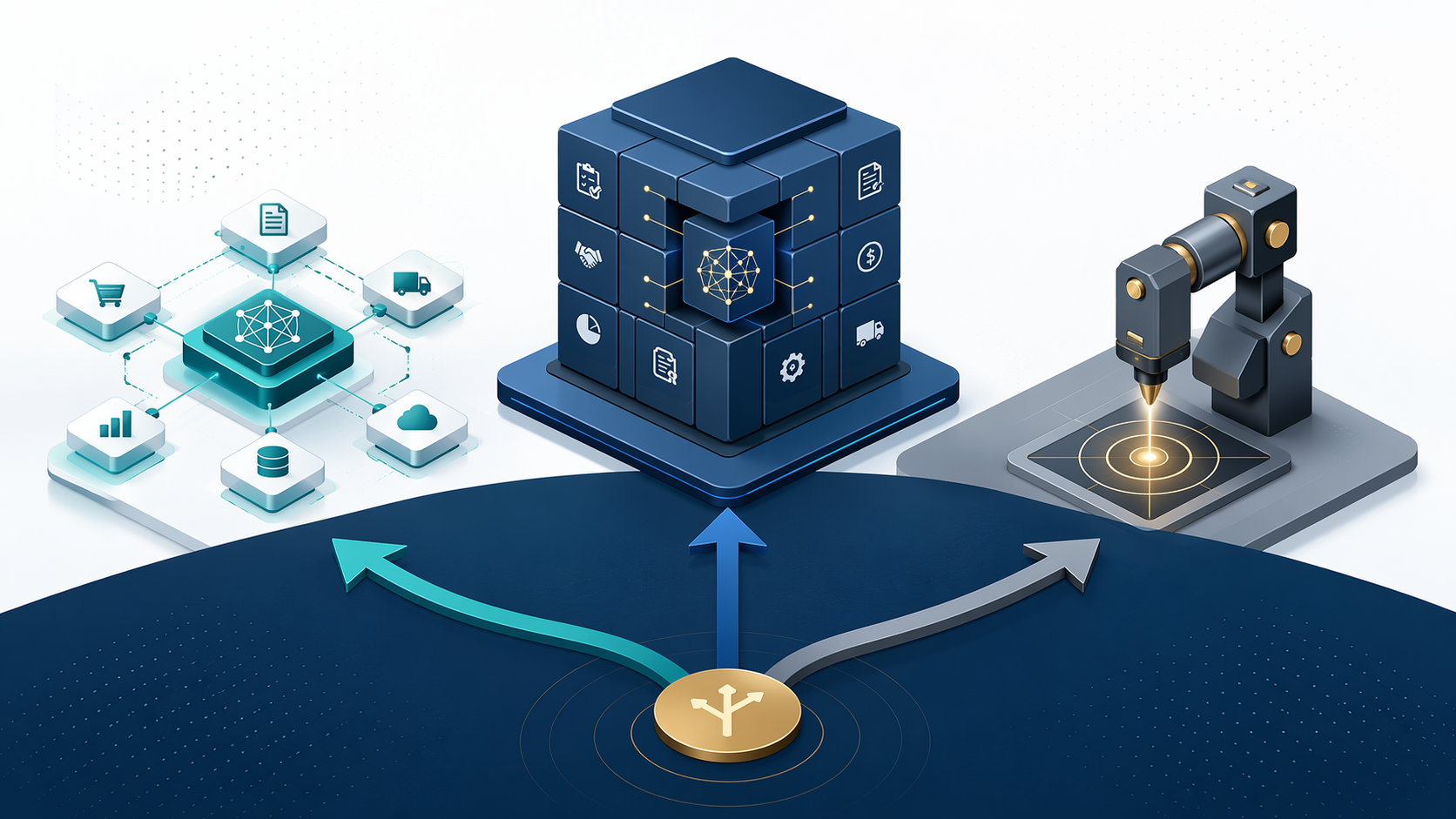
The CPO’s 2026 AI procurement platform decision usually starts with three credible paths, not one obvious winner. One path is an orchestration layer such as Zip, Opstream, or ORO Labs, sitting above a mixed estate of ERP, S2P, CLM, vendor management, ticketing, and analytics tools. Another is a full source-to-pay suite with embedded AI, such as Coupa, SAP Ariba, Ivalua, or Zycus. The third is a specialist tool such as Keelvar, Pactum, or Suplari, aimed at a bounded problem like sourcing optimization, autonomous negotiation, or spend intelligence.
Feature checklists make those paths look deceptively comparable. They all mention intake, recommendations, automation, analytics, workflows, and some form of AI. The harder question is architectural: which option can create value without forcing the organization into a systems program it is not prepared to fund, govern, or absorb?
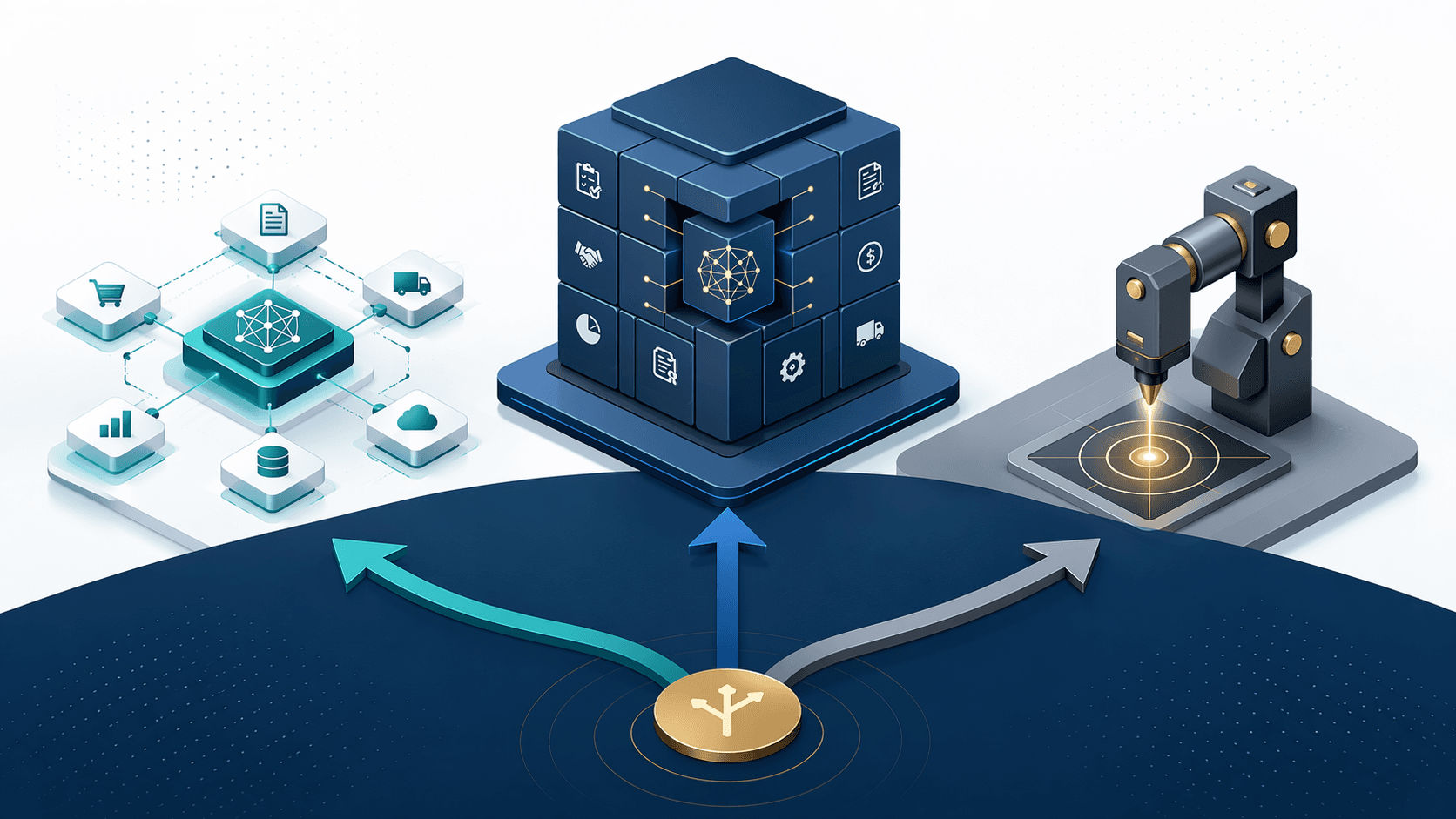
The pressure to decide is real. Gartner projects agentic AI in supply chain and procurement software to grow from about $2 billion in 2025 to $53 billion by 2030, a 93.5% compound annual growth rate, according to Opstream’s summary of Gartner’s 2026 forecast analysis.[1] That number explains the boardroom urgency. It does not, by itself, justify buying the most ambitious platform in the room.
A more useful signal is the mismatch between ambition and readiness. Ivalua cites Gartner’s 2026 finding that 72% of CPOs view AI as a top technology priority through 2030, while 74% say their data is not AI-ready.[2] That is the procurement technology evaluator’s problem in one sentence: leadership wants AI outcomes, while the installed base may still be held together by partial S2P adoption, ERP dependencies, incomplete master data, and spreadsheet workarounds.
The three architectures are built for different constraints
An AI procurement platform should be evaluated first by where it sits in the architecture. That placement determines what it can automate, what data it must trust, how much change management it creates, and which team inherits the mess when the demo logic meets production reality.
| Architecture | Representative vendors | Where it tends to fit | Main constraint to test |
|---|---|---|---|
| Orchestration layer | Zip, Opstream, ORO Labs | Organizations with heterogeneous systems, fragmented intake, and urgent workflow pain | Can it coordinate the current stack without becoming another disconnected layer? |
| Embedded-AI S2P suite | Coupa, SAP Ariba, Ivalua, Zycus | Organizations ready to consolidate and standardize core procurement workflows | Can the business tolerate the timeline, process redesign, and governance load? |
| Specialist tool | Keelvar, Pactum, Suplari | Teams with a high-value, bounded problem in sourcing, negotiation, or spend intelligence | Is the use case valuable enough without pretending to replace the operating model? |
This is also where vendor-authored rankings need careful handling. Several useful market guides are written by vendors that place their own products at or near the top. That does not make the content worthless; it does mean the ranking itself is not evidence. The more defensible use is to extract the architectural claim, then test it against your own stack, process ownership, category needs, and data condition.
Orchestration layers: useful when the stack is mixed and the front door is broken
Orchestration platforms are attractive because many procurement organizations do not get to start from a clean system diagram. They have an ERP that finance will not replace, a sourcing module used by some categories, a contract repository with uneven adoption, supplier risk tools owned by another function, and service tickets that never quite become procurement data. In that environment, the immediate pain is often not the absence of a grand suite. It is that requesters do not know where to go, procurement does not see demand early enough, and approvals move through whatever channel the requester already knows.
Zip, Opstream, and ORO Labs belong on the shortlist when the job is to create an intake and process layer across systems rather than rip those systems out. The architectural promise is coordination: route the request, pull the right stakeholders into review, trigger the right downstream system, and create visibility over work that previously leaked through email, chat, and side spreadsheets.
The speed claim matters, but it should be tested. Sources comparing orchestration and legacy S2P implementations commonly describe orchestration deployments in weeks, while legacy S2P suite programs can run 6 to 18 months.[3] A faster deployment can be decisive when procurement needs visible progress inside a planning cycle. It is less decisive if the organization has no agreement on approval policy, supplier ownership, intake taxonomy, or finance controls.
Vendor-published outcomes show why the category has momentum. Zip reports that customers see 40% to 60% intake-to-PO cycle time reduction within 90 days.[4] That is useful directional evidence that intake orchestration can remove friction. It is not a guarantee that a buyer with dirty supplier data, disputed approval matrices, and weak category ownership will reproduce the same result.
S2P suites: heavier, slower, and sometimes exactly the right answer
Full source-to-pay suites are easy to dismiss in a market that rewards the phrase “deploys in weeks.” That dismissal is too convenient. Coupa, SAP Ariba, Ivalua, and Zycus remain serious options when the procurement problem is not just intake friction but fragmented policy, inconsistent sourcing execution, weak contract compliance, limited spend control, or the need to standardize procurement across regions and business units.
A suite path asks for more organizational commitment because it reaches deeper into the operating model. It can touch sourcing, supplier management, contracts, purchasing, invoicing, spend analytics, and controls. That is exactly why it can be painful. It is also why it may be the right choice for a procurement leader who needs one governed process backbone rather than another layer over a fragmented core.
The 6-to-18-month timeline often associated with legacy S2P programs should not be treated as a defect in isolation.[3] Sometimes a longer program reflects real process redesign: harmonizing approval policies, cleaning supplier records, aligning finance and procurement controls, deciding which categories follow which sourcing route, and removing local exceptions that have become invisible operating rules. The problem is not that suites take longer. The problem is pretending a suite is a quick AI overlay when the organization is actually buying a procurement transformation program.
Embedded AI in these suites also deserves a fair evaluation. The “AI-native versus AI-added” language used by newer vendors can be a useful prompt, but it is not a decision rule. Incumbent S2P providers have made meaningful AI investments, and for some buyers, the value of embedded intelligence inside governed procurement workflows will outweigh the appeal of a newer interface or narrower autonomous capability.
Specialist tools: buy them when the problem is sharp enough
Specialist tools are most compelling when the organization can name the expensive problem precisely. Keelvar’s autonomous sourcing bots and Pactum’s autonomous contract negotiation agents are representative examples of tools built around focused value propositions rather than broad procurement workflow replacement.[5][6] Suplari fits a different specialist pattern, with emphasis on spend intelligence and opportunity identification.
This category is easy to misuse. A specialist tool can outperform a broad platform in a defined use case, but it will not fix procurement intake, supplier governance, contract lifecycle discipline, or ERP integration by implication. It belongs on the shortlist when the target problem has enough spend, volume, repeatability, or margin impact to justify a tool that may live beside the main procurement platform.
The best specialist buying cases usually sound less like “we need AI procurement” and more like “we run frequent sourcing events where optimization quality materially changes award outcomes,” or “we have a long tail of supplier negotiations that humans cannot economically cover.” That narrower framing is a strength. It gives finance a clearer benefits case and gives procurement a cleaner answer when IT asks why this tool should be added to the stack.
A practical decision framework for the 2026 shortlist
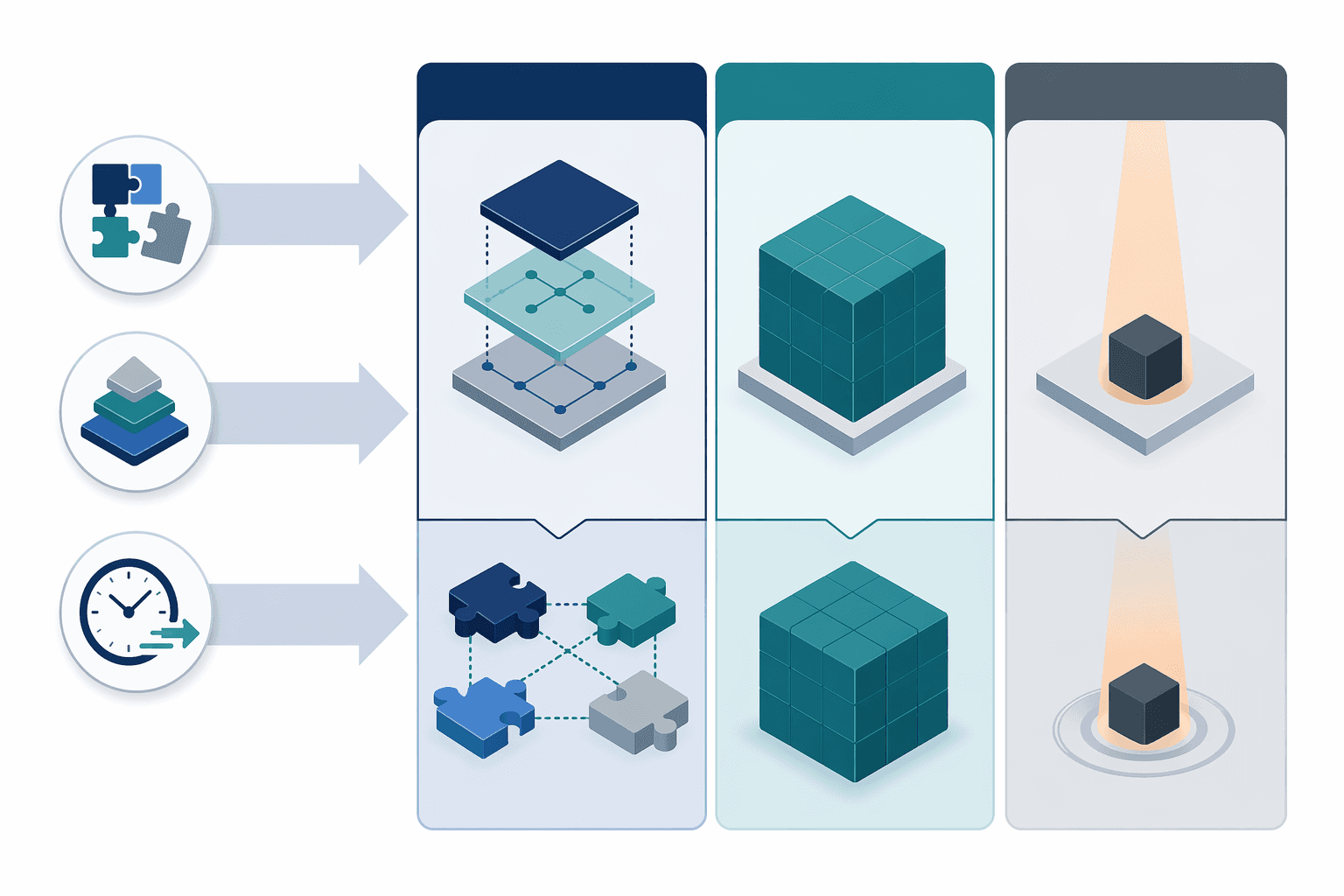
The shortlisting conversation should start with three questions: what does the current stack allow, what does category complexity require, and how quickly must benefits show up? The answer rarely lands cleanly in one box. Still, forcing the discussion through these constraints prevents the team from buying the platform with the cleanest demo and the worst implementation fit.
1. Existing stack modularity: what can you realistically leave in place?
If the organization has a heterogeneous but serviceable stack, orchestration should usually be evaluated first. This is the buyer with an ERP dependency that finance will not reopen, some working procurement modules, a few category-specific tools, and an intake experience that requesters find confusing. The value is not in replacing every system. It is in making the existing system landscape usable enough that procurement sees demand, routes work, and enforces the right review path.
If the current stack is not just fragmented but strategically exhausted, a suite becomes more defensible. That means the organization is willing to revisit core workflows, standardize process design, rationalize local exceptions, and accept a longer implementation window. In that case, using orchestration to preserve a broken core can postpone the harder decision rather than solve it.
If the existing stack is mostly adequate and the pain is concentrated, a specialist tool may be cleaner than either orchestration or suite replacement. A sourcing team that needs better event optimization does not necessarily need a new procurement front door. A team drowning in long-tail negotiations may need autonomous negotiation capacity more than another analytics dashboard.
For readers who need a deeper two-way comparison before adding specialist tools to the discussion, the architectural tradeoffs between orchestration and suite models are covered in more detail in this orchestration-versus-S2P guide.
2. Category complexity: how much variation must the platform handle?
Category complexity changes the platform answer. A procurement organization with broad indirect spend, regulated supplier onboarding, multiple approval paths, and region-specific policies needs governance as much as automation. A suite can be attractive here because it offers a more consolidated process backbone, assuming the business is ready to standardize.
Orchestration can also handle complexity, but in a different way. It is best suited when complexity comes from routing and stakeholder coordination across existing systems: legal for certain contract types, security for software, finance for budget checks, risk for supplier review, and category managers for sourcing decisions. The orchestration layer earns its place if it reduces the number of places a request can disappear.
Specialist tools fit category complexity when the complexity is analytical or negotiable rather than procedural. Sourcing optimization, bid analysis, autonomous event design, tail-spend negotiation, and spend opportunity discovery can justify a focused tool if the category team has enough volume and decision rights to use the output. A specialist tool without category ownership becomes another impressive engine waiting for someone to operationalize it.
3. Deployment timeline: when must benefits hit the P&L?
Finance usually asks a simpler question than the platform team: when do the benefits arrive? If the CPO needs visible cycle-time reduction in the current fiscal year, orchestration or a specialist tool may be easier to defend than a full S2P transformation. That is especially true when the first problem is intake leakage, approval delay, or a high-volume category use case with measurable savings potential.
Vendor-published ROI claims can help size the opportunity, but they should not become the business case by themselves. Raindrop reports that Workwear Outfitters achieved 400% ROI on $120 million in managed spend in a customer case study.[7] Levelpath reports a 76% cycle-time reduction and 10x RFP capacity in its AI procurement materials.[8] These are customer-reported or vendor-published examples, useful for showing that measurable outcomes are possible, not independent benchmarks for every buyer.
The safer business case separates time-to-value from total transformation value. Orchestration may produce faster visibility and workflow gains. A specialist tool may create a narrower but clearer savings or capacity story. A suite may unlock larger standardization benefits, but only if the organization funds the process work that makes consolidation real.
AI-assisted versus AI-agentic is an architecture question
In 2026, one of the most important evaluation questions is whether the platform merely assists users or can act with bounded autonomy. Focal Point and Opstream both frame the shift toward agentic AI as a major procurement technology trend, with the distinction centered on whether AI suggests actions or can execute tasks within defined constraints.[1][9]
AI-assisted capabilities include drafting an RFP, summarizing supplier risk, recommending a sourcing strategy, flagging a contract clause, or suggesting the right approval route. These can be valuable inside any architecture. They also leave the human user clearly in control of the next step.
AI-agentic capabilities go further. An agent may run a sourcing event, negotiate within approved parameters, chase stakeholder approvals, or trigger downstream actions after conditions are met. That raises the architectural burden. The platform must know which policy applies, which data is authoritative, which exceptions require human review, and where the audit trail lives.
This is why autonomy cannot be evaluated as a feature badge. In an orchestration layer, agentic capability depends on whether the layer can safely coordinate across systems and preserve decision controls. In a suite, it depends on whether the governed workflow and master data are strong enough for autonomous action inside the process backbone. In a specialist tool, it depends on whether the use case is bounded tightly enough for the agent to act without creating unacceptable commercial or compliance risk.
A practical test is to ask vendors where the AI stops. If it drafts but does not execute, it is assistance. If it executes within policy, ask what policy source it reads, what approval gates it respects, how exceptions are escalated, and how the action is written back to the system of record. For a deeper assessment of autonomous use cases, see this guide to agentic AI in procurement and the companion analysis on identifying genuinely agentic vendors.
Data readiness is the gating condition
The 74% data-not-ready finding should follow the buying team into every vendor conversation.[2] It does not mean the organization must complete a perfect data program before buying anything. It does mean the autonomy level and scope of deployment must match the data the organization can actually trust.
Deloitte’s 2025 Global CPO Survey found that “Digital Masters,” described as more AI-mature organizations, achieve 3.2x ROI on GenAI compared with 1.5x for less mature organizations.[10] That gap is a warning against buying the most advanced AI promise while underfunding the data, process, and governance conditions that make the promise usable.
The data question should be specific to the architecture. For orchestration, can the platform reliably identify request type, supplier, category, budget owner, policy path, and downstream system? For suites, can supplier, contract, item, and spend data survive consolidation without months of exception handling? For specialist tools, is the category data rich enough for optimization or negotiation agents to produce defensible recommendations and actions?
If the answer is no, the right response may be to narrow the first deployment rather than abandon AI entirely. Start with intake visibility before autonomous routing. Start with assisted sourcing before autonomous award recommendations. Start with one spend domain before enterprise-wide claims. Teams that need a deeper remediation path can use a procurement data AI-readiness roadmap before asking vendors to automate decisions the data cannot support.
How to narrow the shortlist
A credible shortlist does not need one vendor from every category. It needs vendors whose architecture matches the operating reality the procurement leader will have to defend twelve months after contract signature.
- Evaluate orchestration first when the stack is heterogeneous, the ERP is not moving, intake is fragmented, stakeholders are hard to coordinate, and the business needs visible progress in weeks or a few months rather than a transformation program.
- Accept the heavier S2P suite path when the organization wants a governed procurement backbone, is willing to standardize core workflows, and can tolerate a 6-to-18-month implementation window for broader consolidation.
- Buy a specialist tool when the pain is bounded, economically material, and owned by a team that can operationalize the output, such as sourcing optimization, autonomous negotiation, or spend opportunity detection.
- Pause the advanced AI claim when supplier, spend, contract, category, or approval data is too unreliable for the platform’s proposed autonomy level.
The vendor conversation should then become more concrete. Ask orchestration vendors to show how they integrate with the systems you will actually keep. Ask suite vendors which process decisions must be made before implementation starts. Ask specialist vendors how they define the use case boundary and what happens when the agent or model lacks confidence. Ask all of them how actions are audited, where data is mastered, and which outcomes are vendor-published examples rather than independently verified benchmarks.
Once the architecture is selected, a deeper capability evaluation still matters: security, workflow configuration, integration methods, model governance, reporting, supplier experience, change management, and commercial terms. Those questions belong after the architectural cut, not before it. For a broader evaluation method, use this CPO buyer’s guide to AI procurement software; for use-case mapping, see the procurement AI use-case catalog.
There is no universal best AI procurement platform in 2026. There is only the least-damaging fit: the platform whose deployment burden, autonomy level, category focus, and data requirements fit the organization as it is, while still moving it toward the procurement model it can realistically run.
References
- Best AI Procurement Platforms, Opstream.
- AI Procurement Software, Ivalua.
- State of AI in Procurement, Art of Procurement.
- AI in Procurement, Zip.
- Top 10 AI Procurement Tools, Suplari.
- Procurement AI Software Options 2026, Viewpoint Analysis.
- AI Procurement ROI CFO Business Case, Raindrop.
- AI Procurement Solutions, Levelpath.
- The Future of Procurement: Trends and Predictions for 2026, Focal Point.
- 2025 Chief Procurement Officer Survey, Deloitte, 2025.
Comments
Join the discussion with an anonymous comment.