The AI Maturity Progression in Supply Chain: Predictive → Generative → Agentic
Supply chain AI adoption has moved through distinct phases over the past decade. The first wave — predictive AI — brought machine learning to demand forecasting, inventory optimization, and anomaly detection. By 2025, roughly 45% of organizations had machine learning or predictive AI in live production, according to Blue Yonder's Supply Chain Compass 2026 survey of 678 senior supply chain professionals. The second wave — generative AI — doubled its adoption rate from 12% to 24% year-over-year, as teams began using large language models for tasks like contract summarization, supplier communication, and scenario narrative generation.
The third wave — agentic AI — represents a fundamentally different paradigm. Instead of generating recommendations for humans to act upon, agentic AI systems observe conditions, analyze trade-offs, decide on a course of action, and execute directly against operational systems. The Supply Chain Compass 2026 data shows that only 8% of organizations have live agentic AI deployments today, but 54% are actively investigating or implementing it. This gap between early adoption and widespread intent defines the current market inflection point.
Blue Yonder's May 2025 Cognitive Solutions launch and its ICON 2026 announcements position the company squarely at this inflection point. CEO Duncan Angove framed the shift directly at ICON 2026, warning that "the danger is that we bolt intelligence onto yesterday's workflows instead of reimagining how supply chains should operate." The company's thesis is that the next competitive differentiator will not be better dashboards or faster reports, but the ability to delegate operational decisions to governed AI agents that act in real time.
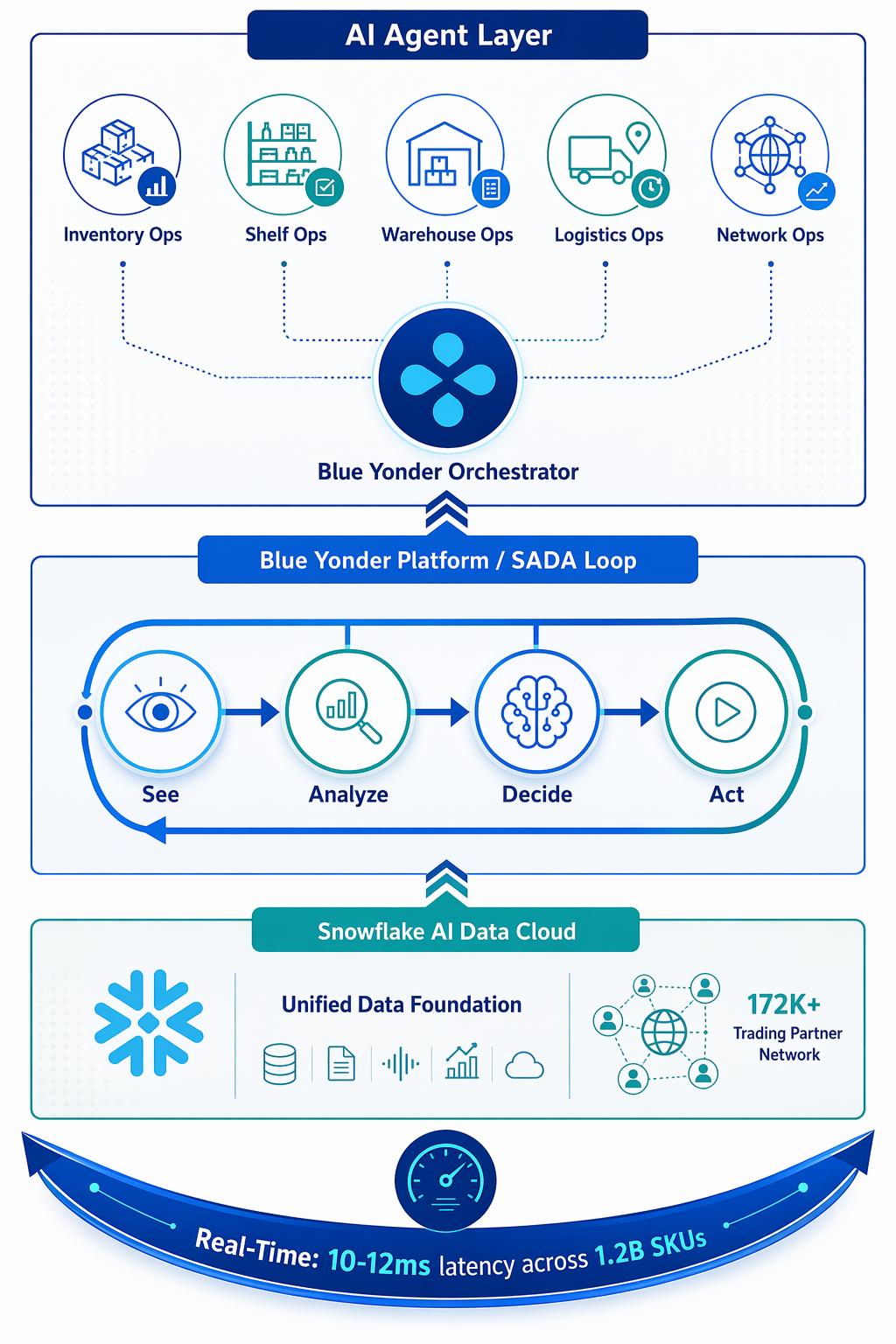
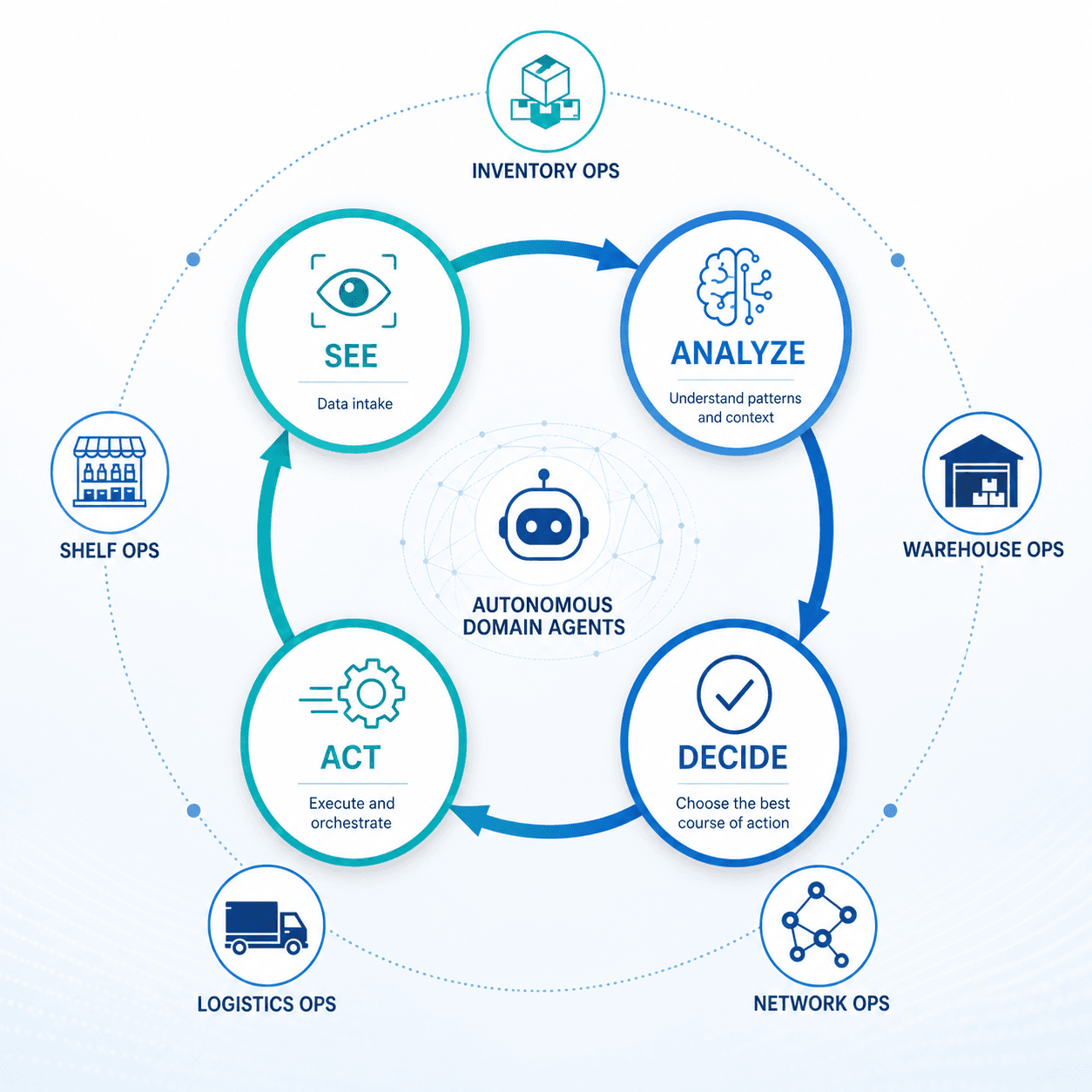
Blue Yonder's Cognitive Solutions: The SADA Loop and the Five Autonomous Domain Agents
At the core of Blue Yonder's agentic AI architecture is the SADA Loop — a proprietary cognitive model that stands for See, Analyze, Decide, Act. Unlike traditional AI systems that stop at generating a recommendation, the SADA Loop completes the full cycle by executing decisions directly against warehouse management systems (WMS), transportation management systems (TMS), order management systems (OMS), and planning engines. Blue Yonder describes this as replicating "human decision-making processes" in real time, transforming AI "from information on a computer screen into actions that create impact in the real world."
Comments
Join the discussion with an anonymous comment.