
The Cost of Poor Demand Planning: Why $1.77 Trillion in Inventory Distortion Demands a New Approach
Before any discussion of ROI, supply chain leaders must confront the scale of the problem they are trying to solve. According to Supply Chain Digital, global inventory distortion now drains an estimated US$1.77 trillion from enterprises annually. That figure represents the combined cost of overstock, stockouts, expedited freight, markdowns, and working capital tied up in inventory that sits in the wrong place at the wrong time.
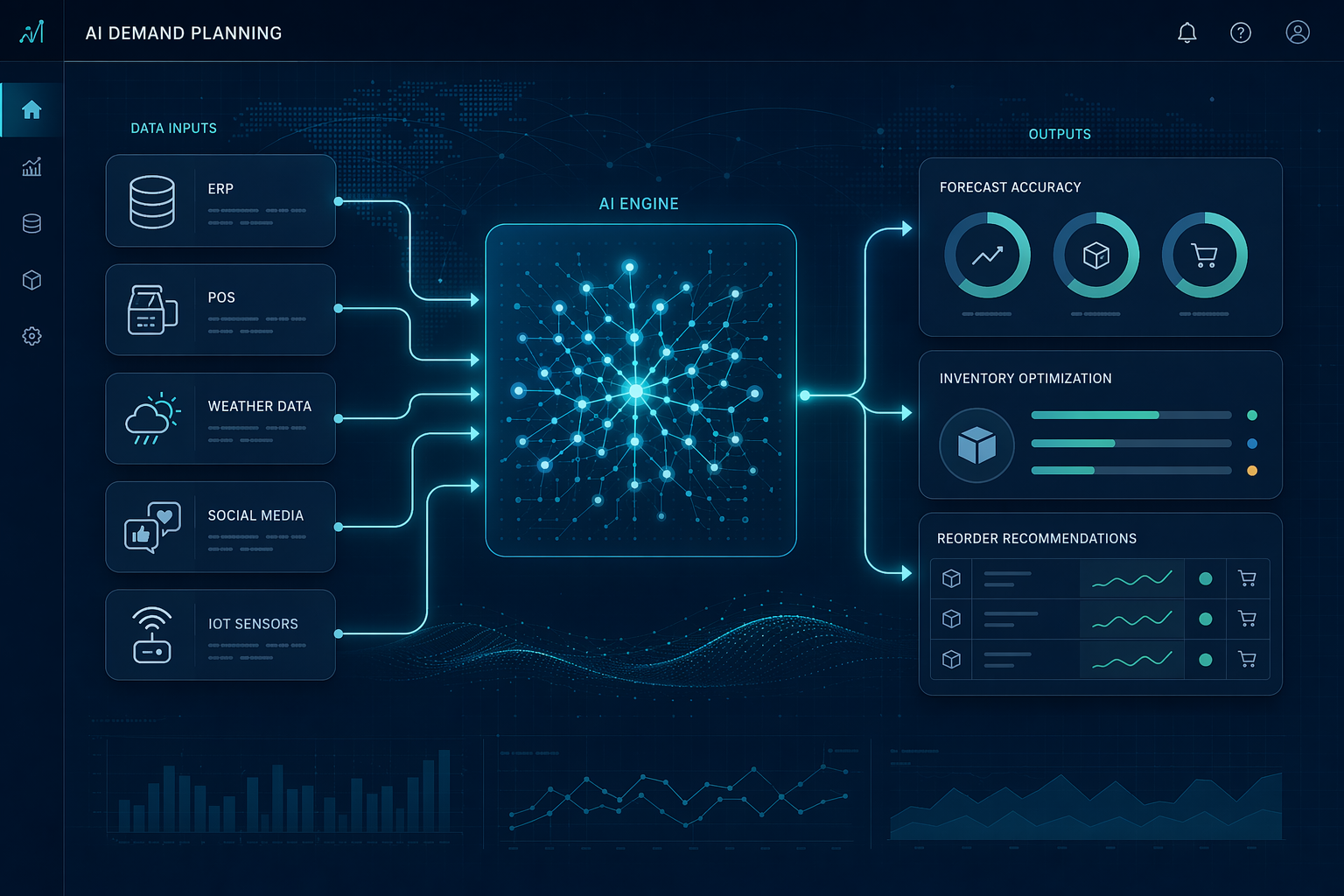
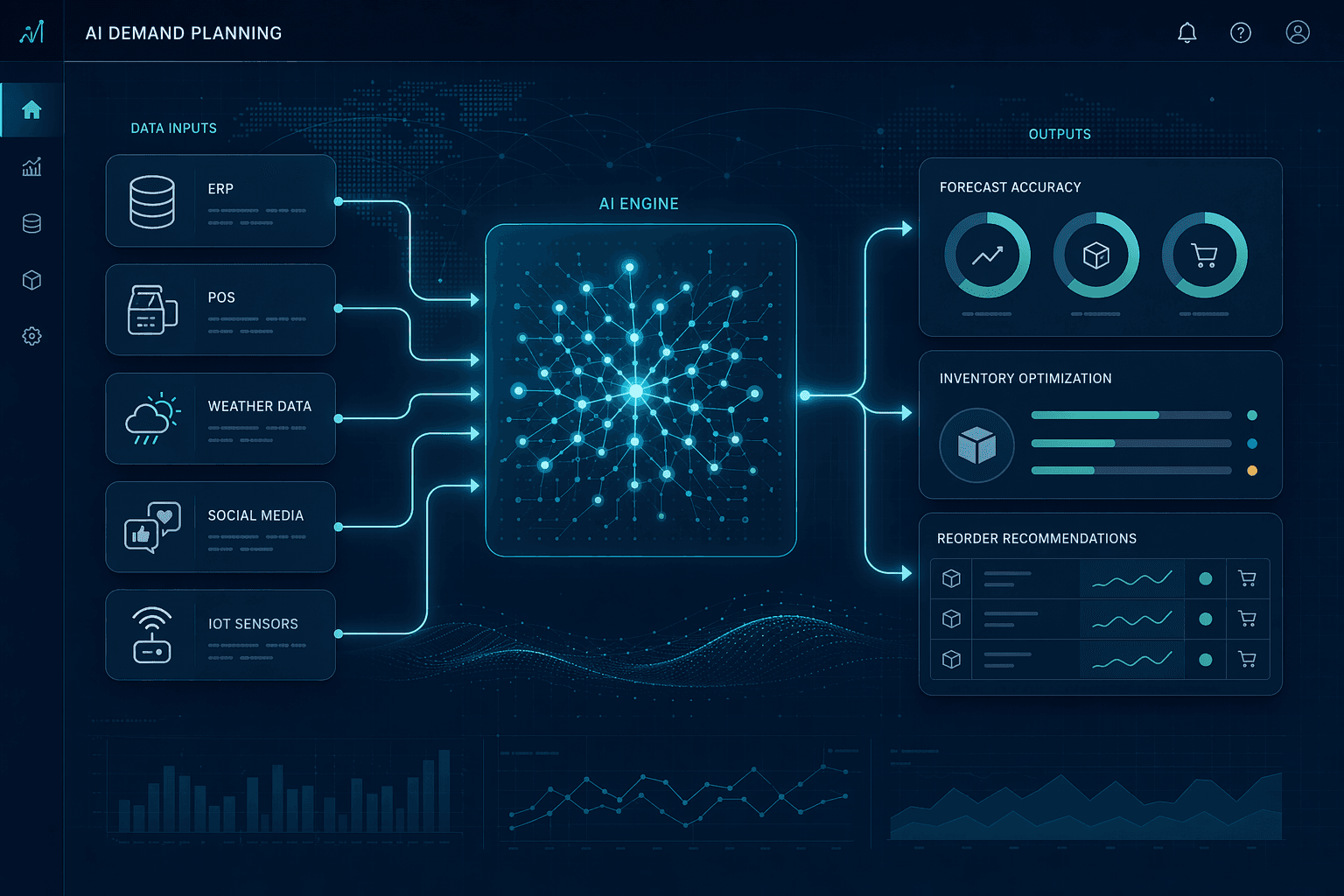
Traditional demand planning methods — spreadsheet-based forecasting, simple moving averages, or even basic statistical models — were designed for an era of relatively stable demand patterns. They struggle to process the volume, velocity, and variety of data that now influences demand: point-of-sale transactions, promotional calendars, weather patterns, social media sentiment, macroeconomic indicators, and supplier lead-time variability. The result is a persistent gap between what planners forecast and what customers actually buy.
This gap has direct financial consequences. Research from McKinsey & Company indicates that AI-powered forecasting can reduce supply chain forecasting errors by 20% to 50% and decrease product unavailability by up to 65%. When framed against the $1.77 trillion distortion figure, even a 10% improvement in forecast accuracy represents hundreds of billions in potential working capital recovery across the global economy.
For supply chain executives building a business case, the key insight is that poor demand planning is not an abstract operational issue — it is a measurable financial drain that directly impacts working capital, gross margins, and customer service levels. AI demand planning software addresses this drain by applying machine learning models that continuously learn from new data, detect patterns humans cannot see, and generate probabilistic forecasts that account for uncertainty rather than pretending it does not exist.
ROI Tier 1: Forecast Accuracy Improvement (10–50% Error Reduction)
The most direct and measurable ROI from AI demand planning software comes from improved forecast accuracy. However, the range of reported improvements is wide — from 10% to 50% error reduction — and this variation is not random. It reflects different scopes of analysis, different baseline methodologies, and different levels of AI maturity.
The McKinsey Global Institute, in research cited by Anaplan, reports that AI can improve overall demand planning forecast accuracy by 10% to 20%. This figure likely reflects the average improvement across a broad set of companies using AI-enhanced planning processes, including those with moderate data maturity. At the higher end, McKinsey & Company research cited by both Oracle and ToolsGroup shows that AI-driven forecasting specifically — not just general planning improvement — can reduce errors by 20% to 50%. The distinction matters: the 10–20% range applies to overall demand planning improvement, while the 20–50% range applies to the incremental gain from AI-driven forecasting on top of existing statistical methods.
| Source | Scope | Error Reduction Range | Context |
|---|---|---|---|
| McKinsey Global Institute (via Anaplan) | Overall demand planning improvement | 10–20% | Broad cross-industry analysis; includes companies with varying data maturity |
| McKinsey & Company (via Oracle) | AI-driven forecasting specifically | 20–50% | Focused on AI/ML models applied to supply chain forecasting |
| McKinsey & Company (via ToolsGroup) | AI-driven forecasting specifically | 30–50% | Narrower scope; organizations implementing dedicated AI forecasting solutions |
| International Journal on Science and Technology (2025) | AI vs. traditional forecasting | Error rates from 25–40% (traditional) to 10–16% (AI) | Peer-reviewed study; confirms AI reduces error rates significantly |
| World Journal of Advanced Engineering Technology and Science | AI integration in forecasting | WAPE reduction of 40–75%; bias reduction of 30–70% | Technical study; shows AI improves both accuracy and bias |
Comments
Join the discussion with an anonymous comment.