
The planning problem in 2026 is not that supply chain costs are hard to forecast. They have always been hard to forecast. The problem is that the old error band has become too expensive. Kearney’s Supply Chain Navigator data put the pressure plainly: global supply chain costs peaked at 7% above baseline inflation in Q4 2025 and are expected to remain 2.3% to 4% above baseline inflation through 2026.[1] That is the kind of spread that turns a tolerable forecast miss into a margin conversation with finance after the quarter has already closed.
The drivers are not one-time noise. Kearney identifies four structural forces behind the elevation: applied tariff rates up 30%, critical minerals exports down one-third year over year, geopolitical risk up 34%, and global inventory levels up 14%.[1] Each one moves through the P&L differently. Tariffs change landed cost. Minerals constraints change input availability and supplier leverage. Geopolitical risk changes freight routes, insurance, lead times, and buffer stock. Higher inventories add carrying cost just when working capital is already under scrutiny.

That is why AI supply chain cost forecasting has moved from an analytics improvement to a margin-defense question. A forecast built mainly from last year’s demand, average freight rates, supplier lead-time history, and a static inflation assumption cannot defend a sourcing decision when tariff treatment changes, or a service promise when inventory buffers are rising faster than the planning cycle can absorb.
Why Historical Forecasting Breaks Under Structural Inflation
Traditional cost forecasting usually works best when the future is a recognizable version of the past. A planner can smooth volatility, adjust for seasonality, apply a supplier increase, and still have a forecast that procurement, logistics, sales, and finance can argue over productively. Structural inflation changes the terms of that argument. The issue is not whether the average was calculated correctly; it is whether the average still represents the cost environment the company is about to buy into.
The Kearney figures matter because they describe cost pressure that sits above general inflation, not merely inside it.[1] If supply chain costs remain 2.3% to 4% above baseline inflation through 2026, then margin protection depends on seeing cost movement before price lists, supplier commitments, inventory positions, production schedules, and customer service levels are locked. A late explanation may satisfy accounting. It does not recover a bad buy, an avoidable expedite, or a service promise priced on stale assumptions.
AI-powered cost forecasting is useful only where it changes that timing. The practical difference is the ability to ingest external and internal signals continuously: tariff changes, commodity and minerals constraints, supplier behavior, freight variance, geopolitical risk indicators, inventory movements, demand shifts, and production constraints. The model’s value is not that it produces a more elegant dashboard. The value is that it gives operators earlier, defensible visibility into which costs are moving, where they will land, and what decision still remains open.
Lenovo Is the Enterprise Case Worth Studying Closely
The strongest available enterprise evidence comes from Lenovo’s Supply Chain Intelligence deployment, cited by Kearney in June 2025. Lenovo reported an approximately 20% reduction in manufacturing and logistics costs, a 4.8% revenue increase, and a 5% improvement in on-time-in-full performance across a supplier network of more than 2,000 suppliers.[2] Those figures are Lenovo-reported and cited by Kearney, not independently audited in the material available here, so they should not be treated as a universal ROI promise. They are still operationally important because they connect forecasting and intelligence work to several margin levers at once.
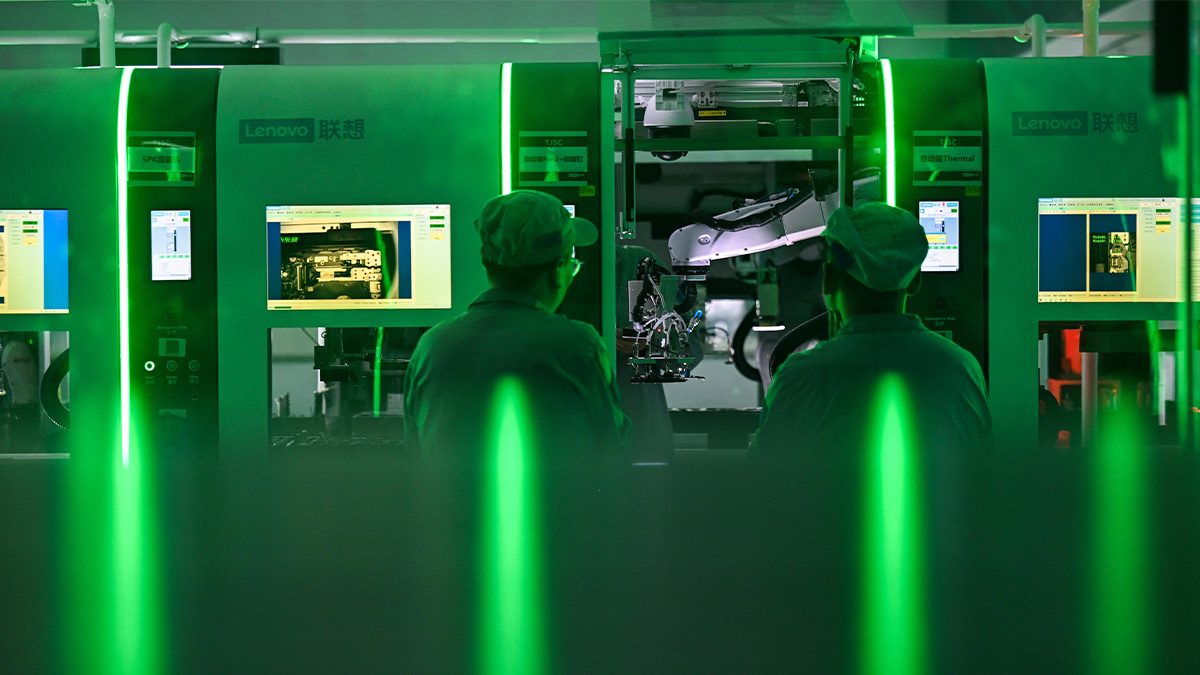
A cost reduction of that size is not just a procurement win. Manufacturing and logistics costs sit across plant utilization, supplier allocation, transportation mode, network design, inventory placement, and exception handling. A 5% OTIF improvement matters for the same reason. Service failures often create hidden cost: premium freight, manual intervention, customer concessions, duplicated planning work, and inventory rebalancing. When a system improves both cost and service measures, it suggests the model is helping the organization make better trade-offs rather than simply cutting expense out of one function and pushing the pain into another.
The 4.8% revenue increase is also worth separating from the cost story.[2] Revenue lift does not prove that AI forecasting alone created demand. It does indicate that better supply chain intelligence can help preserve or capture sales when availability, supplier coordination, and service reliability improve. In a structurally inflated environment, that distinction matters. Margin defense is not only about spending less; it is also about avoiding the revenue leakage that comes from missed shipments, constrained supply, and late decisions.
The supplier scale is what makes the Lenovo case more than a tidy technology story. A network of more than 2,000 suppliers creates exactly the cross-functional leakage that planning directors recognize: procurement has one view of risk, logistics has another, manufacturing has a third, and finance asks for a single forecast. AI cost forecasting earns its place when it reduces the gap between those views early enough for the company to change allocation, negotiate differently, reposition inventory, or adjust customer commitments before the variance becomes a closed-quarter explanation.
The Benchmarks Suggest Lenovo Is Not an Outlier, but the Attribution Matters
Broader benchmark data point in the same direction, though with a different level of precision. McKinsey benchmarks, cited through OpenSky Group and NC State material rather than directly from the original McKinsey report in the available research, attribute 5% to 20% logistics cost reductions, 20% to 30% inventory reductions, and 5% to 15% procurement spend reductions to AI-enabled supply chain applications.[3] That secondary attribution chain should make buyers careful, not dismissive. The ranges are directionally consistent with the Lenovo case, but they should be used as planning ranges rather than guaranteed savings.
| Margin lever | Reported or benchmarked outcome | Why it matters operationally |
|---|---|---|
| Manufacturing and logistics cost | ~20% reduction reported by Lenovo | Touches production efficiency, network decisions, freight choices, and exception costs |
| Revenue | 4.8% increase reported by Lenovo | Suggests better availability and execution can protect sales, not only reduce expense |
| OTIF | 5% improvement reported by Lenovo | Reduces service failures, expedites, manual recovery work, and customer friction |
| Logistics cost | 5–20% reduction attributed to McKinsey benchmarks | Shows savings potential beyond one enterprise case, with secondary-source caveat |
| Inventory | 20–30% reduction attributed to McKinsey benchmarks | Lowers carrying cost and exposure when inventories are structurally elevated |
| Procurement spend | 5–15% reduction attributed to McKinsey benchmarks | Connects forecasting to sourcing, supplier negotiations, and input-cost control |
The inventory benchmark is especially relevant against Kearney’s finding that global inventory levels are up 14%.[1][3] Inventory is often treated as the insurance policy against disruption, but in a high-cost environment it becomes a financing and obsolescence problem as well. AI forecasting does not eliminate the need for buffers. It can, however, make the buffer more deliberate: which SKUs deserve protection, which suppliers need earlier commitments, which lanes require contingency capacity, and which inventory is only compensating for poor visibility.
For readers evaluating use cases beyond cost forecasting, broader function-level comparisons can help separate realistic ROI pockets from fashionable ones. The useful question is not whether every AI supply chain project deserves funding; it is which decisions are expensive enough, frequent enough, and data-rich enough to justify the implementation burden. That is where a broader view of AI use cases in supply chain by function can keep a cost-forecasting program from becoming an isolated analytics initiative.
Market Intent Is Rising Faster Than Operating Maturity
Spending intent is moving quickly. Accenture’s February 2026 survey, reported by SupplyChainBrain, found that 85% of executives plan to increase AI spending in 2026, and one in five expects to raise spending by more than 20%.[4] The same research says AI-mature supply chains are 23% more profitable.[4] That profitability figure is useful as a market signal, but it should not be read as proof that buying a forecasting tool creates a 23% profit advantage. Maturity usually includes data quality, process redesign, operating discipline, and leadership alignment, not only software.
The adoption curve also has a gap between ambition and readiness. Gartner projects that 70% of large organizations will adopt AI-based forecasting by 2030 and that 60% of disruptions will be resolved without human intervention by 2031.[5] Those projections describe where large-enterprise planning is heading. They do not mean most companies are ready to run autonomous exception management today. In many organizations, the harder work is still agreeing on master data, cost ownership, decision rights, and what level of model explanation finance will accept.
That readiness gap matters because cost forecasting is a political process as much as a technical one. Procurement may trust supplier intelligence that logistics does not see. Sales may resist price changes based on modeled cost risk. Finance may accept a forecast only if the assumptions are traceable. The AI system has to expose enough reasoning for those groups to act before certainty arrives. A black-box number that no one is willing to defend in the planning meeting has limited value, even if the model tests well.
The ROI Window Is Measured in Years, Not Quarters
The strongest brake on hype is the ROI timeline. Deloitte research cited by OpenSky Group found that only 6% of organizations see AI ROI in the first year, while most achieve satisfactory returns within two to four years.[6] That should change how 2026 investment decisions are framed. If the business case requires full payback before the next budget cycle, many serious forecasting programs will look unattractive. If the decision is about 2028 to 2030 cost position, the same timeline becomes a reason not to wait.
This is where the structural inflation frame matters. A company can defer investment when cost volatility is temporary and the next planning cycle is likely to normalize the assumptions. Kearney’s 2026 outlook does not describe that kind of environment.[1] If tariff pressure, critical minerals constraints, geopolitical risk, and elevated inventories keep costs above baseline inflation, then waiting for a cleaner implementation window may simply push the learning curve into the years when competitors are already using better cost visibility in sourcing, pricing, inventory, and service decisions.
The practical implication is not to approve every AI forecasting proposal. It is to evaluate whether the company has cost categories where earlier signal detection would change a real decision. Freight lane volatility, tariff-sensitive components, constrained minerals exposure, high carrying-cost inventory, and supplier networks with frequent allocation trade-offs are stronger candidates than stable categories where ordinary planning already works.
Inventory-heavy businesses should be particularly careful about implementation sequencing. Forecasting value depends on whether the data is reliable enough to support SKU, supplier, lane, and service-level decisions. A focused data readiness assessment for AI inventory optimization is often less glamorous than model selection, but it is closer to the work that determines whether a forecast will be used.
Smaller Operating Proof Points Still Matter
Not every useful case has to match Lenovo’s scale. P&G’s AI forecasting work is projected to reduce its Japan delivery truck fleet by 30%, according to reporting from Nikkei Asia cited in Kearney material.[7] The value of that example is its concreteness. A fleet reduction is not an abstract resilience score. It implies fewer trucks required to meet the same delivery need, with consequences for transportation cost, asset utilization, route planning, emissions exposure, and labor coordination. The figure is projected, so it should not be treated as a realized savings result, but it shows how forecasting improvement can translate into an operating asset decision.
C3 AI provides a different kind of evidence. Its work with a global food manufacturer reportedly improved forecast accuracy by 10% to 40% and reduced production schedule generation time by 96%.[8] The source is vendor-linked, so the claim deserves the usual caution. Still, schedule-generation time is a meaningful operating measure. When planners can create and revise schedules faster, they can respond sooner to demand changes, supply constraints, and cost signals. Accuracy matters, but cycle time matters too; a better forecast delivered after the decision window has closed is not very helpful.
These cases do not prove that every company should pursue the same architecture or the same scope. They do show the kinds of outcomes worth asking for in a business case: fewer trucks, lower logistics cost, lower procurement spend, lower inventory exposure, faster scheduling, better OTIF, and revenue protected through availability. If a proposed AI cost-forecasting program cannot name the operating choice it will change, it is probably still a dashboard project.
What a Defensible 2026 Decision Looks Like
A defensible decision in 2026 starts with the cost pressures that are actually material to the business. The first question is not which model to buy. It is where structural inflation is distorting planning assumptions: tariff-sensitive inputs, minerals exposure, supplier concentration, freight volatility, high inventory carrying cost, or service-level penalties. The second question is whether earlier visibility would change a decision before it becomes expensive: sourcing, allocation, pricing, production scheduling, inventory placement, or customer commitment.
- Start with cost categories where external signals move faster than the current planning cycle.
- Require traceability: finance and operations should be able to see which assumptions moved and why.
- Measure operating outcomes, not model activity: cost, inventory, OTIF, schedule cycle time, and revenue protection.
- Treat first-year ROI as the exception, not the base case, and fund the program against a two-to-four-year return window.
- Avoid broad deployment before the data and decision-rights problems are visible enough to manage.
The investment case is strongest when the model becomes part of the operating cadence. Procurement uses it before supplier negotiations harden. Logistics uses it before capacity is committed. Sales uses it before price and service promises are made. Finance uses it before the forecast becomes a postmortem. That is how AI cost forecasting protects margin: not by being more modern than a spreadsheet, but by moving cost visibility into the window where decisions are still reversible.
The evidence available in 2026 is not perfect. Lenovo’s figures are self-reported and cited by Kearney. McKinsey benchmarks are available here through secondary attribution. P&G’s truck reduction is projected. C3 AI’s figures come from a vendor-linked source. Even with those limits, the pattern is hard to ignore: persistent above-baseline cost pressure, enterprise cases tied to operating outcomes, benchmark ranges that align with those cases, and an ROI timeline that rewards early learning rather than late certainty.
Companies do not need to believe that AI cost forecasting will deliver instant ROI to take the 2026 decision seriously. They only need to accept the arithmetic of timing. If satisfactory returns usually arrive in two to four years, and supply chain costs remain structurally elevated through 2026, then delaying the decision pushes the benefits into the end of the decade. For margin defense, that is not a neutral pause. It is a choice about what kind of cost visibility the business will have when 2028 to 2030 planning decisions arrive.
References
- Kearney Supply Chain Navigator, Kearney / PRNewswire / SupplyChainBrain, February 2026.
- Lenovo Supply Chain Intelligence deployment case study, Kearney, June 2025.
- McKinsey AI supply chain benchmark outcomes, OpenSky Group / NC State, 2024.
- Accenture executive AI spending survey, Accenture / SupplyChainBrain, February 2026.
- Gartner AI-based forecasting and autonomous disruption resolution projections, Gartner.
- Deloitte AI ROI timeline research, Deloitte / OpenSky Group, 2025.
- P&G AI forecasting truck fleet reduction reporting, Nikkei Asia / Kearney.
- C3 AI forecast accuracy and production scheduling case, C3 AI / Kearney.
Comments
Join the discussion with an anonymous comment.