
The first useful question in AI supply chain risk management during the Iran tensions is not whether a model can explain the Strait of Hormuz. It is whether anyone knew, early enough, which shipments, suppliers, sanctions records, and alternates had just become someone else’s urgent problem.
On Feb. 28, 2026, the Strait of Hormuz closure stranded 170 ships, pushed oil higher, cut air cargo by 18%, and drove freight rates up 25% to 35%, according to a GEP account of the U.S.-Israel-Iran war’s supply chain impact published in March 2026.[1] In the week after the closure, Pole Star Global tracked 3,878 vessel-zone events in the Persian Gulf, while Iranian-flagged vessel activity dropped 95.6%, as reported through SDCExec/Bloomberg.[2] Those are not dashboard decoration numbers. They are the kind of signals that decide whether procurement gets ten calm minutes to call a second source or spends the afternoon explaining why the quote changed before the escalation deck was finished.
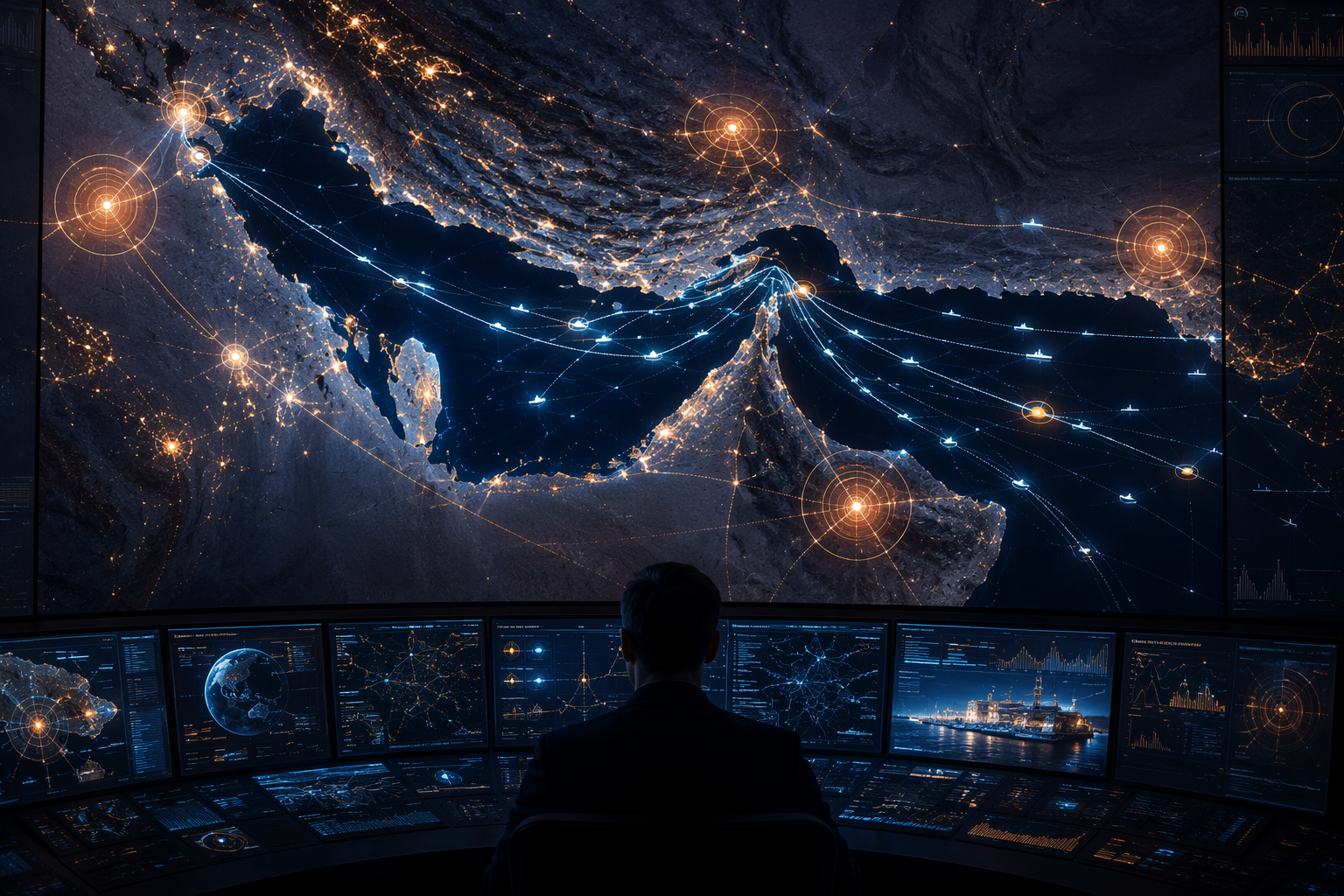
This is where agentic AI had its first real crisis test. Not in a lab, not in a vendor demo, and not in a quarterly resilience workshop. The conflict that began in February forced risk teams to watch routes, supplier tiers, sanctions lists, and commodity dependencies move at once. Traditional analytics could still summarize the story. The stronger agentic platforms were useful when they reduced the waiting: waiting for a news digest, waiting for a supplier impact spreadsheet, waiting for a compliance analyst to reconcile a new designation, waiting for logistics to ask whether the alternate route was already constrained.
That usefulness needs careful labeling. GEP, Resilinc, Interos, Sayari, and similar firms are not neutral observers of their own category. Their crisis notes and customer-facing analysis are vendor-published evidence. Still, vendor evidence can be operationally valuable when it is tied to a timestamp, a node, a route, or a regulatory event that a team can verify. During the Iran disruption, the strongest claims were not about autonomous strategy. They were about faster mapping, faster monitoring, and faster scenario switching.
What Changed When the Route Map Stopped Behaving
The old weakness in geopolitical supply chain monitoring is aggregation delay. A risk score moves, a country alert changes color, an analyst note arrives, and only then does someone start asking whether the exposure is real. In a Hormuz closure, that sequence is too slow. The first decision is usually not elegant: warn sales, hold the shipment, approve an air quote, check a sanctioned-party exposure, or find out whether the affected component is actually dual-sourced.
Agentic tools helped most where they connected the external event to internal consequence without waiting for a human to manually rebuild the map. A chokepoint alert by itself tells logistics what everyone else already suspects. A chokepoint alert connected to purchase orders, carrier lanes, Tier 2 dependencies, and supplier ownership data starts to answer the crisis-call question: whose shipment or part is in trouble first?
| Crisis signal | Traditional response | Agentic contribution that mattered |
|---|---|---|
| Hormuz closure and vessel-zone activity spike | Summarize news, update lane risk, wait for logistics input | Monitor vessel-zone events and flag affected lanes or shipment clusters faster |
| New sanctions designations | Manual watchlist review and supplier screening refresh | Trigger sanctions exposure checks against mapped supplier and ownership records |
| Hidden regional revenue or supplier exposure | Rely on domicile labels or direct supplier records | Map multi-tier and commercial exposure beyond headquarters location |
| Alternate route evaluation | Ask carriers and analysts to rerun options after disruption is visible | Switch scenarios earlier and expose the physical trade-offs for planners |
Interos framed the Iran conflict through global chokepoints and supply chain fallout, while Resilinc published crisis coverage around escalating disruption from the U.S.-Iran conflict.[3][4] Those accounts are useful less as independent proof of vendor superiority than as a record of what the category is trying to automate: the jump from public geopolitical event to supplier-specific exposure. If a platform only produces a sharper headline, it has not changed the job. If it shows the planner which affected supplier, lane, product family, or contractual obligation now needs a decision, it has.
Multi-Tier Mapping Beat Domicile Labels
The Iran crisis punished any company that treated supplier location as a clean proxy for exposure. MSCI’s March 2026 analysis found that Asian companies generated three to four times the Gulf Cooperation Council revenue exposure suggested by domicile classifications.[5] That is the kind of mismatch that breaks a tidy country-risk report. A company can look geographically distant on paper and still have meaningful commercial exposure through customers, suppliers, routes, or financing relationships.
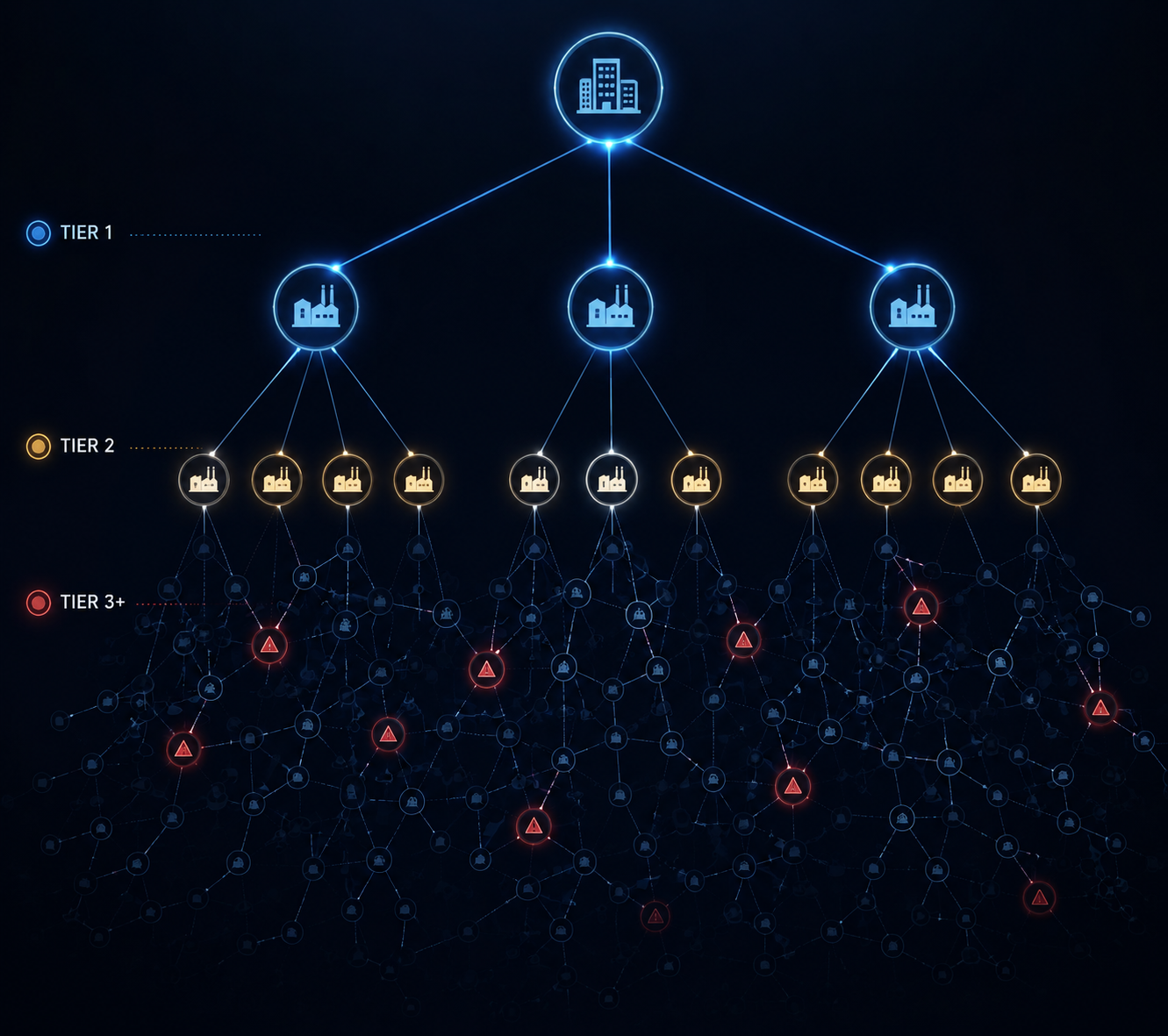
This is where agentic mapping matters. The point is not that the AI magically discovers every supplier. The point is that it can keep recomputing exposure as new information arrives: a port constraint, a sanctions update, a supplier disclosure, a shipment status change, a new ownership link. In a manual process, the Tier 1 supplier list is usually the cleanest record in the room. The problem is that the first break often sits below that line.
For procurement, that difference changes the first hour of response. A domicile-based screen might say the supplier base is mostly outside the Gulf. A multi-tier exposure view might show that a critical subcomponent, tolling relationship, or logistics corridor is not. The first version reassures the wrong people. The second gives the category manager a reason to call a supplier before the supplier’s own customer-service team has a finished answer.
Sanctions Velocity Was a Separate Stress Test
Route risk was only one side of the Iran disruption. Compliance risk moved quickly too. Sayari noted that OFAC issued three sets of Iran-related designations in a single week in April 2026.[6] That tempo matters because sanctions exposure is not just a legal department issue when shipments are moving. It can freeze a transaction, interrupt a payment, block a supplier relationship, or force a procurement team to revalidate an alternate source that looked acceptable the day before.
A sanctions alert has little value if it lands as a PDF in a crowded inbox. The operational value comes when the designation is checked against supplier names, beneficial ownership, affiliates, counterparties, and open transactions. That is the part where AI-driven monitoring can beat a traditional watchlist refresh, provided the underlying entity data is strong enough and the workflow sends the alert to someone with authority to pause or reroute the work.
The honest version is narrower than the sales version. AI did not eliminate sanctions judgment. It reduced the time between a list update and a practical question: do we have exposure, and if so, where is the transaction in the process?
Scenario Switching Helped, Until Physics Took Over
The best use of agentic AI in this crisis was not prediction in the grand sense. It was faster scenario switching. If the Strait is closed, which shipments wait? If air freight is now expensive or constrained, which products justify the premium? If a supplier route depends on Gulf transit, is there a second source, a second lane, or only a prettier version of the same dependency?
The cost pressure showed up quickly. GEP’s March 2026 crisis note cited freight-rate increases of 25% to 35% after the Strait closure.[1] Vendor-sourced crisis data also pointed to Indian pharma exports facing air freight cost spikes of 400% and automotive semiconductor supply chains with single points of failure in Gulf transit routes. Those figures are useful as stress signals, not as proof that every company faced the same exposure. They show why teams needed route and product-level triage rather than another regional heat map.
But there is a hard ceiling here. Software can find the better option faster. It cannot make a constrained aircraft available, shorten a longer ocean route, or remove the shelf-life problem from a sensitive material. J.P. Morgan Asset Management noted that liquid helium has a shelf life of 35 to 48 days in its discussion of whether the Iran war could disrupt AI chip production.[7] If a process depends on that material arriving inside a physical window, the model can escalate the risk and compare alternatives. It cannot negotiate with evaporation.
That distinction matters for investment decisions. A platform that identifies the affected node six hours earlier may be worth paying for if those six hours preserve optionality. It is not worth pretending that visibility itself is resilience. Inventory policy, qualified alternates, route contracts, and supplier development still decide what options exist when the alert fires.
The Model Is Fastest Before the World Stops Looking Like Its Training Data
There is another limitation that should make risk teams cautious. Xeneta warned in February 2026 that AI models perform best in stable systems, while “historical patterns break down quickly” during geopolitical disruptions.[8] That warning is not anti-AI. It is a reminder that a model trained on normal routing behavior, normal carrier responses, or normal demand reactions can lose confidence fast when governments, insurers, carriers, and customers start making exceptional decisions.
In practice, that means the AI output needs a different review posture during crisis conditions. A normal-time recommendation can be checked against service history and cost. A conflict-time recommendation needs someone to ask whether the constraint has changed since the last refresh: insurance availability, port acceptance, air capacity, sanctions exposure, supplier labor, customer priority, or executive risk appetite.
This is also where some traditional analytics still have a role. A slower human analyst who understands why a route is politically unavailable may prevent a fast system from presenting a technically possible option as an operational one. The better agentic tools support that judgment by keeping the evidence current and traceable. They do not remove the need for it.
What to Believe From the Iran Test
The Iran crisis does support a clear claim: agentic AI platforms can reduce decision latency in geopolitical supply chain risk management when they connect external shocks to internal exposure faster than manual teams can. The strongest evidence sits in the practical work: multi-tier mapping that catches exposure beyond domicile labels, chokepoint monitoring that keeps pace with vessel and route changes, sanctions monitoring that reacts to rapid designation activity, and scenario switching that gives planners more time before costs move again.
It does not support a broader claim that AI makes the supply chain resilient by itself. The conflict is ongoing as of July 2026, and several of the most visible accounts come from vendors with commercial reasons to highlight their platforms. The crisis evidence is still useful, but it should be read as operational evidence under stress, not as a settled benchmark study.
For a CPO or risk lead, the buying question should be blunt. Can the platform show which supplier tier, route, part, transaction, or customer obligation is exposed, and can it show that before the human team would have assembled the same answer? Can it preserve the audit trail when compliance asks why a shipment moved or stopped? Can it separate a real supplier dependency from a headline that happens to be nearby? If the answer is yes, the tool has earned a serious look.
For more on why this crisis created the opening for agentic systems in the first place, see Why the Iran Deal Collapse Demands Agentic AI for Supply Chains. The narrower conclusion here is the one that should guide the budget conversation: agentic AI is proving useful as a decision-speed multiplier in the Iran disruption. It is not a substitute for buffers, alternates, contracts, and people who know when a route that looks open on a screen is already gone in the real world.
References
- U.S.-Israel-Iran War Impact on Global Supply Chains, GEP, March 2026.
- Geopolitical Risk in Supply Chain Management is Entering a New Era of Human and AI Intelligence, SDCExec/Bloomberg.
- Global Choke Points: Supply Chain Fallout from the Israel-Iran Conflict, Interos.
- U.S.–Iran Conflict: Escalating Global Supply Chain Disruption, Resilinc.
- Uncovering Supply-Chain Risks in the Iran War, MSCI, March 2026.
- Iran Sanctions and Tariffs Just Made Supply Chain Mapping a CFO Conversation, Sayari.
- Can the Iran war disrupt AI chip production?, J.P. Morgan Asset Management.
- The Biggest Supply Chain Risks of 2026, Xeneta, February 2026.
Comments
Join the discussion with an anonymous comment.