

The awkward moment in an AI vendor selection usually comes after the third demo, not before the first. Every platform has a demand signal story. Every dashboard finds exceptions faster than the current process. Every proposal says the model will learn from the business. Then the leadership team tries to compare them and realizes the real question is not which of the AI supply chain companies gave the most polished presentation. It is whether the organization can actually feed, connect, govern, and use what is being sold.
That gap is visible in the industry numbers. In 2025, 64% of supply chain leaders said AI or generative AI capabilities were important when evaluating new technology solutions, while Gartner reported that only 23% of supply chain organizations had a formal AI strategy in place based on a December 2024 to January 2025 survey of 120 supply chain leaders.[1][2] PwC’s 2026 Digital Trends in Operations Survey adds the harsher operating context: 89% of operations leaders said their technology investments had not fully delivered the expected results.[3]
Those three facts should change the buying process. A feature-by-feature scorecard is useful only after the buyer has tested the basics: data readiness, integration effort, functional fit, AI transparency, ROI timing, and change capacity. Without that sequence, the company is not evaluating AI. It is evaluating a future version of itself that may not exist.

Start With Readiness, Not the Vendor Shortlist
Most selection teams begin with the vendor market because it feels concrete. They ask who serves retail, manufacturing, CPG, distribution, or logistics. They ask whether the platform is AI-native, embedded in a planning suite, or attached to a control tower. Those are valid questions, but they come too early if the buyer has not agreed on what the system will be allowed to decide, which systems it must touch, and who will be accountable when the recommendation conflicts with current practice.
A better first pass is a readiness diagnosis. If the company has no agreed AI strategy, unclear decision rights, fragmented planning data, and a history of under-realized technology investments, then a sophisticated vendor may only expose the weakness faster. For teams still building that foundation, the supply chain AI strategy gap is not an abstract governance issue; it is a buying risk.
| Evaluation dimension | Buyer question |
|---|---|
| Data infrastructure readiness | Can we provide the data the vendor needs at the quality, latency, and governance level required? |
| Deployment model and integration complexity | How will the platform connect to ERP, WMS, TMS, planning tools, and actual decision workflows? |
| Functional fit vs. platform breadth | Does the vendor solve our priority use case deeply enough, or mostly demonstrate broad but shallow capability? |
| AI technique transparency | Can we inspect what the model is doing, when humans review it, and where autonomy is appropriate? |
| ROI timeline realism | Are the benefits, costs, and payback assumptions credible for our operating environment? |
| Change management support | Will planners, buyers, logistics teams, IT, finance, and operations adopt the new way of working? |
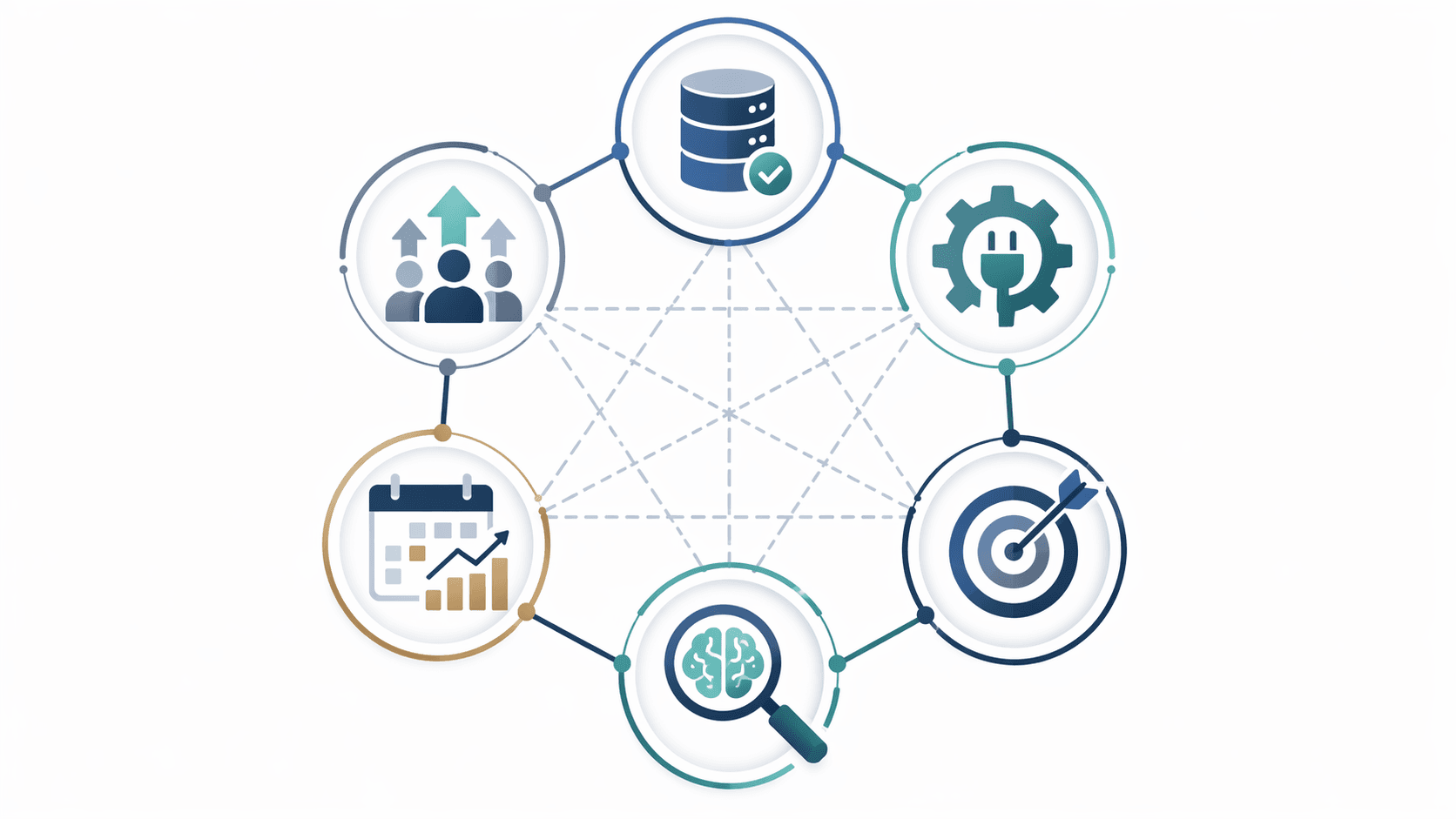
1. Data Infrastructure Readiness
Before asking what outcomes a vendor can deliver, ask what data the vendor requires to deliver them. The difference sounds procedural. In practice, it is where many AI supply chain projects stop being a demo and become a cleanup program.
Oliver Wyman’s 2026 EU Supply Chain Tech Report found that poor and fragmented data quality was the primary AI adoption challenge cited by two-thirds of respondents.[4] That finding should feel familiar to anyone who has watched a planning model inherit inconsistent item masters, duplicate supplier records, missing lead-time history, unmaintained substitution rules, or demand history distorted by stockouts and manual overrides.
The evaluation question is not simply whether the vendor can ingest data from common enterprise systems. Most can say yes. The sharper questions are about the condition of the data and the work required before the model becomes useful.
- Which master data fields are mandatory, optional, or inferred?
- What happens when historical demand includes stockouts, promotions, channel shifts, or pandemic-era anomalies?
- How does the platform treat supplier lead times when purchase order dates, receipt dates, and promised dates disagree?
- Who owns data correction after implementation: the vendor, the buyer’s IT team, the planning team, or a shared governance group?
- How frequently must data refresh for the promised use case to work: daily, intra-day, real time, or only during planning cycles?
A vendor that answers these questions with specificity is easier to evaluate than one that keeps the conversation at the level of “we connect to your systems.” If the use case is inventory optimization, for example, the buyer should press on demand history, service-level targets, substitution logic, order multiples, shelf-life constraints, and inventory position accuracy. The state of AI in inventory management is a useful companion topic because inventory is where data quality issues often become cash, service, and write-off consequences.
The buyer should also separate data availability from data governance. Having a field in the ERP does not mean the field is trusted. Having transaction history does not mean the history is suitable for training or forecasting. Having a data lake does not mean there is a clear owner for correcting records when the AI system exposes exceptions. In vendor scoring, data-readiness answers should carry more weight than the elegance of the analytics layer.
2. Deployment Model and Integration Complexity
Integration is not a technical appendix to the selection process. It is part of the product the buyer is purchasing. PwC’s 2026 operations survey identified integration complexity as the top barrier to AI adoption in supply chain operations, which makes it a frontline evaluation criterion rather than an implementation detail to be solved later.[3]
For supply chain AI, “integration” means more than moving data into a model. It means connecting the recommendation to the systems and routines where work happens: ERP for orders and financial truth, WMS for warehouse execution, TMS for transport planning, planning systems for forecasts and supply plans, supplier portals for collaboration, and control tower workflows for exceptions. A platform that predicts late supply but cannot trigger a usable review path may create better visibility without better action.
The deployment model matters because it shapes integration burden. A module inside an incumbent suite may inherit existing data structures but move at the pace of the suite roadmap. An AI-native platform may offer more flexible modeling and faster product iteration but require heavier mapping to core systems. A point solution may solve one urgent planning or logistics problem well while leaving the buyer to manage handoffs across tools. For a deeper architectural comparison, AI-native vs. incumbent supply chain platforms is the right decision lens.
In vendor workshops, ask for the integration map before the benefits case. The map should show source systems, target systems, data refresh frequency, APIs or middleware, exception workflows, security controls, and the owner of each interface. If the vendor cannot explain how a recommendation becomes an approved purchase order, adjusted forecast, rebalanced inventory position, revised shipment plan, or escalated supplier action, the operating model is still missing.
3. Functional Fit vs. Platform Breadth
Many AI supply chain companies now present broad platforms: demand sensing, inventory optimization, supplier risk, transportation visibility, production planning, procurement intelligence, scenario planning, and control tower orchestration. Breadth is not bad. The problem is when breadth hides the fact that the buyer has one or two use cases that will determine whether the program earns trust.
The selection team should name the decision it wants to improve. “Better planning” is too broad. “Reduce manual forecast overrides for high-volatility SKUs,” “identify late inbound risk early enough for procurement to act,” or “recommend inventory transfers before regional stockouts” can be tested. A vendor that looks less comprehensive but handles the priority decision with stronger data requirements, workflows, and user controls may be a better fit than a platform with more modules.
This is where use-case discipline matters. Buyers should compare vendor capability against the highest-value problem in front of them, not against a generic map of what AI might someday do across the supply chain. The guide to AI use cases in supply chain by function can help anchor that conversation in actual functions rather than vendor category labels.
- For demand planning, test how the model handles sparse history, promotions, channel changes, and planner overrides.
- For inventory, test constraints such as service targets, order multiples, shelf life, substitutions, and multi-echelon tradeoffs.
- For procurement, test supplier data coverage, risk signals, contract context, and escalation workflows.
- For logistics, test ETA accuracy, disruption signals, carrier data, tendering workflows, and exception ownership.
A useful demonstration uses the buyer’s messy operating reality, not a clean scenario. If a vendor cannot run a controlled proof point on representative data, the buyer should at least require a walkthrough of how the system behaves when data is late, incomplete, contradictory, or overridden by a planner.
4. AI Technique Transparency
AI technique matters only when it changes the decision, the risk, or the level of oversight required. Predictive AI may forecast demand, estimate delay probability, or flag inventory risk. Generative AI may summarize exceptions, draft supplier communications, or let users query planning data in natural language. Agentic AI may take multi-step action within defined boundaries, such as monitoring an exception, recommending an option, and initiating a workflow for approval.
The buyer does not need every evaluator to become a data scientist. The buyer does need to know what kind of AI is being used, where it sits in the workflow, what evidence it uses, and whether people can challenge it. This is one of the practical ways to separate genuine capability from AI-washing. If the “AI” is a rules engine with a conversational interface, that may still be useful, but it should not be scored the same way as a model that learns patterns from operational data.
RELEX, a supply chain software vendor, reported in its own 2026 survey that 54% of respondents preferred a hybrid human-in-the-loop approach, while only 10% trusted AI to make critical decisions without human review.[6] Because this is vendor-published research, it should not be treated as neutral proof of market behavior on its own. It is still a useful signal for evaluation design: most organizations are not buying full autonomy for critical supply chain decisions; they are buying earlier warning, better recommendations, and a controlled path to action.
- Can users see which factors influenced a recommendation?
- Can planners compare the AI recommendation with the current plan and prior decisions?
- Can the system explain confidence, uncertainty, or exception severity in business language?
- Which decisions are advisory, which require approval, and which can be automated?
- How are model changes tested, monitored, and rolled back if performance degrades?
For teams comparing platform claims, AI-native vs. legacy supply chain platforms is a useful companion because architecture and transparency often determine whether AI is embedded in the operating model or layered onto an old workflow.
5. ROI Timeline Realism
The fastest way to make a good platform look bad is to attach it to a benefits case the organization cannot deliver. Deloitte’s 2025 agentic supply chain analysis reported that 85% of respondents increased AI investment, but only 6% saw ROI in under one year; most achieved satisfactory returns within a two-to-four-year window.[5] That does not mean short-term wins are impossible. It does mean one-year payback should be treated as a claim requiring evidence, not a default assumption.
Vendor ROI cases often combine several types of value: reduced inventory, improved service, fewer expedites, lower labor effort, better procurement decisions, lower transportation cost, reduced waste, and faster response to disruption. Each benefit has a different timing path. Labor productivity may show up before inventory reduction. Inventory reduction may require policy changes and service-level agreements. Procurement savings may depend on supplier negotiations. Logistics benefits may depend on carrier integration and execution compliance.
Finance should not enter the process after the preferred vendor is chosen. It should help define which benefits count, when they count, and who owns them. If reduced planner effort is the benefit, does the organization actually reduce cost, avoid hiring, or redeploy time to exception management? If inventory reduction is the benefit, does the model change buying behavior, safety stock policy, replenishment parameters, or allocation decisions? If improved service is the benefit, does the company have a baseline that separates AI impact from demand mix, supply availability, and commercial decisions?
For deeper benchmark work, the real ROI of AI in procurement and supply chain and machine learning ROI benchmarks by supply chain use case can help pressure-test vendor assumptions before they become board-approval numbers.
| ROI claim | What to verify |
|---|---|
| Inventory reduction | Baseline inventory, service targets, policy changes, write-off risk, and who approves parameter changes |
| Planning productivity | Current manual workload, exception volume, adoption rate, and whether time savings become financial value |
| Lower expedite cost | Historical expedite drivers, supplier responsiveness, transportation options, and lead time to intervene |
| Better forecast accuracy | Forecast level, horizon, baseline method, exception handling, and downstream planning impact |
| Procurement savings | Spend coverage, contract constraints, supplier leverage, and implementation path for recommendations |
6. Workforce Upskilling and Change Management Support
The people risk is rarely that planners, buyers, or logistics teams refuse technology on principle. The more common risk is that the new system asks them to trust recommendations they cannot inspect, changes their decision rights without saying so, or adds another queue of exceptions to an already crowded day.
Change management should therefore be evaluated as part of the vendor capability. Training on screens is not enough. The vendor should be able to help redesign workflows, define approval thresholds, create exception taxonomies, support super users, and explain how human feedback improves the system over time. The buyer should ask what adoption support is included after go-live, what costs extra, and which responsibilities transfer to the internal team.
- Who reviews AI recommendations during the first planning cycles?
- Which decisions remain with planners, buyers, schedulers, or logistics coordinators?
- Which overrides are captured, and how are they used to improve the model or workflow?
- What role does IT play after implementation: integration owner, data steward, platform administrator, or all three?
- How will finance and operations agree that a benefit has actually been realized?
A vendor that has seen real adoption will have answers that sound operational, not inspirational. It will know where users resist, where managers need new performance measures, and where executive sponsors must remove blockers. It will not treat change management as a slide near the end of the proposal.
Vendor Viability Belongs in the Frame, but Not at the Center
Because the market is crowded, buyers should check financial and strategic viability. A vendor’s funding position, customer concentration, partner ecosystem, product roadmap, and acquisition risk can matter, especially when the platform will sit close to core planning or execution workflows. The Q2 2026 view of supply chain AI vendor funding and M&A is useful for that diligence.
Still, market momentum is not a substitute for fit. A well-capitalized vendor can still fail in an environment with poor master data and unclear decision rights. A smaller specialist can outperform a broad suite in a narrow use case if it integrates cleanly, explains its recommendations, and supports adoption. Vendor viability should influence risk management, contract terms, and roadmap confidence. It should not override the operating questions.
How to Run the Evaluation Without Letting the Demo Decide
A disciplined evaluation does not need to be slow, but it does need to be sequenced. Start by naming the decision the system must improve and the business metric that will prove it. Then ask each vendor for the data requirements, integration map, model transparency approach, ROI assumptions, and adoption plan tied to that decision. Only after that should the team compare modules, user interface, roadmap, and commercial terms.
A practical shortlist workshop should include supply chain, IT, data owners, finance, procurement, and the operations teams that will live with the recommendations. If the vendor is promising reduced inventory, the inventory owner and finance partner need to be in the room. If the vendor is promising better supplier risk response, procurement and operations need to agree on who acts. If the vendor is promising autonomous exception handling, IT and risk leaders need to define the guardrails before implementation begins.
The scorecard can stay simple as long as the questions are hard.
| Dimension | Strong answer | Weak answer |
|---|---|---|
| Data readiness | Vendor identifies required fields, quality thresholds, cleansing work, and ownership | Vendor says it can ingest data from common systems without specifying quality dependencies |
| Integration | Vendor maps interfaces, workflows, approval points, security, and system-of-record boundaries | Vendor treats integration as a post-contract technical task |
| Functional fit | Vendor demonstrates the priority decision using representative constraints | Vendor emphasizes broad module coverage without depth on the buyer’s use case |
| AI transparency | Vendor explains model type, evidence, confidence, human review, and monitoring | Vendor uses AI language without showing how recommendations are produced or governed |
| ROI realism | Vendor separates benefit types, timing, costs, assumptions, and accountable owners | Vendor leads with a generic payback claim |
| Change support | Vendor defines roles, training, adoption metrics, super users, and post-go-live support | Vendor limits change management to user training |
This kind of process may feel less exciting than a demo, but it is fairer to the vendor and safer for the buyer. It gives strong vendors a chance to show implementation maturity. It also prevents the buying team from rewarding the platform that tells the best story about a clean future while ignoring the messy operating system it must enter.
The best AI supply chain company for a buyer in 2026 is not the one with the longest feature list. It is the one whose capabilities match the buyer’s data maturity, integration burden, decision model, ROI horizon, and capacity for change.
References
- ABC/ABI Research survey, ABI Research, 2025
- CSCO Roadmap: Building a Supply Chain AI Foundation, Gartner
- 2026 Digital Trends in Operations Survey, PwC, 2026
- EU Supply Chain Tech Report 2026, Oliver Wyman, 2026
- Resilient by design: The agentic supply chain, Deloitte, 2025
- Supply chain AI in 2026: The numbers behind the hype, RELEX, 2026
Comments
Join the discussion with an anonymous comment.