
What Agentic AI Means for Procurement and Supply Chain
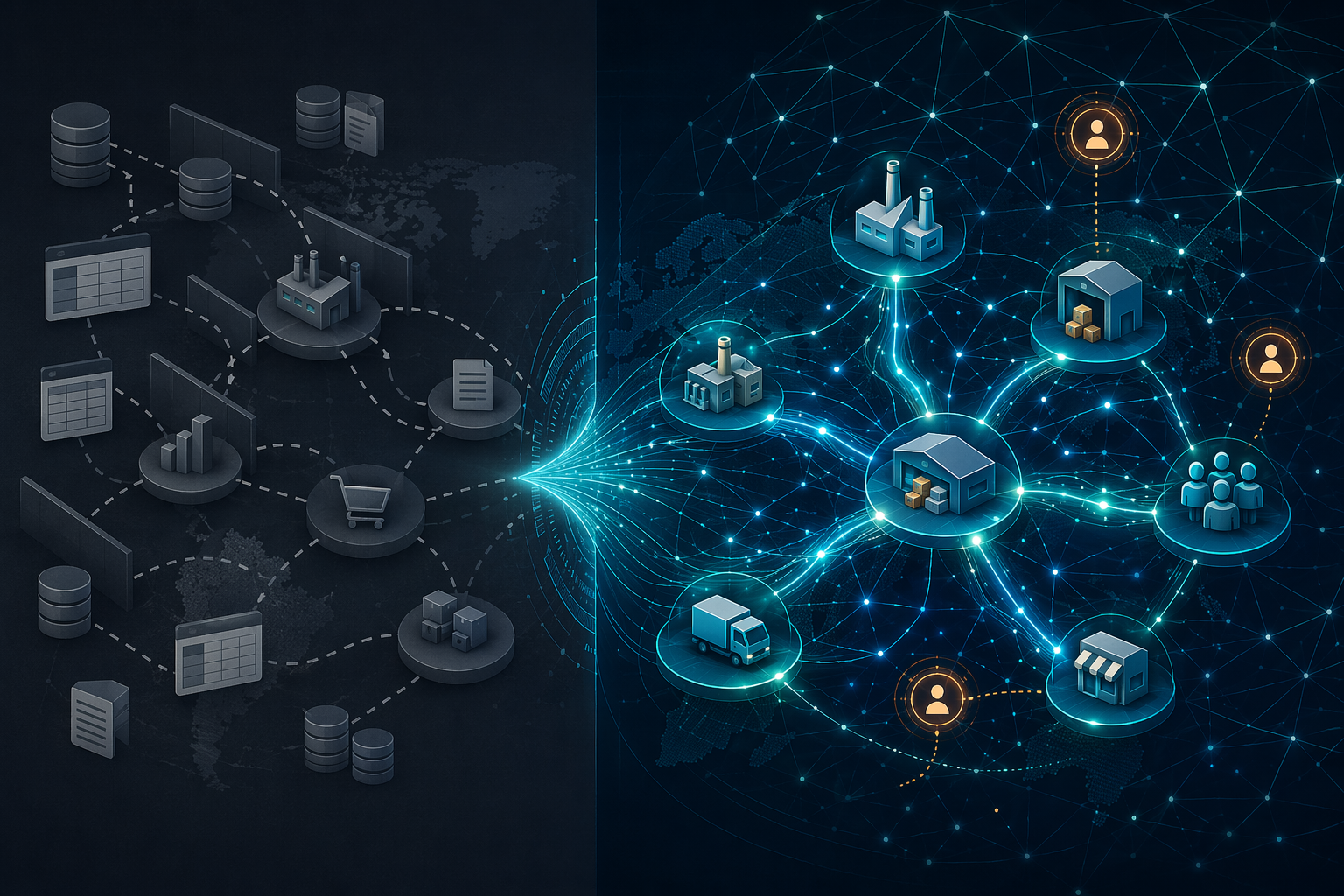
The term "AI" in procurement conversations has, until recently, referred almost exclusively to stateless generative AI tools — chatbots that answer a question, summarize a contract, or draft an RFP within a single session and then reset. A CPO asks a chatbot "What were our top five spend categories last quarter?" and gets an answer. The next query starts from zero. That paradigm is useful for knowledge retrieval and content generation, but it does not execute work.
Agentic AI represents a fundamentally different architecture. An AI agent maintains a permanent project state. It picks up a sourcing event where it left off three weeks ago, remembers the supplier responses it has already evaluated, and continues executing the next step in the workflow without requiring a human to re-establish context. Agents operate across systems — ERP, TMS, WMS, procurement platforms — and execute multi-step workflows autonomously: issue an RFP, evaluate incoming responses against pre-defined criteria, trigger supplier onboarding if thresholds are met, and log every decision to an audit trail.
For supply chain leaders, the practical implication is that agentic AI can handle the routine, rules-based work that consumes 60–70% of procurement and planning teams' time — supplier qualification, purchase order matching, inventory replenishment triggers, freight audit validation — while humans focus on supplier relationship management, category strategy, and exception handling. The thesis for 2026 is that this technology has crossed the capability threshold for production deployment, but the organizational and governance infrastructure to support it has not.
The State of AI Adoption: Key Statistics for 2026
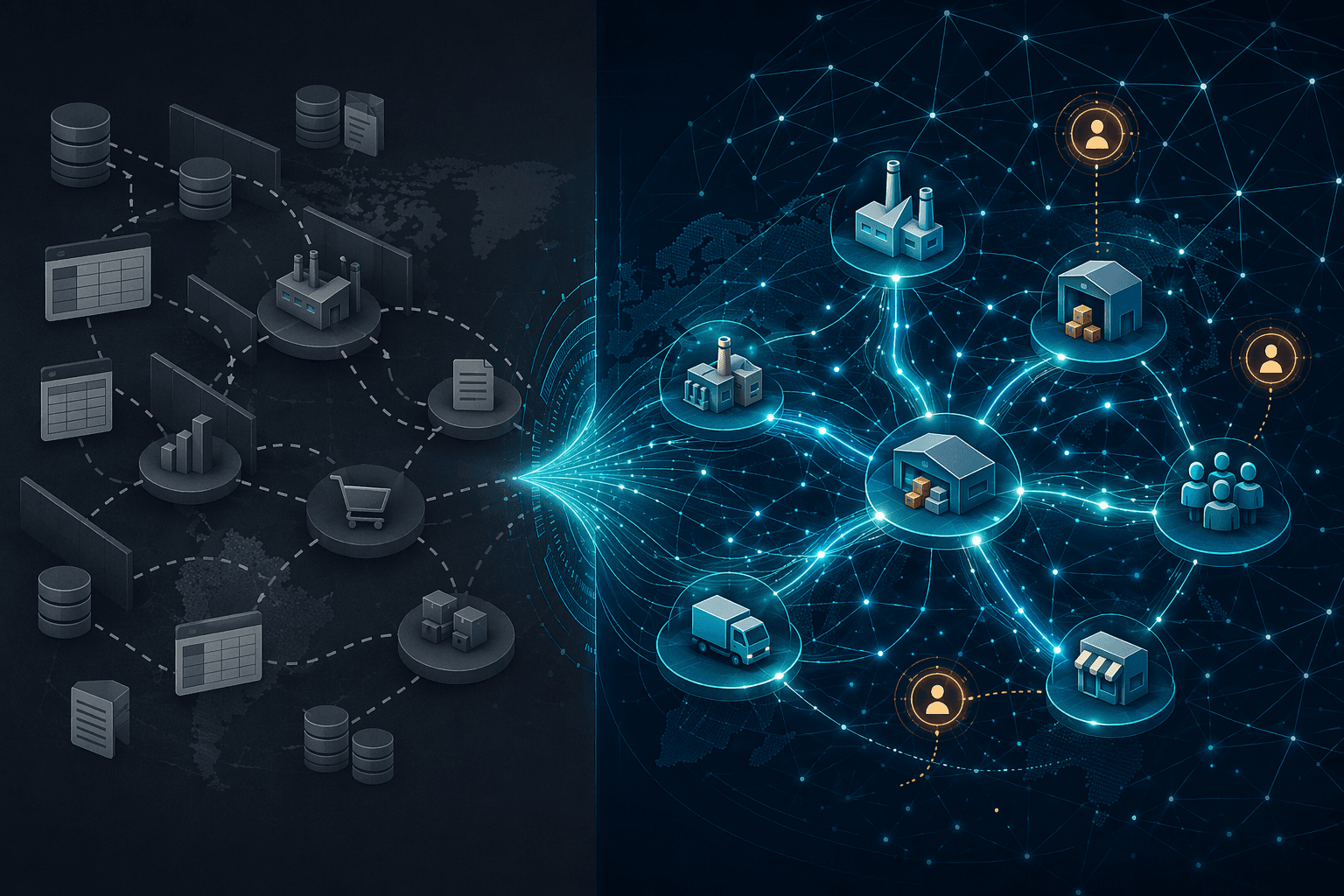
The gap between AI usage and AI deployment at scale is the defining metric of the current market. Understanding where the industry actually stands — rather than where vendor marketing suggests it stands — is essential before building an agentic AI strategy.
| Metric | Figure | Source | Year |
|---|---|---|---|
| Procurement executives using GenAI at least weekly | 94% | AI at Wharton | 2024 |
| Procurement teams that piloted GenAI in 2024 | 49% | Hackett Group | 2024 |
| Teams that achieved large-scale GenAI deployment | 4% | Hackett Group | 2024 |
| Efficiency improvement potential via agentic AI in procurement | 25–40% | McKinsey | 2024 |
| Enterprise AI pilots delivering measurable P&L impact | 5% | MIT NANDA | 2025 |
| Supply chain organizations with a formal AI strategy | 23% | Gartner | 2025 |
| Procurement leaders saying data isn't AI-ready | 74% | Gartner | 2025 |
| Global AI in supply chain market size (2025) | $9.94B | Precedence Research | 2026 |
| Projected market size (2035) | $236.42B | Precedence Research | 2026 |
The pattern is clear: usage is nearly universal, pilots are common, but production deployment at scale is rare. The 94% weekly GenAI usage figure from AI at Wharton reflects how quickly procurement professionals have adopted chat-based AI tools for individual productivity. The 4% large-scale deployment figure from Hackett Group reveals that almost no organization has moved beyond individual use to embedded, enterprise-wide AI workflows. Agentic AI sits at the intersection of these two numbers — it requires the organizational infrastructure that the 96% of teams who have not achieved scale currently lack.
Additional context: 72% of logistics employees adopted AI tools in 2024, the highest rate across all industries tracked by ActivTrak. Companies with AI-mature supply chains are 23% more profitable than peers, per Accenture's 2024 study of 1,148 companies. Yet 57% of CPOs cite siloed working as the top barrier to value delivery, according to Deloitte's 2025 Global CPO Survey. The infrastructure for agentic AI — cross-functional data access, integrated systems, governance frameworks — is precisely what siloed organizations lack.
Real Use Cases: Where Agentic AI Delivers Today
Agentic AI is not a future concept. Specialized agents are already deployed in production environments across four procurement and supply chain domains. Each use case shares a common pattern: the agent operates within defined boundaries, maintains persistent state across sessions, and escalates to a human when it encounters conditions outside its pre-authorized scope.
Autonomous Sourcing and RFP Management
Agents can autonomously issue and manage RFPs, evaluate supplier responses against pre-defined criteria, trigger onboarding workflows for qualified suppliers, and log the entire decision chain. KPMG's 2026 supply chain trends analysis identifies this as one of the three converging forces driving agentic procurement in 2026: capability maturity (agents performing sourcing tasks), strategic pressure (embedding agentic AI across the procurement lifecycle), and operating model evolution (Source-to-Pay platforms moving toward extreme automation). A transportation company cited in Dataiku's 2026 trends report uses agents in the buying process where buyers initiate agentic workflows that request quotes from approved suppliers and rank responses autonomously.
Supplier Risk Monitoring and Escalation
Continuous supplier risk scoring is a natural fit for agentic AI because it requires persistent monitoring across multiple data sources — financial filings, news feeds, port disruption reports, ESG ratings — and the ability to escalate when risk thresholds are breached. A Fortune 500 manufacturer cited by Unframe AI achieved 100% visibility into supplier commitments, three weeks' advance warning of supplier disruptions, and a 30% reduction in supply-driven stockouts using agent-based supplier commitment monitoring. The agent does not just surface a risk score; it maintains a running assessment, correlates events across sources, and triggers a predefined escalation workflow when conditions change.
Contract Management and Intelligence
Contract management agents handle summarization, clause extraction, obligation tracking, and renewal alerts. Unlike a stateless GenAI tool that summarizes a single contract on demand, an agent maintains a repository of contract states, tracks upcoming renewals across the supplier base, generates negotiation scripts based on historical terms, and executes pre-approved contract playbooks. This use case overlaps with NLP-based contract intelligence, but the agentic layer adds persistent memory and proactive execution — the agent identifies an upcoming renewal, retrieves the current terms, compares them against market benchmarks, and drafts a negotiation brief without being prompted.
Negotiation Agents
Gartner predicts that 50% of organizations will use AI-enabled contract negotiation tools by 2027. Agentic negotiation agents go further: they generate negotiation scripts, simulate supplier responses based on historical patterns, execute pre-approved playbooks within defined price and term boundaries, and escalate only when the negotiation moves outside those boundaries. The agent maintains the negotiation history across multiple rounds, remembers concessions made and received, and adjusts its strategy accordingly — something a stateless chatbot cannot do.
- Autonomous sourcing: issue RFPs, evaluate responses, trigger onboarding
- Supplier risk monitoring: continuous scoring, event correlation, escalation
- Contract management: summarization, obligation tracking, renewal alerts
- Negotiation agents: script generation, playbook execution, multi-round strategy
The Adoption Chasm: Why 95% of Pilots Fail to Deliver ROI
MIT's 2025 State of AI in Business study, summarized by Fortune, found that 95% of enterprise AI pilots deliver no measurable P&L impact. Over 80% of firms have piloted generative AI, but only 5% have reached mature production-stage adoption. These numbers are sobering, and they are frequently cited as evidence that AI is overhyped. That interpretation misses the point.
The failure is not in the technology — it is in the deployment approach. Most AI pilots are launched as isolated experiments: a team gets access to a chatbot, runs a few use cases, measures some proxy metric, and then struggles to integrate the tool into existing workflows, data pipelines, and decision processes. The pilot succeeds on its own terms but delivers no business impact because it was never designed to change how work gets done.
Agentic AI deployment is different from general AI deployment in three specific ways. First, governance requirements are more demanding because agents make autonomous decisions that have direct financial and operational consequences — a chatbot that generates a bad summary is annoying; an agent that issues a purchase order to the wrong supplier is a problem. Second, autonomous decision risks require explicit escalation rules, human-in-the-loop checkpoints, and audit trails that most organizations have not yet built. Third, agent orchestration — coordinating multiple specialized agents across sourcing, legal, risk, and negotiation functions — requires an integration architecture that most procurement technology stacks do not currently support.
The 4% of organizations that have achieved large-scale AI deployment, per Hackett Group, share common characteristics: they have invested in data readiness, built cross-functional governance structures, and treated AI deployment as an operating model change rather than a technology implementation. PwC's 2026 Digital Trends survey of 767 operations and supply chain leaders found that only 4% of companies report success across all four key areas: AI embedded enterprise-wide, no barriers to scaling agents, collaborative horizontal structure, and fully delivering expected tech results. Among those leaders, 87% have integrated digital capabilities end to end, and 83% measure both operations and financial impact.
For CPOs and supply chain leaders evaluating agentic AI, the lesson is not to avoid pilots — it is to design pilots as the first step of a production deployment, not as standalone experiments. Every pilot should have a defined path to production, a governance framework from day one, and metrics tied to business outcomes rather than technical performance.
Governance Framework: Glass-Box Agents, Audit Trails, and Human-in-the-Loop
Agentic AI governance is not a future concern — it is the primary barrier to production deployment today. Only 23% of supply chain organizations have a formal AI strategy, per Gartner, and 74% say their data is not AI-ready. Deploying autonomous agents without governance guardrails is not just risky; it is irresponsible. The governance framework for agentic AI rests on three pillars: glass-box explainability, mandatory audit trails, and human-in-the-loop checkpoints.
Glass-Box vs. Black-Box Agents
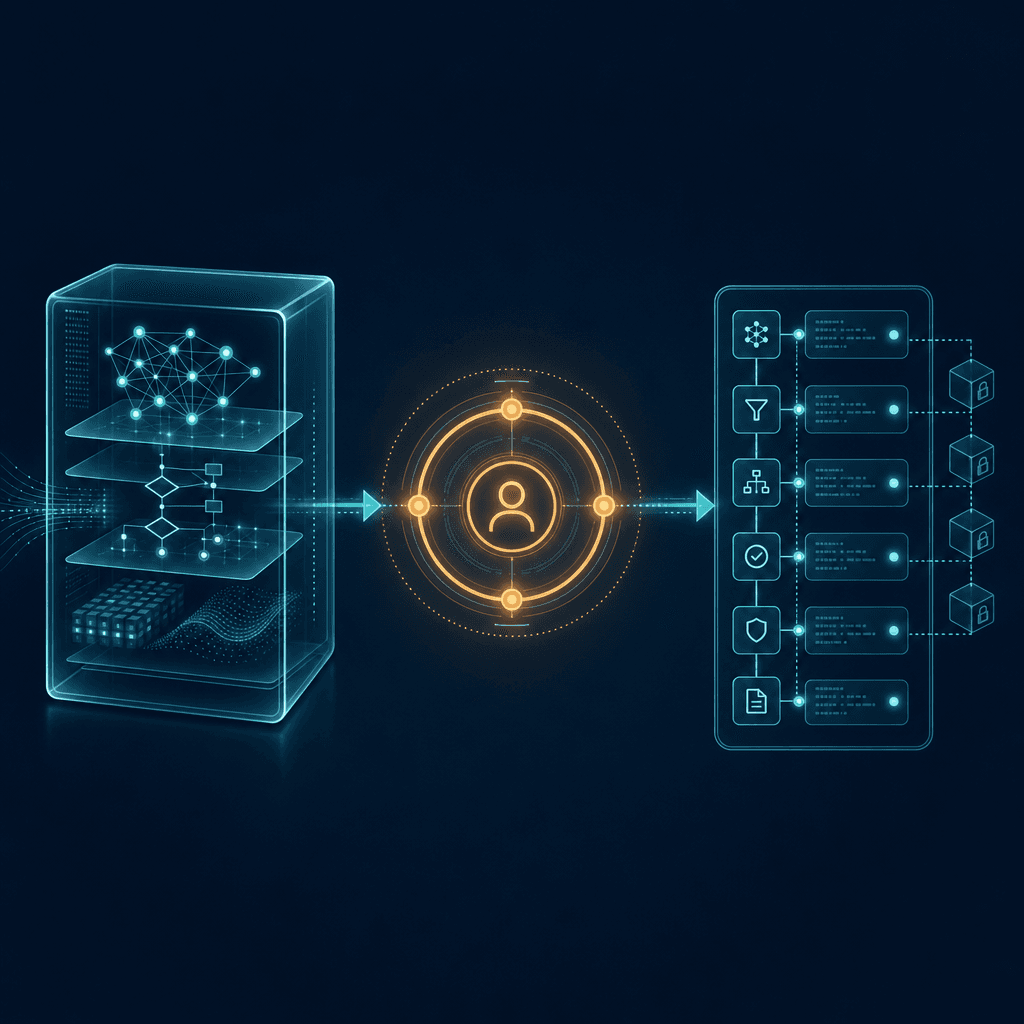
A glass-box agent can explain why it made a decision — which data inputs it used, which rules it applied, which alternatives it considered, and why it chose the action it did. A black-box agent produces an output without a transparent decision trail. For procurement and supply chain applications, glass-box architecture is not optional. When an agent issues a purchase order, rejects a supplier, or adjusts a safety stock level, the organization must be able to reconstruct the decision logic for audit, compliance, and dispute resolution purposes.
SupplyChainBrain's analysis of agentic procurement governance emphasizes full explainability as a non-negotiable principle. The same analysis notes that agents must operate within defined escalation rules — when an agent encounters a decision outside its pre-authorized scope, it must pause and escalate to a human rather than proceeding autonomously.
Audit Trails for Autonomous Decisions
Every autonomous decision must be logged to a persistent, tamper-evident audit trail. The audit record should capture: the agent that made the decision, the data inputs used, the rules or models applied, the decision outcome, the timestamp, and whether a human was involved in the loop. This is not just a compliance requirement — it is the foundation for continuous improvement. Without audit trails, organizations cannot analyze agent performance, identify systematic errors, or refine agent behavior over time.
Human-in-the-Loop Checkpoints
Not all decisions require human approval, but the governance framework must define which decisions do. The general principle: high-value, high-risk, or novel decisions require human-in-the-loop checkpoints; routine, low-value, well-defined decisions can proceed autonomously. The thresholds should be explicit and configurable — for example, any purchase order above $50,000 requires human approval; any supplier onboarding outside the existing approved list requires human approval; any safety stock adjustment exceeding 15% requires human approval.
| Decision Type | Autonomy Level | Human Checkpoint Required |
|---|---|---|
| Routine PO matching (under threshold) | Full autonomy | No |
| Supplier risk score update | Full autonomy | No (escalate if score drops below threshold) |
| Contract renewal within pre-approved terms | Full autonomy | No |
| Purchase order above $50K | Recommendation only | Yes — human must approve |
| New supplier onboarding | Recommendation only | Yes — human must approve |
| Safety stock adjustment >15% | Recommendation only | Yes — human must approve |
| Negotiation outside pre-approved price band | Escalate | Yes — human takes over |
PwC's 2026 survey found that only 37% of operations leaders are comfortable assigning AI agents to execute full end-to-end processes. The gap between capability and comfort is a governance gap, not a technology gap. Organizations that invest in glass-box architecture, audit trails, and clear human-in-the-loop rules will be the ones that move from pilot to production successfully.
Implementation Roadmap 2026–2028: From Pilot to Autonomous Operations
Moving from experimental pilots to production deployment of agentic AI requires a phased approach. The organizations that succeed will be those that treat agentic AI as an operating model transformation, not a technology installation. The following roadmap is based on observed patterns from early adopters and the deployment barriers identified in the PwC, Hackett Group, and Gartner surveys.

Phase 1 (2026): Data Readiness and Pilot Governance
The first phase is not about deploying agents — it is about preparing the conditions for agent deployment. Three priorities define this phase:
- Data readiness assessment: 74% of procurement leaders say their data is not AI-ready. Conduct a structured audit of data quality, accessibility, and integration readiness across ERP, procurement, and supplier systems. This is the single highest-leverage activity in the entire roadmap.
- Governance framework design: Define autonomy levels, human-in-the-loop checkpoints, escalation rules, and audit trail requirements before deploying any agent. The governance framework should be reviewed and approved by legal, compliance, and risk functions.
- Pilot selection: Choose a bounded, low-risk use case — supplier risk monitoring or contract renewal tracking are good candidates. The pilot must have a defined path to production, not just a test-and-report objective.
MIT's research found that AI projects built with external partnerships are approximately twice as likely to succeed as internal-only builds. Organizations without deep in-house AI expertise should consider structured partnerships for this phase.
Phase 2 (2027): Multi-Agent Coordination and Scaling
Once the first agent is in production and the governance framework is validated, the focus shifts to scaling and coordination. Key activities:
- Deploy specialized agents for sourcing, legal, risk, and negotiation functions, each operating within its defined scope and escalation rules.
- Build agent orchestration layer: agents need to hand off tasks to each other — a sourcing agent completes supplier qualification and passes the result to a contracting agent, which passes the executed contract to an onboarding agent.
- Expand data integration: connect agents to additional systems — TMS for logistics data, WMS for inventory data, external data feeds for supplier risk monitoring.
- Begin measuring business impact: track not just technical metrics (agent completion rate, accuracy) but operational metrics (procurement cycle time, cost per transaction, supplier compliance rate).
BCG projects that agentic systems will account for 29% of total AI value by 2028, up from 17% in 2025. Organizations that have built the data and governance foundation in Phase 1 will be positioned to capture this value in Phase 2.
Phase 3 (2028+): Mature Production with Autonomous Workflows
The target state for 2028 and beyond: agents manage 60–70% of end-to-end transactional procurement, per SupplyChainBrain and Digicode Europe analysis. Humans focus on strategic activities — supplier relationship management, category strategy development, innovation sourcing, and exception handling.
| Phase | Timeline | Key Activities | Target State |
|---|---|---|---|
| Phase 1: Foundation | 2026 | Data readiness audit, governance framework design, bounded pilot deployment | One agent in production with validated governance |
| Phase 2: Scaling | 2027 | Multi-agent deployment, orchestration layer, expanded data integration, business impact measurement | 3–5 specialized agents operating with human oversight |
| Phase 3: Autonomous Operations | 2028+ | Full agent coordination, reduced human-in-the-loop for routine decisions, continuous improvement | 60–70% of transactional procurement handled by agents |
Gartner predicts that by 2028, 15% of daily logistics decisions will be made autonomously by AI agents, and by 2031, 60% of supply chain disruptions will be resolved without human intervention. These projections assume that organizations invest in the governance and data infrastructure required to support autonomous operations. Without that investment, the technology will remain stuck in the pilot phase — technically capable but organizationally blocked.
Comments
Join the discussion with an anonymous comment.