
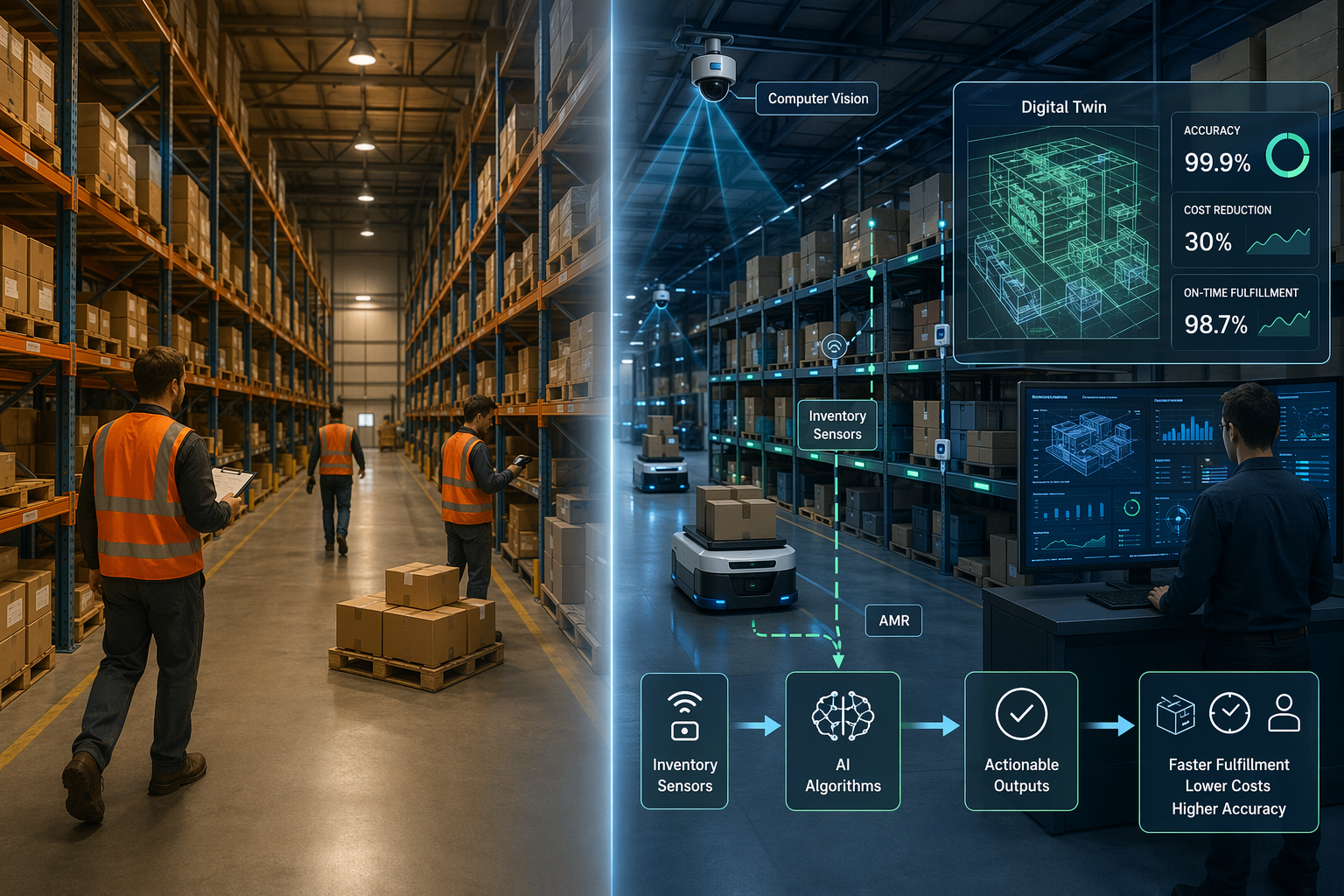
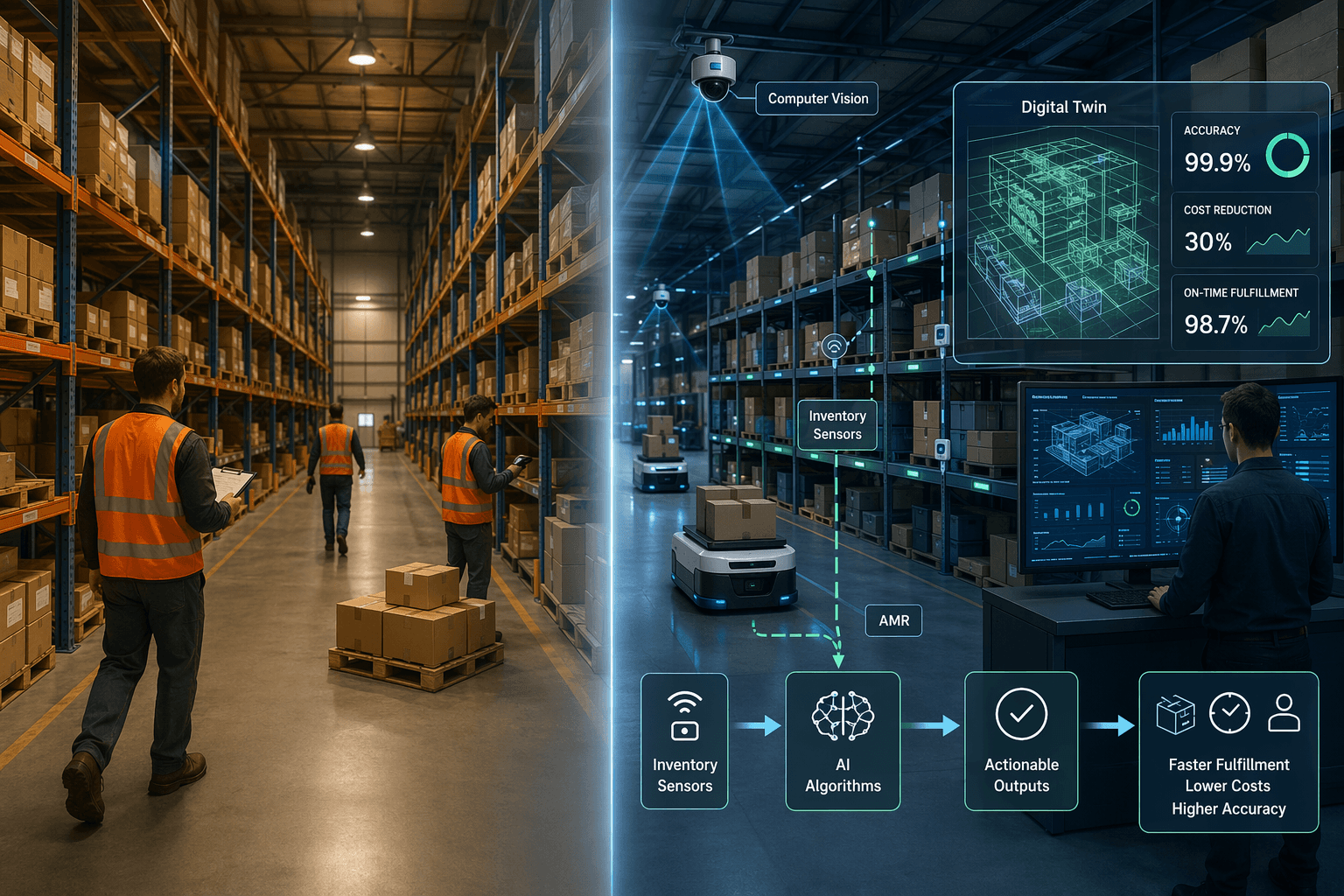
The State of Warehouse AI ROI: What the Aggregated Data Shows
The headline number is compelling: logistics-sector AI investments deliver an average 190% return, according to Gartner's 2025 Supply Chain Technology Report, as cited by The Thinking Company. For warehouse-specific AI use cases, the three-year ROI range sits between 150% and 400%. These figures are the primary reason 85% of supply chain executives plan to increase AI spending in 2026, with one in five expecting a 20% or greater increase, per a Supply Chain Brain survey.
But the aggregate numbers obscure a critical reality: the gap between the top and bottom of that ROI range is wide enough to separate a career-defining success from a budget post-mortem. The same data that produces the 190% average also shows that only 6% of organizations saw ROI in under a year, while most require two to four years to achieve satisfactory returns (Deloitte, 2025). Meanwhile, 94% of supply chain companies plan to use AI or generative AI for decision support within two years (ABI Research, 2025, survey of 490 professionals), yet only 23% have a formal AI strategy in place (Gartner, 2025, survey of 120 supply chain leaders who had already deployed AI).
The strategic context matters. Companies with AI-mature supply chains are 23% more profitable than their peers and six times as likely to use AI or Gen AI widely, according to Accenture's 2024 analysis of 1,148 companies across 10 industries in 15 countries. The question is not whether AI in warehousing delivers value—it clearly does at scale—but whether your organization's specific data environment, operational maturity, and financial tolerance for delayed payback can support a successful deployment.
ROI Breakdown by Use Case: Where the Returns Actually Land
Not all warehouse AI use cases are created equal. The ROI profile varies dramatically by application, investment size, and operational context. The table below consolidates data from The Thinking Company's analysis of Gartner's 2025 Supply Chain Technology Report, providing a use-case-level view of realistic returns, investment requirements, and payback timelines.
| Use Case | 3-Year ROI Range | Typical Investment | Annual Savings | Payback Period |
|---|---|---|---|---|
| Route Optimization (500+ vehicle fleets) | 800–1,200% | EUR 80,000–150,000 | EUR 1.5M–3M | 2–4 months |
| AI-Directed Picking | 250–400% | EUR 50,000–100,000 | EUR 200,000–500,000 | 4–8 months |
| Computer Vision Sorting | 200–350% | EUR 100,000–200,000 | Not separately specified | 6–12 months |
| Inventory Positioning | 150–250% | EUR 40,000–80,000 | Not separately specified | 5–10 months |
Route optimization stands apart with its extraordinary 800–1,200% three-year return. This is not an anomaly—it reflects the fact that transportation represents a large, variable cost pool where AI can rapidly identify savings in fuel, driver time, and vehicle utilization. For a fleet of 500+ vehicles, the EUR 80,000–150,000 investment is modest relative to the EUR 1.5–3 million in annual savings, producing a payback period of just two to four months.
Warehouse-specific use cases—AI-directed picking, computer vision sorting, and inventory positioning—offer strong but more moderate returns. The 250–400% range for AI-directed picking reflects labor productivity gains of 30–50% through better planning and allocation, as noted by Deposco. These use cases require more integration with existing warehouse management systems and physical infrastructure, which extends payback periods to 4–12 months.
For a broader view of how these warehouse-specific returns compare to AI applications across other supply chain functions, see our AI Use Cases in Supply Chain by Function: Where the ROI Is Real in 2026 analysis.
The Cost Reality: What the Vendor Pitch Deck Leaves Out
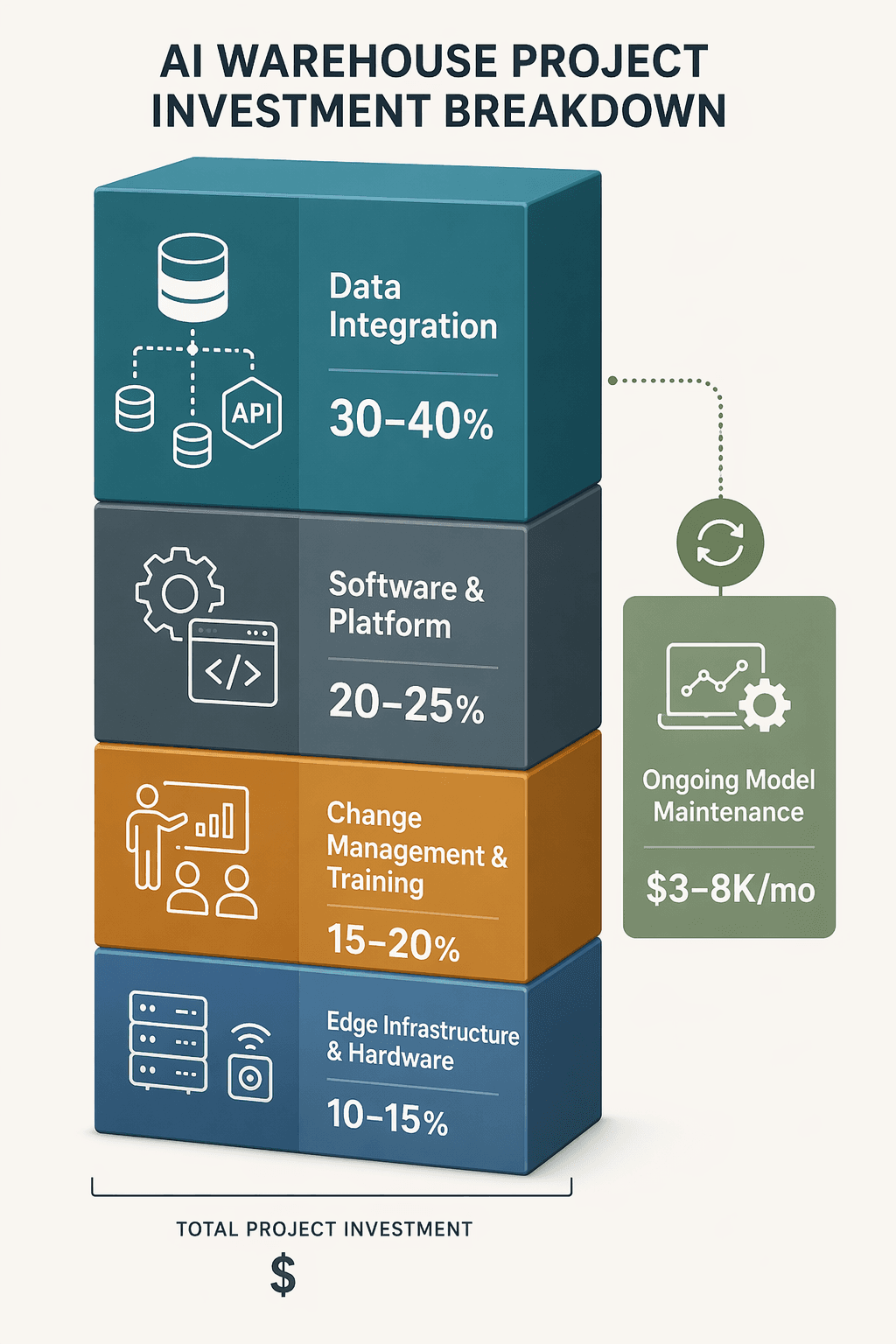
The single most important reason the ROI range for warehouse AI is so wide—150% to 400%—is that most organizations underestimate the cost of making AI work in their specific environment. Vendor pitch decks typically highlight software licensing and hardware costs, but these represent only a fraction of the total investment required.
The Thinking Company's analysis, drawing on Gartner 2025 data, breaks down the hidden cost components that inflate project budgets and delay payback:
| Cost Component | Share of Project Cost | What It Covers |
|---|---|---|
| Data Integration | 30–40% | Connecting WMS, ERP, IoT sensors, and legacy systems; data cleaning and normalization; API development |
| Change Management & Training | 15–20% | Workforce retraining, process redesign, stakeholder alignment, organizational change support |
| Edge Infrastructure & Hardware | 10–15% | On-premise computing for real-time inference, sensors, cameras, network upgrades |
| Ongoing Model Maintenance | $3,000–8,000/month | Model retraining, performance monitoring, data pipeline maintenance, version management |
Data integration alone consumes 30–40% of the project budget. This is not a one-time expense—warehouse data environments are notoriously heterogeneous, with different systems using different data formats, update frequencies, and quality standards. An AI model that performs well on clean training data will degrade rapidly when fed inconsistent or incomplete operational data.
Change management at 15–20% is another frequently underestimated line item. The statistic that 72% of logistics employees already use AI tools (ActivTrak, 2025, tracking tool usage across 774 companies) suggests broad acceptance, but it masks the difference between using a pre-built tool and adapting to AI-driven process changes. Workers who previously spent 30% of their time hunting for inventory—a figure cited by Deposco for traditional warehouses—must trust AI-directed workflows, which requires training, performance monitoring, and cultural shift.
Payback Periods: From 8 Months to 5+ Years
Payback period is the metric that matters most to CFOs and finance stakeholders. It determines whether a project survives the first budget review and whether the organization has the patience to see it through. The data reveals a wide spectrum, with the fastest payback use cases delivering returns in under four months and the most complex deployments requiring five years or more.
| Deployment Type | Payback Period | Key Drivers |
|---|---|---|
| Route Optimization (500+ vehicles) | 2–4 months | Large variable cost pool; minimal physical infrastructure changes; rapid fuel and labor savings |
| Autonomous Mobile Robots (AMRs) | 8 months (typical); under 24 months (max) | Proven technology; 42% five-year OPEX reduction in case studies; scalable deployment |
| AI-Directed Picking | 4–8 months | Labor productivity gains of 30–50%; moderate integration with existing WMS |
| Computer Vision Sorting | 6–12 months | Higher hardware investment; requires camera infrastructure and edge computing |
| Inventory Positioning | 5–10 months | Lower investment; depends on data quality and WMS integration maturity |
| Complex Fully Automated Warehouse | 5+ years | Multi-system integration; facility redesign; workforce transition; regulatory compliance |
The five-year-plus payback for complex fully automated warehouses deserves particular attention. These projects—which combine AMRs, automated storage and retrieval systems, computer vision, and AI orchestration layers—represent the frontier of warehouse automation. Gartner projects that 50% of new warehouses in developed markets could become human-optional by 2030, but getting there requires capital expenditure and integration complexity that most organizations are not prepared for.
For most organizations, the pragmatic path is to start with a single use case that has a proven payback under 12 months—route optimization or AI-directed picking—and use the credibility of that success to fund more complex deployments. The data supports this: AI performance typically improves 15–25% between month 6 and month 18 of deployment as models learn from more operational data, meaning early wins compound over time.
Four Common ROI Pitfalls That Derail Business Cases
Even with accurate use-case-level ROI data and a realistic cost breakdown, many warehouse AI business cases fail because of structural errors in how the projections are built. Based on the patterns observed across hundreds of deployments, four pitfalls consistently undermine ROI projections.
- Ignoring integration costs. The single most common error is treating data integration as a one-time IT expense rather than a 30–40% cost center. Organizations that budget $50,000 for software but $0 for connecting their WMS, ERP, and IoT data streams will discover mid-project that the integration work costs more than the software itself. The result: delayed deployment, reduced scope, and a payback period that stretches beyond the original projection.
- Assuming linear scaling. A model that achieves 250% ROI on a single warehouse with clean data and a skilled workforce will not automatically deliver the same return when scaled to five warehouses with different systems, data quality levels, and operational cultures. The Thinking Company data shows that scaling to additional regions costs 10–20% of the initial investment, not zero. Each new site requires its own integration, training, and model tuning effort.
- Omitting workforce transition costs. Labor comprises 50–70% of a company's warehousing budget, and real wages escalated 15–20% during 2024 (SellersCommerce). AI deployment changes workforce requirements—some roles are automated, others require new skills, and all require change management. The 15–20% of project cost allocated to change management is not optional; it is the cost of ensuring that the workforce can operate alongside AI systems effectively.
- Undervaluing shared data infrastructure. Organizations that deploy AI use cases in silos—a picking optimization here, an inventory positioning model there—miss the opportunity to share data pipelines, integration work, and infrastructure investments. The portfolio ROI concept, discussed in the next section, shows that shared infrastructure can lift returns by 40–60%. Treating each use case as an independent project with its own data stack is a structural error that compounds across multiple deployments.
Beyond Cost Reduction: The Dual Savings Channel
Most ROI projections for warehouse AI focus exclusively on direct operational cost reduction: labor savings, error reduction, inventory optimization, and freight cost cuts. These are real and significant, but they represent only one side of the value equation. A second, increasingly important savings channel comes from carbon compliance value.
Under the Corporate Sustainability Reporting Directive (CSRD), which took full effect in 2025 for large EU companies and is expanding to cover more organizations through 2028, carbon reductions carry a tangible financial value. The Thinking Company analysis, citing CSRD implementation data, values carbon reductions at EUR 45–90 per tonne of CO2 in 2026. For US-based companies with EU operations or supply chain exposure, this compliance value is directly relevant to warehouse AI business cases.
| AI Use Case | Primary Savings Channel | Secondary Carbon Compliance Value | Combined ROI Impact |
|---|---|---|---|
| Route Optimization | Fuel savings: EUR 1.5M–3M/year (500+ fleet) | Reduced fuel consumption lowers CO2; EUR 45–90/tonne credit | 3–5% additional annual return as models improve |
| AI-Directed Picking | Labor productivity: 30–50% improvement | Reduced energy use from optimized workflows; lower facility emissions | Modest near-term; grows as energy monitoring matures |
| Computer Vision Sorting | Error reduction: 99.96%+ accuracy; less waste | Reduced waste and rework lower embedded carbon in returned goods | 1–3% additional return depending on waste volume |
| Inventory Positioning | Inventory reduction: 20–30% (McKinsey) | Less overproduction and obsolescence reduce embedded carbon | 2–4% additional return from reduced write-offs |
The dual savings channel is not a theoretical concept. DHL, which has deployed AI across its global warehouse network, reports that 3–5% additional savings compound annually as AI models learn from more data and as carbon compliance frameworks mature. For a large warehouse operation with annual logistics costs of $50 million, a 3% compounding improvement adds $1.5 million in value in year one, growing to over $8 million by year five.
Building the Portfolio Business Case: Why Multiple Use Cases Outperform Single Deployments
One of the most important insights from the aggregated deployment data is that the whole is greater than the sum of its parts. The Thinking Company analysis, drawing on Gartner 2025 data, finds that deploying multiple use cases that share data infrastructure yields 40–60% higher ROI than single-use-case deployments. This is the portfolio ROI concept, and it has direct implications for how organizations should structure their AI investment plans.
The logic is straightforward. A single use case—say, inventory positioning—requires data integration, model development, and deployment infrastructure. Adding a second use case, such as AI-directed picking, reuses much of that same data pipeline and infrastructure. The incremental cost of the second use case is significantly lower than the first, while the incremental value is comparable. The result: combined ROI that exceeds the average of the individual use cases.
| Deployment Scenario | Total Investment | Total Annual Savings | 3-Year ROI | Payback Period |
|---|---|---|---|---|
| Single Use Case: Inventory Positioning | EUR 60,000 | EUR 30,000 | 150% | 10 months |
| Single Use Case: AI-Directed Picking | EUR 75,000 | EUR 60,000 | 240% | 6 months |
| Portfolio: Inventory Positioning + AI-Directed Picking (shared infrastructure) | EUR 100,000 | EUR 90,000 | 270% | 5 months |
| Portfolio: All Three Warehouse Use Cases (shared infrastructure) | EUR 180,000 | EUR 175,000 | 290% | 4 months |
The portfolio approach also reduces risk. If one use case underperforms—perhaps because data quality for inventory positioning is worse than expected—the other use cases in the portfolio still deliver their returns. The shared infrastructure investment is not wasted; it simply supports a different mix of applications than originally planned.
The practical implication is that organizations should plan for a phased rollout from the beginning. Start with the use case that has the fastest payback and lowest integration complexity—typically route optimization or AI-directed picking—but design the data infrastructure to support additional use cases later. The incremental cost of building for extensibility upfront is small; the cost of retrofitting siloed deployments later is large.
Decision Framework: When to Invest vs. When to Wait
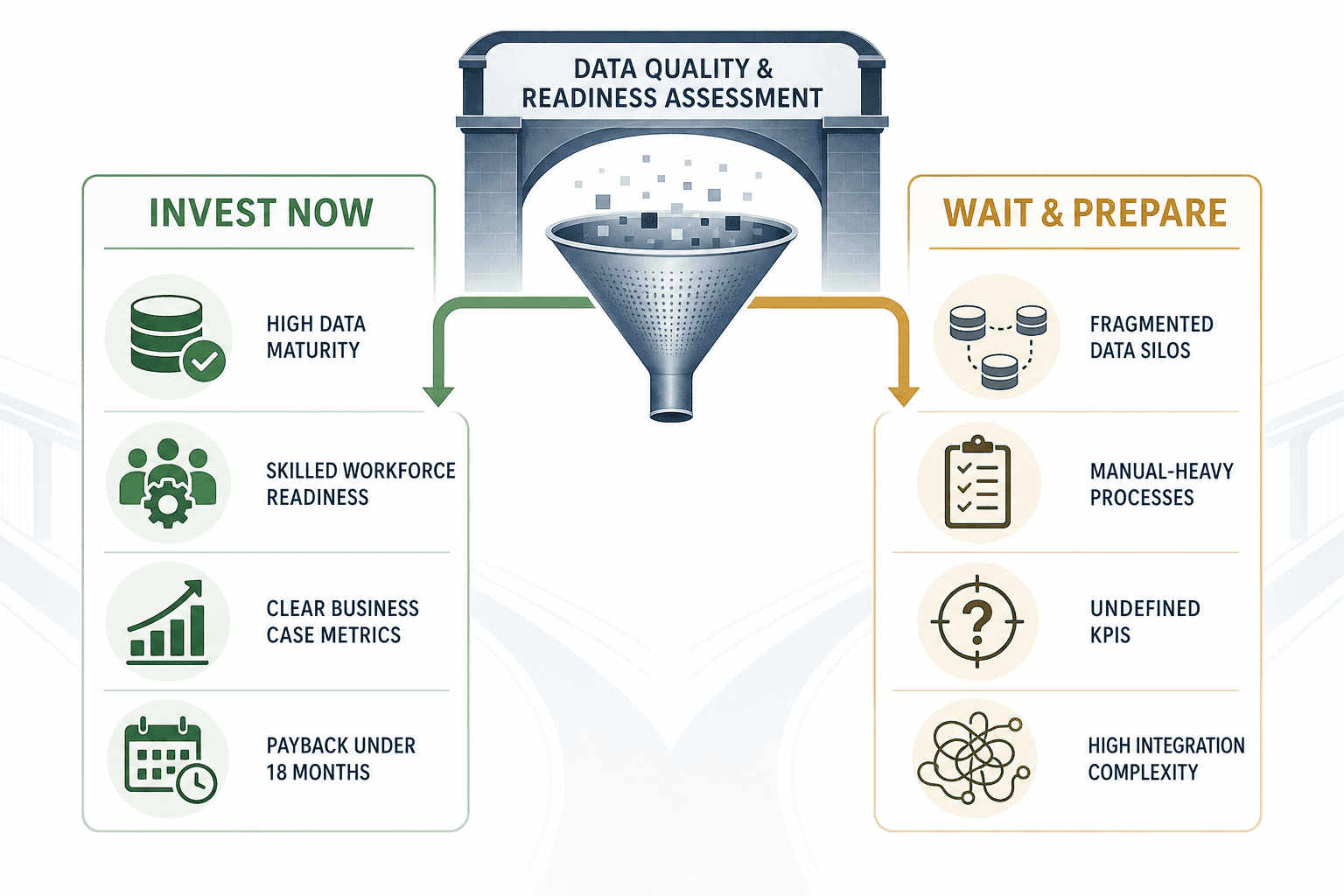
The data is clear: AI in warehouse management delivers strong returns for organizations that are prepared and disappointing results for those that are not. The difference is not primarily about which vendor you choose or which use case you start with—it is about whether your organization has the data maturity, workforce readiness, and financial patience to execute a successful deployment.
The following decision framework provides a structured way for CFOs and supply chain VPs to assess their organization's readiness and determine whether to invest now or focus on building foundational capabilities first.
| Assessment Dimension | Invest Now (Green Flags) | Wait & Prepare (Red Flags) |
|---|---|---|
| Data Maturity | Clean, accessible WMS/ERP data; established data governance; documented data lineage | Fragmented data silos; manual data entry; no data catalog or quality monitoring |
| Workforce Readiness | Skilled data and operations teams; existing analytics culture; leadership AI literacy | Manual-heavy processes; no analytics function; resistance to technology-driven change |
| Integration Complexity | Modern WMS with APIs; cloud-based infrastructure; existing integration patterns | Legacy on-premise systems; no API access; custom integrations required for every connection |
| Financial Tolerance | Payback under 18 months; budget for hidden costs; executive patience for 2–4 year horizon | Expectation of 6-month payback; no budget for integration or change management; quarterly ROI reviews |
| Use Case Fit | Clear operational pain point with measurable baseline; proven use case with peer validation | Vague 'we need AI' mandate; no specific problem identified; first-of-its-kind deployment in your context |
For organizations in the 'Wait & Prepare' category, the path forward is not to abandon AI investment but to build the foundational capabilities that will make future deployments successful. This means investing in data quality and integration infrastructure, building analytics talent, and developing a clear AI strategy—the 23% of organizations that have one, per Gartner, are significantly more likely to achieve positive ROI.
For a structured approach to building those foundational capabilities, see our From Pilot to P&L: A Practical AI Maturity Roadmap for Supply Chain Leaders. That guide provides a staged framework for moving from fragmented pilot projects to production-grade AI deployments that deliver the portfolio ROI discussed in this analysis.
Comments
Join the discussion with an anonymous comment.