
The 80% Problem: Why Most Warehouses Are Still Manual
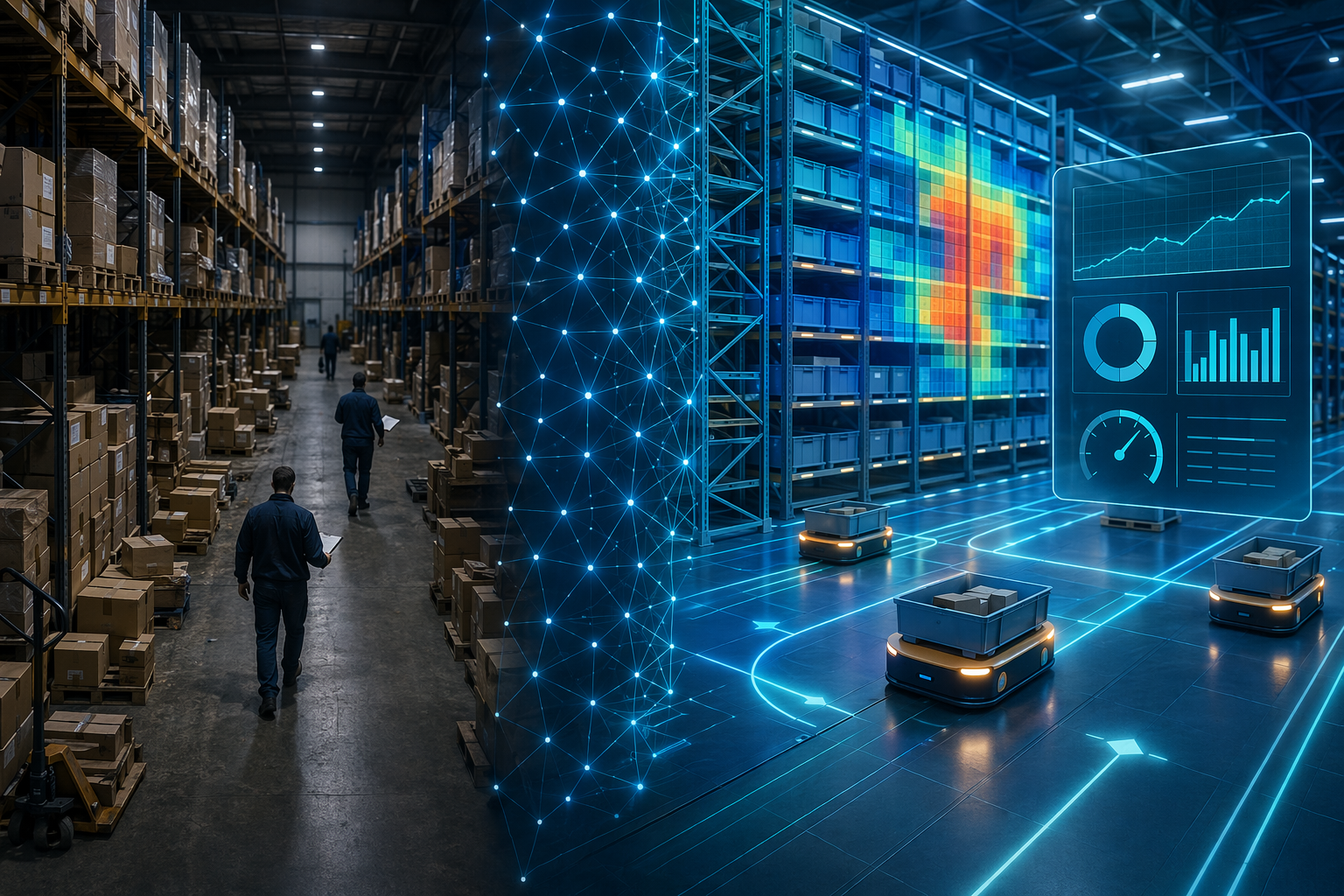
The global warehouse automation market is valued at $29.98 billion in 2026 and is projected to reach $59.52 billion by 2030, according to market research aggregated by TheNetworkInstallers. Yet despite this growth trajectory, approximately 80% of warehouses worldwide still operate without meaningful automation or machine learning. Only 25% of warehouses have implemented any form of automation, and just 10% use advanced automation technologies.
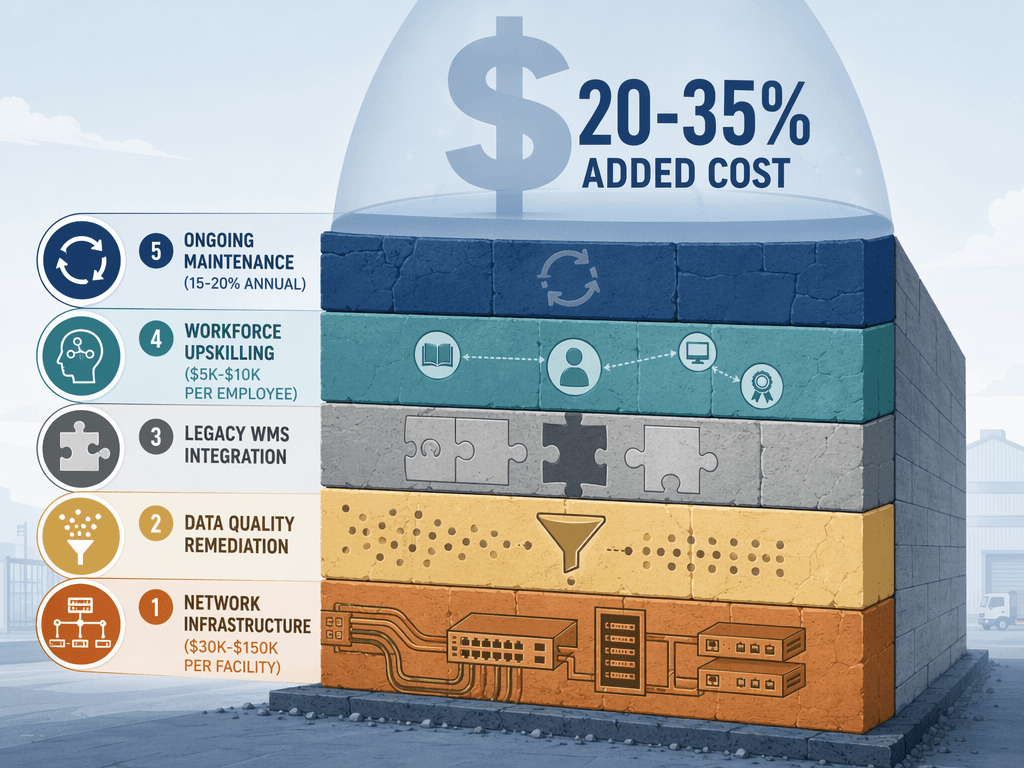
This gap is not a technology problem. The core thesis of this article is that the primary barrier is a set of hidden infrastructure dependencies — network cabling, data quality remediation, legacy system integration, workforce upskilling, and ongoing maintenance — that add 20–35% to initial project budgets and are consistently underestimated or omitted from vendor proposals. For senior operations leaders evaluating automation investments, understanding these costs is the difference between a successful deployment and a stalled initiative.
Labor costs account for 50–70% of a company's warehousing budget, per SellersCommerce. This creates a powerful incentive to automate, but it also means that any automation investment must be weighed against the operational disruption of a failed rollout. The 80% of warehouses that remain manual are not ignoring the ROI potential — they are responding rationally to the hidden costs that vendors do not surface during the sales process.
The Five Hidden Costs That Derail Automation Budgets
Vendor proposals typically highlight equipment costs, software licensing, and projected ROI. They rarely itemize the infrastructure dependencies that determine whether automation actually works in a specific facility. Based on industry data from TheNetworkInstallers, SellersCommerce, and Axelent, five cost categories consistently escape initial budgets.
| Hidden Cost Category | Estimated Range | Frequency of Omission from Vendor Quotes | Source |
|---|---|---|---|
| Network infrastructure upgrades | $30,000 – $150,000 per facility | Rarely included | TheNetworkInstallers |
| Data quality remediation | $15,000 – $80,000 per facility | Often excluded | Industry estimates |
| Legacy WMS integration | $20,000 – $100,000 per facility | Frequently underestimated | Industry estimates |
| Workforce upskilling | $5,000 – $10,000 per employee | Often excluded | TheNetworkInstallers |
| Ongoing maintenance (annual) | 15–20% of equipment cost | Rarely included in budget models | Axelent via TheNetworkInstallers |
1. Network Infrastructure: The Foundation That Vendors Assume Exists
Network infrastructure upgrades cost between $30,000 and $150,000 per facility, according to TheNetworkInstallers. This covers cabling, Wi-Fi access points, switches, and the bandwidth capacity required to support real-time communication between AMRs, sensors, and the warehouse management system. Inadequate network infrastructure is consistently identified as a leading cause of automation project failure, cited by both MH Equipment and McKinsey.
The problem is compounded by the fact that less than 10% of mobile device issues on the warehouse floor are ever reported to IT. A facility may appear to have adequate coverage during a vendor walkthrough, but the network degrades under the load of dozens of connected devices operating simultaneously. The result: AMRs lose connectivity, real-time inventory updates fail, and the automation system underperforms — or stops working entirely.
2. Data Quality Remediation: Garbage In, Robots Out
ML models and automation systems depend on accurate, consistent data. Most warehouses operate with legacy inventory records that contain duplicate SKUs, incorrect bin locations, and incomplete product attributes. Remediating this data — deduplication, standardization, and validation — can cost $15,000 to $80,000 per facility depending on the size of the SKU catalog and the state of existing records.
This is not a one-time expense. Data quality degrades over time as new products are added, suppliers change packaging, and employees make manual entry errors. A data governance process must be in place before automation goes live, or the system will amplify existing errors rather than solving them.
3. Legacy WMS Integration: The Middleware Tax
Most warehouses running on legacy WMS platforms built before 2015 were not designed to interface with real-time automation systems. Integration requires middleware, API development, and often custom data mapping. Costs range from $20,000 to $100,000 per facility, and the timeline for integration work frequently extends beyond the initial deployment window, creating delays that erode projected ROI.
4. Workforce Upskilling: The Human Factor
Training existing warehouse staff to operate, troubleshoot, and maintain automated systems costs $5,000 to $10,000 per employee, per TheNetworkInstallers. This is not optional — it is a prerequisite for safe and efficient operation. Organizations that engage employees in the automation planning process report a 40% higher success rate in adoption, according to Harvard Business Review research cited by OPEX.
Workforce resistance is a genuine implementation risk. Employees who perceive automation as a threat to their jobs are less likely to cooperate during training and more likely to bypass automated workflows. The 40% higher success rate among organizations that proactively engage their workforce underscores that the human dimension of automation is not a soft cost — it is a hard operational requirement.
5. Ongoing Maintenance: The Recurring Expense That Breaks the Budget
Annual maintenance costs run 15–20% of the initial equipment cost, according to Axelent via TheNetworkInstallers. For a $500,000 AMR deployment, that means $75,000 to $100,000 in recurring annual expenses. This figure is rarely included in the budget models that operations leaders present to finance teams for approval. When the maintenance bill arrives in year two, it can trigger budget reallocations that undermine other operational priorities.
The 50K–200K Sq Ft ROI Sweet Spot
Medium-sized facilities — those between 50,000 and 200,000 square feet — commanded 37% of automation market investment in 2024, according to Mordor Intelligence data cited by TheNetworkInstallers. This is the ROI sweet spot: large enough to justify the fixed costs of infrastructure upgrades, but small enough that the deployment can be managed without the complexity of multi-building enterprise rollouts.
Autonomous mobile robots (AMRs) in this facility size deliver payback in under 24 months and ROI above 250% in live deployments where infrastructure fully supports them, per data from TheNetworkInstallers and SellersCommerce. However, these returns are contingent on infrastructure readiness. A facility that skips the network upgrade or rushes data remediation will not achieve these benchmarks.
- Facilities with robust Wi-Fi 6 or private 5G coverage see AMR uptime above 98%.
- Facilities that remediate inventory data before deployment achieve 99.15% average order fulfillment accuracy, per industry benchmarks.
- Facilities that invest in workforce training report 89% of full-time workers being more satisfied with their jobs due to automation, per SellersCommerce.
- Facilities that skip infrastructure preparation see project timelines extend by 40–60% and ROI drop below 100%.
An Infrastructure Readiness Framework for Decision-Makers
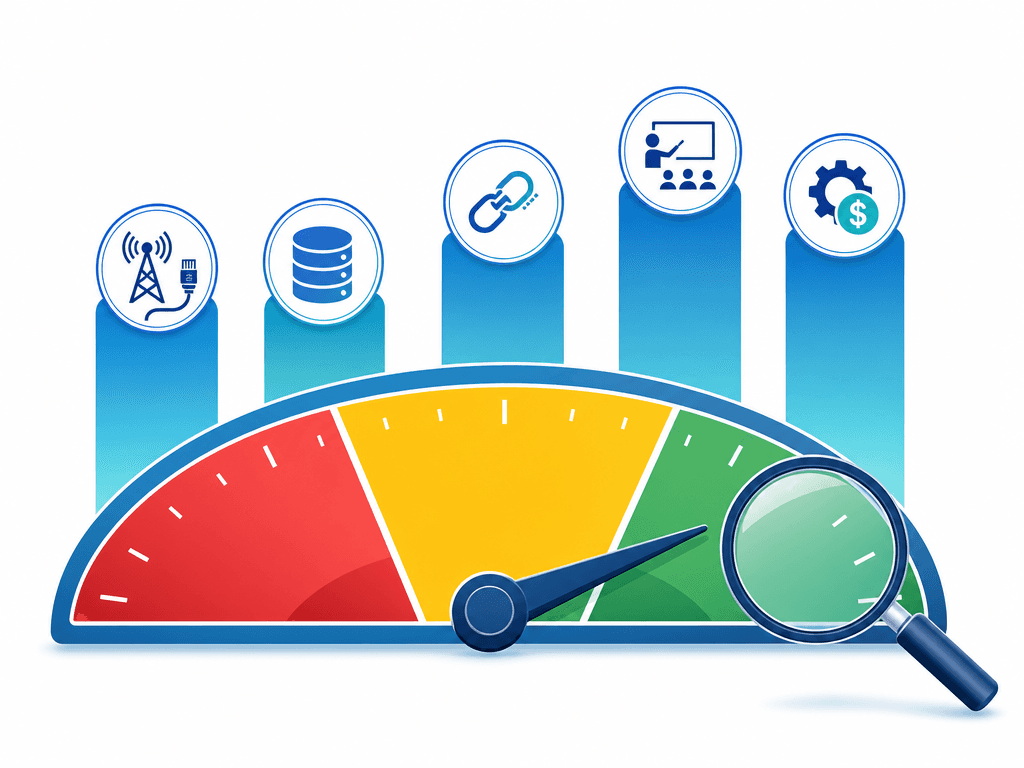
Before engaging vendors, operations leaders should assess their facility's readiness across five dimensions. The following framework provides a structured approach to identifying gaps that will become cost overruns if left unaddressed.
| Readiness Dimension | Assessment Question | Green (Ready) | Yellow (Needs Work) | Red (Not Ready) |
|---|---|---|---|---|
| Network | Can the facility support 50+ concurrent connected devices with <50ms latency? | Wi-Fi 6 or private 5G deployed and tested under load | Wi-Fi 5 with partial coverage; some dead zones | No dedicated warehouse network; relies on office Wi-Fi |
| Data | Is inventory data >95% accurate and free of duplicate SKUs? | Cycle counting program in place; data accuracy verified | Data exists but has known gaps; remediation plan needed | No systematic data quality process; errors are common |
| Systems | Does the WMS support real-time API integration? | WMS has REST API or modern integration layer | WMS supports EDI or batch file exchange only | Legacy WMS with no integration capability |
| Workforce | Have employees been briefed on automation plans and training paths? | Engagement program active; training budget allocated | Initial communication done; no formal training plan | No workforce communication; resistance expected |
| Maintenance | Is there a budget for 15–20% annual equipment maintenance? | Maintenance budget approved for years 1–3 | Maintenance budget exists but not yet approved | No maintenance budget; assumes vendor warranty covers all |
A facility with three or more 'Red' ratings should allocate 6–12 months for infrastructure preparation before issuing an RFP. A facility with all 'Green' ratings can proceed directly to vendor evaluation with confidence that the quoted ROI is achievable.
Procurement Advice: What to Ask Vendors and What to Inspect Before Signing
60% of warehouses reported plans to increase their automation budgets by 20% in 2026, according to SellersCommerce. But budget increases do not guarantee successful deployment. The following procurement checklist is designed to surface hidden costs before contracts are signed.
Questions to Ask Every Vendor
- What are the minimum network specifications (bandwidth, latency, coverage density) required for your system to operate at stated performance levels? Request a written specification sheet.
- Have you performed a network site survey at this facility? If not, when will it be done — and who pays for remediation if the network is inadequate?
- What data quality level does your system require? Can you provide a data audit template so we can assess our readiness before deployment?
- What WMS integrations have you completed? Request reference calls with customers using the same WMS version you have.
- What training is included in the quoted price? How many hours per employee, and what is the cost for additional training?
- What is the annual maintenance cost as a percentage of equipment cost? Is this capped for the first three years?
What to Inspect During a Site Walkthrough
- Run a speed test and latency test at multiple points across the warehouse floor during peak operating hours. Network performance at 9 AM on a Sunday is not representative.
- Pull a random sample of 100 bin locations and physically verify the inventory against the WMS record. If accuracy is below 90%, budget for data remediation.
- Ask the IT team how many mobile device issues were reported in the last 12 months. Then ask the floor supervisor how many they actually experienced. The gap between these numbers reveals the real network health.
- Observe how employees currently handle exceptions — mis-picks, damaged goods, system downtime. Automation will not eliminate exceptions; it will change how they are handled.
How to Structure Contracts to Avoid Surprise Expenses
- Include a clause that requires the vendor to perform a paid network site survey before the contract is finalized, with remediation costs shared or capped.
- Negotiate a fixed-price integration package for WMS connectivity, with a defined scope of work and a change-order process for any modifications.
- Request a three-year maintenance cost cap — 15% of equipment cost in year one, 17% in year two, 20% in year three — to prevent budget escalation.
- Build a 25% contingency into the total project budget to cover infrastructure dependencies that emerge during deployment.
The Bottom Line: Crossing the Gap Requires Honest Budgeting
The 80% of warehouses that remain manual are not lagging behind on technology adoption. They are responding rationally to a procurement environment where vendors systematically understate the total cost of deployment. The hidden infrastructure tax — network upgrades, data remediation, legacy integration, workforce training, and ongoing maintenance — adds 20–35% to initial budgets and, when unaccounted for, turns promising ROI projections into stalled projects.
The data shows that the gap is crossable. AMRs deliver payback in under 24 months and ROI above 250% in facilities where infrastructure fully supports them. Organizations that engage employees report 40% higher adoption success rates. The 50,000–200,000 square foot facility is the proven ROI sweet spot. But none of these outcomes materialize without honest budgeting that accounts for the full cost of deployment.
Comments
Join the discussion with an anonymous comment.