
The uncomfortable part of evaluating AI vendor capex risks in supply chain adoption usually does not show up during the demo. It shows up later, when the planning team has already tuned its workflow around a forecast copilot, the transportation desk is depending on automated exception handling, or the warehouse team has stopped maintaining the spreadsheet that used to sit behind a replenishment decision.
A normal SaaS review asks familiar questions: Is the system available? Is the data encrypted? What happens at renewal? How long will implementation take? Those questions still matter. They are just not enough for an AI-enabled planning, WMS, TMS, logistics visibility, or ERP feature. AI procurement adds a different set of dependencies: model behavior can change after retraining, operational data may be used beyond the customer’s original purpose, sub-processors can sit several layers away from the contracting vendor, and usage-based pricing can rise after the tool has already shaped daily work.
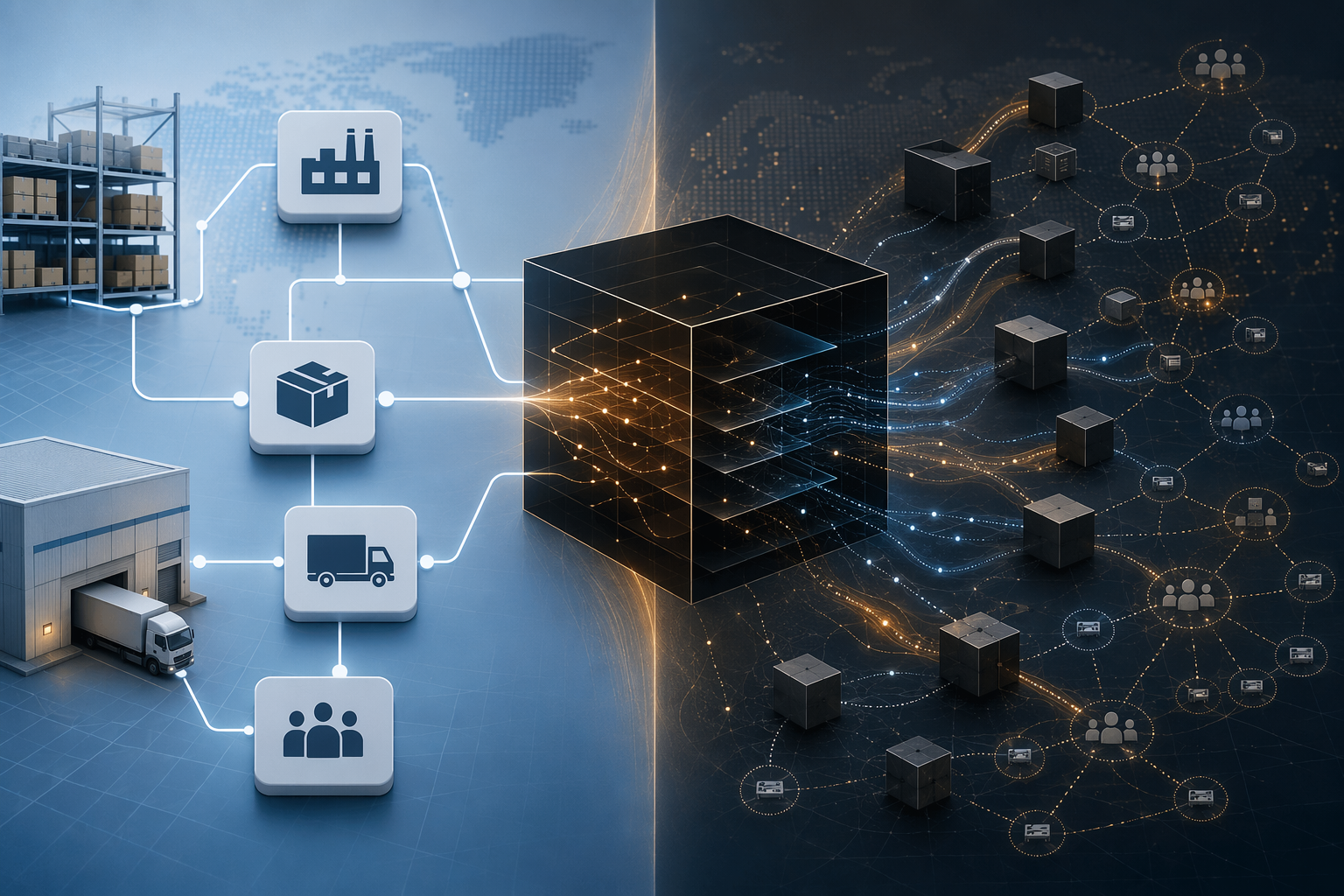
That is why AI vendor risk should not be treated as a paperwork variant of cloud software risk. The operational dependency is more dynamic. A warehouse SaaS module may create lock-in through configuration, integrations, training, and data migration. An AI feature can create all of those, then add a model-dependent decision layer whose behavior, cost, data exposure, and regulatory profile may move while the business is still using it.
The Contract Often Gives Away More Than The Demo Reveals
The most useful warning sign is not a dramatic failure story. It is ordinary contract language. Eliassen cites Stanford Law 2025 research finding that 92% of AI vendors claim broad data usage rights, only 17% commit to full regulatory compliance, and 33% provide indemnification for third-party IP claims.[1] Those figures describe the problem buyers keep missing: the control gap is often written into the deal before the first production workflow goes live.
Broad data usage rights are not a technical footnote in supply chain systems. Forecast history, supplier records, exception notes, warehouse scans, carrier performance, demand signals, and inventory positions can reveal how a company operates. If a vendor can use that data to improve services, train models, benchmark customers, or support adjacent products, the buyer needs to know exactly which data is included, whether inference data is retained, whether customer prompts and outputs are reused, and whether opt-outs survive product changes.
The indemnification number matters for the same reason. Supply chain teams are not usually licensing AI to generate poems; they are using it to recommend purchase orders, classify documents, route shipments, prioritize exceptions, or summarize supplier communications. If a model output creates an IP dispute, violates a customer commitment, or depends on third-party material in a way the buyer cannot inspect, a contract that leaves liability mostly with the customer is not a standard commercial nuisance. It is an operating risk.
Why AI Lock-In Feels Different In Supply Chain
Lock-in is not always vendor bad faith. Many companies create part of it themselves. A pilot team wants speed, so it accepts the vendor’s native connectors. The business wants a usable interface, so it adopts an embedded copilot inside the system people already know. IT wants fewer moving parts, so it favors a tightly bundled platform. Those choices can be rational during a pilot and still become expensive once the tool is embedded in planning calendars, logistics exception queues, or warehouse labor routines.
Ability.ai describes AI vendor lock-in as an operational crisis where an API change, pricing shift, or terms-of-service revision can disrupt automations built around a specific provider.[2] Eliassen makes a similar point in enterprise terms: AI lock-in is not only about data export, but also about proprietary model behavior, integrations, prompts, workflows, and governance assumptions that become hard to recreate elsewhere.[1]
In supply chain, that dependency has a sharper edge because the affected processes are time-bound. A planning cycle cannot wait while a team rebuilds demand-sensing logic. A transportation operation cannot pause while exception rules are remapped. A warehouse cannot easily retrain supervisors because a vendor changed how an AI assistant ranks replenishment tasks. The cost is not only the replacement software. It is the operational delay while people rediscover how decisions were being made.
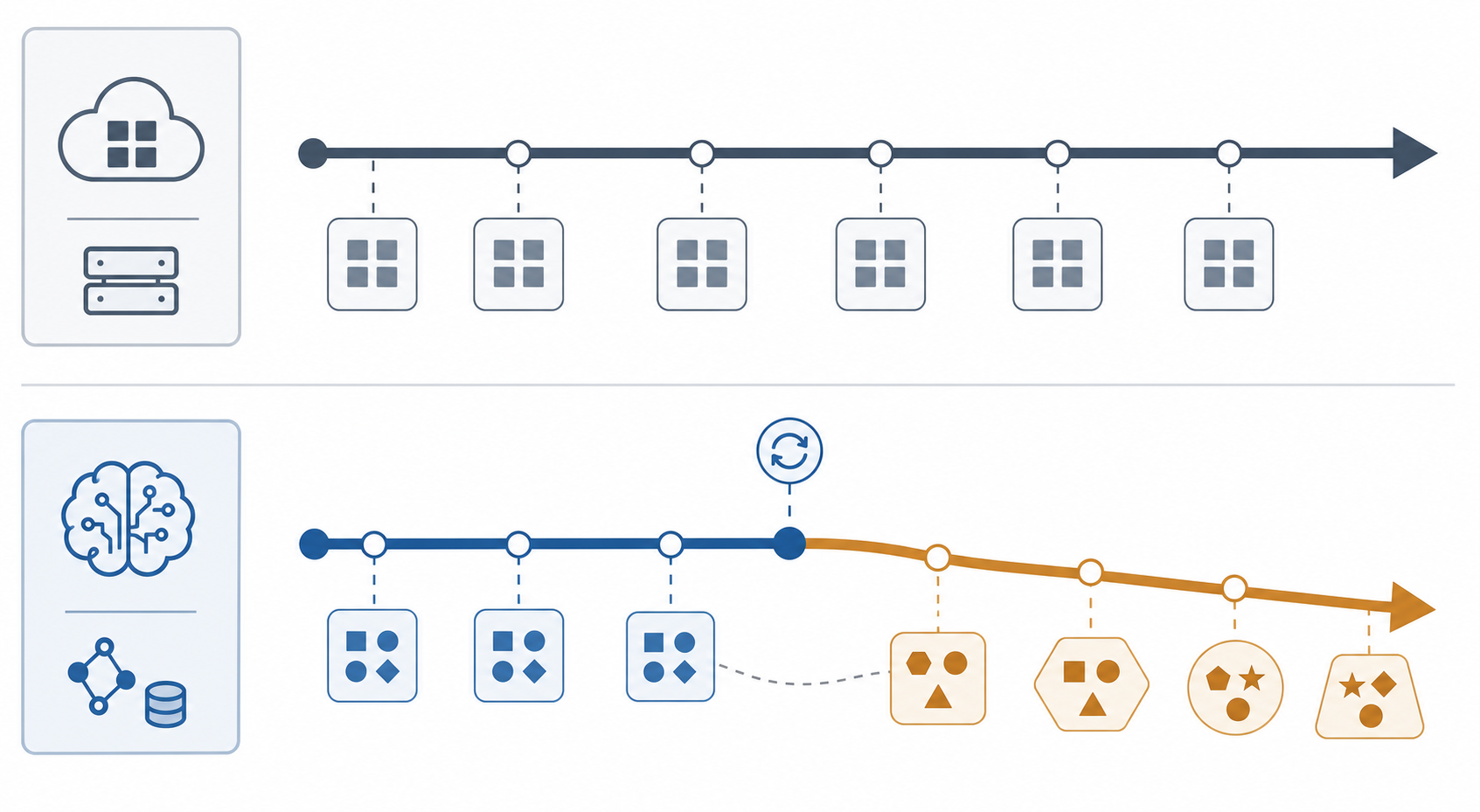
Model drift is the piece the legacy SaaS checklist usually misses. A reporting dashboard may receive new features, but its basic calculation logic should remain traceable. An AI model can change because it is retrained, because the vendor swaps models behind an API, because prompts or retrieval layers change, or because the data distribution shifts. The buyer may still see the same product screen while the decision behavior underneath has moved.
The AI Supply Chain Is Not One Vendor
The phrase “AI vendor” hides a stack. TrustArc maps AI supply chain risk across foundation model and LLM providers, model hosts and cloud AI platforms, synthetic data vendors, data enrichment partners, and embedded AI copilots inside existing enterprise tools.[3] For supply chain buyers, that map is more useful than a generic vendor-risk label because each category changes the due diligence question.
| AI vendor layer | What the buyer needs to trace |
|---|---|
| Foundation model or LLM provider | Training and inference data rights, model replacement terms, output liability, retention practices |
| Model host or cloud AI platform | Regional processing, sub-processors, access logs, uptime commitments, usage billing mechanics |
| Synthetic data vendor | Data provenance, re-identification risk, validation method, permitted downstream use |
| Data enrichment partner | Source permissions, refresh cadence, quality controls, resale or reuse rights |
| Embedded AI copilot in WMS, TMS, ERP, or planning software | Whether AI terms differ from the base SaaS agreement, opt-out rights, model-change notice, exportability of prompts, logs, and outputs |
The embedded copilot deserves special attention because it often enters through the least dramatic procurement path. A customer already has the WMS, TMS, ERP, or planning suite. The vendor adds an AI assistant, the commercial change looks incremental, and the project team treats it as an extension of the existing platform. But the AI feature may rely on a cloud model provider, retrieval layer, analytics service, monitoring vendor, and data enrichment partner that were never part of the original operational risk review.
Sub-processor disclosure is therefore not a privacy formality. It is the only practical way to understand who can touch operational data and who the business depends on if something changes. A vendor that cannot explain its model supply chain, data flow, retention logic, and sub-processor change process is asking the buyer to accept a dependency the buyer cannot govern.
Capex Risk Shows Up As Usage Economics, Not Just Purchase Price
AI vendor capex risks in supply chain adoption are easy to underestimate because the first budget conversation often looks like a software add-on, not a long-term infrastructure choice. The tool may start as a pilot subscription, a packaged copilot, or a usage tier attached to an existing platform. By the time finance sees the true run rate, planners and operators may already depend on the outputs.
OpenSkyGroup cites Zylo data showing AI costs rose 108% in 2025 and 78% of IT leaders experienced unexpected AI-related charges.[4] That data is broader than supply chain AI, so it should not be overread as a precise forecast for planning or logistics tools. It does, however, support a practical procurement point: AI cost volatility is often contractual and architectural, not merely a budgeting mistake.
The cost driver may be token consumption, API calls, document volume, number of users, number of agents, data refresh frequency, premium model routing, observability logs, or retraining support. Some of those costs rise with adoption, which is exactly when leverage declines. The more useful the tool becomes, the harder it is to turn off.
That is why AI ROI work needs to be connected to contract review rather than performed afterward. A business case that only compares subscription cost with labor savings misses the migration cost, model monitoring cost, exception-review burden, retraining impact, and exit cost. The same applies to broader AI ROI measurement frameworks: the model should include what happens if a vendor changes price, model availability, data terms, or service boundaries after adoption.
What A Governable AI Vendor Review Should Demand
A governable AI vendor review is not longer for the sake of being longer. It asks different questions because the system being bought is different. The buyer is not only licensing software; the buyer is allowing a changing decision layer to interact with operational data and, in some cases, influence regulated or customer-sensitive workflows.
Contract safeguards
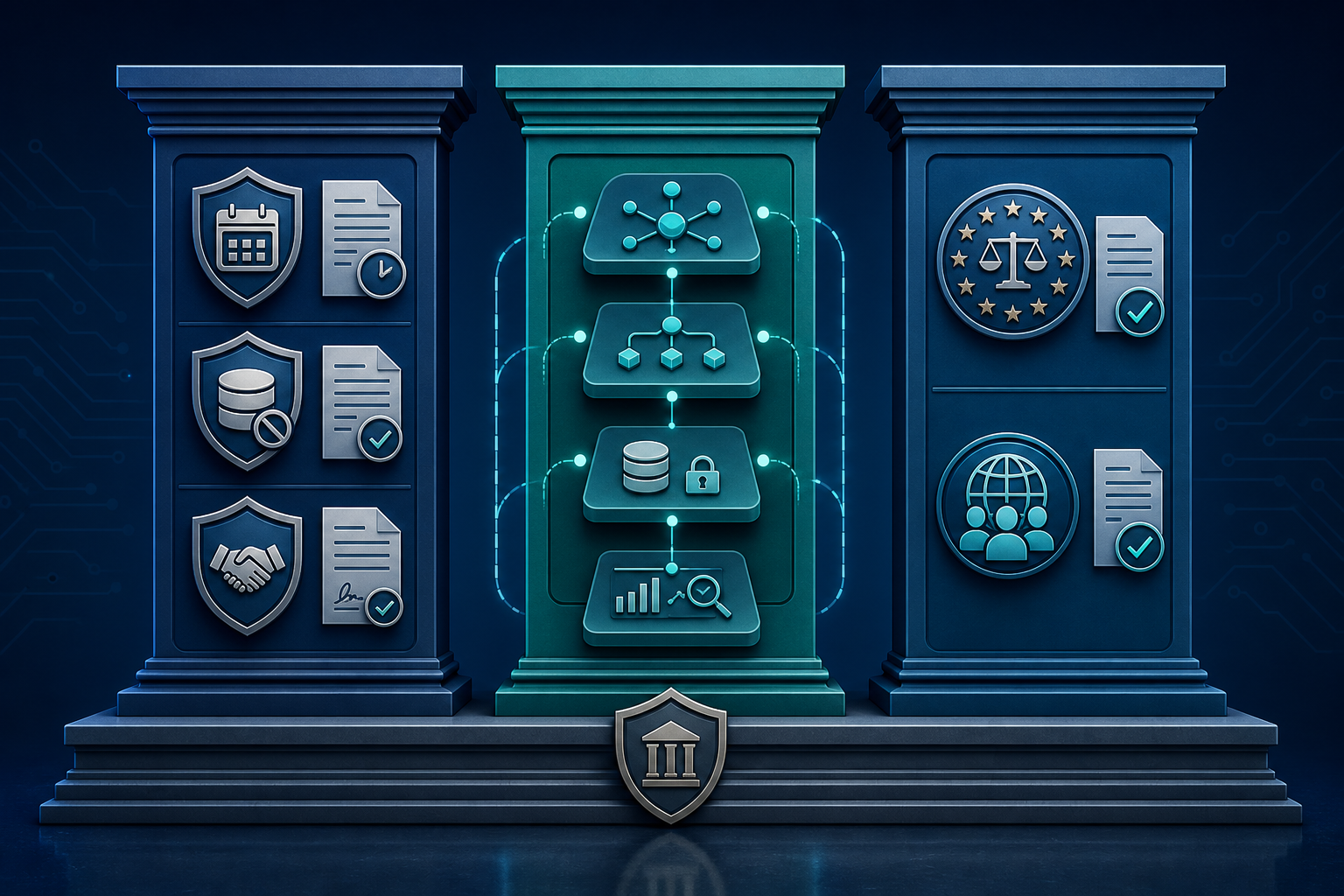
TechTarget’s best-practice guidance includes contract change notices of 60 to 90 days, zero-retention terms for inference data, and portability in open formats such as Parquet, MCP, and OpenTelemetry.[5] Those terms are not procurement decoration. They are the difference between discovering a change while there is still time to respond and discovering it after a planning or logistics workflow has already absorbed it.
- Data rights: state whether prompts, inputs, outputs, logs, feedback, and operational records can be retained, trained on, benchmarked, or shared.
- Model-change notice: require advance notice for material model swaps, retraining changes, feature removals, pricing changes, and terms updates.
- Sub-processor disclosure: require a current list, regional processing details, notification of changes, and the right to object to high-risk substitutions.
- Indemnification: identify who absorbs third-party IP claims, privacy claims, and regulatory claims tied to vendor-controlled model behavior or data use.
- Exit rights: require open-format exports for data, prompts, configuration, logs, evaluation results, and relevant operational history.
The hard part is not asking for these clauses. It is refusing to let them be softened into “commercially reasonable” language that cannot be operated during a disruption. If a vendor says zero retention is unavailable, the next question is not whether the clause is standard. It is which data is retained, for how long, by whom, in which region, for what purpose, and whether the AI feature can be used without that retention.
Architectural abstraction
Constellation Research points to a neutral enterprise control layer as a way to avoid AI lock-in, separating integration, model routing, data access, and observability rather than binding every workflow directly to one vendor’s AI stack.[6] That architecture is not always the fastest pilot path, but it gives the business more ways to respond if a model, price, policy, or regulatory posture changes.
In practical terms, the control layer should decide which systems the model can access, which model is used for which task, what data leaves the enterprise environment, how outputs are logged, and when a human must review a recommendation. It also gives procurement something concrete to negotiate around. The buyer can ask whether the vendor supports external logging, alternate model routing, open telemetry, customer-managed keys, and clean export of prompts and outputs.
This is not an argument against integrated platforms. A tightly integrated AI feature can be the right choice when the process is narrow, the data sensitivity is low, the vendor’s controls are strong, and switching costs are understood. The mistake is treating integration as proof of governance. Integration makes adoption easier; it does not automatically make the dependency reversible.
Regulatory verification
Regulatory review needs to be tied to the actual use case, not the vendor’s general AI policy page. The same model family can carry different obligations depending on whether it summarizes warehouse notes, ranks supplier risk, influences labor decisions, screens trade documents, or supports customer-facing commitments. For teams working in or selling into Europe, EU AI Act compliance obligations for supply chain AI procurement and planning tools should be evaluated at the workflow level rather than as a vendor checkbox.
The enforcement pattern for the EU AI Act is still developing as of Q3 2026, so buyers should avoid pretending every procurement question has a settled answer. The safer move is to require evidence: classification support, technical documentation, audit logs, human oversight features, data governance documentation, incident notification procedures, and a clear allocation of responsibility between provider, deployer, and customer.
That evidence should come before deployment, not after an audit request. A vendor that will not commit to full regulatory compliance, or that pushes all downstream obligations onto the customer without giving the customer the documentation needed to comply, is not offering a governable system.
Black-Box Risk Is A Supply Chain Audit Problem
Z2Data separates AI’s supply chain benefits from its risk surface, including the difficulty of auditing black-box systems and the need to distinguish code risk from data risk.[7] That distinction matters in procurement because a clean software security review does not prove that the model’s training data, enrichment data, inference data, or generated outputs are governed.
Code risk asks whether the application is secure, tested, patched, and controlled. Data risk asks where the information came from, whether it can be used for the stated purpose, whether it can be retained, whether it can be combined with other data, and whether outputs can be explained or challenged. AI systems blur the two, but procurement should not let the vendor answer only the easier half.
A black-box model may still be acceptable for a low-impact workflow if the outputs are advisory, monitored, and reversible. It is a different matter when the model prioritizes supplier exceptions, recommends inventory moves, flags compliance anomalies, or triggers logistics actions. In those cases, the buyer needs evaluation records, known limitation disclosures, escalation paths, and a way to compare model behavior before and after material changes.
The Review File Should Make A Future Exit Plausible
The test of an AI vendor review is not whether everyone liked the pilot. It is whether someone two years later can reconstruct the dependency. That person should be able to answer who touched the data, who could reuse it, which sub-processors mattered, what changed in the model, why costs increased, what compliance evidence exists, and how the company would leave if the vendor became unsafe or uneconomic.
A practical review file should include the contract terms, data-flow diagram, sub-processor list, AI feature inventory, model-change notice terms, retention settings, evaluation results, human oversight rules, billing assumptions, exit plan, and named business owner. For more complex programs, this should connect to the company’s broader AI readiness and execution gap analysis so the vendor decision is not isolated from data quality, process ownership, cloud architecture, and change management.
The file does not need to be elegant. It needs to be usable under pressure. If a vendor announces a model migration, a price change, a new sub-processor, or a revised data-use term, the company should not have to rediscover its own architecture while the planning team waits for direction.
Supply chain leaders do not need to avoid AI vendors. They do need to stop buying dynamic, model-dependent systems as if they were static SaaS subscriptions. The better question is not whether the AI feature is impressive. It is whether the buyer can still govern it after the demo is forgotten, the workflow is embedded, and the vendor changes something the operation now depends on.
References
- What is AI Vendor Lock-In—and Why Does it Matter? — Eliassen
- AI vendor lock-in risks: the operational crisis CEOs must solve — Ability.ai
- AI Supply Chain Risk: The New Frontier of Vendor Due Diligence — TrustArc
- Supply Chain AI Statistics: 18+ Statistics You Should Know for 2026 — OpenSkyGroup
- 7 best practices to avoid AI vendor lock-in — TechTarget
- How to avoid vendor lock-in in the AI age — Constellation Research
- AI's Role in the Future of Your Supply Chain: Benefits and Risks — Z2Data
Comments
Join the discussion with an anonymous comment.