
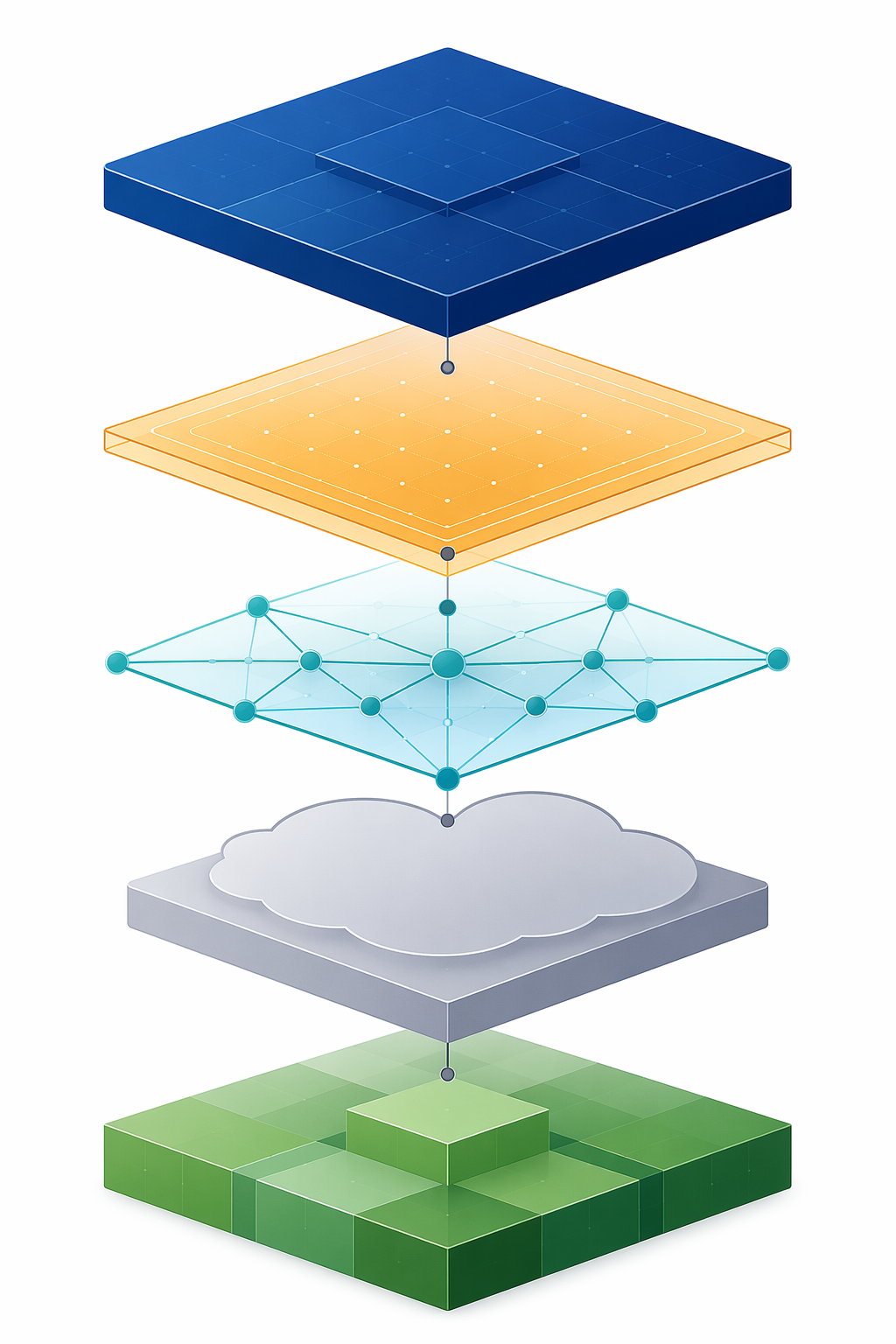
The useful question in the supply chain AI companies market is not “who has AI?” By 2026, nearly everyone can make that claim somewhere in the deck. The better buyer question is: which kind of supply chain work is this company actually built to change?
That distinction matters because the buying environment is badly out of balance. A widely cited 2026 statistics compilation reports that 94% of supply chain companies plan to deploy AI or generative AI for decision support within two years, while Gartner separately found that only 23% of supply chain organizations had a formal AI strategy in place in 2025.[1][2] At the same time, RELEX’s 2026 supply chain AI research found that only 10% of leaders trust AI to make critical decisions without human review, while 54% prefer a human-in-the-loop model.[3] So buyers are under pressure to move, but most still need explainable workflows, review points, and some tolerance for the state of their data.
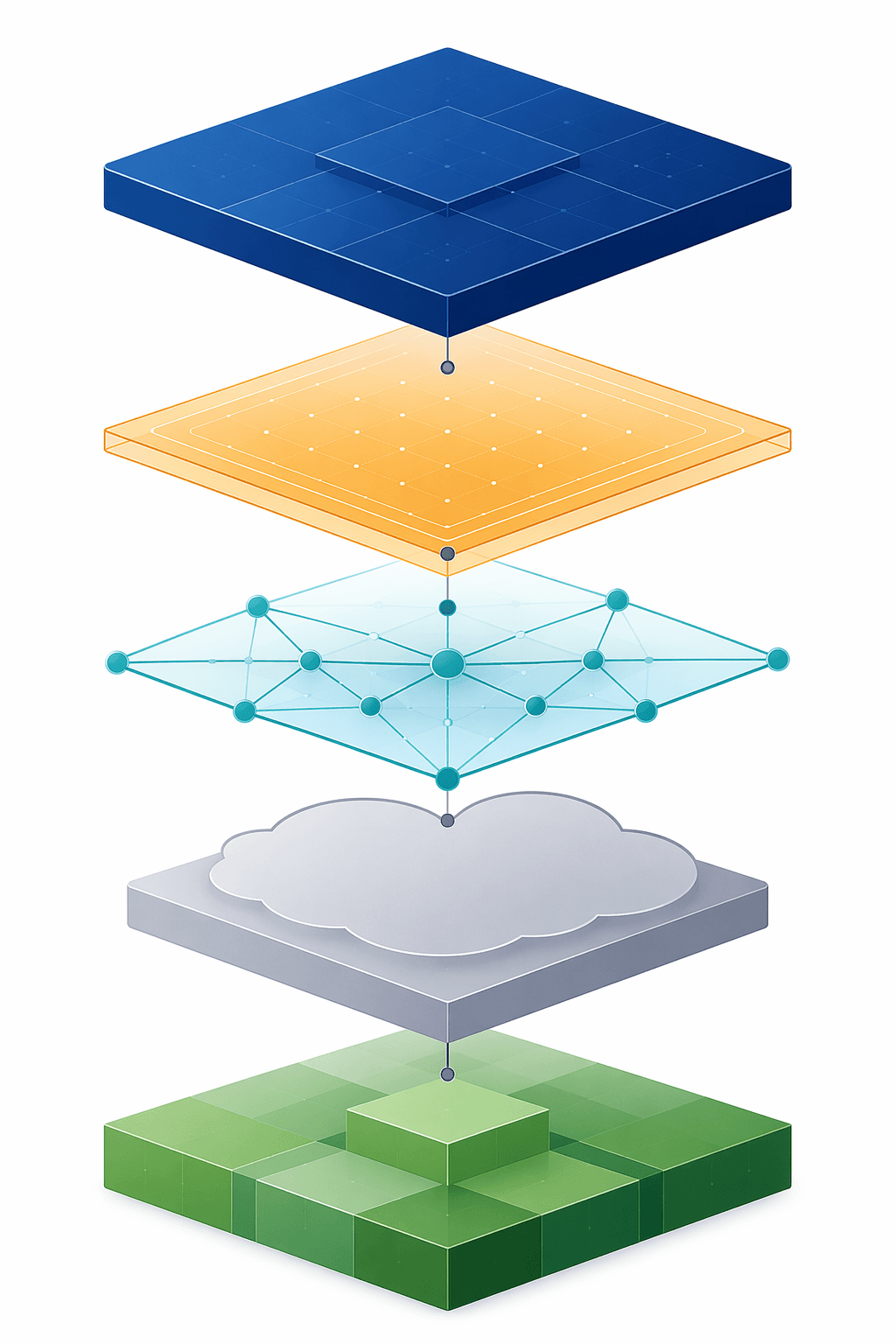
A generic ranking will not solve that. The market has separated into functional tiers, and the expensive mistakes usually happen when a buyer evaluates one tier as if it were another.
| Tier | Representative companies | Primary job | Best-fit buyer question |
|---|---|---|---|
| AI-native planning platforms | o9 Solutions, Kinaxis, RELEX, Blue Yonder | Plan demand, supply, inventory, assortment, replenishment, S&OP, or scenario tradeoffs | Can this become the planning system where teams make and revise decisions? |
| Decision intelligence overlays | Aera Technology | Sense events, recommend actions, automate approved decisions across existing systems | Can this sit above our systems and turn signals into governed decisions? |
| Visibility and risk networks | E2open, FourKites, Infor Nexus | Track goods, suppliers, logistics events, disruption exposure, and partner-network signals | Can this improve execution visibility and exception response across our network? |
| Cloud hyperscalers | AWS Supply Chain, Google Cloud, Microsoft Dynamics 365 | Extend cloud data, analytics, AI, and application ecosystems into supply chain workflows | Should we build or extend inside the cloud stack we already use? |
| Legacy ERP-plus-AI suites | SAP IBP/Joule, Oracle SCM Cloud | Add AI-assisted planning, analytics, and automation to established enterprise process suites | Should we stay inside the ERP process model and accept its constraints? |
| Newer and adjacent entrants | Altair/Logility, John Galt, Coupa | Serve planning, procurement, or mid-market use cases that cut across the main tiers | Is a more focused or commercially practical option enough for our use case? |
This taxonomy follows the functional grouping used in Viewpoint Analysis’s 2026 buyer guide, with one important caveat: vendors inside the same tier are not architectural twins.[4] A planning platform, a decision overlay, and a visibility network may all show a planner a recommended action. They do not get there the same way, and they do not create the same implementation burden.
The market is large, but the scope numbers are not all measuring the same thing
Market-size claims should be treated as directional, not as a buyer’s map. Mordor Intelligence estimates the AI in supply chain market at $7.67 billion in 2025 and $10.29 billion in 2026, using a narrower software-market scope.[5] Broader market estimates cited elsewhere can be much larger because they fold in adjacent logistics, automation, analytics, and infrastructure. Different scope, different number. The shortlist still has to be built from workflow fit.
Tier 1: AI-native planning platforms
AI-native planning platforms are the vendors most buyers think of first when they search for supply chain AI companies. They are also the easiest group to flatten into a meaningless label. o9 Solutions, Kinaxis, RELEX, and Blue Yonder all sell into planning-intensive environments, but they are not interchangeable planning engines.
This tier is built for decisions such as demand forecasting, supply planning, inventory targets, replenishment, assortment, allocation, S&OP, and scenario analysis. The practical question is whether the software becomes a decision-grade planning environment, not whether it can produce an AI forecast on a slide.
o9 is usually evaluated by organizations that want a broad digital operating model across demand, supply, revenue, and financial planning. Its graph-based model is meant to connect entities and relationships across the business, which can be powerful when a company wants cross-functional planning rather than another siloed forecasting tool.[4] The same breadth also means the buyer has to be honest about master data, process alignment, and governance. A graph does not excuse unresolved ownership of customer, item, location, or capacity data.
Kinaxis is more naturally associated with concurrent planning. Its in-memory model is designed so planners can evaluate demand, supply, inventory, and capacity implications without waiting for a batch-planning cycle to finish.[4] That matters in environments where the planning pain is not simply forecast accuracy, but the time lost while teams pass versions back and forth. The buyer should look closely at whether the organization is ready to make decisions in a more concurrent cadence. If the business still insists on sequential signoffs for every material change, a fast planning engine will expose the process drag rather than remove it.
RELEX is often strongest where retail, grocery, consumer goods, and replenishment-heavy planning dominate the business problem. Its fit is usually clearer when demand signals, store-level or location-level replenishment, inventory availability, promotion effects, and operational execution are tightly linked. That is a different buying problem from enterprise-wide integrated business planning. A retailer trying to reduce out-of-stocks and automate replenishment decisions should not evaluate the same way as an industrial manufacturer trying to align long-range capacity, supplier constraints, and finance.
Blue Yonder sits in a more established enterprise supply chain application lineage, with planning, execution, fulfillment, and retail capabilities. For some buyers, that breadth is useful because planning decisions do not stop at the planning module. For others, it can create a harder evaluation problem: which parts of the portfolio are mature in the exact workflow being purchased, and which parts are part of a broader roadmap conversation? The buyer should force the demo into their planning cycle, not the vendor’s portfolio tour.
The strongest planning-platform evaluations usually include three tests. First, can the system represent the real planning entities and constraints that drive decisions? Second, can planners understand why the recommendation changed? Third, can the workflow handle review, override, and exception management without turning every AI output into a manual reconciliation exercise?
The ROI case is real enough to justify serious evaluation, but it should be kept specific. OpenSky Group’s 2026 compilation cites McKinsey benchmarks showing that AI-enabled distribution can deliver 5–20% logistics cost reduction and 20–30% inventory reduction.[1] Those are not guarantees for a planning suite purchase. They are a reminder that the upside depends on whether the tool changes inventory, service, transportation, or labor decisions in the operating workflow.
Where planning-platform evaluations go wrong
The common error is buying for breadth before proving the decision loop. A planning platform may cover demand planning, supply planning, inventory optimization, and S&OP, but the buyer still needs to know which decision will improve first. Is the first release supposed to reduce stockouts, improve forecast bias, rebalance inventory, compress planning cycle time, or make scenario tradeoffs visible to executives? Those are related goals, not the same implementation.
This is also where license-price comparisons can mislead. Viewpoint Analysis estimates that license fees often represent only 20–30% of true total cost of ownership, and it flags 6–18+ month implementation timelines as a sign that architecture, integration, and process debt matter as much as subscription price.[4] A cheaper license can become expensive if the business needs custom data pipelines, heavy process redesign, or a long period of planner distrust before the first useful decision is made.
Tier 2: Decision intelligence overlays
Decision intelligence overlays belong in a different mental model from planning suites. Aera Technology is the clearest representative in this category. It is not primarily bought as the system where planners build every demand, supply, and inventory plan from scratch. It is bought to sit above existing systems, sense conditions, recommend actions, and in some cases automate decisions through governed workflows.
That distinction sounds academic until an implementation starts. A planning platform usually asks, “Can we model the planning problem here?” A decision intelligence overlay asks, “Can we detect a decision that needs to be made, gather enough context, recommend the next action, and push the approved action back into the systems of record?” Those are different architecture questions.
This tier fits companies that already have major systems in place but struggle with decision latency across them. A procurement constraint appears in one system. A demand shift appears in another. A logistics exception comes from somewhere else. Someone exports, reconciles, escalates, and eventually asks a planner or manager to make a call. A decision overlay tries to shorten that loop.
The buyer’s burden is to define which decisions are eligible for automation and which require review. The RELEX survey data is useful here because it shows that the market is not broadly comfortable with unsupervised AI for critical decisions: only 10% trust AI without human review, while 54% prefer human-in-the-loop.[3] A decision intelligence project that assumes full autonomy too early can run into governance resistance even if the model performs well in a pilot.
A practical evaluation should separate recommendations into classes. Some actions may be safe to automate after thresholds are approved, such as routine parameter updates or low-risk exception routing. Others should remain advisory, especially when they affect customer commitments, supplier allocation, constrained inventory, or financial exposure. The product demo should show how approval authority, audit trails, and exception handling work after the recommendation appears.
This is also where the emerging agentic AI conversation belongs, with restraint. BCG reported in 2026 that companies are moving toward AI agents in supply chains, including systems that can monitor, recommend, and act across workflows.[6] That does not mean every agentic claim is production-grade or safe for critical supply chain decisions. It means buyers should expect more vendors to describe themselves in agentic terms, and should respond by asking what the agent can actually do, what it cannot do, who approves it, and where the action is recorded.
Aera versus a planning suite
Aera should not be evaluated as if it were simply another o9, Kinaxis, RELEX, or Blue Yonder alternative. The overlap is in decision improvement, not in primary system role. If the company needs to replace fragmented planning tools with a unified planning environment, the planning-platform tier deserves the first look. If the company already has planning and ERP systems but loses time translating signals into action, a decision intelligence overlay may be the cleaner starting point.
The wrong purchase here is subtle. A buyer can choose an overlay when the real problem is weak planning data architecture, then discover that recommendations are only as good as the plans and master data feeding them. Or the buyer can choose a planning suite when the real pain is cross-system decision latency, then spend heavily on planning transformation while the exception-management queue remains the daily bottleneck.
Tier 3: Visibility and risk networks
Visibility and risk networks are often pulled into the same AI conversation because they now use predictive analytics, machine learning, and recommendation layers. Their center of gravity is still different. E2open, FourKites, and Infor Nexus are usually closer to logistics execution, partner-network visibility, supplier and shipment events, trade flows, and disruption monitoring than to full planning-system replacement.
This tier is built for a buyer who needs to know what is happening across a network: where inventory is, which shipment is late, which supplier or lane is exposed, which customer promise is at risk, and which exception deserves attention first. The AI value is in prediction, prioritization, and response support. It is less useful to ask whether these tools can “do planning” in the broad enterprise sense. The sharper question is whether they can improve the speed and quality of execution decisions when the plan meets the outside world.
FourKites is commonly associated with real-time transportation visibility and shipment tracking. That makes it relevant when logistics teams need better estimated arrival times, carrier visibility, appointment awareness, or exception management. E2open has a broader network model across planning, execution, global trade, channel, and logistics workflows. Infor Nexus is often considered in multi-enterprise supply chain network contexts, particularly where suppliers, logistics partners, and buyers need shared visibility into orders, shipments, and trade flows.
The implementation dependency is partner participation. A visibility network is only as useful as the data flowing through it. If carriers, suppliers, freight forwarders, brokers, or internal execution teams do not contribute timely and usable signals, AI scoring can become a more polished view of incomplete information. Buyers should inspect network coverage, data latency, exception workflows, and partner onboarding effort before they admire the control-tower screen.
The category can also be confused with risk intelligence. Some vendors emphasize shipment visibility, others supplier or trade-network exposure, and others multi-enterprise collaboration. Those are related but not identical. A company trying to reduce demurrage and detention pain needs a different proof point from one trying to identify supplier disruption exposure before a production line is affected.
The buyer should ask what happens after a risk or exception is detected. Who receives it? Is it ranked by business impact? Can the system recommend alternatives? Can it trigger a workflow in transportation, procurement, planning, or ERP? Does the responsible team trust the alert enough to act, or does it still rebuild the evidence manually? Visibility without an action path becomes another dashboard to babysit.
Tier 4: Cloud hyperscalers
AWS Supply Chain, Google Cloud, and Microsoft Dynamics 365 belong in the landscape because many enterprises would rather extend a cloud and data stack they already use than buy another specialized application. This is a legitimate path, especially when the organization has strong internal data engineering, analytics, and architecture teams.
The hyperscaler route can reduce some integration friction when supply chain data already lives in the same cloud ecosystem. It can also give technical teams access to broader AI, machine learning, data storage, and application-development capabilities. For companies that want to build differentiated workflows rather than adopt a packaged planning model, this may be the right kind of control.
The tradeoff is that cloud capability is not the same as supply chain process depth. A data platform can help unify signals, train models, and expose recommendations, but someone still has to design the planning, replenishment, logistics, procurement, or exception workflow. The buyer should be clear about whether they are purchasing an application, a platform to build on, or an extension of a broader cloud commitment.
Microsoft Dynamics 365 sits somewhat differently from AWS and Google Cloud because it is also an enterprise application suite. For a Microsoft-heavy organization, Dynamics, Power Platform, Azure AI, and Microsoft’s broader data estate can feel operationally coherent. That coherence can be useful. It can also deepen lock-in if the supply chain team later needs a specialized planning or visibility capability that sits outside the Microsoft model.
Tier 5: Legacy ERP-plus-AI suites
SAP IBP with Joule and Oracle SCM Cloud are not fallback options just because they come from incumbent enterprise vendors. They are often the most practical options when a company’s supply chain processes, master data, finance integration, procurement workflows, and executive reporting already sit deeply inside SAP or Oracle.
The appeal is process gravity. If the business already runs core planning, procurement, order, manufacturing, or finance processes through an ERP-centered architecture, adding AI capabilities inside that environment can reduce change management and integration burden. The people who own the ERP landscape may also prefer a roadmap that extends an existing vendor relationship rather than introduces another platform into the architecture.
The risk is the same gravity in reverse. An ERP-plus-AI path can inherit the constraints of the existing process model. If planners already work around rigid master data, slow batch cycles, custom workflows, or heavy IT dependency, adding AI assistance does not automatically remove those constraints. It may make the current process more usable, but it may not be the right vehicle for a deeper planning redesign.
This tier deserves a sober evaluation, not reflexive dismissal. A company with a stable SAP or Oracle estate, modest appetite for disruption, and a need for incremental AI-assisted workflows may get more value by extending what it has. A company trying to change how planning decisions are made across functions may find that a specialized planning platform or overlay is better suited to the work.
Newer and adjacent entrants
Altair/Logility, John Galt, and Coupa are useful boundary cases because they show why the market does not fit neatly into a top-10 list. Logility, now part of Altair, is relevant in planning conversations, especially for buyers looking beyond the largest enterprise-suite names. John Galt often appears in demand and supply planning evaluations where mid-market usability and planning focus matter. Coupa enters through procurement, spend, supplier, and business-spend-management workflows, which can connect to supply chain risk and decisioning without being a planning-suite substitute.
These vendors should not be treated as one mini-tier with the same buyer fit. They are adjacent because they cut across the main map. The right question is whether the buyer’s primary workflow is narrower than the enterprise-platform conversation. If the first pain is demand planning adoption, procurement decisioning, supplier spend visibility, or a more practical mid-market rollout, a focused option may beat a broader platform that the organization is not ready to absorb.
How to shortlist the right category
The fastest way to clean up a vendor list is to name the primary workflow before naming the vendor. If the workflow is planning, start with planning platforms and then compare architecture. If the workflow is cross-system decision latency, look at decision intelligence overlays. If the workflow is logistics, supplier, or network exception visibility, start with visibility and risk networks. If the company wants to build on an existing cloud estate, examine the hyperscalers. If ERP process continuity matters most, test the incumbent suite’s AI roadmap first.
| If the main problem is… | Start with… | Be careful about… |
|---|---|---|
| Forecasting, replenishment, inventory targets, S&OP, scenario planning | AI-native planning platforms | Buying breadth before proving the planning decision loop |
| Too many signals, slow decisions, manual exception routing across systems | Decision intelligence overlays | Automating decisions before governance and review rules are clear |
| Late shipments, supplier disruption, logistics exceptions, poor partner visibility | Visibility and risk networks | Mistaking a dashboard for an executable workflow |
| A strong internal data team wants to build or extend on an existing cloud stack | Cloud hyperscalers | Underestimating the supply chain process design work |
| Existing ERP process gravity is stronger than appetite for transformation | ERP-plus-AI suites | Assuming AI will remove inherited process constraints |
| A focused planning, procurement, or mid-market use case | Newer or adjacent entrants | Overbuying an enterprise platform when a narrower tool would do |
Data readiness should be assessed at the same time. Planning platforms need usable item, location, customer, supplier, capacity, and transactional histories. Decision overlays need reliable signals from the systems they monitor and authority to write actions back. Visibility networks need external partner data. Hyperscaler strategies need internal engineering capacity. ERP-plus-AI strategies need a realistic view of what the current ERP process can and cannot support.
Human review is not a side issue. If the organization prefers human-in-the-loop decisioning, as RELEX’s survey suggests many do, then the evaluation should treat approvals, overrides, audit trails, and planner trust as core functionality rather than post-demo details.[3] A system that cannot show how humans review and correct recommendations is not ready for critical supply chain work in most organizations.
Implementation horizon is the final filter. A company that needs a narrow improvement in the next quarter should not casually buy into an 18-month planning transformation. A company trying to redesign global planning should not choose a lightweight overlay and expect it to fix structural planning weaknesses. For a fuller evaluation checklist and phased roadmap, see the internal AI supply chain tool buyer’s guide. For a deeper cut on planning-first versus execution-first vendors, the companion planning vs. execution landscape is the more useful next read.
The point is not to crown one winner. The better shortlist matches vendor category to the work that has to change, the data the company can actually supply, the level of human review the business will tolerate, and the time horizon the implementation can survive. That is less exciting than a universal ranking. It is also much closer to how these systems succeed or fail after the demo team leaves.
References
- Supply Chain AI Statistics: 18+ Statistics You Should Know for 2026, OpenSky Group.
- Gartner Survey: Just 23% Have Formal AI Strategy, Gartner, 2025.
- Supply chain AI in 2026: The numbers behind the hype, RELEX.
- Supply Chain AI Software Options 2026: Our Buyer Guide, Viewpoint Analysis.
- AI in Supply Chain Market Size, Mordor Intelligence.
- How AI Agents Are Transforming Supply Chains, BCG, 2026.
Comments
Join the discussion with an anonymous comment.