
A Scope 3 inventory can look complete and still be fragile. The procurement file has every supplier, every cost center, every category, and a total that reconciles neatly enough for a dashboard. Then assurance asks why a large supplier is still measured with a spend proxy, why one category was mapped to a broad sector average, or why emissions moved sharply from one year to the next when purchasing volumes did not. That is where AI for Scope 3 emissions data in procurement begins: not with a prettier total, but with deciding which records deserve better data first.
Spend-based estimates have a place, especially when supplier data is missing. They are also the least stable foundation for a defensible inventory. The data-quality ladder is blunt: spend-based estimates are commonly associated with PCAF 4–5 and uncertainty around ±40–60%; activity-based calculations can tighten that to roughly ±10–30% and sit around PCAF 2–3; supplier-specific product carbon footprints are the target state at PCAF 1.[1]
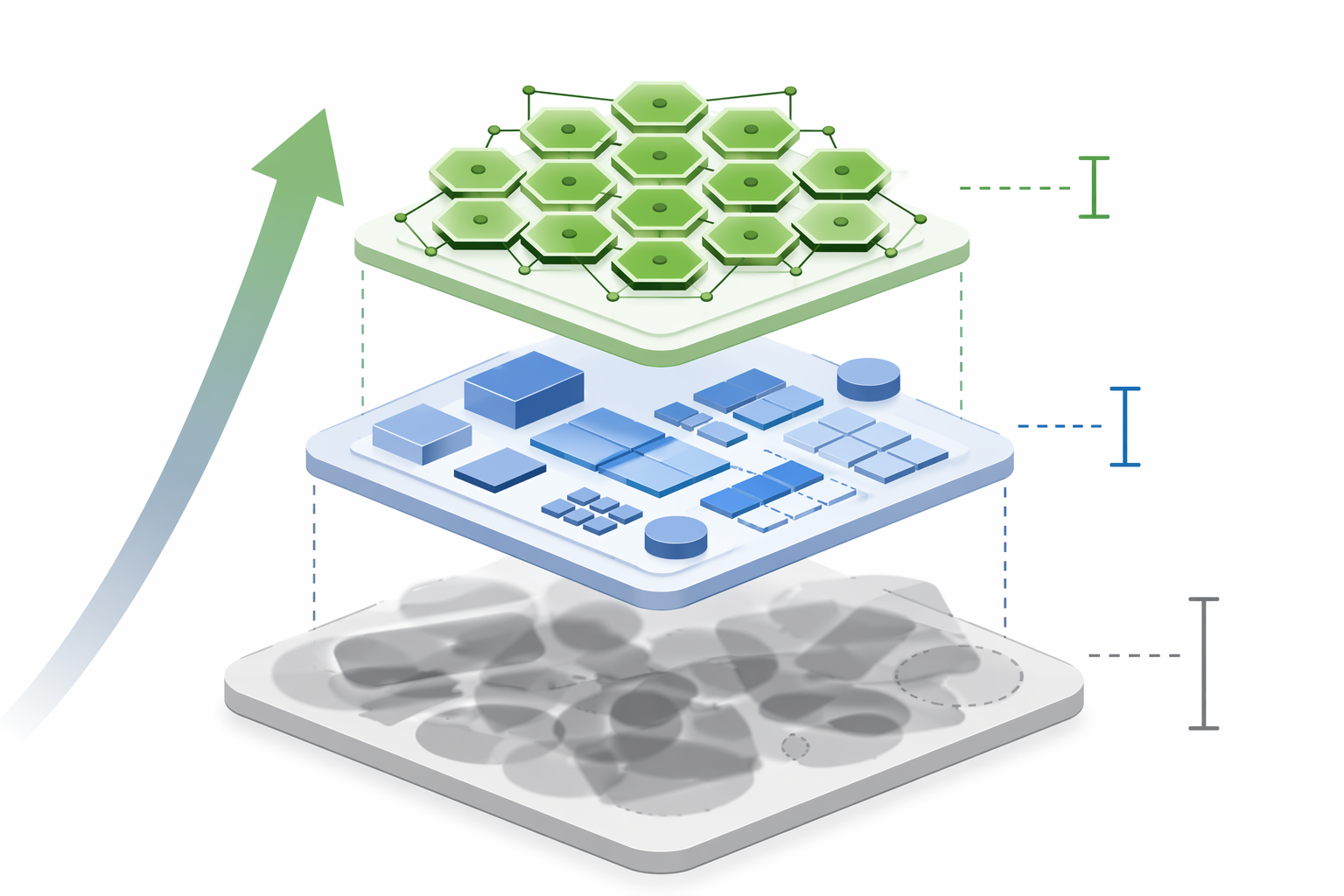
That hierarchy matters because regulatory and target-setting expectations increasingly make weak coverage visible. SBTi criteria cited in the research base expect at least 67% Scope 3 coverage for near-term targets and at least 90% for long-term net-zero targets, while a proposed GHG Protocol Revision B1 signal from March 2026 points toward 95% Scope 3 coverage.[2] These thresholds should be treated as live planning signals rather than permanent legal constants, but they make one thing hard to ignore: procurement teams need a repeatable path for improving data quality, not just a bigger spreadsheet.
For a broader overview of how AI supports Scope 3 tracking across supply chains, see ChainSignal’s guide to AI-enabled Scope 3 carbon emissions tracking. This article stays narrower: how procurement records move from rough proxy estimates toward supplier-specific data without losing the methodology trail.
The data-quality ladder procurement actually has to climb
| Data tier | Typical input | Quality signal | What it can defend |
|---|---|---|---|
| Spend-based estimate | Supplier spend mapped to an emissions factor | PCAF 4–5; roughly ±40–60% uncertainty | Screening, initial hotspot analysis, and gap filling when supplier data is missing |
| Activity-based calculation | Physical units such as kg, kWh, tonne-km, units purchased, or material volumes | PCAF 2–3; roughly ±10–30% uncertainty | More stable category-level and supplier-level reporting where operational data exists |
| Supplier-specific PCF | Primary product carbon footprint from the supplier | PCAF 1 | The strongest basis for supplier-specific Scope 3 reporting and decarbonization tracking |
The mistake is to treat these tiers as reporting labels rather than workflow states. A spend-based line item is not necessarily wrong; it is incomplete. It tells the team where the estimate came from, how uncertain it is, and how much review pressure it should attract. The question is whether that line item is immaterial enough to leave alone for now, or material enough to justify supplier outreach, activity-data collection, or a product carbon footprint request.
This is also where the category-specific warning belongs. ClimatePartner analysis cited through Axion Lab found that spend-based methods can overestimate emissions by about 37% in certain categories.[1] That is not a universal discount factor. It is a reminder that the same dollar of spend can represent very different physical activity depending on price, geography, product mix, and inflation. A procurement team that treats the 37% figure as a blanket correction would simply replace one weak proxy with another.
Where AI helps: the handoff from procurement records to carbon logic
AI is useful here because the hardest early work is repetitive, messy, and easy to misclassify at scale. Procurement descriptions are rarely written for carbon accounting. A supplier may appear under multiple names. One buyer’s “industrial services” category may hide maintenance, spare parts, consumables, and logistics. A free-text invoice line may need to be matched to a NAICS or CPA classification before an emissions factor can be selected.
Net0 describes AI-supported Scope 3 systems ingesting data from more than 10,000 systems and matching activity or spend records against libraries of more than 50,000 emissions factors.[2] The number that matters is not the size of the library by itself. A large library can make a bad match easier to hide. The useful capability is controlled matching: narrowing possible factors, surfacing confidence, retaining the selected factor, and recording why one classification was used instead of another.
Axion Lab also points to AI capabilities such as fuzzy matching of procurement categories to NAICS or CPA codes, correcting price-basis mismatches through appropriate deflators, and flagging suppliers that account for more than 5% of total emissions while still being measured with low-quality proxies.[1] Those are not glamorous functions. They are exactly the functions that prevent a procurement inventory from becoming a pile of unreviewable estimates.
- Ingest supplier, invoice, purchase order, category, region, currency, and activity fields from procurement systems.
- Normalize supplier names and category descriptions so the same supplier or product family is not split across aliases.
- Map each record to the right classification system before assigning an emissions factor.
- Apply currency, reference-year, and price-basis treatment consistently before comparing periods.
- Label every line by data-quality tier, uncertainty range, source, factor, database, and calculation method.
- Flag high-emission records still sitting in PCAF 4–5 so procurement can prioritize the next data upgrade.
The final item is the hinge. Without it, AI is only accelerating estimation. With it, the system starts to behave like a data-quality workbench: it shows which estimates are still weak, which ones matter, and which supplier conversations are worth spending political capital on.
Do not ask the whole supply base for PCFs at once
The practical constraint is supplier attention. Procurement can send a carbon-data questionnaire to every supplier, but that does not mean the responses will arrive, be comparable, or contain primary product-level data. SME suppliers without reporting infrastructure may need templates, education, calculation support, and time. Normative’s discussion of AI in Scope 3 work is explicit on this point: AI can support estimation and engagement, but it cannot create primary supplier data where the supplier has never measured it.[3]
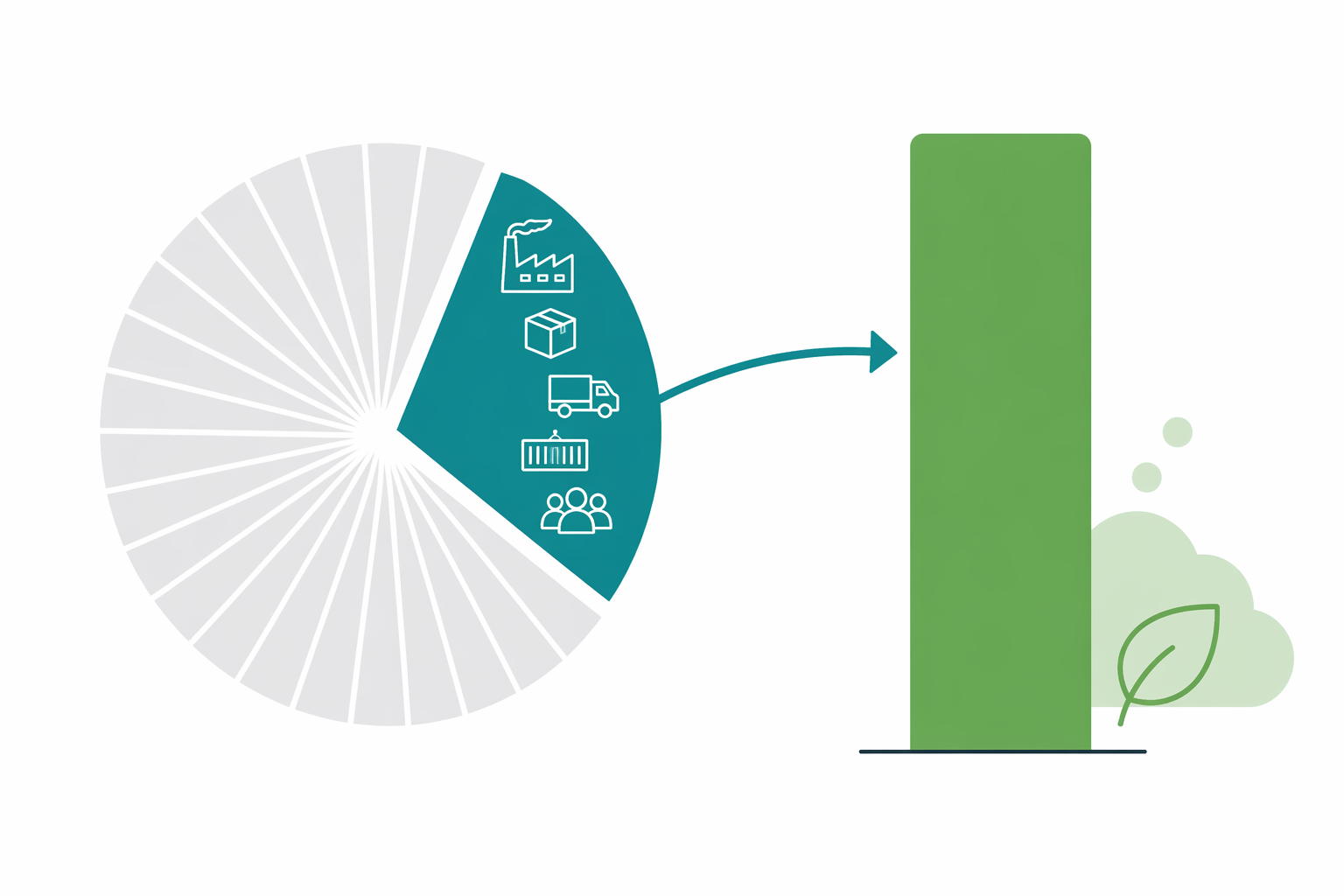
That is why the Pareto pattern is so important. Normative and Axion Lab materials indicate that the top 20% of suppliers typically represent 60–80% of procurement emissions.[1][3] The exact split will differ by company and sector, but the operating consequence is clear: procurement does not need to overwhelm the whole supply base in the first wave. It needs to find the suppliers that dominate emissions and are still measured with weak data.
A defensible prioritization pass should therefore combine two rankings, not one. The first ranking is emissions materiality: which suppliers, categories, or product families drive the largest estimated footprint. The second is data weakness: which of those records still rely on spend-based factors, broad sector averages, old databases, or unclear currency treatment. A supplier with modest emissions and PCAF 5 data can wait. A supplier representing a large share of the footprint and still sitting on a spend proxy cannot.
The upgrade path can then be staged without pretending every supplier is ready for PCAF 1.
- Keep immaterial, low-risk purchases on documented spend-based estimates until better data is proportionate.
- Move material categories from spend to activity data where procurement already has quantities, weights, distances, energy use, or units purchased.
- Request supplier-specific PCFs first from suppliers that are both emissions-material and still measured by low-quality proxies.
- Use supplier enablement for vendors that lack reporting infrastructure instead of treating nonresponse as a software problem.
- Recalculate the inventory with the upgraded data while preserving the old method, source, and factor for comparison.
A hypothetical example makes the distinction plain. Suppose a manufacturer finds that a metals supplier is one of its largest Scope 3 contributors, but the current estimate is based only on annual spend mapped to a broad sector factor. AI can help identify the supplier as material, detect that the category mapping is too broad, suggest better factor candidates, and show the uncertainty attached to the current method. It cannot know the supplier’s actual furnace energy mix, recycled content, allocation method, or product-specific footprint unless those data are provided or calculated with the supplier.
Methodology control is not paperwork
The most dangerous year-over-year Scope 3 movement is the one that looks like operational change but is actually methodology drift. Multi-region input-output databases do not produce identical answers. The same procurement spend run through different MRIO databases can diverge by tens of percent, according to GreenCalculus commentary cited by Axion Lab.[1] If one year uses EXIOBASE 3.8.2, another uses USEEIO, and currency or reference-year treatment changes along the way, the inventory may move even if purchasing behavior did not.
This is where AI systems need restraint as much as speed. The tool should not silently swap factors because a newer database appears, a category label changes, or an invoice description is parsed differently. It should lock the database, reference year, currency base, price deflator, factor version, source, and calculation method for each line. If a better factor is introduced, the change should be visible as a methodology change, not buried inside the new total.
Price-basis treatment deserves particular attention because procurement data is denominated in money, while emissions are physical. Axion Lab notes that AI can help correct price-basis mismatches in the range of 15–35% through appropriate deflator handling.[1] That does not make a spend estimate precise. It reduces one avoidable source of distortion before the team decides whether to pursue activity or supplier-specific data.
| Control point | What should be locked | Why it matters under review |
|---|---|---|
| Database | MRIO or factor library name and version | Prevents artificial emissions changes from database substitution |
| Reference year | The year basis of factors and prices | Separates real purchasing change from inflation or factor-year effects |
| Currency base | Currency, exchange-rate treatment, and price deflator | Keeps spend-based estimates comparable across regions and years |
| Classification | NAICS, CPA, product, or category mapping used | Makes category remapping visible instead of hidden in the calculation |
| Data-quality label | PCAF score or equivalent tier for each line | Shows whether reported improvement reflects better data, not only lower emissions |
A PCAF-labelled audit trail is not administrative decoration. It lets the carbon accounting lead explain why a supplier moved from PCAF 5 to PCAF 3, why total emissions changed after activity data replaced spend, and why a base-year recalculation may or may not be appropriate. It also keeps procurement honest about what has improved. A lower number from a different factor is not the same as a supplier reducing emissions.
A useful case, not a universal proof point
The Hitachi Rail example is useful because it shows the size of the data-quality prize when a company systematically replaces spend-based estimates instead of merely refining them. Normative, as reported through Axion Lab’s discussion, describes Hitachi Rail increasing Scope 3 inventory coverage from 10–13% to more than 90% by working with Normative and replacing spend-based estimates with supplier-specific data.[1][3]
That should not be read as an independently audited promise that every company can move at the same pace or reach the same coverage level with the same toolset. It is better treated as a credible industry example of the direction of travel: coverage improves when procurement data is structured, material suppliers are prioritized, and supplier-specific information replaces proxies where it matters.
The lesson is also narrower than many AI case studies make it sound. AI can shorten the clerical distance between procurement systems and emissions calculations. It can expose which suppliers remain estimated, which factors were used, and which changes reflect method rather than operations. The final jump to supplier-specific PCFs still requires the supplier to measure, calculate, disclose, and defend its own product-level data.
What a defensible upgrade program looks like
A procurement-led Scope 3 data program does not need to begin with a perfect supplier portal. It needs a controlled baseline. That means every line item has a supplier, category, geography where available, spend or activity measure, emissions factor, factor source, database version, reference year, currency treatment, calculated emissions, and data-quality score. Missing fields should be visible rather than smoothed over.
Once that baseline exists, AI can keep the upgrade queue alive. New invoices can be classified against existing mappings. Supplier aliases can be reconciled before duplicates distort materiality. Activity fields can be detected when they appear in purchase orders or logistics records. Records that fall back to PCAF 4–5 can be flagged, especially when they belong to suppliers already above the materiality threshold.
The supplier engagement list should then be short enough for procurement to act on. A first wave might include suppliers that represent a high share of estimated emissions, have commercially important relationships, and sell products where activity or PCF data would materially improve the inventory. The ask should be specific: activity quantities, product-level footprints, calculation standard used, boundary, allocation method, reporting year, and evidence the supplier can maintain.
For suppliers that cannot provide PCFs, activity data is still a meaningful upgrade. Moving from dollars spent to tonnes purchased, kWh consumed, kilometers transported, or units delivered can reduce uncertainty and make future supplier-specific work easier. It also gives procurement a more concrete conversation: not “please fill out our emissions questionnaire,” but “please confirm the quantity, material specification, production location, and reporting period for this product family.”
Finance needs to be involved because the inventory is sensitive to spend, currency, inflation, and category coding. Sustainability needs to be involved because factor choice, PCAF labels, and boundary decisions affect the reported footprint. Procurement needs to be involved because only it can make the supplier request credible. AI can coordinate the handoffs and reduce manual matching, but ownership still sits with the functions that control the underlying data and supplier relationship.
The boundary AI should not cross
There is a clean line between better proxy management and primary supplier data. AI can select a more appropriate emissions factor, identify an outdated price basis, detect inconsistent category mapping, and rank supplier upgrade candidates. It can also help suppliers assemble data they already have. It should not be described as generating supplier-specific PCFs from suppliers that have not measured the product, defined the boundary, or supplied the activity data.
That boundary is not a weakness in the business case. It is the business case. The value of AI is that it makes the upgrade path visible, repeatable, and auditable: which records are spend-based, which suppliers drive the footprint, which factors were selected, which methods changed, and which engagement requests are worth making first. PCAF 1 still depends on supplier-specific primary data and the practical supplier enablement needed to obtain it.
Comments
Join the discussion with an anonymous comment.