
The uncomfortable moment in AI-era retail supply chain account security comes after the login succeeds. A vendor user has the right username. A carrier dispatcher passes MFA. A broker account opens the transportation portal from a familiar region. An internal planner enters a procurement workflow with permissions that were approved months ago. From that point on, the systems around them may treat the session as legitimate while the account starts touching inventory, freight movement, order visibility, supplier messages, or payment instructions.
That is why account takeover deserves more attention than it usually gets in AI supply chain planning. The problem is not only that attackers can steal credentials. It is that AI-enabled supply chain platforms are making authenticated accounts more operationally powerful. A compromised identity no longer just views a portal; it can influence routing, exception handling, replenishment signals, freight documentation, invoice communication, and the handoffs between systems that no single team fully controls.
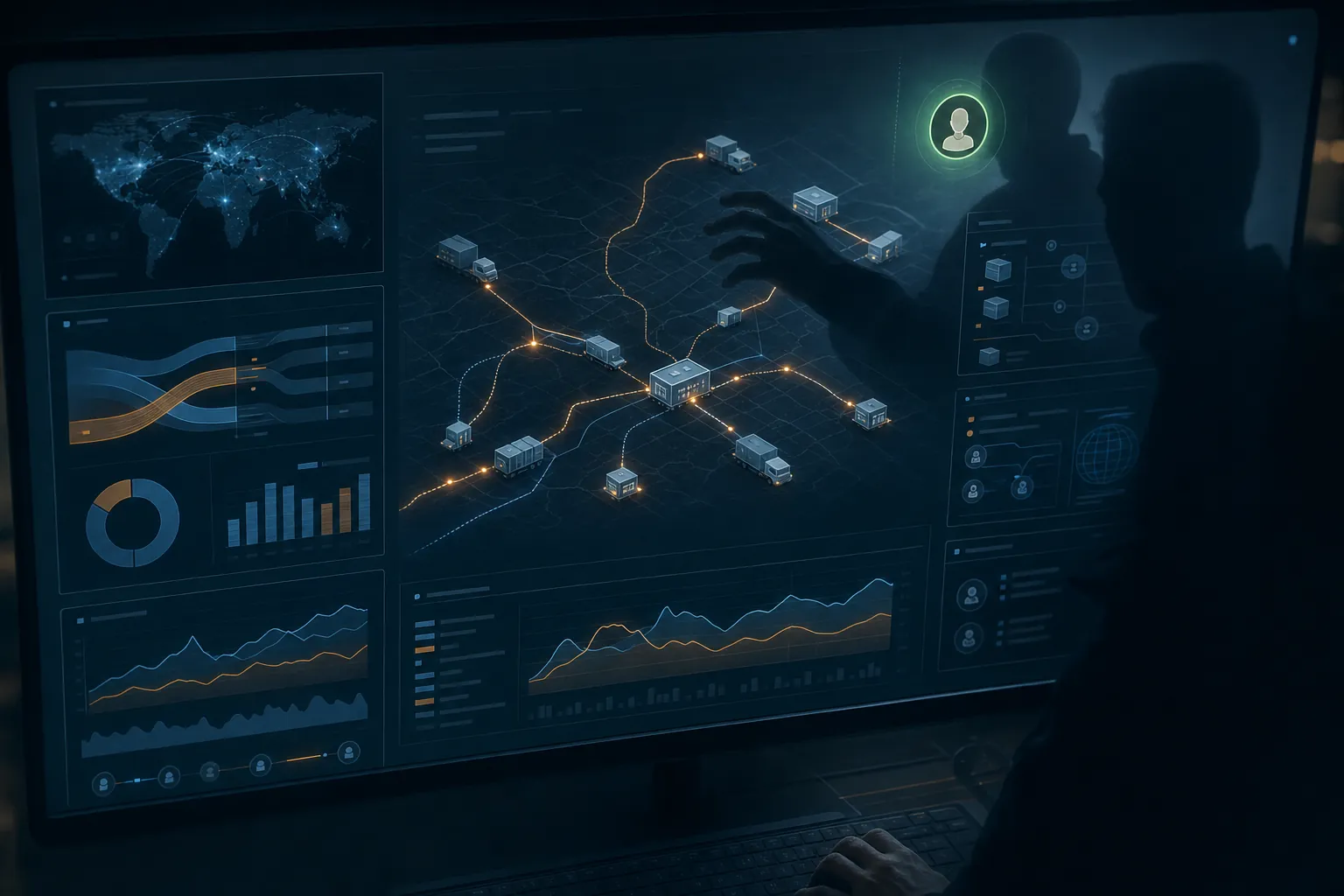
CrossClassify says 83% of supply chain portals have experienced at least one account takeover attack, and it attributes more than $455 million in retail cargo fraud losses to login-based impersonation and identity takeovers in freight systems. Those are vendor-reported figures, not independently audited public statistics, so they should not be treated as the whole market picture. They still point to the right operational anxiety: the account is becoming the attack surface inside the logistics workflow, not merely at the perimeter.[1]
The broader breach evidence points in the same direction. Verizon’s 2025 Data Breach Investigations Report found that third-party involvement in breaches doubled from 15% to 30% in one year, and credential abuse was involved in 22% of breaches.[2] For retail supply chains, that matters because “third party” is not an abstract vendor-management category. It is the carrier, customs broker, supplier, outsourced warehouse, maintenance contractor, managed service provider, and technology platform that may already have a login somewhere in the chain.
The Account Is Now Part of the Supply Chain
Retail supply chains have always depended on trust passed across organizations. AI does not erase that structure; it makes the trusted paths faster and more interconnected. Forecasting tools feed replenishment. Replenishment decisions create purchase orders. Transportation systems assign loads. Warehouse systems handle exceptions. Vendor portals collect documents and status updates. Payment workflows depend on the same business context.
In that environment, an account takeover is not just a stolen login. It is the misuse of a business identity that already has approved access. Credential stuffing tests stolen username-password pairs against portals. Session hijacking steals or reuses an authenticated session so the attacker can skip the front door. Vendor impersonation uses a trusted supplier, carrier, or broker identity to redirect communication, documentation, freight, or money. None of these techniques requires the attacker to “break into” the platform in the cinematic sense if the platform accepts the identity as valid.
The control gap appears in the handoff between identity assurance and operational trust. Login controls answer one question: did this user satisfy the required authentication checks at this moment? Supply chain security has to answer a longer question: does this account continue behaving like the right person, vendor, device, role, and transaction context while it moves through the workflow?
AI Changes the Mechanics, Not Just the Volume
It is tempting to describe AI-enabled account attacks as ordinary fraud at larger scale. That is too narrow. Scale is part of it, especially for credential stuffing. Vectra AI reports that account takeover attacks grew 250% year over year and that 2.1 billion credentials were harvested by infostealers in 2024, creating fuel for automated credential attacks.[3] But the larger shift is mechanical: AI helps attackers test, adapt, impersonate, and persist inside workflows that were designed to reduce friction for legitimate business users.
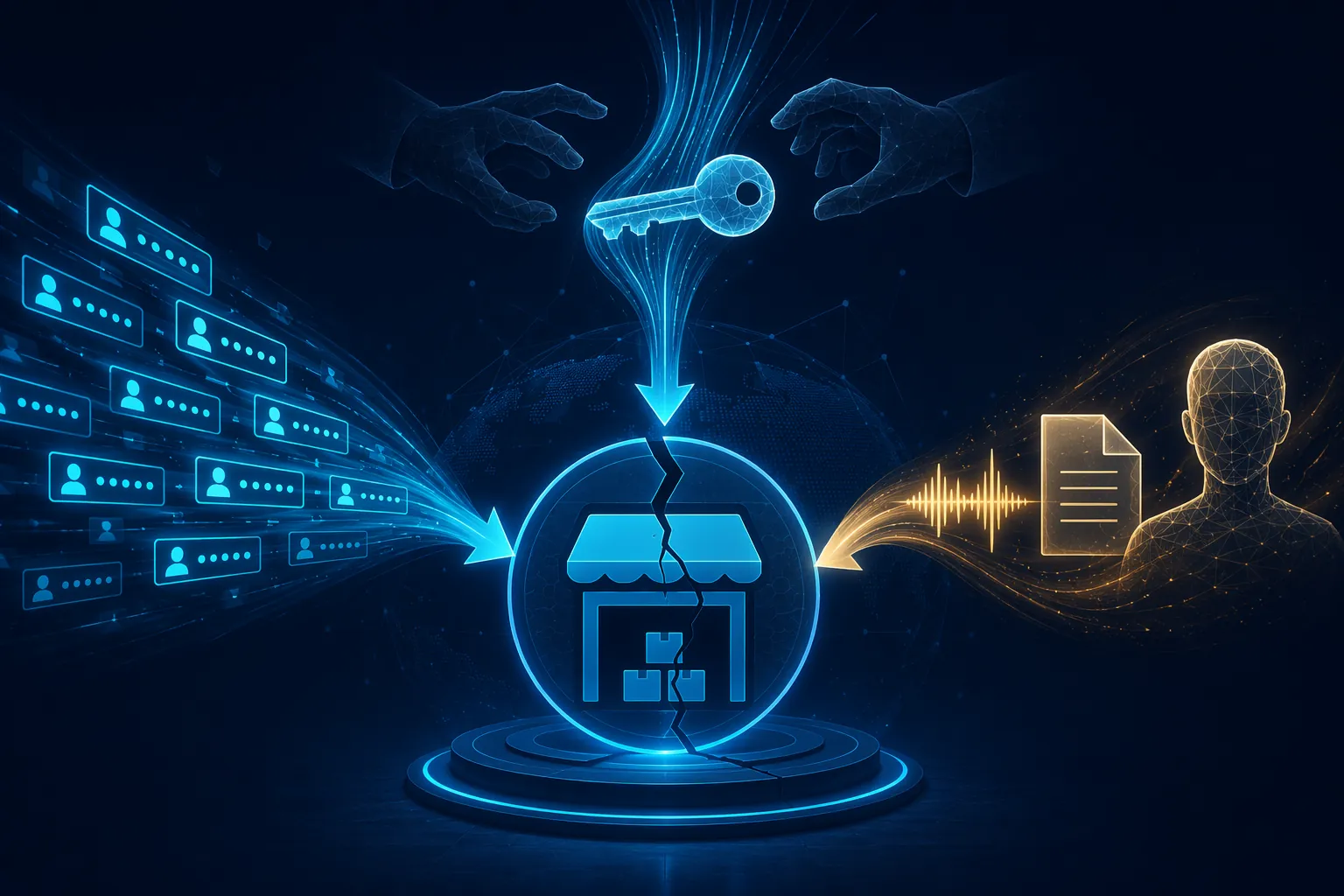
Credential stuffing becomes more automated because attackers can sort stolen credentials, tune attempts, and probe weak portals without manually working through each target. The risk is not evenly distributed. A retailer may harden its central identity provider while a smaller logistics portal, broker interface, or supplier access point still relies on weaker controls. The attacker only needs one accepted identity that connects to a useful workflow.
Session hijacking becomes more damaging because SaaS supply chain sessions often carry real business authority. A valid session in a transportation management system may reveal lane history, carrier assignments, pickup windows, delivery exceptions, and document flows. A valid procurement or vendor portal session may expose purchase orders, payment instructions, supplier contacts, and dispute workflows. The attacker is not merely reading data; the attacker may be positioned to change what others in the chain believe is happening.
Vendor impersonation becomes more credible when synthetic email, document, and voice cues can imitate routine business exchanges. Forbes has described AI-era supply chain risk in terms that include deepfake-enabled fraud, AI-assisted phishing, and adaptive malicious activity across interconnected suppliers and service providers.[4] NeuralTrust similarly identifies AI-driven supply chain attacks that use automation and adaptation to make compromise harder to spot with static defenses.[5] For retail, the practical question is whether a receiving clerk, freight coordinator, AP analyst, or carrier manager can still rely on familiar communication patterns as a trust signal.
Adaptive malware and infostealer activity sit adjacent to the account problem because they feed it. Malware that captures cookies, tokens, browser data, or credentials may not need to destroy systems to create a supply chain incident. It may simply give an attacker enough authenticated access to act through the same dashboards and portals the business uses every day.
MFA Helps, Then It Stops Helping
Multi-factor authentication is still necessary. It raises the cost of simple credential reuse and blocks many opportunistic logins. The mistake is treating MFA as the end of account security in supply chain systems that remain active long after authentication. If an attacker steals a session token, tricks a user into approving a prompt, compromises a device after login, or impersonates a vendor inside a trusted communication chain, the security decision has already moved beyond the login screen.
That is where retail supply chain environments are awkward. Access often has to remain usable for vendors and carriers that do not sit inside the retailer’s managed device estate. A driver support user may need limited visibility into loads. A supplier may need purchase-order status. A broker may need documents. A warehouse supervisor may need exception queues across systems. Locking every action behind heavy friction can break operations; trusting every authenticated session can hand the attacker exactly what they came for.
The better control point is not a single stronger gate. It is a set of decisions made during the session: what the account is doing, whether that action matches its normal role, whether the transaction context makes sense, and whether the risk has changed enough to require re-verification or containment.
Post-Login Behavior Is Where the Signal Lives
Behavioral monitoring earns its place when it is tied to supply chain actions, not when it is sold as a vague promise to “know the user.” In a retail logistics environment, the useful signals are concrete: a carrier account suddenly viewing lanes it never services, a supplier user downloading unusual volumes of purchase-order data, a broker login changing routing-related details outside its normal geography, or an internal planner account moving from forecast views into payment-adjacent vendor records.
PDI Technologies argues for AI-enabled retail security strategies that include continuous monitoring, anomaly detection, and rapid response across retail environments.[6] The relevant point for supply chain account security is not that AI magically recognizes bad intent. It is that AI can compare more activity patterns than a human analyst can reasonably review in real time: navigation paths, timing, device context, action sequence, role history, transaction type, and relationship to known vendor or carrier behavior.
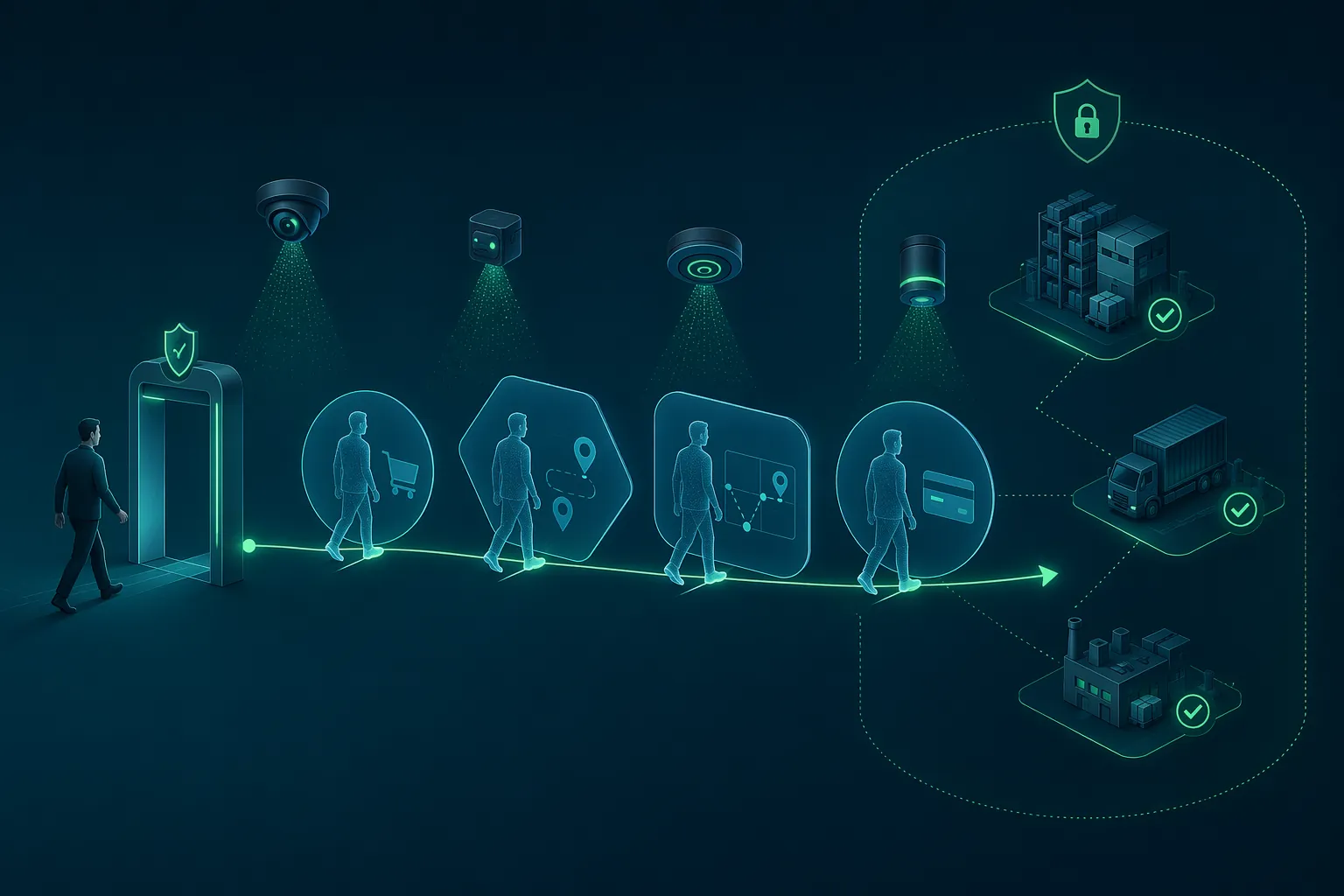
The hard part is governance. Behavioral systems create false positives if they do not understand retail seasonality, peak periods, emergency substitutions, new vendor onboarding, and legitimate route changes. They also create blind spots if they only watch the retailer’s internal users while treating suppliers, freight partners, and managed service accounts as outside the main risk model. Continuous verification has to be tuned to the operating rhythm of the supply chain, or it will either interrupt the wrong people or miss the accounts that matter.
The most useful interventions are usually proportional. A mildly unusual view pattern may deserve logging and analyst review. A high-risk action from an unfamiliar session may require step-up authentication. A vendor account attempting to change payment instructions, routing details, or document destinations may need workflow approval from a known contact through a separate channel. A session showing impossible travel, token reuse, suspicious device posture, or abnormal automation should be terminated rather than politely challenged.
Zero-Trust Vendor Access Has to Reach the Transaction
Zero trust becomes useful in retail supply chains when it stops being a network slogan and starts governing the transaction. A vendor should not receive broad portal access because it is an approved vendor. A carrier should not see freight data outside the lanes or loads it is assigned to handle. A broker should not retain access after a shipment lifecycle ends unless there is a defined business reason. An internal operations account should not accumulate permissions from old roles simply because removing them is administratively tedious.
| Account activity | Stronger control decision |
|---|---|
| Vendor views ordinary purchase-order status | Allow within scoped role and log normally |
| Carrier account accesses unfamiliar lanes or shipment groups | Increase risk score and require contextual review |
| Supplier user changes bank, remittance, or document-routing details | Require step-up verification and out-of-band approval |
| Broker session shows token reuse, impossible travel, or automation-like behavior | Suspend session and contain account pending investigation |
| Internal planner account enters payment-adjacent vendor workflow | Check role entitlement and require transaction-level justification |
This is also where account security intersects with broader AI supply chain risk without becoming the same subject. Retailers still need to care about model provenance, software dependencies, ransomware response, and breach investigation speed. Those are separate control domains. For account takeover, the priority is narrower: make sure every identity that can act inside supply chain systems is scoped to what it needs, watched while it acts, and challenged when behavior no longer matches the role or transaction.
Related AI supply chain controls matter most when they reinforce that account-level discipline. A retailer reviewing AI model supply chain risk should ask which model, vendor, and integration accounts can move data across systems. A team improving AI-supported ransomware response should treat suspicious account behavior as an early operational signal, not only as an endpoint alert. A security operations group using AI to reduce breach investigation time should make supply chain identity trails easy to reconstruct after the first alert.
The New Control Point Is Trust During Action
Retailers do not need to treat every vendor, carrier, broker, and planner as hostile. They do need to stop treating successful authentication as a lasting guarantee. AI makes credential attacks faster, impersonation more believable, and post-login sessions more valuable because the systems behind those sessions are increasingly connected to decisions that move goods and money.
The security model has to follow the account into the work. That means watching for abnormal ordering, routing, document, and payment-adjacent behavior; limiting vendor and partner access to the role and transaction at hand; re-verifying when the session changes character; and preserving enough context for investigators to understand which handoff failed. AI does not merely increase the number of account attacks. It makes stolen or impersonated supply chain identities operationally more powerful, so account security has to move from “prove yourself at the door” to “prove you are still trustworthy while acting inside the network.”
References
- Supply Chain & Logistics, CrossClassify.
- 2025 Data Breach Investigations Report, Verizon.
- Account Takeover, Vectra AI.
- The Growing Cybersecurity Risks To The Supply Chain In The AI Era, Forbes, May 22, 2026.
- AI-Driven Supply Chain Attacks, NeuralTrust.
- AI Security Strategy for Retail, PDI Technologies.
Comments
Join the discussion with an anonymous comment.