
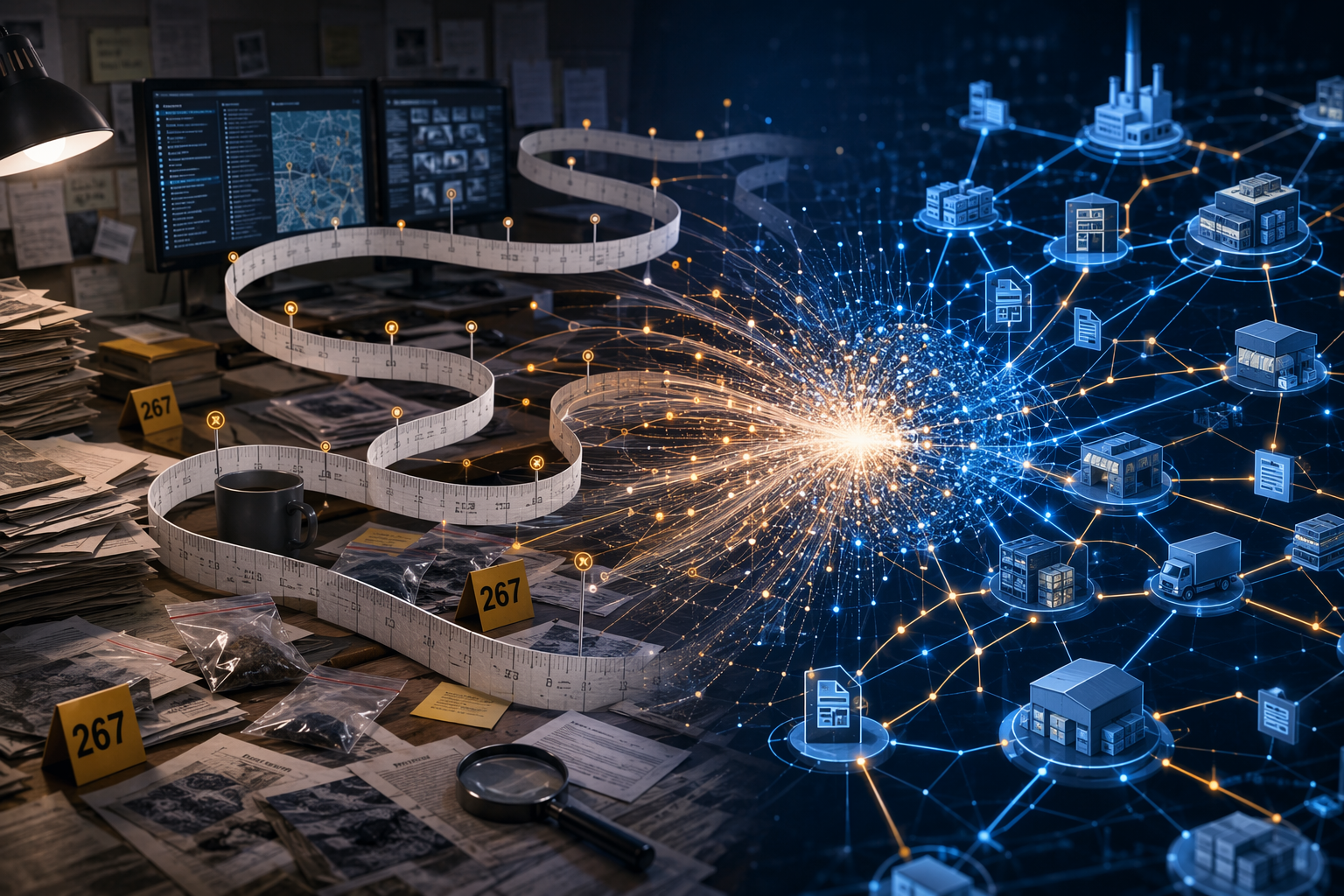
The uncomfortable promise behind supply chain IT breach investigation AI is simple: executives now expect answers in hours for incidents that still take many organizations weeks to reconstruct. IBM’s 2025 breach data puts supply chain breaches at an average of 267 days to identify and contain, with an average cost of $4.91 million.[1] That number is not a stopwatch for every vendor compromise. A supplier with complete endpoint telemetry, preserved build logs, and usable API records is a different investigative problem from a supplier that can only send screenshots and a spreadsheet. But the board-level pain is real: the old clock is too slow for multi-party compromise.
The pressure is rising because third-party involvement is no longer a side channel in breach response. Verizon’s 2025 DBIR reported that third-party involvement doubled year over year, from 15% to 30%.[2] Once that happens, the investigation is no longer just about finding the first malicious login or the last touched database. It is about proving where the compromise began, which vendors and downstream partners are exposed, which software dependencies or AI tools became part of the attack path, and which conclusions can survive legal review, insurance scrutiny, and regulatory questioning.
What has to be true before “hours” is credible
AI can compress investigation time when it has something defensible to correlate. That sounds obvious until the breach room fills with partial exports, conflicting timestamps, vendor portals with different retention periods, and tooling owners who disagree about what “admin access” meant last Tuesday.
The useful work is not magic classification. It is the fast normalization of messy evidence: EDR alerts, identity events, CI/CD logs, package releases, API calls, DNS changes, cloud control-plane activity, support tickets, and vendor attestations. When AI systems can align those artifacts into a shared timeline, investigators can spend less time asking whether two alerts are related and more time asking whether the evidence is complete enough to notify downstream partners.
That is where the better AI-forensics claims deserve attention, with some caution. Ankura describes AI-assisted forensic methods achieving a 92% detection rate compared with 75% for manual approaches, a 17-point improvement.[3] That figure should be verified against the original underlying study before anyone builds a business case around it. Still, the direction matches what incident teams already see: humans are poor at reviewing thousands of low-signal events across unrelated vendor systems under time pressure. Machines are better at sorting, clustering, and surfacing the odd combination that would otherwise sit in three queues owned by three companies.
| Investigation need | What AI can accelerate | What still has to be governed |
|---|---|---|
| Cross-vendor timeline reconstruction | Normalize timestamps, correlate identities, map infrastructure changes, and cluster related alerts | Evidence access, retention periods, chain of custody, and legal hold scope |
| Blast-radius analysis | Connect affected packages, APIs, customers, partners, and downstream integrations | Vendor notification duties, confidence thresholds, and disclosure language |
| AI-tool abuse review | Surface agent logs, permission-bypass flags, prompt/tool activity, and anomalous autonomous actions | Approved tool inventory, developer exceptions, and forensic artifact preservation |
| Pattern detection | Identify combinations of DDoS, API abuse, network anomalies, and release events that look coordinated | False positives, analyst review, and documented rationale for escalation |
The NX breach shows why AI artifacts now belong in the evidence plan
The Deepwatch analysis of the NX breach is useful because it moves the conversation away from “AI-powered SOC” language and into artifacts an investigator can actually ask for. In that incident, attackers reportedly weaponized AI CLI tools, including Claude and Gemini, using permission-bypass flags such as --dangerously-skip-permissions, --yolo, and --trust-all-tools for autonomous reconnaissance.[4] As of the mid-2026 understanding of the case, the important lesson is not that one named tool is uniquely dangerous. It is that AI coding and agent tooling can create a forensic surface that many supplier questionnaires and IR runbooks still do not name.
In a normal breach review, teams know to ask for endpoint telemetry, identity logs, build-system access records, and package publishing history. The NX reporting adds a different set of questions: Was there a .claude.json file? Were MCP server configurations present? Did YOLO-mode logs exist? Were trust-all-tools behaviors enabled? Did the tool have access to repositories, tokens, terminals, package registries, or internal documentation beyond what the user thought they had approved?[4]
This is where AI changes the investigation rather than merely speeding it up. The investigator is no longer only reconstructing what a human operator did. She may have to reconstruct what an AI-enabled tool was allowed to do, what it actually invoked, which permissions were bypassed by configuration, and whether logs survived long enough to distinguish attacker activity from developer convenience.
That distinction matters in supplier incidents. A vendor may honestly say it did not approve broad privileged access for a developer. The logs may show an AI CLI tool executing actions with broader reach because a local flag, extension, or agent configuration changed the operating reality. If procurement, legal, and security only ask whether “AI tools are permitted,” they will miss the part of the answer that matters during containment.
The LiteLLM and Mercor cascade makes blast radius the hard part
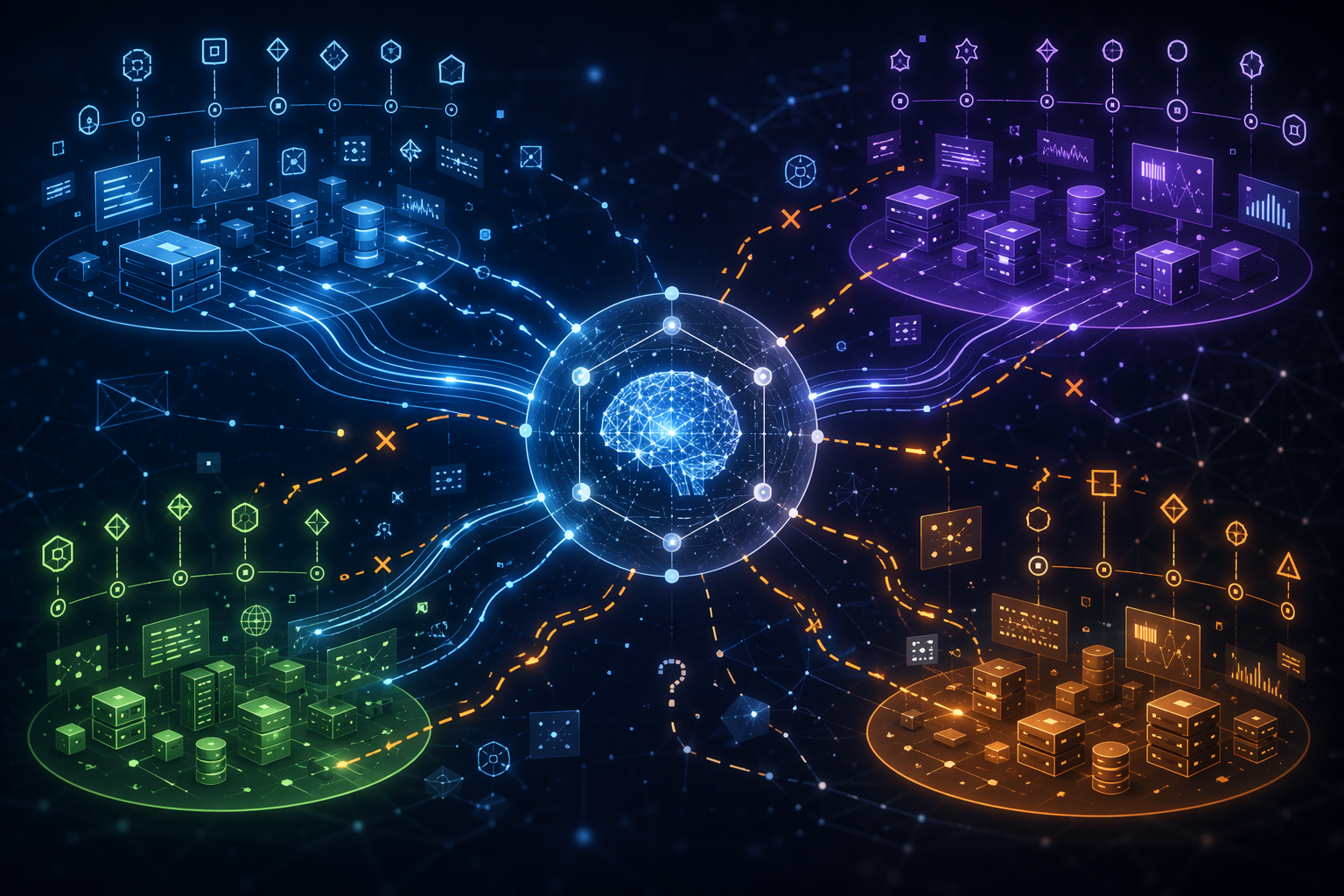
The Foresiet analysis of the LiteLLM/Mercor cascade is the other case security buyers should sit with. It describes 4 TB of data exfiltrated through one unreviewed open-source PyPI package, with AI correlation tools needed to trace blast radius across Meta, Mercor, and downstream partners.[5] As with other active or recently analyzed incidents, that should be treated as the mid-2026 public understanding rather than a closed legal record. But operationally, it captures the nightmare: the first compromised object is small, the consequences are distributed, and every affected organization wants a different answer at the same time.
Manual investigation struggles here because each team sees a local slice. One team sees abnormal package behavior. Another sees API abuse. Another sees network anomalies. Another is dealing with customer notifications. Foresiet’s analysis also documents cross-signal correlation, including DDoS, API abuse, and network anomalies, as a single coordinated incident.[5] That is the kind of pattern a human team can eventually assemble, but “eventually” is expensive when downstream partners are deciding whether to rotate credentials, suspend integrations, or notify their own customers.
Good AI-assisted investigation does not eliminate analyst judgment in that situation. It changes the order of work. Instead of asking each vendor to manually search for indicators and send back fragments, the investigation platform can propose a provisional graph: package to build job, build job to token, token to API calls, API calls to customer data paths, customer data paths to affected partners. The analyst’s job becomes validating the graph, rejecting weak joins, preserving the evidence chain, and deciding which uncertainty is acceptable for containment.
That is also why breach investigation and response planning cannot be separated cleanly. Once a graph shows which partners may be exposed, the next question is who acts first. Teams that have not already mapped response authority across suppliers can use guidance like AI-powered monitoring and automated response in supply chain incidents to connect investigation outputs to containment decisions. The investigation tool may compress the evidence review, but it cannot invent authority to disable a vendor integration or notify a downstream customer.
AI is now part of the attack path, not just the analyst console
The budget argument changes once AI becomes both an investigative asset and an attack surface. Sonatype’s 2026 State of the Software Supply Chain reports a 156% jump in AI-enabled supply chain attacks.[6] The number is alarming, but the more practical problem is what it implies about preparedness. Many organizations still review suppliers as if the critical surfaces are source control, CI/CD, cloud hosting, endpoint protection, and vulnerability management. Those still matter. They are no longer enough.
IBM’s 2025 report found that 30% of breach incidents involving AI models were supply chain compromises, and that 44% of zero-day attacks targeted managed file transfer systems.[1] Those two findings should not be collapsed into one generalized AI-risk story. They point to different investigative demands. AI model incidents require teams to understand training, deployment, access, and dependency paths. Managed file transfer zero-days require fast evidence from systems that often sit in partner-facing workflows. Both become harder when the organization cannot obtain reliable telemetry from the third party that owned the affected surface.
VentureBeat’s reporting adds another uncomfortable detail: seven release-surface classes are absent from most vendor questionnaires and IR playbooks.[7] That is not a paperwork failure. It means the breach team may not know to ask for the evidence until after the attacker has already used the surface. In the meantime, leadership is asking for a containment answer, counsel is asking what can be stated with confidence, and the vendor is trying to determine whether logs even exist.
The evidence problem behind the speed claim
The fastest investigation I would trust is not the one with the most dramatic dashboard. It is the one that can explain its joins. If an AI system says a malicious package, a vendor token, a burst of API calls, and a downstream data transfer are part of the same incident, the team needs to know why. Shared identity? Shared infrastructure? Matching timing? A behavioral baseline break? Reused command structure? A known campaign pattern? Without that explanation, the system has produced a lead, not evidence.
This matters because supply chain incidents create pressure to overstate confidence. The customer wants to know whether it was affected. The supplier wants to limit disclosure. The insurer wants dates. Regulators may ask when the organization knew, not when it felt certain. If AI-assisted correlation shortens the timeline from weeks to hours, the organization still has to preserve the evidence trail that shows how it reached that conclusion.
- The system should retain the source artifacts behind a correlation, not only the resulting alert.
- The investigation team should be able to separate confirmed compromise, probable exposure, and unsupported suspicion.
- Vendor contracts should address access to logs, AI-agent artifacts, build records, and package release history before an incident.
- Analysts need permission to challenge the model output without slowing the incident to manual-only pace.
The last point is where some organizations will stumble. They will buy AI investigation tooling, but leave the operating model untouched. The same procurement exceptions will remain undocumented. The same suppliers will lack telemetry clauses. The same developers will install AI tools under local approval paths. The same IR plan will assume that “vendor logs” means SIEM exports and EDR events, not agent configuration files, tool invocation histories, prompt/tool bridges, or package publishing provenance.
What Q3 2026 budgets should actually buy
For Q3 2026 planning, the question is not whether AI belongs in supply chain breach investigation. It does. Manual log review as a badge of discipline has lost the plot when attackers can move through software dependencies, AI tools, APIs, vendor access paths, and downstream integrations faster than a human team can reconcile the evidence by hand.
The question is what kind of capability the budget is buying. A defensible investment should help reconstruct multi-party attack timelines, detect compromise patterns analysts are likely to miss, preserve source evidence, and account for AI systems as both tools and targets. It should improve the investigation before the press release, before the insurance worksheet, and before the regulator asks why the organization treated a supplier outage as an isolated event for three days.
Governance work has to sit next to the tooling. Supplier agreements need telemetry and retention language that covers AI-specific artifacts. IR playbooks need prompts for AI coding tools, agent frameworks, model access, release surfaces, and open-source package provenance. Security teams that support defense, critical infrastructure, or regulated supply chains also need to watch how procurement rules are changing; AI supply chain security requirements in government contracts and Homeland Security’s role in AI supply chain security are no longer policy-side curiosities when investigation capability becomes part of vendor trust.
Buying speed without evidence access creates a prettier version of guessing. Buying AI forensics with trained analysts, vendor telemetry rights, release-surface coverage, and reviewable correlation logic gives the breach team a fighting chance to answer the only questions that matter under pressure: what happened, who is exposed, what has been contained, and which claims can be defended after the room quiets down.
References
- IBM 2025 Cost of a Data Breach Report, IBM
- Verizon 2025 Data Breach Investigations Report, Verizon
- AI-Driven Forensics 101: What It Is and Why It Matters, Ankura
- NX Breach: A Story of Supply Chain Compromise and AI Agent Betrayal, Deepwatch
- AI Security Incidents & Attack Paths – April 2026, Foresiet
- 2026 State of the Software Supply Chain, Sonatype
- Supply chain incidents: OpenAI, Anthropic, Meta and the release-surface vendor questionnaire matrix, VentureBeat
Comments
Join the discussion with an anonymous comment.