
The business case starts with exposure, not enthusiasm
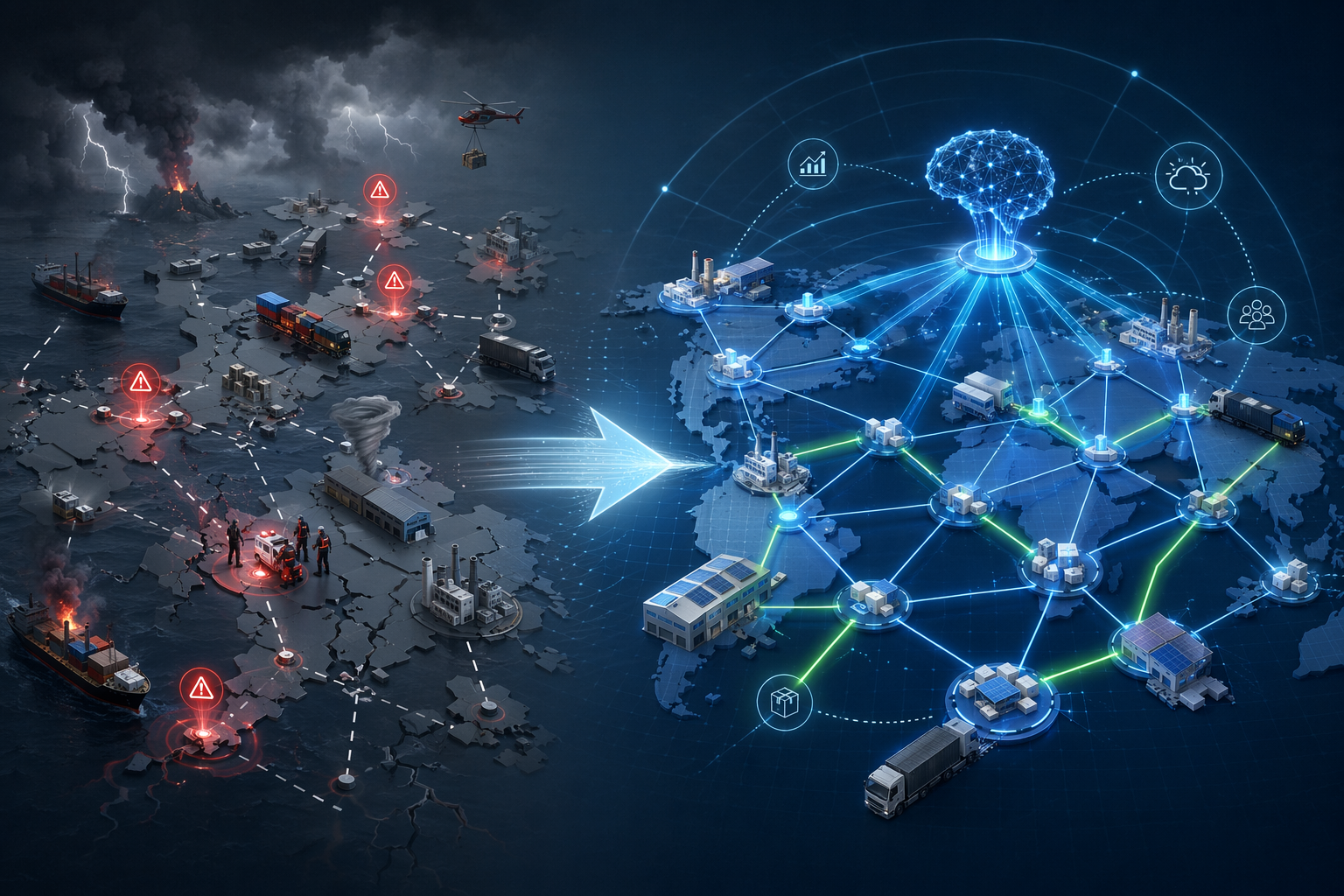
For supply chain leaders, the question is no longer whether AI can read signals faster than a human team can. The harder question is whether it can make disruption cheaper to absorb. Everstream’s 2026 framing puts a hard number on the downside: supply chain disruptions can cost 45% of one year’s profits over a decade, and Gartner-informed coverage in SCMR says 42% of procurement leaders still see supply disruption as their top threat [1][2].
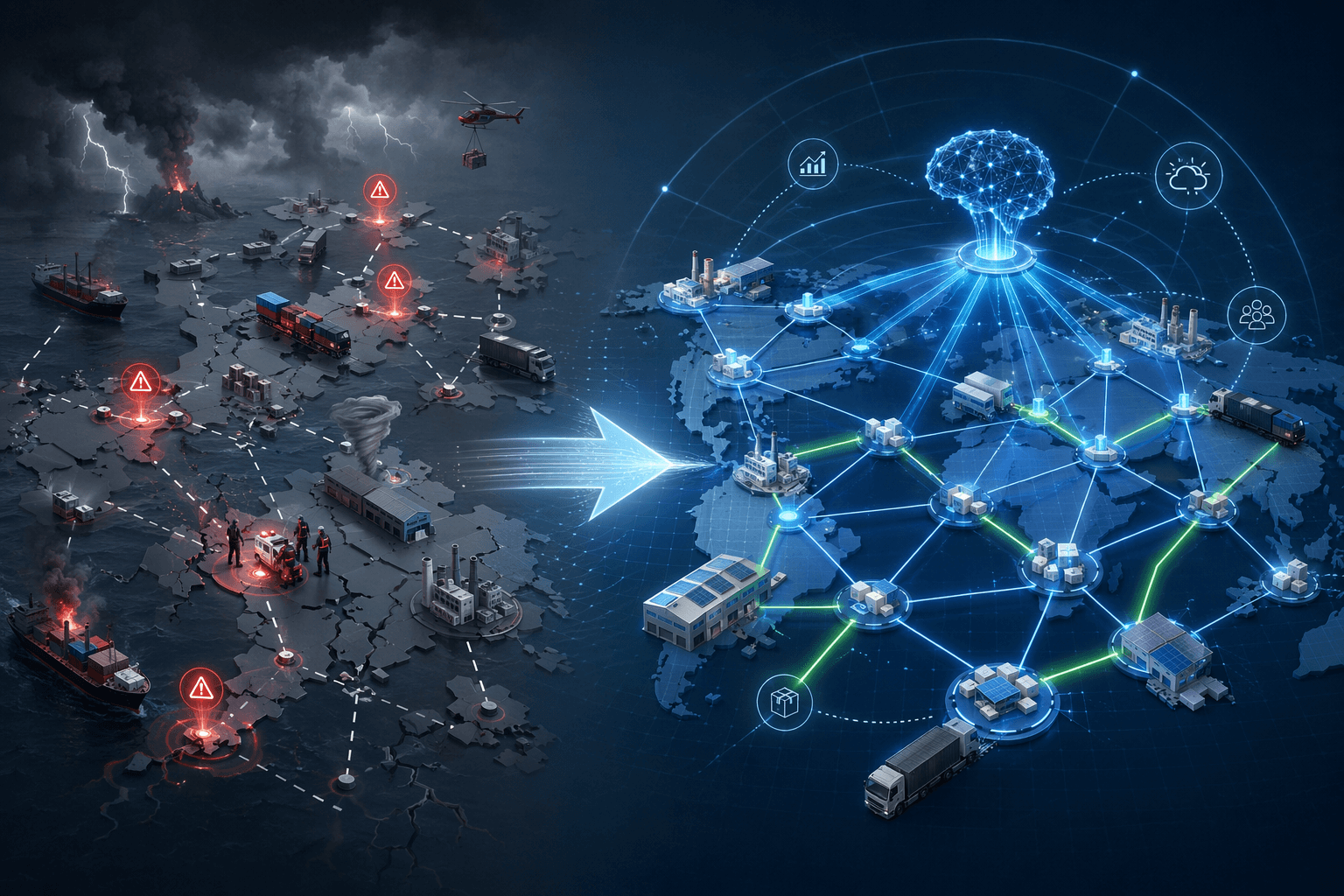
That is why the strongest AI programs are not being sold as dashboards. They are being used to shorten impact assessment, surface hidden dependencies, and keep working capital from sitting in unnecessary buffers. Everstream’s platform-reported outcomes point to a 30% reduction in disruption revenue losses, a 50–70% reduction in the time needed to identify and assess disruption impacts, and 14% excess buffer stock where supplier risk monitoring is absent [3]. Those are vendor-reported outcomes rather than universal benchmarks, but they are serious enough to justify a leadership conversation.
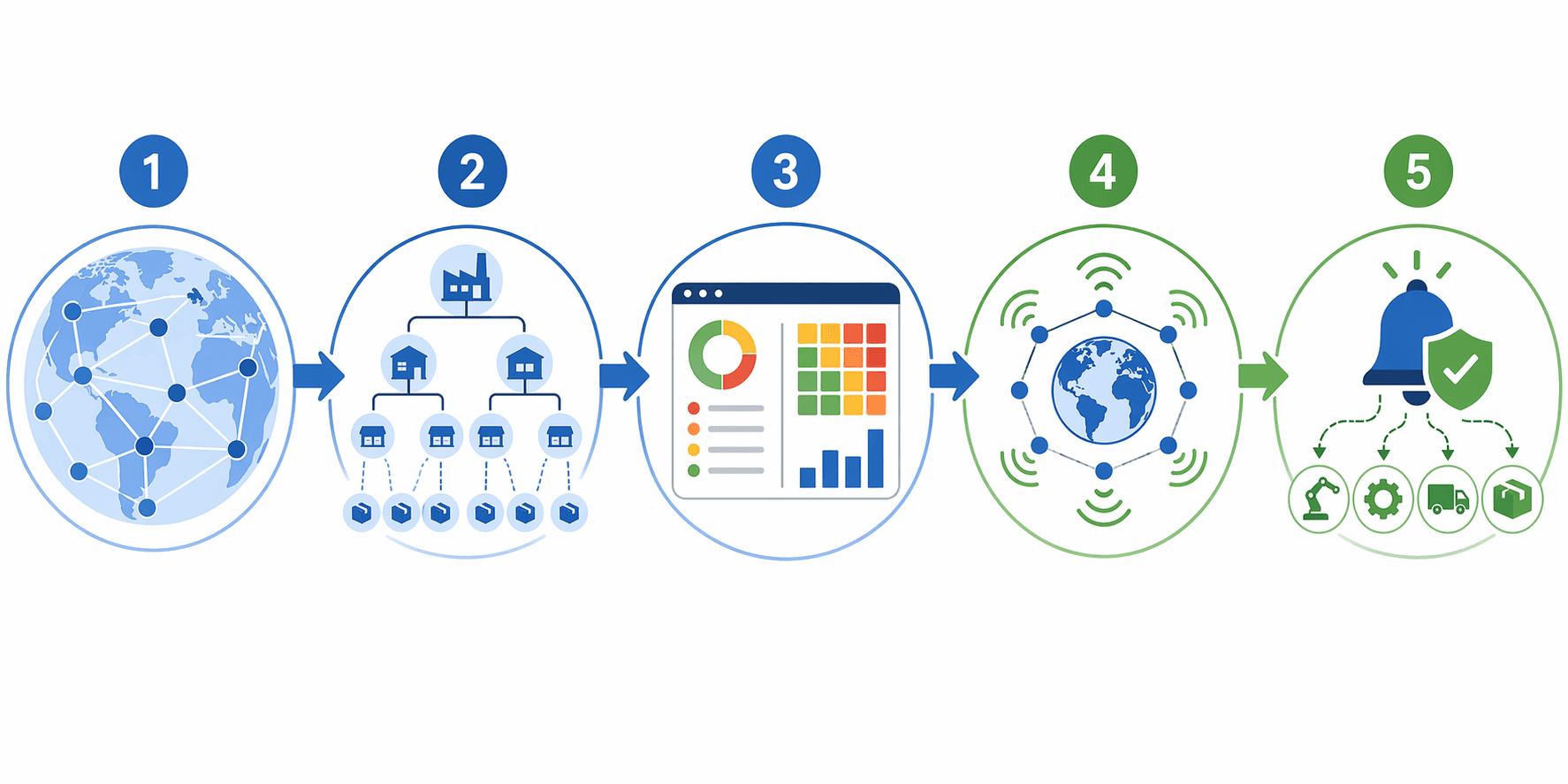
The five-step capability stack
| Step | What it changes | Why it matters |
|---|---|---|
| Network mapping | Build a current view of plants, suppliers, materials, routes, and dependencies. | If the network is incomplete, everything downstream is incomplete too. |
| Sub-tier supplier discovery | Identify Tier-2, Tier-3, and Tier-4 suppliers rather than stopping at direct vendors. | This is where hidden concentration, geographic exposure, and single points of failure usually appear. |
| Risk assessment and scoring | Combine logistics, financial, geographic, compliance, and demand signals into priority scores. | AI becomes useful when it helps rank exposure, not just collect it. |
| Continuous monitoring | Track weak signals and changing conditions as they emerge. | Risk posture shifts from periodic review to ongoing awareness. |
| Predictive alerting and automated mitigation | Route alerts to owners and trigger predefined responses such as alternate sourcing or inventory adjustments. | The operating model starts to act before the disruption hardens. |
The first two steps carry the most weight because they determine whether the rest of the system is working on real network truth or on a partial model. If the network is not mapped, sub-tier suppliers are not discovered. If sub-tier suppliers are not discovered, risk scores are partial. If risk scores are partial, monitoring produces noise. If monitoring is noisy, predictive alerts are not trusted. If alerts are not trusted, mitigation stays reactive.
That sequence matches the visibility gap Tradeverifyd highlights. In its 2026 statistics roundup, 93% of supply chain executives report high confidence in oversight, yet only 56% can trace material origins to Tier-3 or Tier-4 sources, and 72% now view automated mitigation capabilities as mandatory [4]. Confidence is not the same thing as traceability, and that distinction is exactly where many AI programs stall.
The problem is usually less about algorithm quality than about data readiness. PwC’s 2026 Digital Trends in Operations Survey found that 42% of respondents cited lack of real-time data as their main limitation, and 87% said poor data quality had reduced the value of digital initiatives [5]. AI can connect, infer, and prioritize, but it does not create supplier truth out of missing master data.
Even the recovery clock gets longer when networks are not stress-tested. SCMR’s Gartner-informed coverage says recovery can be 30% longer in that condition [2]. At the same time, Everstream’s 2026 context says 73% of supply chain leaders expect to hit their cost-absorption wall by the end of 2026 [1]. That combination makes the investment case less about experimentation and more about avoiding a more expensive operating model.
What leadership should measure
- Share of critical spend and materials mapped to Tier-3 and Tier-4 suppliers
- Time from disruption signal to impact assessment
- Revenue loss from disruptions before and after deployment
- Buffer stock tied to monitored versus unmonitored suppliers
- Alert precision, owner response time, and mitigation acceptance rate
- Percentage of suppliers with validated master data and assigned ownership
The practical way to roll this out is to start where the concentration is highest and the data is clean enough to prove value, then expand outward once the network model is stable. That usually means beginning with one material family, one region, or one high-risk supplier cluster, then connecting the alerting layer to procurement and planning workflows instead of leaving it as a stand-alone view.
The result worth defending to finance is not autonomy and not perfect foresight. It is earlier, more trusted decisions that reduce disruption losses, speed up assessment, and avoid carrying excess inventory simply because the network could not be seen clearly enough.
References
- "Are You Prepared for the Supply Chain Disruptions of 2026?" — Everstream Analytics
- "3 Strategies to Turn Supply Chain Uncertainty Into Advantage in 2026" — Supply Chain Management Review / Gartner
- "How AI Transforms Supplier Risk Management" — Everstream Analytics
- "79 Supply Chain Statistics to Know in 2026" — Tradeverifyd
- "PwC's 2026 Digital Trends in Operations Survey" — PwC
Comments
Join the discussion with an anonymous comment.