
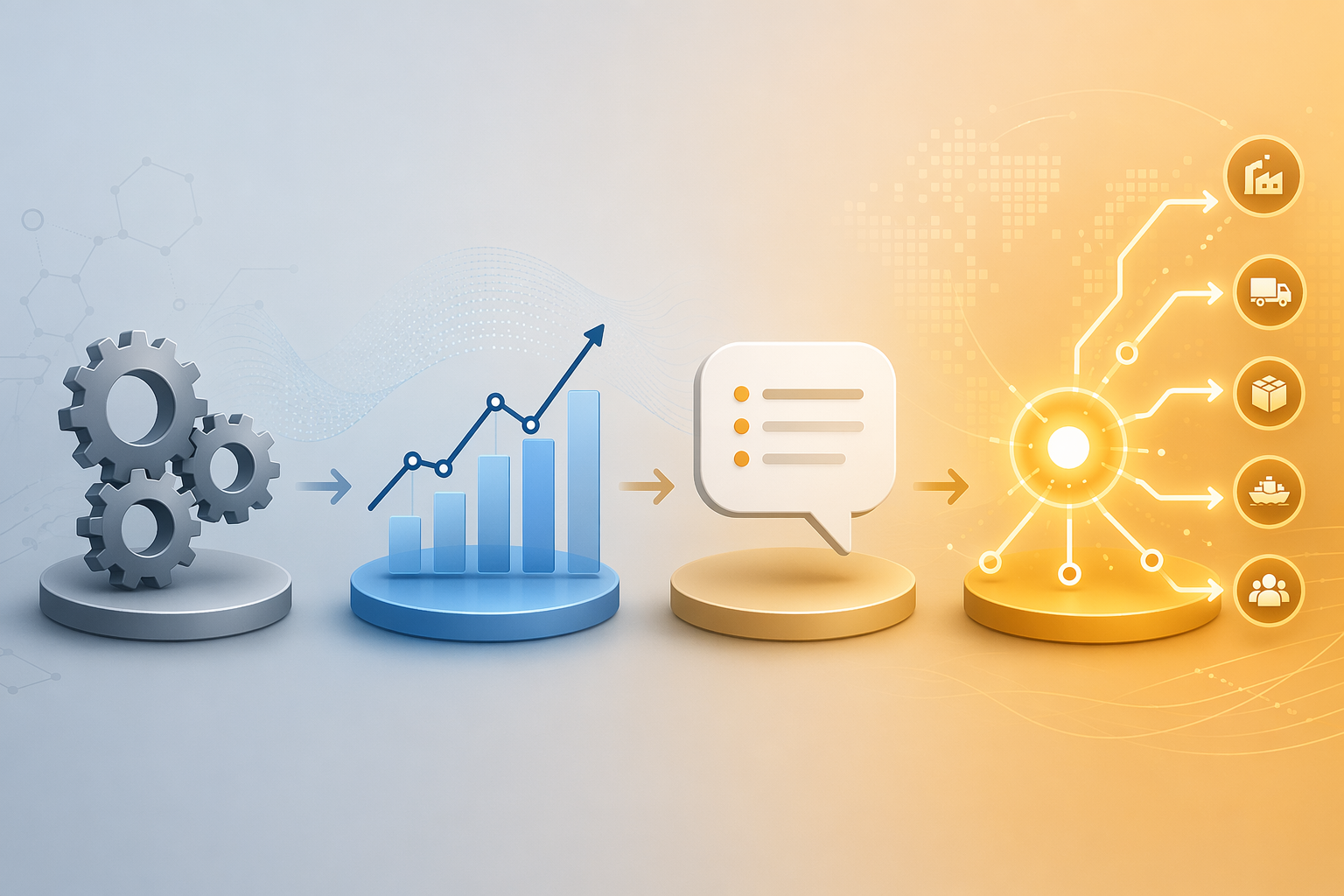
The useful test for artificial intelligence in supply chain examples is no longer whether a system can forecast demand, summarize a shipment delay, or recommend a replenishment move. The stricter test is whether it can sense a change, choose an action, and execute that action inside approved operating limits without opening a ticket for every exception. By that standard, autonomous AI agents are no longer just slideware in 2026, but the production evidence is still concentrated in a small set of companies with unusually mature data, automation, and control environments.
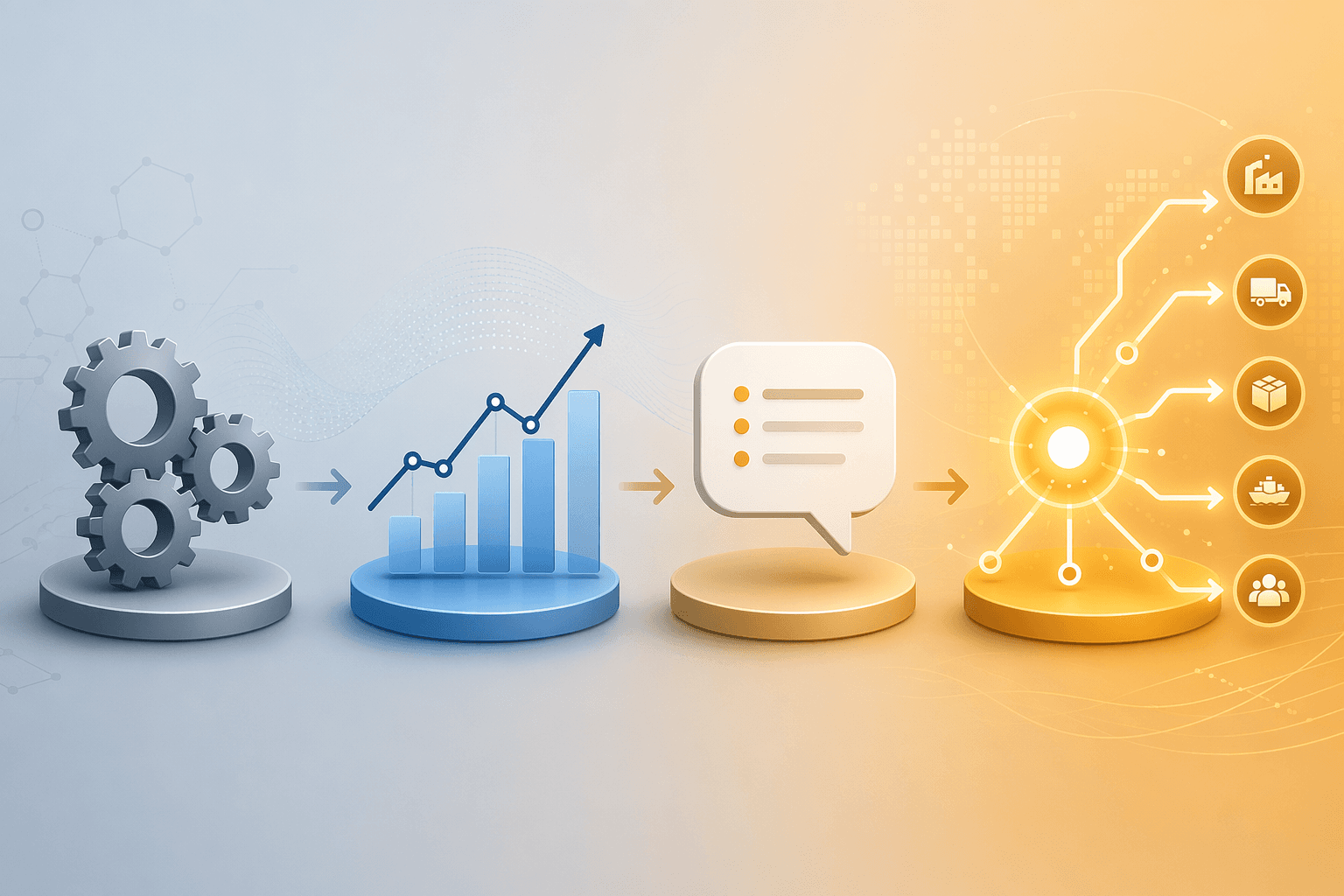
That distinction matters because the word “agentic” is being stretched. A rule engine that says “if port delay exceeds threshold, notify planner” is automation. A machine learning model that predicts late arrival risk is analytics. A generative assistant that explains why inventory is short is useful, but still advisory. An autonomous supply chain agent is different: it takes a bounded decision such as rerouting freight, resequencing work, placing a reorder, or resolving an exception, then acts through connected systems without asking a human to approve each individual move.
The six companies below are not equal evidence. Some results come from vendor-published material. Some metrics need primary-source tracing before they should be treated as benchmark numbers. DHL’s cited productivity figures come from older material, while Gartner’s later forecasts are projections rather than deployed reality. Still, taken carefully, the examples show where autonomous agents have crossed from demo behavior into live supply chain operations.
What Counts as an Autonomous Supply Chain Agent
A production-grade supply chain agent needs more than a model and an interface. It needs a live signal, a decision policy, execution rights, exception boundaries, and auditability. The least interesting part is whether the model uses reinforcement learning, optimization, generative AI, or a mix of techniques. The operational question is simpler: when the shipment is late, the robot fails, the supplier deviates, or the forecast changes, does the system actually do something?
| System Type | What It Does | Where the Human Usually Sits |
|---|---|---|
| Rule-based automation | Executes fixed logic when predefined conditions are met | Designs and updates the rules |
| Predictive ML | Scores risk, demand, ETA, or likely outcomes | Reviews predictions and decides what to do |
| Generative assistant | Explains, drafts, summarizes, or helps investigate | Chooses whether to act on the output |
| Autonomous agent | Senses, decides, and executes within approved limits | Sets guardrails, reviews exceptions, and audits performance |
That last row is where the operating burden changes. Planners are no longer just consuming a better forecast. Logistics teams are no longer just reading a more polished disruption summary. Procurement is no longer just seeing a policy violation after it has happened. The system has some authority to close the loop. That is why the boundary needs to be strict.
1. Flexport: Freight Agents That Reroute During Disruption
Flexport is one of the cleaner examples of what agentic supply chain behavior is supposed to look like, at least in the way the deployment is described: freight agents monitor live logistics conditions, evaluate disruption scenarios, and reroute shipments rather than merely flagging risk for a coordinator. Kanerika’s 2026 write-up attributes the system to autonomous freight agents using reinforcement learning and reports a 30% transportation cost reduction, 25% faster transit times, and real-time rerouting during disruption events such as Suez Canal-type scenarios.[1]
Those numbers should not be repeated as neutral market benchmarks. The cited source is not the same as an independently audited Flexport operating report, and the research brief flags that the metrics should be traced to primary Flexport sources before publication. Even with that caveat, the case is worth attention because the claimed behavior maps to the agentic threshold: disruption signal in, route decision out, execution path changed.
In a conventional setup, the delay alert starts a human chain: planner review, carrier comparison, service tradeoff, customer priority check, possible escalation, then rebooking. An autonomous freight agent compresses that chain only if it already has reliable shipment status, contractual options, service constraints, cost logic, and permission to act within a defined envelope. Without those pieces, “rerouting agent” is just another name for a recommendation engine with a queue behind it.
2. Ocado: Swarm Robotics That Reorganize Around Failure
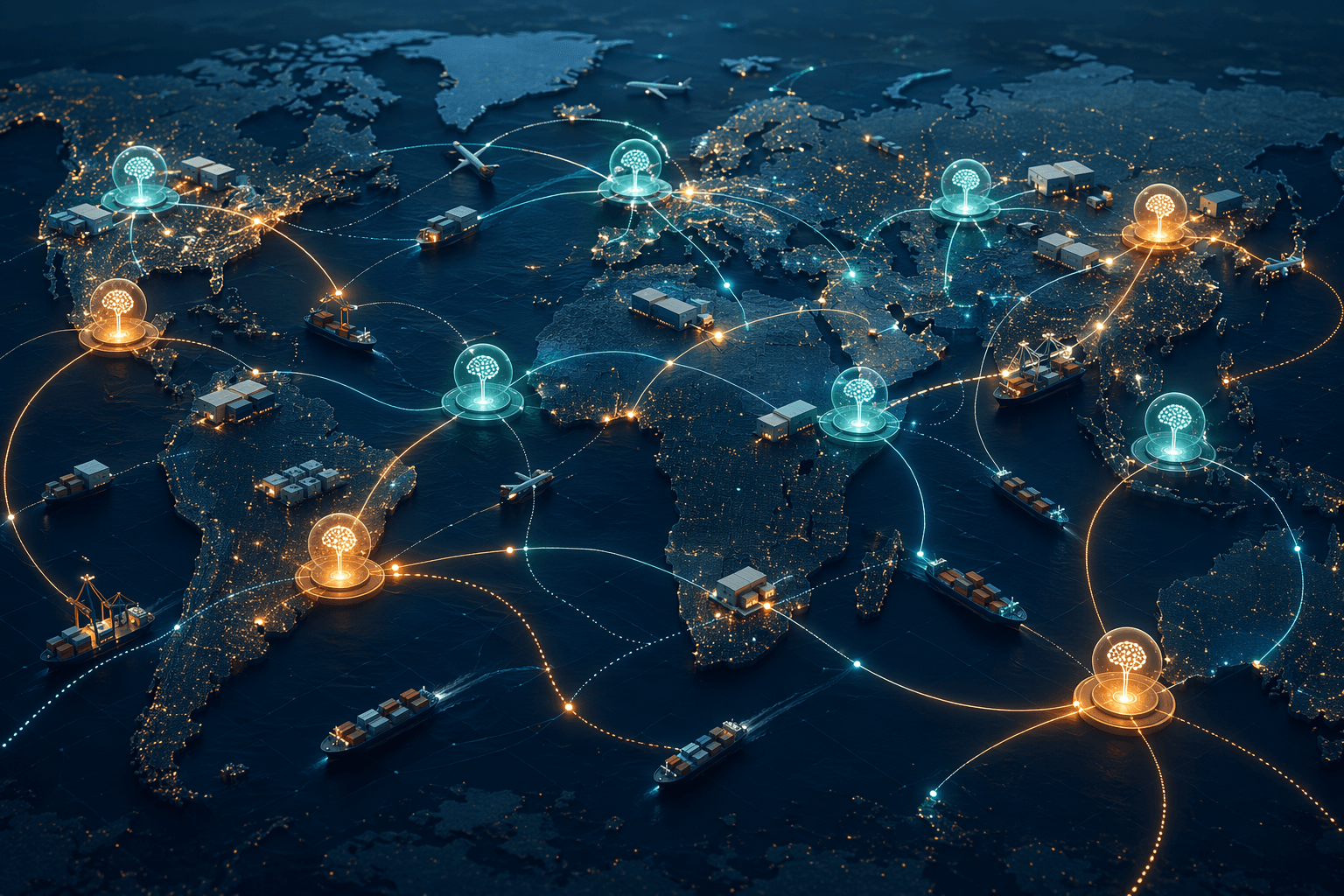
Ocado’s warehouse robotics are a different kind of evidence because the autonomy is visible in physical flow. The system coordinates more than 50 robots per order, processes more than 65,000 orders daily, and is reported at 99.9% accuracy.[2] More important than the headline throughput is the behavior under failure: robots self-organize around failed units without manual reprogramming.[2]
That failure response is what separates a scripted automation cell from a more agentic operating model. A fixed-path warehouse automation system can be highly efficient until something blocks the path, breaks the assumption, or forces a supervisor to intervene. Swarm coordination shifts part of that response into the system itself. The work does not stop just because one unit becomes unavailable; the surrounding agents adjust.
Ocado also shows why the word “agent” should not be limited to office workflows. In supply chain operations, the highest-value autonomy often appears where digital decisions meet physical constraints: bins, grids, routes, doors, capacity, labor windows, and cutoffs. The agent is not impressive because it sounds conversational. It is impressive because the order still moves when the environment changes.
3. Blue Yonder: Planning Agents Across Retail Networks
Blue Yonder widens the pattern from logistics execution into planning. Its agent model is described as a multi-tier hierarchy, with strategic and tactical agents operating across planning decisions. CCO Consulting and Blue Yonder client data say the platform is deployed at 7 of the top 10 global retailers, with claimed forecast error reductions of 40–65%, stockout reductions of 30%, and safety stock decreases of 20–25%.[3]
Those are vendor-sourced performance claims, so the safer reading is not that every retailer should expect the same result. The useful signal is that agentic architecture is being applied beyond isolated exception handling. In retail planning, the decision surface is wide: demand shifts, inventory positions, replenishment timing, service targets, safety stock, and promotion effects all collide. If agents are operating across strategic and tactical layers, governance becomes as important as the model.
Readers evaluating this category should separate platform capability from operating readiness. A planning agent can only act responsibly if master data, item-location history, lead times, allocation rules, service policies, and exception workflows are already disciplined. For a deeper vendor-level view, ChainSignal’s Blue Yonder supply chain AI platform review is the more appropriate place to examine the platform in detail.
4. Coupa: Procurement Agents That Detect and Reduce Non-Compliant Spend
Coupa brings the agentic discussion into procurement, where the operational question is not only “can AI find savings?” but “can it enforce policy and move work through the buying process without adding more review loops?” Coupa-published data says its autonomous procurement agents are deployed across more than 2,000 enterprises, with a 22% procurement cycle reduction and automated detection of about 4.5% annual non-compliant spend.[4]
Again, the source matters. These are vendor-published figures, not independent cross-industry benchmarks. But procurement is a credible domain for bounded autonomy because many decisions already sit inside explicit rules: approved suppliers, contract terms, budget limits, category policies, preferred payment terms, and compliance thresholds. The agent’s value is not in replacing procurement judgment everywhere. It is in removing avoidable cycle time from decisions that are already governed.
5. Maersk: Autonomous Vessel Operations and the Limits of Source Certainty
Maersk is the most dramatic example in scope, but also one where source caution is necessary. Kanerika’s 2026 blog reports that an autonomous container vessel completed a first autonomous trans-Atlantic crossing in December 2024, with a 23% fuel reduction and 18% schedule reliability improvement.[1]
If verified through primary Maersk or technical documentation, that would be a substantial production signal: autonomy acting not just in planning software, but in the movement of assets across a high-risk maritime environment. Until then, the careful interpretation is narrower. The reported case suggests that autonomous navigation and voyage optimization are part of the supply chain autonomy frontier, but the cited figures should not be treated as settled operating norms.
The case also highlights a governance difference between digital and physical autonomy. A freight rerouting agent may need commercial and service guardrails. A vessel autonomy system needs safety, regulatory, navigational, insurance, and failover controls. Calling both “agentic AI” is only useful if the operating envelope is made explicit.
6. DHL: Logistics Agents and Exception Handling at Network Scale
DHL’s relevance is network breadth. Its logistics operations involve global shipment monitoring, exception handling, and warehouse automation across many facilities and service types. DHL Delivered reported in March 2022 that AP robots boosted productivity by 30–180%.[5]
The date matters. A 2022 productivity figure may reflect an earlier deployment stage, and it may not describe the same class of agentic decision-making now being discussed in 2026. Still, DHL belongs in the set because logistics exception handling is one of the natural homes for autonomous agents: a shipment deviates, a constraint changes, a customer promise is at risk, and the system either resolves the exception or pushes it to a human with context.
For readers who want the DHL case separated from the broader agentic AI discussion, ChainSignal’s DHL AI logistics network optimization deployment case study is the better follow-on path.
The Pattern Is Production Autonomy, Not Universal Adoption
Across the six examples, the common thread is not the vendor category or the model type. It is the presence of bounded decision rights. Flexport’s reported agents reroute freight. Ocado’s robots reorganize work around failures. Blue Yonder’s planning agents operate across decision layers. Coupa’s procurement agents shorten cycles and detect policy leakage. Maersk’s reported vessel autonomy, if validated, pushes autonomous execution into transport assets. DHL’s automation and exception-handling environment shows why high-volume logistics is fertile ground.
That is a much narrower claim than “AI is transforming supply chains.” It says that some organizations have reached the point where AI is allowed to close operational loops. The prerequisite is not enthusiasm. It is years of process standardization, data integration, operational telemetry, exception taxonomy, and confidence in the systems of record that agents must read from and write back to.
This is where many agentic AI proposals fail in practice. A planner can tolerate an imperfect dashboard. A procurement manager can ignore a weak recommendation. An autonomous agent with execution rights has less room for ambiguity. If lead times are unreliable, supplier records are messy, shipment events arrive late, or inventory accuracy is poor, the agent does not become strategic. It becomes fast at producing exceptions.
Why These Companies Are Early
The companies that show up in production examples tend to have one of two advantages. Some, like Ocado, built highly instrumented operating environments where the physical process and software architecture were designed together. Others, like large retailers, logistics providers, procurement networks, and ocean carriers, operate at such scale that even small reductions in decision latency justify serious investment in automation governance.
There is also a trust constraint. RELEX’s 2026 research, cited in ChainSignal’s existing coverage, found that only 10% of organizations trust AI to make critical supply chain decisions without human review.[6] That finding does not mean autonomous agents are irrelevant. It means most organizations are still deciding where autonomy can be safely graduated rather than granted wholesale.
Gartner’s forecast, reported by Inbound Logistics in 2026, puts the direction of travel in sharper terms: 15% of daily logistics decisions will be made autonomously by AI agents by 2028, and 60% of disruptions will be resolved without human intervention by 2031.[7] Those are forecasts, not present-tense adoption figures. They are useful mainly because they match the operating pattern already visible in the strongest examples: autonomy arrives first in bounded, high-volume, data-rich decisions.
For organizations evaluating their own path, the relevant question is not whether to “adopt agentic AI” as a category. It is which decisions are stable enough, instrumented enough, and low-regret enough to automate first. A graduated autonomy model is usually more credible than a big-bang handoff; ChainSignal’s practitioner’s guide to graduated autonomy goes deeper on that operating model.
The Real Lesson From These Six Examples
The strongest artificial intelligence in supply chain examples now include systems that do more than predict or advise. They reroute, reorganize, detect, sequence, and resolve within defined boundaries. That is a real shift from decision support to decision execution.
The mistake would be to treat that shift as broadly available just because the technology vocabulary has arrived. The production cases exist because the surrounding operating conditions exist: clean data, integrated execution systems, process discipline, measurable exception flows, and leadership willing to define exactly where the machine is allowed to act. Autonomous agents are compressing some supply chain decision cycles from days to minutes, but they are doing it first where the groundwork has already been laid.
References
- Kanerika 2026 blog, Kanerika, 2026.
- Ocado swarm robotics coordination research, Intellias and MIT Sloan.
- Blue Yonder client data on multi-tiered agent hierarchy, CCO Consulting and Blue Yonder.
- Coupa published data on autonomous procurement agents, Coupa.
- AP robots boosting productivity 30–180%, DHL Delivered, March 2022.
- Agentic AI in Supply Chain: What Actually Works in 2026 — and What's Still Hype, ChainSignal.
- Gartner projection on autonomous logistics decisions, Inbound Logistics, 2026.
Comments
Join the discussion with an anonymous comment.