
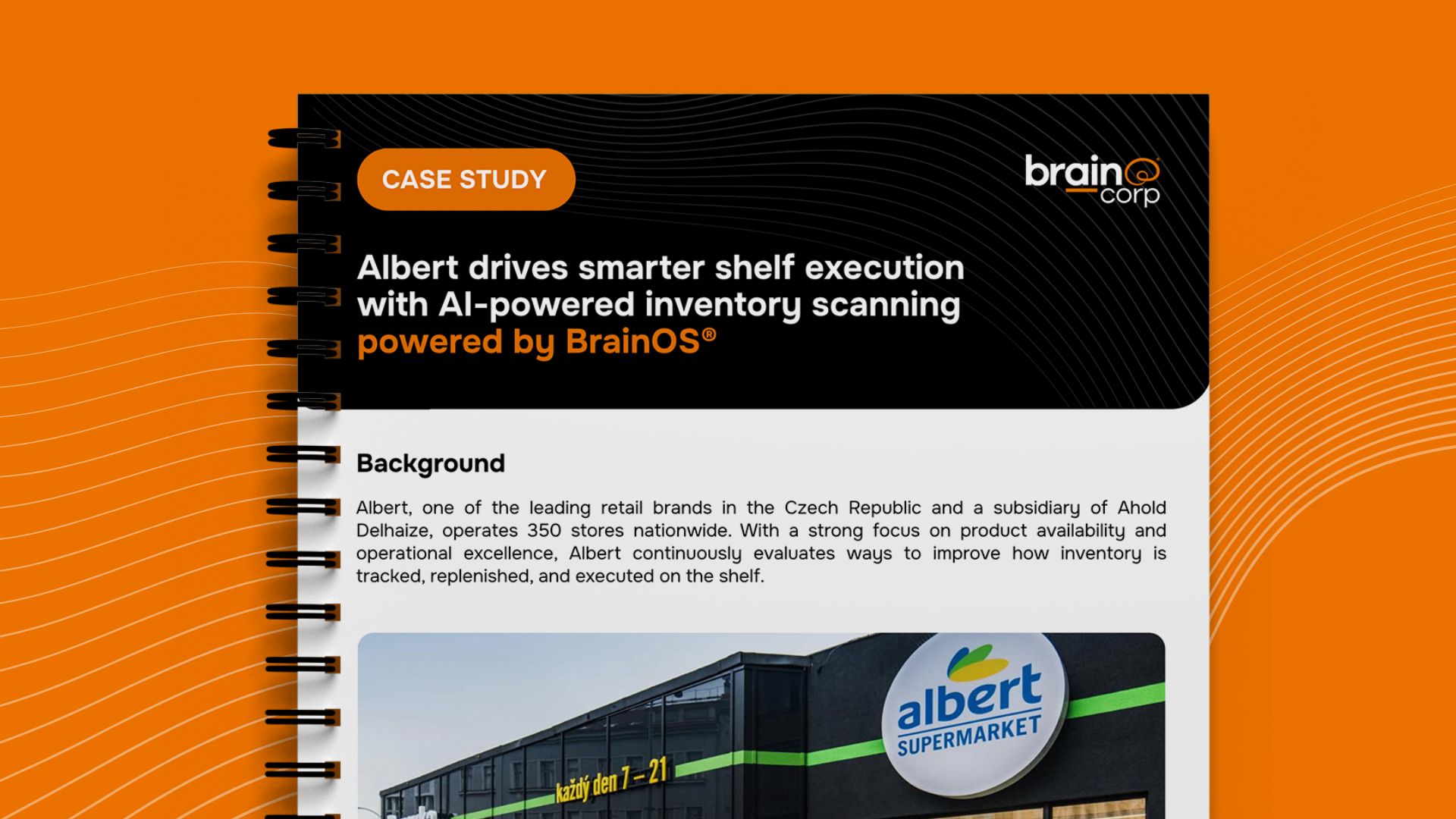
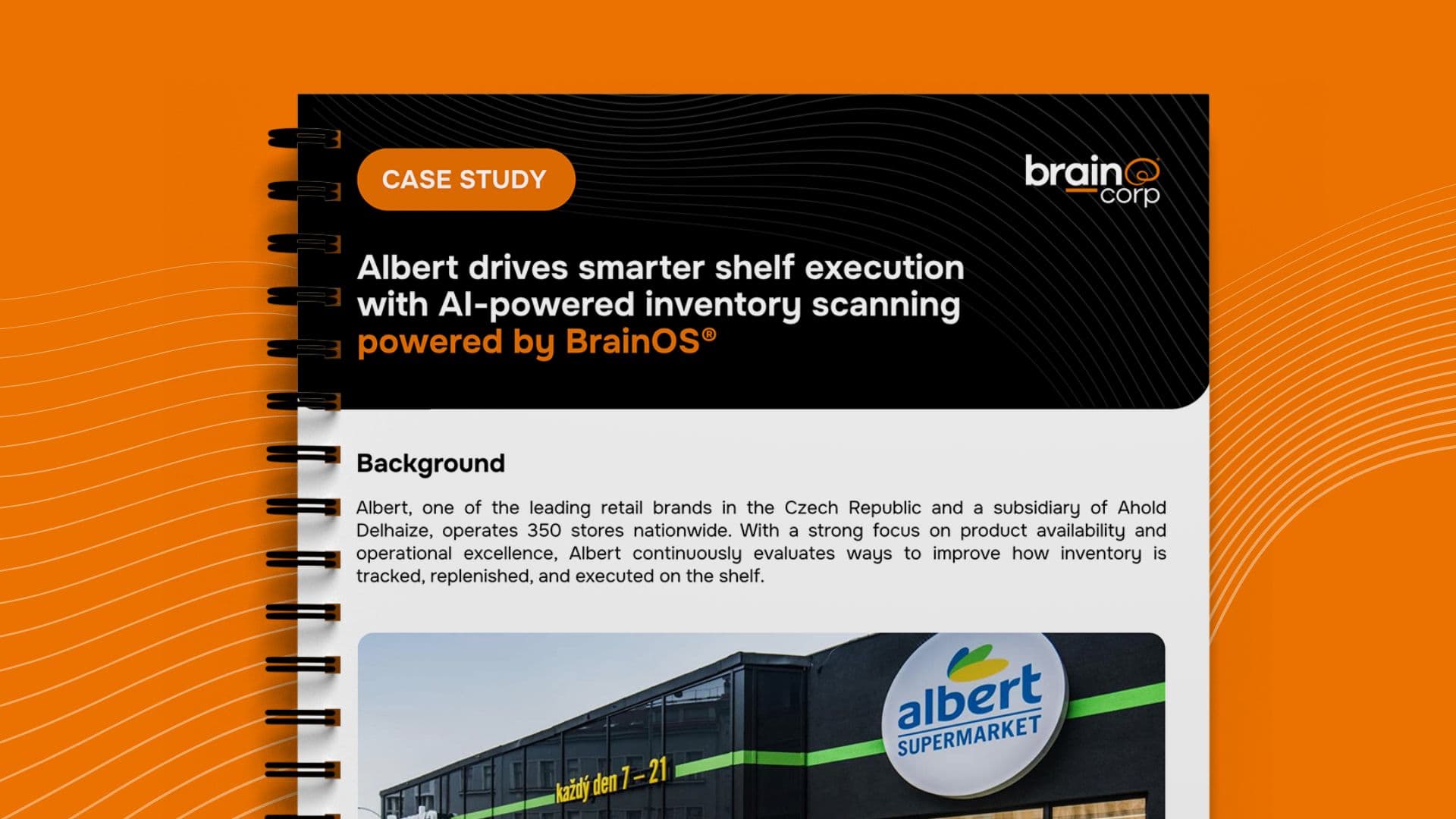
Retail systems can say one thing while the shelf says another. Albert is useful because it turns that everyday visibility gap into a production result: Brain Corp’s case study and PR Newswire release describe the Czech and Slovak retailer using BrainOS-powered shelf-scanning robots in 2026, after an earlier autonomous-cleaning phase had already made robots part of store life [1][2].
The reported shelf-scanning result was high-90s accuracy against a 90% baseline target, across product identification, price tag verification, and exception detection, with accuracy improving on successive scans [3]. That combination matters more than a single headline number. It suggests the robot was not just finding isolated errors; it was becoming more useful as it kept scanning the same live aisles, which is the sort of behavior operations teams care about when the goal is fewer mismatches between the system record, the shelf, and the next customer complaint.
What the reported accuracy actually covers
- Product identification
- Price tag verification
- Exception detection
That is a meaningful operational slice, but it is still a slice. The figures should be read as company-reported results, with trade coverage largely confirming publication rather than independently auditing the exact accuracy level. The result shows the system was reading shelf conditions well enough to support execution work; it does not prove that every store, layout, assortment mix, or replenishment process would land in the same range. The most important part of the reported result is not that it sounds impressive, but that it was tied to a concrete operational task instead of a vague AI promise [3].
For store operations, the practical value is in what gets surfaced early. A wrong tag, a product mismatch, or an unworked exception is usually cheap to fix when it is caught before customers and replenishment decisions drift further away from reality. Albert’s reported result points to that narrower, more valuable claim: computer vision can repeatedly find shelf-state problems in a live retail environment, not just in a demo aisle.
Why the earlier cleaning robots matter
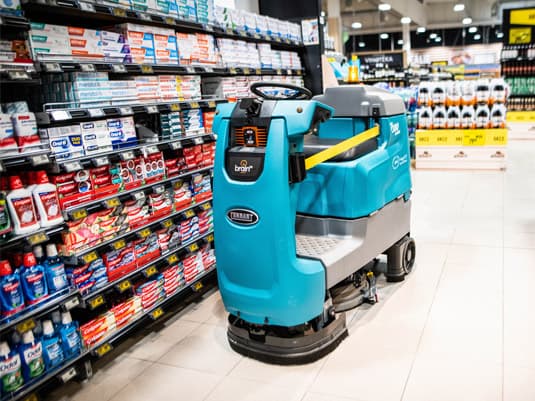
Albert did not start with shelf scanning. Tennant’s case study says the retailer had already used autonomous floor-cleaning robots since 2022, with T380AMR and T7AMR scrubbers working across 92,000-plus routes and cleaning more than 20 million square meters [4]. That is not a decorative prelude. It is the reason the shelf-scanning rollout reads as plausible: the organization had already spent years letting robots move through live stores without turning them into an exception.
That earlier phase likely lowered the adoption friction that usually slows in-store automation. Staff had already seen a platform behave reliably in front of shoppers, and the store had already absorbed the operational rhythm of autonomous machines. The shelf-scanning deployment then built on that familiarity instead of asking the team to trust a higher-stakes use case from zero.
What the broader market context adds
Albert is one deployment, but it sits inside a category drawing budget attention. Fortune Business Insights projects the global AI in warehousing market to grow from $12.69 billion in 2025 to $83.42 billion by 2034 at a 23.1% CAGR [5]. That forecast does not validate any specific ROI model for Albert, but it does explain why shelf-scanning keeps showing up in vendor shortlists instead of staying a niche experiment.
The useful conclusion is narrower than the market hype. Albert provides a production benchmark for AI shelf-scanning, and it does so in the part of retail where inventory accuracy is not abstract. If a retailer already has the operational discipline, store layout, and trust in autonomous systems that Albert appears to have built through cleaning robots first, the shelf-scanning case becomes easier to believe. If it does not, the exact same accuracy claim is harder to translate into repeatable value.
References
- Albert Drives Smarter Shelf Execution with AI-Powered Inventory Scanning from Brain Corp — Brain Corp
- Albert drives smarter shelf execution with AI-powered inventory scanning from Brain Corp — PR Newswire
- Brain Corp reports strong results from AI-powered shelf-scanning robots at Czech retailer Albert — Robotics & Automation News, 2026-05-08
- Albert retail brand robotic scrubber dryers — Tennant Company
- AI in Warehousing Market — Fortune Business Insights
Comments
Join the discussion with an anonymous comment.