

The investment case for ai in forecasting is no longer built on a vague promise that machine learning will “see patterns humans miss.” The usable answer is more specific: forecast error can fall materially, inventory and logistics costs can improve, and planner time can be released. But the cleaner the benchmark slide looks, the more important it is to ask where the improvement actually lands. A lower error metric does not automatically become cash. It has to pass through service-level decisions, safety-stock policy, replenishment rules, exception management, and finance’s willingness to believe that inventory can come down without creating new risk.
The evidence supports serious evaluation, not instant payback. McKinsey figures widely cited through secondary sources point to 20–50% forecast-error reduction, up to 65% lower product unavailability, 20–30% inventory reduction, and 5–20% logistics cost reduction in AI-enabled distribution contexts.[1] Secondary syntheses also cite Deloitte findings that only 6% of organizations saw ROI in under a year, with most returns appearing over a 2–4 year window.[2] Gartner adds the strategic warning: 94% of supply chain organizations plan to adopt AI within two years, but only 23% have a formal AI strategy.[3]

The benchmark answer: meaningful gains, delayed conversion
The most credible way to read the current benchmark set is by separating three things that are often blended together: forecast improvement, operational improvement, and financial return. They are connected, but they do not arrive at the same time or under the same owner.
| What is being measured | Reported benchmark | How to read it |
|---|---|---|
| Forecast error | 20–50% reduction, widely cited from McKinsey through secondary sources [1] | Useful directional range; not a guaranteed company-level result. |
| Traditional vs. AI-driven error rates | Traditional forecasting error rates of 25–40% compared with 10–16% for AI-driven methods, cited via GroupBWT from IJSAT 2025 [2] | A sharper accuracy comparison, but still a secondary citation rather than a directly audited operational benchmark. |
| WAPE and bias | 40–75% WAPE reduction and 30–70% bias reduction, cited via GroupBWT from WJAETS 2025 [2] | Important because WAPE and bias affect planner trust differently; bias reduction can matter as much as headline accuracy. |
| Inventory | 20–30% inventory reduction in AI-enabled distribution, cited from McKinsey through secondary sources [1] | Only converts to working-capital release if service-level, safety-stock, and replenishment policies are changed. |
| Logistics cost | 5–20% logistics cost reduction in AI-enabled distribution, cited from McKinsey through secondary sources [1] | More likely when better forecasts change transportation planning, expedite behavior, allocation, or deployment. |
| ROI timing | Only 6% see ROI in under a year; most returns arrive within 2–4 years, cited in secondary syntheses of Deloitte findings [2] | The main guardrail against building a one-year business case from accuracy improvements alone. |
| Strategy readiness | 94% plan adoption within two years; 23% have a formal AI strategy [3] | The gap that explains why adoption and value capture diverge. |
That table is more useful than a single ROI estimate because forecasting value is staged. Accuracy improves first inside a model or planning workflow. Inventory improvement comes later, after policy owners accept the new signal. Margin improvement comes later still, and only if the organization avoids replacing one cost with another: lower stock with worse service, fewer expedites with missed demand, or lower planner effort with more firefighting elsewhere.
This is also where source type matters. The McKinsey ranges are widely repeated and directionally consistent across supply chain AI summaries, but the figures used here are secondary citations rather than a directly reviewed original report.[1] The IJSAT and WJAETS figures are also cited through GroupBWT rather than independently verified from the original papers.[2] That does not make them useless. It means they should guide expectations, not anchor a board-approved savings number by themselves.
What forecast accuracy gains actually change
Forecast accuracy is the cleanest part of the case because it can be tested against historical demand. A planning team can run backtests, compare model output with the current statistical baseline, and look at error by item, location, customer, channel, and horizon. If the AI model cannot beat the current process in controlled comparisons, the rest of the investment case becomes decoration.
The reported accuracy ranges are strong enough to matter. GroupBWT cites IJSAT 2025 figures showing traditional forecasting error rates of 25–40% dropping to 10–16% with AI-driven methods.[2] The same source cites WJAETS 2025 figures for 40–75% WAPE reduction and 30–70% bias reduction.[2] Those are not small changes. For a demand planner, they can mean fewer chronic over-forecasted items, fewer recurring stockout arguments, and less time spent explaining why the forecast is always wrong in the same direction.
Bias deserves more attention than it usually gets. A model that reduces average error while preserving a persistent upward or downward bias can still create operational damage. Upward bias inflates inventory and capacity signals. Downward bias looks efficient until customer service suffers. When a forecast improvement includes bias reduction, it becomes easier for planners and inventory managers to trust policy changes that would otherwise feel risky.
The practical test is not whether the new model produces a better aggregate number. It is whether the improvement appears at the level where decisions are made. A 25% error reduction at the national product-family level may be interesting to a dashboard owner. It may be much less useful to a replenishment manager who still has to decide what to ship to a regional warehouse next week. For a deeper benchmark discussion, see AI Demand Forecasting Accuracy: What Supply Chain Leaders Can Expect in 2026.
The operating gains depend on whether the business can absorb the new signal
The inventory and logistics numbers are where the investment case gets tempting and dangerous. A 20–30% inventory reduction range and a 5–20% logistics cost reduction range are material enough to get executive attention.[1] They are also easy to misuse. Forecasting does not reduce inventory by itself. Inventory comes down when the business changes how much buffer it holds, where it holds it, and how quickly it reacts when demand shifts.
In practice, the translation usually moves through several operating decisions:
- Safety stock can be recalculated because forecast error and demand variability assumptions have changed.
- Replenishment parameters can be adjusted so the system does not keep ordering against an outdated demand signal.
- Deployment and allocation rules can shift inventory toward locations where the forecast is now more reliable.
- Transportation plans can reduce last-minute moves when demand and supply exceptions are visible earlier.
- Planner exception queues can shrink if the model removes routine noise rather than adding another layer of alerts.
Each of those changes has an owner. Demand planning may own the forecast, but inventory policy may sit with supply planning, finance, merchandising, or operations. Logistics cost may sit under a different budget entirely. This is why a forecast improvement can be real and still fail to show up as recognized savings. The organization has to decide who is allowed to change the policy and who carries the consequence if the new policy misses.
Procurement benchmarks add another angle. McKinsey figures cited through secondary sources point to 10–25% sourcing cost reduction in procurement contexts.[1] That is not the same as demand forecasting ROI, but it shows how better predictive signals can matter upstream: supplier commitments, purchase timing, and volume negotiations improve when future demand is less opaque. The boundary is important. Procurement savings should not be counted in a forecasting business case unless the implementation actually changes sourcing decisions.
The cases worth studying are concrete, not universal
Vendor case studies should not be treated as neutral population averages. They are still useful when the outcome is operationally specific enough to examine. Idaho Forest Group is a good example because the reported change is not an abstract “AI transformation.” IBM says the company reduced forecasting time from more than 80 hours to under 15 hours using IBM AI.[5]
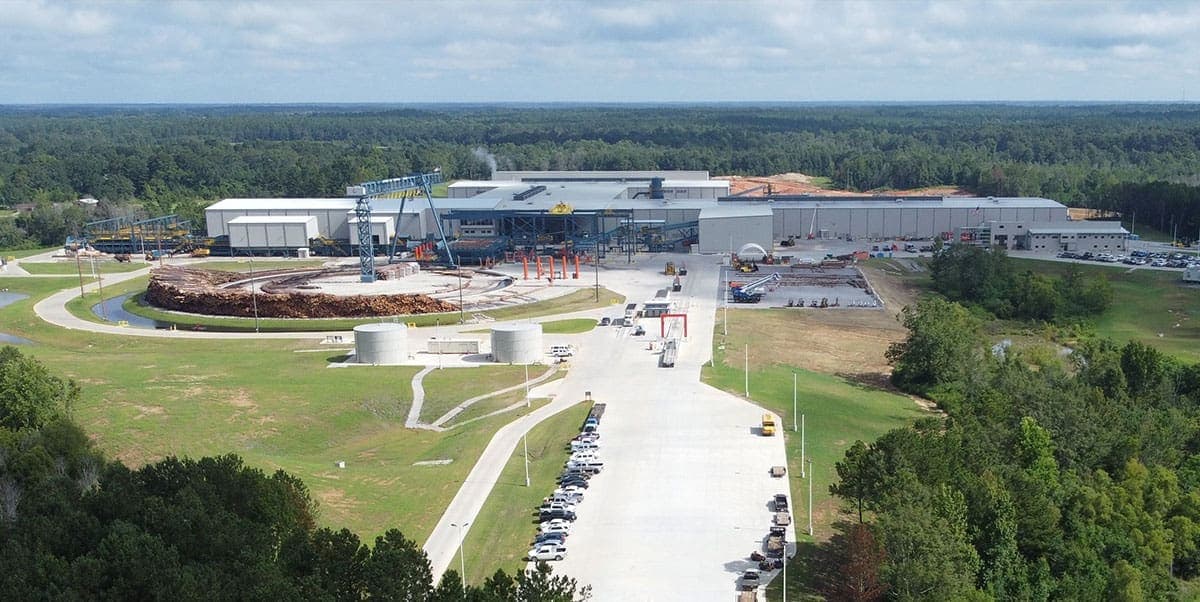
That kind of result changes the planning week. It can mean the difference between spending days assembling a baseline and having time to challenge exceptions, review customer changes, and coordinate with supply. Planner capacity is not always valued properly in ROI models, but it is often where teams first feel the benefit. If a planning cycle shrinks, the organization gains time to act before the forecast becomes stale.
Novolex is the stronger inventory illustration. IBM reports that the company reduced excess inventory by 16% and cut planning cycles from weeks to days through AI-enabled planning.[5] That does not prove a 16% reduction is typical. It does show what value capture looks like when forecast improvement reaches the balance sheet: excess stock is identified, planning cadence improves, and the organization acts before inventory becomes a fixed cost problem.
The o9 Solutions material reports planner productivity gains of up to 60% in food-industry AI/ML adoption contexts.[6] That figure is useful as a ceiling case, not a planning assumption. Food demand can have volatility, promotion effects, perishability, and service constraints that make planner productivity particularly sensitive to better exception handling. A company in a slower-moving industrial category should not lift that number into its own business case without testing whether the same work is actually being removed.
The better use of these cases is diagnostic. Ask which part of the result resembles your own bottleneck. If the problem is too much manual forecast preparation, Idaho Forest Group is relevant. If the problem is excess inventory and slow planning cycles, Novolex is more relevant. If the problem is planner exception overload, the productivity cases may help frame the opportunity. None of them removes the need for a company-specific baseline.
Why the ROI timeline stretches beyond year one
The frustrating part of AI forecasting is that the model can improve before the economics do. Secondary syntheses citing Deloitte report that 85% of organizations increased AI investment in 2025, yet only 6% saw ROI in under a year, with most achieving returns over 2–4 years.[2] That pattern is believable because the first year is usually consumed by data work, integration, baseline testing, user adoption, and governance decisions.
The early months often reveal how much of the current forecast process lives outside the system of record. Customer overrides may sit in spreadsheets. Promotion assumptions may be embedded in email threads. Lost sales may be invisible. Substitutions, allocations, and one-time events may be coded inconsistently. An AI model can ingest bad history faster than a traditional tool, but speed does not turn poor inputs into reliable demand signals.
PwC’s 2026 Digital Trends in Operations survey gives this problem a hard edge: 87% of operations leaders said poor data quality has impacted digital initiative outcomes.[4] The same PwC research found that only 4% of organizations simultaneously achieved full AI embedding, no scaling barriers, a horizontal operating model, and technology investments delivering results.[4] Those figures explain why pilot success and enterprise ROI are different milestones.
Gartner’s strategy gap points to the same issue from another direction. If 94% of supply chain organizations plan to adopt AI within two years but only 23% have a formal AI strategy, most companies are entering implementation with ambition ahead of operating design.[3] That gap shows up in familiar ways: unclear ownership of forecast overrides, no decision rights for changing safety stock, weak model monitoring, and disagreement over whether the forecast serves service, cost, revenue, or working-capital goals first.
This is where the business case should be more disciplined than the vendor demo. A first-year plan can reasonably target model validation, data remediation, workflow integration, and selected policy changes. A second- and third-year plan can start to carry broader inventory, service, logistics, and productivity benefits if the early evidence supports expansion. For a more detailed roadmap, see AI Demand Forecasting ROI: Evidence, Benchmarks & Implementation Roadmap and How to Implement AI Demand Forecasting.
Adoption is rising faster than capability
The market is not waiting for perfect maturity. PwC reports that 88% of retail executives target AI forecasting within two years, while 66% of energy organizations already apply AI to forecasting.[4] Gartner predicts that 70% of large organizations will adopt AI-based supply chain forecasting by 2030.[3] These are adoption signals, not proof of captured value.
That distinction matters because adoption can mean anything from a controlled pilot to embedded forecasting that changes replenishment, supply planning, and execution. A company can say it uses AI forecasting while still allowing planners to override most recommendations, while still holding the same safety stock, and while still running the same monthly consensus process. In that version, the organization has bought a better signal but has not yet changed the system that consumes it.
The more advanced projections should be read as context rather than a near-term operating assumption. Gartner-linked projections point toward more autonomous planning and execution, including disruption resolution without human intervention and AI agents handling a share of daily logistics decisions. Most current forecasting business cases still need to win on narrower grounds: better accuracy, cleaner exception handling, inventory policy changes, and measurable cycle-time reduction.
What a credible business case should claim
A credible AI forecasting business case can claim that measurable forecast improvement is realistic. It can cite directional ranges for error reduction, WAPE improvement, bias reduction, inventory reduction, and logistics cost reduction. It can use Idaho Forest Group and Novolex as examples of operational change that planning teams can recognize. It should not claim that a benchmark accuracy gain will automatically become a first-year cash return.
The better claim is conditional: if the company invests in forecasting capability, data quality, process discipline, and a formal AI strategy, then AI forecasting is mature enough to justify a multi-year value case. Without those conditions, the organization may still get a better model, but it will struggle to convert that model into lower inventory, lower logistics cost, or planner capacity that finance can recognize.
That is not a weak conclusion. It is the version that a planning leader can defend after the demo is over.
References
- Supply Chain AI Statistics, OpenSky Group.
- AI Demand Forecasting: How AI Improves Demand Forecasting Accuracy, GroupBWT.
- Gartner Predicts 70% of Large Organizations Will Adopt AI-Based Supply Chain Forecasting to Predict Future Demand by 2030, Gartner, September 16, 2025.
- 2026 Digital Trends in Operations Survey, PwC, 2026.
- AI demand forecasting, IBM.
- Everything About AI Forecasting, o9 Solutions.
Comments
Join the discussion with an anonymous comment.