
A DSCSA transaction can look clean from a distance and still fail the receiving team. The ASN went out. The EPCIS file exists. The repository has an event record. Then product arrives, the serialized data does not line up across systems, and the receiving team quarantines inventory while someone traces the failure back through packaging, WMS, ERP, a serialization repository, and the trading partner exchange.
That is where AI advice for medication recall supply chains has to start: not with a recall command center, but with the handoff that either preserves or damages the traceability record long before a recall notice is issued. A May 2026 Pharmaceutical Commerce analysis described a single inbound or outbound DSCSA flow as having 10 or more potential failure points across systems and partners.[1] In practice, that means recall speed is being created, or lost, every time serialized product and serialized data move out of sync.
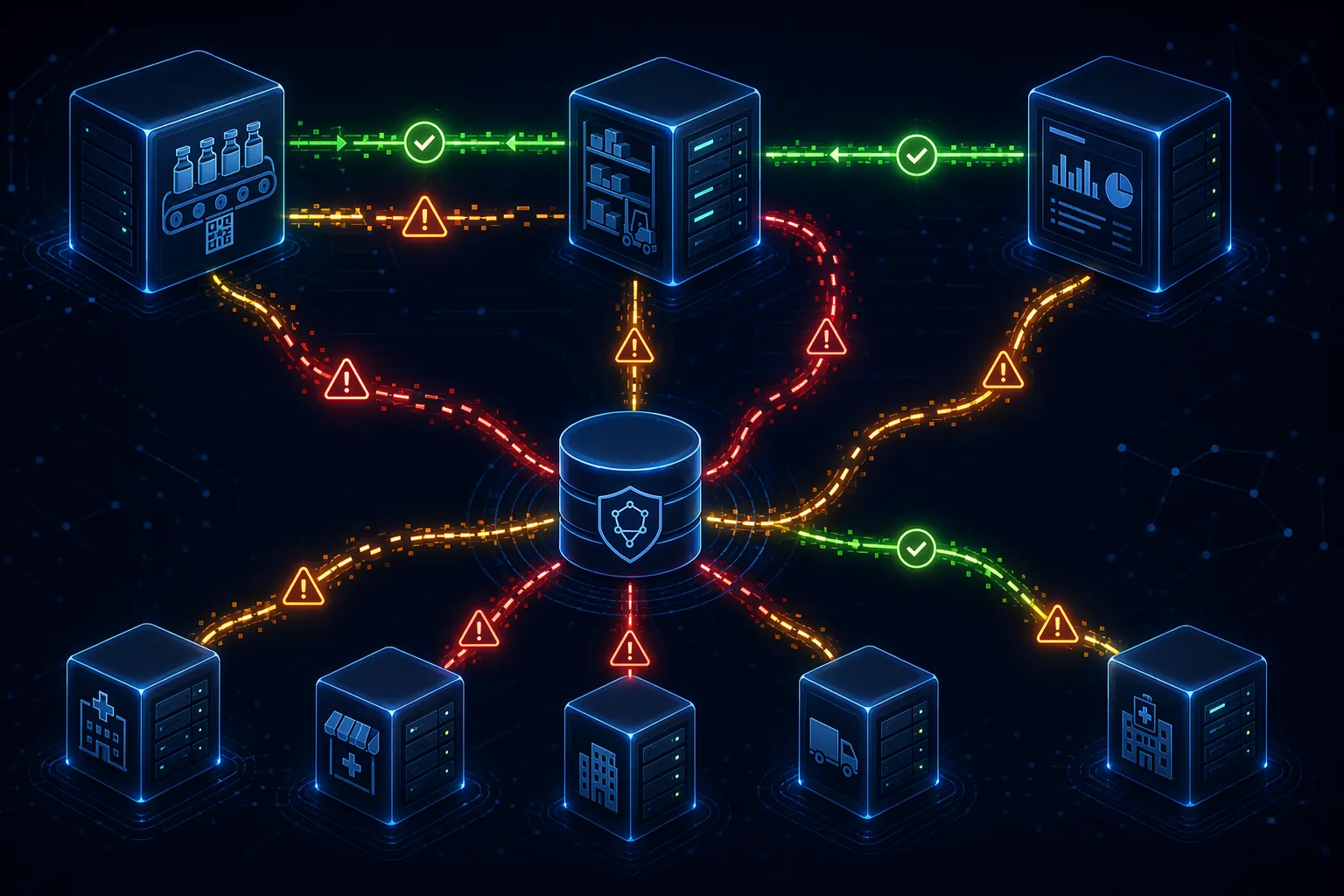
The uncomfortable part is that many compliance dashboards still reward the wrong signal. They can confirm that a transaction was sent without proving that the serialized record remains usable when a downstream team has to receive, verify, trace, quarantine, or recall product. The checkbox is transaction-level. The operational risk is process-level.
The Handoff Is Where Recall Readiness Is Built
DSCSA serialization data is supposed to support serial-number-level traceability. That promise depends on more than producing required files. It depends on whether each serialized event remains coherent as it travels through packaging execution systems, warehouse systems, ERP, serialization repositories, third-party logistics environments, and partner systems.
A receiving exception is rarely caused by one dramatic failure. More often, the error is ordinary: data arrives after product, a parent-child hierarchy breaks between aggregation and shipment, a product identifier does not match partner master data, or an event sequence makes sense in one system but not in another. The product may be physically correct. The shipment may have moved on time. The traceability record is still not trusted enough to release without investigation.
That distinction matters during a recall. If the affected lot, case, or serialized units must be identified under pressure, the recall team is not starting from the recall notice. It is starting from the accumulated quality of prior DSCSA exchanges. Clean EPCIS data gives the team a narrower search area. Unreconciled exceptions widen it, slow it, and shift work onto people who are already operating under regulatory and commercial urgency.
For readers who need the wider recall operating model, the broader pharmaceutical recall supply chain discussion covers upstream and downstream recall coordination. This article stays at the serialization compliance layer, because that is where the traceability record is either made recall-ready or left for humans to repair later.
Why Transaction Monitoring Misses the Failures That Matter
A transaction-level monitor asks a narrow question: did the expected message or file move? That is necessary, but it is not enough for recall readiness. The harder question is whether the end-to-end serialized story remains complete and interpretable after multiple systems have touched it.
| Monitoring view | Question it answers | What it can miss |
|---|---|---|
| Transaction-level | Was the expected DSCSA message sent or received? | Late data, inconsistent hierarchies, mismatched master data, and invalid event sequencing |
| Process-level | Does the serialized record remain complete, current, and usable across the handoff? | Fewer blind spots, because the system checks the relationship between events, products, locations, and partners |
The second view is the one that matters when a recall team needs to identify affected serialized units quickly. A sent file does not prove that every serialized identifier can be trusted downstream. A completed interface job does not prove that the receiving partner can reconcile the shipment without quarantine. A repository event does not prove that the aggregation structure survived the full trip.
This is why manual exception work persists. Clarkston Consulting reported in July 2025 that 41% of pharmaceutical firms cited manual L4 serialization rework as a major pain point.[2] The number is useful less as a productivity complaint than as evidence of where the system is still relying on people to absorb data-quality failures after the fact.
Manual rework is not automatically bad. Some exceptions need trained judgment. The problem is when people spend their time sorting unclassified noise: deciding whether an alert is late data, a broken hierarchy, a master data issue, a sequencing problem, or a partner-side timing gap. That is precisely the kind of pattern recognition where AI agents can be useful, provided the outputs are explainable and tied to controlled workflows.
What AI Should Classify Before Anyone Trusts It
The phrase “AI monitoring” is too loose to be useful on its own. In a DSCSA serialization environment, the practical value comes from classifying exceptions according to the operational response they require. The Pharmaceutical Commerce analysis describes AI agents that distinguish timing issues, structural EPCIS errors, master data mismatches, and sequencing problems.[1]
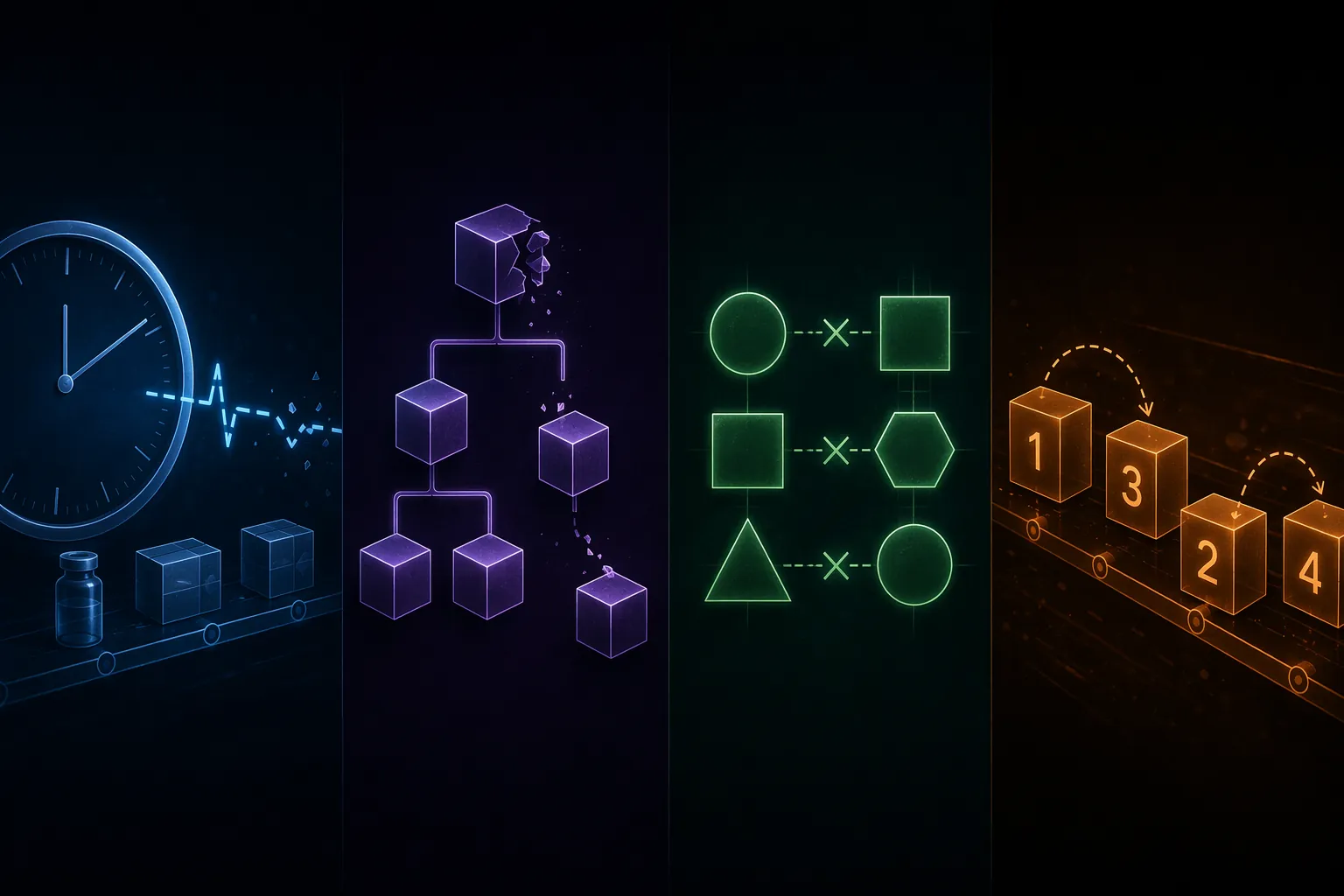
Timing failures
A timing failure means the serialized data and the physical product are not arriving in the right order for the receiving process. The data may be valid, but late. That calls for a different workflow than a structural error. A useful agent does not merely raise an exception; it identifies that the shipment may be held because the receiving site cannot yet match product to expected serialized events.
The remediation path may involve checking the transmission queue, partner acknowledgement, repository latency, or a missed job in the integration layer. The point is not to let AI release product. The point is to route the exception to the team that can restore the missing data before quarantine becomes the default safety mechanism.
Structural EPCIS hierarchy errors
A structural error is more serious than a late message. If the parent-child relationship between serialized units, cases, and pallets is broken, the traceability record may not support precise identification. During a recall, that can force the organization to investigate a broader set of product than the actual affected units.
Agents trained against GS1 EPCIS expectations can look for hierarchy patterns that do not reconcile across commissioning, aggregation, shipping, and receiving events. The useful output is not a vague alert that “data quality is low.” It is a classified exception showing which relationship failed, where it was last coherent, and which system or partner handoff needs review.
Master data mismatches
Master data mismatches create a different kind of friction. A serialized event may be syntactically valid, but the partner cannot reconcile the product, location, company identifier, or related reference data. These failures are easy to underestimate because they do not always look like serialization defects at first. They look like partner disputes, receiving delays, or recurring manual cleanup.
For recall readiness, the consequence is straightforward: if product identifiers and partner master data are not consistently understood before the recall, the recall team has to spend valuable time proving what the records mean. AI can help by detecting repeated mismatch patterns across partners and routes, but the remediation still belongs to master data governance, trading partner coordination, and controlled correction.
Sequencing problems
Sequencing problems occur when events appear in an order that does not support a coherent product history. A system may show a downstream event before the expected upstream event, or a partner may receive data that does not match the lifecycle sequence implied by the shipment.
These issues are especially important because they can make traceability look complete while making it hard to trust. During recall identification, the team needs confidence that the serialized unit history is not only present, but logically ordered. An AI agent that recognizes sequence anomalies can send the issue to serialization support or integration owners before the record becomes part of a larger unresolved exception backlog.
From Exception Noise to Recall-Ready Workflows
The mechanism is not magic. It is a disciplined loop: observe the handoff, classify the exception, route it to the right owner, document the resolution, and learn from recurrence. AI helps because the same failure pattern may appear in different language across a WMS alert, an ERP job failure, a repository exception, and a partner rejection.
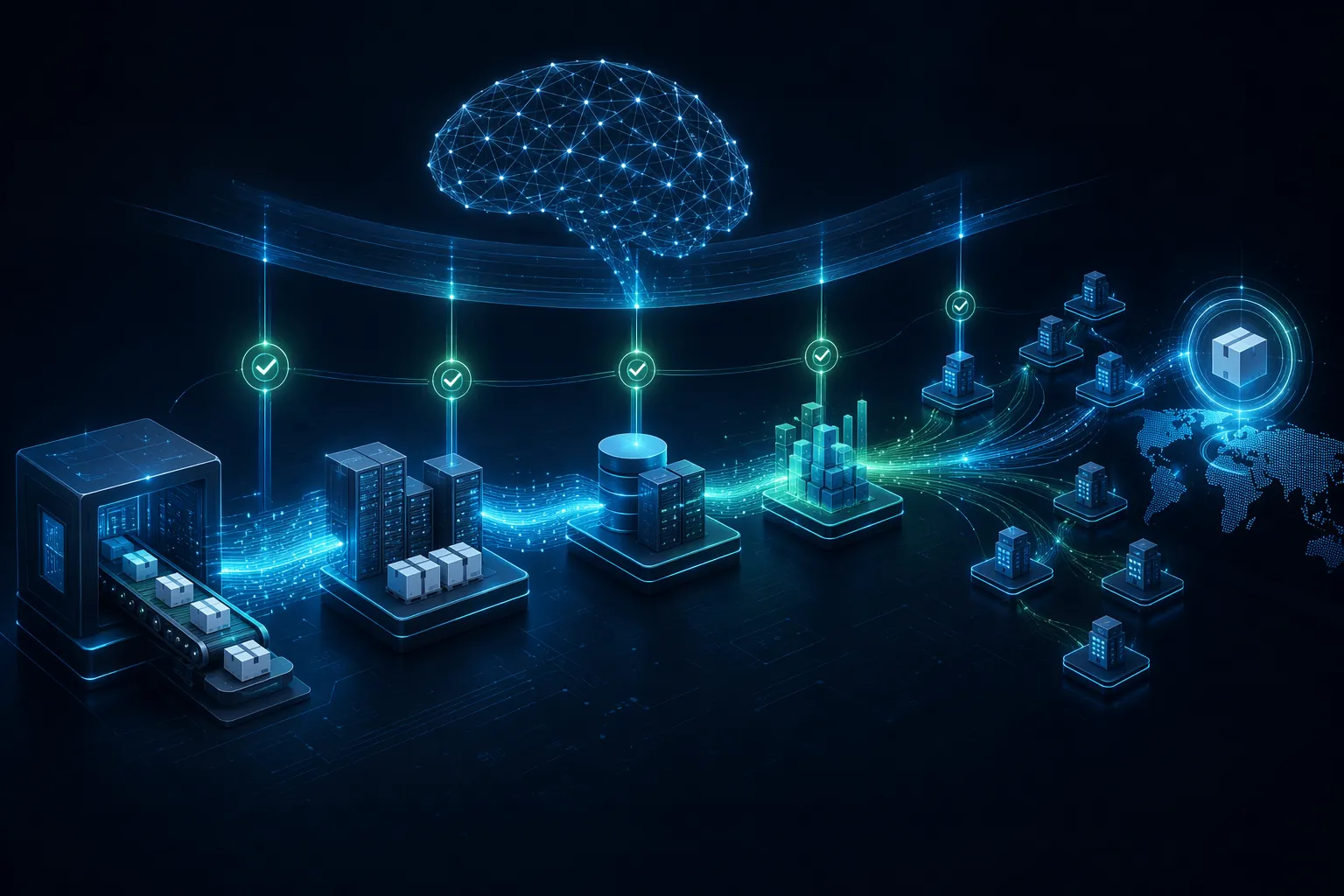
A defensible AI-assisted DSCSA workflow usually has several practical elements:
- A monitoring layer that sees serialization events across packaging, WMS, ERP, repository, and partner exchange points, rather than only one system’s success log
- Classification rules aligned to EPCIS concepts, so timing, hierarchy, master data, and sequencing failures are not treated as the same problem
- Routing logic that sends each class of exception to the team able to fix it, such as integration support, serialization operations, master data governance, or trading partner management
- Human review for release-impacting, recall-impacting, or regulatory-impacting decisions
- An audit trail showing what the agent detected, what evidence supported the classification, who approved the action, and how the record was corrected
The audit trail is not administrative decoration. It is what keeps the workflow usable in a regulated environment. If an agent classifies a broken aggregation hierarchy, the organization needs to know which events were compared, which rule or model output supported the classification, and what human decision followed. A black-box alert that cannot be explained creates a new compliance problem while trying to solve an old one.
This is also where the recall benefit becomes concrete. When exceptions are classified and remediated before a recall, the recall team is not reconstructing the serialized universe from scratch. It can search trusted records, identify affected serial numbers, confirm trading partner locations, and narrow the scope with more confidence. The time saved at recall is the result of earlier data discipline.
Where the Data Has to Be Watched
AI monitoring cannot sit only at the repository and claim to understand the process. By then, too much context may already be missing. The important handoffs begin earlier and continue beyond the organization’s own walls.
| Handoff point | What can go wrong | Why it matters in a recall |
|---|---|---|
| Packaging server to enterprise systems | Commissioning, aggregation, or packaging-event data does not carry forward cleanly | Serialized unit and case relationships may be unreliable |
| WMS and ERP coordination | Physical shipment movement and serialized event status diverge | Inventory may be difficult to match to traceability records |
| Serialization repository | Events are present but incomplete, late, duplicated, or structurally inconsistent | Search results may be too broad or too uncertain |
| Trading partner exchange | Partner receives data that does not reconcile with product, timing, or master data expectations | Product may be quarantined or require manual reconciliation before it can be trusted |
The table is deliberately operational. A recall team does not benefit from a beautiful serialization architecture diagram if the live process still hides failures between systems. Monitoring has to follow the serialized data as it changes custody, format, status, and business meaning.
This is also why fragmented environments cannot simply bolt on AI and expect near-instant recall identification. If EPCIS events are inconsistent, partner identifiers are unstable, system ownership is unclear, or exception resolution is not documented, an agent can accelerate confusion. The practical prerequisite is not perfection, but a minimum level of data hygiene and process ownership: known systems of record, defined event expectations, stable master data, and an agreed path for correcting errors.
Governance Still Owns the Decision
AI agents can classify, prioritize, and route DSCSA exceptions. They should not be presented as autonomous recall authorities. Recall decisions, product disposition, partner communications, and regulatory submissions still require accountable human sign-off.
That boundary is practical, not merely legalistic. A timing exception may be resolved by a late file. A structural hierarchy error may require investigation into packaging or aggregation records. A master data mismatch may need partner coordination. A sequencing problem may expose an integration defect. The agent can reduce the time spent identifying the nature of the problem, but the organization still has to decide what the evidence permits.
The FDA context should be read with the same care. The agency has been assessing AI in supply chain resiliency areas such as shortage prediction and identification of non-traditional supply chain participants, but that is not the same as finalized regulatory endorsement of a particular AI-based DSCSA compliance model.[3] The safer interpretation is narrower: AI use in supply chain oversight is on the regulatory radar, and organizations using it for serialization compliance should be prepared to explain the model’s role, evidence, controls, and human review points.
A Practical Readiness Path
The first move is to map the real DSCSA flow, not the idealized one. That means following a serialized product and its data through packaging, warehouse movement, enterprise transaction processing, repository updates, and partner exchange. The useful question at each point is simple: what would make a receiving team quarantine this product even if the upstream system says the transaction completed?
From there, organizations can separate readiness work into three different jobs:
- Stabilize the data: confirm that EPCIS event expectations, product identifiers, location identifiers, and partner master data are consistent enough to support automated checks
- Classify the exceptions: train or configure agents to distinguish timing, structural, master data, and sequencing problems instead of sending all failures into one queue
- Control the workflow: define owners, escalation thresholds, documentation requirements, and human approval points before the system is used for recall-relevant decisions
This sequencing matters. Starting with an agent before stabilizing data definitions creates impressive-looking alert volume and little operational trust. Starting with governance but no process visibility leaves teams debating exceptions they still cannot see. The strongest programs connect the two: enough data discipline for the agent to classify reliably, and enough governance for people to act on the classification without surrendering accountability.
The best test is not whether the organization can produce a compliance report. It is whether a recall team can ask, under pressure, which serialized units are affected, where they moved, which partners touched them, and which records are trusted enough to support the answer. If the exception history is already classified and remediated, that identification can move in minutes rather than through open-ended manual reconstruction.
The Payoff Comes Before the Recall
Near-instant recall identification is not an AI feature added at the end of the process. It is the payoff for treating DSCSA data integrity as a live operating discipline. The agent’s value is not that it makes recall decisions. Its value is that it keeps the serialization record cleaner, more current, and more explainable before anyone needs to make one.
When the handoffs are monitored, exceptions are classified, and remediation is documented, the recall team inherits a traceability record it can use. When those steps are skipped, AI has little to accelerate except the discovery that the data was never recall-ready.
References
- When Patient Safety Depends on Data: How AI Is Reshaping DSCSA Compliance, Pharmaceutical Commerce, May 2026
- Ensuring DSCSA Serialization Compliance with AI: Opportunities and Challenges, Clarkston Consulting, July 2025
- Supply Chain News, Reports and Publications, FDA
Comments
Join the discussion with an anonymous comment.