
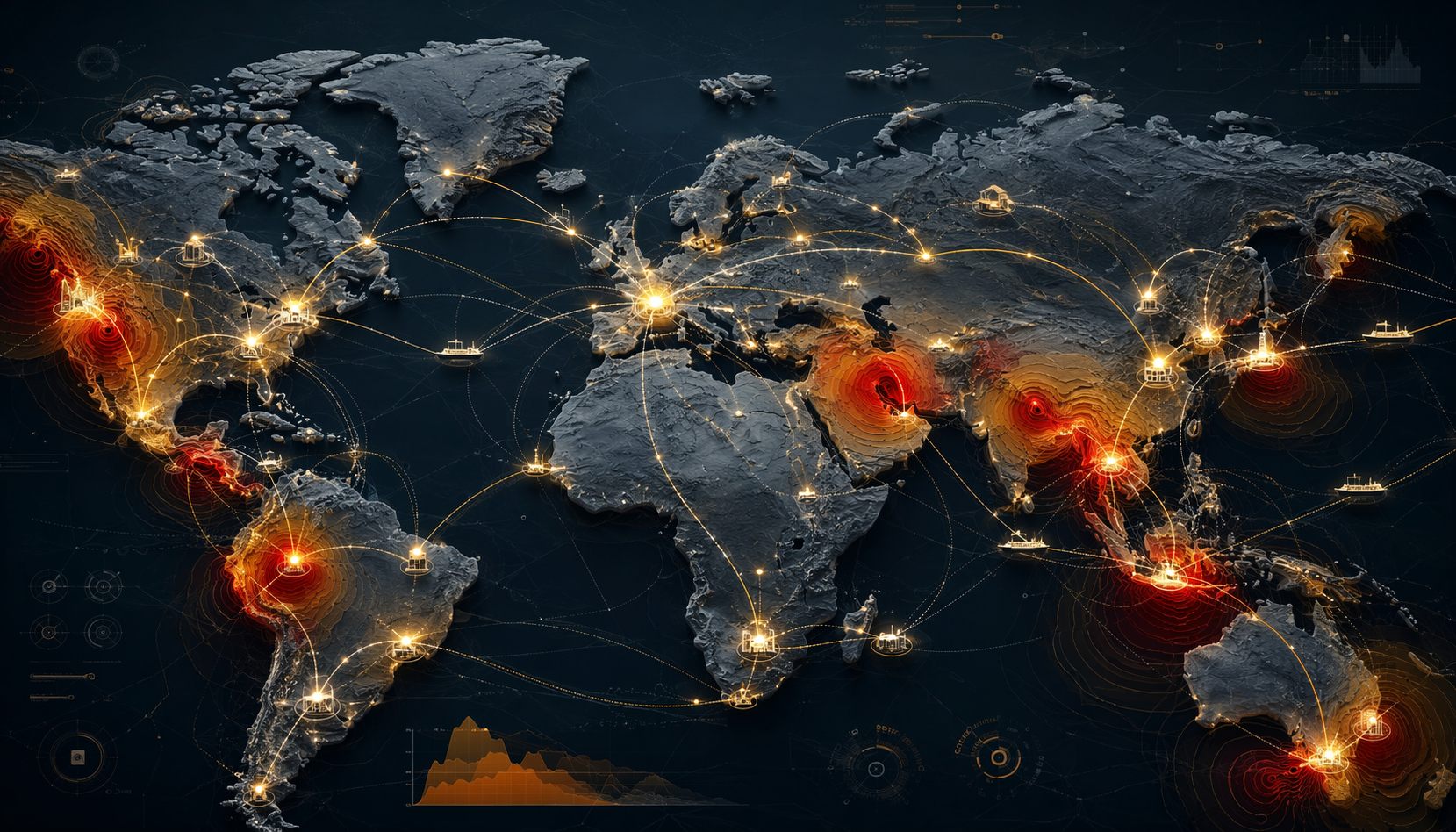
AI can help expose earthquake risk in a supply chain before the ground moves, but only if it is doing more than repainting a dashboard. The useful systems today map where supplier sites sit, how deep the network reaches, which parts and products concentrate in one region, and which assets deserve attention first.
Why Taiwan Changes The Question
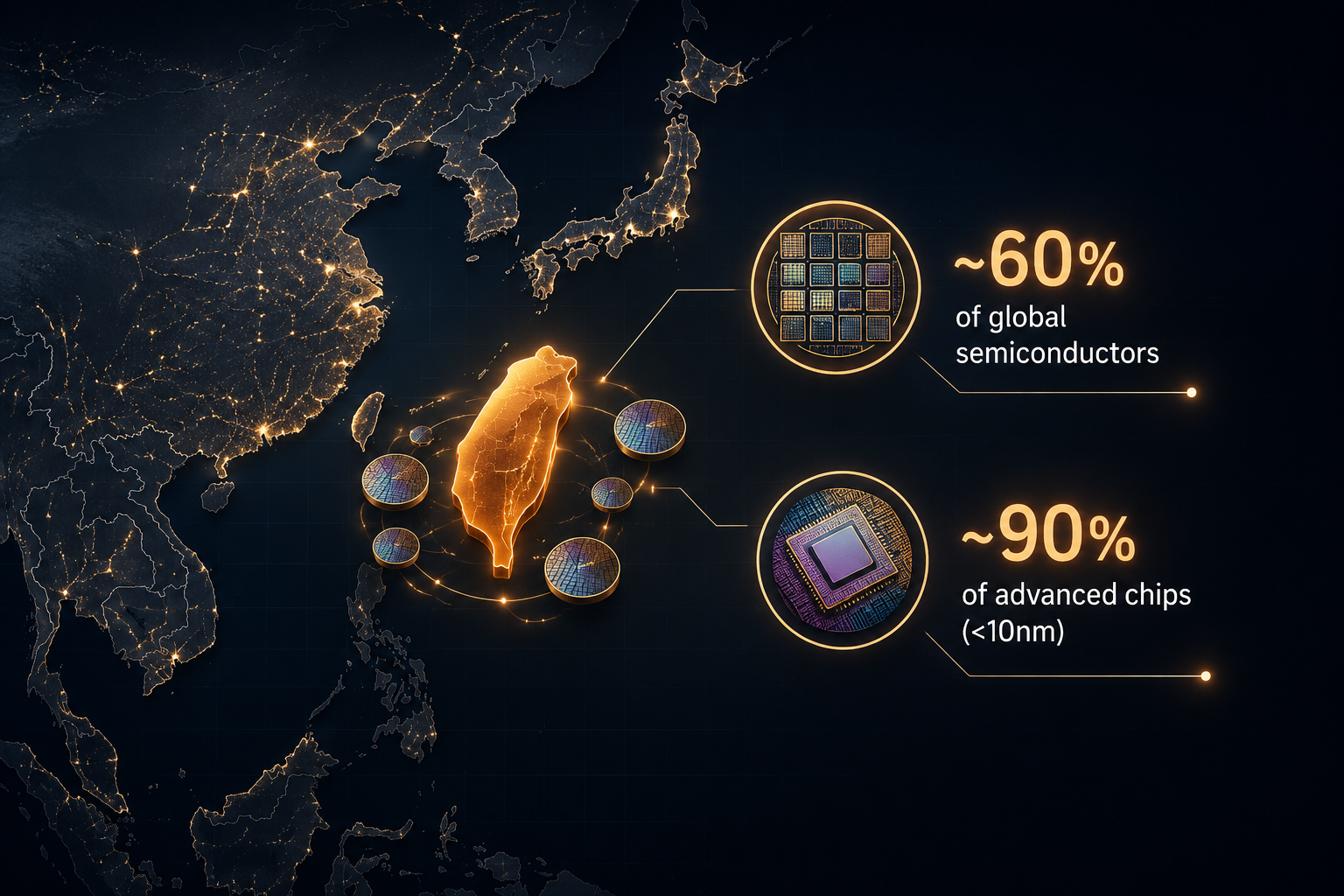
The hard part is not proving that earthquakes happen. It is showing how a regional shock becomes a supply shortage. One Interos analysis, citing a US-Taiwan Business Council estimate, says Taiwan produces roughly 60% of global semiconductors and 90% of advanced chips, and that a major disruption could affect up to $1.6 trillion, or about 8% of annual US GDP. That is concentration risk, not weather commentary. [1]
The April 2024 Taiwan earthquake made that concentration visible in real time. Resilinc said it tracked potential impacts across more than 13,000 supplier sites, 5,800 parts, and 21,000 products, while Z2Data reported that TSMC and UMC automated shutdowns still took 36 to 48 hours to restore. The point is not that automation failed; it is that even highly prepared operations still had to absorb a shock that started outside the factory gate. [2][3]
What AI Can Do Today
The near-term value is in visibility. AI tools can overlay seismic hazard data on supplier locations, score individual assets or geographic radiuses, trace exposure through multiple tiers, and connect sites, parts, and finished products so the buyer sees where the bottleneck sits before it becomes a scramble. In practice, that means geocoding supplier assets well enough to trust the map, then pushing the result into the control tower or risk workflow where planning actually happens.
Trax Technologies says its predictive AI can score individual supply chain assets inside geographic radiuses and identify threats 3 to 5 days before they materialize. It also claims $420 billion in annual avoidable supply chain losses, but that figure should be treated as a vendor claim rather than an independently verified benchmark. The useful part of the claim is narrower: pre-event scoring is already commercial, even if it is not earthquake forecasting. [4]
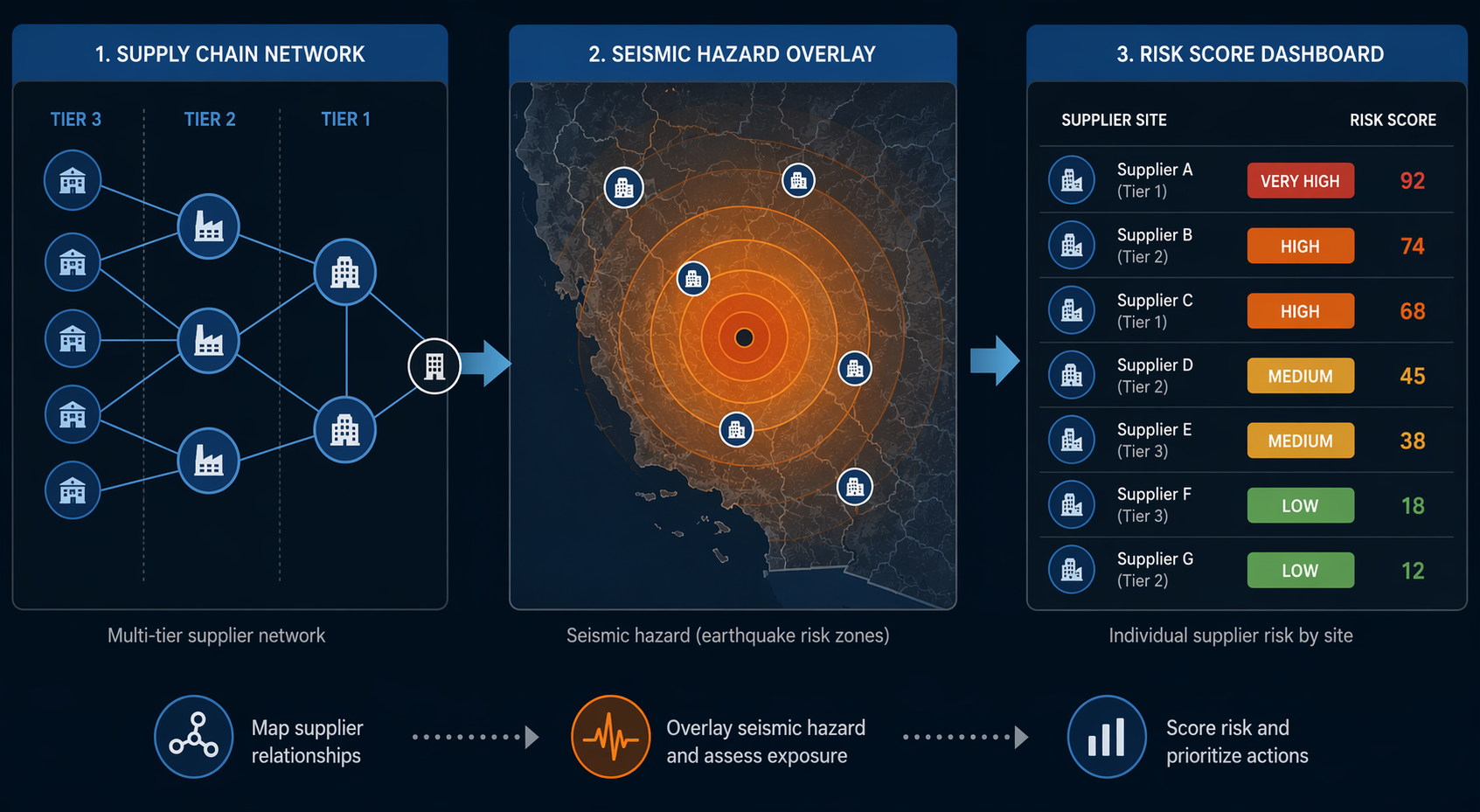
That is also where model choice matters. Resilinc groups supply chain AI into classification, regression, simulation, recommendation, and generative AI. Those labels are not the answer by themselves, but they do give buyers a practical way to ask what the platform is actually doing: ranking exposed sites, estimating likely impact, simulating propagation, recommending action, or summarizing the result for a planner who does not have time to inspect every node. [6]
Where Forecasting Still Stops
The research milestone is real, but it sits in a different lane. A 2024 UT Austin trial in China reported about 70% accuracy forecasting earthquakes one week in advance over a seven-month study, using statistical bumps in seismic data. The researchers also cautioned that the approach had not been validated in other geologies, which is the detail that keeps it in the research column rather than the procurement column. [5]
That distinction matters because supply chain teams do not buy geology papers. They buy decisions: where to hold inventory, which alternates to prequalify, which suppliers need continuity review, and which location should be escalated because one earthquake could ripple through several product families at once. The response and recovery side of that problem belongs in a separate PPRR discussion.
What To Ask Before Buying
| Capability | What to ask | Why it matters |
|---|---|---|
| Tier depth | How far down the network can you map supplier sites and sub-suppliers? | Earthquake exposure often sits in the second or third tier, not at the named vendor. |
| Asset geocoding | Can you resolve the actual site location, not just the company headquarters? | A bad pin makes the whole risk score less useful. |
| Hazard overlay | What seismic layers do you use, and how often are they updated? | The map has to reflect the hazard, not just the supplier database. |
| Radius scoring | Can the system rank risk by asset and by radius around a fault or hazard zone? | That is how teams isolate the sites that deserve review first. |
| Workflow fit | Does the result flow into the control tower, sourcing, or continuity process? | If the score stays in a dashboard, it will be too late when someone asks for action. |
| Evidence standard | What is the proof behind any early-warning or ROI claim? | This is where forecasting claims, vendor attribution, and operational value need to stay separate. |
A good earthquake-risk platform should make weak nodes less invisible. It does not need to promise that it can stop tectonic movement; it needs to show which supplier site, part family, or geographic concentration will hurt first if the movement happens.
References
- Navigating Semiconductor Supply Chain Disruptions: Insights from Taiwan's Earthquake — Interos
- Taiwan Earthquake Supply Chain Shockwaves — Resilinc
- Taiwan Earthquake Impact on Electronics Manufacturers — Z2Data
- Predictive AI Transforms Physical Risk Management for Global Supply Chains — Trax Technologies
- AI-Driven Earthquake Forecasting Shows Promise in Trials — Association of American Universities
- AI Supply Chain Risk Management: 5 Models — Resilinc
Comments
Join the discussion with an anonymous comment.