
The useful way to read the proposed FSMA 204 delay is not “more time.” It is “one clean implementation window.” FDA had originally set compliance for January 20, 2026, and the current planning assumption is a proposed extension to July 20, 2028, with congressional direction for non-enforcement before 2028.[1] That gives produce companies room to build traceability into receiving, cooling, packing, shipping, and partner exchange before the request arrives from FDA or a customer and everyone starts hunting through spreadsheets.
For companies handling foods on the Food Traceability List, this is not an abstract food-safety software project. The produce scope includes leafy greens, melons, peppers, tomatoes, tropical tree fruits such as mango, guava, and lychee, cucumbers, herbs, fresh-cut fruits, fresh-cut vegetables, and sprouts.[2] If those products move through your operation, the problem is whether the required Key Data Elements at each Critical Tracking Event can be captured accurately enough, tied to the right Traceability Lot Code, and retrieved fast enough to matter.
That is where AI-based produce supply chain traceability becomes more than a buying phrase. The practical question is whether AI can make FSMA 204 records a byproduct of the work already happening on the floor, rather than a second version of the work reconstructed later by QA.
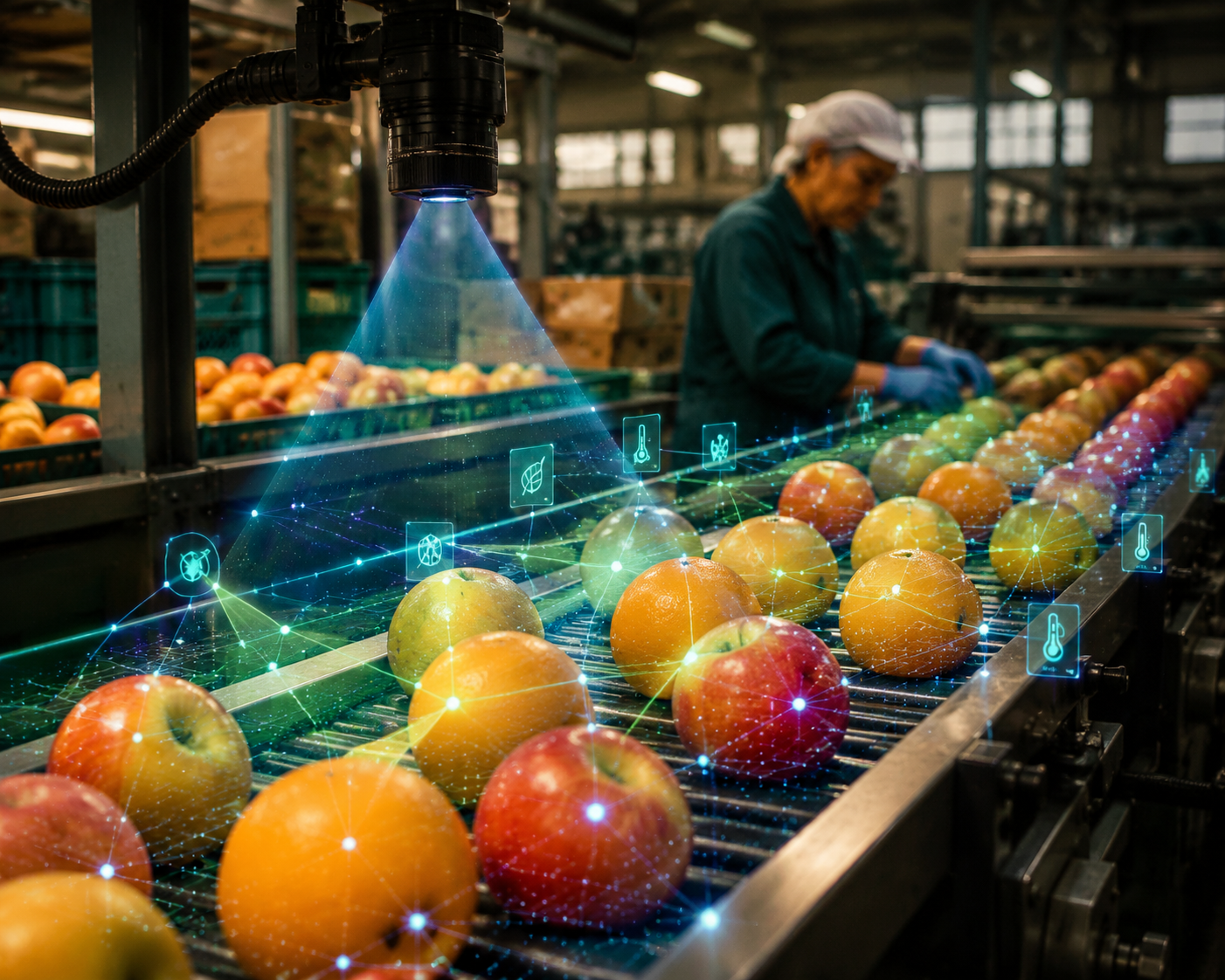
The Weak Point Is Usually the Handoff
FSMA 204 asks for records at defined Critical Tracking Events, not a nice story after the fact. In produce, the messy parts usually appear where product identity changes hands: harvest to cooling, cooling to packing, packing to finished pallet, finished pallet to outbound shipment, and shipment data to the next trading partner. A label may be correct on the box, while the inspection sheet, cooler log, and shipment file still disagree on lot, time, quantity, or product description.
The Traceability Lot Code is the spine. If the lot-code logic is loose, every tool downstream becomes a faster way to preserve confusion. A camera can read the wrong label very efficiently. A sensor can document temperature history for a pallet that was never properly linked to a lot. A machine-learning check can flag a missing field, but it cannot invent discipline in how lots are created, transformed, split, packed, and shipped.
The first implementation task, then, is not choosing an AI vendor. It is mapping where KDEs are born and where they are currently retyped, copied, corrected, or guessed. AI earns its keep when it removes those re-entry points and catches broken links before the audit file becomes a performance.
Computer Vision Belongs Where Lot Codes and Quality Evidence Already Meet
Packing is one of the few places where compliance evidence and operational evidence are already in the same physical space. Product is visible. Labels are being applied or verified. Inspectors are checking size, grade, defects, decay, color, condition, and packaging. Lot codes are being associated with cartons, cases, pallets, or finished units. If that moment is still handled by paper sheets and later transcription, the company is manufacturing traceability risk during its most observable process.
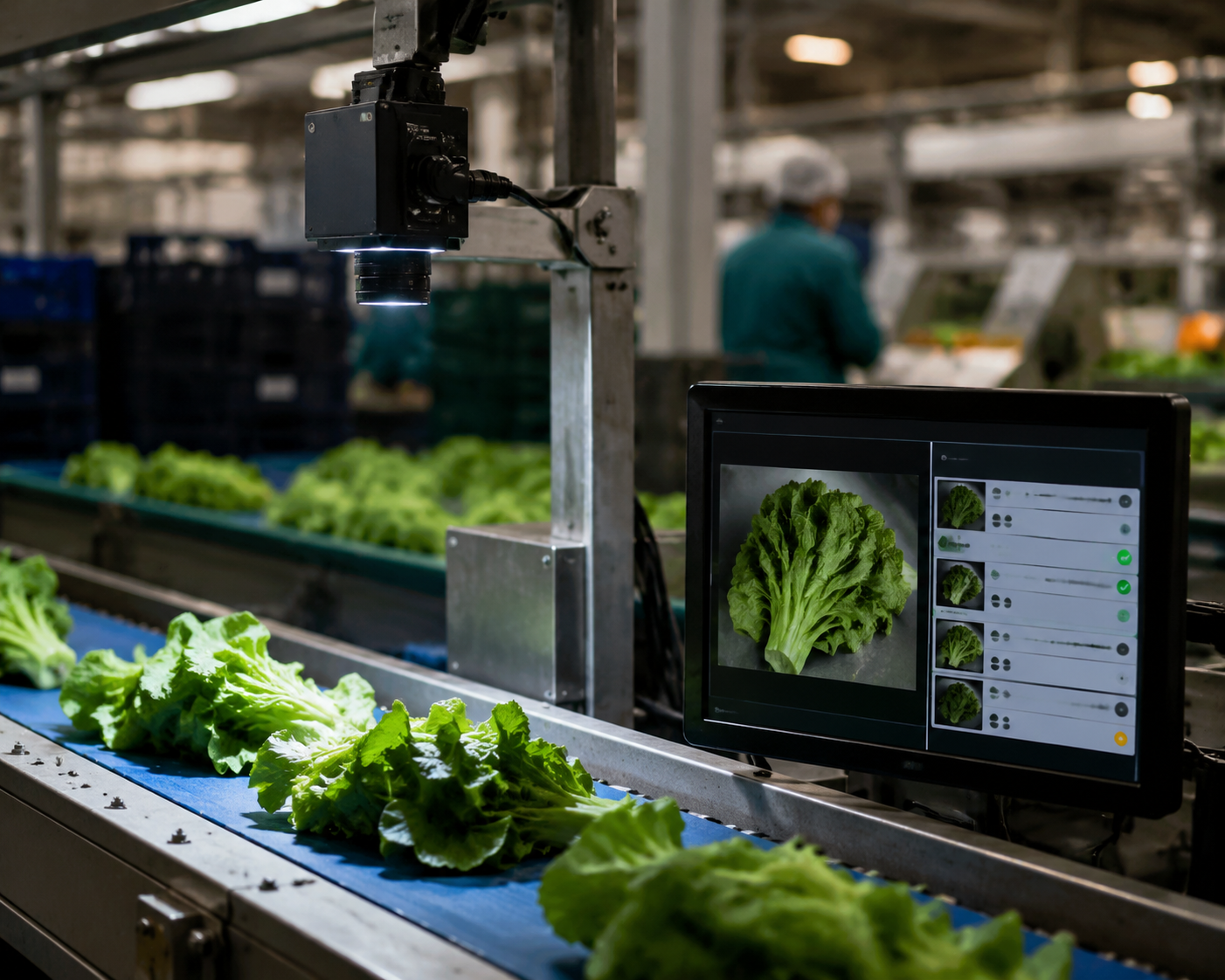
Computer vision can help by capturing label evidence, reading or verifying lot-code data, and attaching inspection findings to the product identity while the product is still on the line. The compliance value is direct: fewer handwritten or rekeyed KDEs, fewer mismatches between inspection and shipment records, and a better chance that the lot, product, quantity, location, and event timing remain connected when records are pulled later.
The operational value is just as important. A usable image-and-data record can show what passed through inspection, what quality condition was observed, and which lot or shipment the evidence belongs to. That matters when a customer claim arrives days later and the team needs to distinguish a traceability question from a quality question. It also matters during a recall investigation, when narrowing the affected product depends on whether the lot-code chain can survive contact with real shipping history.
Clarifresh is the most concrete produce example in the available material, but it needs to be read carefully. The company reported 2025 deployments with three major North and Latin American citrus, grape, and berry exporters in which inspector productivity doubled, sample sizes increased by 50% to 100%, and waste or claims fell by 25% to 35%.[3][4] Those figures are useful because they connect automated inspection capture to actual fresh-produce work. They are not independent proof of universal ROI; they are company-reported results from three unnamed customers.
Even with that limitation, the direction is credible. Larger samples can make inspection less theatrical. Faster capture can give QA more time to judge product rather than fill out fields. Better linkage between image evidence, grade observations, and lot codes can reduce the number of arguments that begin with someone asking which sheet is the real one.
What to Capture at the Packing Event
- Traceability Lot Code and the internal logic that connects it to harvest, cooling, packing, and shipment records.
- Product identity fields that match trading-partner and FSMA 204 record expectations.
- Event timing, location, and responsible operation without depending on later manual entry.
- Quality observations and image evidence linked to the lot or pallet, not stored as a separate inspection artifact.
- Exceptions: unreadable labels, mismatched codes, missing quantities, repacks, split lots, or rejected product.
Cold-Chain Data Should Not Sit in a Separate Sensor Log
Temperature records often live beside traceability rather than inside it. A cooler has a log. A trailer has a sensor feed. A carrier has its own portal. QA may be able to prove that product shipped, and logistics may be able to show a temperature curve, but the two records are not always tied cleanly to the same lot, pallet, shipment, and time window.
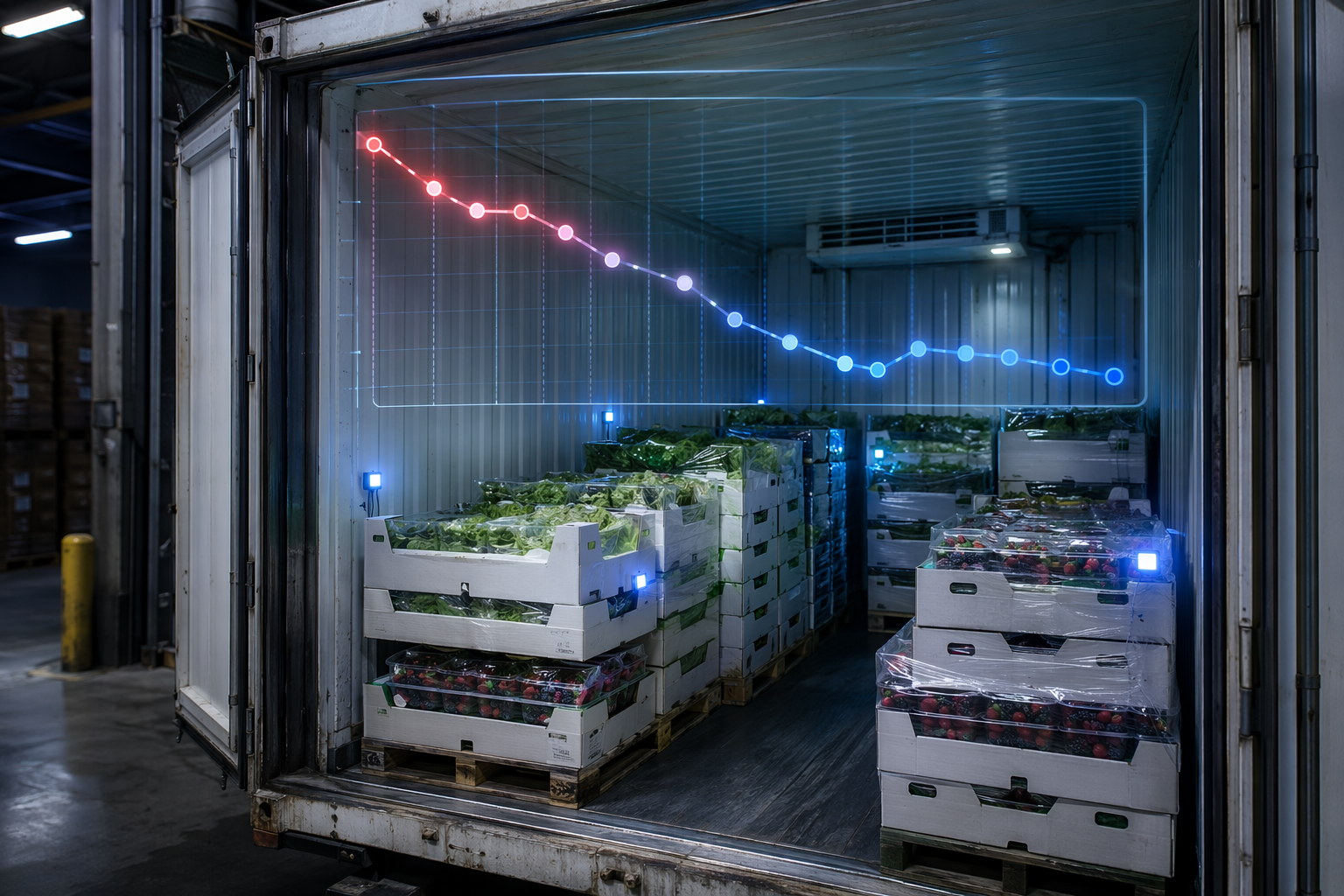
IoT analytics are most useful when they turn condition history into traceability evidence. A cooling event can carry time, location, product identity, lot-code linkage, and condition data. An outbound shipment can carry not just “loaded at dock door 4,” but the temperature history associated with the specific pallets and lots on that shipment. If a receiver later challenges condition, or if a recall requires product disposition, the company is not stitching together three systems under pressure.
This is not a claim that every temperature excursion explains every quality problem. Produce condition is affected by many variables before and after a given sensor starts recording. The narrower and more defensible claim is that lot-linked condition history reduces blind spots. It shows who had custody, what the product experienced during a defined interval, and which records belong together.
For FSMA 204, the benefit is record readiness. For operations, the benefit is less time debating whether the data exists and more time deciding what it means. A cold-chain system that cannot connect to lot identity may still be useful for logistics, but it is only halfway to traceability.
ML Validation Is the Layer That Finds the Missing Field Before FDA Does
Machine learning is less visible than a camera over a line or a sensor in a trailer, but it can be the difference between having data and having usable records. The job is not to make a compliance manager feel modern. The job is to compare event records, look for missing KDEs, flag impossible sequences, and show where lot-code relationships do not reconcile.
Useful checks are often plain and unforgiving: a shipment without a linked packing event, a packed lot with no cooling history, a quantity that grows after a split, a product description that changes between systems, a harvest date that does not fit the pack date, or a trading-partner file that omits a required field. These are not glamorous discoveries. They are exactly the discoveries QA would rather make on Tuesday morning than during a 24-hour records request.
| Traceability Work | Where AI Helps | What Operations Gains |
|---|---|---|
| Lot-code capture at packing | Computer vision reads or verifies labels and links inspection evidence to the lot | Less rekeying, better claim support, cleaner recall scoping |
| Cooling and shipment condition history | IoT analytics attach temperature and custody data to lots and pallets | Faster condition investigations and fewer disconnected sensor records |
| Record completeness | ML validation flags missing KDEs, sequence conflicts, and partner-file gaps | Earlier correction before customer, auditor, or FDA pressure |
| Trading-partner exchange | Standards-aligned event structures reduce custom mapping work | Cleaner handoffs beyond the company’s own four walls |
The important point is timing. Validation after records are archived is better than no validation, but it still leaves the cleanup to someone in compliance. Validation close to the event gives operations a chance to fix the source process: a label station, a scan step, a cooler release procedure, a master-data mismatch, or a partner file format.
Interoperability Decides Whether the Record Travels
A produce company can make its own internal records beautiful and still fail at traceability if the data cannot move across trading partners. FSMA 204 pressure does not stop at the packinghouse door. Distributors, processors, retailers, carriers, and importers all need records that can be interpreted without a custom translation exercise every time product changes hands.
That is why the GS1 EPCIS work matters. GS1 US issued EPCIS recommendations in May 2025 that map FSMA 204 events into EPCIS event structures, giving technology providers and food companies a standards-aligned way to represent traceability events.[1] In practice, that can help AI-captured data from cameras, sensors, and validation tools become exchangeable event records rather than trapped evidence inside a single platform.
The IFT Traceability Driver example points in the same direction. Launched in September 2025, it reportedly reduced development time by about 60% in one seafood deployment by standardizing integrations.[1] That is a single case in seafood, not proof that produce integrations will see the same reduction. Still, it highlights the quiet bottleneck: the hard part is often not detecting the data, but getting everyone to accept, map, and return it in a usable form.
Fresh-food platforms are starting to position around this requirement. TrackVision AI, for example, describes itself as a GS1-standards-compliant traceability platform for the fresh food industry.[5] That kind of standards claim is worth asking about in procurement, but it should lead to implementation questions: Which EPCIS events are supported? How are Traceability Lot Codes represented? Can partner records be imported and validated? What happens when a receiver’s file is incomplete?
The Business Case Should Start With Compliance and Then Keep Going
There is plenty of money moving toward traceability. One market forecast placed the global food traceability market at $18.92 billion in 2024 and projected it to reach $51.81 billion by 2033, with an 11.84% CAGR.[6] That helps explain why vendor outreach is getting louder. It does not tell a QA director whether a packing line will capture the right lot-code evidence on a wet Tuesday in peak season.
The better business case is built from avoided manual work and improved operating decisions. How many records are touched twice? How many partner files need correction? How often does QA reconcile inspection, cooler, and shipment records? How quickly can the company scope a withdrawal or recall to the affected lots rather than a broader production window? How often do customer claims lack linked quality and condition evidence?
Those questions are less exciting than a dashboard demo, but they are the ones that separate a traceability system from a digital filing cabinet. If computer vision only creates images, IoT only creates temperature charts, and ML only creates alerts that no one owns, the compliance team inherits more data without less burden. The advantage appears when each tool changes the normal work: scan at the line, link at the lot, validate before release, exchange in a format partners can use.
Use the Runway to Build the Architecture, Not Just Buy the Tool
The 2026-to-2028 window should be used for process design before enforcement pressure returns. A sensible sequence starts with CTE mapping and lot-code rules, then moves to data capture at the highest-friction events, then validation, then partner exchange. That order keeps the company from automating a broken handoff.
- Map each FSMA 204 Critical Tracking Event for affected produce and identify where required KDEs are first created.
- Document Traceability Lot Code logic for harvest, cooling, packing, repacking, splitting, commingling, and shipment.
- Target computer vision where labels, inspection evidence, and lot identity already intersect.
- Tie cold-chain sensor history to lots, pallets, and shipments instead of storing it as a separate logistics record.
- Use ML validation to catch incomplete KDEs, sequence conflicts, and partner-data gaps close to the source event.
- Require standards-compatible exports and imports so traceability records can travel beyond the company’s own system.
Smaller growers and packers may not have the same starting point. Connectivity, hardware cost, master-data discipline, and partner data-sharing agreements are real barriers. Some operations will need a phased approach: stabilize lot-code practices first, digitize the highest-risk handoffs next, and avoid integrations that cannot be maintained after the implementation team leaves.
The conditional answer is yes: AI traceability can turn FSMA 204 from a recordkeeping mandate into an operational advantage when companies use the runway to align CTE workflows, lot-code discipline, sensor data, EPCIS-compatible integrations, and partner exchange. The advantage will not come equally to every operation, and it should not be sold as guaranteed ROI. It will go first to companies that treat compliance architecture as operations architecture, before the enforcement clock becomes punitive again.
References
- AI in Food Supply Chain Traceability, Yenra, March 2026
- FSMA Final Rule on Requirements for Additional Traceability Records for Certain Foods, U.S. Food and Drug Administration
- Fruit Logistica 2025, Clarifresh
- Computer Vision for Fresh Produce Quality Control Conversation, Clarifresh
- Fresh Food, TrackVision AI
- Food Traceability Market, SkyQuest, 2025
Comments
Join the discussion with an anonymous comment.