
The clearest proof starts with spend classification
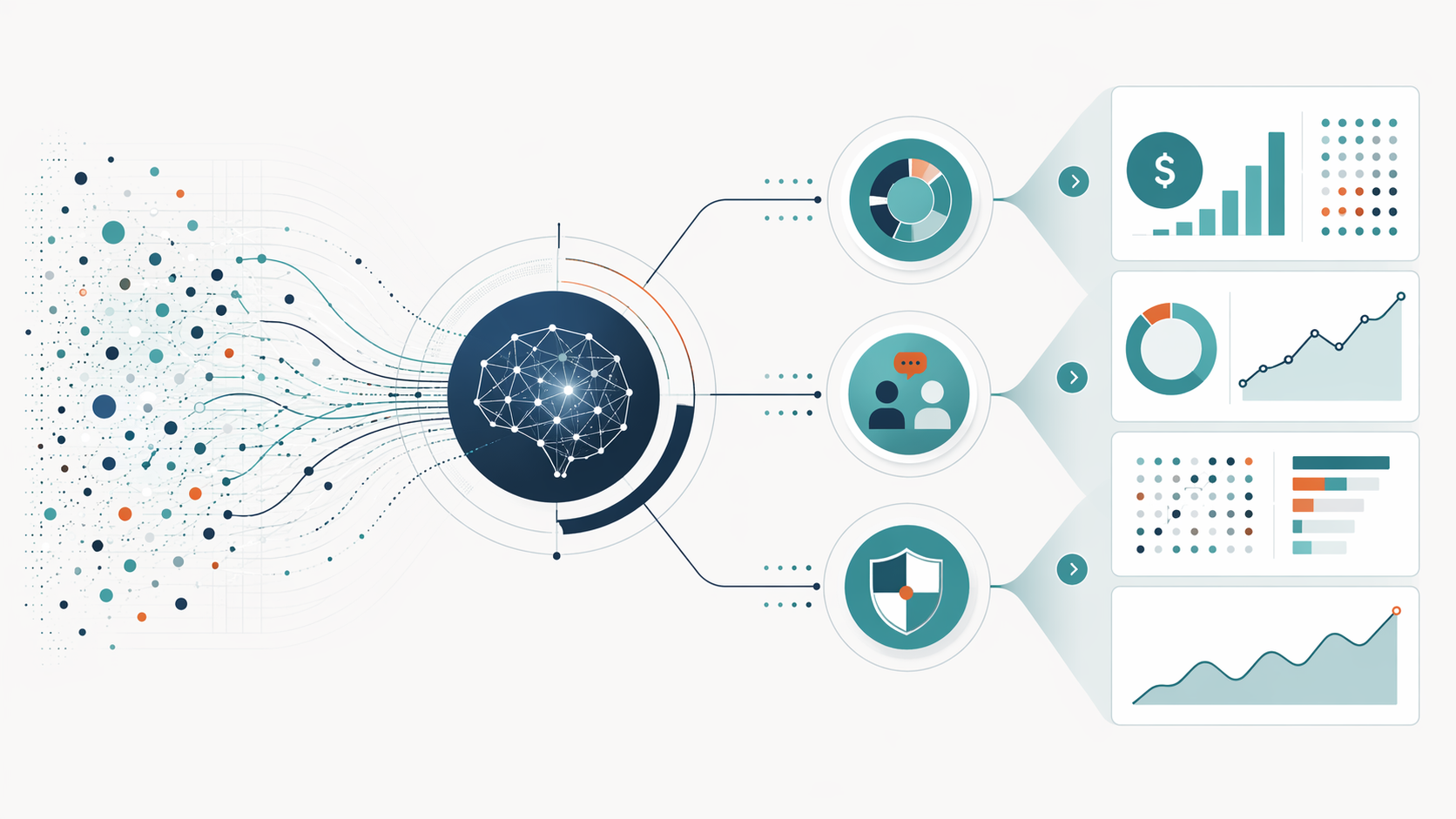
The most useful proof points in AI in procurement are not vague productivity claims. They are the cases where the model changed what buyers could see, what finance could validate, and what the sourcing team could actually do next. That is why the strongest evidence starts with spend classification: once the data is clean enough to trust, procurement can move from arguing about categories to acting on supplier mix, payment terms, and leakage.
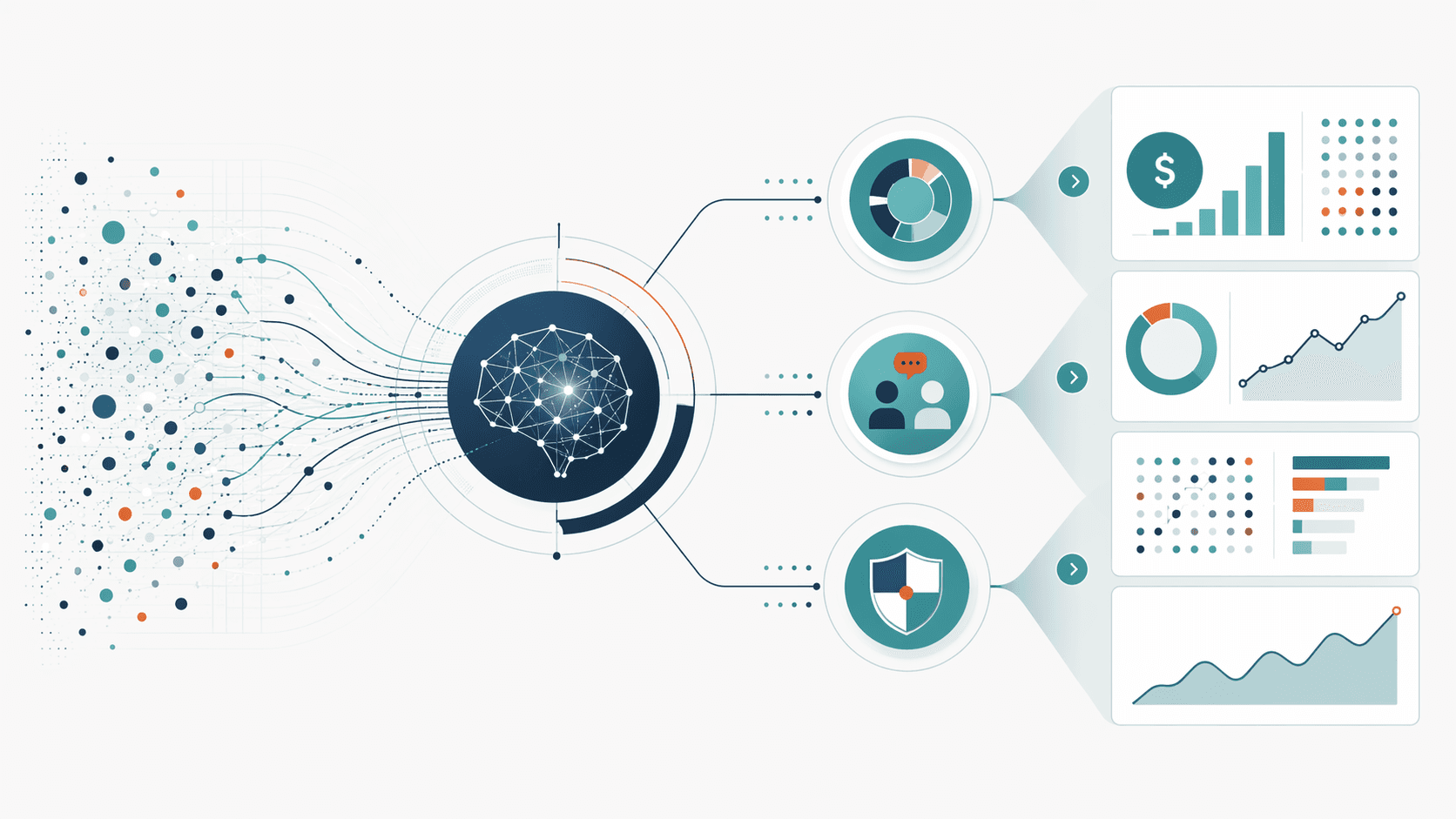
Coca-Cola Europacific Partners is the cleanest large-scale example in the brief. IBM’s case study says its Procurement Analytics work classified and analyzed 98%+ of direct and indirect spend and produced more than $40M in overall business benefits, including $5M in annual cost savings [1]. That is the kind of result procurement leaders can explain upstairs without dressing it up: the model improved visibility across spend, and that visibility translated into measurable business value.
Pentair is the other spend-classification case worth treating as more than a vendor demo. Sievo’s case study says the company reached over 90% classification accuracy across business units and linked the work to $15M in working capital improvement through supplier consolidation and payment-term optimization [2]. If you want the mechanics behind that kind of clean-up, How Machine Learning Transforms Spend Analytics goes deeper on how classification and analytics feed each other. The practical point here is simpler: procurement AI is easiest to defend when the output is auditable and the financial effect shows up in working capital, supplier rationalization, or actual savings.
Negotiation automation is where the clock starts to matter
Walmart is still the historical anchor for AI-assisted supplier negotiation. Harvard Business Review reported in 2022 that Walmart used AI-powered chatbots for more than 100,000 suppliers, focusing on tail-end suppliers that had previously been given cookie-cutter terms [3]. The age of the case matters: it is now several years old, and newer public details are scarce. Even so, it remains the clearest mainstream example of procurement AI moving from analysis into live negotiation work at scale.
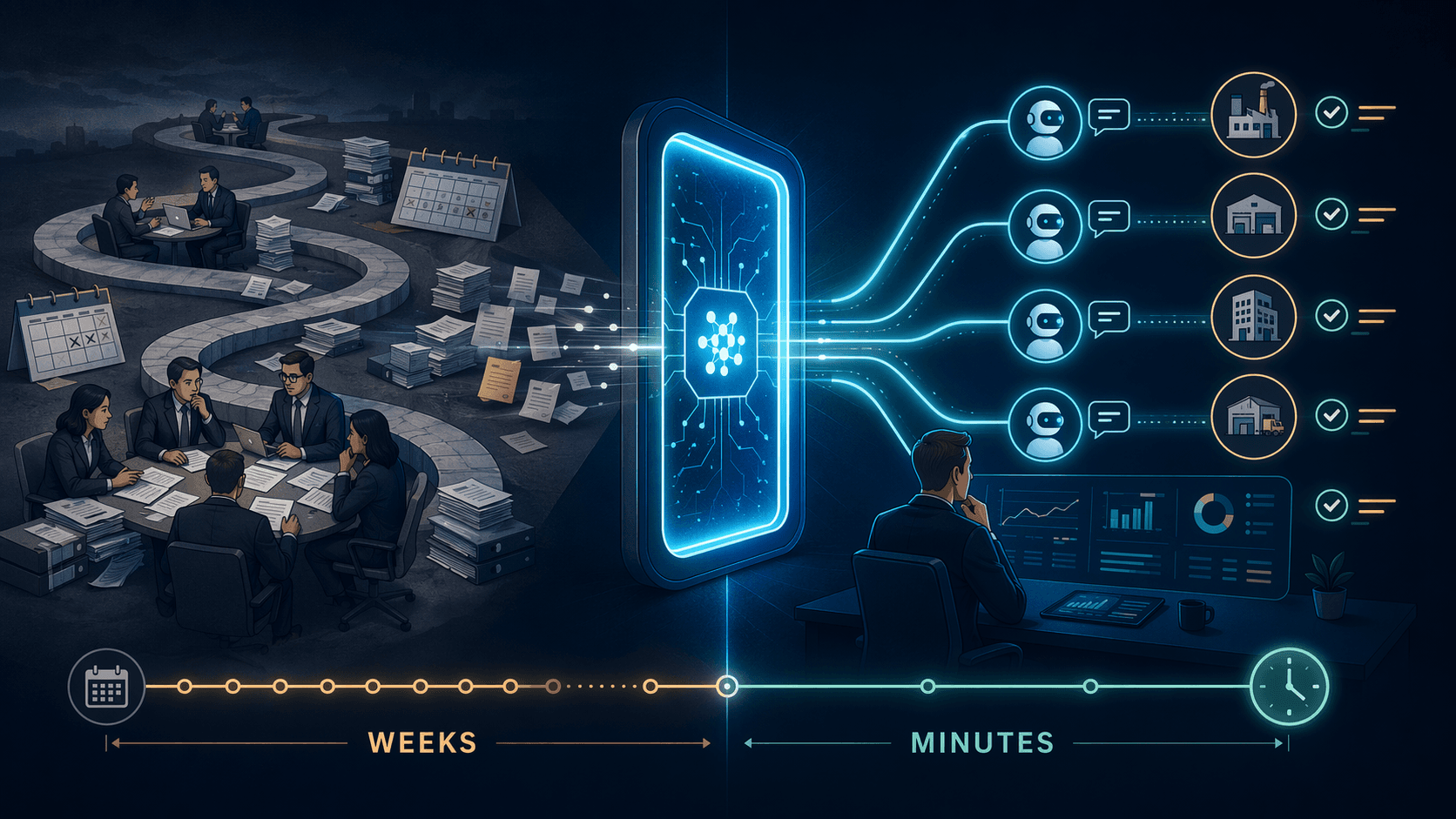
Maersk belongs in the same conversation, but with a different evidentiary weight. Pactum’s account describes autonomous contract negotiations using AI agents across global operations and says the cycle fell from weeks to minutes [4]. That is a meaningful procurement claim, but it is also vendor-adjacent and self-reported, so it should be read as a strong signal rather than an independent benchmark. For readers tracking the broader shift, How Agentic AI Is Reshaping Strategic Sourcing in 2026 and 6 Companies Already Using Autonomous AI Agents in Supply Chain are the right follow-ons, because they separate agentic capability from the older automation tools that only look similar from a slide deck.
- Procure.Ai's case material on Kärcher treats it as a tactical-procurement automation example: it reduced manual negotiation effort and was reported to deliver substantial discounts and time savings.
- GEP's case study on a global fast-food chain says supplier-risk AI was used during Brexit-related disruption, reducing network distance by 25% and achieving €3.2M in annual savings.
- GEP's Fortune 500 oil and gas case says the company consolidated 15 legacy procurement solutions into 2 AI-powered systems, increasing eSourcing adoption by 20% and procurement ROI by 15%.
What the evidence is actually strong enough to support
Taken together, these cases support a narrower conclusion than the usual AI marketing language does. AI in procurement is already a production tool in at least three useful areas: cleaning and classifying spend, automating parts of supplier negotiation, and reducing risk or operating friction in the procurement stack. The evidence is strongest where the source is independent or institutionally credible, the use case is specific, and the result can be traced back to a procurement decision rather than a general technology uplift.
That distinction matters when someone has to defend the business case to a CFO. The IBM and Sievo examples are easier to underwrite because they tie AI to spend visibility, working capital, and savings [1][2]. Walmart is older but still useful because it shows a concrete negotiation workflow at scale [3]. Maersk is a sign of where the market is going, but it should be presented with the caveat that the public evidence is still mostly vendor-reported [4].
The remaining questions are which procurement problem it is good for, how hard the implementation will be, and whether the claim is solid enough to take upstairs. For that second layer of due diligence, Procurement AI ROI in 2026: What the Evidence Actually Shows is the better place to pressure-test the numbers, while The People Side of AI Procurement Transformation is where the adoption problems start to look like the real project.
References
- Coca-Cola Europacific Partners — IBM Case Study
- Pentair — Sievo Case Study
- How Walmart Automated Supplier Negotiations — Harvard Business Review, 2022
- Understanding Agentic AI in Procurement: How Autonomous AI Has Been Transforming Supplier Deals — Pactum
- Kärcher — Procure.Ai Case Material
- Global fast-food chain — GEP Case Study
- Fortune 500 oil and gas company — GEP Case Study
Comments
Join the discussion with an anonymous comment.