
Kauai’s supply chain problem is not that the island lacks a dashboard. It is that most goods arrive through a narrow maritime path, and the useful warning window can close before a planner has time to do anything with the warning.
Hawaii is commonly described as importing roughly 85–90% of what it consumes, and that state-level estimate is a fair starting point for Kauai even though island-by-island proportions may vary.[1] For Kauai, the concentration is sharper because Nawiliwili Harbor is the island’s deepwater commercial harbor, the place where the maritime risk becomes physical: berth space, crane work, truck queues, receiving windows, and the next downstream promise made to a store, hotel, clinic, jobsite, or fuel customer.[2]
The carrier side is just as concentrated. Hawaii ocean freight is served by two Jones Act carriers, Matson and Pasha Hawaii, so a Kauai-bound shipper does not have the same substitution options that a mainland shipper might have across multiple ports, railheads, and truck lanes.[3] A delay upstream on the U.S. West Coast, a missed connection through Honolulu, or a weather-driven schedule change around the islands can become a Kauai inventory problem quickly because there are few redundant paths.
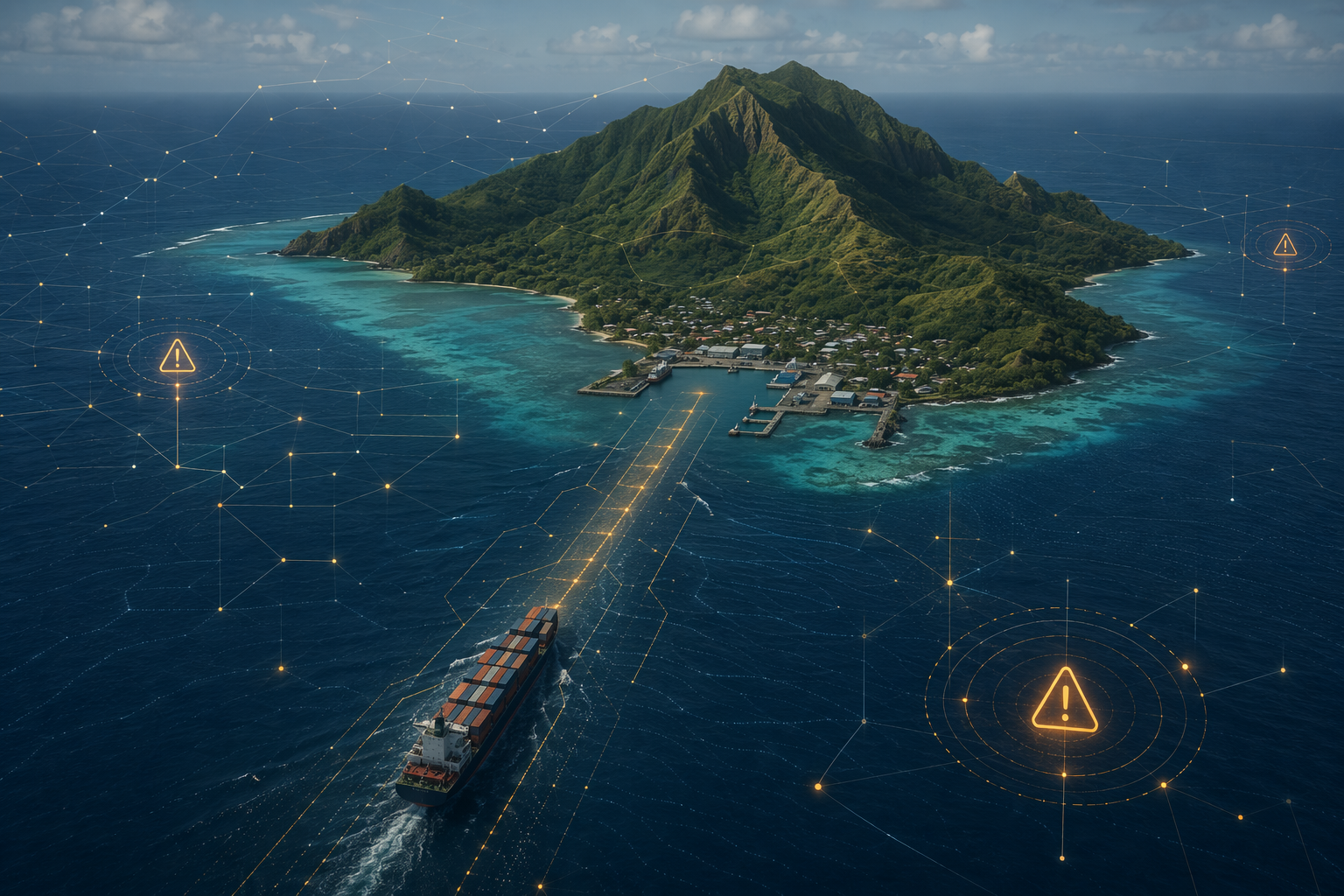
That is the practical test for AI maritime alerts that Kauai operators would actually use: not whether the system can show that a vessel is late, but whether it can create enough runway to reroute available freight, pull inventory forward, change labor plans, reschedule delivery appointments, or warn downstream teams before the miss becomes expensive.
The delay that matters is the one you can still act on
A mainland distribution network can sometimes absorb bad information with optionality. Kauai has less slack. If the sailing slips, the inbound container is not merely late in a system; it may be the replenishment load behind a grocery promotion, the materials behind a contractor’s sequence, or the replacement stock behind a service commitment.
The disruption set is familiar to anyone who has worked Hawaii freight long enough: vessel delays before departure, knock-on effects from West Coast terminals, Honolulu transshipment timing, Nawiliwili terminal congestion, inter-island barge disruption, and Pacific weather. Hawaii logistics also faces the ordinary island pressures of fuel costs, infrastructure limits, and long inbound lanes.[4] None of those hazards is exotic. What is different on Kauai is how quickly a single delay can run out the clock.
An alert that arrives after the receiving crew has already been scheduled is mostly an explanation. An alert that arrives while the inventory lead can still raise a reorder threshold, move substitute stock, or call a customer with a credible revised date has operational value. The difference is hours.
What the current maritime alert platforms actually watch
The useful systems in this category are not just map layers over AIS dots. They combine vessel position, weather, port events, terminal behavior, historical route patterns, and outside disruption signals, then push alerts when the current pattern stops looking like the expected one.
Portcast is a good example of the ETA-and-terminal side of the market. The company says its platform integrates more than 200 data sources, including AIS, satellite, weather, and terminal signals, and tracks more than 12,000 ports and more than 5,000 vessels.[5] Its value for a Kauai-serving shipper would not be the broad port count. It would be the ability to see whether a vessel movement, terminal condition, or route deviation is likely to affect the load before the carrier notice or customer complaint arrives.
Windward illustrates a different strength: behavioral anomaly detection. Its maritime AI glossary describes 15 proprietary AI models used to identify vessel behavior, anomalies, and deceptive shipping practices.[6] A Kauai food distributor may not care about every compliance use case in that stack, but the same pattern-recognition discipline matters when a vessel’s actual movement no longer fits the expected schedule.
Everstream Analytics sits closer to the global monitoring and analyst-validation model. Its platform page describes 24/7 monitoring, a dedicated applied meteorology team, and daily processing of 1,000–1,500 disruptions.[7] That mix matters when weather, labor action, infrastructure interruption, or a port event needs a human-readable assessment instead of another automated ping.
| Platform pattern | What it can add for Kauai freight | Where the operator still has to verify |
|---|---|---|
| AIS, terminal, weather, and satellite fusion | Earlier ETA risk signals and port-level congestion context | Whether the alert maps to the actual Matson or Pasha container and sailing plan |
| Behavioral anomaly detection | Flags when vessel movement stops matching the expected route or timing | Whether the anomaly changes the receiving, inventory, or delivery decision |
| Analyst-validated global monitoring | Weather, infrastructure, labor, and disruption context in plain operating language | Whether the event will touch the Hawaii lane or remain a distant risk |
There are also broader event-alert systems that show how fast disruption detection has become. Blue Yonder’s Resilinc EventWatchAI is described as monitoring more than 104 million news sources, detecting 96% of disruptions within the first hour, and generating 25 billion daily predictions.[8] Those figures are not Kauai-specific maritime performance numbers, but they show the direction of the alert market: speed is becoming the product.
The API gap is where usefulness gets decided
The hard constraint for Kauai is not whether AI can estimate maritime risk. It can. The hard constraint is whether the platform can tie that risk to the actual booked freight early enough and accurately enough for someone to change the plan.
Neither Matson nor Pasha Hawaii offers a real-time public container-level tracking API for operators to plug into the way they might connect with some parcel, truckload, or ocean visibility networks. That does not make AI maritime alerts useless. It does mean the system may lean heavily on AIS-based ETA prediction, sailing schedules, terminal intelligence, vendor carrier relationships, uploaded booking data, and exception management rather than clean, direct carrier event feeds.
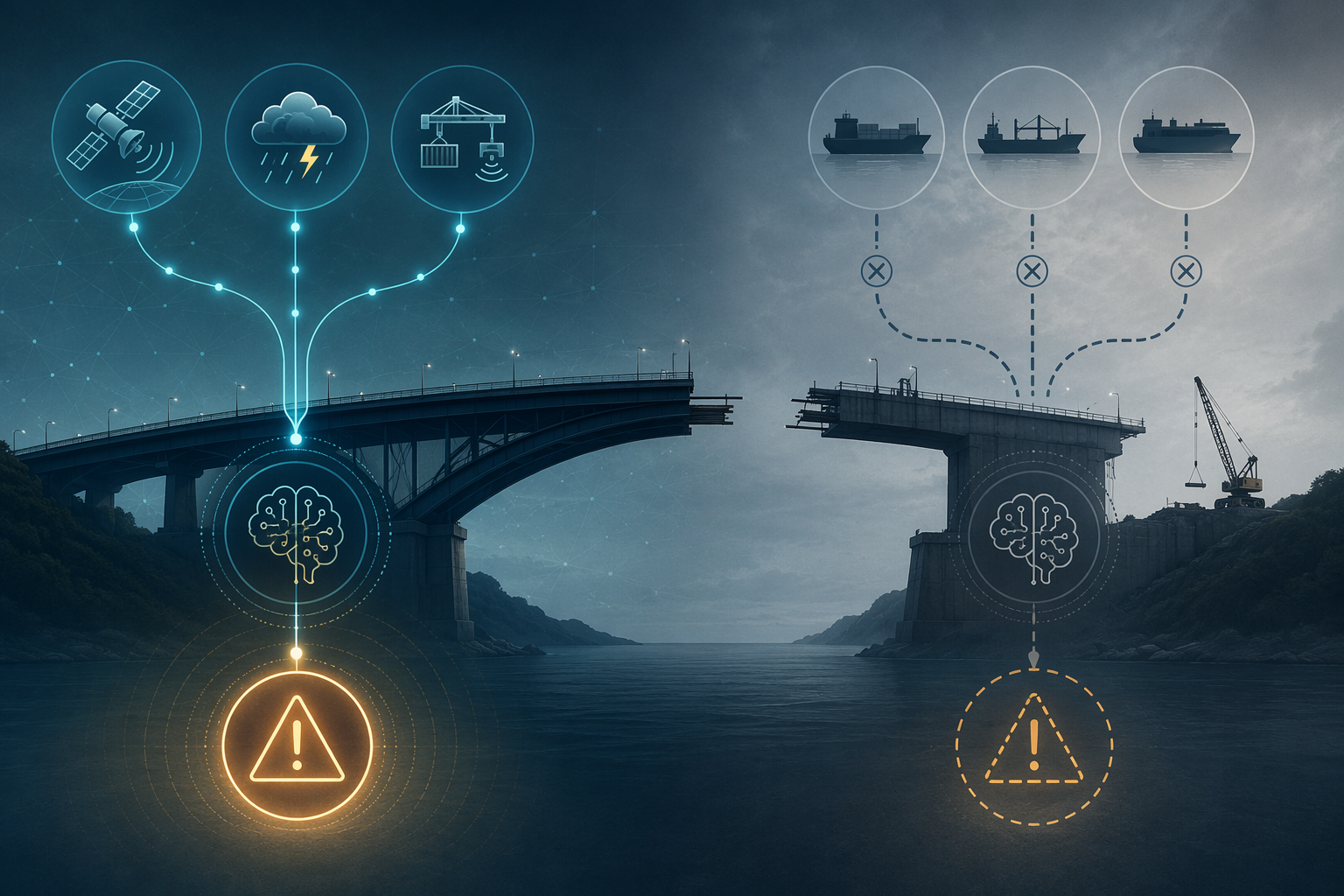
That gap changes the operating question. If the platform says a vessel is trending late into Honolulu, the Kauai operator still needs to know whether the affected container is on that vessel, whether it will miss an inter-island move, whether Nawiliwili labor or receiving capacity will still line up, and whether the shipment is urgent enough to justify a corrective action.
This is where a dashboard can look impressive and still fail the floor. An alert that cannot be matched to the purchase order, container, delivery route, or store allocation becomes a watch item. An alert that lands inside the transportation management system, inventory planning process, or dispatcher queue becomes a decision.
For Kauai-serving operators, the most credible implementation is usually layered. Use AIS and weather models for early suspicion. Use terminal and port data to judge congestion risk. Use carrier portals, EDI, booking files, or account-team confirmation to validate the shipment impact. Then push only the exceptions that change work: expedite, hold, substitute, reschedule, or notify.
Where the hours can be spent
The strongest use cases are not abstract resilience cases. They are small decisions made before the next sailing or delivery window closes.
- Pre-position inventory when an upstream vessel delay makes the next Kauai replenishment uncertain.
- Adjust labor and receiving appointments at Nawiliwili or the consignee dock before trucks and crews are committed.
- Warn store, hotel, construction, or fuel teams that a delivery promise is now exposed, not merely late.
- Move substitute stock or split allocation when one container contains the high-risk items.
- Escalate to the carrier account team with a specific vessel, container, and customer consequence instead of a general request for status.
The inventory action is often the highest-value one because Kauai has less time to hide a replenishment miss. If an AI alert indicates that a West Coast departure delay is likely to affect a Honolulu connection, the inventory lead can raise the exception before the shortage shows in store-level demand. That may mean pulling forward available stock, changing allocation, or telling sales not to promise what operations can no longer protect.
The transportation action is narrower but still important. A dispatcher does not need a lecture about global volatility. They need to know whether tomorrow’s pickup sequence still makes sense, whether a truck should be held, whether a delivery appointment should be moved, and whether the customer service team needs a revised ETA before the phone starts ringing.
Weather alerts have their own rhythm. A storm risk around the Hawaiian archipelago can change sailing expectations even when the cargo is already moving. In that case, the alert is not about finding a new ocean carrier at the last minute. It is about protecting the parts of the plan still under local control: warehouse sequencing, customer notification, cold-chain exposure, substitute sourcing, and replenishment priorities.
Vendor outcomes are useful signals, not guarantees
The outcome claims around these platforms should be read carefully. Portcast reports a 15% demurrage reduction and an 80% reduction in manual tracking updates in customer or partner material.[5][9] Those are useful directional claims, especially because demurrage and manual status chasing are real pain points. They are still vendor-reported figures, not a promise that a Kauai operator will see the same result.
The more defensible takeaway is narrower: if an alert platform reduces blind status work and surfaces exceptions earlier, the operations team can spend more time on the loads that need intervention. That matters in a small island network because attention is also a scarce resource. The person checking status across portals, emails, spreadsheets, and phone calls is not simultaneously solving the next miss.
TryLeverage cites industry research indicating that 41% of organizations take a week to identify impacted materials without AI-driven alerts.[10] That figure is not maritime-specific to Kauai, but the underlying failure mode is recognizable: disruption is known somewhere in the organization, yet the affected items are not identified quickly enough for operations to respond cleanly.
What a Kauai-ready alert workflow looks like
A useful Kauai workflow starts with shipment identity, not with the map. The platform needs the booked sailing, container or booking reference, purchase order, consignee, commodity class, required delivery date, and the downstream owner who can act. Without that layer, even a good AI prediction can become another status note.
The alert rules should then separate curiosity from consequence. A vessel variance may be informational if the cargo has buffer. The same variance becomes urgent if it touches perishable goods, fuel supply, high-demand retail items, project-critical materials, or inventory with no substitute on island.
| If the alert says | The first question is | The action owner is usually |
|---|---|---|
| West Coast departure is slipping | Will this miss the Honolulu or Kauai handoff? | Transportation planner |
| Honolulu congestion is rising | Which Kauai-bound containers are exposed? | Carrier manager or 3PL |
| Weather risk may affect sailing | Which delivery promises need protection now? | Dispatcher and customer service lead |
| Nawiliwili receiving window may compress | Can labor, trucks, and dock time be resequenced? | Local operations manager |
| High-priority stock is at risk | Can inventory be buffered, substituted, or reallocated? | Inventory lead |
The best alert is usually not the earliest possible alert. It is the earliest alert with enough confidence and shipment context to trigger a named action. Too early, and the team learns to ignore noise. Too late, and the team is documenting failure.
This is becoming established technology, but implementation still carries risk
Maritime AI is no longer a science project category. Berkeley CMR describes AI applications across maritime transport optimization, including routing, fuel efficiency, predictive maintenance, and port operations.[11] Grand View Research’s market material places maritime artificial intelligence in a fast-growth commercial category, with the global market estimated at $4.3 billion in 2024 and a cited 40.6% compound annual growth rate for 2025–2030.[12] Market size does not prove operational fit, but it does show that the vendor base is maturing.
The security side deserves a practical check, not panic. A 2026 Smart Maritime Network report notes that AI is placing the maritime industry at greater cyber-attack risk.[13] For a shipper or 3PL, that means vendor due diligence has to include access controls, data-sharing boundaries, incident response, and how carrier, customer, and shipment data are handled. An alert platform should not become a new weak point in a lane that already has few alternatives.
The same alert logic appears in other risk topologies. In a multi-port hurricane environment, the problem is choosing between threatened ports, changing inland routes, and acting before weather closes options; the ChainSignal article on AI maritime alerts for Florida hurricane preparedness covers that pattern. Kauai is the narrower version: fewer ports, fewer carriers, fewer workarounds, and a higher premium on the first useful warning.
The Kauai answer
AI maritime alert platforms are a credible use case for Kauai-serving operators because they can buy the one thing a concentrated island supply chain needs most: lead time. Portcast-style ETA and terminal intelligence, Windward-style behavioral detection, and Everstream-style monitored disruption context can all help identify trouble before it reaches the receiving dock.
The limit is just as clear. AIS-based prediction is not the same as full carrier-integrated shipment visibility, and the lack of real-time public container-level APIs from Matson and Pasha Hawaii keeps the integration problem alive. The alert becomes operationally valuable only when it is tied to the booked freight, the downstream inventory or delivery consequence, and the person authorized to change the plan.
For Kauai, the winning metric is not how much the platform sees. It is how many hours earlier the right person can reroute, buffer, reschedule, or warn someone before the island feels the miss.
References
- Industry Info — Supply Chain Hawaii.
- Port of Nawiliwili, U.S.A. — Findaport.
- Shipping to Hawaii: How to Navigate the Obstacle Course — SupplyChainBrain.
- Logistics in Hawaii: Sustaining Island Supply Chains — Inbound Logistics.
- Portcast homepage — Portcast.
- What is Maritime AI? — Windward.
- Global Monitoring and Alerting — Everstream Analytics.
- Revolutionizing Supply Chain Risk Management with Real-Time Disruption Alerts — Global Trade Mag.
- When sea freight gets smarter: How AI is turning supply chain chaos into competitive advantage — Siemens Digital Logistics blog, 2025-09-05.
- Top AI Tools for Supply Chain Disruption Alerts — TryLeverage.
- Utilizing AI for Maritime Transport Optimization — Berkeley CMR, 2024-12.
- Maritime Artificial Intelligence Market Size Report, 2025–2030 — Grand View Research.
- AI is placing maritime industry at greater risk of cyber-attack – report — Smart Maritime Network, 2026-03-02.
Comments
Join the discussion with an anonymous comment.