
The 2026 Strait of Hormuz blockade was not the kind of disruption that can be handled by moving a few dates on a planning calendar. After tanker attacks earlier in the year, commercial traffic through the Strait was reported to have fallen by 95–97%, while Brent crude moved from roughly $61 to about $118 during the shock window.[1] For supply chain teams, that meant the usual question changed quickly. It was no longer whether Hormuz was a risk. It was whether planners could see which orders, vessels, inventory positions, plants, and customers were exposed before the first executive meeting ended.
That is the useful test for AI supply chain disruption planning in a Hormuz tanker crisis. The point is not whether AI can produce a sharper alert than a news feed. Most organizations had alerts. The question is whether AI helped convert the blockade into usable options: which voyages to reroute, which berths to re-sequence, which inventory buffers to protect, which customers to warn, and which expensive moves were justified by the new risk.
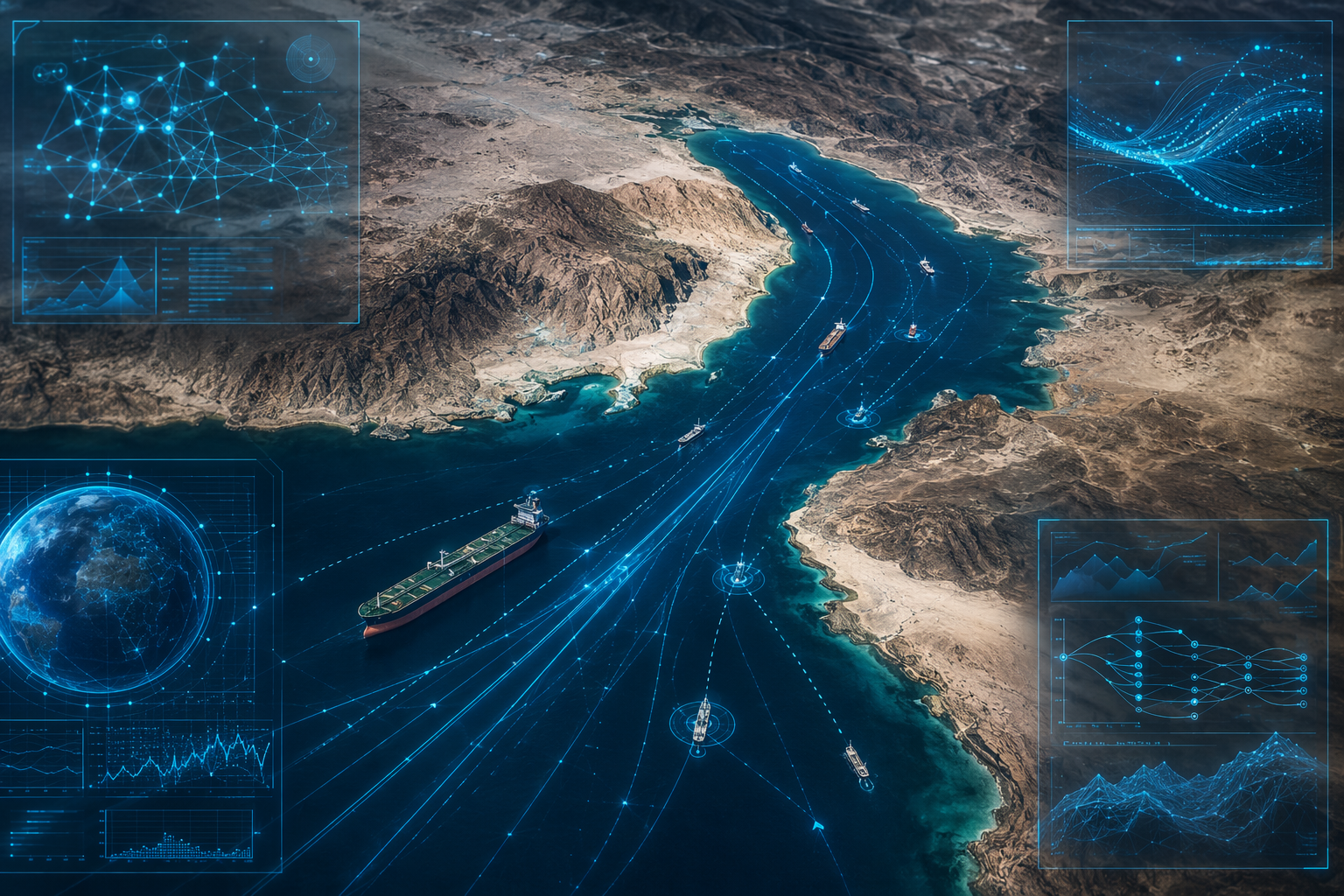
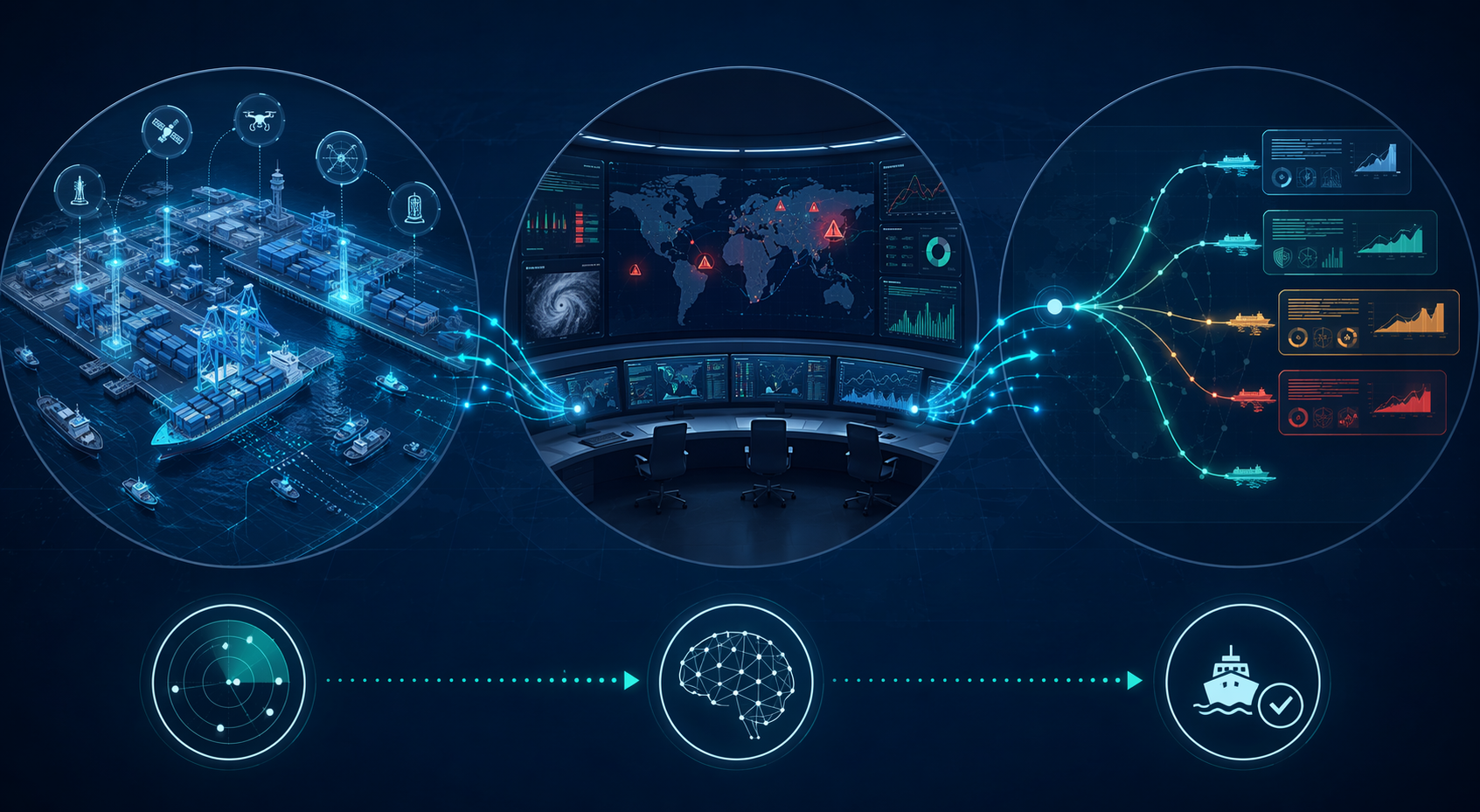
In the better-run responses, AI appears to have compressed the interval between signal and decision from weeks to hours. That is a serious improvement, but it is not a magic property of a model. It depends on a planning stack: trusted operational data, models that translate live disruption into lead-time and inventory consequences, and decision routines that let teams act before the old governance cycle catches up.
Where AI Actually Helped During the Blockade
The PortXchange material is the most useful evidence because it stays close to operations. During the Hormuz disruption, its framework described AI models analyzing voyage patterns and berth schedules in real time, with the aim of improving maritime resilience as conditions shifted rather than after they stabilized.[1] That matters because vessel delay is not just a marine issue. A delayed tanker can change refinery runs, feedstock availability, production schedules, storage utilization, demurrage exposure, and customer allocation decisions.
The practical value started with pattern recognition. When vessel behavior changes around a chokepoint, planners need to know whether they are seeing a temporary pause, a route shift, a berth congestion pattern, or a developing capacity constraint. AI control towers can combine AIS-like vessel movement, voyage schedules, terminal status, port calls, carrier updates, and internal order data into a live operating picture. The useful output is not a red icon over the Gulf. It is a ranked set of planning consequences.
A control tower that knows only that a tanker is delayed is still mostly a visibility tool. A control tower connected to purchase orders, production demand, inventory policies, customer commitments, and transport contracts can answer harder questions: which shipments miss the production window, which sites can substitute supply, which lanes become uninsurable or uneconomic, and which decisions need human approval today. For readers comparing platforms, ChainSignal’s article on three control tower models and ROI is a useful companion because Hormuz exposed the difference between passive visibility and planning-grade orchestration.
Digital Twins Turned Chokepoint Risk Into Testable Alternatives
Digital twins earned their place in the Hormuz response when they stopped being display models and became stress-test environments. A maritime digital twin can represent ports, berths, vessels, sailing times, queues, storage limits, and downstream demand. Once the blockade changed the baseline, planners could test alternatives without pretending they were certainties.
That distinction matters. A good scenario model does not say, “reroute everything” and call the job done. It shows the cost, timing, congestion, inventory, and service trade-offs of each reroute option. It can compare waiting outside the Strait, diverting around a longer route, drawing down regional inventory, changing production sequencing, expediting a substitute input, or prioritizing one customer segment over another. Some of those options will be ugly. The value is seeing the ugliness early enough to choose deliberately.
In tanker-related crises, the twin also has to connect marine constraints to non-marine consequences. A berth schedule change can decide whether a refinery feedstock arrives inside a feasible processing window. A route extension can turn acceptable inventory coverage into a stockout risk. A storage constraint can make an otherwise sensible delay impossible. AI helps by running many permutations quickly, but the model is only as useful as the operational reality it can represent.
Scenario Engines Made the Next Decision Visible
The strongest AI use case in the blockade was not prediction in isolation. It was scenario conversion: taking a disruption signal and translating it into executable planning options. ARC Advisory Group’s framing, published through Supply Chain Management Review, describes the broader shift from reactive supply chain architecture toward predictive execution.[3] Hormuz made that shift less theoretical. When a chokepoint starts closing, the planning team does not need another dashboard proving the world has changed. It needs a narrower set of feasible choices.
In practice, that means the model must estimate how the event changes lead times, variability, capacity, and inventory exposure. If the model flags a voyage delay but cannot estimate the effect on available-to-promise dates, production plans, or replenishment windows, the planner still has to do the hard work manually. If it can connect the delay to a shortage date, a customer-service risk, and a recommended allocation or reroute action, it becomes part of the planning process rather than a layer beside it.
This is also where dynamic safety-stock optimization becomes more than a math exercise. During a blockade, safety stock should not rise uniformly across the network. Some items have alternative lanes or suppliers. Some have demand flexibility. Some sit behind a single exposed route, vessel class, or input material. AI can help separate “increase buffer everywhere” from “protect these nodes because the next replenishment signal is now unreliable.” That difference is where cost control and resilience stop fighting each other quite so blindly.
The Crisis Was Larger Than Crude Oil
Oil prices set the public drama, but the planning problem reached deeper into industrial supply chains. The Asia Group reported that before the conflict, roughly one-third of global helium and about half of seaborne sulfur transited Hormuz.[2] Those are not background details for chemical, semiconductor, medical, energy, and industrial buyers. They are reminders that a maritime chokepoint can become a hidden materials constraint before the company’s main commodity dashboard says anything useful.
This is where AI planning can widen the field of view. A tanker crisis may enter the organization through the energy desk, but the material risk can sit in procurement, manufacturing engineering, packaging, utilities, maintenance, or a contract manufacturer two tiers away. Models that connect transport exposure with bill-of-materials dependencies can show that a supposedly minor input deserves attention because it gates production.
The warning for buyers is straightforward: if the system knows only finished-goods lanes and primary suppliers, it will miss too much. Hormuz planning requires item-level and supplier-level exposure data, not just vessel tracking. The same logic appears in other disruption patterns, including earthquake supply chain planning, where the decisive constraint is often a sub-tier component rather than the facility named in the first alert.
What Had to Be in Place Before the AI Worked
The blockade rewarded companies that had already done the unglamorous work. AI did not make fragmented carrier data, inconsistent item masters, slow approval rules, or stale inventory policies disappear. In many organizations, those weaknesses were the real bottleneck. “Geopolitics” may have caused the crisis, but it did not cause a company to discover during the crisis that its shipment data, supplier data, and planning data could not be reconciled quickly.
| Prerequisite | What it had to support during Hormuz |
|---|---|
| Trusted operational data | Link vessel movements, carrier updates, terminal conditions, orders, inventory, suppliers, and customer commitments |
| Predictive models | Translate disruption signals into lead-time shifts, stockout dates, capacity pressure, and cost exposure |
| Fast operating routines | Let planners reroute, resequence, allocate, expedite, or escalate without waiting for normal-cycle governance |
The first prerequisite is data trust. In a maritime crisis, the planning system has to reconcile information from carriers, terminals, third-party logistics providers, freight forwarders, procurement systems, ERP, inventory records, and demand plans. If those sources disagree, AI can still produce a recommendation, but planners will spend the critical hours auditing the recommendation instead of acting on it.
The second prerequisite is model relevance. A generic risk score is not enough. A Hormuz tanker disruption requires models that understand voyage patterns, berth schedules, route alternatives, port congestion, inventory coverage, materials exposure, and commercial priority. This is why the PortXchange example is more persuasive than a generic AI claim: the framework was tied to the operating mechanics of voyages and berths during the disruption.[1]
The third prerequisite is organizational speed. A model can surface an alternative route in minutes, but if finance approval, customer allocation, freight procurement, and executive signoff still move on the old timetable, the company has only made delay more visible. Buyers evaluating AI tools should ask vendors to show not only model output, but the workflow that turns output into approved action.
That workflow should include exception thresholds, owner assignment, audit trails, approval rights, and handoffs into transportation, procurement, and planning systems. The relevant benchmark is not whether the demo produces a clever scenario. It is whether the operating team can use that scenario while carriers, insurers, customers, and executives are all asking for answers.
Agentic AI Results Are Interesting, Not Yet Benchmarks
Tarangya reported agentic AI pilot results during Hormuz disruptions that included a 12% fuel-cost reduction and a 30% lead-time improvement.[4] Those figures are worth noting because they point to the direction of travel: systems that do more than recommend, and can coordinate route, fuel, and timing decisions under constraints. They should not be treated as established market benchmarks.
The reason is simple. The figures come from a single practitioner source and are not independently verified in the material available here. They may reflect a strong pilot, a favorable operating context, or a narrower definition of lead-time improvement than a buyer would use in its own business case. A planning VP can use them as indicative evidence for what to investigate, not as a number to paste into an investment memo without qualification.
Agentic AI is still relevant to Hormuz-style disruption planning because the crisis contained many repetitive coordination tasks: monitoring vessel movements, comparing route options, checking inventory impact, preparing exception summaries, and prompting owners for decisions. The boundary is accountability. A system may assemble the option set faster, but it should not quietly make geopolitical risk decisions that belong to executives.
What AI Could Not Solve
The Hormuz blockade also showed the hard limits. AI cannot make insurers write coverage when the market freezes. It cannot force carriers to accept a lane they consider unsafe. It cannot remove war-risk premiums, reopen a closed chokepoint, or decide how much political risk a company should absorb to protect service. Those are commercial and executive judgments, not optimization problems.
This matters for vendor evaluation. A tool that claims to “solve” geopolitical disruption is overreaching. A tool that detects exposure, models alternatives, estimates consequences, records assumptions, and accelerates cross-functional decisions is making a credible claim. For buyers building a broader capability map, ChainSignal’s AI capabilities for disruption planning covers the surrounding functions that should connect to this Hormuz use case.
There is also a judgment problem that no model removes. If two scenarios are both bad, the organization still has to choose who waits, who pays, and which commitments are protected. AI can make those trade-offs visible earlier. It does not make them painless or politically neutral.
How Buyers Should Evaluate the Use Case
For mid-size and large enterprises, AI for Hormuz tanker disruption planning is worth evaluating when the organization can prove three things before procurement starts: the data is ready enough, the models are specific enough, and the decision process is fast enough. Without those, the same platform becomes a faster dashboard attached to a slow company.
- Ask vendors to demonstrate vessel, berth, inventory, order, supplier, and customer-impact data in the same scenario, not as separate screens.
- Require scenario outputs that show lead-time, cost, service, capacity, and inventory consequences, not just a risk score.
- Test whether the system can distinguish crude exposure from other material dependencies such as helium, sulfur, additives, packaging, or maintenance inputs.
- Run a tabletop exercise with real approval owners in the room, because model speed is irrelevant if rerouting authority is unclear.
- Treat pilot ROI claims as hypotheses until the vendor shows scope, assumptions, baseline, and independent validation.
The better business case is not “AI will predict the next blockade.” The better case is narrower and stronger: when a maritime chokepoint crisis hits, AI can reduce the time required to detect exposure, compare feasible responses, and move an approved plan into execution. Hormuz made that value visible. It also made the prerequisites impossible to ignore.
References
- Hormuz tensions highlight a new reality: maritime resilience now runs on data and AI, AJOT
- Hormuz disruption exposes AI’s hidden supply chain risks, AGBI, July 2026
- How AI is shifting global supply chains from reactive to predictive, Supply Chain Management Review
- The 2026 Logistics Pivot: Navigating the Hormuz Crisis and the Rise of Agentic AI, Tarangya
Comments
Join the discussion with an anonymous comment.