
For food supply chains, the Iran crisis is not an abstract technology question anymore. The Strait of Hormuz closure has made several planning assumptions fail at once: energy, fertilizer, ingredients, packaging, vessel availability, and demand behavior. A planning team can absorb one bad lane or one late supplier with enough phone calls and overtime. It cannot keep treating the baseline plan as reliable when oil, urea, freight capacity, and downstream consumer prices are all moving together.
The numbers explain why this is not a single-lane logistics issue. The Hormuz closure affects 20–30% of global fertilizer trade, 35% of global urea exports, and 27% of global oil exports. Fertilizer can account for up to 25% of agricultural production costs. Urea at the New Orleans import hub rose from $516 to $683 per ton in the first week of the war, then reached a 77% increase by March 9, 2026.[1]
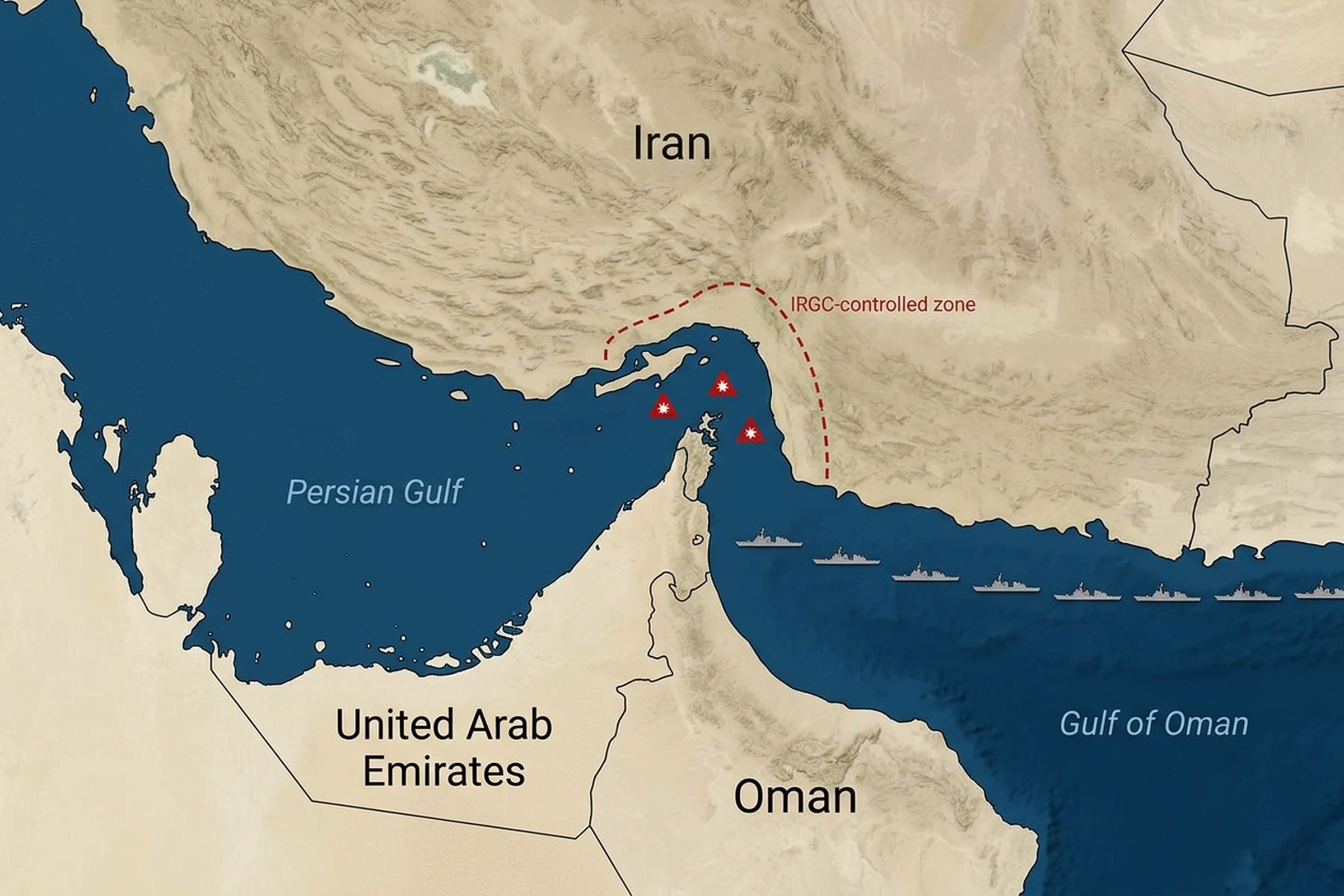
Food manufacturers feel that compression in ugly, practical ways. A procurement manager may still have a purchase order confirmed with a tier-1 ingredient supplier, while that supplier is exposed to higher fertilizer costs, delayed upstream inputs, fuel-indexed surcharges, or packaging components sitting behind the same chokepoint. FoodNavigator described the disruption as simultaneous energy cost spikes, fertilizer shortages, ingredient delays, and packaging bottlenecks, with more than 2,000 ships stranded as the crisis deepened.[2]
That is where AI earns or loses credibility. Speed alone is not the outcome. The useful question is whether the system changes the next decision cycle: which SKUs stay protected, which supplier dependency gets escalated, which safety stock moves closer to demand, and which route is abandoned before it burns margin.
The Plan Fails When Variables Stop Moving One at a Time
Legacy planning systems usually assume that the last approved plan is still a reasonable starting point. During the Iran-Hormuz disruption, that assumption expires quickly. The demand plan may be only a week old, but its cost inputs, lead times, supplier feasibility, and transportation availability may already be stale.
Food and beverage networks are especially exposed because they connect agricultural cost structures with manufacturing constraints and retail service expectations. Higher urea prices do not stay inside a fertilizer category. They can change crop economics, supplier pricing, contract renegotiation pressure, and the cost to preserve production of high-volume SKUs. Higher oil prices do not stay inside transportation. They touch refrigeration, processing energy, resin-linked packaging, and spot freight.
A static planning process reacts by opening exception lists. The planner sees late inbound material, the inventory lead sees service risk, procurement sees price exposure, and logistics sees a lane problem. Each function is correct inside its own screen. The problem is that the crisis is cross-functional before the meeting even starts.
| Pressure point | What changes in the decision |
|---|---|
| Demand sensing and safety stock | Which SKUs receive scarce inventory, and where buffer stock is moved |
| Supplier risk monitoring | Which tier-2 and tier-3 dependencies are escalated before the tier-1 supplier misses |
| Logistics rerouting | Which lanes, modes, and service promises are still financially defensible |
AI does not remove the constraint. It gives the team a faster way to recompute the consequences of the constraint across the network. That difference matters most in the first 90 days, when decisions are still reversible enough to protect availability, but late enough to carry real cost.
Demand Sensing Has to Become an Allocation Tool
Demand sensing is often sold as a forecasting upgrade. In this crisis, its more useful role is allocation discipline. When lead times stretch and input costs rise, a better demand signal helps decide which demand is worth serving first.
A food manufacturer facing constrained ingredients cannot protect every SKU equally. It has to distinguish between stable demand, panic buying, promotion-driven lift, channel substitution, and noise. Historical shipments alone are a weak guide when households, retailers, distributors, and foodservice customers are reacting to price moves and availability rumors at the same time.
The practical AI advantage is not that it produces one perfect forecast. It can refresh demand assumptions faster as external signals change, then connect those assumptions to inventory positions. FoodNavigator cited supply chain consultant Lisa Anderson on the role of AI-enabled advanced planning systems in reallocating and optimizing inventory across the supply chain during this type of disruption.[2]
That matters because safety stock is not sacred. In a stable quarter, buffer policies can sit inside the system and behave like governance. In a crisis, the same policies can trap inventory in the wrong echelon. A regional warehouse may be carrying too much of a low-margin SKU while a plant waits on one constrained ingredient for a core product. A retailer may be over-allocated on a promotion that no longer deserves priority once inbound replacement cost changes.
AI-supported multi-echelon inventory optimization is useful here when it does three things at once: it sees projected demand by SKU and node, respects lead-time changes, and calculates the cost of moving stock against the service risk of leaving it alone. The output should not be a prettier inventory dashboard. It should be a set of recommended moves: transfer this pool, hold that allocation, protect this SKU family, and stop replenishing that slow mover until the next scenario run.
The Australian food manufacturer case is a good proof of mechanism. During an unexpected supplier shutdown in a peak demand period, the company used an AI-driven supply chain optimization platform to run millions of calculations across six crisis scenarios in seconds. The platform identified a blended sourcing solution that allowed the manufacturer to sustain 70% of its product range through the disruption.[3]
Tier-1 Visibility Is Too Shallow for This Crisis
The weakest sentence in too many crisis calls is still: “Our supplier says they are fine.” That may be true at tier 1 and useless at tier 2.
The Iran-Hormuz shock hides exposure behind otherwise healthy supplier relationships. A packaging supplier may not source directly through the strait, but its resin, additives, liners, coatings, or energy costs may be exposed. An ingredient supplier may have confirmed near-term production while its agricultural input costs are resetting. A co-manufacturer may still have labor and capacity but face higher fuel, delayed parts, or constrained replacement materials.
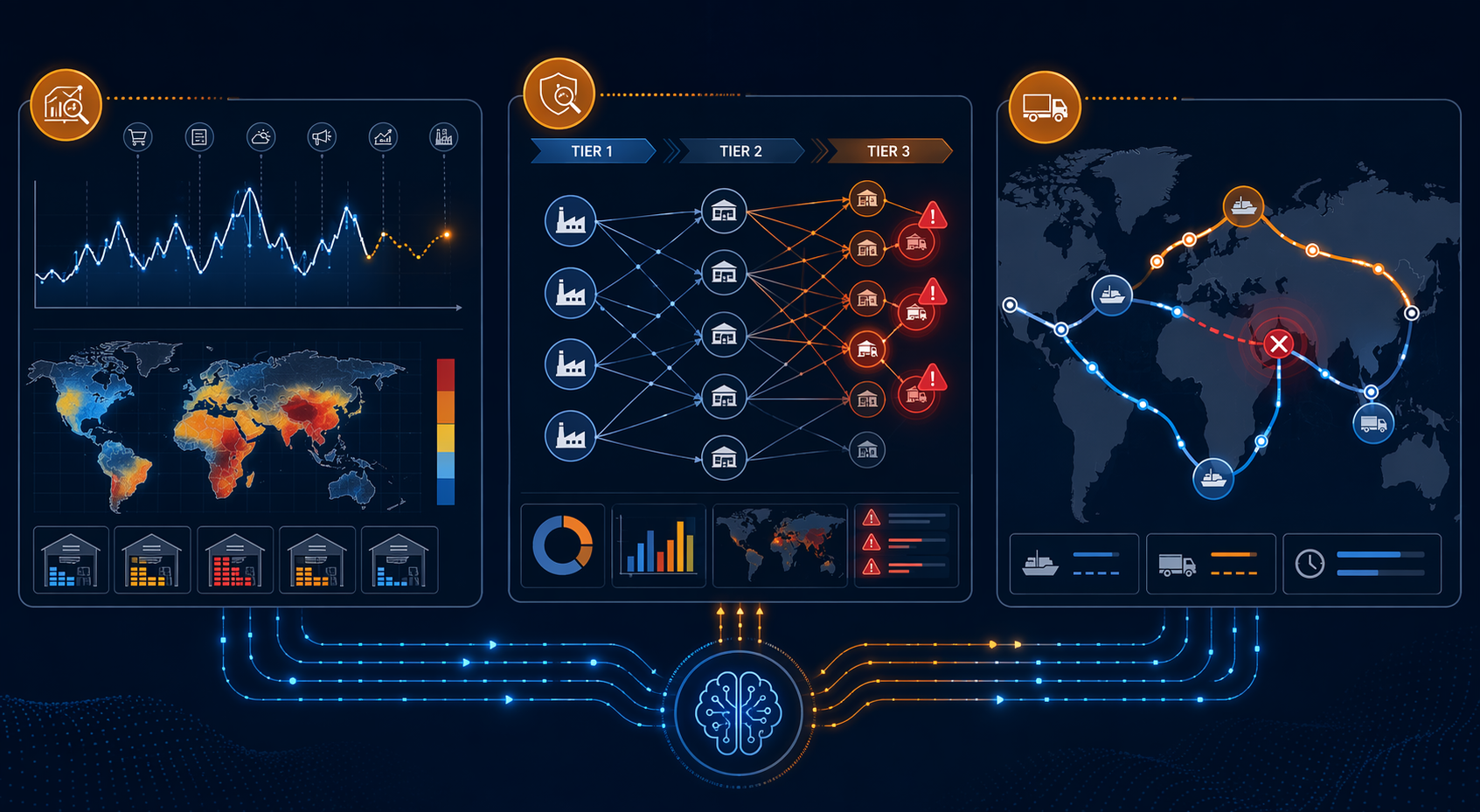
Supplier risk monitoring should therefore move from vendor status tracking to dependency mapping. The system needs to connect materials, facilities, sub-suppliers, countries, ports, energy exposure, and substitute options. This is where knowledge graphs and multi-tier network models become operationally relevant, not just technically interesting. A supplier node only becomes useful when it explains which finished goods, production lines, customer commitments, and inventory pools are affected if that node deteriorates.
For food manufacturers, the priority dependencies are not limited to headline ingredients. Fertilizer exposure belongs in the map because it can influence crop availability and input pricing. Packaging belongs in the map because a missing film, closure, label stock, or carton format can stop a run even when the food ingredient is available. Energy belongs in the map because suppliers with energy-intensive processes may become commercially or physically constrained before they appear on a late-shipment report.
A useful risk model does not simply rank suppliers red, yellow, and green. It helps the procurement risk team decide who deserves escalation today. One tier-1 supplier with a high spend value may be less urgent than a lower-spend supplier whose tier-2 exposure blocks a protected SKU family. One alternate supplier may look attractive until the model reveals that both suppliers depend on the same upstream input or port pair.
This is also where internal links between commercial planning and procurement risk stop being optional. If the demand plan says a product family must be protected, the supplier model must show the hidden inputs behind that family. If the supplier model flags a tier-3 exposure, the demand and inventory teams need to know whether to build, transfer, substitute, or stop promising the volume. For a deeper treatment of the risk-scoring mechanics, see how AI reveals hidden supplier risks in wartime and how knowledge graphs deliver multi-tier supply chain visibility.
Rerouting Is a Margin Decision, Not a Map Exercise
When more than 2,000 ships are stranded, rerouting stops being a transportation-team side calculation.[2] Freight premiums, port congestion, container availability, delivery windows, and customer penalties all begin to compete with production priorities.
AI can help here, but only if the routing model is tied to product economics and service commitments. The cheapest available lane may be wrong if it misses a launch window for a protected product. The fastest lane may be wrong if it consumes emergency freight budget on a low-margin SKU that could have been delayed without losing the account. A modal shift may look attractive until it collides with shelf-life, refrigeration, customs, or customer receiving constraints.
The better question is not “Can we get around Hormuz?” It is “Which alternate route preserves the most service at an acceptable landed cost for the SKUs we have already chosen to protect?” That requires logistics scenarios to share assumptions with demand sensing and inventory optimization. Otherwise, transportation solves yesterday’s priority list.
An AI-supported control tower can contribute if it turns disruption signals into recommended interventions. A useful version will flag which shipments should be expedited, consolidated, rerouted, delayed, or abandoned. A weak version will show the same exception earlier and still leave the transportation manager to rebuild the plan manually. For readers comparing control tower designs, three control tower models and why only one delivers ROI is a useful companion piece.
The Australian Case Shows Capability Fit, Not Guaranteed ROI
The Australian manufacturer case is worth returning to because it resembles the kind of decision supply chain leaders actually face. The company did not use AI to admire a disruption. It used AI to evaluate six crisis scenarios, compare blended sourcing options, and preserve part of the range during a supplier shutdown.[3]
That sequence matters. First, the team had a defined operating problem. Second, the platform could calculate many feasible combinations quickly. Third, the output supported a portfolio decision. The company did not need an omniscient system; it needed one that could narrow a messy option set before the window closed.
For the Iran-Hormuz disruption, the same mechanism is relevant even if the exact result is not transferable. A manufacturer with dual-source ingredients, flexible packaging formats, and available production capacity may find workable blends. A manufacturer locked into single-source inputs and dedicated equipment may get less benefit. AI can expose the option set, but it cannot create physical supply, qualified vendors, or regulatory approvals that do not exist.
This distinction keeps the business case honest. The immediate ROI is not “AI makes the crisis manageable.” It is that AI can reduce the time required to re-evaluate scenarios, improve the quality of tradeoffs, and reveal dependencies early enough for humans to act.
A 90-Day Priority Lens
The next 90 days do not reward broad AI roadmaps. They reward narrow deployments that change crisis decisions. A supply chain director should ask for evidence that the system can refresh scenarios on the cadence of the disruption, not the cadence of the monthly planning cycle.
- Start with protected SKUs: define which products deserve scarce ingredients, packaging, capacity, and freight before optimization begins.
- Refresh demand assumptions weekly or faster: treat historical-only forecasts as a starting point, not the allocation rule.
- Map tier-2 and tier-3 exposure: prioritize fertilizer-linked inputs, energy-intensive suppliers, packaging dependencies, and shared upstream nodes.
- Move safety stock deliberately: calculate where buffer inventory protects service and where it merely hides inside the network.
- Tie rerouting to margin and service: evaluate alternate lanes against SKU priority, landed cost, shelf life, and customer commitments.
Quality control and predictive maintenance should not be ignored, but they belong in this crisis discussion for a specific reason: they free scarce capacity. When energy costs, labor constraints, and replacement-part delays are tightening the operating window, fewer defects and less unplanned downtime can protect the production hours that remain. They are supporting capabilities, not substitutes for demand sensing, supplier risk monitoring, or rerouting.
The same discipline applies to AI control towers. A control tower that aggregates disruption alerts may be useful for visibility. A control tower that recommends inventory moves, supplier escalations, and lane changes against a shared scenario model is more likely to affect the decision cycle. The difference is not cosmetic; it determines whether the organization gets earlier awareness or better action.
Where the Advantage Is Real
AI provides a measurable crisis-response advantage during the Iran-Hormuz disruption when it helps a food company re-answer the operating question faster than the disruption changes it. Which demand is still real? Which SKU should be protected? Which supplier exposure is hidden below tier 1? Which inventory pool should move? Which route is still worth paying for?
Companies with current data, multi-tier visibility, and authority to act on scenario outputs can use AI to make better tradeoffs under unstable assumptions. Companies without those foundations may still get a faster dashboard. They will also get the same blind spots faster.
References
- Chokepoint: How War with Iran Threatens Global Food Security, Center for Strategic and International Studies, March 2026
- Iran war disrupts food supply chains as Strait of Hormuz crisis deepens, FoodNavigator, April 14, 2026
- Dial AI for assistance: Leveraging AI for supply chain resilience and crisis management, Sydney Business Insights / University of Sydney
Comments
Join the discussion with an anonymous comment.