
Disaster volatility is no longer an exception that supply chain teams can park in a business-continuity appendix. It is now part of the planning surface: supplier qualification, lane design, safety stock, labor coverage, warehouse siting, carrier contracts, and customer allocation all inherit the weather and infrastructure risk. Resilinc reported a 38% surge in disruption alerts in 2024, while weather delays account for 23% of U.S. road delays; its EventWatchAI data also described a 119% increase in extreme weather events versus the prior year, including flood alerts up 214% and hurricanes up 101%.[1]
That is the operating backdrop for AI for disaster preparedness in the supply chain in 2026. The problem is not lack of interest. Gartner found that 94% of supply chain leaders planned to deploy AI within two years, but only 23% had a formal AI strategy.[2] That gap matters because disaster work punishes vague intent. An alert that does not change a purchase order, a stock transfer, a carrier booking, or a recovery sequence is just another dashboard tile.
The useful question is therefore narrower than “Can AI improve disaster preparedness?” It is: which part of the disaster lifecycle is the tool serving, what decision does it improve, and how strong is the evidence that it works outside a sales deck?
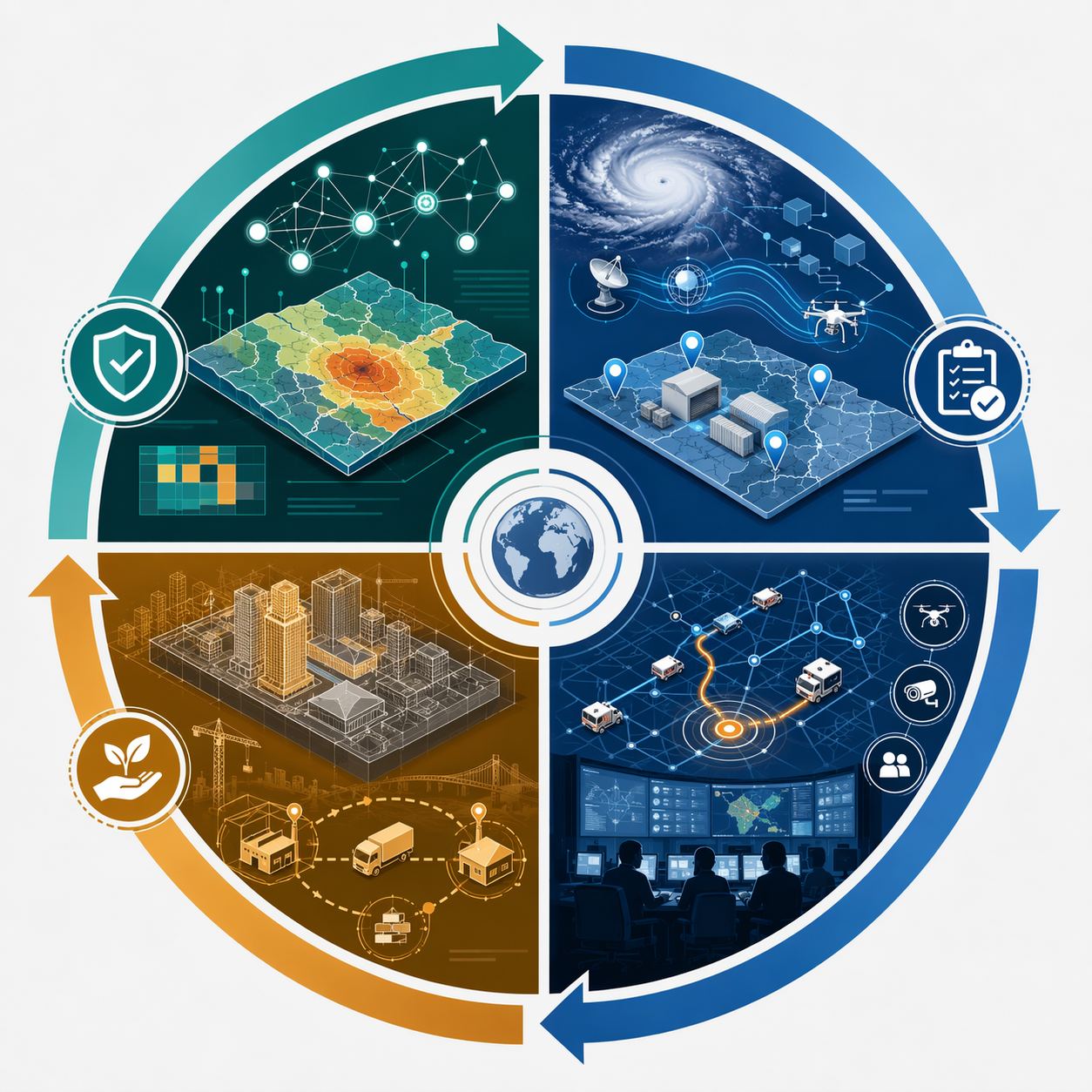
Map AI To The Disaster Phase Before Comparing Vendors
The same model family rarely does every disaster job well. Predictive analytics that scores supplier exposure months ahead of hurricane season is not the same as computer vision that classifies roof damage after landfall. A digital twin used to test restart options after a flood is not the same as weather intelligence used to preposition inventory before demand shifts.
| Disaster phase | AI technique that fits best | Operational decision it should improve | Evidence posture |
|---|---|---|---|
| Mitigation | Predictive risk analytics, supplier and lane risk scoring | Which suppliers, facilities, lanes, and SKUs deserve mitigation before a named event | Most buyer-relevant evidence, but many outcomes remain vendor-reported |
| Preparedness | Weather intelligence, demand sensing, inventory prepositioning models | What stock to move, where to stage it, and when to commit before conditions deteriorate | Credible deployed cases exist, with verification caveats |
| Response | Computer vision, routing optimization, relief targeting, agentic workflows | Which routes remain usable, which sites are damaged, and which requests receive priority | Useful direction of travel; less proof of end-to-end automation |
| Recovery | Simulation, digital twins, scenario optimization | How to restart supply flows, sequence repairs, and test alternatives under constraint | Promising for planning and rehearsal; ROI may take longer than a pilot cycle |
This map is not an academic nicety. It changes procurement. A mitigation tool should be judged on exposure data quality, supplier graph coverage, alert precision, and impact assessment speed. A preparedness tool should be judged on forecast granularity, demand-response modeling, inventory decision support, and how clearly it expresses uncertainty. A response tool has to survive degraded communications, damaged infrastructure, and human review. A recovery tool needs credible operating constraints, not a clean simulation that assumes the missing labor, trucks, and parts will appear on command.
Mitigation: Predictive Risk Assessment Is The Most Mature Shortlist Category
Mitigation happens before the season, before the advisory, and preferably before the supplier crisis call. In supply chain terms, it means identifying which nodes are brittle enough to justify action: dual qualification, alternate sourcing, buffer inventory, adjusted service promises, contractual surge capacity, or a different lane design.
This is where predictive risk analytics has the clearest current use. A good system ingests external disruption signals, facility and supplier location data, shipment flows, weather exposure, geopolitical or infrastructure events where relevant, and internal commercial priorities. It should not merely say that a hurricane, wildfire, or flood is possible. It should indicate which suppliers, lanes, SKUs, orders, and customers are likely to be affected, and it should do that early enough for someone to act.
Everstream Analytics reports that its clients have achieved a 50–70% reduction in time to identify and assess disruption impact, a 30% reduction in revenue losses, and a 10% improvement in on-time performance.[3] Those are the kind of numbers a logistics or procurement leader can actually interrogate: what was the prior assessment process, which disruptions were included, how was revenue loss attributed, and whether the result came from faster sensing, better playbooks, or both.
The caveat is important: these are vendor-reported outcomes, not independently audited benchmarks. That does not make them useless. It means they belong in a shortlist conversation, followed by hard questions about sample size, customer mix, baseline operations, and whether the tool changed decisions or simply documented them faster.
The broader performance case for predictive analytics is also supportive, though less disaster-specific. McKinsey has reported that AI predictive analytics can reduce supply chain errors by 20–50%.[2] That finding helps justify the category, but it does not prove that any given disaster-risk platform will reduce hurricane, flood, wildfire, or earthquake disruption by the same amount. It is category evidence, not deployment proof.
The same restraint should apply to more dramatic early-warning claims. Some articles attribute to a Johnson & Johnson AI system the ability to detect 85% of major disruptions an average of seven days ahead, but the original methodology, sample, and publication trail were not independently verified in the available sources.[4] That type of claim is worth asking about in a vendor meeting; it is not strong enough by itself to anchor a business case.
For teams building a mitigation shortlist, the practical test is simple: can the system reduce the time between weak signal and operational decision? A seven-day warning has value only if procurement can qualify alternates, planners can move inventory, logistics can reserve capacity, and sales can reset commitments before the event consumes the calendar. For a deeper look at risk-scoring workflows, see AI risk assessment for logistics.
Preparedness: Weather Intelligence Has To End In A Stocking Decision
Preparedness is where AI becomes more concrete and more uncomfortable. The team is no longer discussing abstract exposure. It is deciding whether to move inventory before everyone else wants the same trucks, warehouse labor, generators, pallets, fuel, and temporary storage. Move too little and the response team inherits empty shelves. Move too much and finance asks why working capital was stranded in the wrong place.
Weather intelligence helps because disaster demand is not only about impact location. It is about timing, product mix, code requirements, accessibility, and the difference between a short spike and a longer suppression. ClimateAi describes its FICE model as quantifying the “timing, duration, and magnitude of demand spikes and suppressions related to weather” by combining sales data with local weather and geological conditions.[5]
The Hurricane Ian case is the most useful preparedness example in the available material because it ties AI to a specific inventory action. ClimateAi reports that a building materials company used its model before Hurricane Ian to preposition Florida-code-approved inventory and captured $15 million in incremental sales.[5] The number is vendor-reported and should be treated that way, but the workflow is exactly the right one to inspect: forecast weather-linked demand, identify compliant inventory, stage product before transportation capacity tightens, and serve the market when ordinary replenishment is too slow.
The real value is not that the model “predicted a hurricane.” Public agencies, meteorologists, carriers, utilities, and customers were all watching the same storm. The supply chain value came from translating weather and demand signals into SKU-level and location-level choices early enough to change the physical network.
That translation depends on data most organizations do not keep as cleanly as they think: historical sell-through by store or customer, weather-normalized baseline demand, substitute-product logic, regional code requirements, available-to-promise inventory, inbound purchase order timing, carrier capacity, and warehouse receiving constraints. A weather model can be strong while the deployment fails because item masters, facility calendars, or transportation commitments are stale.
Weather AI also has a natural ceiling. Weather systems are chaotic, and the further a forecast reaches, the more it becomes a probability distribution rather than a promise. The operational discipline is to decide what probability threshold triggers which action: hold inventory, forward-position inventory, reserve transportation, activate alternates, or wait. Treating probability as certainty is how teams create expensive false confidence.
For supply chain leaders evaluating this phase, the useful demo is not a storm animation. It is a before-and-after decision trail: what the model saw, which demand pockets changed, which SKUs were recommended, who approved the move, how uncertainty was displayed, and what happened to service, margin, and leftover inventory. For a deeper phase-specific discussion, see AI weather forecasting for supply chain disruption.
Response: Faster Information Matters, But Automation Claims Need A Narrow Reading
Once the event lands, the planning horizon collapses. Roads are open until they are not. A warehouse can receive until power, labor, or access fails. A carrier accepts the tender and then loses a driver, a fuel stop, or a safe route. Response-phase AI is valuable when it shortens the gap between what has happened and what the team can safely decide.
Computer vision is one of the more concrete response applications. Texas A&M’s UrbanResilience.AI Lab has been applying computer vision to post-disaster damage assessment, using AI to interpret visual evidence after disasters.[6] For supply chain operations, that kind of capability matters because damage assessment is often a gating item: whether a facility can reopen, whether a road or bridge is usable, whether a staging site is safe, and whether inbound relief or commercial freight should be redirected.
The useful outcome is not an elegant image classifier. It is fewer hours waiting for usable status information. A regional manager deciding whether to reopen a cross-dock, a planner deciding whether to release constrained inventory, and a carrier manager deciding whether to retender freight all need the same thing: a timely, confidence-rated view of conditions.
AI is also moving into relief targeting. A GiveDirectly and Google partnership has used AI for cash relief targeting after Hurricanes Helene and Milton.[7] That is adjacent to commercial supply chain work, but it shows how response workflows are expanding beyond routing and inventory into prioritization: who is likely affected, where assistance should go first, and how scarce response capacity should be allocated.
Routing and distribution optimization remain important, especially when networks degrade. McKinsey has estimated that AI-enabled distribution can reduce logistics costs by 5–20%, inventory by 20–30%, and procurement spend by 5–15%.[2] Those are meaningful ranges, but they should not be read as disaster-response guarantees. During a live event, the issue is not only optimization. It is whether the data feed knows a road is washed out, whether drivers are available, whether curfews or emergency rules apply, and whether the recommended route is acceptable to the people taking the risk.
Agentic systems will keep entering this phase because response work is full of repetitive triage: summarize alerts, flag impacted shipments, draft supplier emails, propose retenders, and open exception workflows. The boundary should stay clear. AI can prepare decisions faster. Human accountability still belongs on lane closures, safety overrides, customer allocation, and relief prioritization.
Recovery: Simulation Is Strongest When It Tests Constraints, Not Perfect Plans
Recovery begins when the immediate danger recedes but the network is still bent out of shape. Demand may be distorted, suppliers may be late, ports or roads may be constrained, labor may be unavailable, insurance documentation may slow repairs, and customers may still expect a firm answer. This is where simulation and digital twins can help, provided they are built around the constraints that actually govern restart.
AWS describes cloud-scale simulation and digital twin approaches for supply chain scenario testing after disasters.[8] The value is the ability to test recovery options quickly: whether to prioritize one facility over another, which customer segments receive constrained inventory first, how alternate suppliers affect cost and service, and how long a temporary lane can carry volume before it becomes the next bottleneck.
A recovery twin is only as useful as the operating reality it contains. If it assumes standard lead times while suppliers are still damaged, assumes labor availability while schools and roads are closed, or assumes carrier capacity while everyone else is bidding for the same trucks, it will produce confidence faster than it produces recovery. The better use is comparative: test imperfect options against each other, expose the trade-offs, and document why the chosen restart sequence is defensible.
The long-term automation projection is ambitious. Gartner projects that by 2031, 60% of supply chain disruptions will be resolved without human intervention.[2] That may prove directionally right for routine disruptions with clean data, stable rules, and predefined playbooks. It should not be treated as evidence that complex disaster recovery will soon run unattended. Disaster recovery combines physical damage, human safety, public infrastructure, supplier solvency, customer commitments, and reputational judgment. Some exceptions can be automated; the recovery posture cannot simply be delegated.
Evidence Quality Should Change How Much Weight A Claim Gets
The current evidence base is good enough to support serious vendor evaluation. It is not clean enough to support blanket claims that AI has solved disaster supply chain preparedness. The difference matters when teams are building business cases, choosing pilot sites, and defending spend after the next event.
| Claim type | How to use it in evaluation | What to ask next |
|---|---|---|
| Vendor-reported deployed outcome | Useful for shortlist inclusion when the workflow matches your operation | Ask for baseline, customer context, time period, attribution method, and comparable references |
| Independent research or institutional benchmark | Useful for category-level confidence | Ask whether the benchmark applies to disaster conditions or only normal operations |
| Projection or forecast | Useful for strategic direction | Do not treat it as current capability |
| Unverified performance claim | Useful as a prompt for diligence | Ask for methodology, sample size, publication source, false positive rate, and missed-event rate |
Market-size numbers deserve similar restraint. Different analysts define “AI in supply chain” differently: some count broad supply chain AI platforms, while others use narrower supply chain management AI segments. The resulting totals can differ by a wide margin, including 2025 estimates of $9.94 billion for one broader market definition and $40.4 billion for a narrower SCM AI segment.[2] Those figures show investor and vendor momentum. They do not say whether a hurricane-prepositioning model, flood-risk supplier map, or recovery simulation tool will work in a specific network.
The same caution applies to profitability correlations. Accenture found that companies with AI-mature supply chains are 23% more profitable.[2] That is useful context, but it should not be read as proof that AI caused the profitability gap or that disaster-specific tools produce that result alone. AI maturity often travels with better data governance, stronger planning discipline, larger technology budgets, and more capable operating teams.
Implementation Constraints Are Operational, Not Just Technical
The hard part of disaster AI is rarely the demo model. It is the handoff from probability to action. An alert may be right and still fail if no one owns the decision, if procurement has not prequalified alternates, if finance blocks early inventory moves, if transportation contracts do not include surge options, or if regional teams distrust a recommendation they did not help design.
The 94% versus 23% Gartner gap shows up here.[2] Many organizations are using AI somewhere, and ActivTrak reported that 72% of logistics employees already use AI tools.[2] But individual usage is not the same as a governed disaster-readiness capability. A planner using a forecasting assistant, a transportation analyst summarizing exceptions, and a procurement lead screening suppliers may all be using AI without a shared trigger matrix, escalation path, data standard, or audit trail.
A credible deployment plan should answer four questions before the contract is celebrated:
- Who receives the alert, and who has authority to act on it?
- Which specific decisions are in scope: supplier qualification, inventory movement, carrier booking, customer allocation, facility restart, or relief prioritization?
- What data must be current for the recommendation to be safe enough to use?
- How will the team measure missed events, false alarms, delayed action, and decisions the model influenced?
- What manual override rules apply when safety, legal obligations, or local judgment conflict with the recommendation?
ROI timing also needs a longer view than the typical one-year pilot narrative. Deloitte reported that 85% of organizations increased AI investment in 2026, but only 6% saw ROI in under a year; most achieved satisfactory returns in two to four years.[2] Disaster-preparedness ROI can be especially awkward because the most valuable proof may come from an event that does not happen during the pilot window, or from avoided losses that are harder to document than new revenue.
That does not argue for waiting. It argues for choosing measurable intermediate outcomes: time to identify impacted suppliers, time to assess order exposure, inventory positioned before cutoff, alternate capacity secured, forecast accuracy under event conditions, route exception cycle time, damage-assessment latency, and recovery scenario turnaround. These are not as dramatic as a headline loss-avoidance figure, but they are closer to the work.
A Practical Shortlist Posture
Supply chain leaders should not shortlist “AI for disaster preparedness” as one category. The shortlist should start with the disaster phase and the decision that needs help.
- For mitigation, prioritize predictive risk platforms that can connect external signals to suppliers, facilities, lanes, SKUs, revenue, and customer commitments.
- For preparedness, prioritize weather intelligence and demand models that end in inventory, capacity, and staging recommendations with visible uncertainty.
- For response, prioritize tools that shorten the time from impact to usable information, especially where routing, damage assessment, and relief prioritization depend on fast triage.
- For recovery, prioritize simulation and digital twins that model real constraints and help compare restart options, rather than promising a perfect recovery plan.
The strongest cases in the current evidence are specific and operational: faster disruption impact assessment, weather-linked inventory prepositioning, damage assessment from visual evidence, relief targeting, and scenario testing. The weaker claims are the ones that sound most complete: broad disruption detection percentages without methodology, market totals with shifting definitions, and autonomous-resolution forecasts treated as if they already apply to messy disaster conditions.
AI is mature enough to act on, but not mature enough to buy on faith. The right posture is phase-by-phase selection, sourced outcomes, human accountability, and a clear line from model output to operational movement: stock moved, lane changed, supplier activated, route closed, site assessed, or recovery sequence chosen.
References
- How AI Helps Supply Chains Weather Disruptions — Global Trade Magazine — globaltrademag.com/how-ai-helps-supply-chains-weather...
- Supply Chain AI Statistics — Open Sky Group — openskygroup.com/supply-chain-ai-statistics/
- Artificial Intelligence’s Role in Supply Chain Risk Management — Everstream Analytics — everstream.ai/articles/artificial-intelligence-role...
- AI in Supply Chain Resilience — Körber — koerber.com/en/insights-and-events/supply-chain-insights/ai-in-supply-chain-resilience
- Three Ways AI Can Help Businesses Better Prepare for Extreme Weather Events — ClimateAi — climate.ai/blog/three-ways-ai-can-help...
- AI Tools for Disaster Response Research — Texas A&M — stories.tamu.edu/news/2025/10/01/
- RAND Commentary on AI and Disaster Response — RAND — rand.org/pubs/commentary/2025/08/
- Leveraging AI and Cloud for Supply Chain Resilience — AWS — aws.amazon.com/blogs/enterprise-strategy/leveraging-ai-and-cloud...
Comments
Join the discussion with an anonymous comment.