
The critical path for an AI data centre in Australia can now be set before a piling rig arrives on site. If the transformer package is still being treated as a normal line item after concept design, the schedule may already be carrying a delay that no construction acceleration plan can buy back. Global transformer lead times of 24 to 48 months are now being reported for data centre projects, a benchmark drawn from a US-focused procurement report but directionally relevant to Australian buyers competing in the same constrained manufacturing pool.[1]
That is the practical meaning of Australia’s AI data centre supply chain problem. It is not simply that demand is rising. It is that the same scarce equipment is being pulled by data centres, utilities, renewable energy projects, and mining, while much of the manufacturing capacity sits offshore and is already allocated into long production queues. A better tender template does not create a transformer slot.
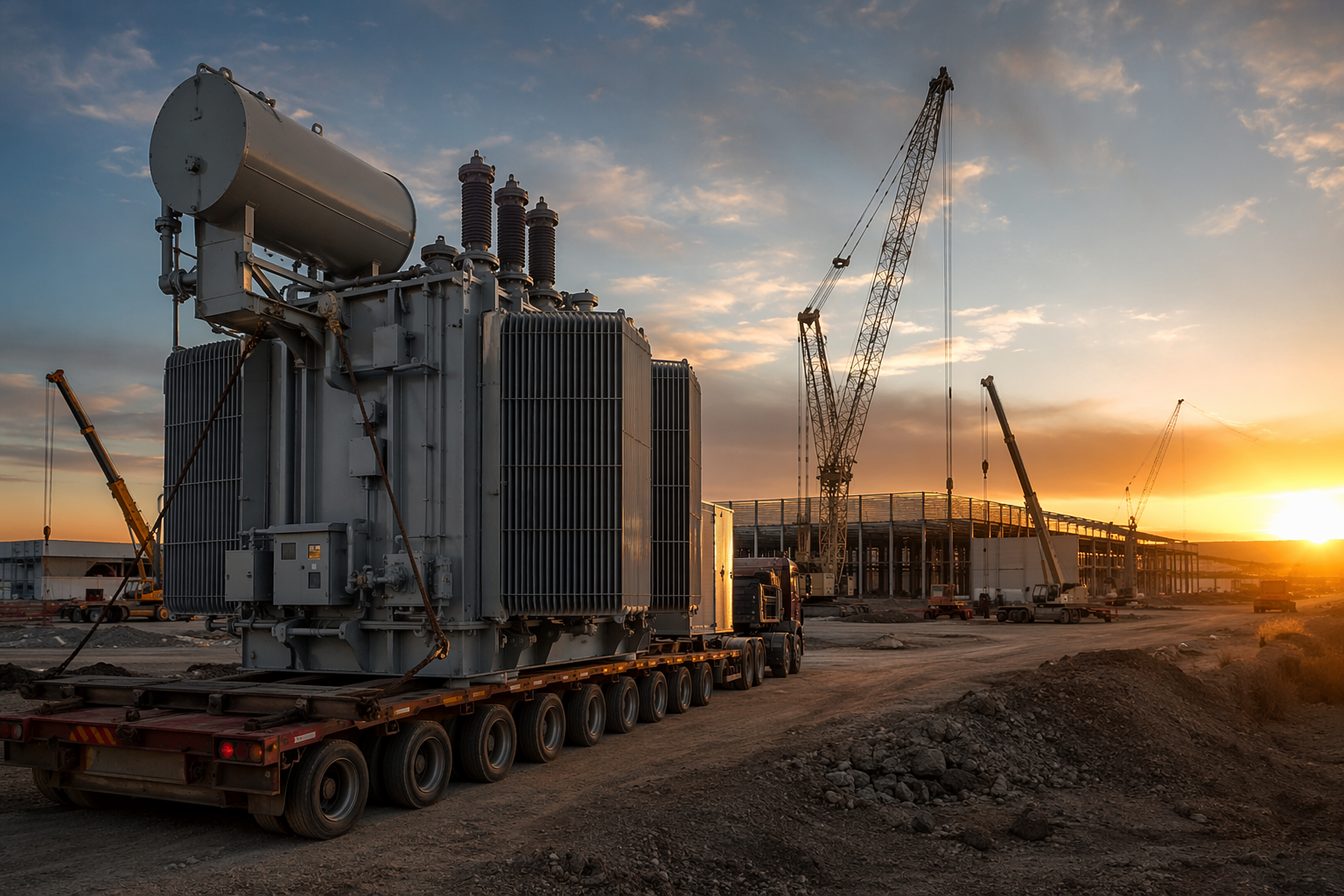
The pressure is not coming only from new AI capacity. Data Centre Magazine, citing US Department of Energy data, reported that 55% of distribution transformers in service today are expected to reach end of life by 2030.[2] Even allowing for the US basis of that equipment-age data, the sourcing signal matters: replacement demand is arriving at the same time as new load growth. The procurement team is not just bidding against the next hyperscale campus. It is bidding against grid renewal.
The pipeline is large, but the constraint is specific
Westpac IQ put Australia’s data centre investment pipeline at $155 billion, equivalent to 5.6% of one year’s GDP.[3] That figure deserves attention, but not as a guarantee that every announced project will be built on its first timetable. Westpac describes the pipeline as announced intentions rather than contracted investments, and actual deployment could be lower, delayed, or reshaped by power access, planning, capital cost, and customer commitments.[3]
For procurement, the more useful part of the Westpac analysis is the leakage point: about half of the investment is expected to flow offshore through imported equipment.[3] That turns a domestic infrastructure boom into an international capacity-reservation problem. Australian teams may own the site, the grid connection process, the planning approvals, and the construction contract, but they do not automatically own a place in a transformer, switchgear, pump, or cooling-system production queue.
Global electricity demand from data centres is also projected to roughly double from 448 TWh in 2025 to 980 TWh in 2030, according to Gartner figures cited by Data Centre Magazine.[2] That projection is not an Australian delivery schedule, but it explains why OEMs are not waiting for local buyers to finish their design development before allocating production capacity. The demand signal has already been absorbed by the market.
Transformers are the visible bottleneck, not the only one
Transformer procurement has become the cleanest test of whether a sourcing strategy is real. If the project team cannot answer who has manufacturing capacity, which specifications can be standardized, which logistics route is feasible, who owns delay risk, and when the order must be placed relative to financing and design freeze, it is not managing the critical path. It is documenting a hope.
The practical exposure is wider than the main transformer. AI facilities also intensify demand for high-voltage switchgear, backup power components, pumps, chillers, liquid-cooling systems, structural materials, specialist installers, heavy-haul transport, cranage, commissioning engineers, and grid-interface expertise. Some of these categories have alternate suppliers. Some do not. Some can be modularized. Some must be locked down early because a late substitution creates engineering rework, approvals friction, or operating-cost penalties.
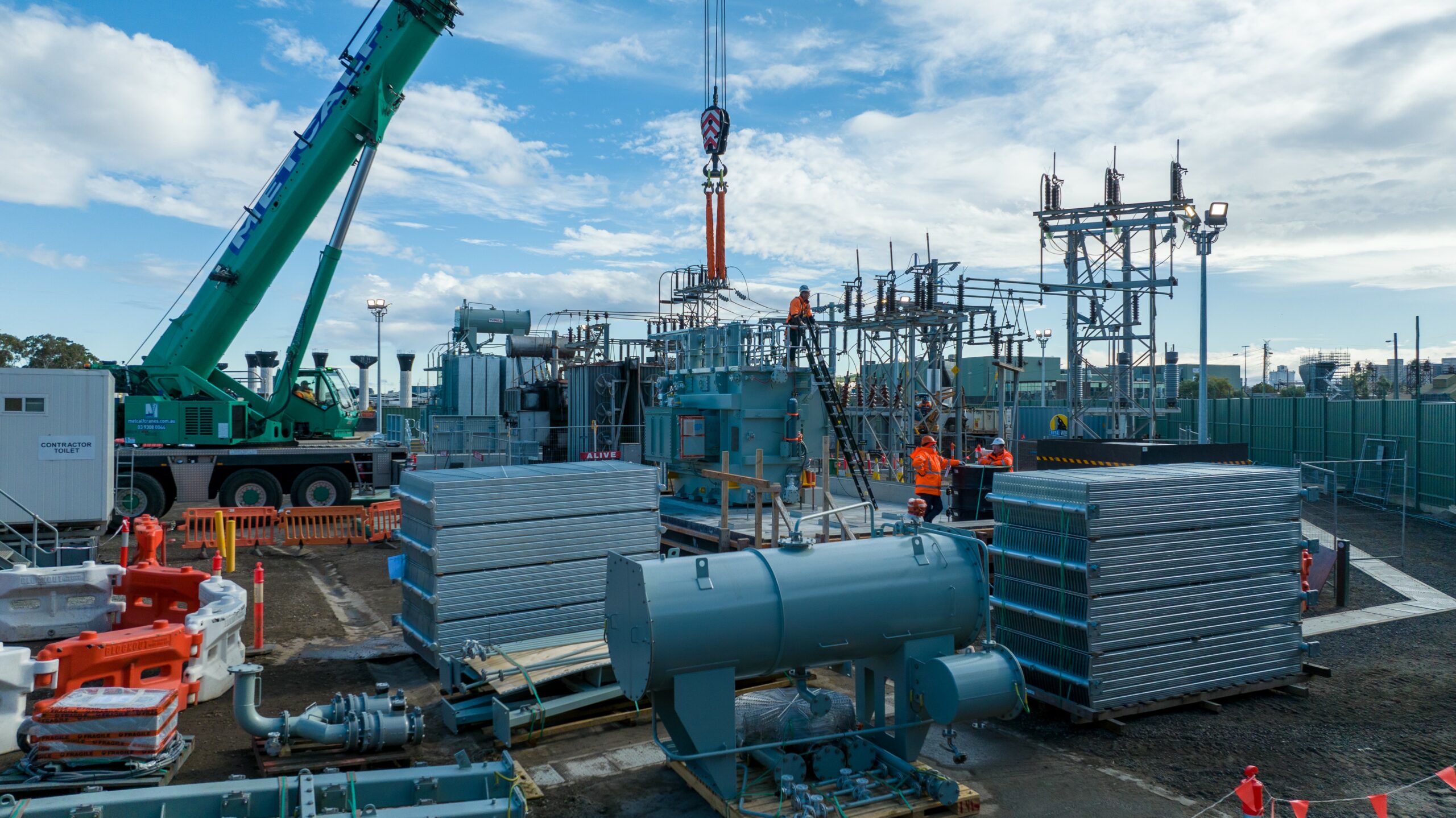
Cooling is moving in the same direction. Turner & Townsend’s 2025-26 data centre cost work, reported by Infrastructure Global, found that 83% of global data centre experts believe local supply chains cannot deliver the advanced cooling systems required for AI facilities.[4] That is a global survey result, not an Australia-only measurement, but it is hard to ignore when Australian projects are already facing imported equipment exposure and tight construction markets.
Cost signals point the same way. Turner & Townsend data reported through Build Australia put traditional data centre construction cost inflation at an average of 5.5% in 2025, with AI-specific facilities carrying a 7% to 10% premium in the US.[5] The same reporting listed Australian per-watt build costs at US$10.56 in Sydney and US$10.40 in Melbourne.[5] Those numbers do not say that every Australian AI project will suffer the same overrun pattern as a US facility. They do say that late procurement decisions are being made in a market where replacement capacity is expensive, not waiting on a shelf.
The procurement response starts before the tender
The first operational change is to stop treating sourcing as an event that begins after the design team has finished narrowing the options. For constrained equipment, procurement needs to sit beside engineering, EPC, grid-connection, finance, and operations while the project is still deciding what it is asking the market to supply.
Trace Consultants sets out five starting actions for organisations exposed to AI data centre growth: map supply exposure across categories, prioritize scarce inputs such as transformers, pumps and switchgear, shift from transactional buying to multi-year supplier partnerships, embed whole-of-life cost thinking, and integrate sustainability criteria into every category.[6] The value of that framework is not that it sounds tidy. It puts the procurement conversation back where it belongs: around capacity, risk ownership, and operating consequences.
| Procurement move | What changes in practice |
|---|---|
| Map supply exposure | Identify which categories can delay energization, commissioning, or staged capacity release. |
| Prioritize scarce inputs | Separate ordinary price competition from capacity-constrained categories that need executive attention. |
| Build multi-year partnerships | Reserve supplier attention and production access before a single project tender becomes urgent. |
| Use whole-of-life cost | Avoid choices that reduce capex while increasing power, cooling, maintenance, or replacement exposure. |
| Integrate sustainability criteria | Make energy, water, emissions, and circularity requirements part of category strategy rather than late compliance. |
| Adopt modular sourcing where it fits | Shift work into repeatable off-site packages that reduce site dependency and support staged expansion. |
Map exposure by schedule consequence, not spend
A conventional category plan often starts with spend. That is useful for leverage, but it can misread an AI data centre program. A lower-spend equipment package can still control the handover date if it sits on the energization path, requires limited OEM commissioning resource, or has no acceptable substitute after design approval.
The exposure map should therefore show three things together: technical dependency, market capacity, and decision deadline. Transformers, switchgear, pumps, and cooling systems should be visible in the same room as planning approvals, grid-connection milestones, EPC contracting, and customer capacity commitments. Logistics should not appear at the end as a freight estimate. For a large transformer, port choice, route survey, heavy-haul availability, cranage, permits, site access, and laydown area can all become delivery constraints.
This is also where imported-equipment exposure needs to be explicit. If about half of the Australian pipeline’s investment value may leak offshore through imported equipment, category managers need visibility into currency exposure, shipping risk, customs timing, OEM allocation rules, warranty support, and local service capability.[3] A project that has only compared landed prices has not yet compared deliverability.
Prioritize the inputs that can stop energization
Scarce inputs should be ranked by their ability to stop capacity from going live. The list will vary by project, but transformers, switchgear, advanced cooling equipment, pumps, and specialist commissioning services deserve early scrutiny because they connect procurement directly to energization, heat rejection, uptime, and staged release of data halls.
The ranking should also distinguish constrained supply from merely expensive supply. A category with several qualified alternatives can still be negotiated late if the specification allows it. A category with a two-year manufacturing queue, a small approved vendor base, long testing requirements, or limited field-service support cannot. Once that distinction is made, the procurement plan stops being a calendar of tenders and becomes a sequence of capacity decisions.
Forward contracting is the behavioral shift
Forward contracting is uncomfortable for organisations used to buying after scope certainty. It asks them to reserve capacity before every design issue has been settled, and that creates commercial risk. But in a 24-to-48-month transformer market, waiting for certainty can simply transfer the risk into the schedule.[1]
The move is not to place reckless early orders. It is to define which specifications can be standardized, which options need to remain open, which cancellation or deferral rights are worth paying for, and which long-lead components can be released under controlled notices to proceed. The commercial structure has to match the engineering maturity. A transformer package may move earlier than architectural finishes. Switchgear may need OEM engagement before the EPC contract is fully settled. Cooling packages may require parallel evaluation of performance, water use, energy efficiency, maintainability, and supplier production slots.
For portfolio owners, the strongest case for forward contracting is aggregation. A single project tender looks like a late request for scarce equipment. A multi-year program with credible demand, standardized requirements, and disciplined release gates gives suppliers a reason to allocate engineering time and production capacity. That is the difference between asking the market for a price and offering the market a planning signal.
This is where procurement needs authority, not just involvement. If finance will not approve early commitments, engineering will not standardize, legal will not build flexible release terms, or executives will not decide which projects have priority, the category team cannot compensate with negotiation technique. Capacity reservation is a governance decision.
Supplier partnerships need to reserve access, not just improve relationships
Multi-year partnerships are often described too softly. In this market, the test is whether the arrangement changes supplier access. A useful partnership gives both sides a planning horizon: forecast demand, standard equipment families, engineering engagement, agreed escalation routes, service support, spare strategy, performance requirements, and a mechanism for allocating scarce production slots across projects.
That does not remove competition. It changes where competition is applied. Procurement can still benchmark margins, test alternates, and maintain dual-source visibility. But for constrained categories, the organization may need to compete earlier for supplier commitment rather than later for a marginally sharper unit price. The category manager’s question becomes: which suppliers will still answer the phone when every utility, renewables developer, miner, and data centre owner is asking for the same factory capacity?
The EPC also has to be inside this model. If the owner signs a supplier framework that the EPC cannot integrate, the project inherits a coordination problem. If the EPC controls supplier selection without owner visibility into long-lead risk, the owner may not see the problem until the schedule is already exposed. For transformers, switchgear, cooling, pumps, and commissioning services, dual visibility between owner, EPC, and OEM is not administrative overhead. It is schedule control.
Whole-of-life cost belongs in the first sourcing decision
Speed matters, but speed-only sourcing can leave operations with a long bill. AI workloads change power density and cooling requirements, which means equipment choices affect energy consumption, water exposure, maintenance regimes, spare holdings, redundancy design, and future upgrade paths. A procurement team that buys the fastest available cooling package without testing operating consequences may protect the construction date while weakening the asset.
Whole-of-life cost should be built into the category strategy before supplier engagement. For electrical equipment, that includes losses, maintenance access, expected service life, spares, monitoring capability, warranty terms, and local service support. For cooling, it includes energy efficiency, water implications, resilience under heat events, maintainability, and compatibility with staged capacity growth. For construction packages, it includes installation productivity, rework risk, commissioning complexity, and the cost of late design changes.
Sustainability criteria should sit in the same decision rather than being added as a compliance layer after shortlist. Trace Consultants specifically calls for sustainability to be integrated into every category.[6] In practical terms, that means energy performance, water intensity, embodied carbon, refrigerant choices, repairability, supplier transparency, and end-of-life options have to be visible when procurement is deciding what kind of capacity to reserve.
Modular procurement changes the construction problem
Modular construction is not a universal fix for scarce electrical equipment. A prefabricated module still needs components, factory capacity, logistics, site integration, and commissioning. Its value is more specific: it can change the procurement object from fragmented site work into repeatable packages with clearer interfaces, staged scalability, and more predictable delivery conditions.
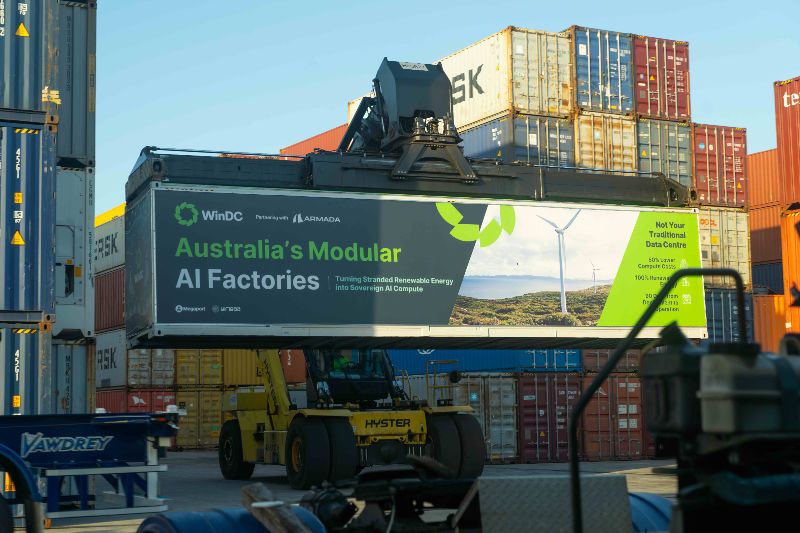
Holding Redlich’s March 2026 analysis of data centre construction challenges describes modular, off-site construction as a way to reduce delays caused by weather and labour shortages, support staged scalability, and provide greater cost predictability.[7] Those benefits matter in Australia because construction capacity, specialist labour, and site productivity are now competing with a broad infrastructure cycle, not a single asset class.
The procurement decision is where modular either becomes useful or becomes another optimistic label. Useful modular sourcing starts with repeatability: standard electrical rooms, cooling skids, containerized or prefabricated compute modules, preassembled pipework, standardized controls, or factory-tested assemblies. The more the project can repeat interfaces across phases, the more it can move work away from weather, congestion, and late trade stacking.
It also changes risk allocation. Factory acceptance testing can bring defects forward. Package-level warranties can clarify accountability. Staged deployment can let capacity come online in increments rather than waiting for the full site to be complete. But these advantages only hold if the owner, designer, EPC, modular supplier, OEMs, and logistics providers agree early on dimensions, transport limits, connection points, testing regimes, and commissioning responsibilities.
A simple selection rule helps: modularize where repeatability reduces interface risk; avoid it where the module merely hides bespoke complexity inside a box. The objective is not to make the project look innovative. It is to reduce the number of late site decisions that can collide with constrained labour, materials, and commissioning windows.
Logistics cannot be appended after award
Heavy equipment sourcing is only half secured when the purchase order is signed. For transformers and large modular assemblies, the logistics path should be part of supplier selection. Port capability, road access, bridge limits, permits, escort requirements, cranage, storage, site sequencing, and insurance can all affect whether the equipment can be delivered when the project needs it.
This is where EPC and OEM integration becomes practical rather than procedural. The OEM knows factory timing and handling requirements. The EPC knows site readiness and installation sequence. The logistics provider knows route feasibility. Procurement needs all three views before committing to a delivery promise. A transformer that arrives before the site can receive it creates storage and damage risk. A transformer that arrives after energization testing was supposed to start creates a schedule problem that no amount of expediting language will solve.
What to change in the next sourcing cycle
The next sourcing cycle should not begin with a longer RFQ. It should begin with a short list of decisions that the organization is willing to make earlier than usual.
- Give procurement a formal role before design freeze for transformers, switchgear, cooling, pumps, modular packages, and specialist commissioning services.
- Create a category exposure map that ranks packages by energization impact, market capacity, engineering dependency, logistics complexity, and decision deadline.
- Use forward contracts, framework agreements, or staged notices to proceed where long-lead capacity must be reserved before full project certainty.
- Separate supplier partnerships that reserve capacity from preferred-supplier lists that only simplify administration.
- Require EPC, OEM, and logistics visibility for heavy electrical equipment and prefabricated assemblies before award.
- Evaluate whole-of-life cost and sustainability in the first sourcing model, not as a late-stage compliance review.
None of these moves eliminates scarcity. They do change the footing on which Australian organisations compete. A team with standardized requirements, early supplier engagement, forward capacity reservations, modular packages where they genuinely reduce site risk, and integrated EPC/OEM logistics is not in the same position as a team that waits for the design to be finalized and then asks the market for bids. In this cycle, that difference may decide whether a data centre project is delivered or merely announced.
References
- Data Center Transformer Procurement in 2026, Build.inc, 2026
- How Data Centres Should Approach Transformer Procurement, Data Centre Magazine, May 2026
- Powering the AI Economy: Australia's $155bn data centre boom, Westpac IQ, May 2026
- AI data centre rush raises alarm over construction supply chain, Infrastructure Global
- AI data centres strain global supply chains, Build Australia
- AI, Data Centres and the Supply Chain Reality, Trace Consultants
- Data centre construction challenges and the rise of modular solutions, Holding Redlich, March 2026
Comments
Join the discussion with an anonymous comment.