
Recall work has always been measured in hours, but the margin for manual stitching is getting thinner. In 2025, Sedgwick counted 3,295 U.S. recall events and 858 million defective units, with defective-unit volume up 26% year over year.[1] Then Q1 2026 opened with 492 million units recalled, up 27% from the previous quarter.[2] Those are not abstract compliance statistics. They are supplier notices arriving as PDFs, lot codes sitting in ERP tables, inventory parked across warehouses, customer-service queues filling up, and quality teams trying to prove which product is inside the fence before the next executive update.
The cost case is harder to state cleanly, and it should be. The often-cited $10 million average direct cost for a food recall traces to older Grocery Manufacturers Association work from 2011; the same benchmark family found that 52% of surveyed companies reported total recall impact above $10 million, with business interruption accounting for roughly 49% of total cost.[3] That vintage matters. It should not be treated as a current universal price tag. It still does one useful thing: it reminds decision-makers that the invoice for a recall is not limited to freight, disposal, or replacement product. The expensive part is the business stopping while everyone waits for defensible facts.
That is the practical opening for AI for supply chain recall management. The question is not whether AI can make a dashboard prettier. It is where it can remove latency, reduce avoidable scope, or prevent a defect from ever becoming a market action.

The Recall Lifecycle Is Not One Workflow
A recall program spans at least three different operating horizons. They share data, but they do not reward the same technology in the same way. Prevention asks whether weak signals, inspection images, supplier quality patterns, or environmental results can expose a problem before product ships. Crisis response asks which units, customers, facilities, carriers, and channels are affected right now. Root-cause analysis asks how the organization converts the event into corrective and preventive action without losing the evidence trail.
| Recall horizon | Operational question | Where AI can help | What the result should be |
|---|---|---|---|
| Prevention | Can we see the defect before it escapes? | Inspection analytics, supplier-risk signals, environmental trend detection, external recall monitoring | Avoided shipment, narrower quarantine, earlier supplier intervention |
| Real-time traceability and containment | What exactly is affected, where is it, and who needs to know? | Recall-letter extraction, batch and lot impact mapping, warehouse and shipment tracing, customer interaction automation | Faster containment, smaller recall scope, stronger regulatory and customer response |
| Root-cause analysis | What failed, what evidence supports that conclusion, and what CAPA follows? | Deviation clustering, CAPA workflow orchestration, evidence collection, post-event learning | More consistent investigation and fewer repeated failures |
This distinction matters because a single metric can mislead. A system that shortens call-center resolution does not prove it can detect a packaging defect. A tool that maps affected lots inside ERP does not prove it can diagnose root cause. The stronger business cases say exactly which part of the recall lifecycle is being accelerated.
Containment Is Where the Business Case Becomes Visible
When a recall is declared, the work becomes brutally specific. Someone has to read the supplier letter, identify the affected parts and lots, reconcile those identifiers against ERP and warehouse records, determine what shipped, hold what remains, notify the right customers, and keep a record that can stand up to regulatory, legal, and commercial scrutiny.
FSMA 204 raises the stakes for food companies because it establishes a 24-hour traceability-response expectation for covered foods, even though FDA has proposed extending the enforcement timeline to July 2028.[4] For a deeper food-specific view, the traceability requirement is better handled in AI food traceability and FSMA 204. The point here is narrower: a company cannot meet a short response window by discovering during the event that its supplier identifiers, receiving records, production batches, and customer shipment data do not line up.
Supplier Letters Are a Good Test of Whether AI Removes Real Work
One of the least glamorous recall tasks is also one of the most revealing: turning a supplier recall letter into usable data. Oracle’s Recalls Curation Assistant is documented as an AI agent that parses supplier recall-letter PDFs and extracts header details, parts, lots, and serials.[5] That is not a complete recall program. It is still valuable because it attacks a common failure point at the front of containment: rekeying critical identifiers from an external document into internal systems under time pressure.
The operational gain is not only clerical. If the affected lots and serials enter the recall workflow faster and with less manual transcription, the team can start the harder questions earlier: which finished goods consumed those materials, which warehouses hold open inventory, which shipments have already moved, which customers require notification, and which product can safely remain available.
Impact Mapping Has to Live Close to the Transaction Record
Containment depends on context. A lot code by itself does not say whether product is in quarantine, on a truck, inside a distributor’s facility, returned from a customer, or already consumed in a finished assembly. Cegeka describes a Quality Impact Recall Agent embedded in Dynamics 365 ERP that uses Microsoft’s Model Context Protocol to map quality deviations across batches, warehouses, and shipments.[6] The detail worth noticing is the embedding. In recall work, a standalone answer that then has to be reconciled against the system of record can create another queue instead of closing one.
ERP-embedded impact mapping is especially relevant when containment scope is uncertain. If a deviation touches multiple batches or distribution nodes, the AI-supported workflow should help quality and supply chain teams separate three groups quickly: product that must be held, product that already shipped and needs customer action, and product that can be released with documented rationale. That last group is not a side benefit. Over-scoping a recall can be expensive, but under-scoping one can be worse.
The same containment logic applies outside food. Automotive recall teams may need to connect affected components to vehicles, dealers, service parts, and completion capacity. A separate operating question — how parts availability and repair execution are orchestrated after a recall decision — is covered in AI recall parts logistics orchestration. The shared principle is the same: the recall clock punishes every handoff where identifiers lose meaning.
Customer Response Can Become a Scale Problem Overnight
Containment does not end when the affected population is identified. Customers still need instructions, proof may be needed that a product is affected, replacement or refund processes have to be handled, and call-center evidence may become part of the recall file. TechSee reports that visual AI agents handled more than 300,000 customer interactions during a multinational consumer goods recall, with 40% faster resolution and double-digit cost reduction.[7]
That is vendor-published evidence from a single event, so it should not be treated as a universal benchmark. It is still a useful example because the task is concrete. Visual AI can help customers identify products, document condition, validate whether an item falls within scope, and route the next action without forcing every interaction through a live agent. During a large recall, that can reduce wait time for customers and preserve human capacity for exceptions, escalations, vulnerable consumers, or cases with legal sensitivity.
This is also where recall management starts to touch brand recovery, though the evidence base here is softer. Fast, clear customer response matters, but it is harder to convert into a clean ROI model than avoided inventory destruction or reduced manual reconciliation. The safer claim is that AI can absorb repetitive contact volume and improve response consistency when the interaction pattern is well defined.
Prevention Starts Upstream, Especially With Supplier-Origin Defects
The cleanest recall is the one that never leaves the facility. That sounds obvious until the defect is buried inside a package, spread across supplier lots, or visible only as a weak signal in environmental or complaint data. Supplier-origin exposure is large enough to deserve attention: FDA root-cause data attributes about 26% of medical device recalls to supplier-related causes, while AlixPartners has reported that supplier defects account for 15% to 20% of automotive recall costs.[8][9]
AI prevention tools are not all doing the same job. Some inspect product or packaging. Some monitor external recall signals. Some look for environmental or process trends that should trigger investigation before finished goods are released. The common value is earlier detection, but the evidence has to be tied to the actual sensor, data source, or decision point.
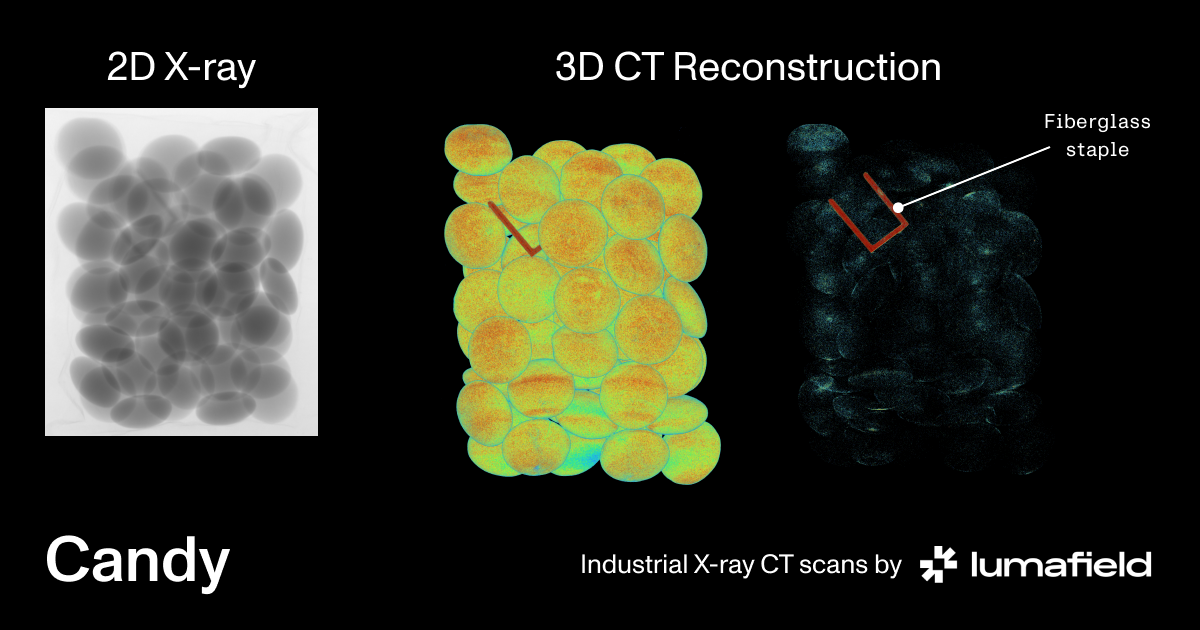
Lumafield’s industrial CT example is one of the more tangible prevention cases because it involves a defect with no visible exterior signature. The company describes AI-powered CT scanning that found an internal packaging defect, enabled release of $18 million in quarantined inventory, and prevented a potential recall of more than 1 million units.[10] It is a vendor case study, not cross-industry proof. It still illustrates a prevention pattern that quality teams recognize immediately: if conventional inspection cannot see the failure mode, the recall conversation may start too late.
The prevention case is also changing inside food quality programs. In a June 2026 Food Technology article, J.M. Smucker Co. VP of Quality Assurance Jeff Varcoe described AI as operational for external recall signal detection and more experimental, but promising, for predicting environmental contamination trends.[11] That distinction is important. Monitoring outside recall signals is already close to an information-routing problem. Predicting internal contamination risk is a higher bar because the organization has to trust the data quality, sampling design, environmental history, and escalation rules.
For companies with high supplier-defect exposure, prevention should not be sold as a vague predictive layer. It needs to connect to supplier qualification, incoming inspection, production release, nonconformance management, and hold decisions. If AI flags a supplier lot as anomalous but the quality system has no clear path to quarantine, disposition, or supplier corrective action, the signal becomes another alert to explain after the fact.
Root-Cause Analysis Is Useful, but the Evidence Is Less Mature
After containment, the organization still has to answer why the event happened, what corrective action is justified, and how recurrence will be prevented. This is where AI can help assemble investigation evidence, cluster similar deviations, retrieve prior CAPAs, identify repeated supplier or process patterns, and keep owners moving through corrective-action workflows.
IONI describes an end-to-end CAPA orchestration platform in the context of recall management software.[12] That kind of orchestration can be valuable if it reduces investigation drift: missing evidence, late approvals, duplicated containment actions, or CAPAs that close administratively without changing the process. The stronger use case is not autonomous diagnosis. It is disciplined workflow support around evidence, ownership, due dates, and recurrence checks.
The current evidence set does not support a broad claim that AI can independently diagnose recall root cause across food, pharma, automotive, and consumer goods. Root-cause analysis depends on process knowledge, sampling limits, supplier records, design history, complaint data, and sometimes destructive testing. AI can shorten the path to likely hypotheses and make the CAPA file more complete, but quality leadership still owns the conclusion.
What to Look for in an AI Recall-Management Claim
A credible claim should survive the same questions that come up in a mock recall. Where does the system act? What records does it need? What identifier does it trust? What task gets faster? Who reviews the output? What evidence is retained? If the answer stays at the level of “AI improves recall management,” it is not ready for a business case.
- For prevention, ask which defect signals the model can see before release: inspection images, CT scans, supplier quality history, environmental data, complaints, or external recall feeds.
- For containment, ask whether the tool can connect supplier identifiers to internal parts, lots, batches, warehouses, shipments, customers, and open inventory without manual rework.
- For customer response, ask which interactions are automated, what evidence is captured, and how exceptions are escalated to human teams.
- For CAPA, ask whether AI is only drafting text or actually helping preserve evidence, assign ownership, track effectiveness checks, and link recurrence patterns.
- For governance, ask whether the system writes back to ERP, QMS, PLM, CRM, or WMS records, or whether it creates a separate dashboard that someone must reconcile during the event.
The integration question is often the difference between relief and theater. Recall teams do not need another impressive screen if the official answer still has to be rebuilt from spreadsheets, supplier PDFs, warehouse exports, and call-center notes.
Where Investment Looks Most Compelling
AI recall management is a growing use case, not an established category with uniform performance expectations. The evidence is mostly industry reporting, vendor documentation, practitioner commentary, and trade press. That does not make it weak; it means the business case should be built from workflow exposure rather than market-size forecasts or broad transformation language.
The clearest investment cases appear in companies with fragmented traceability, high supplier-defect exposure, regulated response windows, or large customer-contact burdens. In those environments, AI has a practical job to do: parse the supplier letter, map the affected inventory, narrow the hold, support customer instructions, preserve evidence, and feed the corrective-action loop.
For teams still shaping the predictive side of the program, AI recall management from reactive to predictive gives the broader framing. For teams dealing with retail response operations, AI recall response agents goes deeper on agentic workflows. This use case, though, comes back to the room where the recall clock is running: who can prove what, from which system, by when.
AI can reduce exposure when it is attached to the operational moments where recall cost and risk accumulate: missed upstream defects, slow traceability, overbroad containment, overloaded customer response, and weak post-event learning. It should not be credited with universal ROI until the company can show which horizon improved and which evidence supports the claim.
References
- U.S. Product Recalls Hit Seven-Year High in 2025, Sedgwick
- U.S. Product Recalls Surge in Q1 2026, Sedgwick / Risk & Insurance
- Capturing Recall Costs: Measuring and Recovering the Losses, Grocery Manufacturers Association, 2011
- Requirements for Additional Traceability Records for Certain Foods; Compliance Date Extension, U.S. Food and Drug Administration
- Recalls Curation Assistant, Oracle Help Center
- Quality Impact Recall Agent, Cegeka, January 2026
- AI Agents for Product Recalls: How Visual AI Streamlines Customer Support, TechSee
- Medical Device Recall Root Cause Data, U.S. Food and Drug Administration
- Supplier Defects and Automotive Recall Costs, AlixPartners
- AI-Powered CT Prevents a Potential Food Recall, Lumafield
- How AI Is Transforming Food Safety and Quality, IFT Food Technology, June 2026
- Best Recall Management Software, IONI AI
Comments
Join the discussion with an anonymous comment.