
Recall management is not a communications problem first. It is an uncertainty problem under time pressure: which units are implicated, where they moved, who can stop them, and how much good inventory gets pulled because the answer is still unclear. In Q1 2026, U.S. recalls reached 785 events covering 492.31 million units, with recalled units hitting a four-year high even as event frequency fell.[1] For food companies, direct recall costs average about $10 million per event, and business interruption can add three to five times more.[2]
That is the right frame for evaluating AI for supply chain recall management at Walmart. The useful question is not whether Walmart has announced a single, branded “recall AI stack.” It has not. The stronger and more defensible claim is narrower: Walmart has documented separate AI and data initiatives that map onto four recall lifecycle jobs — prevention, traceability, prediction, and a still-nascent orchestration layer.
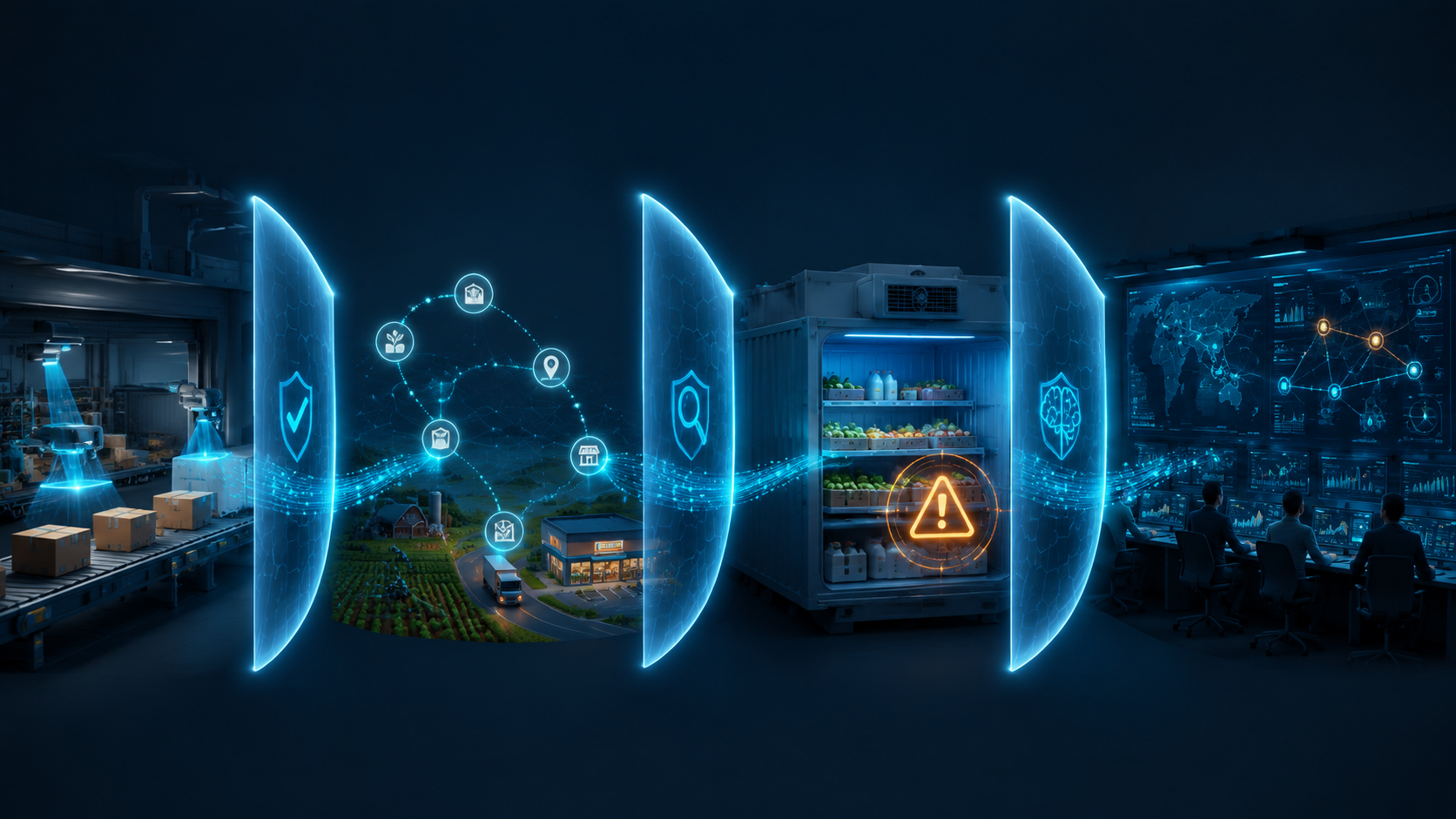
The distinction matters. A recall does not fail only because a team lacks an alert. It fails because each handoff adds ambiguity: defect detection is late, provenance takes too long, cold-chain risk is invisible until product quality is already suspect, or responsibility gets scattered across quality, merchandising, store operations, suppliers, and legal. Walmart’s documented work is worth studying because the first three layers reduce uncertainty at specific points in that chain. The fourth layer is strategically plausible, but the public evidence is not yet recall-specific.
The Four Layers, With Different Evidence Strength
| Recall lifecycle job | Walmart-documented layer | Documented result or current boundary |
|---|---|---|
| Prevention | Computer vision at distribution centers | Walmart says its system scans 100% of conveyable cases in select distribution centers to detect defects before they move downstream.[3] |
| Traceability | Hyperledger Fabric blockchain / IBM Food Trust context | A mango provenance trace reportedly fell from 7 days to 2.2 seconds in Walmart’s test.[4] |
| Prediction | Digital twins for refrigeration assets | Walmart says refrigeration issues can be forecast up to two weeks in advance.[3] |
| Orchestration | Super agent framework | Walmart has published agentic AI plans for customer, associate, developer, and partner use cases, but not a recall-specific orchestration agent.[6] |
Those four rows should not be weighted equally. Prevention and traceability carry the strongest recall-management evidence because they change what happens before and during the highest-pressure part of a recall. Prediction is relevant where spoilage risk depends on equipment condition. Orchestration is the missing workflow layer: it is easy to imagine, and there are examples outside Walmart, but Walmart’s public material does not yet show recall execution being coordinated by agents.
Prevention: Catching Defects Before the Recall Clock Starts
The cleanest recall is the one that never leaves the network. Walmart’s July 2025 “Retail, Rewired” article describes computer vision systems in distribution centers that scan 100% of conveyable cases, using AI to detect defects and route problem cases for inspection.[3] That is not recall management in the narrow regulatory sense. It is upstream quality control. But operationally, it attacks the same failure path: a nonconforming case moves forward, becomes harder to isolate, and eventually forces a broader response.
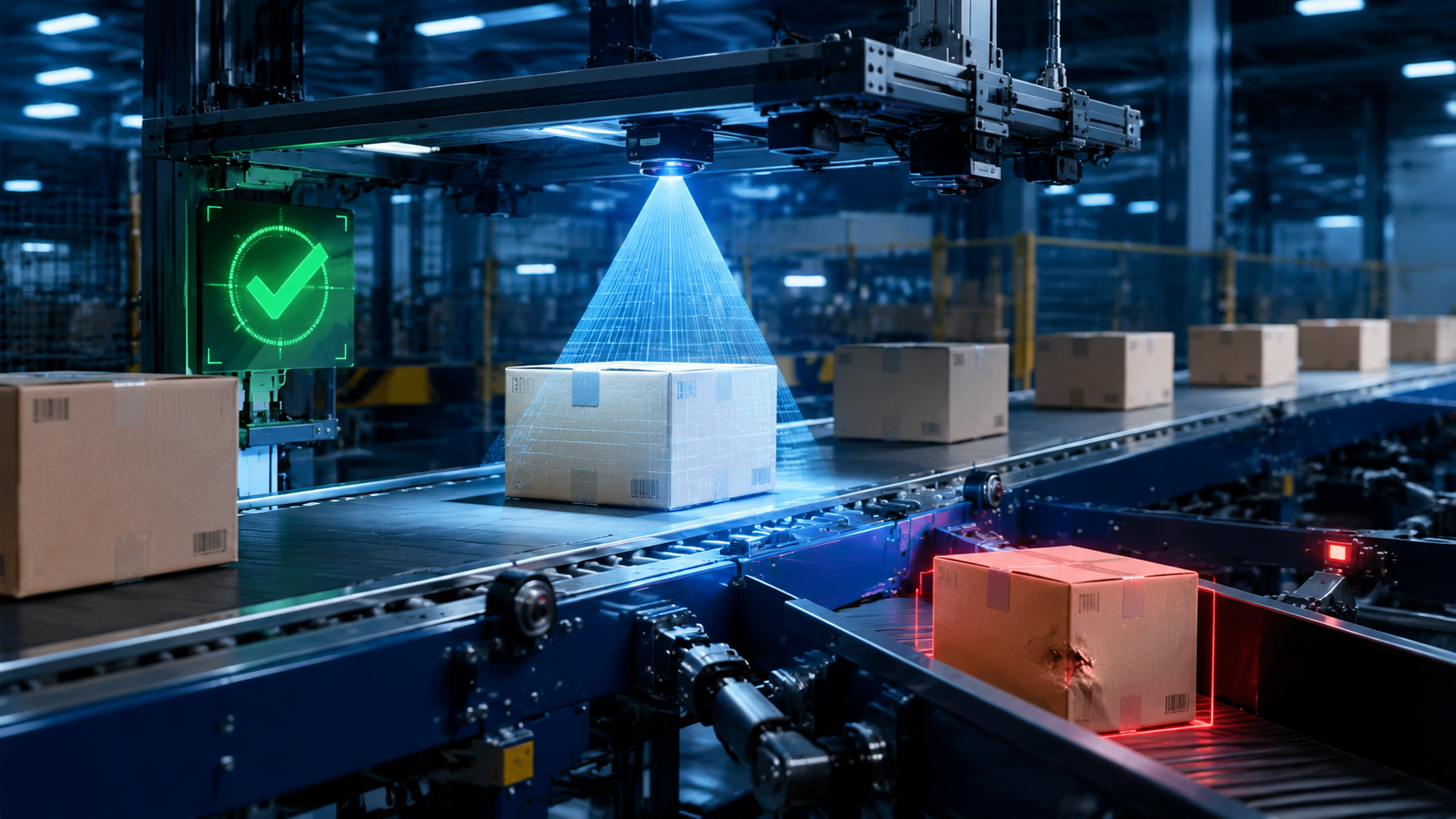
The phrase “100% of conveyable cases” is doing real work here. Sampling can be appropriate in many quality systems, but sampling leaves room for misses and later arguments over representativeness. Full scanning of conveyable cases changes the operating posture. A quality team can act on a visible exception at the distribution center instead of waiting for a store report, customer complaint, or supplier escalation.
This is also where AI is easiest to overstate. The public Walmart material does not prove that computer vision has reduced a specific number of recall events. It does show a capability that reduces one kind of recall uncertainty: whether a physical defect passed through a distribution point undetected. In a real event, that matters because the distribution center record is often one of the first places teams look when they are trying to separate suspect product from everything else that happened to move through the same facility.
For a supply chain leader evaluating similar investments, the recall-relevant metric is not “AI deployed.” It is how much earlier the defect is intercepted, how reliably exceptions are routed for human review, and whether the inspection outcome becomes part of the product’s downstream record. Without that last link, scanning helps local quality control but does less for later recall reconstruction.
Traceability: The Difference Between a Targeted Pull and a Wide Removal
Traceability is the deepest part of Walmart’s recall-management case because it speaks to the ugliest part of a live incident: narrowing scope fast enough to protect customers without stripping shelves of unaffected product. In the Hyperledger case study, Walmart used Hyperledger Fabric to trace mango provenance in 2.2 seconds, compared with 7 days using the prior method.[4]
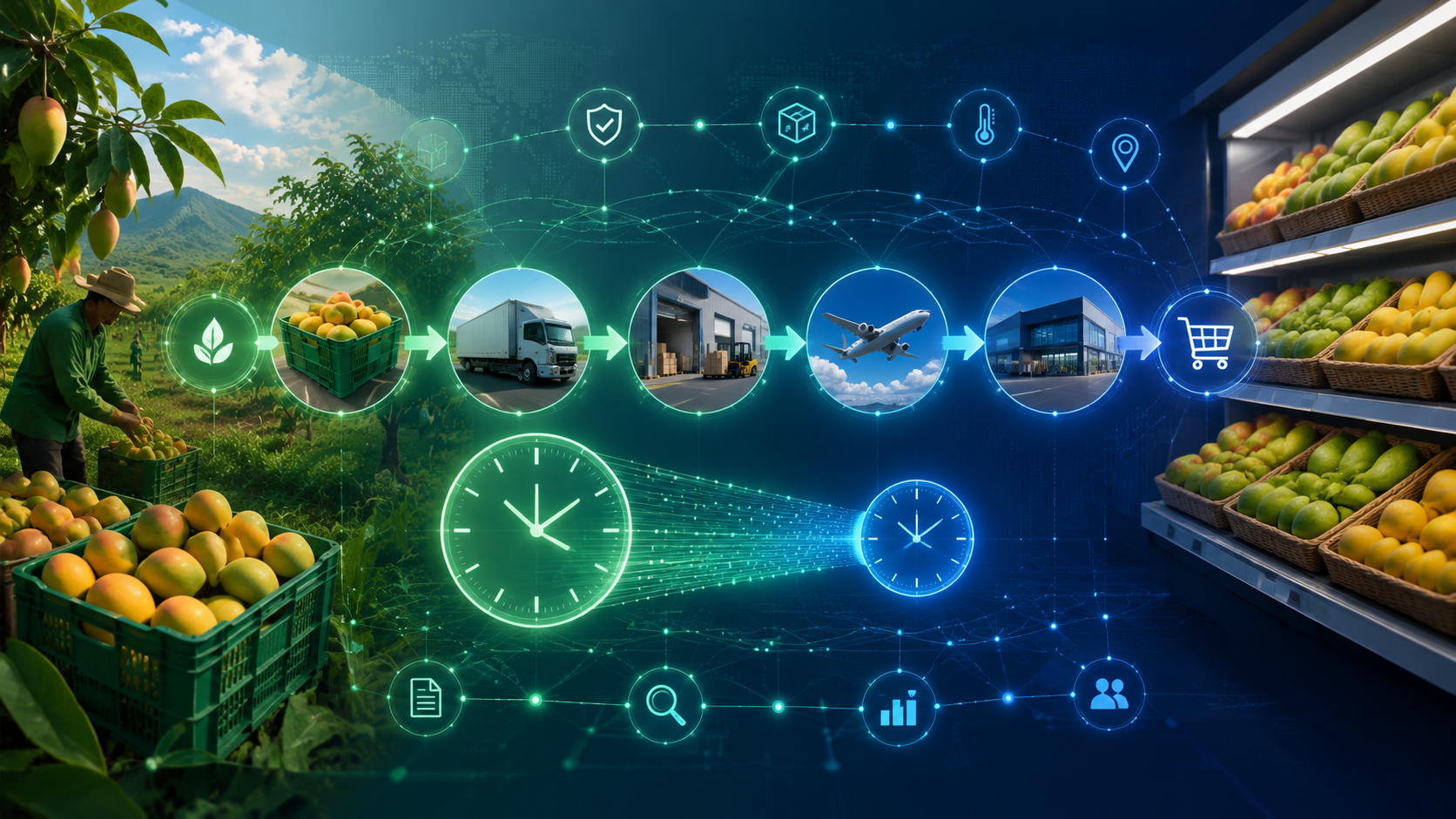
That result is often repeated because it is dramatic. Its importance is not the blockchain label. The operational meaning is that the provenance question moved from a multi-day document chase to a near-immediate lookup. During a suspected contamination event, that compression changes what stores are asked to do. Instead of pulling every plausible item while headquarters works backward through invoices, bills of lading, supplier records, and distribution paths, the organization has a better chance of identifying the implicated source and narrowing action sooner.
Walmart’s leafy greens mandate shows that the company treated traceability as a supplier compliance requirement, not just a lab demonstration. In 2018, Walmart required all 100 of its fresh leafy greens supplier farms to join the blockchain system by September of that year.[5] That is a critical detail because traceability fails when only the retailer’s side is digitized. The recall file needs the farm, lot, packing, shipping, distribution, and store-facing records to line up when the call comes in.
The consortium context also matters, though it should not be romanticized. The Hyperledger case study places Walmart’s work in the IBM Food Trust ecosystem alongside companies including Nestlé, Unilever, Kroger, Tyson, and Dole.[4] That does not prove every participant achieved Walmart’s mango result. It does show that the traceability layer was not merely a private proof of concept living inside one retailer’s walls.
In recall terms, the value is not that a blockchain exists. The value is that an authorized team can answer specific questions faster: Which supplier lot is involved? Which distribution centers touched it? Which stores received it? Which adjacent lots should be reviewed but not automatically condemned? Who has enough evidence to approve a targeted withdrawal rather than a blanket removal?
That last question is where traceability becomes financial as well as protective. Recall costs are not only freight, disposal, notices, and replacement product. They include business interruption, which Lumafield estimates can add three to five times the direct cost of a food recall.[2] Better provenance does not eliminate those costs by itself, and it does not decide legal responsibility. But it can reduce the period when the company is making expensive decisions with incomplete facts.
What the Mango Result Does and Does Not Prove
The mango trace reduction from 7 days to 2.2 seconds is a provenance result, not a full recall outcome.[4] It does not, by itself, prove faster regulatory closure, fewer illnesses, lower insurance losses, or less product removed across every category. Those outcomes depend on adoption depth, data quality, supplier participation, store execution, and the nature of the hazard.
It does prove something narrower and still very important: when the relevant data exists in the system, source tracing can be compressed from days to seconds. Anyone who has worked a recall knows that this is not a cosmetic gain. It changes the tempo of the first response meeting. People stop debating which spreadsheet is current and start debating what action the trace evidence supports.
Prediction: Seeing Refrigeration Risk Before Product Quality Is in Question
Walmart’s predictive layer is more specific than the usual “digital twin” language. In the same July 2025 article, Walmart says it uses digital twins for refrigeration assets and can forecast refrigeration failures up to two weeks in advance.[3] For recall management, that matters where temperature control is part of product safety or quality assurance.
A refrigeration failure is not automatically a recall. The relevant question is what happens before the failure becomes a product-risk investigation. If the system flags a likely failure early enough, maintenance can intervene, product can be monitored, and store or facility teams can avoid discovering the issue only after temperatures have drifted or product condition is disputed.
The recall-management value is earlier risk visibility. It gives quality and operations a chance to separate an equipment work order from a product disposition decision. Once temperature history is uncertain, every conversation gets harder: what was exposed, for how long, under what conditions, and who is comfortable releasing it? Predictive maintenance does not answer every product-safety question, but it can reduce the number of times those questions arise from avoidable equipment failures.
This layer should stay in its lane. Walmart’s public claim supports refrigeration failure forecasting up to two weeks ahead; it does not support a broad claim that digital twins predict all recall categories.[3] Contamination, allergen mislabeling, foreign material, and supplier formulation errors have different detection paths. A strong AI investment case names the hazard class it improves rather than treating prediction as a universal shield.
Orchestration: The Plausible but Unproven Recall Layer
The orchestration layer is where the evidence becomes conditional. Walmart has described a super agent framework spanning Sparky, Marty, associate, developer, and partner agents.[6] That matters because recall execution is exactly the kind of cross-functional workflow where agents could, in theory, help: retrieve trace records, draft store instructions, route approvals, check supplier acknowledgments, watch task completion, and escalate exceptions.
But Walmart’s published super agent material is not a recall-management case study. It does not show an agent coordinating a product withdrawal, generating regulatory-ready documentation, validating store removals, or reconciling supplier lot data during an incident. Treating it as a proven recall orchestration layer would be retrospective certainty dressed up as strategy.
There is a useful outside reference for what such a layer could resemble. Cegeka describes a Dynamics 365 Quality Impact Recall Agent designed to help assess quality impact and support product recall workflows.[7] That example should not be imported into Walmart as if Walmart has deployed the same capability. It simply clarifies the workflow shape: an agentic layer is most valuable when it coordinates accountable action, not when it answers questions in a chat window.
For readers evaluating that layer specifically, How AI Agents Automate Recall Response Across Retail Supply Chains goes deeper on the agentic response pattern. The key test is whether the agent reduces handoff delay and preserves accountability. A recall workflow cannot become a black box. Someone still has to approve scope, notify stores, communicate with regulators where required, and decide what evidence is sufficient to release or destroy product.
What Walmart’s Case Means for AI Investment Decisions
Walmart’s case is useful because it avoids the weakest version of AI business-case writing. The evidence is not one generic model promising end-to-end transformation. It is a set of operational layers, each reducing a different uncertainty:
- Computer vision reduces uncertainty about whether visible defects passed through a distribution checkpoint.
- Traceability reduces uncertainty about product origin, movement, and affected scope.
- Refrigeration prediction reduces uncertainty about emerging cold-chain equipment risk.
- Agentic orchestration could reduce uncertainty about task ownership and workflow status, but Walmart has not yet published recall-specific proof.
That structure is a better template than copying any single technology. A retailer with poor supplier lot discipline will not fix recall scope by buying a dashboard. A CPG manufacturer with fragmented quality holds will not get much from an agent that cannot access the systems where dispositions are recorded. A grocer with recurring refrigeration excursions may have a stronger ROI case for predictive maintenance than for blockchain expansion.
The broader investment comparison belongs outside this case. Readers weighing recall management against forecasting, inventory, transportation, and procurement use cases can use AI Applications in Supply Chain: A Practical ROI Comparison as a wider benchmark. Inside recall management, the first filter should be lifecycle friction: where does uncertainty currently persist long enough to cause over-removal, delayed action, unsafe release, duplicated work, or avoidable interruption?
Walmart’s strongest documented evidence sits in the first three layers. Computer vision supports earlier defect detection at distribution centers. Hyperledger-based traceability shows a measured provenance compression from 7 days to 2.2 seconds. Refrigeration digital twins provide earlier warning of equipment failure risk. The super agent framework may become the workflow layer that ties those signals into recall execution, but the public record has not yet shown that result. For now, Walmart’s recall-management AI story is comprehensive in coverage, measured in parts, and still unfinished at orchestration.
References
- Product recalls drop in frequency but surge in scale with units reaching four-year high, Risk & Insurance, May 2026
- The real cost of a product recall and how to prevent one, Lumafield, April 2026
- Retail, Rewired, Walmart, July 2025
- Walmart Case Study, Linux Foundation Decentralized Trust
- Walmart rolls out blockchain for food supply, Risk & Insurance, 2018
- Inside Walmart's Strategy for Building an Agentic Future, Walmart, May 2025
- Transforming Product Recalls with AI, Cegeka
Comments
Join the discussion with an anonymous comment.