
When a supply chain AI startup gets acquired, the buyer’s first question is not whether the founder got a good exit or whether the acquirer found a clever growth story. The practical question is narrower: did the use case just become safer to buy, or did it become harder to control?
That distinction matters because most enterprise supply chain technology decisions are defended over several budget cycles. A planning tool, logistics visibility layer, supplier intelligence product, or sourcing workflow rarely stands alone after implementation. It touches ERP data, transportation systems, procurement processes, master data, and reporting structures. Once a startup is absorbed into a larger platform, the buyer has to recheck the basics: product roadmap, APIs, migration path, contract terms, support model, and whether the acquired capability still has enough internal sponsorship to keep improving.
The recent pattern in supply chain AI startup acquisitions is more specific than the usual “AI consolidation” story. The clearest deals are not about generic intelligence. They are about bounded operational jobs: redesigning a supply chain network, automating logistics coordination, building category strategies, discovering suppliers, and improving demand planning. Those are not vague AI capability buckets. They are jobs with owners, workflows, data dependencies, and failure modes.
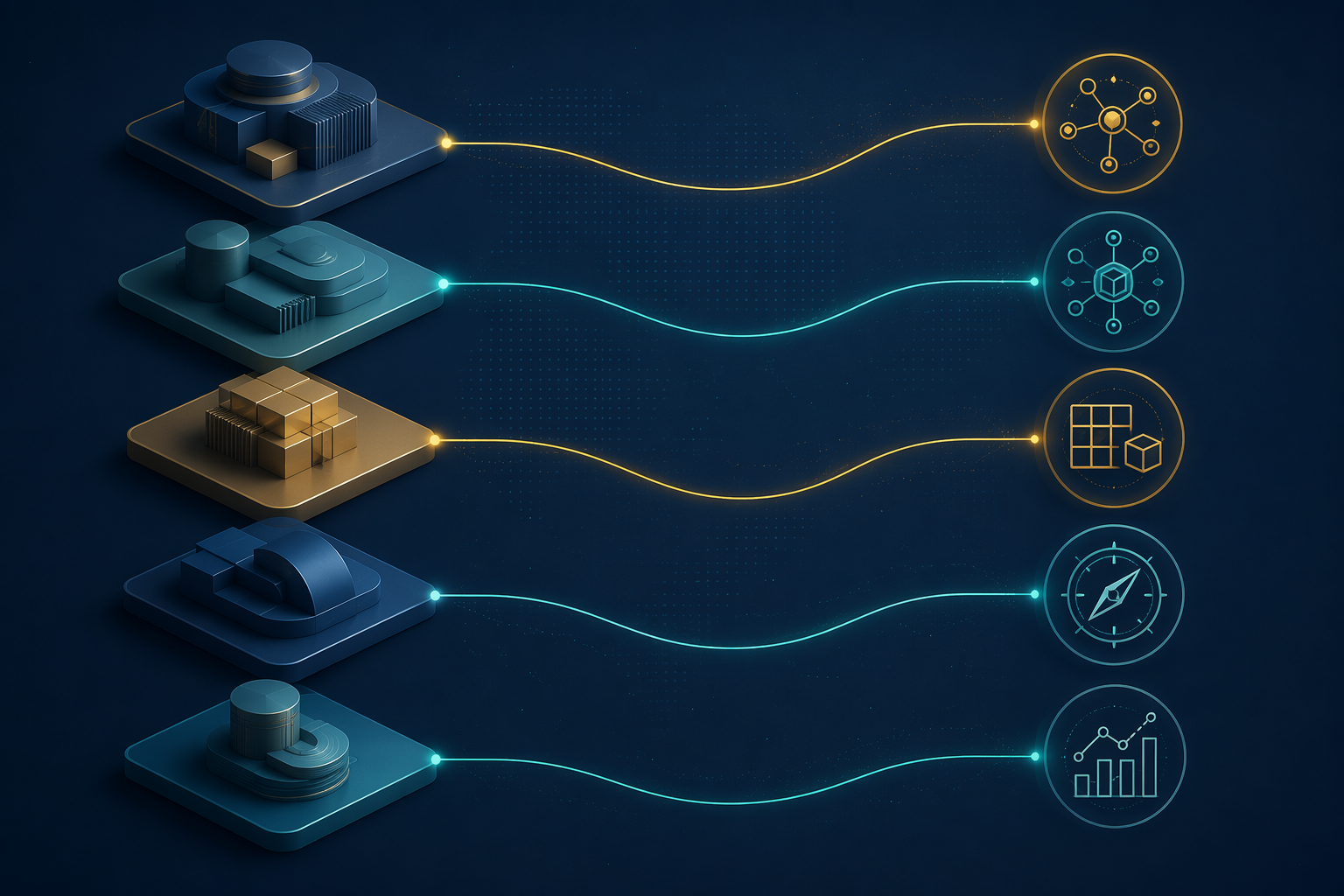
The pattern: acquirers bought operating jobs, not AI theater
A useful way to read the five deals is to start with the function each acquisition brought into the acquirer’s platform. The question is not “Who bought whom?” It is “Which supply chain job became part of a larger suite?”
| Acquired capability | Acquirer | Supply chain job | What buyers should watch |
|---|---|---|---|
| LLamasoft | Coupa | Supply chain network design and modeling | Whether design intelligence remains a deep analytical capability or becomes a spend-management add-on |
| LunaPath.ai | project44 | Agentic logistics orchestration | Whether autonomous task execution stays tied to practical logistics workflows such as check calls, POD retrieval, and appointment confirmations |
| Cirtuo | Coupa | AI-powered category management | Whether category strategy moves closer to sourcing execution, especially for direct spend |
| Scoutbee | Coupa | Supplier discovery intelligence | Whether supplier search and matching remain open enough to serve complex sourcing needs |
| Blue Yonder | Panasonic | Autonomous demand planning and replenishment | Whether planning AI benefits from industrial-scale backing without being buried inside a broader hardware strategy |
This is why acquisition analysis should be use-case-first. “AI-powered” says very little. A network design engine used by supply chain strategists has a different buyer, data model, refresh cadence, and risk profile than an agent handling carrier check calls. A supplier discovery engine has a different integration burden than an autonomous replenishment tool. Consolidation can help all of them, but not in the same way.
LLamasoft to Coupa: network design becomes part of spend management
Coupa’s acquisition of LLamasoft is the foundational deal in this set because it moved AI-powered supply chain design into a spend management platform. Coupa announced the deal as a way to connect LLamasoft’s supply chain design and planning capabilities with Coupa’s business spend management platform, with the transaction valued at approximately $1.5 billion.[1]
Network design is not a decorative analytics layer. It is where companies test questions such as where inventory should sit, how many distribution nodes a market can support, which flows become uneconomic under disruption, and what trade-offs exist between service, cost, and resilience. The value of the acquisition, from a buyer’s point of view, is not simply that Coupa added AI. It is that Coupa added a modeling discipline that can influence decisions before procurement and logistics teams are asked to execute them.
The risk is also clear. Network design needs depth. It needs scenario logic, data preparation, planning assumptions, and practitioners who understand that a model is not the same thing as an operating decision. If a design product is treated as one more tile in a broad spend suite, buyers may get convenience but lose some of the sharpness that made the original tool worth acquiring.
For Coupa, though, the strategic logic is not hard to see. Spend management gains power when it can see not only what the enterprise buys, but how supply chain structure drives what the enterprise must buy. That gives the acquirer a reason to keep investing in the capability, provided the integration does not flatten a specialist workflow into a generic dashboard.
LunaPath.ai to project44: agentic AI gets a logistics job description
The LunaPath.ai acquisition deserves more attention than a routine “AI agents come to logistics” headline. In April 2026, project44 acquired LunaPath.ai to accelerate AI agent orchestration across global supply chains. The company said LunaPath.ai’s agents handle operational tasks including carrier check calls, proof-of-delivery retrieval, and appointment confirmations.[2]
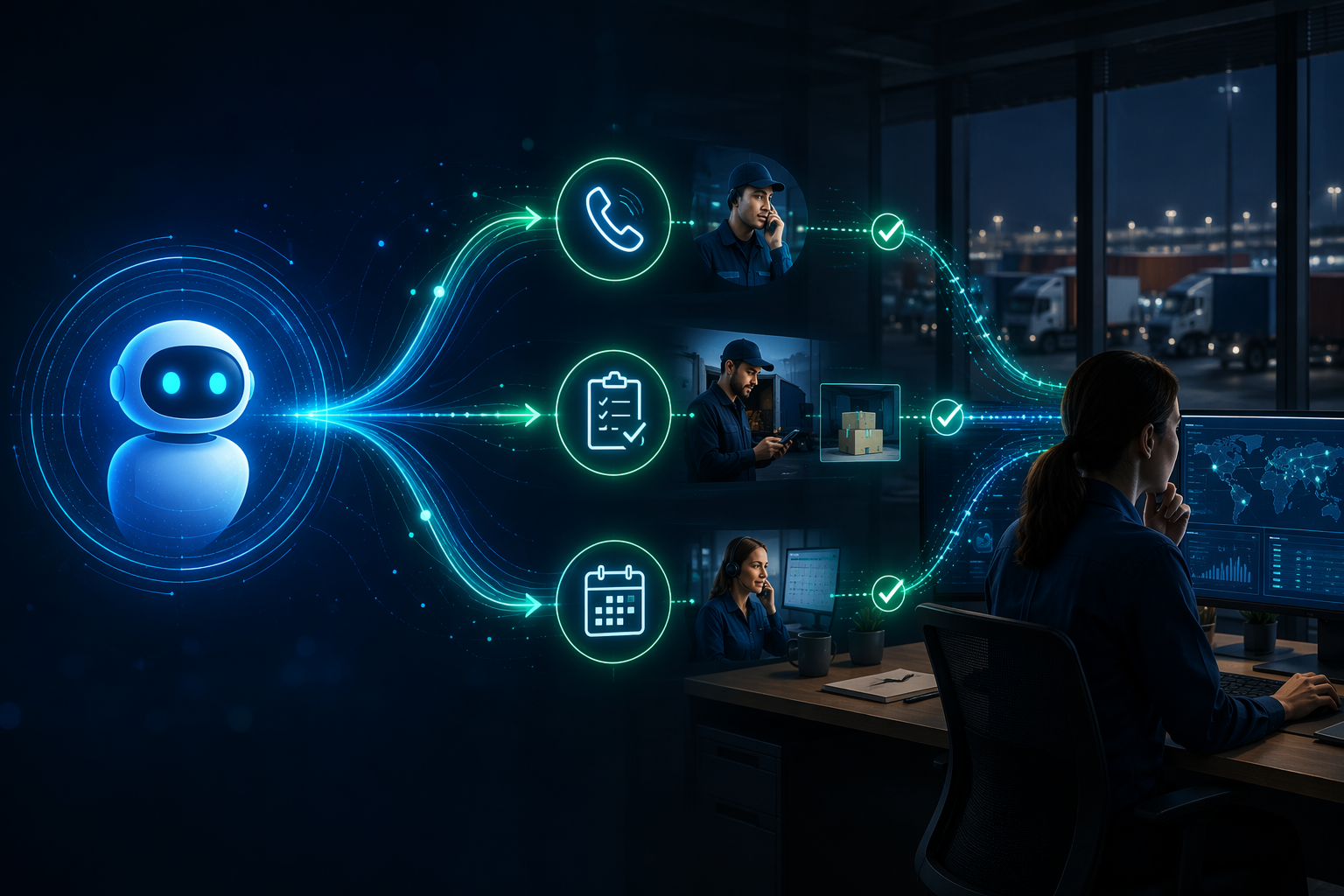
Those examples matter because they make agentic AI legible to operations teams. A transportation coordinator does not need an abstract debate about autonomous systems. The coordinator needs fewer repetitive calls, fewer missing documents, fewer manual status updates, and fewer appointment exceptions sitting in a queue while a shipment waits. Carrier check calls and proof-of-delivery retrieval are not glamorous, but they are exactly the type of bounded, high-volume work where an agent can be evaluated against a real workflow.
The acquisition also looks more deliberate than many AI tuck-ins. Journal of Commerce reported that project44 evaluated eight AI agent vendors over 16 months before acquiring LunaPath.ai.[3] That does not prove the integration will work, but it does suggest a use-case search rather than a hurried branding exercise.
For buyers comparing logistics AI vendors, this is the practical test: does the agent reduce a named manual step inside a shipment lifecycle, or does it merely summarize information that another user still has to chase? If the agent can initiate outreach, collect a document, confirm an appointment, and return the result to the transportation workflow with auditability, it belongs in a different evaluation category from a chatbot sitting beside a visibility dashboard.
There is still integration risk. A logistics agent needs access to shipment data, carrier contact workflows, document repositories, exception rules, and escalation paths. It also needs constraints: which carriers it can contact, which documents it can request, when a human reviews the result, and how failed automation is routed. Buyers looking more broadly at agentic workflows can compare this deal against examples in agentic AI procurement and logistics workflows, but LunaPath.ai’s value is clearest when judged at task level.
Coupa’s Cirtuo and Scoutbee deals show a procurement intelligence surface taking shape
Coupa’s later acquisitions of Cirtuo and Scoutbee are best read together. They are not the same use case, and treating them as interchangeable “procurement AI” would miss the point. Cirtuo sits closer to category strategy. Scoutbee sits closer to supplier discovery. Together, they show Coupa extending from spend control toward decision support for the people who shape what gets sourced and from whom.
In May 2025, Coupa announced the acquisition of Cirtuo, describing it as a leader in AI-powered category management. Coupa positioned the deal as filling a category management gap in its sourcing suite and said it targeted direct spend categories, where 70–80% of spend occurs for product companies.[4]
That direct-spend detail is the useful part. Category management has often been under-tooled compared with sourcing events and contract workflows. A category manager is not merely running an RFP. She is deciding which categories deserve attention, what the market structure looks like, where supplier leverage exists, how risk affects the sourcing approach, and when a sourcing event is premature because the category strategy is still weak.
If Cirtuo’s capability remains a strategy layer, it could make Coupa more useful before the sourcing event begins. If it is reduced to template generation or recommendation snippets, the acquisition becomes less important. Buyers should ask how category logic flows into sourcing execution, supplier selection, savings tracking, and governance. A category strategy product that cannot influence the downstream workflow becomes a planning document factory.
Scoutbee extends the same platform logic from a different angle. In October 2025, Coupa announced the acquisition of Scoutbee to add AI-powered supplier intelligence and discovery, emphasizing search and matching for supplier sourcing.[5]
Supplier discovery is where procurement teams often discover the limits of their own data. Incumbent supplier lists are easy to search and hard to escape. Market intelligence can be fragmented. Supplier qualification creates friction. If AI-powered search and matching can surface credible alternatives while preserving qualification discipline, it can improve sourcing options before negotiation begins.
The buyer question is whether Scoutbee stays useful outside a narrow Coupa-controlled context. Supplier discovery needs breadth: external supplier data, category nuance, risk signals, location and capacity constraints, and a path into sourcing workflows without forcing every decision through one suite. Coupa has a clear reason to make supplier discovery part of its procurement intelligence layer. Buyers still need to test data access, exportability, and how easily discovered suppliers can move into qualification and sourcing steps.
This is the useful tension in Coupa’s cluster. LLamasoft, Cirtuo, and Scoutbee point toward a broader intelligence surface across network design, category strategy, and supplier discovery. That could make the platform more coherent for enterprises that already want Coupa to be a decision system. It could also make each specialist capability less flexible for companies that wanted the acquired tool without adopting the surrounding suite.
Blue Yonder to Panasonic: demand planning at industrial scale
Panasonic’s acquisition of Blue Yonder sits somewhat apart from the Coupa and project44 examples because of its scale and strategic setting. Panasonic acquired Blue Yonder in a $7.1 billion deal in 2021, with AI Business describing the move as a bet on AI-driven supply chains and highlighting Blue Yonder’s AI and machine learning capabilities for demand sensing and autonomous replenishment.[6]
Demand planning is one of the more unforgiving places to absorb AI into a broader enterprise story. Forecasts affect inventory, production, replenishment, service levels, and working capital. A better model is useful only if planners trust it enough to adjust decisions, and if the surrounding process can act on the signal before the signal goes stale.
The appeal of the acquisition is clear: Blue Yonder’s software capabilities could sit inside Panasonic’s broader industrial and supply chain strategy. The caution is just as plain: autonomous demand planning is not a feature that becomes valuable simply by being owned by a larger company. It requires sustained investment in planning workflows, data quality, exception management, planner adoption, and integration with execution systems.
For buyers, the key is to separate ownership from operating fit. A larger parent can provide resources, distribution, and implementation reach. It can also change priorities. The acquisition strengthens the use case only if the planning product remains central enough to receive product attention and open enough to work inside the buyer’s actual architecture.
The market context is attractive, but it should not carry the decision
There are good commercial reasons these use cases attract acquirers. Supply chain AI is easier to justify when it maps to cost, inventory, working capital, service, or labor capacity. McKinsey’s 2024 estimates put AI-enabled distribution savings at 5–20% logistics cost reduction, 20–30% inventory reduction, and 5–15% procurement spend reduction. Those ranges explain why platforms want sharper AI capabilities in logistics, planning, and procurement.
But savings potential is not the same as buyer readiness. Gartner reported in 2025 that only 23% of supply chain organizations had a formal AI strategy. That gap matters because acquired products tend to arrive with more platform messaging, more integration decisions, and more internal stakeholders. A buyer without a clear AI governance model can mistake consolidation for risk reduction when it has simply moved the risk into architecture and process design.
Startup supply also appears to be changing, though the evidence should be read carefully. An Oliver Wyman and Prequel Ventures 2026 report focused on EU supply chain startups found that startup founding in the sector dropped by roughly half from 2024 to 2025, while average seed sizes increased. That is not a global conclusion, and it does not prove fewer useful tools will emerge. It does suggest a market where fewer startups may be trying to reach enterprise scale independently.
AI M&A pricing adds another caution. Telehill Advisors’ 2026 analysis said strategic acquirers were paying 8–15x ARR for AI-native companies with net revenue retention above 120%.[7] That is not supply-chain-specific evidence, and it should not be used to value a logistics or procurement tool directly. It does, however, help explain why acquirers are willing to pay for AI companies that show expansion inside existing accounts rather than just interesting models.
How to evaluate an acquired supply chain AI use case
The acquisition announcement is an input, not a verdict. Buyers should treat it as a reason to reopen diligence, especially if the product was already on a shortlist. The diligence does not have to become abstract. It can start with four questions.
- What exact operational job does the acquired capability perform?
- Is that job central to the acquirer’s strategy, or is it a tuck-in?
- Will the product remain open enough to fit the buyer’s architecture?
- What evidence shows the capability has worked in production or near-production workflows?
Start with the job, not the model
A buyer evaluating LunaPath.ai inside project44 should not begin with “agentic AI.” The better starting point is: how many manual carrier contacts, document retrieval steps, appointment confirmations, or exception updates could move through the agent, and where does a human intervene? A buyer evaluating Cirtuo inside Coupa should not begin with “AI category management.” The better starting point is: which category strategy decisions will the tool influence before a sourcing event is created?
The same discipline applies across the set. LLamasoft is about network design decisions. Scoutbee is about supplier discovery. Blue Yonder is about planning and replenishment decisions. If the acquirer cannot show where the acquired AI changes a named workflow, the buyer should discount the strategic language.
Check whether the use case is strategic or ornamental
A startup capability survives acquisition better when it solves a problem the acquirer cannot afford to neglect. Coupa has an obvious platform reason to invest in category management and supplier intelligence if it wants to expand procurement decision support. project44 has an obvious platform reason to invest in logistics agents if it wants visibility to move closer to execution. Panasonic had a broader supply chain strategy around Blue Yonder, but buyers still need to test whether their planning use case remains a product priority under that ownership structure.
The warning sign is a capability that looks useful in a press release but does not change the acquirer’s competitive position. Those tools can become demo features: impressive in a product keynote, less important in release planning.
Inspect the integration path before accepting the suite story
Integration can be the reason an acquisition works. A logistics agent embedded in a shipment visibility platform has access to the context it needs. Supplier discovery inside a sourcing suite can reduce handoffs. Category strategy connected to sourcing execution can move analysis into action. Network design connected to spend data can make strategic modeling less isolated.
Integration can also become lock-in. Buyers should ask which APIs remain available, whether data can be exported cleanly, how third-party systems connect, what happens to existing standalone customers, and whether the acquirer plans to force migration to a broader platform. These questions are not procurement bureaucracy. They determine whether the acquired tool remains usable in the buyer’s stack.
Separate validation from distribution
An acquisition can validate that a larger company wanted the capability. It does not automatically validate that the capability will deliver results in a buyer’s environment. The acquirer may have bought product, talent, customers, data assets, competitive positioning, or some combination of those. Enterprise buyers need evidence closer to implementation: reference deployments, workflow metrics, integration timelines, support commitments, and roadmap specificity.
This is especially important in supply chain functions where adoption and effectiveness are often confused. A tool can be widely adopted because it is bundled into a suite. That does not prove it improves forecast quality, reduces manual logistics work, expands qualified supplier options, or improves category strategy. The metric has to match the job.
Where frontier AI acquisitions fit, and where they do not
Some AI acquisitions are research bets rather than supply chain use-case acquisitions. SAP’s May 2026 acquisition of Prior Labs, for example, is better understood as a frontier AI investment than as a direct supply chain workflow purchase. That distinction matters for buyers comparing platform strategies. A frontier AI lab may eventually influence planning, procurement, or logistics modules, but it does not answer the same diligence questions as LunaPath.ai handling shipment coordination tasks or Cirtuo supporting category management.
There is nothing wrong with speculative research investment. The problem is treating it as equivalent to an implementation-ready supply chain use case. Buyers looking at broader platform roadmaps, including SAP-specific module coverage, may want to compare claims against SAP supply chain AI use cases by module. The diligence standard should change depending on whether the acquisition bought research capacity or a workflow product.
What consolidation means for the shortlist
The five acquisitions point to a practical conclusion for supply chain technology buyers: consolidation is neither a green light nor a red flag. It is a change in the risk profile.
A deal can strengthen a use case when the acquirer has implementation capacity, a credible integration plan, API discipline, and a strategic reason to keep funding the product. LLamasoft could make network design more connected to spend decisions. LunaPath.ai could make logistics visibility more operational. Cirtuo and Scoutbee could extend procurement intelligence before sourcing events begin. Blue Yonder could benefit from industrial-scale backing for planning and replenishment.
The same deal can narrow a use case when the startup becomes a feature, loses roadmap focus, or is tied to a suite the buyer did not intend to standardize on. That is the part selection committees have to test before the contract is signed, not after implementation begins.
The cleanest shortlist lens is still simple: identify the operating job, test the acquirer’s integration record, inspect product openness, and decide whether the acquired capability is central to the acquirer’s strategy or merely useful decoration.
References
- Coupa Acquires LLamasoft to Connect AI-Powered Supply Chain and Spend Management, Coupa
- project44 Acquires LunaPath.ai to Accelerate AI Agent Orchestration Across Global Supply Chains, project44
- project44 acquires agent developer to expand AI use cases, Journal of Commerce
- Coupa Acquires Cirtuo, Leader in AI-Powered Category Management, Coupa, May 2025
- Coupa Announces Acquisition of AI-Powered Scoutbee to Drive Supplier Intelligence and Discovery, Coupa, October 2025
- Panasonic Buys Into AI-Driven Supply Chains With $7.1bn Acquisition of Blue Yonder, AI Business
- AI M&A Trends in 2026: What Strategic Acquirers Are Actually Buying and Why, Telehill Advisors, 2026
Comments
Join the discussion with an anonymous comment.