
SpaceX’s first five weeks as a public company turned a supply chain problem into a market-cap problem. The company debuted on June 12, 2026, traded as high as $225.64, and by mid-July was changing hands around $124, a roughly 45% decline that erased nearly $600 billion in market value.[1][2] The obvious temptation is to make the chart the story. It is louder, cleaner, and easier to price than a substation upgrade or a water withdrawal permit.
But the useful question is not whether investors overpaid for rockets, satellites, or an Elon Musk premium. It is whether the physical system under SpaceX’s AI compute thesis can keep producing contracted capacity at the scale the valuation has already assumed.
That distinction matters because the sell-off did not occur against a collapsed demand story. The AI compute demand story is still intact enough to attract customers and capital. What has become harder to ignore is the delivery chain beneath it: GPUs, networking gear, grid power, backup power, cooling water, emissions approvals, interconnect timelines, and contract clauses that decide how much of today’s revenue remains revenue after customers have alternatives.
The Valuation Was Priced Like Software; The Asset Behaves Like Infrastructure
Before the IPO, Morningstar estimated SpaceX’s fair value at $780 billion, far below the $1.75 trillion IPO price that framed the public-market debut.[3] That gap does not prove the market was wrong; early public trading in a controlled, narrative-heavy asset rarely offers a clean verdict. It does show how much future execution had already been capitalized before the public shareholder base had much evidence of public-company operating cadence.
The launch business, Starlink, and Musk’s voting control all matter, but they are not the cleanest explanation for the speed of the repricing. The sharper issue is that SpaceX’s AI infrastructure story asks investors to treat contracted compute capacity as if it were a high-margin platform revenue stream, while the underlying delivery chain looks more like an emergency industrial project with public-utility dependencies.
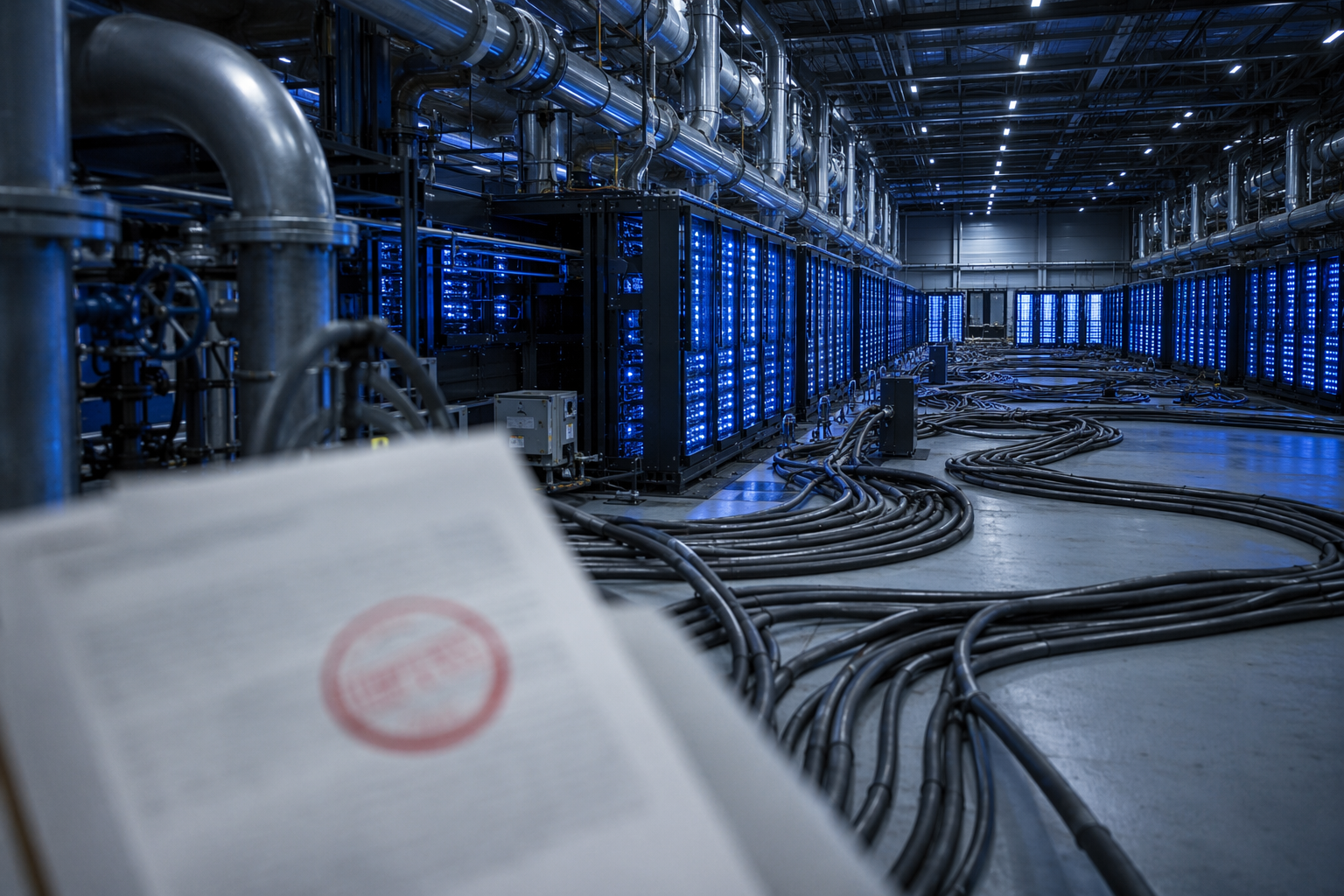
The Colossus complex in Memphis and Southaven is the case that exposes the mismatch. Klover.ai’s infrastructure analysis describes a buildout exceeding 555,000 GPUs across Nvidia H100, H200, B200, and B300 systems, with roughly 2 gigawatts of continuous power demand, a load it compares to about 1.5 million American homes.[4] Those numbers are not a product roadmap. They are an interconnect queue, a transformer procurement problem, a cooling design problem, and a local political problem.
Colossus Is A Supply Chain Achievement, Not Proof Of De-Risked Revenue
The Colossus deployment deserves credit before it is dissected. Klover.ai reports that the facility was deployed in 122 days, compared with typical hyperscaler deployment timelines of 18 to 36 months.[4] Futurum Group’s S-1 analysis also treats the company’s compute buildout as central to SpaceX’s attempt to become a broader AI foundation infrastructure company, not merely a rocket-and-satellite operator.[5]
A 122-day data center build at this scale is not hand-waving. It implies fast allocation of servers, power equipment, liquid-cooling components, networking, racks, labor, site work, and vendor escalation rights. It also implies that suppliers made room in their own production and integration schedules. Supermicro integration and Nvidia Spectrum-X networking, cited in the Klover.ai analysis, are not decorative details; at this density, networking and integration can become rate limiters as surely as chips can.[4]
Speed, however, changes the risk profile. A project delivered before the surrounding utility, regulatory, and community systems are ready can create capacity on paper while pushing unresolved obligations into operations. That is tolerable in a prototype. It is harder to defend when public-market investors have valued the company on recurring lease revenue from that capacity.
The GPU Count Is Only The First Constraint
The 555,000-plus GPU figure is the part equity markets understand most readily because it resembles a capacity count.[4] More GPUs mean more compute, more compute means more revenue, and revenue can be put into a model. Procurement teams know the awkward middle step: GPUs at this scale arrive with dependencies that do not fit neatly into a unit-count multiple.
Each tranche of accelerators requires server integration, high-speed networking, power distribution, thermal management, spares, firmware coordination, and field support. The actual deliverable is not a GPU. It is a stable cluster that a customer can use. If any part of that stack lags, the revenue-recognition story can remain intact in a filing while the physical ramp slips behind it.
This is why the phrase “GPU supply normalizes” cuts both ways. If Nvidia and its integrators remain constrained, SpaceX’s early access to capacity is valuable. If supply improves and hyperscalers can offer comparable capacity through more conventional data center pipelines, the scarcity premium embedded in short-duration lease contracts becomes less durable. The same procurement velocity that validates Colossus today may become less defensible if the rest of the market catches up.
Two Gigawatts Turns A Data Center Into A Utility Problem
The power figure is the hardest one to finesse. Klover.ai reports roughly 2 gigawatts of continuous demand at Colossus and says the local utility, the Tennessee Valley Authority, could not supply the full load.[4] A shortfall at that level is not solved by better software utilization. It requires generation, transmission, interconnection, switching equipment, protection studies, and an operating plan that the utility and regulators can live with.
SpaceX’s workaround was physical and immediate: 50 mobile natural-gas turbines, later ruled illegal by the EPA according to Klover.ai’s analysis, plus $1 billion in Tesla Megapacks for buffering.[4] The Megapack deployment is useful in engineering terms; batteries can smooth load and reduce some operational volatility. It also creates a circular intra-Musk supply chain dependency, with Klover.ai estimating that the order represented about 3.4% of Tesla Energy’s 2025 revenue.[4]
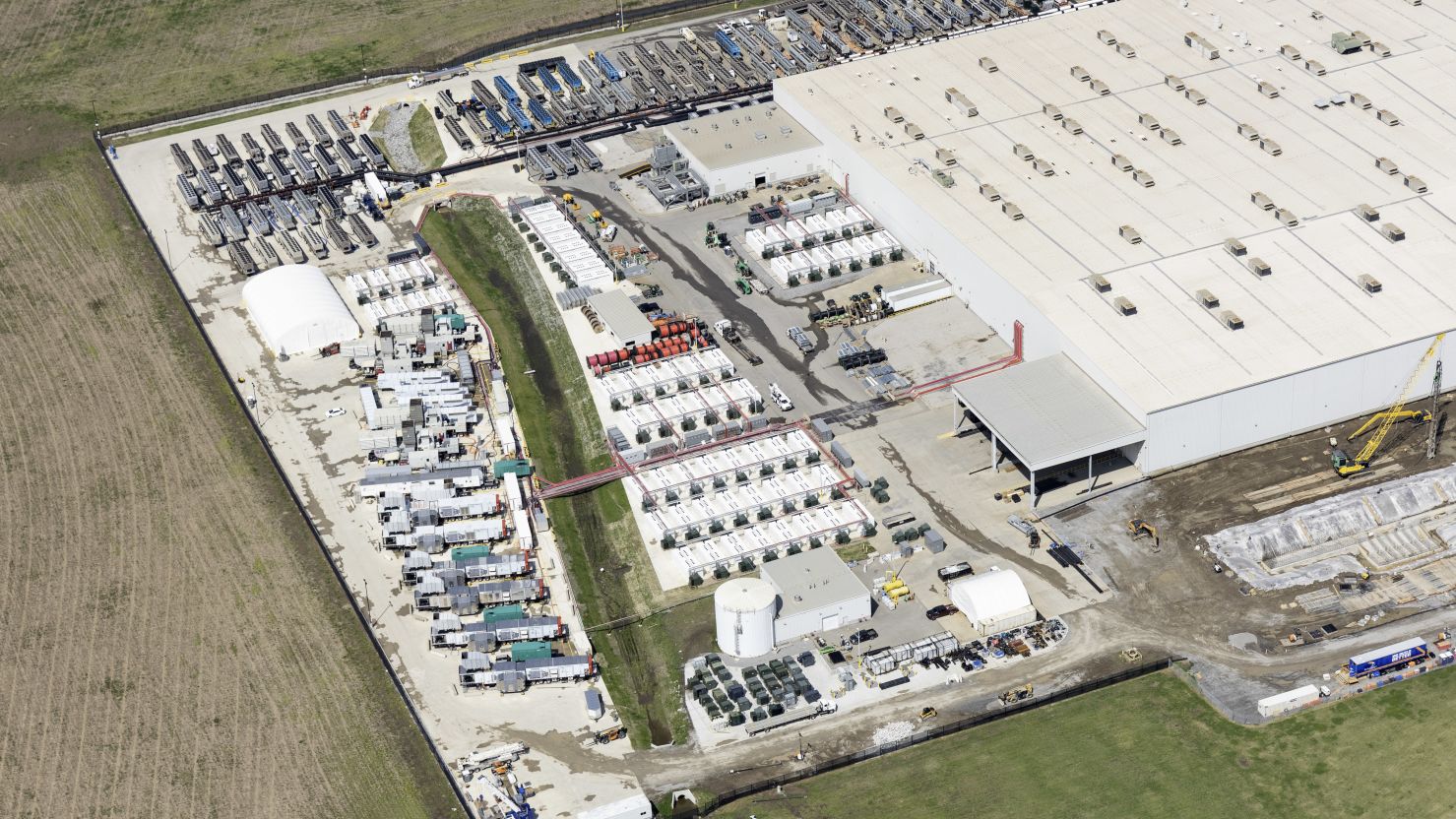
The legal status of the turbines matters more than the optics. Temporary generation can be a bridge during commissioning. Once a regulator determines that a bridge is unlawful, the bridge becomes exposure: enforcement risk, operating uncertainty, possible forced replacement, and a negotiating problem with customers who expected available compute, not a debate over emissions equipment.
Investors often treat power as an input cost. At Colossus scale, power is also a schedule constraint. If grid capacity arrives late, if mobile generation cannot run, or if battery buffering does not cover the operational gap, then capacity sold in a contract can become capacity that operations teams must ration, delay, or defend in public proceedings.
Cooling Water Is Not A Footnote
The water dependency is just as material. Klover.ai reports that Colossus requires about 5 million gallons per day from the Memphis aquifer for liquid cooling.[4] That figure should not be treated as a background environmental line item. Liquid cooling is part of the production system. If water access is constrained, contested, or politically conditioned, compute availability is affected.
The local challenge is already visible. Klover.ai and press reporting cite environmental justice litigation from the NAACP and community groups tied to the project’s water and emissions footprint.[2][4] The same analysis estimates total carbon dioxide output at roughly 6 million tons per year.[4] Those are not abstract ESG factors when the operating plan depends on public tolerance for large withdrawals, local emissions, and emergency-style power generation.
Community opposition does not automatically stop a project. It does change the execution environment. Permits get challenged. Mitigation conditions become more expensive. Public agencies become more cautious. Customers begin asking whether the capacity they leased is vulnerable to injunctions, operating limits, or reputational drag. A data center can be technically impressive and still be a weak form of collateral if its cooling and power assumptions are being litigated.
Where Speed Becomes Contract Exposure
The largest equity risk is not that Colossus fails to run. The larger risk is that it runs well enough to support the story for a while, but not reliably enough to justify treating its lease revenue as sticky, long-duration infrastructure cash flow.
Klover.ai’s analysis describes $26 billion in annualized compute lease revenue from Anthropic at $1.25 billion per month and Google at $920 million per month.[4] That is the strongest evidence for the bull case. Customers are not merely expressing interest; they are paying for capacity at a level large enough to matter to SpaceX’s valuation.
The same contracts also contain the risk. The leases include 90-day cancellation rights after December 31, 2026, according to Klover.ai’s reading of the filing and related reporting.[4] That clause turns an infrastructure bottleneck into an equity variable. If customers find cheaper or less controversial capacity from hyperscalers, if GPU supply normalizes, or if SpaceX’s operating constraints reduce service confidence, a large annualized revenue figure can weaken quickly.
| Constraint | Operational Question | Equity Risk |
|---|---|---|
| GPUs and networking | Can SpaceX keep integrating usable clusters, not just buying accelerators? | Capacity growth slows or loses scarcity premium as competitors catch up. |
| Power | Can the grid, turbines, and batteries support roughly 2 GW of continuous demand? | Available compute becomes exposed to utility delays or enforcement action. |
| Water and cooling | Can liquid cooling continue with about 5M gallons per day of aquifer demand? | Permitting, litigation, or mitigation costs impair operating certainty. |
| Contracts | Will customers remain after 90-day cancellation rights begin after Dec. 31, 2026? | Annualized lease revenue proves less durable than valuation models assume. |
This is not a theoretical accounting concern. A lease contract can validate demand and reveal fragility at the same time. The revenue line tells investors that customers need the capacity now. The cancellation language tells them those customers have preserved the right to leave if the market or the operating facts improve in their favor.
The Supplier Risk Is Bigger Than SpaceX
Ex Terra JSC framed SpaceX’s $75 billion raise as a supplier risk event, which is the right category even if the public conversation has focused on valuation.[6] When a buyer with unusual capital access pulls forward demand for GPUs, power equipment, batteries, cooling systems, and construction services, it changes allocation decisions up and down the supplier base. Vendors may prioritize the customer who can pay, move fastest, or tolerate unconventional deployment risk.
That can be an advantage for SpaceX. Vertical integration, supplier leverage, and organizational urgency are real capabilities. A company that can compress a deployment cycle from years to months may keep winning capacity races that slower buyers lose. It would be too neat to call the Colossus build only a warning sign.
The problem is that public markets converted that advantage into a much broader claim: that fast physical execution would translate into durable, high-value AI revenue. Those are different propositions. A procurement lead can admire the expediting and still ask who owns the downside if a turbine cannot operate, a water permit is challenged, a substation slips, or a customer exits with 90 days’ notice.
What The Stock Slump Is Actually Pricing
The cleanest reading of the stock move is not that SpaceX’s AI infrastructure strategy has failed. The company has too little public trading history for that conclusion, and a five-week chart can reflect IPO froth, scarcity, lockup dynamics, sentiment reversal, or simple discomfort with a $1.75 trillion starting point. Klover.ai’s analysis is also a commercial publication from a firm with its own AI strategy practice, so its synthesis should be attributed carefully rather than treated as neutral adjudication.
Still, the sell-off is a useful signal because it landed where the financial model is most physically exposed. The $26 billion annualized lease thesis depends on keeping an enormous compute factory available. That factory depends on hundreds of thousands of GPUs, high-density networking, about 2 GW of power, millions of gallons per day of cooling water, batteries and turbines to bridge grid limits, and regulators willing to accept the operating plan.[4]
Software multiples tolerate abstraction. Utility-scale compute does not. Every missing megawatt has to be found somewhere. Every gallon has a source and a constituency. Every emergency generator has an emissions profile. Every cancellation clause has a date. SpaceX’s decline is best read as the market beginning to price those facts into an AI revenue story that had previously been valued as if physical capacity were already solved.
The investor test for the next AI infrastructure story should be narrower and tougher: not whether demand for compute exists, but whether the physical system can keep producing contracted capacity without legal, utility, environmental, or cancellation risk overtaking the revenue narrative.
References
- After Blockbuster I.P.O., SpaceX Shares Are Slumping, The New York Times, 2026-06-23
- SpaceX stock returns to Earth after record IPO, Los Angeles Times, 2026-06-23
- SpaceX is worth less than half its IPO target price, Morningstar says, CNBC, 2026-06-03
- xAI / SpaceX IPO: Infrastructure Economics of Compute Supply Chain, Klover.ai, 2026
- SpaceX S-1: Is Elon Musk Building the Ultimate AI Foundation?, Futurum Group
- SpaceX's $75 Billion Raise Is a Supplier Risk Event, Ex Terra JSC
Comments
Join the discussion with an anonymous comment.