
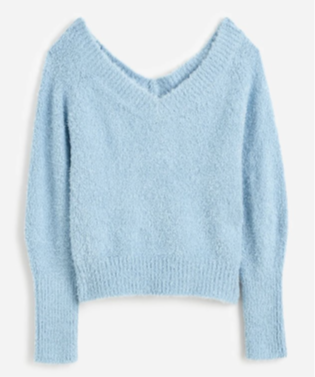
The Madewell sweater recall began with a hard number: about 5,900 women’s sweaters were recalled on July 16, 2026, because they violated the federal flammability standard for clothing textiles, 16 CFR Part 1610, and posed a burn hazard.[1] That is not a theoretical quality miss. It is finished product already far enough downstream that the response now involves a public notice, consumer instructions, reverse logistics, and a compliance explanation.
Inc.com’s coverage added another uncomfortable detail: the recall followed a single-incident trigger.[2] That does not prove a broad defect pattern, and it should not be treated as one. It does show how little visible evidence may be needed before a brand is pulled into the machinery of recall response once a regulated hazard is credible enough.
For apparel QA teams, the useful question is not whether an AI camera would have saved this specific sweater program. No source confirms that an AI inspection system saw the Madewell fabric, detected a pre-recall anomaly, or would have classified the garment as non-compliant. The more defensible question is narrower: what can this recall tell us about where computer vision might strengthen textile inspection before a flammability failure leaves the factory?
The Rule That Matters Is Not a Visual Defect Standard
16 CFR Part 1610 is the federal standard for the flammability of clothing textiles. It is not a brand preference, a workmanship grade, or a customer-experience metric. It classifies textile flammability performance under prescribed test conditions, and apparel that fails the standard can become a regulatory problem even if it looks commercially acceptable on a hanger.[3]
That distinction matters because many factory inspection systems are strongest where the defect is visible: stains, holes, loose yarns, slubs, shade variation, skew, skipped threads, or other surface irregularities. Flammability compliance sits one layer deeper. Fiber content, fabric structure, finishing, nap, and surface behavior can all influence how a textile performs in a burn test, but the legal result is established through the applicable standard, not by an inspector deciding that the fabric looks safe.
The compliance environment has also tightened. In April 2024, the CPSC amended requirements connected to the clothing textile flammability standard, raising the burden on firms to maintain adequate compliance evidence rather than relying on informal confidence in supplier controls.[4] The Madewell recall arrives in that narrower tolerance environment. A non-compliant lot is not merely a defect escape; it is a sign that the control chain did not produce enough reliable friction before shipment.
Where Manual Inspection Gets Thin
Manual fabric inspection is useful, but it is uneven by design. People get tired. Lighting changes. Sampling plans leave gaps. A roll can pass through several hands while no one has a clear reason to connect a subtle surface condition with a later flammability classification problem. The inspector is usually being asked to protect several outcomes at once: appearance, construction, shade, contamination, measurement, sewing performance, packaging, and documentation.
In a recall like this, the painful fact is that non-compliant fabric made it through whatever controls existed before the public notice. That does not identify the exact failed step. The miss could sit in supplier qualification, raw material certification, finishing control, sampling, lab testing, documentation review, production segregation, or final release. But once the product reaches consumers, every upstream assumption becomes harder to defend.
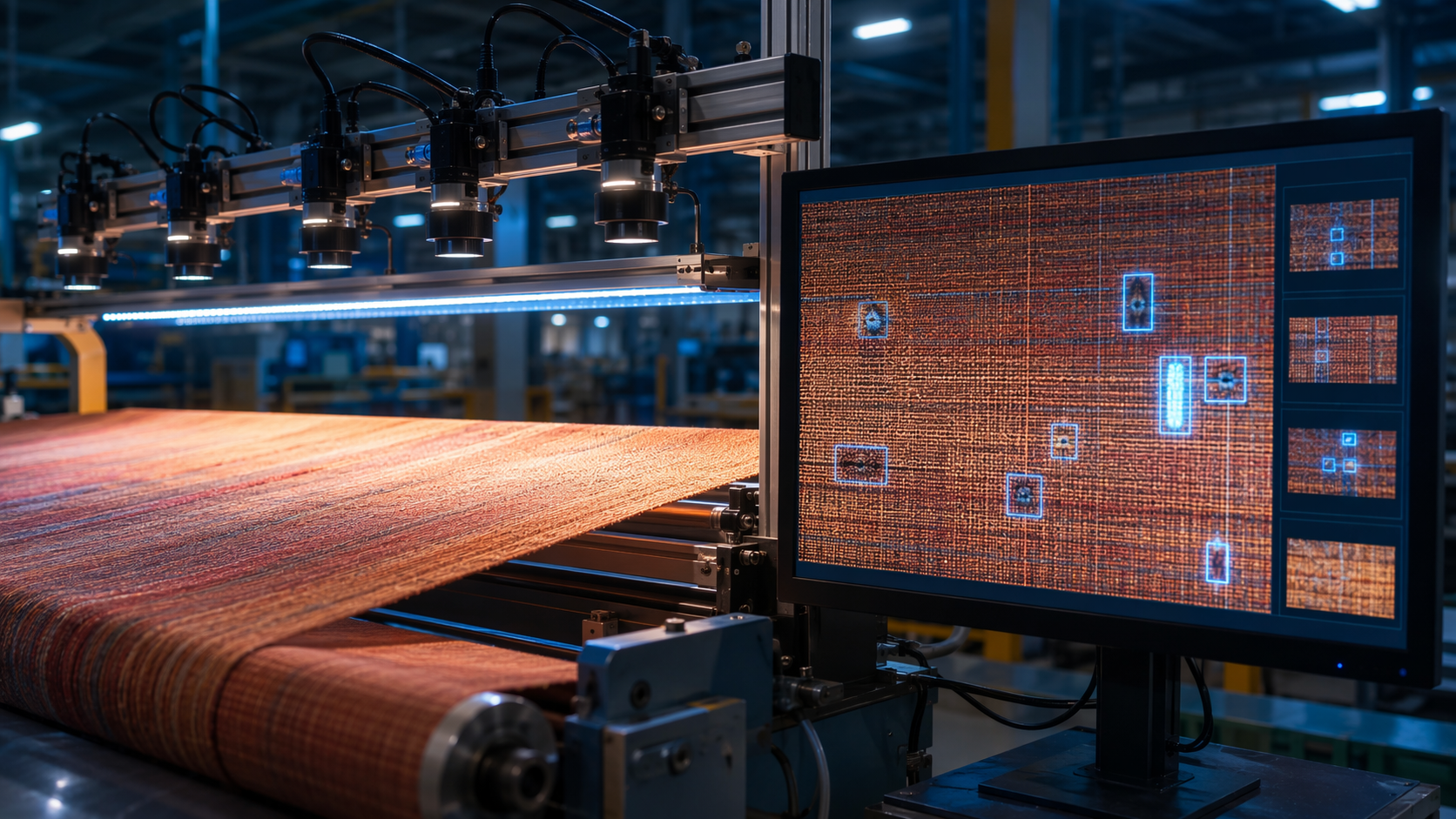
This is where AI textile inspection becomes relevant, though not magical. A camera cannot replace the flammability test required to verify compliance. It can, however, add a high-frequency visual control at the point where fabric characteristics are still moving past the line and can still be stopped, separated, or escalated.
What AI Vision Can Actually See
The strongest case for AI inspection is not that it “knows” a garment will pass 16 CFR Part 1610. The stronger case is that modern computer vision can detect textile anomalies consistently at production speed, including patterns that a tired operator may miss or inconsistently classify.
Robro Systems describes AI-based textile quality control using architectures such as YOLOv8 and claims defect detection accuracy above 99%.[5] That claim should be read carefully. It supports the proposition that trained machine-vision systems can perform very well on defect detection tasks. It does not, by itself, prove flammability compliance, nor does it prove that the Madewell sweater defect would have been caught.
Cognex’s textile inspection materials are more concrete about the visual targets: surface irregularities, warp and weft skips, fiber anomalies, and other material inconsistencies that can be identified by machine vision during production.[6] Those are the kinds of defects that belong in the discussion because they sit close to the physical fabric. They are not paperwork errors. They are observable deviations in the material stream.
| Inspection layer | What it can catch | What it cannot prove alone |
|---|---|---|
| Manual visual inspection | Obvious workmanship and fabric appearance defects | Consistent detection across every yard or full flammability compliance |
| AI machine vision | Repeatable detection of trained visual anomalies such as skips, irregularities, and fiber-level deviations | That a garment passes 16 CFR Part 1610 |
| Laboratory flammability testing | Performance under the applicable flammability method | Continuous inspection of every production surface in real time |
The practical value is in the handoff between these layers. If a vision system flags a roll with unusual nap, inconsistent yarn behavior, skipped construction, or a surface condition outside the trained norm, QA does not need to declare it illegal. QA needs to quarantine it, review the lot history, and decide whether additional testing is required before that material becomes finished inventory.
The Flammability Link Is Plausible, Not Proven by This Recall
Here the wording has to stay disciplined. Textile anomalies can be relevant to flammability risk because fabric structure and surface characteristics can affect burn behavior. A raised surface, inconsistent construction, or unexpected fiber condition may justify additional attention. But “may justify attention” is not the same as “would have prevented the Madewell recall.”
The supported chain is this: a recalled sweater violated 16 CFR Part 1610; the existing quality and compliance process did not prevent non-compliant goods from reaching the market; AI vision systems can detect textile defects and material inconsistencies at high accuracy in production settings; some of those inconsistencies can be relevant enough to trigger flammability review.[1][3][5][6] The unsupported leap would be to say that the same system would have identified the exact Madewell failure before shipment.
That boundary is not a minor legal footnote. It is the difference between using AI inspection as a risk-control layer and selling it as a compliance guarantee. The first claim is serious. The second is usually where the evidence thins out.
Testing Still Carries the Compliance Burden
Bureau Veritas describes apparel flammability testing as a service layer for evaluating garments and textiles against applicable safety requirements.[7] That is the layer a brand still needs when the question is whether a product complies with a flammability standard. Computer vision can decide that something looks abnormal. Testing determines how the material performs under the relevant method.
The better operating model is not AI instead of testing. It is AI before and around testing: continuous screening on the fabric line, automatic capture of visual evidence, lot-level escalation when anomalies exceed thresholds, and targeted lab verification before suspect material is cut, sewn, packed, and shipped. That gives the compliance team more chances to stop a weak lot while the cost of stopping it is still mostly internal.
A hypothetical example makes the distinction clear. Suppose a knit fabric roll shows an unusual surface condition that the AI model has learned to associate with prior rejected lots. The system should not label the roll “flammability failed.” It should flag the roll, attach images to the production record, and route the lot for QA review or additional testing. The value is not a final legal conclusion; it is earlier evidence and faster containment.
What the Recall Should Change in QA Conversations
The Madewell recall should make apparel teams more skeptical of inspection systems that only work as a final gate. By the time a finished sweater is in retail distribution, the cheapest control points have passed. Fabric review, roll mapping, supplier deviation alerts, lab-test triggers, and lot segregation are all more useful before the garment becomes a consumer product with a recall notice attached.
For a QA manager trying to justify AI vision investment, the argument should stay close to what the technology can document. It can increase coverage on moving fabric. It can create a visual record of defects that would otherwise depend on human observation. It can standardize escalation when the same anomaly appears across rolls, shifts, or suppliers. It can help decide which lots deserve additional review before release.
It should not be presented as a shortcut around 16 CFR Part 1610, the April 2024 compliance expectations, or independent lab verification. A system that detects textile anomalies is valuable precisely because it gives the compliance process more evidence earlier. It is not valuable because it lets a brand stop asking the harder regulated question.
The disciplined conclusion from the Madewell case is therefore limited but important. AI machine vision deserves serious attention in apparel QA because it can identify material defects associated with compliance risk at line speed. The recall does not prove an AI system would have prevented this specific flammability failure, and it should not be used that way. It does show why relying on late-stage confidence is a fragile posture when 5,900 finished garments can become a public regulatory event.
References
- Madewell Recalls Women’s Sweaters Due to Burn Hazard and Violation of Federal Flammability Regulations, U.S. Consumer Product Safety Commission, July 16, 2026.
- Madewell Recalls 5,900 Sweaters After Single Incident, Inc.com, July 16, 2026.
- 16 CFR Part 1610—Standard for the Flammability of Clothing Textiles, Electronic Code of Federal Regulations.
- Standard for the Flammability of Clothing Textiles; Final Rule, U.S. Consumer Product Safety Commission, April 2024.
- How AI is Reshaping Textile Quality Control, Robro Systems.
- Textile Inspection, Cognex.
- Apparel Flammability Testing, Bureau Veritas.
Comments
Join the discussion with an anonymous comment.