
Predictive Analytics in Supply Chain Management: Definition, Techniques, and Implementation Roadmap

Predictive Analytics in Supply Chain Management: Definition, Techniques, and Implementation Roadmap

A definitive glossary entry for supply chain leaders and practitioners. Defines predictive analytics, explains the analytics maturity continuum (descriptive → predictive → prescriptive), details key techniques with a decision framework, provides source-attributed ROI data from enterprise deployments, and outlines implementation challenges, tooling costs, and emerging trends.

By Editorial Team
forecastinginventoryprocurementlogisticsmachine-learning

Definition: What Is Predictive Analytics in Supply Chain Management?

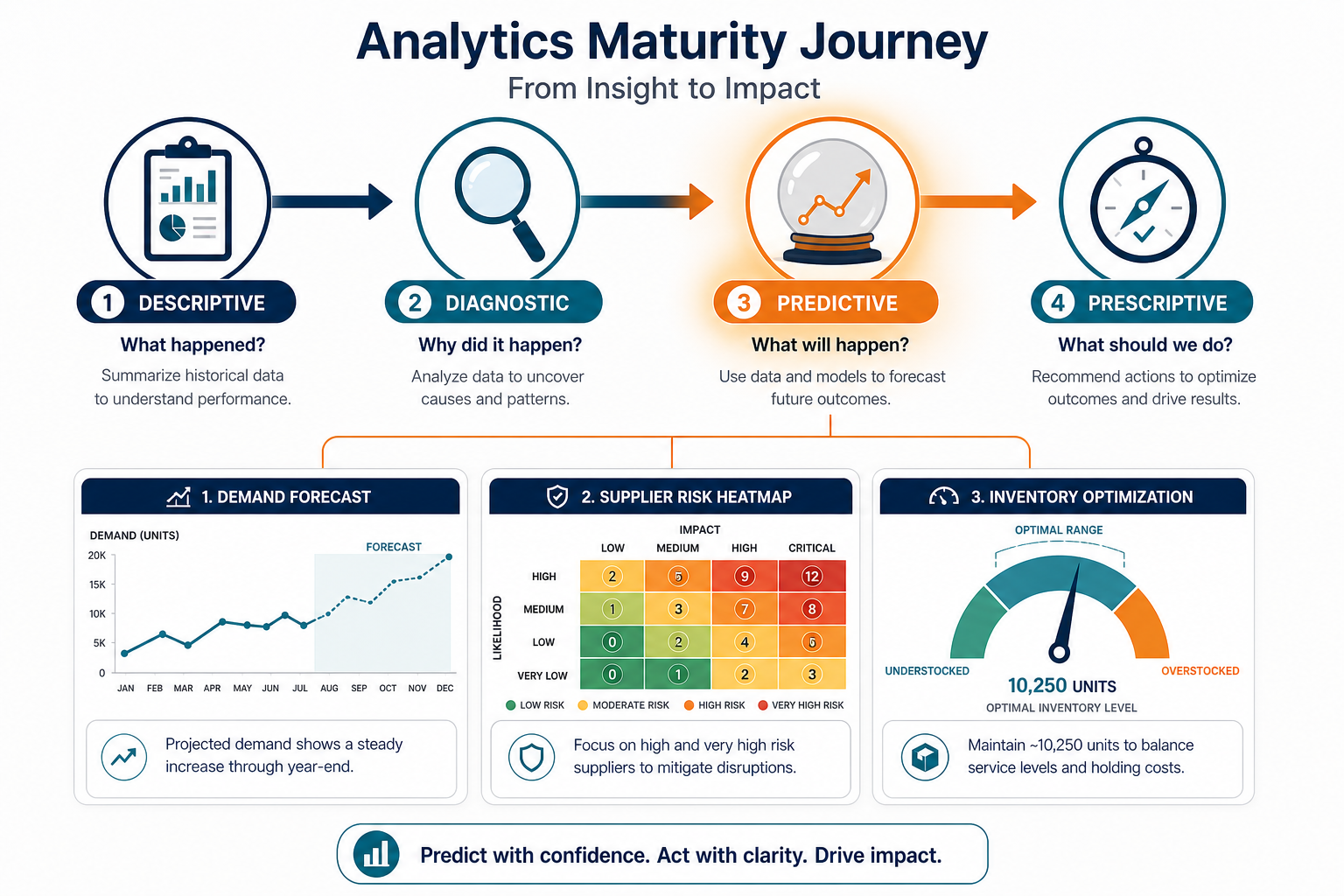
Predictive analytics in supply chain management is the application of historical data, statistical models, and machine learning techniques to forecast future outcomes across planning, procurement, logistics, and warehouse operations. It answers the question “What will happen?” — distinguishing it from descriptive analytics (“What happened?”) and prescriptive analytics (“What should we do?”). This distinction forms the backbone of the analytics maturity continuum, which organizations progress through as they build data-driven supply chain capabilities.
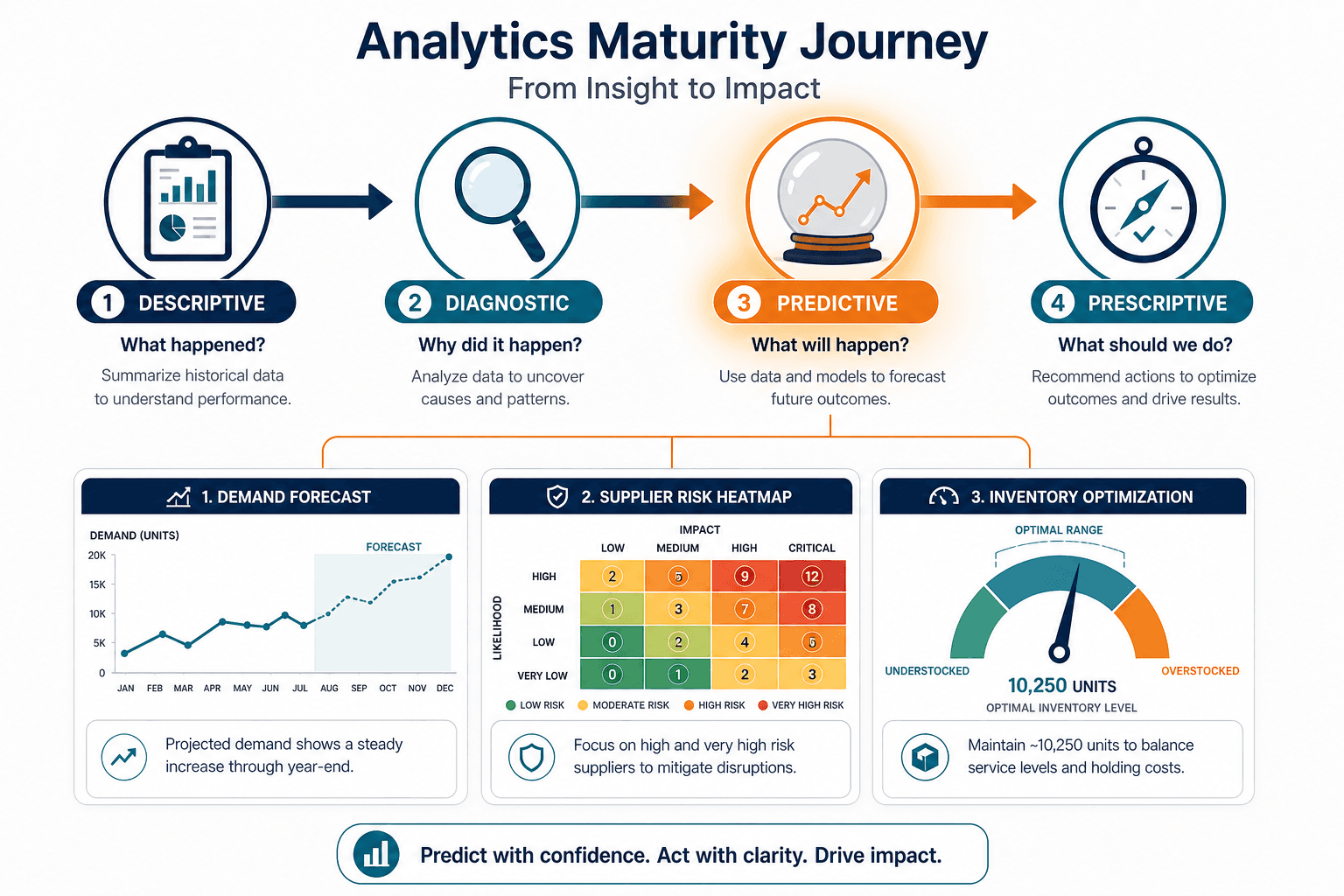
A horizontal infographic showing four stages of supply chain analytics maturity: Descriptive, Diagnostic, Predictive, and Prescriptive, with the Predictive stage highlighted and three output panels below it.
The analytics maturity continuum: Predictive analytics occupies the third stage, bridging the gap between understanding past performance and taking automated action.

Comments

Join the discussion with an anonymous comment.

Loading comments...