
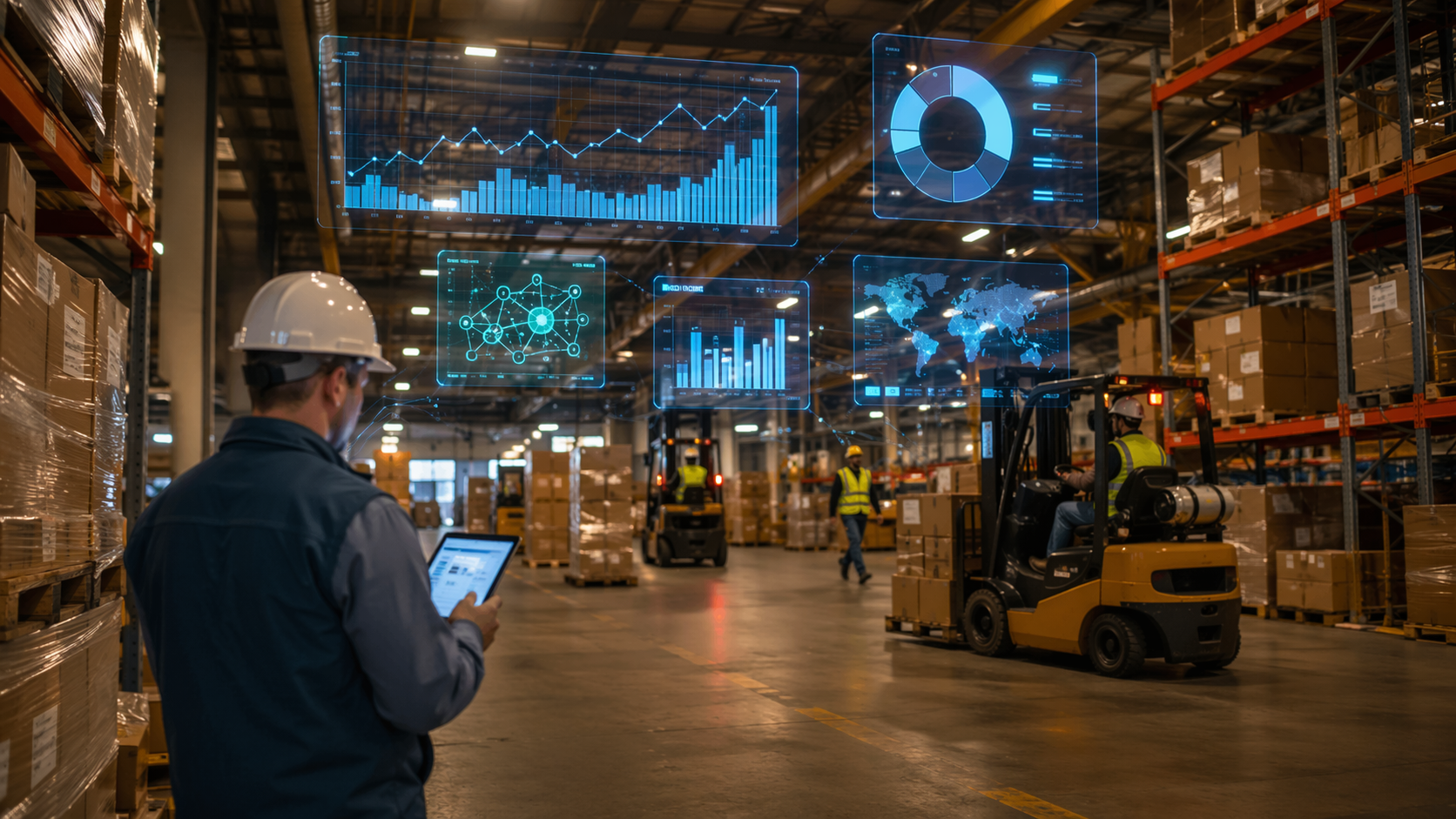
What a realistic supply chain AI budget looks like
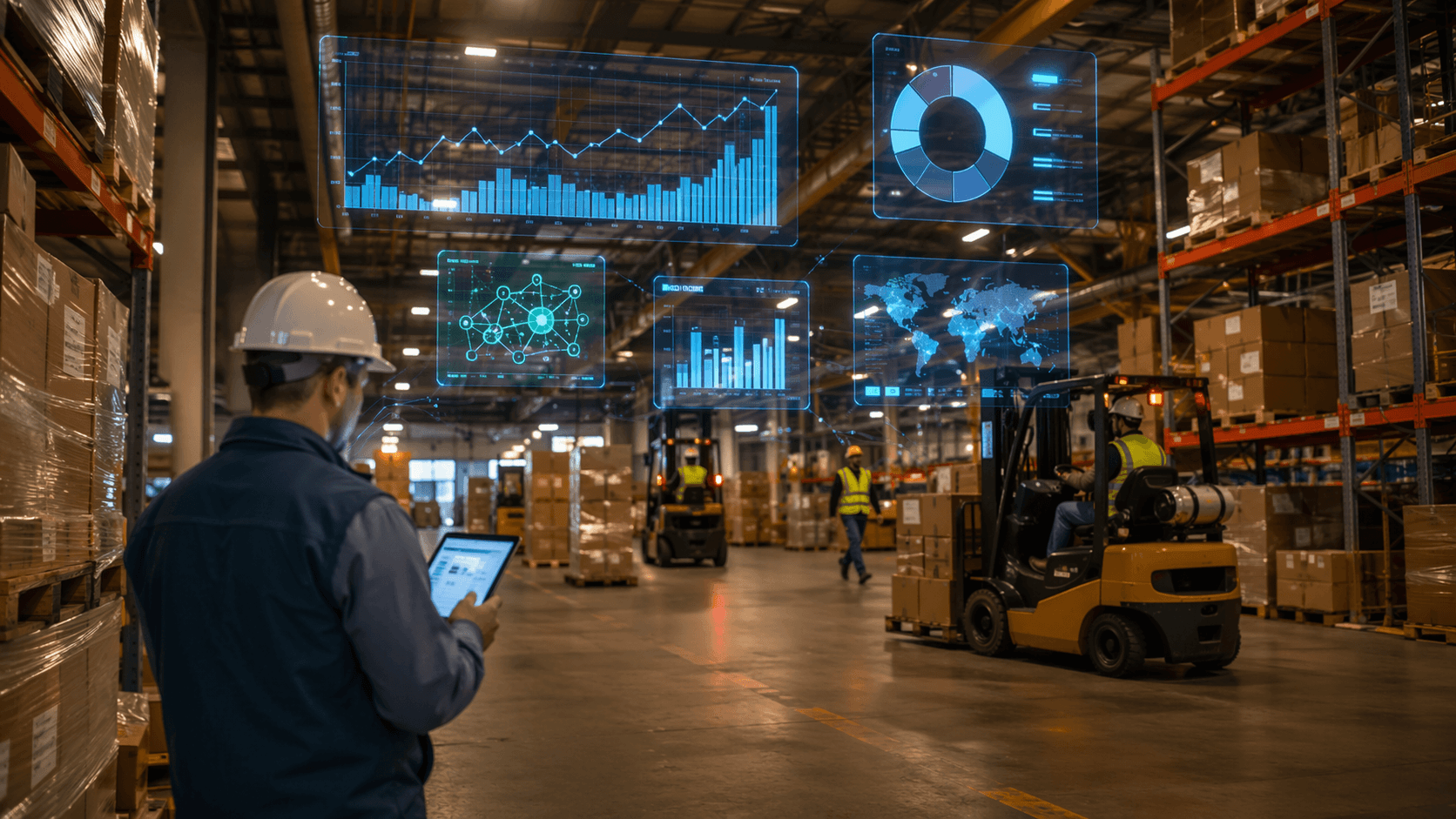
Mid-market companies can afford supply chain AI, but only if they treat it as a focused rollout instead of an enterprise transformation. In 2026, the workable year-one budget usually lands around $75,000 to $200,000 once licensing and implementation are combined. That is enough to launch one scoped use case, not to rebuild the full planning stack. The market is already active—91% of manufacturers are using GenAI—but integration is still shallow, with only 25% fully integrated and only 23% of supply chain organizations reporting a formal AI strategy [1].
| Platform | Directional benchmark | What it implies |
|---|---|---|
| Kinaxis RapidResponse | $100K+/yr; $1M-$3M three-year TCO at enterprise scale [2] | Usually beyond a first mid-market pilot |
| Kinaxis Planning One | Positioned as low-risk, low-cost; deployed in weeks, not months [3] | More realistic if the planning scope is narrow |
| Blue Yonder modules | About $100K/yr per module, with 12-24 month implementations [4] | Powerful, but slower and costlier than most mid-market first projects |
| Horizon Solutions | 50%-70% lower TCO than equivalent o9 deployment; 6-10 weeks per module [5] | Closer to the budget and speed mid-market teams usually need |
| o9 | Enterprise cost and 12-24 month deployment; best fit for $3B+ enterprises with mature data engineering [5] | Usually overbuilt for a mid-market first deployment |
| RELEX | Strong CPG/retail mid-market positioning [6] | Best when demand and replenishment are the core pain points |
These are directional benchmarks, not published list prices. The pattern matters more than the exact quote: once a platform needs a long integration program or a heavy consulting layer, year-one cost rises quickly and the deployment starts to look like an enterprise project instead of a mid-market tool.
The hidden cost is implementation, not the model
The budget often breaks on services. Boutique AI consulting commonly runs $35K-$150K per engagement, while mid-tier consulting reaches $100K-$500K [7]. If the team tries to build instead of buy, the numbers move sharply upward: $500K-$2M+ in cost, 12-24 months of work, and a team of 7-10 specialists [8]. That is why SaaS buying shows about 56% lower three-year TCO than building [8].
The first decision, then, is not which algorithm sounds strongest. It is which business problem is narrow enough to instrument cleanly. For use-case selection, the fastest companion references are AI Use Cases in Supply Chain by Function and, if the issue is inventory accuracy, Data Readiness Assessment for AI Inventory Optimization.
Select for speed, not breadth
The vendor screen should favor packaged planning or forecasting modules over broad enterprise suites. Kinaxis Planning One is explicitly positioned as low-risk and low-cost, with deployment in weeks rather than months [3]. Horizon Solutions claims 50%-70% lower TCO than an equivalent o9 deployment and 6-10 weeks per module [5]. RELEX is the clearer fit when the problem is CPG or retail demand and replenishment, while o9 reads more like an enterprise program for teams that already have mature data engineering and time to absorb a 12-24 month deployment [5][6].
Blue Yonder can still be rational when a company needs a broader suite, but the benchmark cited here—about $100K a year per module with 12-24 month implementation windows—makes it hard to treat as a quick mid-market win [4].
Why the first 90 days matter more than the platform
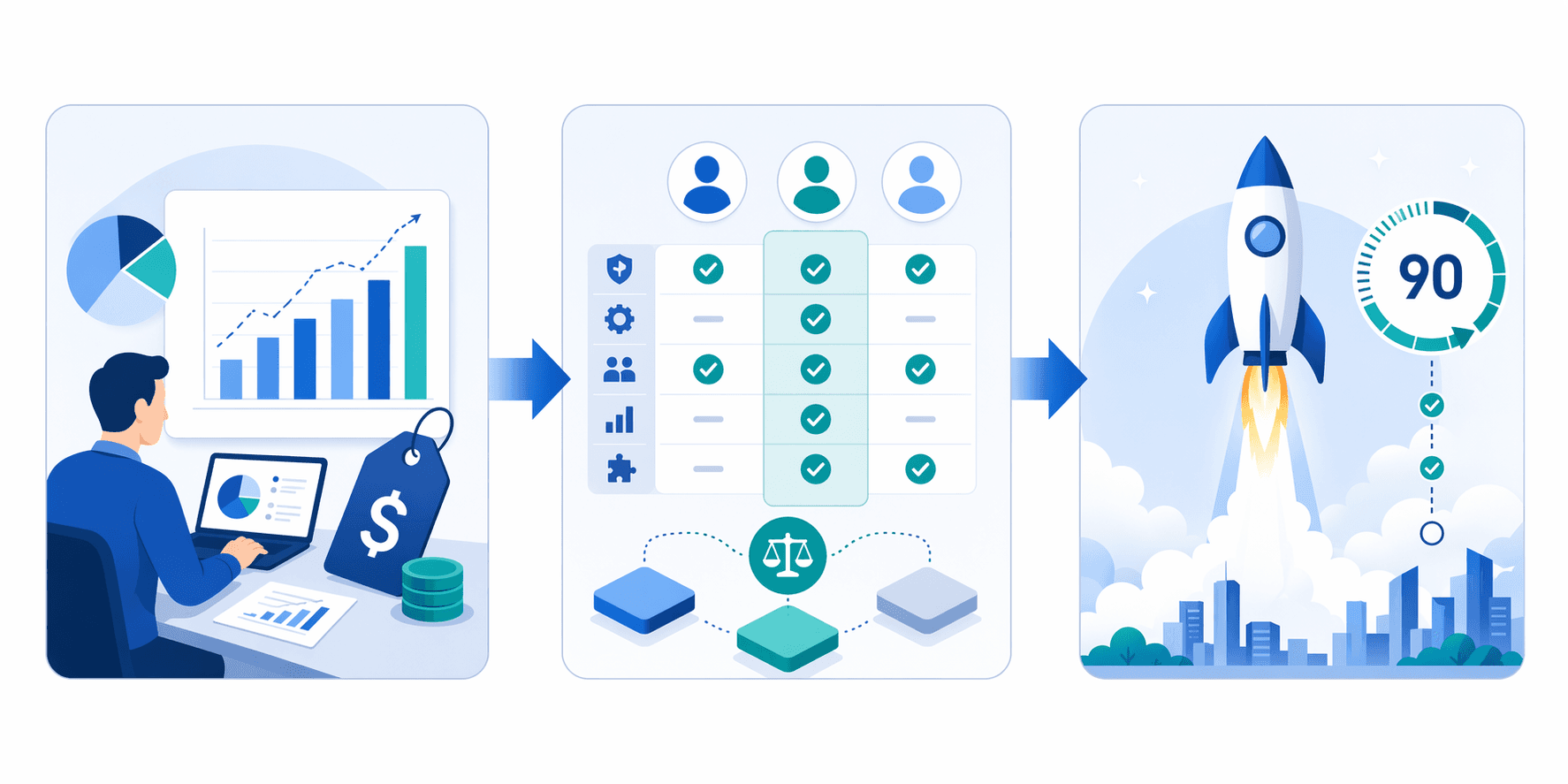
A pilot-first deployment works because it tests data quality, integration, and ownership before scope expands. That matters because one cited failure mode is data quality gaps, which account for most pilot-to-production breakdowns [10]. It also fits the shorter payoff window mid-market teams can sometimes reach: measurable ROI in 3-6 months, rather than the longer enterprise cycle [9].
- Lock one use case and one KPI before any platform comparison.
- Require a deployment path that fits existing ERP, WMS, or TMS systems.
- Run a 90-day pilot on a live process, not a sandbox.
The narrowest defensible conclusion is also the most useful one: supply chain AI is financially realistic for mid-market companies when the use case is bounded, the vendor is already packaged for mid-market deployment, and the first project is treated as a 90-day proof of value instead of an open-ended transformation. Anything broader tends to turn into enterprise-style spend before it turns into usable output.
References
- Supply Chain AI Statistics: 18+ Statistics You Should Know for 2026 — OpenSky Group
- Kinaxis Pricing — Forthcast
- Kinaxis Planning One — Kinaxis
- Blue Yonder Pricing — Locus / SelectHub
- Supply Chain Planning: o9 Alternatives 2026 — Horizon Solutions
- Supply Chain AI — RELEX
- How Much Does AI Consulting Cost? — bosio.digital
- Build vs Buy vs Partner AI Automation Strategy for Mid-Market Companies — mAccelerator
- Mid-Market vs Enterprise AI Agility — AI Assembly Lines
- Manufacturers Go All In: 95% Already Using AI for Supply Chains — TraxTech
Comments
Join the discussion with an anonymous comment.