
What Is Machine Learning in Supply Chain Management?
Machine learning in supply chain management refers to the application of algorithms that learn from operational data patterns and improve their performance over time without being explicitly programmed for every possible scenario. Unlike static rule-based systems — which apply fixed logic like "if inventory drops below 100 units, reorder 500" — ML models continuously adjust their predictions and recommendations as new data flows in from enterprise resource planning (ERP) systems, transportation management systems (TMS), warehouse management systems (WMS), Internet of Things (IoT) sensors, and external sources such as weather feeds or port schedules.
The core distinction matters for supply chain leaders evaluating technology investments. Traditional analytics tools answer "what happened?" through dashboards and reports. Business intelligence systems answer "what happened and why?" through dimensional analysis. Machine learning answers "what will happen next?" and "what should we do about it?" — shifting the supply chain from reactive, rule-bound operations to predictive, adaptive decision-making at scale.
How Machine Learning Works in the Supply Chain Pipeline
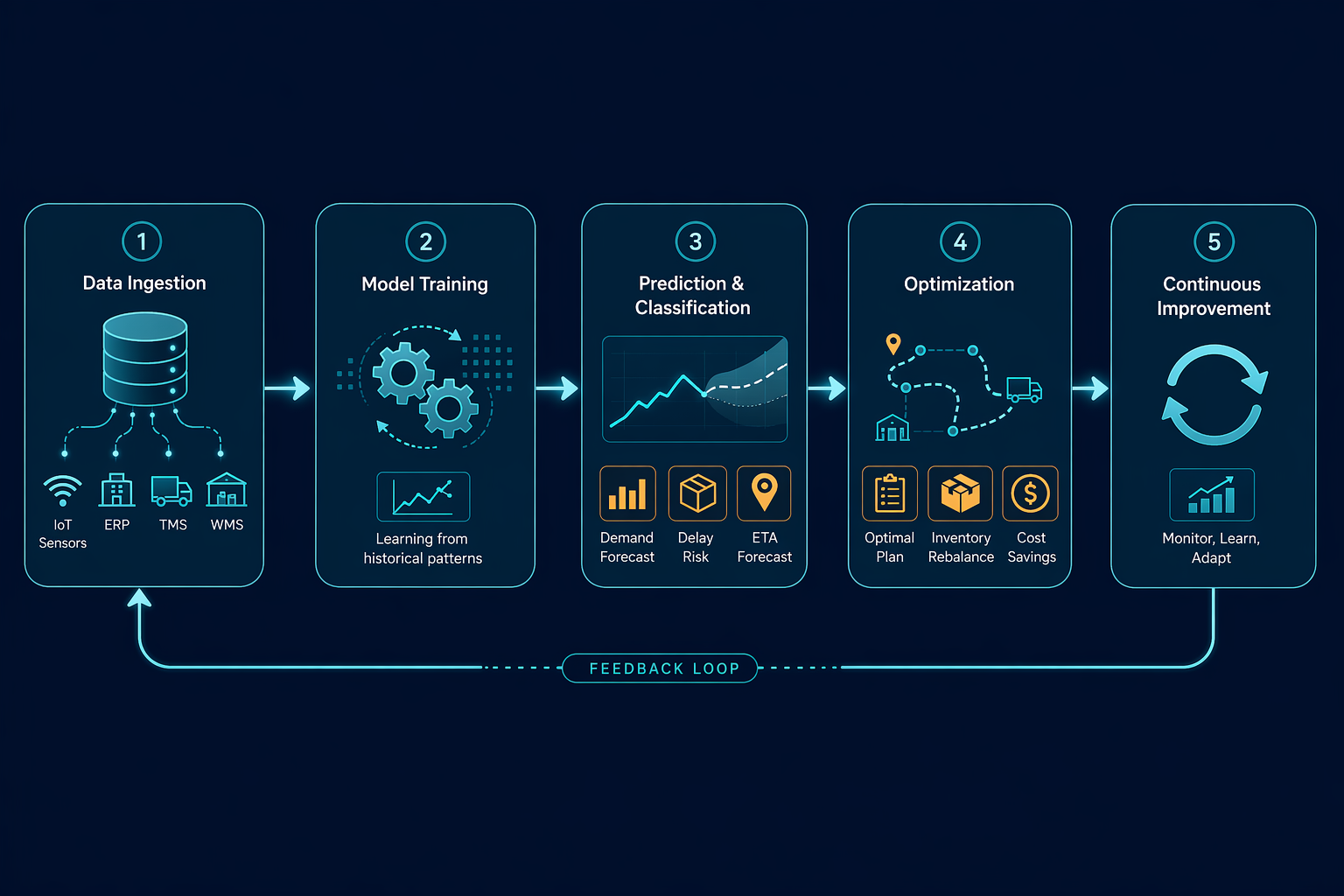
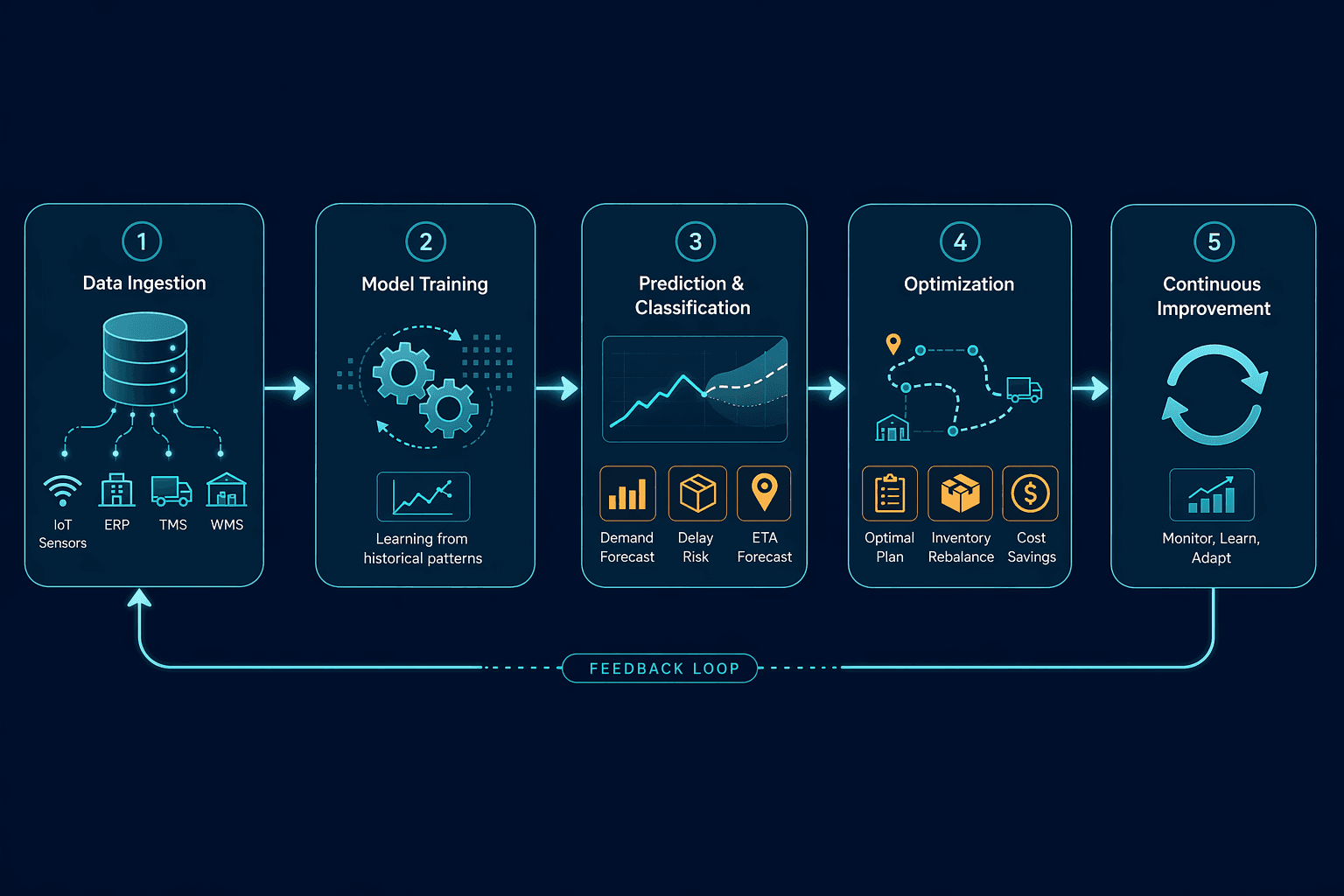
The operational ML pipeline in a supply chain context follows five sequential stages, each with distinct data requirements and technical considerations. Understanding this pipeline helps practitioners diagnose where their organization's data infrastructure supports ML deployment and where gaps exist.
Comments
Join the discussion with an anonymous comment.