
Why This Matters Now: The Urgency Gap
The gap between AI adoption intent and workforce readiness in supply chain has become the defining talent challenge of 2026. According to ABI Research data cited by Open Sky Group, 94% of supply chain companies plan to use AI or generative AI for decision support within two years. Yet Gartner reports that only 23% of supply chain organizations have a formal AI strategy in place. That 71-point gap between intent and strategy is not a planning problem — it is a skills problem.
The market is responding with a flood of educational offerings, but the signal-to-noise ratio is poor. Supply chain professionals and training buyers now face a fragmented landscape of university executive programs, professional body certifications, and self-paced platforms — each with different curriculum depth, instructor quality, and career-stage fit. Choosing poorly means wasting time and budget on generic AI content that does not translate to supply chain operations.
The financial stakes are concrete. SCOPE Recruiting reports that workers with AI skills in supply chain earn 25–30% more than peers in identical roles, and AI-related supply chain job postings grew 86% from December 2022 to December 2024. At the organizational level, McKinsey found that companies effectively using AI in supply chain reported a 15% improvement in logistics efficiency and a 35% reduction in inventory-related costs — but those gains were concentrated in organizations that made parallel workforce training investments.
This article provides a structured decision framework for evaluating AI in supply chain courses across all three tiers. It is designed for supply chain managers, directors, and VPs — and for organizational training buyers — who need to match program type to career stage, technical baseline, budget, and expected ROI. For readers who want a narrower certification-only comparison, ChainSignal's existing article on top AI in supply chain certifications covers that segment in detail. This piece takes the broader view.
The Course Landscape: Three Tiers of AI in Supply Chain Education
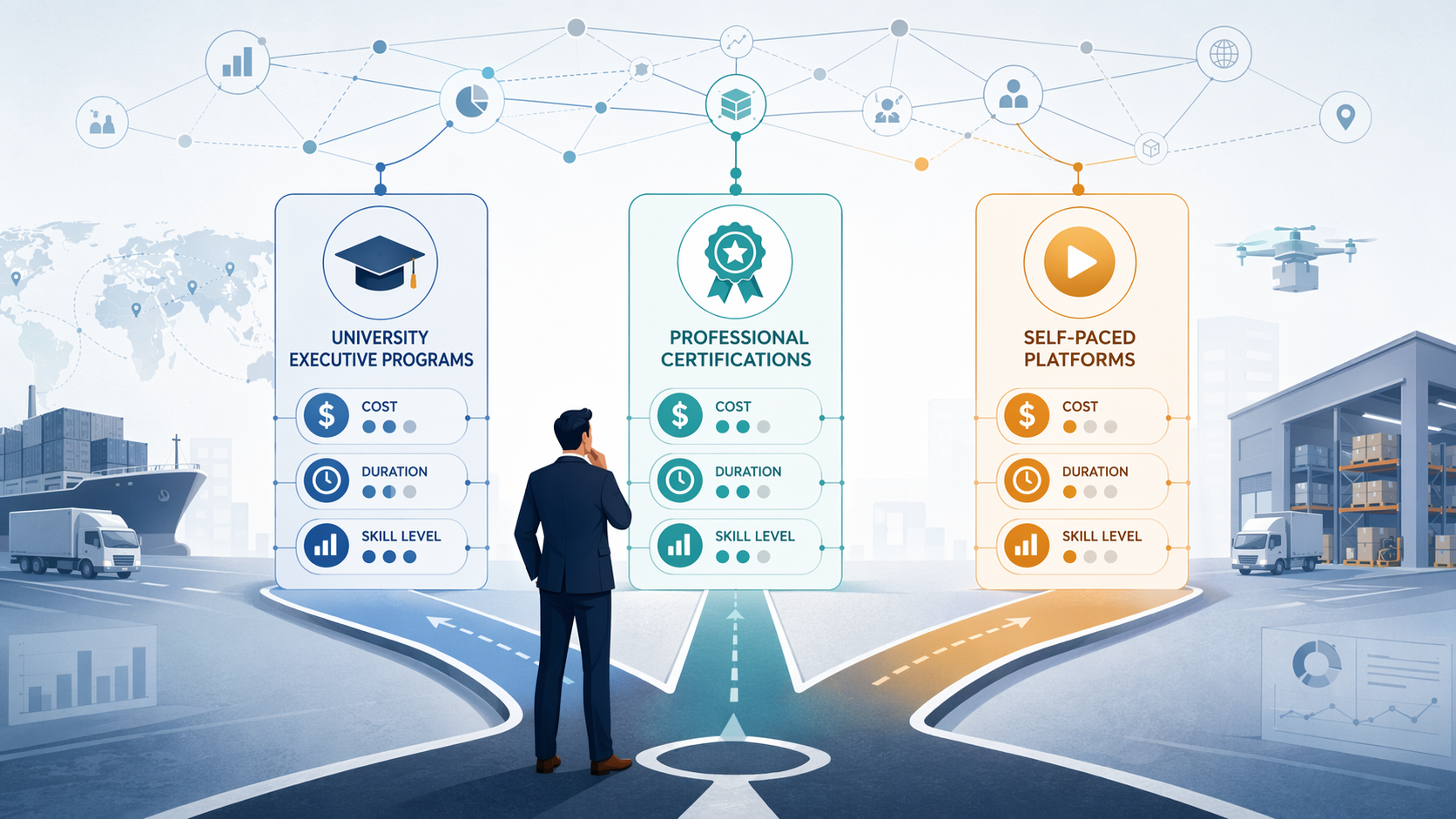
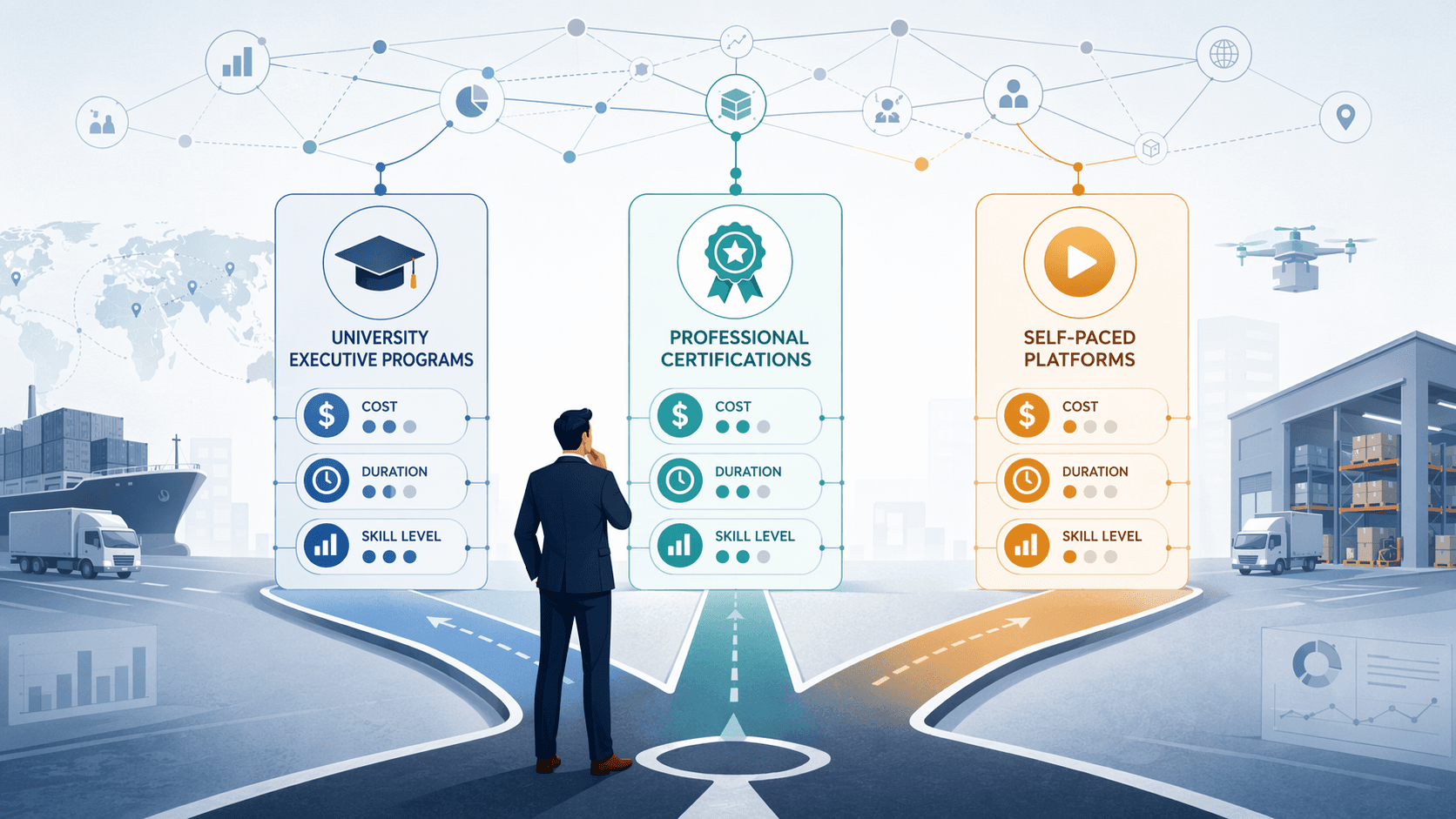
The market for AI in supply chain education has matured into three distinct tiers, each with different delivery models, price points, and target audiences. Understanding the structural differences between these tiers is the first step in any selection process.
| Tier | Provider Examples | Format | Duration | Cost Range | Target Audience |
|---|---|---|---|---|---|
| University Executive Programs | MIT xPRO, Georgia Tech, Wharton, INSEAD, Michigan Ross | Online (self-paced + live sessions) or in-person intensive | 3 days to 12 months | $1,500 – $15,000+ | Senior leaders, directors, VPs seeking strategic frameworks and credentials |
| Professional Certifications | ASCM, CSCMP/LinkedIn, ISCEA, GSDC | Self-paced online with exam | 5 hours to 6 months | $0 – $695 | Mid-career practitioners needing applied, role-specific skills |
| Self-Paced Platforms | Coursera, LinkedIn Learning, Udemy, ELVTR | On-demand video or live online cohort | 3 weeks to 7 weeks | $0 – $1,500 | Entry-level explorers, career switchers, just-in-time learners |
Comments
Join the discussion with an anonymous comment.