
The fastest way to make AI yard management useful is to ask where the delay is physically happening. Is the truck still at the gate? Is the trailer somewhere in the yard but not where the system says it is? Or is the dock schedule clean on paper while door availability, labor, and trailer readiness disagree on the ground?
Those are not three versions of the same problem. They are three operating zones with different inputs, different failure modes, and different ROI math. Gate AI works on identification and check-in. Yard AI works on asset location, movement, audits, and congestion. Dock AI works on appointment logic and door assignment. A buyer who evaluates them as one bundled promise will miss the part that matters: what the model sees or predicts, what work it changes, and what happens when it is wrong.
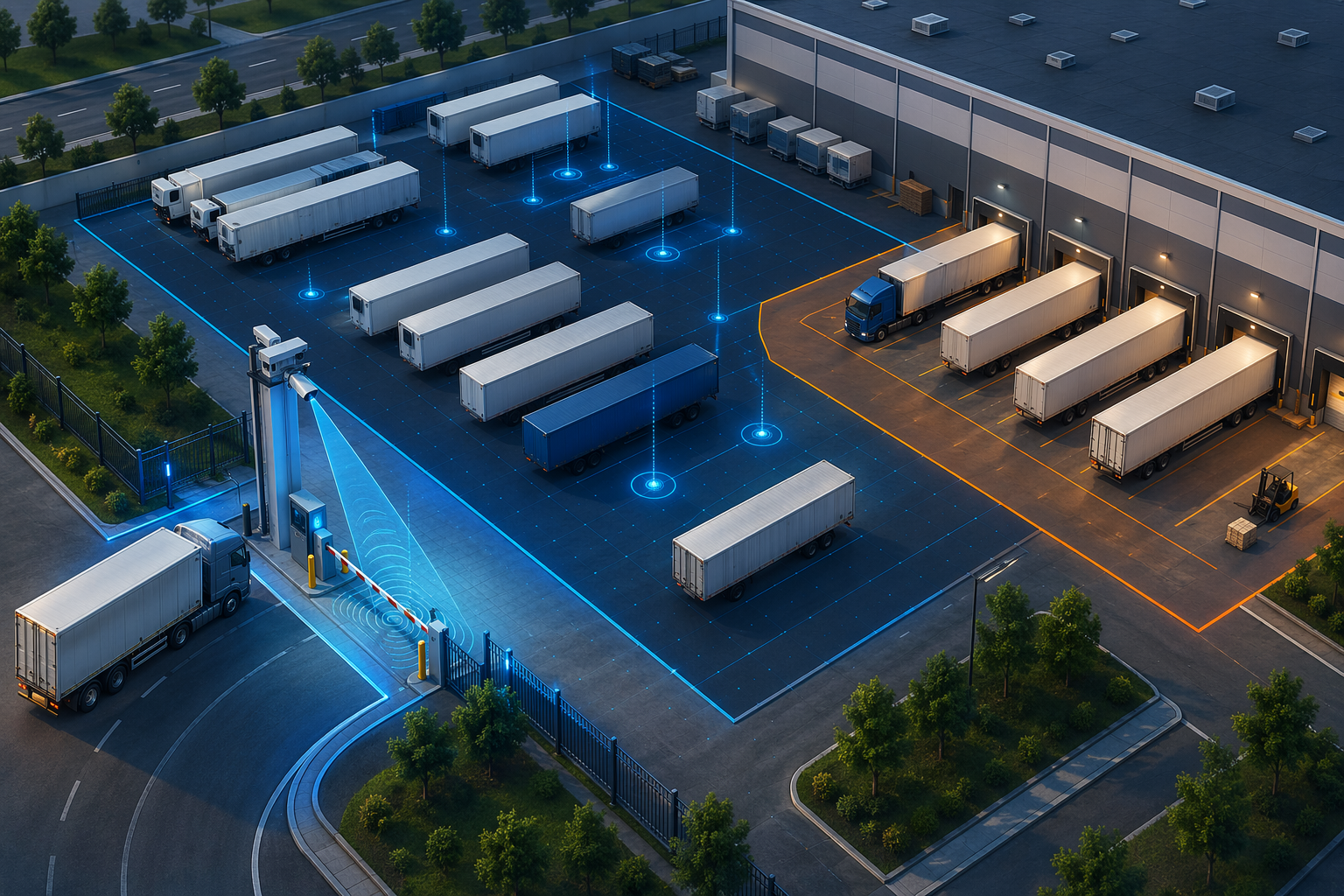
A practical map of AI yard management system use cases
| Physical zone | Primary AI method | Operational work changed | Outcome to track separately |
|---|---|---|---|
| Gate | Computer vision and OCR | Trailer, tractor, container, appointment, and driver identification | Check-in time, data-entry errors, exception rate, queue length |
| Yard | Multi-camera tracking, object recognition, predictive analytics | Trailer location, yard moves, audits, congestion alerts, search reduction | Search time, yard labor, audit time, dwell, jockey moves, wait time |
| Dock | Constraint-satisfaction algorithms and scheduling optimization | Door assignment, appointment sequencing, dispatcher workload | Dock utilization, manual scheduling time, detention exposure, on-time loading |
The three-zone model is a simplification. Some yards are compact enough that gate, yard, and dock decisions blur together, and some vendor platforms span all three zones. Still, the model is useful because the yard is not an abstract handoff between TMS and WMS. It is pavement, weather, lighting, missing placards, drivers waiting for instructions, and supervisors trying to keep detention from becoming the morning’s budget story.
For broader context on how yard projects compare with planning, procurement, warehouse, and transportation AI, see AI use cases in supply chain by function. Yard management usually earns attention when delay is already visible: gate lines, yard hunts, dock starvation, or detention charges that no department wants to own.
Gate AI: faster check-in only counts if exceptions are handled
At the gate, AI has a narrow job: identify what is arriving, match it to an appointment or expected shipment, and get the truck released into the yard without a clerk retyping the same bad or incomplete information. The main techniques are computer vision and OCR, usually reading trailer numbers, container IDs, tractor plates, carrier markings, or appointment-related identifiers from camera feeds.
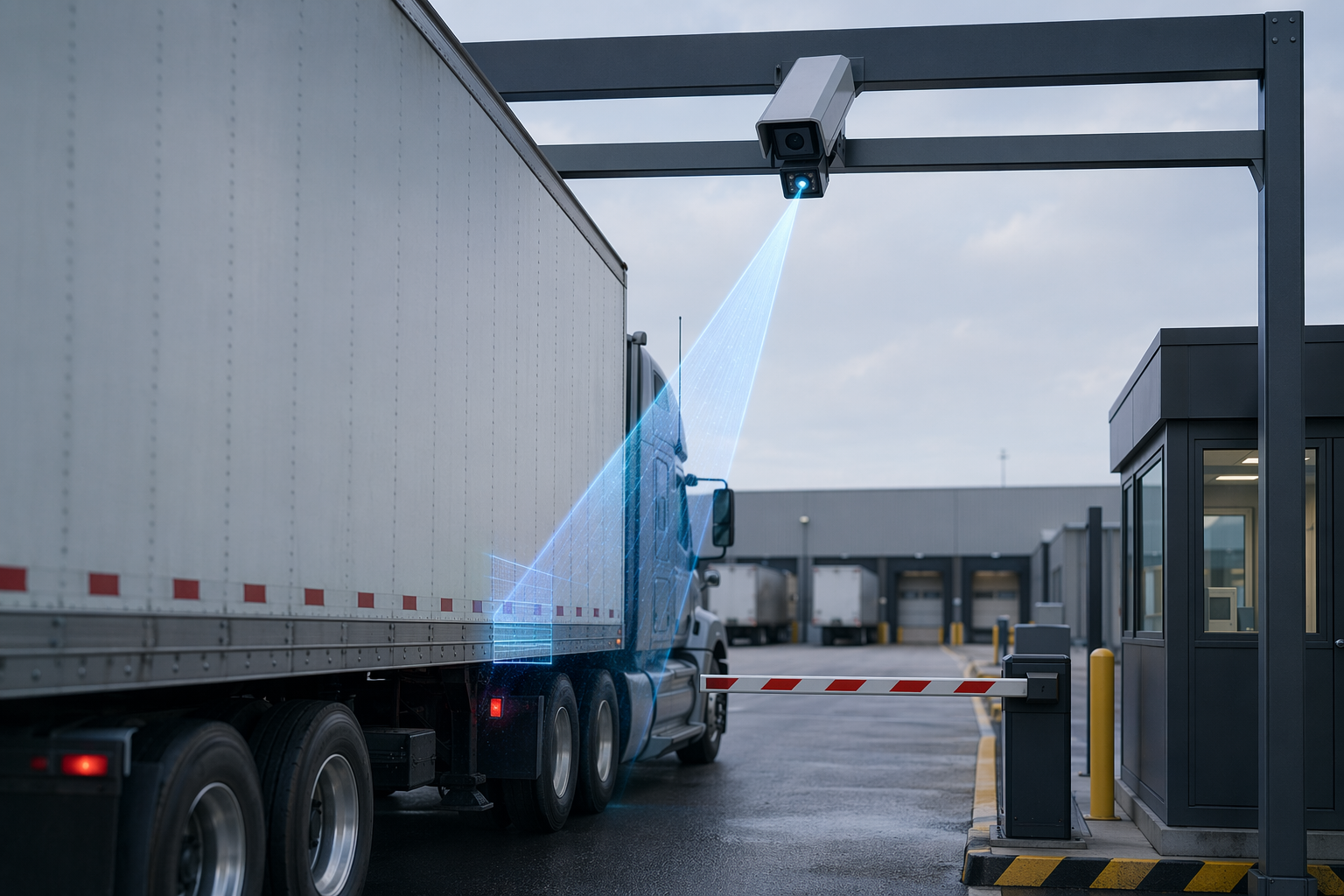
The attractive number is check-in speed. Terminal Industries says OCR and computer vision gate automation can reduce gate processing from more than 10 minutes to under 2 minutes, with accuracy reaching 99.5% under controlled conditions.[1] FourKites says AI-powered gate identification can cut gate processing errors by up to 75% by eliminating manual data-entry mistakes.[2]
Those two outcomes matter because a gate line is not just a line. It delays driver release, throws off appointment spacing, backs pressure onto guard staff, and pushes the first bad timestamp into every downstream system. If the trailer identity is wrong at entry, the yard jockey later searches for the wrong asset, the dock planner trusts a bad status, and the warehouse gets blamed for a delay that started before anyone touched a pallet.
The caveat is not a footnote; it is the operating condition. YardView points out that AI cameras can struggle with damaged, covered, or inconsistently placed trailer identifiers, which means fallback manual processes remain necessary.[3] Add rain, glare, snow, faded numbers, bad angles, and a driver who stops short of the camera’s preferred read zone, and the difference between controlled accuracy and Tuesday morning accuracy becomes real.
A gate use case is ready for serious evaluation when the vendor can explain the exception path as clearly as the happy path. Who gets the low-confidence read? Does the clerk see the image and suggested match in the same screen, or do they still switch systems? Can the gate proceed with a provisional status? Does the exception create a task for a supervisor, or does it sit as a note nobody sees until the trailer is already missing?
- Good gate metrics: average check-in time, queue length by hour, manual override rate, OCR confidence distribution, and corrected-identification rate.
- Weak gate metrics: generic accuracy claims without lighting, weather, camera placement, and trailer-condition assumptions.
- Useful pilot boundary: one entrance lane, a defined trailer population, known appointment data, and a measured manual fallback process.
The buying question is not whether the gate can be automated. It is whether automation removes enough typing, radio traffic, and rework while still giving gate staff a clean way to resolve unreadable or mismatched arrivals.
Yard AI: the labor case starts with finding the trailer
Inside the yard, the problem changes. The truck has arrived, but the asset still has to be found, staged, moved, audited, and made available to the dock at the right time. This is where AI starts to look less like a check-in tool and more like an operating layer: cameras, location data, object detection, movement history, and predictive congestion signals feeding the next decision.
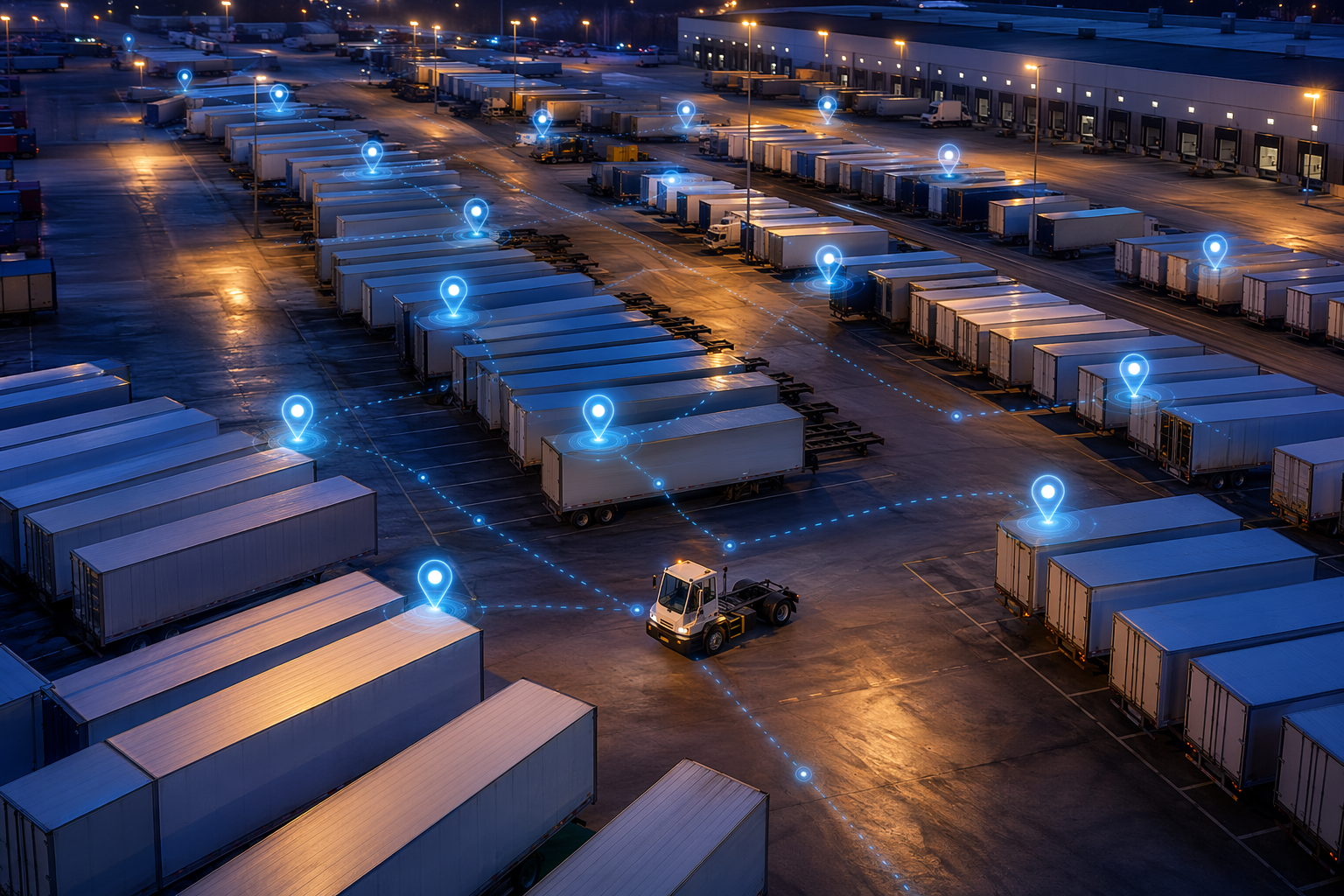
EAIGLE says multi-camera, multi-object tracking can reduce asset search time by up to 90%.[4] That is a meaningful claim because trailer search is one of the dumbest forms of labor waste in a distribution center. A jockey drives rows, calls dispatch, checks a location that was correct three moves ago, and then repeats the loop while a dock door waits or a load misses its sequence.
Automated audits are another practical yard use case. dtLabs says automated yard audits can eliminate 3–4 manual audits per day.[5] The value is not only the time saved walking or driving the yard. It is the confidence that the system location is recent enough to act on. A yard board that is mostly right still creates expensive hesitation when the next move depends on the one trailer that may not be where the screen says it is.
Predictive congestion management sits one step higher. Instead of merely reporting where trailers are, it looks for patterns that suggest future blockage: too many arrivals stacking into the same zone, jockey moves clustering around a few lanes, door demand exceeding practical staging space, or dwell times creeping beyond plan. dtLabs attributes up to a 12.5% warehouse capacity lift to reduced wait times from predictive congestion management, though the underlying studies are not named, so that figure is better treated as directional than universal.[5]
The stronger yard evidence is a named operating result. FourKites reports that a global food manufacturer using AI-driven yard orchestration improved on-time delivery by 26% while reducing yard labor by 30%.[2] That combination is worth attention because it ties service and labor together. The operation did not just add visibility; it changed how work was sequenced and reduced the labor required to keep trailers moving.
A credible yard AI deployment usually has more than one input. Cameras can see assets, but they need coverage. GPS or telematics can help, but not every trailer is instrumented. Manual move confirmations can fill gaps, but only if people trust the workflow enough to use it. The best yard pilots define the zone where the model is expected to be reliable, then measure what still has to be corrected by a person.
| Yard use case | What AI changes | What can go wrong | Metric worth tracking |
|---|---|---|---|
| Trailer location | Detects or infers where assets are parked | Blind spots, blocked views, unreadable identifiers | Search time and location correction rate |
| Yard move optimization | Prioritizes moves based on dock demand and trailer readiness | Bad upstream status or ignored human constraints | Moves per load and late dock arrivals |
| Automated audits | Compares observed assets with system records | Camera coverage gaps or stale observations | Manual audits avoided and discrepancy closure time |
| Congestion prediction | Flags likely bottlenecks before queues form | Model overreacts to normal surges or misses abnormal events | Wait time, dwell, and blocked-door incidents |
This is also the zone where implementation readiness matters most. If yard jockeys keep their own paper notes because the system is slow, if supervisors override moves outside the workflow, or if the yard has dead connectivity areas, the AI layer will learn from a partial version of the truth. For a deeper look at why execution gaps derail warehouse and yard-adjacent AI projects, see why warehouse AI deployments fail.
Dock AI: better scheduling depends on better upstream truth
At the dock, AI is less about seeing objects and more about resolving constraints. A door may be technically open but operationally blocked. Labor may be available in one area and short in another. A live unload may need different treatment from a drop trailer. Product temperature, load priority, carrier appointment windows, equipment type, and warehouse readiness all shape the correct door assignment.
Terminal Industries says constraint-satisfaction algorithms for dynamic dock assignment can improve dock utilization by 30–40% compared with static first-come-first-served scheduling.[6] Peripass says appointment scheduling optimization can reduce manual scheduling work by up to 50%, freeing dispatchers for higher-value tasks.[7]
Those numbers are plausible in yards where dispatchers are constantly repairing the schedule by phone, email, spreadsheet, and radio. Static scheduling breaks when arrivals bunch, loads are not ready, a door is blocked by a late departure, or a trailer that was supposed to be staged cannot be found. Dynamic dock assignment can improve the situation only if it receives reliable arrival status from the gate and reliable asset location from the yard.
That dependency is why dock AI should not be evaluated in isolation. A scheduling algorithm can assign the right trailer to the right door mathematically and still fail operationally if the trailer is on the wrong side of the yard, the jockey cannot reach it, or the system says it arrived when it is still outside the gate. Dock optimization is powerful, but it is the least forgiving of bad upstream data.
- Useful dock inputs: confirmed arrival time, trailer location, load status, door constraints, labor availability, appointment priority, and equipment requirements.
- Useful dock outputs: recommended door assignment, appointment resequencing, dispatcher alerts, and exception tasks.
- Useful dock controls: human override reasons, constraint weights, blocked-door flags, and audit trails for schedule changes.
For readers comparing dock-side AI with warehouse execution systems, AI WMS vendor comparison is a useful companion because dock decisions often expose the seam between YMS and WMS.
Where the ROI compounds
The strongest case for AI yard management is not that every zone has a separate improvement claim. It is that each zone improves the next one when the data is trusted. Gate AI improves identity and arrival timestamps. Yard AI improves asset location and congestion visibility. Dock AI improves assignment and appointment decisions. The workflow gets tighter because fewer people are repairing stale information.
FourKites estimates that unmanaged yard operations cost the average distribution center $200,000–$400,000 annually in excess labor, detention charges, and missed delivery windows.[2] That range is useful as a directional business-case prompt, not a precise benchmark for every site, because the published material does not provide a methodology or sample size.
Adoption context should be handled with the same care. FourKites reported that only 21% of companies had adopted any YMS in 2020/2021 data.[8] That figure may not represent the 2026 market, especially given reported YMS market growth since then, but it does explain why many operations teams are still moving from spreadsheet-and-radio processes directly into AI-enabled yard tools rather than upgrading from mature legacy YMS environments.
Payback claims also need zone-level scrutiny. The research set points to typical payback periods of 6–12 months for a full AI YMS and 6–9 months for automated gate systems alone, but those ranges depend heavily on baseline detention, labor cost, volume, appointment variability, and how much manual work the system actually removes.[7][8] A high-volume grocery DC with recurring gate queues and trailer hunts has a different ROI profile from a smaller site with predictable drops and plenty of yard space.
This is where comparisons outside the yard help. A project may be attractive and still compete for capital with demand planning, transportation procurement, labor planning, or warehouse slotting AI. For cross-functional ROI benchmarks, see supply chain AI use case ROI and the AI ROI playbook for transportation and logistics.
How to evaluate vendors without buying a slogan
A vendor demo can make a yard look like a clean digital map. The real evaluation should be more specific. Ask what physical zone the use case covers, what sensor or system input it depends on, what operational decision changes, and what exception process keeps people from working around the software when the model is uncertain.
| Question | Why it matters |
|---|---|
| Where does the model see, read, predict, or schedule? | Prevents a broad AI claim from hiding a narrow capability. |
| What happens when the confidence score is low? | Shows whether clerks, dispatchers, and supervisors get a usable fallback. |
| Which metric changes within 30, 60, or 90 days? | Separates measurable workflow improvement from transformation language. |
| What data must already be clean? | Reveals whether the system depends on appointment, carrier, WMS, or TMS data quality the site does not yet have. |
| Who can override the recommendation, and is the reason captured? | Keeps human judgment in the loop while improving the model and the process. |
The same discipline applies to case evidence. A named company result with a defined operational change is stronger than an anonymous percentage. A controlled-condition accuracy claim is not useless, but it should trigger a site test under local lighting, weather, traffic mix, and trailer condition. A payback period is not a guarantee; it is a hypothesis to be tested against current detention, labor, dwell, and throughput baselines.
Readers who want broader named-company logistics examples can compare the yard-specific evidence here with AI logistics deployments with measurable results. For a more cautionary lens on why some logistics AI projects fail to deliver, see AI in logistics adoption gaps.
AI yard management is credible when it is bought by zone and measured by work changed: trucks processed faster at the gate, assets found without search loops in the yard, and dock assignments updated before congestion turns into detention. It is risky when it is bought as a single visibility promise without asking where the model sees, predicts, schedules, and hands the work back to people when the yard refuses to behave like the demo.
References
- The Future of Logistics: Why Every Warehouse Needs an AI-Powered Yard Management System, Terminal Industries.
- Yard Management Systems: Your Key to Supply Chain Savings, FourKites.
- Is Artificial Intelligence (AI) the Future of Yard Management?, YardView.
- The Future of Yard Management: How AI is Changing the Game, EAIGLE.
- How AI Is Revolutionizing Logistics and Yard Management, dtLabs.
- Yard Dock Management: Boost Efficiency with AI and YMS Solutions, Terminal Industries.
- Why invest in Yard Management Software?, Peripass.
- Beyond the ROI: Why It's Time to Adopt a Yard Management System Now, FourKites.
Comments
Join the discussion with an anonymous comment.