
A wind project schedule rarely fails in one clean place. The permit does not arrive, so the turbine supply agreement becomes harder to lock. A manufacturing slot that looked reasonable on a slide starts competing with other projects. Financing parties ask whether the commercial operation date still holds. Installation vessels, cranes, grid-connection work, and specialist crews all sit behind a milestone that was treated as administrative until it was not.
That is the supply chain relevance of AI wildlife monitoring at wind farms. The technology is usually described as bird protection or compliance tooling. It is both. But for developers and procurement teams, its sharper use is earlier: turning bird and bat uncertainty into site-specific evidence before approval, procurement, and construction commitments harden.

The Biodiversity Data Gap Becomes a Procurement Problem
Bird and bat studies are often filed mentally under environmental review, separate from turbine sourcing or construction logistics. In practice, the separation breaks down quickly. If a regulator or lender does not trust the biodiversity baseline, the project team may need another survey window, another mitigation proposal, another consultation round, or a revised operating plan. None of those steps waits politely outside the procurement calendar.
Spoor frames the problem directly for offshore wind permitting: pre-construction monitoring can turn biodiversity data into a faster path for approvals because it gives developers a stronger evidence base before decisions are locked in.[1] That claim should not be read as a universal promise that every AI survey shortens every permit. It is better understood as a practical dependency: when avian risk is a known permitting bottleneck, poor data leaves the schedule exposed.
The cascade is not theoretical in the way project teams experience it. A delayed permit can push turbine notice-to-proceed dates. Delayed notice can weaken a developer’s position in manufacturer capacity planning. The manufacturer may protect its own production sequence rather than hold an uncertain slot. Financing teams then price or condition around timing risk, while construction managers try to preserve vessel and crew availability without knowing whether the site will actually be ready.
AI wildlife monitoring does not manufacture blades faster. It does not create port capacity or fix interconnection queues. Its role is narrower and still useful: it can reduce one avoidable source of schedule ambiguity by producing continuous, reviewable wildlife evidence earlier and at operational scale.
What AI Monitoring Adds Before Construction
The pre-construction stage is where wildlife monitoring has the most leverage over supply chain planning. By the time turbines are being installed, the procurement team has already made expensive commitments. Earlier monitoring gives the project a chance to understand species presence, flight height, movement patterns, and seasonal variation while there is still room to adjust layout, mitigation, operating assumptions, and permit materials.
For offshore wind, the more interesting development is not simply that cameras can identify birds. It is that monitoring can be attached to campaigns the project already needs. Fugro and Spoor announced a buoy-mounted AI bird monitoring solution for offshore wind farms that can be deployed with metocean measurement campaigns, capturing more than 4,500 hours of daytime monitoring annually and producing species-level and flight-height data.[2] That matters because metocean buoys are already part of many early offshore development programs; adding avian monitoring there can turn a measurement campaign into a permitting asset.
| Planning Question | Traditional Weak Point | AI Monitoring Contribution |
|---|---|---|
| Can the site support approval with defensible bird data? | Short survey windows and fragmented observations can leave seasonal gaps. | Continuous camera or sensor records build a larger evidence base across defined periods. |
| Can procurement milestones be treated as firm? | Permit uncertainty makes turbine and installation commitments harder to sequence. | Earlier wildlife evidence reduces one cause of late review questions. |
| Can mitigation be designed without excessive curtailment? | Static assumptions may over- or under-estimate collision risk. | Species, flight-height, and movement data can support more targeted mitigation. |
| Can the operating plan survive regulator review? | Vendor claims alone may not be enough. | Validated field data and accepted detection methods make the record easier to defend. |
This is also where the distinction between adoption and effectiveness matters. Installing cameras is adoption. Producing a dataset that a permitting authority, lender, or independent reviewer can use is effectiveness. The second standard is the one that belongs in a supply chain risk review.
Operational Mitigation Has Stronger Evidence Than Most Claims
The strongest field evidence for AI wildlife monitoring comes from operational curtailment, especially the IdentiFlight work at the Top of the World wind project in Wyoming. An independent study published in the Journal of Applied Ecology found that automated curtailment reduced eagle fatalities by 82% to 85% at that site.[3] IdentiFlight reports that the targeted curtailment associated with this type of system resulted in less than 1% power generation loss.[4]
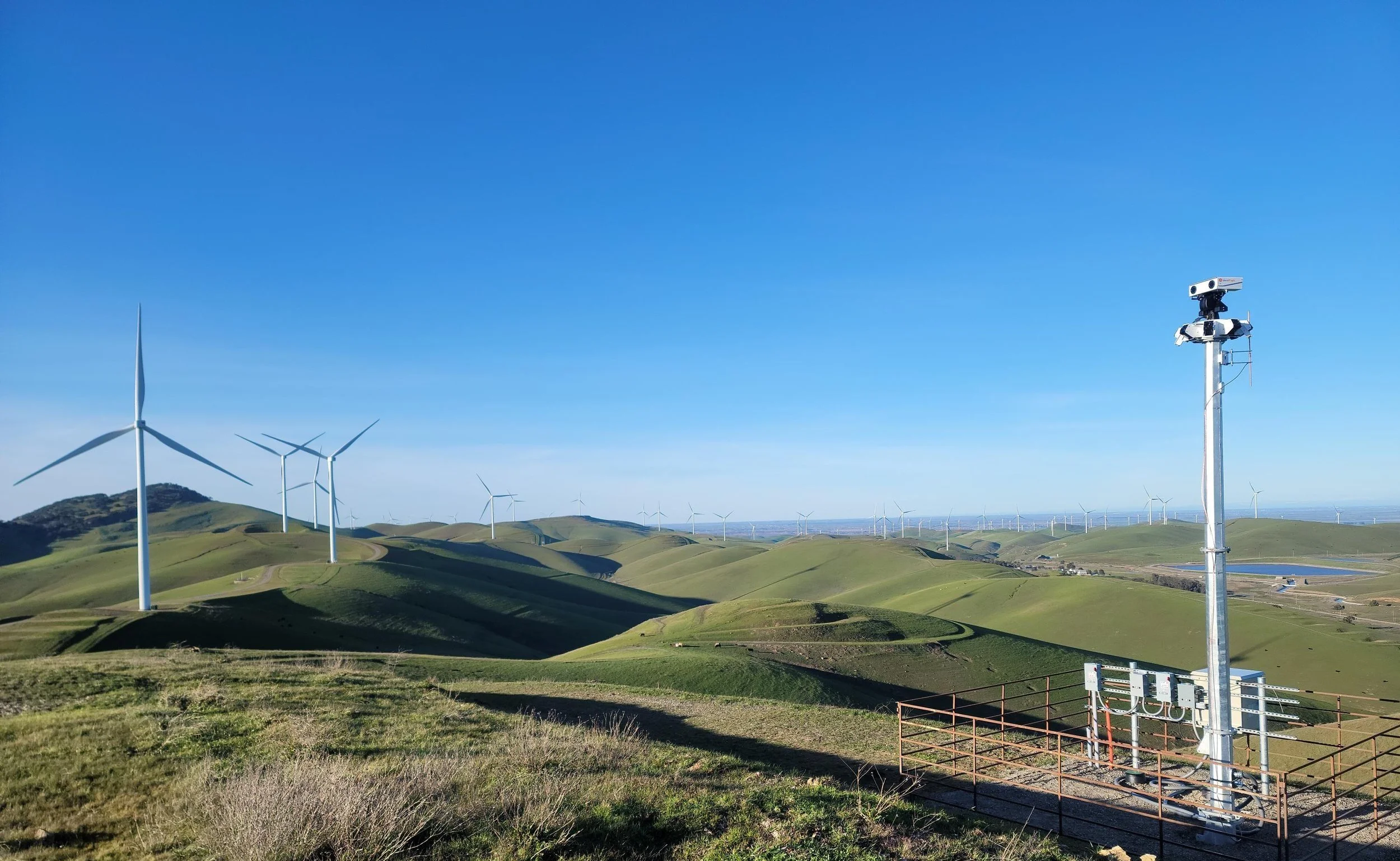
That pairing is important. A wildlife system that only protects birds by broadly stopping turbines can create a new operating problem. A system that materially reduces fatalities while keeping generation losses below 1% at a studied site gives planners something more useful: evidence that mitigation can be targeted rather than blunt.[3][4]
The Wyoming result should stay in its lane. It is not proof that every wind farm will see the same fatality reduction, the same power-loss profile, or the same regulator response. Species, terrain, turbine layout, migration routes, visibility, and local permit conditions matter. But it is still a meaningful proof point because it joins ecological outcome and operational continuity in the same evidence base.
IdentiFlight’s vendor-published performance figures describe a system with more than 520 installed stations across six continents, more than 20 million birds detected, a 96% detection rate up to 1 kilometer, less than 2 seconds from classification to curtailment decision, 98% species-identification accuracy, and less than 1% false-negative rate for protected species.[4] Those numbers are useful for shortlisting, but they should be treated differently from the independent Wyoming fatality result. One is vendor performance disclosure. The other is independently published site evidence.
The Offshore Case: Monitoring as a Data Campaign
Offshore wind makes the monitoring problem more expensive and less forgiving. Vessel-based and aircraft-based surveys can be fragmented by weather, cost, and access. A buoy-mounted or fixed camera system does not eliminate the need for ecological interpretation, but it can keep collecting observations while the development team is still shaping the project.
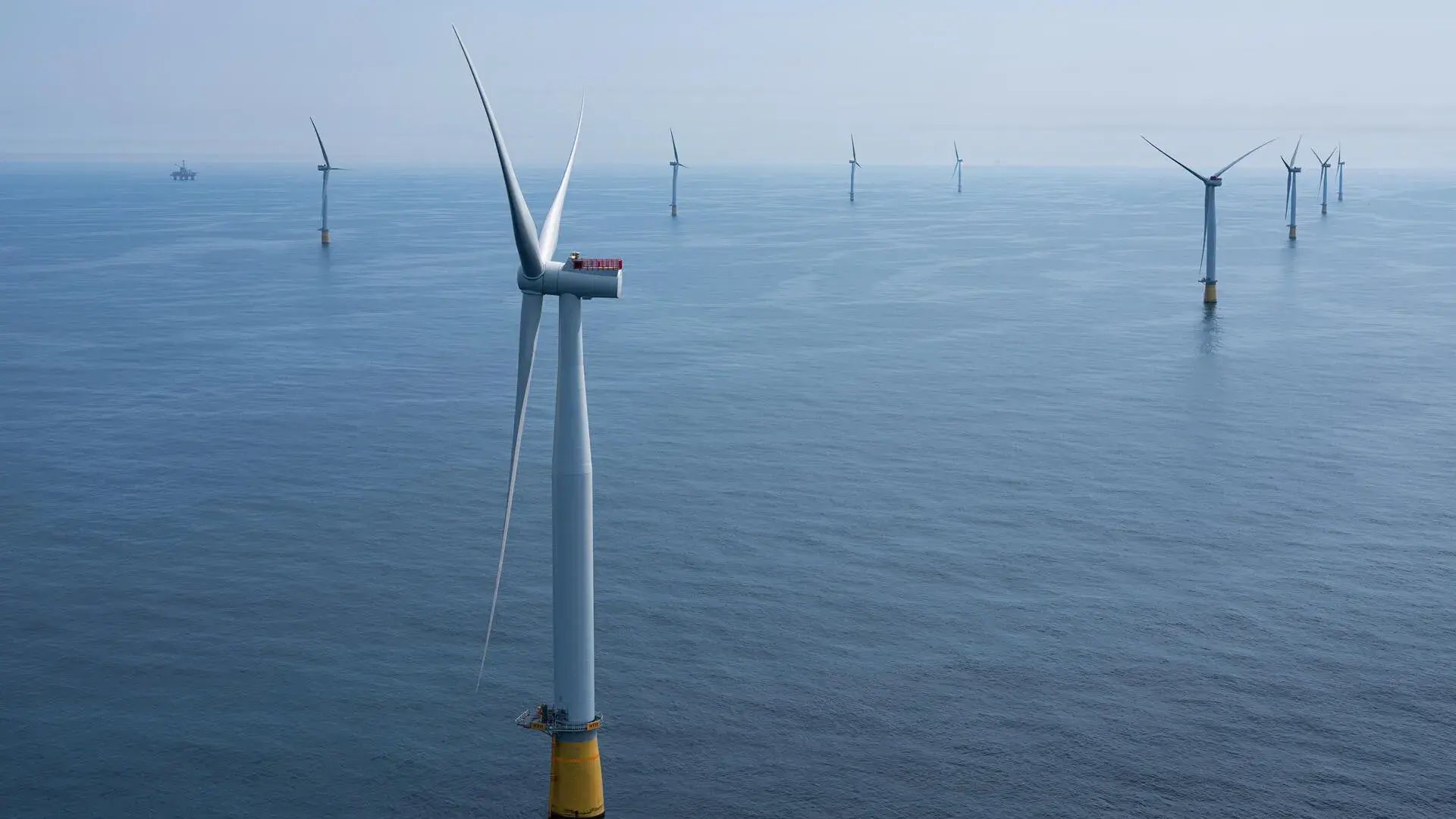
At Equinor’s Hywind Tampen floating wind farm, Spoor’s pilot detected 55,868 birds from 4,880 hours of video across four cameras during a June to October 2023 season.[5] Spoor says its AI has been trained on more than 1 million bird images and reports more than 95% detection accuracy.[6] Again, the planning value is not the generic phrase “AI sees birds.” The planning value is that a defined monitoring deployment produced a large, time-bounded dataset that can be reviewed, questioned, and compared against site assumptions.
For a procurement lead, that kind of dataset changes the conversation. Instead of asking whether avian risk has been “handled,” the project can ask what was detected, during which months, at what flight heights, and under which operating or weather conditions. That is the level at which environmental evidence starts to become schedule evidence.
Regulatory Acceptance Is the Gate Between Sensor Data and Schedule Value
A wildlife monitoring system has limited supply chain value if its output cannot survive regulatory review. This is why regulatory recognition deserves more attention than a clean dashboard screenshot. The 2024 U.S. Fish and Wildlife Service Eagle Permit Rule explicitly names automated detection technology, including IdentiFlight, as a mitigation measure.[4] IdentiFlight also states that it is the first system listed under Germany’s Federal Nature Conservation Act framework, while reporting formal certification signals in Germany and France.[4][7]
Those signals do not mean a permit is automatic. They mean the method is less likely to be dismissed at the threshold. For supply chain planning, that distinction matters. A system with local regulatory acceptance can be built into the permitting strategy earlier; a system that only has attractive vendor accuracy claims may still leave the project exposed to late-stage challenge.
Lenders can add a parallel pressure. IFC Performance Standard 6 requires biodiversity conservation and sustainable management of living natural resources in financed projects, while the EBRD’s 2024 Environmental and Social Policy sets environmental and social requirements for projects it supports.[8][9] Where project finance depends on measurable biodiversity management, monitoring quality becomes part of bankability rather than an afterthought.
Compliance Risk Is Real, but It Is Not the Whole Story
Fines and prosecutions explain why wildlife monitoring reaches executive attention, but they should not dominate the planning case. Duke Energy was fined $1 million, and PacifiCorp was fined $2.5 million, for protected bird deaths at wind farms.[7][10] A French dBird case study from STMicroelectronics and ALTEN cites potential fines of €3,000 per day for non-compliance and states that about 56,000 birds are killed by wind turbines annually in France.[11]
Those figures establish material risk. They do not, by themselves, prove that AI monitoring reduces turbine lead times or lowers supply chain costs. The more defensible argument is operational: enforcement exposure, weak ecological baselines, and unaccepted mitigation plans can all keep a project from moving cleanly through approval and into procurement execution.
How to Evaluate Vendors Without Turning Accuracy Claims Into a Permit Strategy
A vendor shortlist should start with the project’s regulatory and species problem, not with the largest quoted model metric. The same system that is useful for eagle curtailment onshore may not answer the questions raised by offshore seabird flight height. A monitoring network that produces strong detection counts may still need independent validation before it can support a permit condition.
- Match the system to the decision: baseline survey, permit evidence, operational curtailment, post-construction monitoring, or lender reporting.
- Separate independent field outcomes from vendor-published detection, classification, and latency metrics.
- Ask whether local regulators have accepted the method for the species and geography in question.
- Check whether the dataset includes species, time, flight height, weather or operating context, and audit trails.
- Confirm how false negatives are handled for protected species, because missed detections carry more consequence than nuisance alerts.
- Require an integration plan for curtailment commands, turbine controls, data storage, and permit reporting before procurement milestones depend on the system.
Some adjacent vendor evidence points to broader operating value. Cognite reports a 21% reduction in operational expenses for wind farm operators using computer vision and acoustic monitoring.[12] That is relevant to the category, but it should not be overextended into a claim about wildlife permitting unless the project can trace the same mechanism in its own case.
The same discipline applies across environmental AI use cases. In AI wildfire smoke forecasting for supply chain resilience, the value comes from converting environmental signals into earlier logistics decisions. Wildlife monitoring earns its place in the same category only when the data changes permitting confidence, mitigation design, or operating decisions.
Where the Supply Chain Value Is Strongest
The clearest use case is a project with known bird or bat sensitivity, meaningful permit uncertainty, and procurement milestones that cannot tolerate late redesign. In that setting, early AI monitoring can support a stronger permit record, give lenders and regulators more concrete evidence, and reduce the chance that biodiversity questions emerge after turbine and installation commitments are already exposed.
The weaker use case is a project treating AI monitoring as a badge. If the system is deployed late, if its data is not tied to permit questions, if local regulators have not accepted the method, or if the buyer treats headline accuracy as a substitute for validation, the supply chain benefit becomes speculative.
For wind developers and procurement teams, early AI biodiversity monitoring is a credible de-risking layer when it produces regulator-ready, site-specific evidence. Its supply chain value is strongest where permitting uncertainty is a known bottleneck, and weakest where buyers treat vendor accuracy claims as a replacement for validated field data and local regulatory acceptance.
References
- Bird monitoring helps windfarm permitting, Spoor.
- Fugro and Spoor create new AI bird monitoring solution for offshore wind farms, Fugro, 2025.
- Automated curtailment of wind turbines reduces eagle fatalities, Journal of Applied Ecology.
- Performance, IdentiFlight.
- Avian Intelligence: AI-Driven Bird Monitoring Reduces Wind Turbine Collision Risk, Journal of Petroleum Technology.
- Spoor, Spoor.
- Can AI Help Wind Turbines and Birds Coexist?, The Revelator.
- Performance Standard 6: Biodiversity Conservation and Sustainable Management of Living Natural Resources, International Finance Corporation.
- Environmental and Social Policy, European Bank for Reconstruction and Development, 2024.
- How New Technology Is Making Wind Farms Safer for Birds, Audubon.
- How edge AI helps avoid bird collisions with wind turbines, STMicroelectronics.
- DataOps for wind energy: computer vision and acoustic data, Cognite.
Comments
Join the discussion with an anonymous comment.