
A warning that arrives 2.3 shifts before a tolerance breach is not a dashboard flourish. In this case, AI supply chain recall tracking meant trend analysis on consecutive inspection data — seam measurements, retort signals, CCP deviations, temperature logs, and related quality inputs — looking for drift before the line crossed a limit [1].
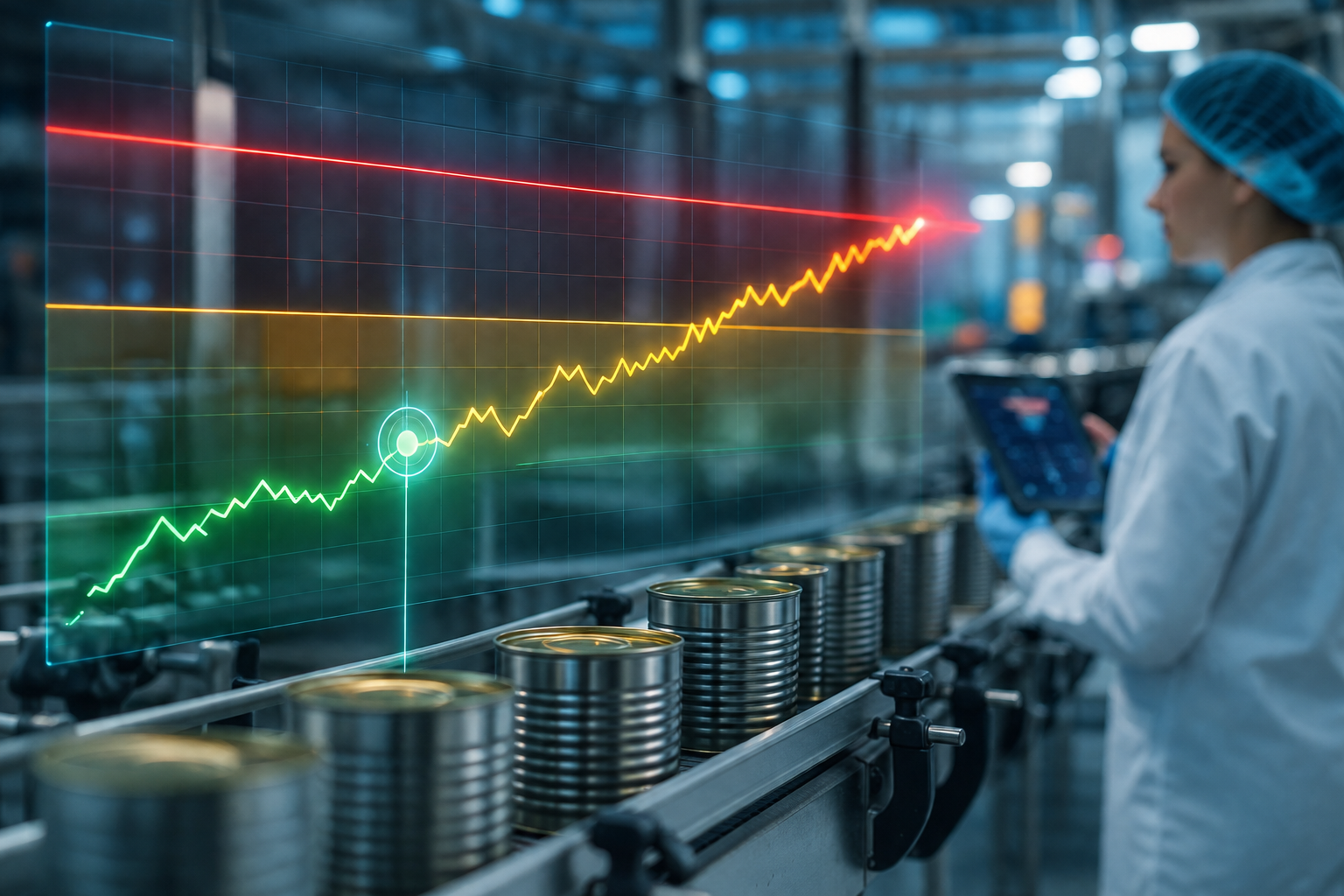
That shift in timing matters because threshold alerts usually arrive after the process is already too close to failure. Trend analysis changes the question from "has the limit been crossed?" to "is the process moving toward a breach fast enough that we can still act?" In a plant-floor setting, that can mean checking seam calibration, validating retort performance, reviewing a CCP deviation, or holding product before the problem becomes a recall event.
What The Canned Food Case Actually Shows
The strongest evidence here is a 2026 iFactory case study at a canned food manufacturer. It reports 12 potential recalls prevented, a 2.3-shift early warning on seam drift, 100% CCP documentation completeness, elimination of an 18% per-shift gap rate, and an 87% reduction in audit preparation time [1].
Those numbers are useful because they describe work that quality teams recognize. Seam drift is not an abstract anomaly; it is the kind of gradual equipment change that can push product outside tolerance if nobody sees the pattern early enough. CCP records matter because missing entries turn a manageable deviation into a compliance scramble. Audit prep time matters because the cost of a near miss is not only the product at risk, but the labor needed to prove what happened afterward.
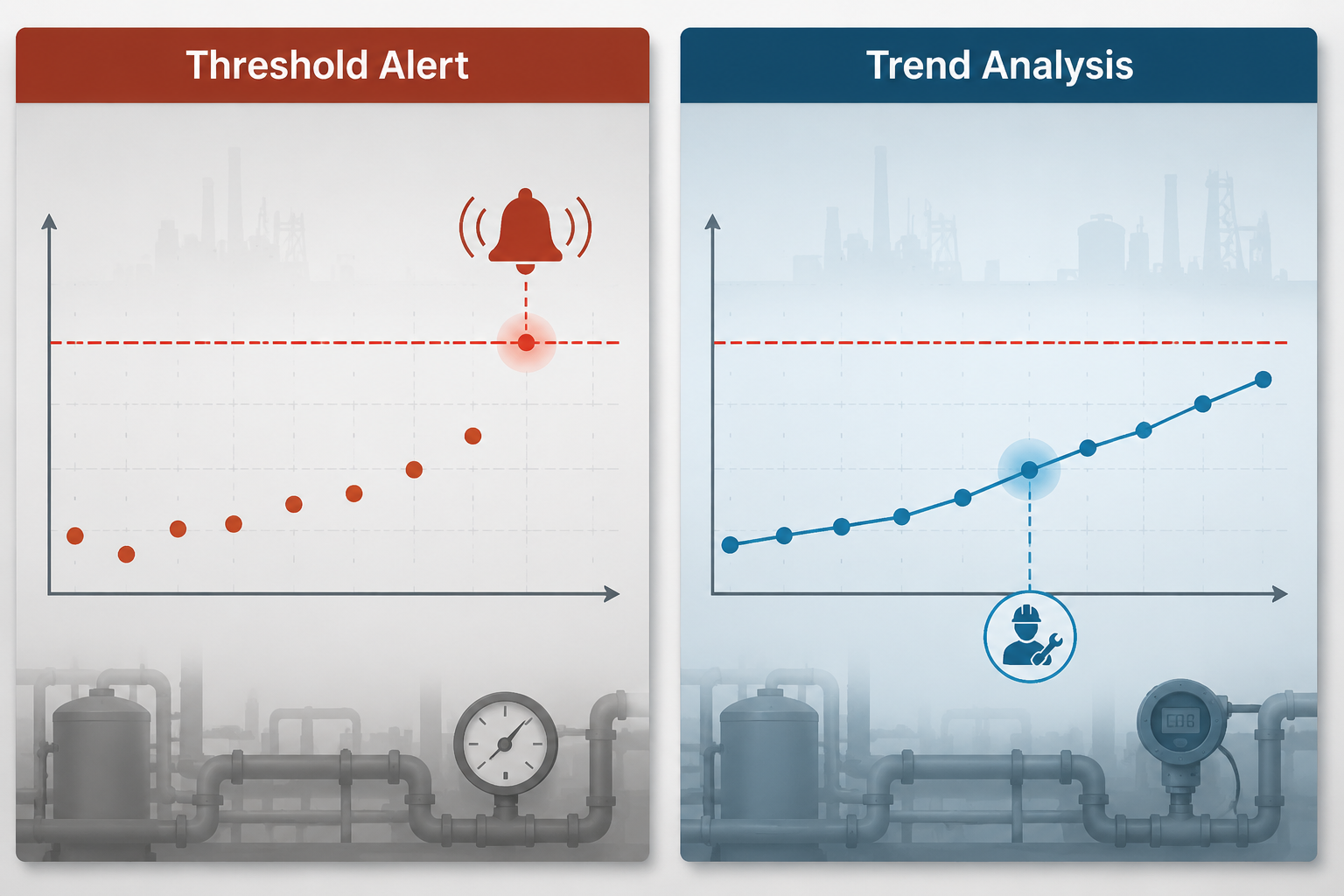
The mechanism is simple enough to inspect. Consecutive readings let the system see direction, not just level. A single inspection that is still in spec can look harmless; a run of readings sliding in the same direction tells a different story. That is why this use case is better described as drift detection than as generic prediction. The model is not guessing the future from nowhere. It is surfacing a pattern that line staff can verify against calibration history, process settings, and recent quality events.
Why The Stakes Stay High
Executives do not need much convincing that recalls are expensive, but the scale still helps explain why earlier warning matters. Lumafield cites a GMA study putting average direct food recall cost at $10 million, with total economic impact often running 3 to 5 times higher once business interruption and related losses are included [2]. Even if that figure is dated, it remains a useful reminder that the real bill extends beyond disposal and rework.
The exposure is not shrinking either. Sedgwick's Q1 2026 Recall Index recorded 785 US recall events and 492.31 million units recalled, with pharmaceutical units surging 2,400% [3]. That does not prove AI caused or prevented anything on its own. It does show why quality and compliance leaders keep looking for earlier signals: once recall volume accelerates, the cost of being late rises with it.
Where The Approach Holds, And Where It Can Break
This is not a plug-and-play guarantee. The use case depends on clean, consecutive inspection records, tolerances that are defined tightly enough to matter, and a workflow that routes the early warning to someone who can decide what to do next. If the data are patchy, the drift line is noisy, or the alert lands in a queue nobody owns, the model becomes another signal that arrives too late to change the outcome.
It also depends on how quality teams respond. An early warning is only useful if it triggers review before operational or compliance action: confirm the trend, inspect the line, validate the affected lot range, and decide whether to slow production, quarantine product, or open a formal investigation. In regulated environments, that human step is not a weakness. It is what turns an anomaly into evidence.
That is why the iFactory case should be read as validation, not a benchmark for the whole industry. It shows that AI trend analysis can expose drift early enough to support prevention, and it links that warning to concrete quality work rather than to vague automation claims. But it is still one vendor-published deployment in one product setting, so the broader claim should stay modest: AI-powered trend analysis looks credible for proactive recall prevention when inspection data is continuous, process parameters are well defined, and quality teams are ready to act on the signal [1].
Comments
Join the discussion with an anonymous comment.