
The practical question in Q3 2026 is no longer whether a drone can become a security problem at a stadium. It is whether AI drone detection for event security logistics has become dependable enough to put into the plan before the trailers arrive, the temporary yards are fenced, and the command trailer starts taking calls from five agencies at once.
The answer is yes, with conditions. The use case has moved out of the “interesting defense technology” bucket and into the commercial evaluation pile for large events, venue districts, and event-adjacent logistics hubs. That does not mean every vendor claim deserves to survive procurement. It means the threat is now frequent enough to budget for, comparable deployments exist, and the operational payoff can be measured in response time, false-alarm reduction, investigations, or avoided losses.
The evidence is not as clean as a buyer would like. There is no single definitive study covering AI drone detection, event security, and logistics operations end to end. The case has to be stitched together from stadium incidents, critical infrastructure reports, major-event deployments, warehouse video analytics, and cargo-theft pressure. That is not fatal. It is just the way this category looks while it is becoming normal.
The risk is now ordinary enough to plan around
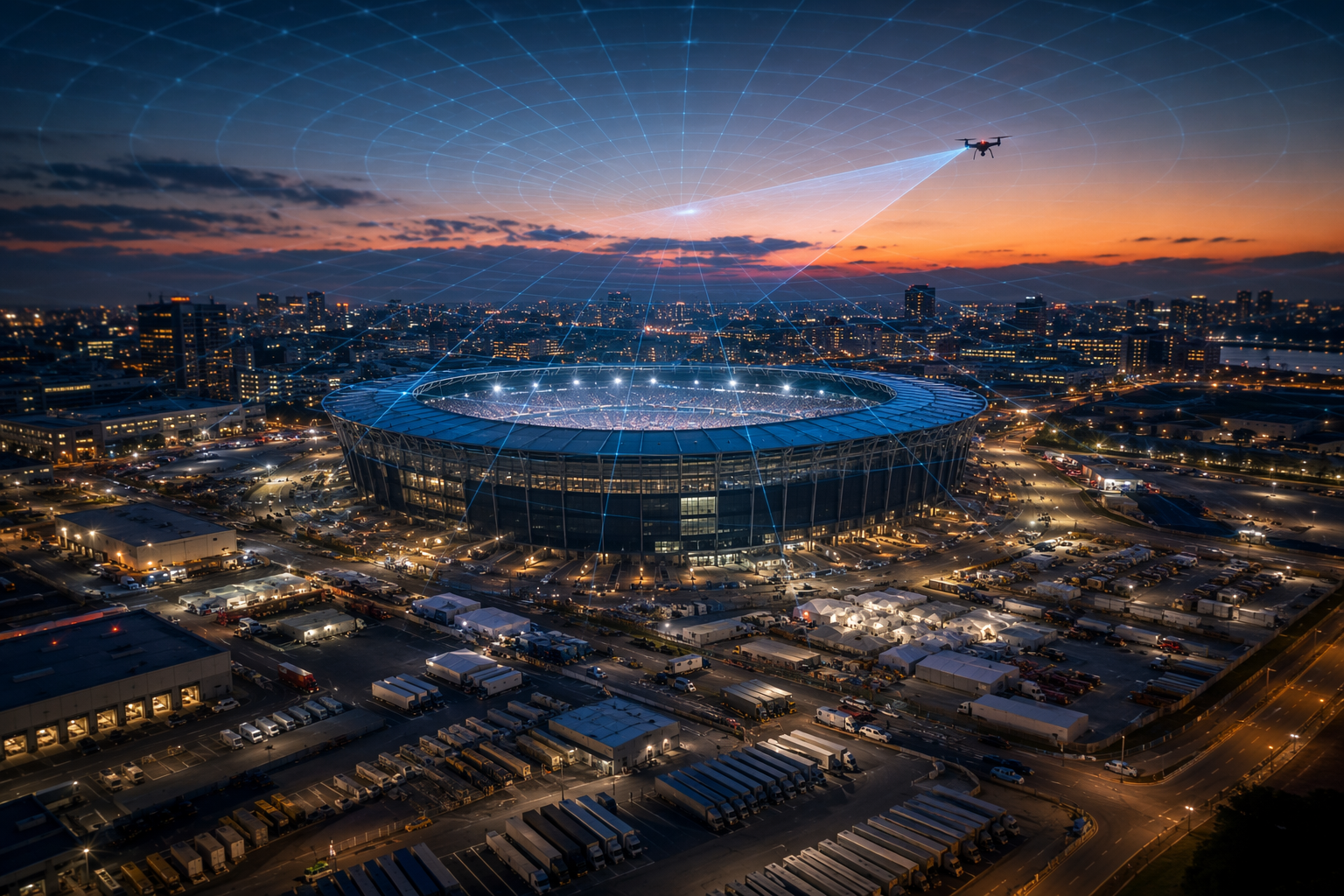
Drone incursions around major venues are not rare edge cases anymore. Forecast International’s Drone Systems Monitor, citing NBC data, reported more than 2,300 NFL stadium violations in 2024; the same June 2026 article notes that NBC’s original figure was slightly higher, at about 2,500 incidents.[1] That difference matters for precision, but it does not change the operating reality: stadium security teams are seeing enough airspace activity that manual spotting and ad hoc radio traffic are not a serious control.
The venue problem sits inside a larger airspace-monitoring problem. D-Fend Solutions reported more than 13,000 drone incidents logged at U.S. power sites in 2024.[2] A power site is not a stadium, and a stadium is not a warehouse yard. But all three share the same ugly feature from an operations desk: a low-cost aircraft can appear near a restricted or sensitive area, and someone has to decide quickly whether it is a nuisance, a safety issue, a reconnaissance risk, or part of a coordinated disruption.
Event logistics adds another layer because the valuable target is not only the crowd. It is the freight pattern around the crowd: broadcast equipment, concession inventory, team gear, sponsor assets, temporary power, medical supplies, credentials, fencing, and high-value loads parked in places that were never designed to behave like hardened facilities. TRASSIR, citing North American cargo-theft data, points to a 49% increase in cargo theft in 2024, with 2,217 cases and an average loss of $202,000.[3] Those cargo-theft figures should be checked against original industry datasets before a loss model is built around them, but they are directionally consistent with what logistics teams already feel: the event perimeter does not end at the turnstile.
That is why the drone-detection question belongs with logistics security, not only with public-safety airspace teams. A drone over a loading dock can trigger a delivery hold. A drone over a temporary yard can force a supervisor to explain why a trailer seal was broken during a response. A drone near a venue approach road can produce camera clips, radio logs, access-control exceptions, and police requests that someone will need to reconcile after midnight. The tool has to help that chain of decisions, not merely display a moving dot on a map.
World Cup 2026 makes this a funded commercial test
The 2026 FIFA World Cup is the most useful proof point because it brings the relevant pressures together: multiple public venues, temporary operating environments, high political visibility, logistics congestion, and formal government funding. Forecast International’s Drone Systems Monitor described a World Cup 2026 security funding stack that includes $250 million in FEMA grants, a $115 million DHS office, and $100 million in JIATF-401 funding.[1] Public spending does not prove that any one system works. It does show that airspace security has become institutional enough to be planned, funded, and procured as part of the event.
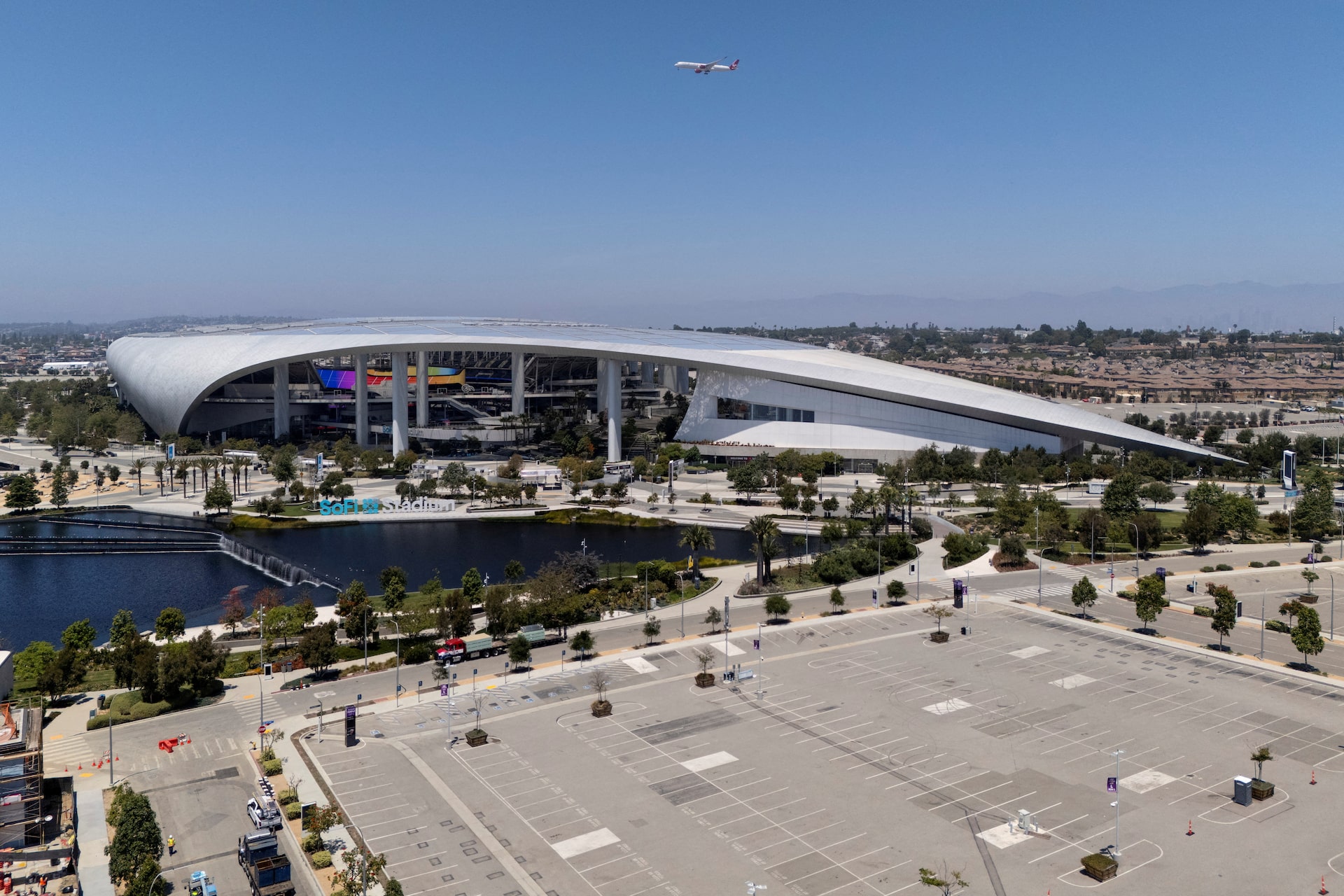
That planning has vendor specificity. Sentrycs has been identified in connection with World Cup 2026 counter-drone security, according to the same Drone Systems Monitor coverage.[1] For a logistics security director, the useful part is not the brand name by itself. It is the fact that major-event organizers are no longer treating drone detection as a laboratory add-on. They are placing it inside the operating model for events where a false alarm can waste scarce response capacity and a missed alarm can become a public incident.
World Cup 2026 also follows an emerging public-venue deployment record. Fortem Technologies markets public-venue protection and points to its use around the Qatar 2022 World Cup.[4] Robin Radar has been associated with drone detection at the Paris 2024 Olympics.[5] These are not interchangeable case studies, and vendor pages do not substitute for independent operating benchmarks. Still, they matter because they move the discussion from “could this work someday?” to “how did it perform around a real venue with real constraints?”
That shift matters more than most market slides. Stadium and event deployments have to survive RF noise, temporary structures, television crews, police aircraft, helicopters, authorized drones, weather, blocked sight lines, and staff who rotate between posts. A system that only works in a controlled demonstration will not help the person deciding whether to stop inbound deliveries at Gate C because an alert appeared near a temporary dock.
The market numbers point in the same direction, with a caveat
Analyst estimates disagree on the exact size of the anti-drone market, but they agree on rapid growth. Global Market Insights estimated the market at $858.6 million in 2024 and projected it to reach $8.4 billion by 2034 at a 28.9% CAGR.[6] ResearchAndMarkets projects a $15 billion market by 2035 at a 29.1% CAGR.[7] Grand View Research projects $3.36 billion by 2030.[8]
Those figures should not be blended into a false average. They likely reflect different category boundaries, technology inclusions, geographies, and forecast windows. For a procurement team, the better takeaway is narrower: capital is moving into anti-drone detection and mitigation, and the category is large enough that event operators will increasingly see commercial products rather than one-off defense integrations.
| Evidence type | What it supports | What it does not prove |
|---|---|---|
| Stadium and infrastructure incident counts | Drone activity is frequent enough to require planning | That every detected drone is malicious |
| World Cup 2026 funding and deployment coverage | Major events are becoming funded proving grounds | That a specific system will fit every venue or logistics yard |
| Warehouse and cargo-theft analytics | AI monitoring can reduce investigation effort and losses in logistics environments | That warehouse ROI transfers unchanged to temporary event operations |
| Market forecasts | The supplier category is maturing commercially | That forecasted market size equals operational effectiveness |
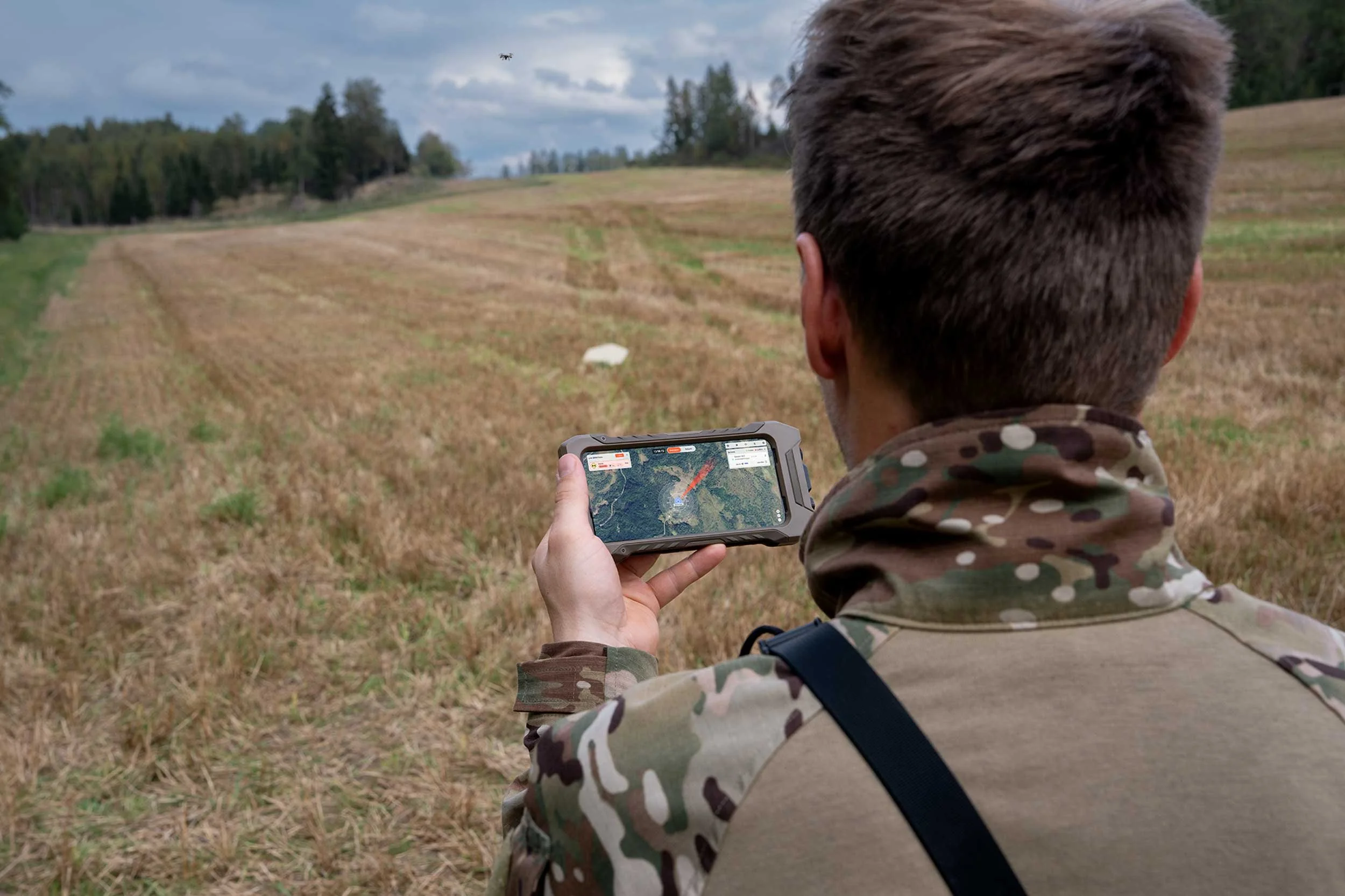
The segment detail is more interesting than the headline market size. Global Market Insights identifies portable anti-drone systems as the fastest-growing segment, with a 30.3% CAGR.[6] That matches the problem event logistics actually has. A Super Bowl, World Cup match, political convention, or major concert does not give security teams a permanent perimeter with months to tune every sensor. It gives them changing vehicle routes, rented lots, temporary screening points, third-party contractors, pop-up command posts, and a clock.
Why portable AI detection fits event logistics better than fixed-site thinking
Permanent infrastructure security is allowed to be patient. Event logistics is not. A fixed facility can map nuisance patterns over months. A tournament site may need useful alerting during a short setup window, then move equipment to another venue with a different skyline, RF profile, police plan, and delivery schedule.
That is where AI matters commercially. The value is not that an algorithm sounds more advanced than a radar. The value is that the system can combine sensor inputs, classify objects, reduce nuisance alerts, and present a track that a mixed command team can act on. In event logistics, the alert has to answer operational questions quickly: Where is the object? Is it moving toward a restricted area? Is it consistent with a bird, hobby drone, authorized flight, or unknown aircraft? Which gate, yard, dock, or route is affected? What evidence will remain after the shift changes?
This is also why “airspace control” language can be misleading in commercial buying decks. Many event operators are not buying a military-style defeat capability. They are buying earlier warning, better classification, cleaner escalation, and evidence that can stand up after a decision has been made. If mitigation is legally restricted or handled by law enforcement, detection still has value when it prevents a bad choice: sending staff outside without knowing where the drone is, locking down the wrong gate, or ignoring a repeated flight path near a staging lot.
The strongest event use cases are not abstract. They sit around temporary and semi-temporary points where airspace alerts collide with logistics decisions.
- Venue loading docks, where a drone alert may delay deliveries, expose open trailers, or trigger law-enforcement coordination.
- Temporary cargo yards, where trailers, generators, broadcast equipment, and concession loads sit outside normal facility controls.
- Credential and screening zones, where surveillance concerns can affect staffing, crowd movement, and contractor access.
- Event-adjacent warehouses, where theft prevention, video investigation, and airspace awareness may overlap.
- Multi-venue command structures, where one alert has to be understood by venue security, public safety, logistics, transportation, and private contractors.
Warehouse ROI helps, but it is not the same environment
The logistics ROI evidence comes mostly from warehouse and video-analytics deployments, not from published, independent event-logistics benchmarks. That distinction is important. A warehouse has repeatable camera views, known traffic flows, familiar lighting conditions, and a more stable workforce. An event yard may change layout overnight because a sponsor build, weather plan, or police route changed.
Still, warehouse evidence is relevant because it measures the same kinds of operational pain: theft, investigation time, false alarms, and the ability to reconstruct what happened. TRASSIR reports that its deployments across 21 warehouses produced a 30% theft reduction, 90% faster investigations, and 6–12 month payback.[3] Those are vendor-published claims, not independent audit results, so they should be treated as attributed evidence. They are useful because they point to measurable categories a buyer can test rather than vague promises about “smarter security.”
False alarms deserve special attention. TRASSIR says its Neuro Detector reduces false alarms by more than 95% compared with traditional motion detection.[3] Again, that is vendor data. But the operating problem is real. A drone-detection system that floods a command post with birds, wind-blown debris, aircraft confusion, and duplicate tracks can become worse than a blind spot because it trains staff to discount alerts. For event logistics, a lower false-alarm rate is not a comfort feature. It is what keeps dispatch, loading, and perimeter teams from burning their response capacity before the real exception arrives.
Titan Protection-style case material belongs in the same category: useful as a signal of commercial adoption, but not the same as an independent benchmark. Vendor case studies can show how a system was packaged, deployed, staffed, and justified. They should not be used as the final word on detection range, classification accuracy, or financial payback unless the buyer can inspect the baseline, incident definitions, labor assumptions, and excluded costs.
What “viable” should mean before a major event
Viability is not the same as perfection. Event logistics teams already operate with imperfect tools: CCTV that misses angles, access-control logs that require cleanup, radio calls that arrive late, and exception reports written by tired people. AI drone detection becomes viable when it improves the decision chain enough to justify cost and integration burden.
The first test is frequency. The stadium and infrastructure incident counts clear that bar for major venues and high-profile events. A small private event may not need dedicated detection. A World Cup venue district, an NFL stadium, a political convention, or a logistics hub serving a major event has a different exposure profile.
The second test is comparable deployment. Qatar 2022, Paris 2024, and World Cup 2026 do not prove universal effectiveness, but they show that the category has operated around public venues and event-security structures rather than only military bases or controlled demonstrations.[1][4][5]
The third test is operational payoff. For logistics leaders, that payoff should be written in plain terms before procurement: fewer nuisance dispatches, faster confirmation of drone tracks, clearer handoff to law enforcement, shorter investigation time, reduced cargo exposure, or a lower probability that a supervisor has to make a high-consequence call from incomplete information.
A credible evaluation should therefore ask for site-specific proof, not generic detection theater. Test the system against the actual venue map, temporary-yard layout, delivery windows, known RF conditions, nearby flight activity, law-enforcement escalation process, and staff roles. If a vendor claims payback, ask what loss baseline it used. If it claims false-alarm reduction, ask what counted as a false alarm. If it claims rapid deployment, ask how many people set it up, how long calibration took, and what happened when the line of sight changed.
The investability judgment
AI drone detection is now a viable event logistics security tool for major venues, large temporary events, and event-adjacent logistics hubs. The case is strongest where three conditions meet: drone activity is likely enough to disrupt operations, logistics assets are valuable or exposed, and multiple stakeholders need a common operating picture before deciding whether to hold, reroute, dispatch, or investigate.
The buyer still has work to do. Market forecasts show momentum, not effectiveness. World Cup funding shows institutional seriousness, not automatic fit. Vendor ROI claims show what can be measured, not what every site will achieve. The right conclusion is neither hype nor dismissal: this is a commercial security category worth evaluating now, provided detection performance, false-alarm claims, payback assumptions, and evidence workflows are tested against the event’s actual operating conditions.
References
- Safeguarding the World Cup, Forecast International / Drone Systems Monitor, June 2026.
- D-Fend Solutions drone incident data, D-Fend Solutions.
- TRASSIR warehouse deployment article, TRASSIR.
- Public Venues, Fortem Technologies.
- Robin Radar Paris 2024 Olympics deployment information, Robin Radar.
- Anti-Drone Market Size, Global Market Insights, 2025.
- Anti-Drone Market Research Report, ResearchAndMarkets.
- Anti-Drone Market Size, Share & Trends Analysis Report, Grand View Research.
Comments
Join the discussion with an anonymous comment.